

Bioactive Polysaccharides from Seaweeds
Open accessThe DOI matches its Crossref record; 188 of the 188 references it cites were found in a registry or an index.
Abstract
Bioactive compounds with diverse chemical structures play a significant role in disease prevention and maintenance of physiological functions. Due to the increase in industrial demand for new biosourced molecules, several types of biomasses are being exploited for the identification of bioactive metabolites and techno-functional biomolecules that are suitable for the subsequent uses in cosmetic, food and pharmaceutical fields. Among the various biomasses available, macroalgae are gaining popularity because of their potential nutraceutical and health benefits. Such health effects are delivered by specific diterpenes, pigments (fucoxanthin, phycocyanin, and carotenoids), bioactive peptides and polysaccharides. Abundant and recent studies have identified valuable biological activities of native algae polysaccharides, but also of their derivatives, including oligosaccharides and (bio)chemically modified polysaccharides. However, only a few of them can be industrially developed and open up new markets of active molecules, extracts or ingredients. In this respect, the health and nutraceutical claims associated with marine algal bioactive polysaccharides are summarized and comprehensively discussed in this review.
Overview
The claims and statistics of this paper haven’t been checked yet.
Free: it reads the open-access text and checks the first 5 claims that cite a source we can check. Create a free account to check every claim.
Integrity signals
Registry
Cites
Statistics
Figures




Verification
Claims the paper makes
The claims and statistics of this paper haven’t been checked yet.
Free: it reads the open-access text and checks the first 5 claims that cite a source we can check. Create a free account to check every claim.
Claims other papers make about this one
Each is checked against this paper’s own text: does it say what the citing paper says it does?
The source backs part of the claim, not all of it — or backs it for a different population, condition or comparison.
In the citing paper
“Spyridia hypnoides, Mastocarpus stellatus, Gracilaria caudata, Gracilaria birdiae, Porphyra sp., and Ulva pertusa | Carrageenans | Antioxidant potential, gelling properties, emulsion stabilizers, and acting against skin spots | [76,79]”
From Innovative Approaches to an Eco-Friendly Cosmetic Industry: A Review of Sustainable Ingredients (2024) · cites this paper as [79]
Experimental — accuracy not yet measuredThe cited source says what the claim attributes to it.
In the citing paper
“There are almost 291 species of seaweed in 43 countries; however, the species used industrially are Eucheuma , Laminaria , Gracilaria , Undaria , Porphyra, and Kappaphycus , which make up 96% of world production [79].”
From Innovative Approaches to an Eco-Friendly Cosmetic Industry: A Review of Sustainable Ingredients (2024) · cites this paper as [79]
The cited source says what the claim attributes to it.
In the citing paper
“Agar is composed of agarose and agaropectin [79].”
From Innovative Approaches to an Eco-Friendly Cosmetic Industry: A Review of Sustainable Ingredients (2024) · cites this paper as [79]
Self-check
Percentages, sums and reported differences re-computed from the paper’s own numbers.
The self-check needs the paper’s full text.
Citations
Cites
1 retracted
RETRACTED: Carrageenan: A natural seaweed polysaccharide and its applications
Prajapati, V. D., Maheriya, P. M., Jani, G. K., & Solanki, H. K. (2014) · Carbohydrate Polymers · doi:10.1016/j.carbpol.2014.01.067 · Cited by 383
RetractedPathways towards and Away from Alzheimer’s Disease
Mattson, M. P. (2004) · Nature · doi:10.1038/nature02621 · Cited by 3,052
Oxidative stress and the amyloid beta peptide in Alzheimer’s disease
Cheignon, C., Tomas, M., Bonnefont-Rousselot, D., Faller, P., Hureau, C., & Collin, F. (2018) · Redox Biology · doi:10.1016/j.redox.2017.10.014 · Cited by 2,185
Masters, C. L., Bateman, R., Blennow, K., Rowe, C. C., Sperling, R. A., & Cummings, J. L. (2015) · Nature Reviews Disease Primers · doi:10.1038/nrdp.2015.56 · Cited by 1,853
Algae as nutritional and functional food sources: revisiting our understanding.
Wells, M. L., Potin, P., Craigie, J. S., Raven, J. A., Merchant, S. S., Helliwell, K. E., Smith, A. G., Camire, M. E., & Brawley, S. H. (2017) · Journal of Applied Phycology · doi:10.1007/s10811-016-0974-5 · Cited by 1,562
Carrageenans: Biological properties, chemical modifications and structural analysis – A review
Campo, V. L., Kawano, D. F., Silva, D. B. D., & Carvalho, I. (2009) · Carbohydrate Polymers · doi:10.1016/j.carbpol.2009.01.020 · Cited by 1,403
Cumashi, A., Ushakova, N. A., Preobrazhenskaya, M. E., D'Incecco, A., Piccoli, A., Totani, L., Tinari, N., Morozevich, G. E., Berman, A. E., Bilan, M. I., et al. (2007) · Glycobiology · doi:10.1093/glycob/cwm014 · Cited by 1,026
Structure and Functional Properties of Ulvan, a Polysaccharide from Green Seaweeds
Lahaye, M., & Robic, A. (2007) · Biomacromolecules · doi:10.1021/bm061185q · Cited by 1,019
Necas, J., & Bartosikova, L. (2013) · Veterinární medicína · doi:10.17221/6758-vetmed · Cited by 929
Hepatotoxic Effects of Tacrine Administration in Patients With Alzheimer's Disease
Watkins, P. B. (1994) · JAMA: The Journal of the American Medical Association · doi:10.1001/jama.1994.03510370044030 · Cited by 829
Research works printed but not linked: 3
- Kokilam G. Vasuki S. Biochemical and phytochemical analysis on Ulva fasciata and Caulerpa taxifolia Int. J. Pharm. Sci. Res. 2014 4 7 11
- Rinaudo M. Seaweed polysaccharides Comprehensive Glycoscience Kamerling J.P. Elsevier Amsterdam, The Netherlands 2007
- Craigie J.S. Cell walls Biology of the Red Algae Cole K.M. Sheath R.G. Cambridge University Press London, UK 1990 221 251
Cited by
Items 201–275 of 275
Potential Seaweed-Derived Bioactive Compounds for Pharmaceutical Applications
Mathew, J. T., Inobeme, A., Bini, E. M., Shaba, E. Y., Tanko, M. S., Abdulkadir, A., Haruna, I., Hussaini, J., Mamman, A., Akinsipo, O. B., et al. (2024) · Springer eBooks · doi:10.1007/978-981-97-8557-5_14 · Cited by 1
Seaweed-Based Proteins and Peptides: Processing and Development of Innovative Products
Mirzapour‐Kouhdasht, A., Shaghaghian, S., & García‐Vaquero, M. (2025) · Springer eBooks · doi:10.1007/978-981-96-0519-4_9 · Cited by 1
Arslan, Ş., Abdelsalam, A. H., Kurt‐Kızıldoğan, A., Otur, Ç., Konuş, M., Çetin, D., Babat, C. F., Yılmaz, C., Oğuztüzün, S., Sayın, S., et al. (2025) · Biology Bulletin · doi:10.1134/s1062359024608814 · Cited by 1
“Researchers pointed out that an important source of these natural resources is the sea (Hentati et al., 2020).”
Cosmeceuticals from Marine Sources: Algal Products as Green Cosmetics
Zovia, I., Ijaz, A., Munir, A., Mumtaz, A., Arshad, M., Ahmad, A., & Javed, S. (2025) · Springer eBooks · doi:10.1007/978-3-031-86087-4_7 · Cited by 1
Gandhi, R. V., Senthilkumar, M., & Kirubakaran, D. (2025) · Thalassas An International Journal of Marine Sciences · doi:10.1007/s41208-025-00871-x · Cited by 1
“Beyond its traditional use, S. polycystum and other edible seaweeds have started gaining attention in Western nations as potential of novel foods a category of foods not widely consumed prior to 1997 in the EU context (Hentati et al. 2020).”
A sustainable approach to enhancing fruit production and quality through seaweed based biostimulants
Asha, P., Jayavalli, R., Kuppusamy, S., Aruna, P., Baskar, M., Suresh, J., Malini, N., Kumar, S., Yasodha, P., Rajeswari, R., et al. (2025) · Plant Science Today · doi:10.14719/pst.9420 · Cited by 1
Polymeric Polysaccharides for Biomedical Applications
Sankaran, S., Jose, A., Hussein, F. J., & Mohammed, W. K. (2025) · Wiley eBooks · doi:10.1002/9781394214532.ch13 · Cited by 1
Zhang, Z., Xu, M.-X., Wang, N., Shen, R., Sun, J., Zha, M., & Wang, M. (2026) · Frontiers in Nutrition · doi:10.3389/fnut.2026.1695902 · Cited by 1
“Food-based iodine sources, particularly marine algae and sea vegetables, deliver iodine alongside polysaccharides and polyphenols that may buffer absorption and provide additional neuroprotective benefits (154, 155).”
Prince, Gupta, S., Singh, P. K., Tyagi, S., Sharma, B., & Singh, V. (2026) · Journal of Pharmaceutical Innovation · doi:10.1007/s12247-026-10756-y · Cited by 1
“Fucoidans present in sodium alginate enhance the AChE activity and improve cognitive disabilities [78].”
Benhniya, B., Karmil, F. Z., Maliki, S. E., Hasbaoui, N. E., Lakhdar, F., Marty, C., Boutolleau, D., Bourgougnon, N., & Etahiri, S. (2026) · International Journal of Molecular Sciences · doi:10.3390/ijms27114848 · Cited by 1
Garrido‐Bañuelos, G., Tveit, G. M., Dalsvåg, H., Uglem, S., Martínez‐Sanz, M., & López-Sánchez, P. (2026) · Future Foods · doi:10.1016/j.fufo.2026.101225 · Cited by 1
Marine Natural Products as a Bioresource for Cosmeceuticals
Rasmi, Y., Kırboğa, K. K., Rao, T., Ali, M., & Ahmed, M. Z. (2024) · Royal Society of Chemistry eBooks · doi:10.1039/9781837672288-00223 · Cited by 1
The Primary Bioactive Compounds of Seaweeds
Polat, S., & Özoğul, Y. (2024) · Springer eBooks · doi:10.1007/978-3-031-65529-6_14 · Cited by 2
Lee, J. Y., Lim, L. W. C., Wong, C.-Y., Koh, R. Y., Lim, C. L., Kok, Y.-Y., & Chye, S. M. (2026) · CNS & Neurological Disorders - Drug Targets · doi:10.2174/0118715273403412251202093934 · Cited by 1
Fighting the resistance: algae as key organisms against antibacterial resistance;
Monteiro, P. (2021) · Portuguese National Funding Agency for Science, Research and Technology (RCAAP Project by FCT)
Abdullah, W. N., Mege, R. A., Arrijani, A., & Mokosuli, Y. S. (2021) · JURNAL BIOLOGI TROPIS · doi:10.29303/jbt.v21i3.2919
Formulation of Green Bioactivator Based on Natural Products for Remediation of Polluted Waters
Xu, Q., Xing, H., He, C., & Huang, G. (2021) · Water Air & Soil Pollution · doi:10.1007/s11270-021-05432-5
“Seaweed extract is a valuable biological resource, rich in trehalose, protein, trace elements, and other nutrients, as well as diterpenes, fucosides, bioactive peptides, and other active substances (Balina et al., 2016; Hentati et al., 2020).”
BackgroundBioactive Compounds from Algae: Potential Applications
Jayappriyan, K. R., Kurinjimalar, C., Kaviraj, M., Vijayakumar, M., Rajkumar, R., & Raja, R. (2022) · BENTHAM SCIENCE PUBLISHERS eBooks · doi:10.2174/9789815051872122010012
Expression and characterization of dextransucrase from leuconostoc citreum ABK-1
Bulan, K., & Pichyangkura, R. (2021) · Chula Digiverse · doi:10.58837/chula.the.2021.12
Algae for Cosmetics Application
Bohari, S. P. M., Samad, N. A. A., & Ihsan, N. (2024) · Springer eBooks · doi:10.1007/978-981-97-1908-2_3
Seaweeds as Potential Source of Bioactive Compounds
Mishra, P., & Saini, P. (2024) · Springer eBooks · doi:10.1007/978-3-031-63844-2_2
Osaki, V. S. (2024) · Digital Library of Theses and Dissertations (Universidade de São Paulo) · doi:10.11606/d.41.2024.tde-22082024-191041
Kopp, L., Janentzky, A., & Bischoff, S. C. (2024) · Aktuelle Ernährungsmedizin · doi:10.1055/a-2316-8202
“Zudem sind viele ge-sundheitliche Vorteile, wie entzündungshemmende, antidiabeti-sche, fettleibigkeitshemmende, antihyperlipidämische, immunmodulatorische, antioxidative, antitumorale, antivirale, an-timikrobielle und gastroprotektive Aktivitäten gut erforscht [70, 71].”
Pathogenetic Targets of Sea Algae Polysaccharides in Non-Alcoholic Fatty Liver Disease
Kryzhanovsky, S. P., Gusevа, L. G., Юрьевич, Д. Е., Fedyanina, L. N., & Zaporozhets, T. S. (2024) · Antibiot Khimioter = Antibiotics and Chemotherapy · doi:10.37489/0235-2990-2024-69-7-8-67-79
Seaweed-extracted mucilages: Sulfated and uronic acid-containing fiber
Fu, X., Huang, W., & Nie, S. (2025) · Elsevier eBooks · doi:10.1016/b978-0-443-21630-5.00009-5
Metabolic health: unleashing the potential of bioactive compounds
Bhattarai, P., Dahal, M., Tiwari, K., & Nirmal, N. P. (2025) · Elsevier eBooks · doi:10.1016/b978-0-443-28862-3.00007-8
Microalgae biotechnological potentials
Najafpour, G. D. (2025) · Elsevier eBooks · doi:10.1016/b978-0-443-33096-4.00007-7
Eswaramoorthi, M. P., Subramanian, G., Rajeswari, S., Debora, J. J., Varadarajan, V., KARUNAKARAN, G. A., & Rethinam, B. (2025) · Biologia · doi:10.1007/s11756-025-01927-2
The role of marine-derived nutraceuticals in enhancing skin and hair health
Kale, P. A., Kachare, P. B., Jumbad, S. B., Kale, A. R., & Wagh, A. S. (2025) · Journal of Pharmacognosy and Phytochemistry · doi:10.22271/phyto.2025.v14.i3a.15344
A review on seaweeds and its bioactive compounds: Implication to the WIO ecosystem health
Asha S Ripanda, D. V. M. (2022) · International Journal of Biosciences (IJB) · doi:10.12692/ijb/20.2.300-313
Marine food source for sustainable future
Tounsi, L., Hlima, H. B., Michaud, P., & Abdelkafi, S. (2025) · Elsevier eBooks · doi:10.1016/b978-0-443-32920-3.00035-5
Self-citationEnzyme-assisted extraction of plant protein: Methods, mechanism, and recent advances
S., A., Mathangi, G., Abhijith, K., Thirumoorthy, S., Baskaran, N., & Vignesh, S. (2025) · Elsevier eBooks · doi:10.1016/b978-0-443-33955-4.00008-5 · Cited by 1
Nadanasabapathy, S., Fotedar, R. K., Tilbrook, D., & Coorey, R. (2026) · Algal Research · doi:10.1016/j.algal.2026.104873
Naik, R. R. (2024) · UNSWorks (University of New South Wales, Sydney, Australia) · doi:10.26190/unsworks/30350
Chen, L.-M., Yang, P.-P., Haq, A. T. A., Hwang, P.-A., Lai, Y.-C., Weng, Y.-S., Chen, M. A., & Hsu, H.-L. (2022) · Figshare · doi:10.6084/m9.figshare.21130074
Mahanama Geegana Gamage, A., & 142068 (2023) · Institutional Repositories DataBase (IRDB)
Kopp, L. J. G. S. (2023) · University writing server of the University of Hohenheim (Universität Hohenheim)
Aspen Plus simulation of a biomethane plant based in Ulva rigida
Arias Marrón, M. (2021) · UCrea (University of Cantabria)
Fujaya, Y., Hidayani, A. A., Aslamyah, S., Wati, W. K., Putri, Z. B., & Damayanti, S. N. (2025) · BIO Web of Conferences · doi:10.1051/bioconf/202518508001
Rubeena, M., Stephen, N. M., Ravichandran, J., & Indumathi, K. (2026) · Springer eBooks · doi:10.1007/978-3-032-09287-8_3 · Cited by 1
Teles, F. B. (2024) · LA Referencia (Red Federada de Repositorios Institucionales de Publicaciones Científicas)
Shan, S., Chen, W., Wu, W., Zhang, W., Liu, J., Liao, W., Wen, Y., & Zhao, C. (2026) · Journal of Agricultural and Food Chemistry · doi:10.1021/acs.jafc.5c13346
Renita, A. A., Karthikeyan, M., Sivamani, J., Raja, S., Govindaraj, B. B., Rusho, M. A., Sharma, S., & Abbas, M. (2026) · Pure and Applied Chemistry · doi:10.1515/pac-2025-0601
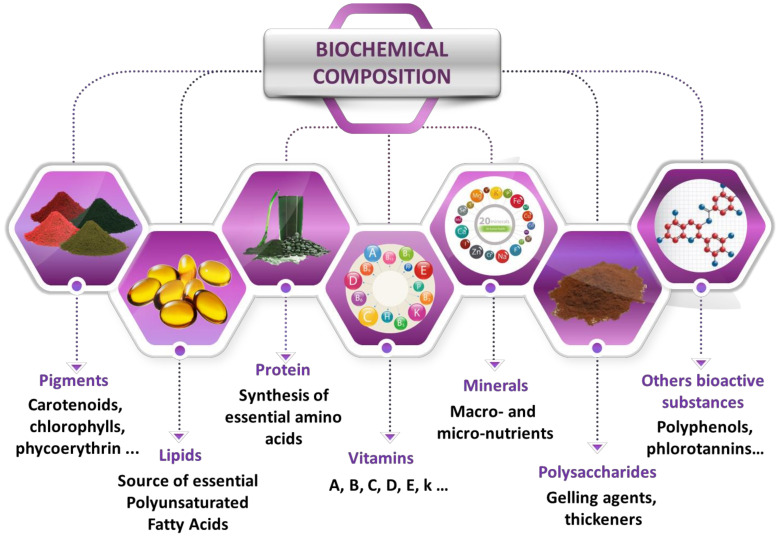
“The chemical composition of the seaweeds is detailed in the section below 37,38 and depicted in Figure 2.”
Targeting epithelial-to-mesenchymal transition of cancer cells by sulfated glycans from marine algae
Malyarenko, O. S., Kravchenko, A. O., Druzhinina, V. R., Gundamaraju, R., Ermakova, S. P., & Ambati, R. R. (2026) · Advances in Cancer Biology - Metastasis · doi:10.1016/j.adcanc.2026.100172
Macroalgae (seaweed) based bioactive compounds with health benefits for functional foods development
Saraswat, V., Gupta, V., Nallamilli, T. R., & Raghavarao, K. (2026) · Elsevier eBooks · doi:10.1016/b978-0-443-33853-3.00019-3
Aquatic waste valorization: innovative approaches and sustainable strategies
Maqsood, S., Arshad, M. T., Khalid, W., Suleman, S., Mzoughi, M., & Sağlam, K. (2026) · Elsevier eBooks · doi:10.1016/b978-0-443-44027-4.00011-1
Bose, C., Chakraborty, K., Pai, S. K., & Pai, A. A. (2026) · Algal Research · doi:10.1016/j.algal.2026.104655
Metabolic and ecological strategies of specialist bacteria mediating macroalgae breakdown
Brunet, M. (2021) · theses.fr (ABES) · doi:10.70675/fe9344a0z21a8z4479zbd02z8b52b80c4375
Hadjkacem, F. (2023) · theses.fr (ABES) · doi:10.70675/5c21557fz2f69z412cz9609zb6eb7ccd7885 · Cited by 2
Manseur, C. (2024) · theses.fr (ABES) · doi:10.70675/bf265358z2a8az4abdz9931z6dfc7cd074f4 · Cited by 2
Tounsi, L. (2023) · theses.fr (ABES) · doi:10.70675/59ee10fezffc5z4990z8d9ez402fce5bdc2c
Self-citationSathishkumar, K., Patel, N. D., Santhoshkumar, M., Ponnusamy, C., Velu, S. K. P., Alam, M. M., Al-Sehemi, A. G., & Parthipan, P. (2026) · Carbohydrate Polymers · doi:10.1016/j.carbpol.2026.125381
Bioactive Compounds in Algae: Applications in Pharmaceuticals and Therapeutic Uses
Mishra, H., Kushwaha, V. B., & Singh, M. P. (2026) · Springer eBooks · doi:10.1007/978-3-032-22521-4_11
Xue, C., Li, Z., Yao, L., Zhou, Y., Xiao, Y., Fan, X., Song, D., Chen, W., Ji, D., Wang, Z., et al. (2026) · npj Science of Food · doi:10.1038/s41538-026-00890-9 · Cited by 1
“…potential to ameliorate glucose and lipid metabolism disorders 8 – 10 , Polysaccharides constitute major bioactive components of Polygonati Rhizoma 11 , however, many prior studies relied on crude preparations or heterogeneous fractions, which precludes establishing a clear structure – function…”
Sapei, L., Agustriyanto, R., Setyopratomo, P., Fatmawati, A., Ambarsari, D. A., Purwanto, S., Hakim, A. R., Budiarti, E., Gunawan, M. R., Sugiono, A., et al. (n.d.) · Ubaya Repository (University of Surabaya)
Marine derivatives for meat preservation
Cui, F., Wang, D., Ren, L., Jiang, W., Zhang, Y., 周江跃, Tu, K., Wang, B., Zhan, L., Wang, Y., et al. (2026) · Elsevier eBooks · doi:10.1016/b978-0-443-40425-2.00004-1
High value components and sequential biorefining processes of brown seaweeds: A comprehensive review
Du, H., Zhang, M., Zhao, Y., & Guo, L. (2026) · Food Chemistry · doi:10.1016/j.foodchem.2026.150191
Transforming Beach-Accumulated Seaweed into High-Value Bioactive Products: A Recycling Perspective
Dissanayake, D. S., Jayawardena, T. U., & Nagahawatta, D. P. (2026) · Recycling · doi:10.3390/recycling11070116
Algal Biochar: Production Strategies and Sustainable Application Perspectives
Nath, P., Chanu, Y. N., Paul, T., & Rout, J. (2026) · Springer eBooks · doi:10.1007/978-3-032-19855-6_15
Ray, S., Sairam, M., MAITY, B., Sagar, L., Gitari, H. I., Pattanayak, S., Divya, B. S., Bhattacharya, U., Santosh, D. T., Atapattu, A. J., et al. (2026) · Springer eBooks · doi:10.1007/978-3-032-26637-8_8
Impact of seaweed on body weight management
Kirindage, K. G. I. S., & Jayasinghe, A. M. K. (2026) · Elsevier eBooks · doi:10.1016/b978-0-443-29190-6.00022-2
Noris, M., Alkhair, A., & Juraidin, J. (2026) · Indonesian Journal of Global Health Research · doi:10.37287/ijghr.v8i4.1950
“…Heddam et al., 2019; Ma et al., 2023; Song et al., 2012) Protect food and add to its physicochemical and bioactive functions (García et al., 2021; Hentati et al., 2020; Li et al., 2022; Sotiroudis & Sotiroudis, 2013; Wan et al., 2021) Additional food source in sauces, soups, noodles, bread and…”
Arroyo-Xochihua, O., Sánchez-Medina, A., López‐Franco, Ó., Olivares-Bañuelos, T. N., & Zepeda, R. C. (2026) · Molecular Biology Reports · doi:10.1007/s11033-026-12685-y
“The Lessoniaceae family comprises brown seaweeds that synthesize compounds such as polysaccharides, alginic acids, laminarins, fucoidans, phlorotannins, and diterpenes [ 11, 12], which have been extensively demonstrated to possess anti-inflammatory properties [ 13 – 16].”
Sadeghi, A., Khazaeel, K., Ahmady, A. Z., & Tabandeh, M. R. (2026) · Scientific Reports · doi:10.1038/s41598-026-71702-z
Marine-derived biopolymers – the wider prospects as nutraceuticals
Sofi, F. R., Kumar, L. R. G., Sannejal, A. D., Aakila, Manjunatha, K. G., Surasani, V. K. R., Behere, G. S., Saba, K., Maqbool, H., Hussain, T., et al. (2026) · Polymer Bulletin · doi:10.1007/s00289-026-06696-9
“Thus, increasing demand for seaweed polymers has stimulated interest in extraction meth-ods that can produce high-quality products using less energy and solvent while minimizing environmental impact [ 32 , 37 ].”
InfluentialCadâr, E., Mireşan, H., Drăgan, L. A.-M., Pesterau, A.-M., Mircioiu, I., Pascale, C., Sîrbu, R., Albu, C.-C., Bubulac, L., Bogdan-Andreescu, C. F., et al. (2026) · Marine Drugs · doi:10.3390/md24100338
Singh, A., Raza, M. A., Firdous, A., Kapoor, K., & ., A. (2026) · SSRN Electronic Journal · doi:10.2139/ssrn.7528476
Premarathna, A. D., Roleda, M. Y., Dziubińska‐Kühn, K., Narvarte, B. C. V., Critchley, A. T., & Tuvikene, R. (2026) · Food Hydrocolloids · doi:10.1016/j.foodhyd.2026.113435
Antifungal potential of marine macroalgae: an integrative review
Christo, M. C. P., do Nascimento, I. T. V. D. S., Mendes, K. C., Araújo, G., de Melo, T. A., & Serra, I. M. R. D. S. (2026) · Brazilian Journal of Biology · doi:10.1590/1519-6984.305968
Zhang, C., Qu, Y., Xue, L., Cheng, B., & Zang, J. (2026) · Marine Drugs · doi:10.3390/md24100354
“Laminarin, another major algal polysaccharide, is indigestible in the livestock small intestine, but it has been shown to enhance growth performance, antioxidant capacity, immunity and intestinal microecology in animals [6,7].”
Recovery of bioactive compounds from the side streams of polysaccharide extraction from seaweed
Barua, H., Mithu, M. A., Acharjee, M. R., Bekhit, A. E. A., & Ahmmed, M. K. (2026) · Elsevier eBooks · doi:10.1016/b978-0-443-45519-3.00008-x
Metadata
- Authors
- Hentati, F., Tounsi, L., Djomdi, D., Pierre, G., Delattre, C., Ursu, A. V., Fendri, I., Abdelkafi, S., & Michaud, P.
- Affiliations
- Centre National de la Recherche Scientifique (FR)
- University of Maroua (CM)
- University of Sfax (TN)
- Corresponding author
- Michaud, Philippe
- ORCID
- Venue
- Molecules
- Publisher
- MDPI AG
- Published
- 2020-07-09
- Volume
- 25
- Issue
- 14
- Pages
- 3152
- ISSN
- 1420-3049 (ISSN-L)
- PMC
- PMC7397078
- OpenAlex
- W3040973509
- Cited by
- 254
- References
- 186
- Citations by year
- 2026: 36 · 2025: 52 · 2024: 57 · 2023: 37 · 2022: 40 · 2021: 30 · 2020: 2
- FWCI
- 2.24
- Type
- journal article
- Language
- en
- Open access
- gold
- dx.doi.org
- Licence
- Locations
- Molecules (publishedVersion, cc-by)
- PubMed Central (publishedVersion, cc-by)
- PubMed (publishedVersion)
- HAL (submittedVersion, cc-by)
- DOAJ (DOAJ: Directory of Open Access Journals) (submittedVersion, cc-by-sa)
- Topics
- Life Sciences › Agricultural and Biological Sciences › Aquatic Science › Seaweed-derived Bioactive Compounds
- Life Sciences › Agricultural and Biological Sciences › Food Science › Polysaccharides Composition and Applications
- Physical Sciences › Earth and Planetary Sciences › Oceanography › Marine and coastal plant biology
- Keywords
- seaweed polysaccharides, seaweed, bioactive compounds, nutraceuticals, oligosaccharides, polysaccharide derivatives, fucoxanthin, phycocyanin, carotenoids, bioactive peptides, diterpenoids, health claims
- MeSH terms
- Carotenoids, Humans, Peptides, Polysaccharides, Seaweed, Dietary Supplements, Xanthophylls
About these checks
Registry, retraction, Cites and statistics results are computed, not judged, with one exception: a printed reference that no index lists is read once by a model before it counts as a citation error. Claims are extracted by a model and kept only when their quote appears verbatim in the text; each cited source is then checked, with a model’s help, for whether it says what the claim relies on. Those verdicts can be wrong — read the claim’s quote and the cited source before relying on one.
Statistics and arithmetic are recomputed, not judged.
Confidence bands are shown only for fields calibrated on our annotated test set. None is calibrated yet, so no band is shown.
What counts as a claim ›How we measure confidence ›How we check this ›
Are you an author, or do you see a problem with this page? Request a review
Data sources
Bibliographic data: Semantic Scholar, OpenAlex, Crossref.
Contains information from the Semantic Scholar Academic Graph Datasets, made available under the ODC Attribution License (ODC-BY 1.0).
Semantic Scholar’s data is described in: Kinney, R., et al. (2023). The Semantic Scholar Open Data Platform. arXiv:2301.10140.
