

Cobalt–Graphene Catalyst for Selective Hydrodeoxygenation of Guaiacol to Cyclohexanol
Open accessThe DOI matches its Crossref record; 61 of the 61 references it cites were found in a registry or an index.
Abstract
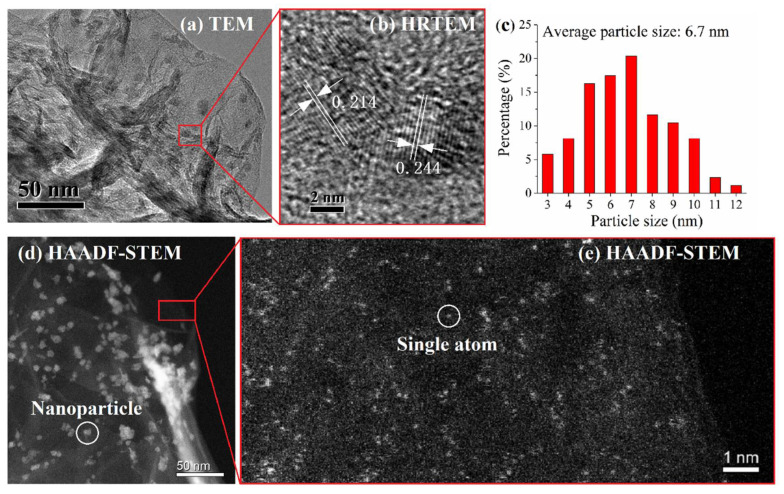
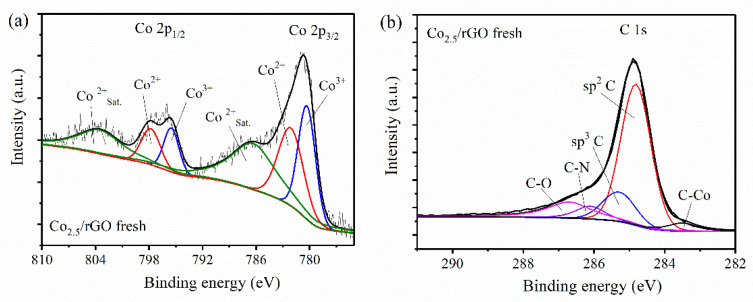
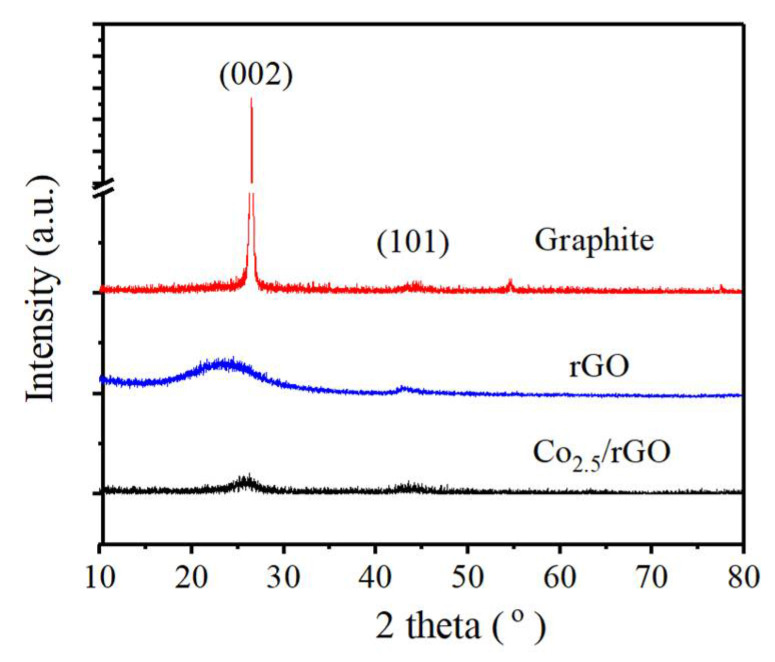
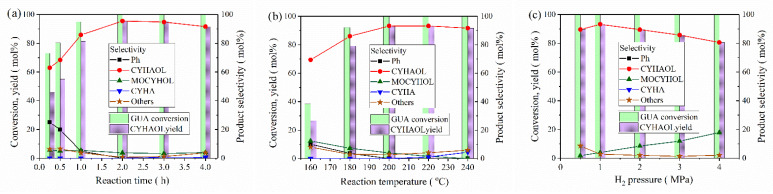
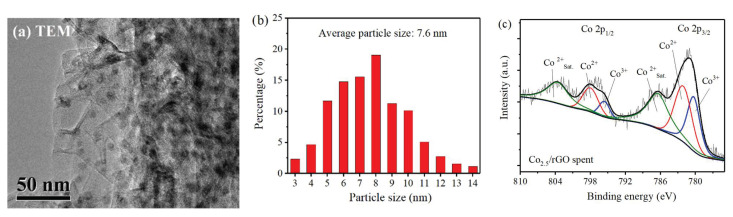
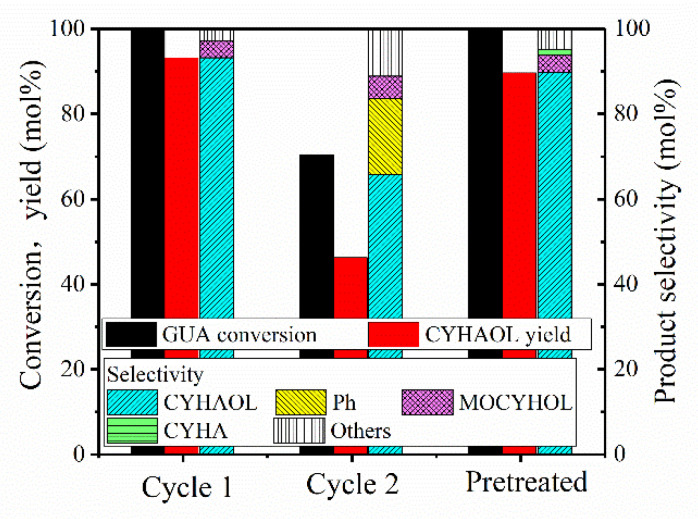
Herein, cobalt-reduced graphene oxide (rGO) catalyst was synthesized with a practical impregnation–calcination approach for the selective hydrodeoxygenation (HDO) of guaiacol to cyclohexanol. The synthesized Co/rGO was characterized by transmission electron microscopy (TEM), high-angle annular dark-field scanning TEM (HAADF-STEM), X-ray photoelectron spectroscopy (XPS), Raman spectroscopy, X-ray diffraction (XRD), and H2 temperature-programmed reduction (H2-TPR) analysis. According to the comprehensive characterization results, the catalyst contains single Co atoms in the graphene matrix and Co oxide nanoparticles (CoOx) on the graphene surface. The isolated Co atoms embedded in the rGO matrix form stable metal carbides (CoCx), which constitute catalytically active sites for hydrogenation. The rGO material with proper amounts of N heteroatoms and lattice defects becomes a suitable graphene material for fabricating the catalyst. The Co/rGO catalyst without prereduction treatment leads to the complete conversion of guaiacol with 93.2% selectivity to cyclohexanol under mild conditions. The remarkable HDO capability of the Co/rGO catalyst is attributed to the unique metal–acid synergy between the CoCx sites and the acid sites of the CoOx nanoparticles. The CoCx sites provide H while the acid sites of CoOx nanoparticles bind the C-O group of reactants to the surface, allowing easier C-O scission. The reaction pathways were characterized based on the observed reaction–product distributions. The effects of the process parameters on catalyst preparation and the HDO reaction, as well as the reusability of the catalyst, were systematically investigated.
Overview
The claims and statistics of this paper haven’t been checked yet.
Free: it reads the open-access text and checks the first 5 claims that cite a source we can check. Create a free account to check every claim.
Integrity signals
Registry
Cites
Statistics
Figures
Verification
Claims the paper makes
The claims and statistics of this paper haven’t been checked yet.
Free: it reads the open-access text and checks the first 5 claims that cite a source we can check. Create a free account to check every claim.
Self-check
Percentages, sums and reported differences re-computed from the paper’s own numbers.
The self-check needs the paper’s full text.
Citations
Cites
Raman Spectra of Graphite Oxide and Functionalized Graphene Sheets
Kudin, K. N., Ozbas, B., Schniepp, H. C., Prud'homme, R. K., Aksay, I. A., & Car, R. (2008) · Nano Letters · doi:10.1021/nl071822y · Cited by 4,475 · cited 1×
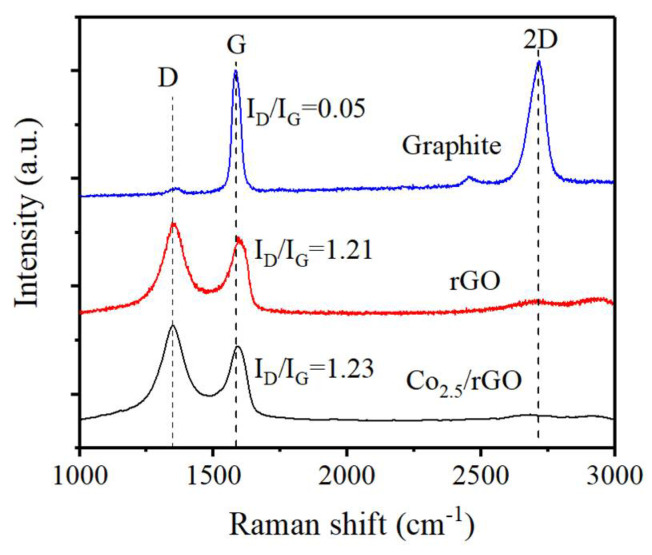
“The ratio of the peak intensity of the D band to that of the G band (ID/IG) is inversely proportional to the perfection of the graphene’s honeycomb lattice [47,48].”
BackgroundKovtyukhova, N. I., Ollivier, P. J., Martin, B. R., Mallouk, T. E., Chizhik, S. A., Buzaneva, E. V., & Gorchinskiy, A. D. (1999) · Chemistry of Materials · doi:10.1021/cm981085u · Cited by 3,240 · cited 1×
“The reduction of graphene oxide (GO) with hydrazine hydrate generated rGO, and GO was prepared with a modified Hummers’ method [38,39].”
MethodCatalytic Transformation of Lignin for the Production of Chemicals and Fuels
Li, C., Zhao, X., Wang, A., Huber, G. W., & Zhang, T. (2015) · Chemical Reviews · doi:10.1021/acs.chemrev.5b00155 · Cited by 2,951 · cited 1×
“As a renewable energy resource, abundant and carbon-neutral biomass has been extensively explored for the production of highly valuable chemicals and biofuels [1].”
BackgroundRaman Spectroscopy of Graphene Edges
Casiraghi, C., Hartschuh, A., Qian, H., Piscanec, S., Georgi, C., Fasoli, A., Novoselov, K. S., Basko, D. M., & Ferrari, A. C. (2009) · Nano Letters · doi:10.1021/nl8032697 · Cited by 1,056 · cited 3×
“Highly ordered graphite has a G-band peak at approximately 1580 cm−1, corresponding to the in-phase vibration of the sp2 carbon lattice, and a weak D-band peak at approximately 1350 cm−1, corresponding to the sp3 carbons caused by the defects on the graphite edges [47].”
BackgroundUpgrading of lignin-derived bio-oils by catalytic hydrodeoxygenation
Saidi, M., Samimi, F., Karimipourfard, D., Nimmanwudipong, T., Gates, B. C., & Rahimpour, M. R. (2014) · Energy Environ. Sci. · doi:10.1039/c3ee43081b · Cited by 944 · cited 1×
“Currently, catalytic hydrodeoxygenation (HDO) is considered the most efficient approach for upgrading biomass derivatives, and the development of cost-effective catalysts is key to this process [3].”
BackgroundCobalt carbide nanoprisms for direct production of lower olefins from syngas
Zhong, L., Yu, F., An, Y., Zhao, Y., Sun, Y., Li, Z., Lin, T., Lin, Y., Qi, X., Dai, Y., et al. (2016) · Nature · doi:10.1038/nature19786 · Cited by 874 · cited 1×
“Metal carbides, such as Co carbide [34], exhibit specific catalytic hydrogenation features in Fischer−Tropsch to olefins reaction.”
BackgroundLong, D., Li, W., Ling, L., Miyawaki, J., Mochida, I., & Yoon, S.-H. (2010) · Langmuir · doi:10.1021/la102425a · Cited by 729 · cited 1×
“N was incorporated into the rGO network through the hydrothermal reduction of GO using hydrazine hydrate and ammonia as reducing reagents [51].”
MethodGuex, L. G., Sacchi, B., Peuvot, K. F., Andersson, R. L., Pourrahimi, A. M., Ström, V., Farris, S., & Olsson, R. T. (2017) · Nanoscale · doi:10.1039/c7nr02943h · Cited by 587 · cited 1×
“N-free reduced graphene oxide (rGO*) was prepared by reducing GO with sodium borohydride at 80 ◦C [40].”
MethodBifunctional Catalysts for Upgrading of Biomass-Derived Oxygenates: A Review
Robinson, A. M., Hensley, J. E., & Medlin, J. W. (2016) · ACS Catalysis · doi:10.1021/acscatal.6b00923 · Cited by 548 · cited 2×
“Transition metal carbides have been compared to platinum group metals, showing similar catalytic properties, which means that they could be promising catalysts for HDO reactions [52]; therefore, Co2.”
BackgroundRecent advances in hydrodeoxygenation of biomass-derived oxygenates over heterogeneous catalysts
Kim, S., Kwon, E. E., Kim, Y. T., Jung, S., Kim, H. J., Huber, G. W., & Lee, J. (2019) · Green Chemistry · doi:10.1039/c9gc01210a · Cited by 535 · cited 4×
“In this reaction, especially carried out in milder conditions, the basicity of support can affect the selectivity of bond breaking [6,57,58].”
BackgroundInfluential
Research works printed but not linked: 2
- Lv, 2021, Review of application functions of graphene materials in catalysts, Ind. Catal., 29, 1
- Liu, J.G., Sun, J.M., Singhe, T., Linc, S., and Ma, L. Facile synthesis of N-doped graphene encapsulated Ni@N/C catalyst and its catalysis for highly selective semi−hydrogenation of alkynes, Green Chem. Eng., in press.
Cited by
Ge, F., Xia, H., Li, J., Xue, Y., Su, J., Yang, X., Jiang, J., & Zhou, M. (2023) · Chemical Engineering Journal · doi:10.1016/j.cej.2023.145375 · Cited by 46
Crystalline porous materials for catalytic conversion of lignin‐related substances
Huang, Q., Wu, P., Li, X., Wang, Y., Tian, D. B., & Lan, Y. (2024) · Aggregate · doi:10.1002/agt2.525 · Cited by 23
Jiang, D., Lin, M., Yan, Y., Zhan, L., Li, R., & Wu, Y. (2024) · Chemical Engineering Science · doi:10.1016/j.ces.2024.119779 · Cited by 22
Zhou, M., Ji, X., Chen, C., Zhang, L., & Jiang, J. (2024) · Industrial Crops and Products · doi:10.1016/j.indcrop.2024.118727 · Cited by 19
Aboelazm, E. A. A., Khe, C. S., Shukur, M. F., Chong, K. F., Saheed, M. S. M., & Zakaria, M. B. (2023) · Journal of Energy Storage · doi:10.1016/j.est.2023.108580 · Cited by 17
Hu, C., Zhang, H., & Yan, Y. C. (2023) · Journal of the Taiwan Institute of Chemical Engineers · doi:10.1016/j.jtice.2023.105002 · Cited by 16
Li, X., Zhang, C., Yu, Y., Zhou, H., Li, X. H., Minofar, B., Fiser, B., Xu, S., Ding, W., Qin, X., et al. (2025) · Renewable and Sustainable Energy Reviews · doi:10.1016/j.rser.2025.116455 · Cited by 12
Liu, C., Wang, Y.-F., Wang, C., Ren, X.-Y., Zhu, Y., Zhang, Y., Zhang, K., Zhang, D.-J., Zhao, X.-Y., & Cao, J. (2024) · Journal of the Energy Institute · doi:10.1016/j.joei.2024.101749 · Cited by 10
Fang, Q., Liu, Q., Song, Z., Zhang, X., & Du, Y. (2024) · Nanoscale · doi:10.1039/d3nr06538c · Cited by 10
Bezerra, R. D. C. F., Bertoldo, G. M., Vidal, R. M. B., Saraiva, G. D., Oliveira, A. C., de Castro, A. J. R., Araújo, R. D. S., Rodríguez‐Aguado, E., Jiménez, J. J., & Rodríguez-Castellón, E. (2023) · Molecular Catalysis · doi:10.1016/j.mcat.2023.113427 · Cited by 9
Liu, C., Wang, C., Jiang, W., Ren, X.-Y., Guo, P., Zhou, D., Zhao, X.-Y., Zhang, D.-J., & Cao, J. (2025) · Renewable Energy · doi:10.1016/j.renene.2025.123365 · Cited by 7
Yan, Y., Jiang, D., Song, X., Li, R., & Wu, Y. (2025) · ACS Sustainable Chemistry & Engineering · doi:10.1021/acssuschemeng.5c05346 · Cited by 7
Han, X. L., Xu, S., Zhang, F., Chai, R., Du, S., Jiao, X., Chen, D., & Zhang, J. (2025) · Applied Catalysis A General · doi:10.1016/j.apcata.2025.120669 · Cited by 6
Longo, L., Murzin, D. Y., Baldassin, D., Mäki‐Arvela, P., Warna, J. P., Peuronen, A., Huš, M., Likozar, B., Aho, A., Martínez‐Klimov, M. E., et al. (2025) · Applied Catalysis B: Environmental · doi:10.1016/j.apcatb.2025.126194 · Cited by 6
Hydrogenation of glucose to sorbitol catalyzed by Co supported on coconut-shell active carbon
Liu, Y., Wang, M., Mao, J., Lv, H., & Zhou, J. (2025) · New Journal of Chemistry · doi:10.1039/d5nj00424a · Cited by 6
Self-citationLiu, C., Mao, J., Lv, H., & Zhou, J. (2024) · Applied Catalysis A General · doi:10.1016/j.apcata.2024.119742 · Cited by 6
Self-citationDhanwani, H. M., & Yadav, G. D. (2025) · Journal of Chemical Sciences · doi:10.1007/s12039-024-02321-2 · Cited by 4
Boosting higher alcohols direct formation from syngas over ZIF-67-derived Co-Ni alloy-based catalyst
Chen, A., Gao, S., Xu, M., Tian, Y. P., & Zhu, H. (2025) · Fuel · doi:10.1016/j.fuel.2025.134692 · Cited by 4
Selective hydrodeoxygenation of guaiacol to phenol over CoFe/reduced graphene oxide
Guo, Q., Lv, H., Mao, J., & Zhou, J. (2024) · Molecular Catalysis · doi:10.1016/j.mcat.2024.113857 · Cited by 3
Self-citationWang, Y., Zhang, W. L., Tu, J. B., Huang, J., & Zeng, X. (2024) · Russian Journal of Physical Chemistry A · doi:10.1134/s0036024424701255 · Cited by 2
Lu, T., Shi, L., Wei, J., Yang, N., Yu, F., & Yuan, B. (2025) · Journal of Molecular Liquids · doi:10.1016/j.molliq.2025.127864 · Cited by 2
Synergistic Co Single Atoms and Co3O4 Nanoparticles for Catalytic Fractionation of Lignocellulose
Su, Y., Zhao, X., Zheng, J., Zhang, W., Huang, Z., Liu, Z., Huang, Z., & Huang, Z. (2026) · ACS Catalysis · doi:10.1021/acscatal.6c03716
Zhang, W., Yu, F., Li, T., & Wang, J. (2026) · Catalysts · doi:10.3390/catal16090762
SiO2-coated ZIF-67-derived cobalt catalyst for the hydrodeoxygenation of guaiacol to cyclohexanol
Cao, L., Xun, W. A. N. G., Ruipeng, R., Fan, Y. A. N. G., Nankai, Z. H. A. O., & LÜ, Y. (2026) · Journal of Fuel Chemistry and Technology · doi:10.1016/s1872-5813(26)60728-1
Chen, A., Gao, S., Zhao, Y., Luo, X., & Chen, W. (2026) · Journal of Analytical and Applied Pyrolysis · doi:10.1016/j.jaap.2026.108224
Metadata
- Authors
- Guo, Q., Mao, J., Li, S., Yin, J., Lv, Y., & Zhou, J.
- Affiliations
- Dalian University (CN)
- Corresponding author
- Zhou, Jinxia
- Venue
- Nanomaterials
- Publisher
- MDPI AG
- Published
- 2022-09-28
- Volume
- 12
- Issue
- 19
- Pages
- 3388
- ISSN
- 2079-4991 (ISSN-L)
- PMC
- PMC9565367
- OpenAlex
- W4297545643
- Cited by
- 24
- References
- 61
- Citations by year
- 2026: 3 · 2025: 9 · 2024: 8 · 2023: 4
- FWCI
- 1.52
- Type
- journal article
- Language
- en
- Open access
- gold
- doi.org
- Licence
- Locations
- Nanomaterials (publishedVersion, cc-by)
- PubMed Central (publishedVersion, cc-by)
- PubMed (publishedVersion)
- DOAJ (DOAJ: Directory of Open Access Journals) (submittedVersion, cc-by-sa)
- Funders
- National Natural Science Foundation of China (21975035, LR2020079)
- Support Program for Excellent Talents in colleges and universities in Liaoning province (21975035, LR2020079)
- Topics
- Physical Sciences › Chemical Engineering › Catalysis › Catalysis for Biomass Conversion
- Physical Sciences › Chemical Engineering › Catalysis › Catalysis and Hydrodesulfurization Studies
- Physical Sciences › Chemical Engineering › Catalysis › Catalysts for Methane Reforming
- Keywords
- reduced graphene oxide, guaiacol, cyclohexanol, selective hydrodeoxygenation, cobalt carbide, cobalt oxide nanoparticles, C–O bond cleavage, catalyst reusability, reaction pathways
About these checks
Registry, retraction, Cites and statistics results are computed, not judged, with one exception: a printed reference that no index lists is read once by a model before it counts as a citation error. Claims are extracted by a model and kept only when their quote appears verbatim in the text; each cited source is then checked, with a model’s help, for whether it says what the claim relies on. Those verdicts can be wrong — read the claim’s quote and the cited source before relying on one.
Statistics and arithmetic are recomputed, not judged.
Confidence bands are shown only for fields calibrated on our annotated test set. None is calibrated yet, so no band is shown.
What counts as a claim ›How we measure confidence ›How we check this ›
Are you an author, or do you see a problem with this page? Request a review
Data sources
Bibliographic data: Semantic Scholar, OpenAlex, Crossref.
Contains information from the Semantic Scholar Academic Graph Datasets, made available under the ODC Attribution License (ODC-BY 1.0).
Semantic Scholar’s data is described in: Kinney, R., et al. (2023). The Semantic Scholar Open Data Platform. arXiv:2301.10140.
