

Nano-Sized Cyclodextrin-Based Molecularly Imprinted Polymer Adsorbents for Perfluorinated Compounds—A Mini-Review
Open accessThe DOI matches its Crossref record; 123 of the 123 references it cites were found in a registry or an index.
Abstract
Recent efforts have been directed towards the design of efficient and contaminant selective remediation technology for the removal of perfluorinated compounds (PFCs) from soils, sediments, and aquatic environments. While there is a general consensus on adsorption-based processes as the most suitable methodology for the removal of PFCs from aquatic environments, challenges exist regarding the optimal materials design of sorbents for selective uptake of PFCs. This article reviews the sorptive uptake of PFCs using cyclodextrin (CD)-based polymer adsorbents with nano- to micron-sized structural attributes. The relationship between synthesis of adsorbent materials and their structure relate to the overall sorption properties. Hence, the adsorptive uptake properties of CD-based molecularly imprinted polymers (CD-MIPs) are reviewed and compared with conventional MIPs. Further comparison is made with non-imprinted polymers (NIPs) that are based on cross-linking of pre-polymer units such as chitosan with epichlorohydrin in the absence of a molecular template. In general, MIPs offer the advantage of selectivity, chemical tunability, high stability and mechanical strength, ease of regeneration, and overall lower cost compared to NIPs. In particular, CD-MIPs offer the added advantage of possessing multiple binding sites with unique physicochemical properties such as tunable surface properties and morphology that may vary considerably. This mini-review provides a rationale for the design of unique polymer adsorbent materials that employ an intrinsic porogen via incorporation of a macrocyclic compound in the polymer framework to afford adsorbent materials with tunable physicochemical properties and unique nanostructure properties.
Overview
The claims and statistics of this paper haven’t been checked yet.
Free: it reads the open-access text and checks the first 5 claims that cite a source we can check. Create a free account to check every claim.
Integrity signals
Registry
Cites
Statistics
Figures




Verification
Claims the paper makes
The claims and statistics of this paper haven’t been checked yet.
Free: it reads the open-access text and checks the first 5 claims that cite a source we can check. Create a free account to check every claim.
Claims other papers make about this one
Each is checked against this paper’s own text: does it say what the citing paper says it does?
The source backs part of the claim, not all of it — or backs it for a different population, condition or comparison.
In the citing paper
“S1′s cationic amine attracts anionic carboxylic or sulfonic groups electrostatically, while its -cyclodextrin cavity forms stable complexes with fluorocarbons [24,37,38].”
From Comparative evaluation of PFAS-selective adsorbents in hard-to-treat residual waste streams (2025) · doi:10.1016/j.cej.2025.161983 · cites this paper as [37]
Experimental — accuracy not yet measured
Self-check
Percentages, sums and reported differences re-computed from the paper’s own numbers.
The self-check needs the paper’s full text.
Citations
Cites
Cyclodextrins and their uses: a review
Del Valle, E. M. M. (2004) · Process Biochemistry · doi:10.1016/s0032-9592(03)00258-9 · Cited by 3,375 · cited 1×
“In order to form a stable complex, the guest molecules must fit, at least partly, into the CD cavity [81,82].”
BackgroundWater Analysis: Emerging Contaminants and Current Issues
Richardson, S. D., & Ternes, T. A. (2014) · Analytical Chemistry · doi:10.1021/ac500508t · Cited by 2,144
Steed, J. W., & Atwood, J. L. (2009) · Wiley eBooks · doi:10.1002/9780470740880 · Cited by 1,341
Cyclodextrins as Building Blocks for Supramolecular Structures and Functional Units
Wenz, G. (1994) · Angewandte Chemie International Edition in English · doi:10.1002/anie.199408031 · Cited by 1,320 · cited 1×
“Wenz has reviewed the utility of CDs as versatile building blocks for supramolecular structures because they can be linked regioselectively to multiple substituents, both covalently and non-covalently [85].”
BackgroundAdsorption behavior and mechanism of perfluorinated compounds on various adsorbents—A review
Du, Z., Deng, S., Bei, Y., Huang, Q., Wang, B., Huang, J., & Yu, G. (2014) · Journal of Hazardous Materials · doi:10.1016/j.jhazmat.2014.04.038 · Cited by 1,236 · cited 4×
“[41] that described biomaterial adsorbents.”
BackgroundInfluentialMolecularly Imprinted Polymers: Present and Future Prospective
Vasapollo, G., Sole, R. D., Mergola, L., Lazzoi, M. R., Scardino, A., Scorrano, S., & Mele, G. (2011) · International Journal of Molecular Sciences · doi:10.3390/ijms12095908 · Cited by 1,128 · cited 1×
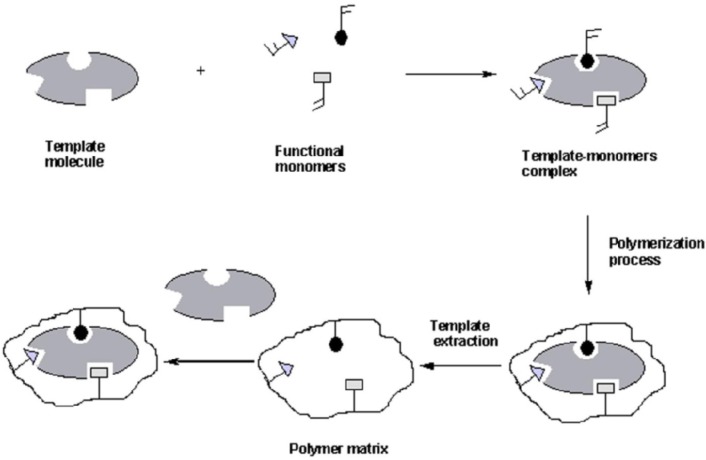
“Reproduced with permission from [95], Copyright 2011, MDPI AG.”
MethodPeer Reviewed: Perfluorochemical Surfactants in the Environment
Giesy, J. P., & Kannan, K. (2002) · Environmental Science & Technology · doi:10.1021/es022253t · Cited by 1,100
CRINI, G., PEINDY, H., GIMBERT, F., & ROBERT, C. (2007) · Separation and Purification Technology · doi:10.1016/j.seppur.2006.06.018 · Cited by 975 · cited 1×
“SPE methods using CD-based polymers have been reported for the efficient removal of organic dyes [63–66] and other organic pollutants [67–69].”
MethodMicrowave heating applications in environmental engineering—a review
Jones, D. A., Lelyveld, T. P., Mavrofidis, S. D., Kingman, S. W., & Miles, N. J. (2002) · Resources, Conservation and Recycling · doi:10.1016/s0921-3449(01)00088-x · Cited by 966 · cited 1×
“However, the regeneration of carbonaceous materials using chemical and biological methods, oxidation, ultrasound, heat, and solvent assisted methods may be impractical due to the prohibitive economic costs [57–61].”
Yu, Q., Zhang, R., Deng, S., Huang, J., & Yu, G. (2009) · Water Research · doi:10.1016/j.watres.2008.12.001 · Cited by 890 · cited 1×
“documented with several recent reports [46–55].”
Research works printed but not linked: 3
- Case, 2001, Rats and rabit oral developmental taxicological studies with two perfluorinated compounds, Int. J. Toxicol., 20, 101, 10.1177/109158180102000207 · doi:10.1177/109158180102000207 · Paper page
- Chen, 2006, Microwave regeneration of activated carbon containing toluene, Environ. Pollut. Control Technol. Equip., 7, 77
- Pesek, J.J., and Matyska, M.T. (2000). Solid-Phase Extraction: Principles, Techniques, and Applications, Taylor & Francis Group LLC.
Cited by
Supramolecular Luminescent Sensors
Mako, T. L., Racicot, J. M., & Levine, M. (2019) · Chemical Reviews · doi:10.1021/acs.chemrev.8b00260 · Cited by 735
Cyclodextrins, from molecules to applications
Crini, G., Fourmentin, S., Fenyvesi, É., Torri, G., Fourmentin, M., & Morin-Crini, N. (2018) · Environmental Chemistry Letters · doi:10.1007/s10311-018-0763-2 · Cited by 372
Morin-Crini, N., Winterton, P., Fourmentin, S., Wilson, L. D., Fenyvesi, É., & Crini, G. (2018) · Progress in Polymer Science · doi:10.1016/j.progpolymsci.2017.07.004 · Cited by 250
Self-citationVu, C. T., & Wu, T. (2022) · Critical Reviews in Environmental Science and Technology · doi:10.1080/10643389.2020.1816125 · Cited by 232
Molecular Imprinting: Materials Nanoarchitectonics with Molecular Information
Komiyama, M., Mori, T., & Ariga, K. (2018) · Bulletin of the Chemical Society of Japan · doi:10.1246/bcsj.20180084 · Cited by 229
Metadata
- Authors
- Karoyo, A., & Wilson, L.
- Affiliations
- University of Saskatchewan (CA)
- Corresponding author
- Wilson, Lee
- Venue
- Nanomaterials
- Publisher
- MDPI AG
- Published
- 2015-06-04
- Volume
- 5
- Issue
- 2
- Pages
- 981-1003
- ISSN
- 2079-4991 (ISSN-L)
- PMC
- PMC5312915
- OpenAlex
- W1520975041
- Cited by
- 68
- References
- 123
- Citations by year
- 2026: 3 · 2025: 7 · 2024: 3 · 2023: 3 · 2022: 4 · 2021: 12 · 2020: 4 · 2019: 9 · 2018: 12 · 2017: 7 · 2016: 4
- FWCI
- 0.94
- Type
- journal article
- Language
- en
- Open access
- gold
- dx.doi.org
- Licence
- Locations
- Nanomaterials (publishedVersion, cc-by)
- Europe PMC (PubMed Central) (publishedVersion, cc-by)
- PubMed Central (publishedVersion, cc-by)
- PubMed (publishedVersion)
- DOAJ (DOAJ: Directory of Open Access Journals) (submittedVersion, cc-by-sa)
- Funders
- University of Saskatchewan
- Global Institute for Water Security, University of Saskatchewan
- Topics
- Physical Sciences › Chemistry › Analytical Chemistry › Analytical chemistry methods development
- Physical Sciences › Environmental Science › Environmental Chemistry › Per- and polyfluoroalkyl substances research
- Physical Sciences › Environmental Science › Water Science and Technology › Adsorption and biosorption for pollutant removal
- Keywords
- perfluorinated compounds, cyclodextrins, molecularly imprinted polymers, adsorbents, selective sorption, non-imprinted polymer, chitosan, epichlorohydrin, nanostructured polymers, pollutant removal, pore-forming agent
About these checks
Registry, retraction, Cites and statistics results are computed, not judged, with one exception: a printed reference that no index lists is read once by a model before it counts as a citation error. Claims are extracted by a model and kept only when their quote appears verbatim in the text; each cited source is then checked, with a model’s help, for whether it says what the claim relies on. Those verdicts can be wrong — read the claim’s quote and the cited source before relying on one.
Statistics and arithmetic are recomputed, not judged.
Confidence bands are shown only for fields calibrated on our annotated test set. None is calibrated yet, so no band is shown.
What counts as a claim ›How we measure confidence ›How we check this ›
Are you an author, or do you see a problem with this page? Request a review
How to cite
Cite CoChat for the checks on this page, and the paper for its own findings.
- This page
- CoChat. (2026). Citation check: Nano-Sized Cyclodextrin-Based Molecularly Imprinted Polymer Adsorbents for Perfluorinated Compounds—A Mini-Review. https://app.cochat.ai/papers/10.3390/nano5020981
- The paper
- Karoyo, A., & Wilson, L. (2015). Nano-Sized Cyclodextrin-Based Molecularly Imprinted Polymer Adsorbents for Perfluorinated Compounds—A Mini-Review. Nanomaterials. https://doi.org/10.3390/nano5020981
Data sources
Bibliographic data: Semantic Scholar, OpenAlex, Crossref.
Contains information from the Semantic Scholar Academic Graph Datasets, made available under the ODC Attribution License (ODC-BY 1.0).
Semantic Scholar’s data is described in: Kinney, R., et al. (2023). The Semantic Scholar Open Data Platform. arXiv:2301.10140.
