

Polycystic Ovary Syndrome in Insulin-Resistant Adolescents with Obesity: The Role of Nutrition Therapy and Food Supplements as a Strategy to Protect Fertility
Open accessThe DOI matches its Crossref record; 234 of the 238 references it cites were found in a registry or an index.
Abstract
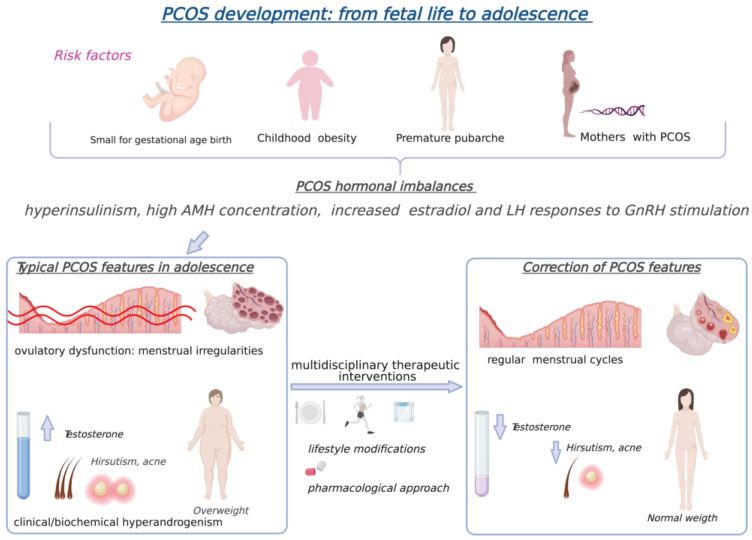
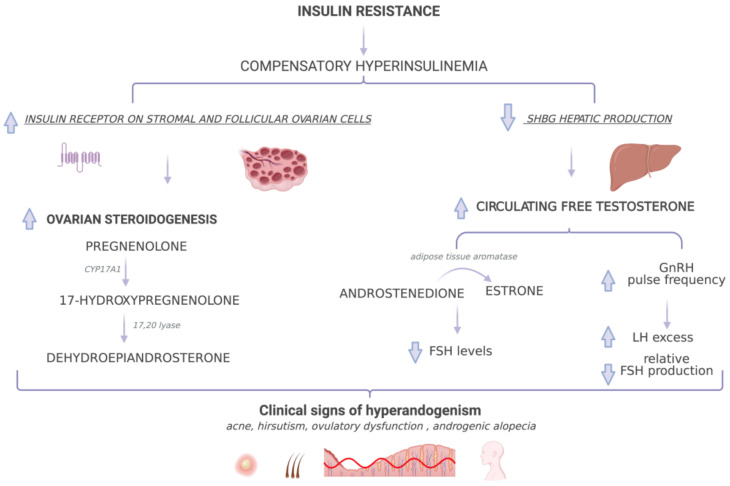
Polycystic ovary syndrome (PCOS) is the most common endocrine disorder in young reproductive-aged women. PCOS is often associated with obesity and impairs reproductive health. Even though several theories have been proposed to explain the pathogenic mechanism of PCOS, the role of insulin resistance (IR) as a key etiological component, independently of (but amplified by) obesity, is well recognized. The consequent hyperinsulinemia activates excessive ovarian androgen production, leading to PCOS. Additionally, the state of chronic inflammation related to obesity impacts ovarian physiology due to insulin sensitivity impairment. The first-line treatment for adolescents with obesity and PCOS includes lifestyle changes; personalized dietary interventions; and, when needed, weight loss. Medical nutrition therapy (MNT) and the use of specific food supplements in these patients aim at improving symptoms and signs, including insulin resistance and metabolic and reproductive functions. The purpose of this narrative review is to present and discuss PCOS in adolescents with obesity, its relationship with IR and the role of MNT and food supplements in treatment. Appropriate early dietary intervention for the management of adolescents with obesity and PCOS should be considered as the recommended approach to restore ovulation and to protect fertility.
Overview
The claims and statistics of this paper haven’t been checked yet.
Free: it reads the open-access text and checks the first 5 claims that cite a source we can check. Create a free account to check every claim.
Integrity signals
Registry
Cites
Statistics
Figures
Verification
Claims the paper makes
The claims and statistics of this paper haven’t been checked yet.
Free: it reads the open-access text and checks the first 5 claims that cite a source we can check. Create a free account to check every claim.
Claims other papers make about this one
Each is checked against this paper’s own text: does it say what the citing paper says it does?
The source backs part of the claim, not all of it — or backs it for a different population, condition or comparison.
In the citing paper
“Limited data are available regarding the diagnosis, assessment, treatment and prognosis of PCOS in the adolescent population, although early identification of the disease’s hallmarks may bring substantial benefit in terms of cardiovascular prognosis and fertility [4].”
From Low-Calorie Ketogenic Diet: Potential Application in the Treatment of Polycystic Ovary Syndrome in Adolescents (2023) · cites this paper as [4]
Experimental — accuracy not yet measuredThe source backs part of the claim, not all of it — or backs it for a different population, condition or comparison.
In the citing paper
“The Mediterranean diet (MD) is a dietary pattern rich in complex carbohydrates and fiber, and high in monounsaturated fat, that is closely associated with an improvement in low-grade chronic inflammation, IR, and hormonal derangements in PCOS [4].”
From Low-Calorie Ketogenic Diet: Potential Application in the Treatment of Polycystic Ovary Syndrome in Adolescents (2023) · cites this paper as [4]
Experimental — accuracy not yet measuredThe cited source says what the claim attributes to it.
In the citing paper
“In adolescence, the cornerstones of PCOS treatment are lifestyle and dietary interventions.”
From Low-Calorie Ketogenic Diet: Potential Application in the Treatment of Polycystic Ovary Syndrome in Adolescents (2023) · cites this paper as [4]
Self-check
Percentages, sums and reported differences re-computed from the paper’s own numbers.
The self-check needs the paper’s full text.
Citations
Cites
(2004) · Fertility and Sterility · doi:10.1016/j.fertnstert.2003.10.004 · Cited by 9,050
Linking long-term dietary patterns with gut microbial enterotypes
Wu, G. D., Chen, J., Hoffmann, C., Bittinger, K., Chen, Y.-Y., Keilbaugh, S. A., Bewtra, M., Knights, D., Walters, W. A., Knight, R., et al. (2011) · Science · doi:10.1126/science.1208344 · Cited by 6,513
The Diagnosis of Polycystic Ovary Syndrome during Adolescence
Witchel, S. F., Oberfield, S., Rosenfield, R. L., Codner, E., Bonny, A., Ibáñez, L., Pena, A., Horikawa, R., Gomez-Lobo, V., Joel, D., et al. (2015) · Hormone Research in Paediatrics · doi:10.1159/000375530 · Cited by 3,113 · cited 4×
“According to the latest criteria [19], mild hirsutism is sufficient clinical evidence of androgen excess, while the previous documents [17,18] consider moderate–severe hirsutism.”
BackgroundInfluentialThe Firmicutes/Bacteroidetes Ratio: A Relevant Marker of Gut Dysbiosis in Obese Patients?
Magne, F., Gotteland, M., Gauthier, L., Zazueta, A., Pesoa, S., Navarrete, P., & Balamurugan, R. (2020) · Nutrients · doi:10.3390/nu12051474 · Cited by 2,335
Microbiota-Generated Metabolites Promote Metabolic Benefits via Gut-Brain Neural Circuits
De Vadder, F., Kovatcheva-Datchary, P., Goncalves, D., Vinera, J., Zitoun, C., Duchampt, A., Bäckhed, F., & Mithieux, G. (2014) · Cell · doi:10.1016/j.cell.2013.12.016 · Cited by 2,200 · cited 2×
“Butyrate and propionate have been shown to stimulate intestinal hormones and reduce food intake [218].”
BackgroundAzziz, R., Carmina, E., Dewailly, D., Diamanti-Kandarakis, E., Escobar-Morreale, H. F., Futterweit, W., Janssen, O. E., Legro, R. S., Norman, R. J., Taylor, A. E., et al. (2009) · Fertility and Sterility · doi:10.1016/j.fertnstert.2008.06.035 · Cited by 2,132 · cited 4×
“Some patients with PCOS even have isolated increases in serum DHEAS [10,108].”
BackgroundInfluentialDiamanti-Kandarakis, E., & Dunaif, A. (2012) · Endocrine Reviews · doi:10.1210/er.2011-1034 · Cited by 1,947 · cited 10×
“It seems that the theca cells of women with PCOS are hyperresponsive to the androgen-stimulating action of insulin [10] and have increased expression of some steroidogenic enzymes.”
BackgroundInfluentialGarvey, W. T., Mechanick, J. I., Brett, E. M., Garber, A. J., Hurley, D. L., Jastreboff, A. M., Nadolsky, K., Pessah-Pollack, R., & Plodkowski, R. (2016) · Endocrine Practice · doi:10.4158/ep161365.gl · Cited by 1,914 · cited 1×
“Given the prevalence of overweight, obesity and insulin resistance, a relatively lowenergy diet, promoting from 5% to 15% reduction in weight, can improve insulin resistance, androgen concentration, reproductive system dysfunctions and fertility in these women [122].”
BackgroundTeede, H. J., Misso, M. L., Costello, M. F., Dokras, A., Laven, J., Moran, L., Piltonen, T., Norman, R. J., & the International PCOS Network (2018) · Clinical Endocrinology · doi:10.1111/cen.13795 · Cited by 1,823
Rosenfield, R. L., & Ehrmann, D. A. (2016) · Endocrine Reviews · doi:10.1210/er.2015-1104 · Cited by 1,603 · cited 3×
“Interestingly, these factors have been demonstrated to be correlated to hyperandrogenism, as increased androgen levels promote IR and hyperinsulinemia, which, in turn, promote androgen [8] and LH [5] secretion, respectively, by adipose tissue and the pituitary gland [5].”
Background
Research works printed but not linked: 2
- Philip Z. Kristen N. Insulin Resistance Humana Press Totowa, NJ, USA 2020 978-3-030-25057-7
- Directive E.U. Directive 2002/46/EC of the European Parliament and of the Council of 10 June 2002 on the approximation of the laws of the Member States relating to food supplements (Text with EEA relevance) Off. J. Eur. Communities Legis. 2002 45 51 57
Cited by
Items 101–182 of 182
Zhang, C., Yan, D., Wang, X., & Cheng, D. (2023) · Medicine · doi:10.1097/md.0000000000032312 · Cited by 3
Alnisani, Z. A., & Abdulridha, M. K. (2023) · Iraqi Journal of Pharmaceutical Sciences · doi:10.31351/vol32isssuppl.pp61-73 · Cited by 8
Sports and Weight Control in Children
Lazarev, A. M., Nath, S., Nguyen, C. Q., Demian, A. M., Bertasi, R. A. O., Bertasi, T. G. O., & Pujalte, G. G. A. (2024) · Cureus · doi:10.7759/cureus.53731 · Cited by 4
“PCOS is associated with hyperandrogenism [34] and infertility [35] and must be considered to protect the fertility of the patients [30].”
BackgroundStachowska, A., Kicińska, A. M., Kotulak‐Chrząszcz, A., & Babińska, A. (2024) · Healthcare · doi:10.3390/healthcare12111108 · Cited by 3
“IRis accompanied by oxidative stress and low-grade in fl ammation that cause abnormal ovarian follicle growth and impaired oocyte maturation with endometrial receptivity dysfunction, which can lead to infertility in PCOS [24–26].”
BackgroundMarlina, U., Maulitanti, S. D., Annisa, Y., & Masitha, D. (2023) · Jurnal Pendidikan Indonesia · doi:10.59141/japendi.v4i05.1821 · Cited by 3
The Role of Nutrients in PCOS: An Exploration of Key Nutrients and Their Impact on PCOS Symptoms
Sharma, P., Kumar, R., Gupta, M., & Rani, J. (2025) · Springer eBooks · doi:10.1007/978-981-96-2120-0_3 · Cited by 1
Lei, X., Liu, X., Qu, Y., & Huang, Y. (2025) · Brain and Behavior · doi:10.1002/brb3.70745 · Cited by 3
“PCOS is a heterogeneous endocrine disorder with a global incidence ranging from 8% to 13% among women of reproductive age (Zeng et al. 2020; Calcaterra et al. 2021).”
Octavia, L., Panjarwanto, D. A., Nabila, P. A., Geany, P. L., Javier, R. M., Rahman, A., Yora, V. S., Sutanto, L., Tandayu, A. P., Varsha, S., et al. (2025) · Frontiers in Medicine · doi:10.3389/fmed.2025.1589193 · Cited by 4
Upadhyay, S., Mazumder, A., & Das, S. (2025) · Current Pharmaceutical Design · doi:10.2174/0113816128382284250822045319 · Cited by 1
Feng, Y., Wu, L., Liu, J., & Feng, Y. (2025) · Frontiers in Reproductive Health · doi:10.3389/frph.2025.1600995 · Cited by 2
“Hyperinsulinemia further inhibits the synthesis of sex hormone-binding globulin (SHBG), thus forming the “obesity-insulin resistance-reproductive dysfunction” pathophysiological metabolic axis (7).”
The interaction between the gut microbiota, nutrition, and human health
Hrustemović, E. (2025) · Journal of the Science of Food and Agriculture · doi:10.1002/jsfa.70395 · Cited by 3
Fu, Q., Zhi, C., Cai, S.-Y., Li, Z., Luo, H., Gao, H., Agbo, E., Huang, X.-L., & Huang, Y.-S. (2026) · Frontiers in Nutrition · doi:10.3389/fnut.2026.1759556 · Cited by 2
“Notably, PCOS, the most common endocrine disease in reproductive-aged women, is often associated with obesity and impairs reproductive health (46).”
Abduljabbar, H., Jamal, M., & Esmat, A. (2026) · Current Pharmaceutical Biotechnology · doi:10.2174/0113892010433981251031050335 · Cited by 1
Li, H., Jing, Z., Li, R., Shen, Z., Bai, T., & Song, Q. (2026) · Frontiers in Endocrinology · doi:10.3389/fendo.2026.1662823 · Cited by 2
“It is also important to undergo regular screenings to reduce the burden of the disease and improve long-term health outcomes (54, 55).”
ALATAŞ, H., Arslan, N., KESKİN, L., & Ağralı, C. (2026) · Diabetes Metabolic Syndrome and Obesity · doi:10.2147/dmso.s586793 · Cited by 1
Yegane, D. F., Bahramikia, S., Babaeenezhad, E., & Dezfoulian, O. (2026) · Inflammopharmacology · doi:10.1007/s10787-026-02316-0 · Cited by 1
“Insulin resistance leads to compen - satory hyperinsulinemia, which directly affects ovarian steroidogenesis by increasing androgen production in theca cells via the upregulation of steroidogenic enzymes (Rojas et al. 2014; Calcaterra et al. 2021).”
Wang, J., Yang, Y., Wang, Z. X., Li, F., Shi, Z., Gao, T., & Chang, H. (2026) · Frontiers in Global Women s Health · doi:10.3389/fgwh.2026.1836617 · Cited by 1
The Role of Microparticles in Polycystic Ovarian Syndrome. An Updated Review
Almaghrabi, S. Y. (2022) · International Journal Of Pharmaceutical Research And Allied Sciences · doi:10.51847/eillcorjfq · Cited by 1
Pirhadi, M., Khaniki, G. J., Nejad, A. S. M., & Sadighara, P. (2022) · Current Women s Health Reviews · doi:10.2174/1573404819666220804093852 · Cited by 1
Polycystic Ovary Syndrome (PCOS): A Concerning Hormonal Condition and its Bodily Impact on Women
Saeed, S., Aslam, T., Javed, E., Choudhary, M., Lateef, M., & Bajwa, R. M. (2022) · BioScientific Review · doi:10.32350/bsr.44.i · Cited by 3
Diet and Fertility Status: Relevance in Health and Disease
Torre, S. D. (2023) · Nutrients · doi:10.3390/nu15071669 · Cited by 1
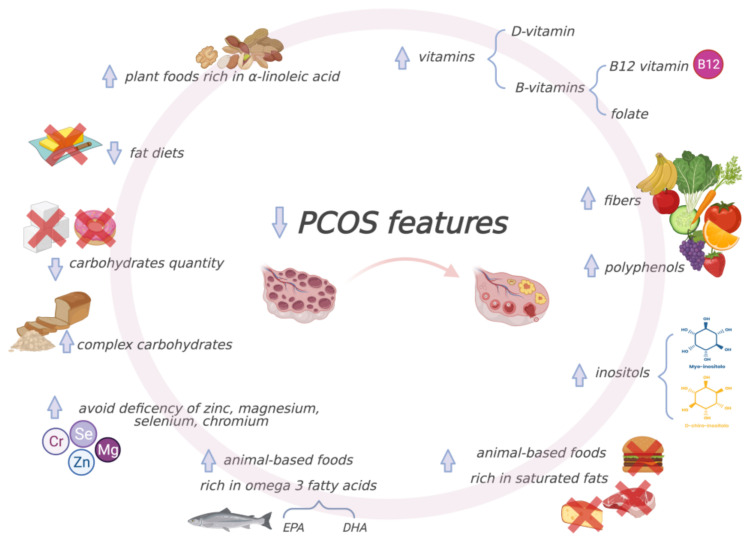
“, diets rich in carbohydrate with low glycemic index, plant protein, MUFA and PUFA, folic acid, vitamin D, antioxidants, and iron) are recommended approaches to restore ovulation and to protect fertility [20].”
BackgroundСеменюк, Л. М., Pankiv, V. І., Чернуха, Л. С., & Yuzvenko, Т. Y. (2023) · INTERNATIONAL JOURNAL OF ENDOCRINOLOGY (Ukraine) · doi:10.22141/2224-0721.19.2.2023.1258 · Cited by 1
Pal, R. S., Pal, Y., Chaitanya, M., Kumar, R., Tyagi, P. K., & Srivastava, P. (2023) · Current Women s Health Reviews · doi:10.2174/0115734048262284230927191823 · Cited by 1
Effects of Acupuncture Treatment on Polycystic Ovary Syndrome (PCOS)
Ramanathan, G. (2023) · Obstetrics and gynecology. · doi:10.5772/intechopen.113799 · Cited by 2
Veretekhina, T. V., St. Petersburg, R. F., & Yarmolinskaya, M. I. (2024) · Women s Health and Reproduction · doi:10.31550/2712-8598-2024-1-1-zhzir · Cited by 1
Dietary Pattern, Physical, and Behavioral Trends in Women with Polycystic Ovary Syndrome
Acharya, A., Shetty, S. S., Shetty, P. K., & Kumari, S. (2024) · Journal of Datta Meghe Institute of Medical Sciences University · doi:10.4103/jdmimsu.jdmimsu_708_23 · Cited by 1
Kang, X., & Liu, L. (2025) · Journal of Medical Biochemistry · doi:10.5937/jomb0-53948 · Cited by 2
Hemanth, K. S., Fathima, N., & Sridhar, G. D. (2025) · Springer eBooks · doi:10.1007/978-981-96-2120-0_8 · Cited by 3
Condutas nutricionais no cuidado das manifestações da Síndrome dos Ovários Policísticos
Assunção, C. M. V., & de Carvalho, L. M. F. (2021) · Research Society and Development · doi:10.33448/rsd-v10i17.24260 · Cited by 2
de Oliveira, T. F., da Silva, M. J. A. A., & Salomón, A. L. R. (2022) · Research Society and Development · doi:10.33448/rsd-v11i8.31425 · Cited by 1
Readdressing pathophysiology of polycystic ovary syndromein post-COVID new normal era: A pilot study
Mallick, P., Chakraborty, S., Pal, R., Samaddar, A., Saha, S. K., & Basu, B. R. (2023) · BOHR Journal of Obstetrics and Gynaecology. · doi:10.54646/bjog.2023.01 · Cited by 1
ENPP1 Is Correlated With Insulin Resistance and Lipid Molecules in PCOS RatsPreprint
Xia, J., Yang, Y., Yang, Z., Wu, G., & Yang, J. (2021) · Research Square · doi:10.21203/rs.3.rs-779340/v1 · Cited by 1
Lerner, R. M. (1972) · Cited by 1
Shelkovnikova, V. N., Dmitrieva, M. E., Владимировна, М. Е., Imidoeva, N. A., Belyshenko, A. Y., Morgunova, M. M., Vlasova, A. A., Telnova, T., Batalova, A., Martynova, E., et al. (2024) · bioRxiv (Cold Spring Harbor Laboratory) · doi:10.1101/2024.07.03.601846 · Cited by 1
“Medication therapy is limited to the intake of dietary supplements [10], which does not involve treatment for pathological conditions.”
BackgroundSmyczyńska, J. (2021) · Kwartalnik Naukowy Fides et Ratio · doi:10.34766/fetr.v47i3.895
Xia, J., Yang, Y., Yang, Z., Wu, G., & Yang, J. (2021) · Research Square · doi:10.21203/rs.3.rs-1136703/v1
Xia, J., Yang, Y., Yang, Z., Wu, G., & Yang, J. (2022) · Research Square · doi:10.21203/rs.3.rs-1208513/v1
Zhang, C., Zhang, Y., Chen, J., & Yan, C. (2022) · medRxiv · doi:10.1101/2022.10.10.22280920
Manejo da Síndrome do Ovário Policístico (SOP) em Adolescentes
Bessa, P. R., Carvalho, E. T. G. B., Filho, O. V. F., Silva, P. H. C. V., & Peres, M. C. T. D. S. (2022) · Research Society and Development · doi:10.33448/rsd-v11i15.37118 · Cited by 6
Davis, C. C., & Popp, J. K. (2022) · Journal of Family Medicine · doi:10.26420/jfammed.2022.1285
Bhanoori, M., Guruvaiah, P., Siddamalla, S., Veena, K. V., Govatati, S., Dakshayani, L., Deenadayal, M., & Shivaji, S. (2023) · Austin Journal of Obstetrics and Gynecology · doi:10.26420/austiniobstetgynecol.2023.1212
Boldori, B. P., Pires, L. R. E., Cavalli, A. P., Friedrich, A. P., Hammes, B., Sampaio, E., Bettes, P. S. L., & Bettes, J. B. (2023) · Seven Editora eBooks · doi:10.56238/devopinterscie-124
Hassan, M. F., Jawad, M. A., & Al-yasiry, R. Z. (2023) · Maaen Journal for Medical Sciences · doi:10.55810/2789-9128.1014 · Cited by 6
Maulitanti, S. D., Marlina, U., Rezkitha, Y. A. A., & Masitha, D. (2023) · Jurnal Pendidikan Indonesia · doi:10.59141/japendi.v4i05.1838
Fatores nutricionais e a fertilidade: uma revisão de literatura
dos Santos, M. L. S., Cristovão, K. D. C., & de Menezes, I. B. C. (2023) · Research Society and Development · doi:10.33448/rsd-v12i6.42201 · Cited by 1
İleri Glikasyon Son Ürünleri (AGE) ve Polikistik Over Sendromu İlişkisi
AŞIK, B. N., & ÇİNTESUN, E. E. (2023) · İstanbul Sabahattin Zaim Üniversitesi Fen Bilimleri Enstitüsü Dergisi · doi:10.47769/izufbed.1318435 · Cited by 1
PATHOGENESIS OF INSULIN RESISTANCE IN POLYCYSTIC OVARIAN SYNDROME
(2023) · International Research Journal of Modernization in Engineering Technology and Science · doi:10.56726/irjmets46351
PCOS Challenges for Women during Puberty and after First Pregnancy
Patil, S. (2024) · INTERANTIONAL JOURNAL OF SCIENTIFIC RESEARCH IN ENGINEERING AND MANAGEMENT · doi:10.55041/ijsrem30938
Amrita, A., Gupta, P. P., Amitav, K., & Singh, S. K. (2024) · International Journal of Pharmaceutical Sciences Review and Research · doi:10.47583/ijpsrr.2024.v84i04.018
Relationship of vitamin D level with HOMA IR and LH in PCOS patients
Nurkumala, W., Santoso, B. I., & Tunjungseto, A. (2023) · Bali Medical Journal · doi:10.15562/bmj.v13i2.4901
“37 Based on Table 9, it was discovered that the median of obese patients was 12.10 17.8 and non-obese was 12.9 5.55 with a Mann - Whitney p-value of 0.045, indicating that LH values were higher in the non-obese PCOS group than in the obese group.”
BackgroundInfluentialRannaud-Bartaire, P. (2024) · Perfectionnement en Pédiatrie · doi:10.1016/j.perped.2024.04.001
de Lima, A. V. R., Amantéa, G. F. G., Cardoso, J. M. D. O., Pereira, L. M. D. O., & Silva, D. R. G. (2024) · Revista Contemporânea · doi:10.56083/rcv4n6-107
Prevalence and Risk Factors of Metabolic Syndrome in Women with Polycystic Ovarian Syndrome
Waseem, Z., Riaz, T., Shafique, S., Shahid, G., Huma, I. B., & Shehzadi (2024) · Journal of Liaquat University of Medical & Health Sciences · doi:10.22442/jlumhs.2024.01059
Meyer, Z., Soukup, S. T., Lubs, A., Ohde, D., Walz, C., Schoen, J., Willenberg, H. S., Hoeflich, A., & Brenmoehl, J. (2024) · Nutrients · doi:10.3390/nu16162697 · Cited by 2
“As dietary intervention has gained attention in recent years to reduce the negative effects of obesity on female reproduction [52], phytoestrogens could represent one relevant component with potentially beneficial or adverse effects [27,38].”
Backgroundde Souza, E. S. A., Mendes, B. S., Simões, M. C. C., Miranda, Y. I., de Oliveira, D. A., & Reis, M. C. (2024) · Revista Contemporânea · doi:10.56083/rcv4n10-097 · Cited by 1
Empowering Young Women with Polycystic Ovary Syndrome through Food and Nutrition Literacy
Mathema, S., Aryal, B., & Subedi, S. (2024) · Journal of Health Promotion · doi:10.3126/jhp.v12i1.72710 · Cited by 1
Impact of hygienic factors on formation and maintenance of female reproductive health
Magomedova, U. A., Gitinova, P. S., Bartykhanova, K. M., & Magomedov, S. T. (2025) · Spravočnik vrača obŝej praktiki (Journal of Family Medicine) · doi:10.33920/med-10-2502-07
Mihuţa, M. S., Paul, C., Borlea, A., Roi, C. M., Pescari, D., & Stoian, D. L. (2025) · IntechOpen eBooks · doi:10.5772/intechopen.1009275 · Cited by 1
The Report on the Effect of White and Black Truffle Extracts on Rat Semen Parameters In vitro
Shelkovnikova, V. N., Dmitrieva, M. E., Malygina, E. V., Imidoeva, N. A., Belyshenko, A. Y., Morgunova, M. M., Vlasova, A. A., Telnova, T., Batalova, A., Lipatova, O., et al. (2025) · Journal of Human Reproductive Sciences · doi:10.4103/jhrs.jhrs_35_25
“[9] Medication therapy is limited to the intake of dietary supplements, [10] which does not involve treatment for pathological conditions.”
Al-Azzawi, A. A.-S. M., Behayaa, H. R., & Mousa, B. A. (2025) · Medical Journal of Babylon · doi:10.4103/mjbl.mjbl_320_24
Suplementos dietéticos y ejercicio físico en el síndrome de ovario poliquístico
Pierard, S. M. C., Jiménez, S. O. I., & Pierard, J. L. C. (2025) · MENTOR revista de investigación educativa y deportiva · doi:10.56200/mried.v4i12.9284
Dasgupta, S., Kumar, P., Biswas, P. K., Kamat, J., Ahire, P., Fatima, K., Hadwale, A., Nadkarni, S., Narvekar, P., Gaitonde, V., et al. (2025) · International Journal of Reproduction Contraception Obstetrics and Gynecology · doi:10.18203/2320-1770.ijrcog20253506
Dietary prevention and diet therapy for selected reproductive healthdisorders in women
Szymkowiak, A., & Pisarski, R. K. (2025) · Zeszyty Naukowe Collegium Witelona · doi:10.5604/01.3001.0055.5686
Wang, Z., Liu, S.-Y., Gao, M., Shen, Y., Sun, M., & Hao, S. (2026) · International Immunopharmacology · doi:10.1016/j.intimp.2026.116251 · Cited by 2
Biochemical Features of Obese Polycystic Ovary Syndrome Patients in Babylon Province
al-shemary, L. K. T., Ali, Z. A., & Hussein, H. K. (2025) · Medical Journal of Babylon · doi:10.4103/mjbl.mjbl_1631_23
Natarajan, M., Shweatha, H. E., & Nataraj, R. (2026) · Frontiers in Endocrinology · doi:10.3389/fendo.2026.1766838 · Cited by 1
Wang, Z., Liu, S., Gao, M., Shen, Y., Sun, M., & Hao, S. (2026) · International Immunopharmacology · doi:10.1016/j.intimp.2026.116375
George, R., Mathew, L. E., Pillai, M. G., & Antony, H. (2026) · Indian Journal of Clinical Biochemistry · doi:10.1007/s12291-026-01402-y
Efetividade terapêutica nutricional em pacientes portadoras da síndrome de ovários policísticos
da Silva, T. B. S., Cavalcanti, A. B. S., & da Costa, C. K. L. (2025) · IVY ENBER SCIENTIFIC JOURNAL · doi:10.57108/iesj.dossie-saude2025.4
Liu, M., Zhang, Y., Fu, X., Liu, F., Liu, H., & Liu, X. (2026) · Research Square · doi:10.21203/rs.3.rs-9219043/v1
CURRENT THERAPEUTIC APPROACHES IN THE MANAGEMENT OF POLYCYSTIC OVARY SYNDROME
Wojtala, A., Rafałowska, Z., Rutz, S., Kret, J., Wyrostkiewicz, A., Pałubska, J., Muller, O., Sadkowski, A., Bigda, P., Gdula, J., et al. (2026) · International Journal of Innovative Technologies in Social Science · doi:10.31435/ijitss.2(50).2026.5328
Abou‐El‐Naga, A. M., Elarby, N. Y., Sobh, M. A., & Mutawa, G. (2026) · Tissue and Cell · doi:10.1016/j.tice.2026.103634
Walid, Y., Elsabbagh, R. A., Handoussa, H., & Abdel-Maksoud, S. M. (2026) · Scientific Reports · doi:10.1038/s41598-026-56474-w
Evaluation of Serum Interleukin-19 level in Women with Polyendocrine Metabolic Ovarian Syndrome
AL-Tai, T. H. H., Al-Saedi, J. A., Al-Hadithi, H. S., & Nadeem, T. (2026) · Journal of the Faculty of Medicine Baghdad · doi:10.32007/jfacmedbaghdad3321
Deciphering the Insulin Link: Exploring Metabolic Interplay in Polycystic Ovary Syndrome
Maqbool, M., Qadrie, Z., & Ashraf, H. (2026) · Tropical Journal of Pharmaceutical and Life Sciences · doi:10.61280/tjpls.v13i4.285
Application of endoscopic metabolic weight reduction surgery in polycystic ovary syndrome
Li, C.-Z., Wang, Q.-S., & Chen, X. (2026) · World Chinese Journal of Digestology · doi:10.11569/wcjd.v34.i7.527
Uncovering the Metabolic Origins of Polycystic Ovary Syndrome
Iyer, P. J., Reza, H., Chitteti, N., Singh, A., Goyal, R., Saiyad, S. S., Raj, A. E. R. S., Singla, N., Vats, B., Kamaladasan, D., et al. (2026) · Cureus · doi:10.7759/cureus.114165
“Women with PCOS and obesity exhibit more pronounced hyperandrogenism and IR; obesity-related chronic inflammation further impairs ovarian function by reducing insulin sensitivity, establishing a self-reinforcing cycle [10].”
Gordón, V., Monaco, M., Vergara, C., Samudio, R., & Luis, L. (2026) · Conducta Científica · doi:10.65050/rcc.v9n2a4
Nowakowski, Ł., Warchoł, K., Kuźniar, A., Zimoń, B., Skoczylas, M. M., Marzec, P., Krawczyk, G., Jegorow, D., Pankiewicz, R., Warchol, A., et al. (2026) · Journal of Clinical Medicine · doi:10.3390/jcm15176705
Colantonio, K., & Sonneville, K. R. (2026) · Elsevier eBooks · doi:10.1016/b978-0-443-40344-6.00201-5
Modern approaches to the diagnosis and treatment of polycystic ovary syndrome in adolescent girls
Sibirskaya, E. V., Sharkov, S. M., Karapetyan, A. A., & Чатикян, И. А. (2026) · M Ya Studenikin Russian Pediatric Journal · doi:10.46563/2026-1-1-53-60
ВІТАМІН В12 І МЕТАБОЛІЧНИЙ СИНДРОМ (огляд лiтератури)
Serhiyenko, A. A., Сегін, В., & Serhiyenko, V. A. (2026) · PROBLEMS OF ENDOCRINE PATHOLOGY · doi:10.21856/j-pep.2026.3.05
Metadata
- Authors
- Calcaterra, V., Verduci, E., Cena, H., Magenes, V. C., Todisco, C. F., Tenuta, E., Gregorio, C., De Giuseppe, R., Bosetti, A., Di Profio, E., & Zuccotti, G.
- Affiliations
- University of Pavia (IT)
- University of Milan (IT)
- Laboratory of Dietetics and Clinical Nutrition, Department of Public Health, Experimental and Forensic Medicine, University of Pavia, 27100 Pavia, Italy
- Ospedale dei Bambini Vittore Buzzi (IT)
- Pediatric Department, “Vittore Buzzi” Children’s Hospital, 20154 Milan, Italy
- Corresponding author
- Calcaterra, Valeria
- ORCID
- Venue
- Nutrients
- Publisher
- MDPI AG
- Published
- 2021-05-28
- Volume
- 13
- Issue
- 6
- Pages
- 1848
- ISSN
- 2072-6643 (ISSN-L)
- PMC
- PMC8228678
- OpenAlex
- W3164931028
- Semantic Scholar
- 7e9382154b04d8a12a023ed52557b5a94d03db42
- Cited by
- 183
- References
- 238
- Citations by year
- 2026: 25 · 2025: 31 · 2024: 43 · 2023: 45 · 2022: 31 · 2021: 7
- FWCI
- 5.18
- Type
- journal article
- Language
- en
- Open access
- gold
- doi.org
- Licence
- Locations
- Nutrients (publishedVersion, cc-by)
- PubMed Central (publishedVersion, cc-by)
- PubMed (publishedVersion)
- Archivio Istituzionale della Ricerca (Universita Degli Studi Di Milano) (submittedVersion, other-oa)
- DOAJ (DOAJ: Directory of Open Access Journals) (submittedVersion, cc-by-sa)
- Topics
- Health Sciences › Medicine › Reproductive Medicine › Ovarian function and disorders
- Health Sciences › Medicine › Reproductive Medicine › Reproductive Biology and Fertility
- Health Sciences › Medicine › Endocrinology, Diabetes and Metabolism › Diabetes, Cardiovascular Risks, and Lipoproteins
- Keywords
- polycystic ovary syndrome, insulin resistance, adolescent obesity, medical nutrition therapy, dietary supplements, fertility preservation, hyperinsulinemia, chronic inflammation, dietary intervention, weight loss
- MeSH terms
- Adolescent, Female, Humans, Insulin Resistance, Polycystic Ovary Syndrome, Dietary Supplements, Nutrition Therapy, Pediatric Obesity
About these checks
Registry, retraction, Cites and statistics results are computed, not judged, with one exception: a printed reference that no index lists is read once by a model before it counts as a citation error. Claims are extracted by a model and kept only when their quote appears verbatim in the text; each cited source is then checked, with a model’s help, for whether it says what the claim relies on. Those verdicts can be wrong — read the claim’s quote and the cited source before relying on one.
Statistics and arithmetic are recomputed, not judged.
Confidence bands are shown only for fields calibrated on our annotated test set. None is calibrated yet, so no band is shown.
What counts as a claim ›How we measure confidence ›How we check this ›
Are you an author, or do you see a problem with this page? Request a review
Data sources
Bibliographic data: Semantic Scholar, OpenAlex, Crossref.
Contains information from the Semantic Scholar Academic Graph Datasets, made available under the ODC Attribution License (ODC-BY 1.0).
Semantic Scholar’s data is described in: Kinney, R., et al. (2023). The Semantic Scholar Open Data Platform. arXiv:2301.10140.
