

Polycystic Ovary Syndrome in Insulin-Resistant Adolescents with Obesity: The Role of Nutrition Therapy and Food Supplements as a Strategy to Protect Fertility
Open accessThe DOI matches its Crossref record; 234 of the 238 references it cites were found in a registry or an index.
Abstract
Polycystic ovary syndrome (PCOS) is the most common endocrine disorder in young reproductive-aged women. PCOS is often associated with obesity and impairs reproductive health. Even though several theories have been proposed to explain the pathogenic mechanism of PCOS, the role of insulin resistance (IR) as a key etiological component, independently of (but amplified by) obesity, is well recognized. The consequent hyperinsulinemia activates excessive ovarian androgen production, leading to PCOS. Additionally, the state of chronic inflammation related to obesity impacts ovarian physiology due to insulin sensitivity impairment. The first-line treatment for adolescents with obesity and PCOS includes lifestyle changes; personalized dietary interventions; and, when needed, weight loss. Medical nutrition therapy (MNT) and the use of specific food supplements in these patients aim at improving symptoms and signs, including insulin resistance and metabolic and reproductive functions. The purpose of this narrative review is to present and discuss PCOS in adolescents with obesity, its relationship with IR and the role of MNT and food supplements in treatment. Appropriate early dietary intervention for the management of adolescents with obesity and PCOS should be considered as the recommended approach to restore ovulation and to protect fertility.
Overview
The claims and statistics of this paper haven’t been checked yet.
Free: it reads the open-access text and checks the first 5 claims that cite a source we can check. Create a free account to check every claim.
Integrity signals
Registry
Cites
Statistics
Figures
Verification
Claims the paper makes
The claims and statistics of this paper haven’t been checked yet.
Free: it reads the open-access text and checks the first 5 claims that cite a source we can check. Create a free account to check every claim.
Claims other papers make about this one
Each is checked against this paper’s own text: does it say what the citing paper says it does?
The source backs part of the claim, not all of it — or backs it for a different population, condition or comparison.
In the citing paper
“Limited data are available regarding the diagnosis, assessment, treatment and prognosis of PCOS in the adolescent population, although early identification of the disease’s hallmarks may bring substantial benefit in terms of cardiovascular prognosis and fertility [4].”
From Low-Calorie Ketogenic Diet: Potential Application in the Treatment of Polycystic Ovary Syndrome in Adolescents (2023) · cites this paper as [4]
Experimental — accuracy not yet measuredThe source backs part of the claim, not all of it — or backs it for a different population, condition or comparison.
In the citing paper
“The Mediterranean diet (MD) is a dietary pattern rich in complex carbohydrates and fiber, and high in monounsaturated fat, that is closely associated with an improvement in low-grade chronic inflammation, IR, and hormonal derangements in PCOS [4].”
From Low-Calorie Ketogenic Diet: Potential Application in the Treatment of Polycystic Ovary Syndrome in Adolescents (2023) · cites this paper as [4]
Experimental — accuracy not yet measuredThe cited source says what the claim attributes to it.
In the citing paper
“In adolescence, the cornerstones of PCOS treatment are lifestyle and dietary interventions.”
From Low-Calorie Ketogenic Diet: Potential Application in the Treatment of Polycystic Ovary Syndrome in Adolescents (2023) · cites this paper as [4]
Self-check
Percentages, sums and reported differences re-computed from the paper’s own numbers.
The self-check needs the paper’s full text.
Citations
Cites
Items 201–234 of 234
PCOS in Adolescence and Type 2 Diabetes
Carreau, A.-M., & Baillargeon, J.-P. (2015) · Current Diabetes Reports · doi:10.1007/s11892-014-0564-3 · Cited by 40 · cited 2×
“However, IR and hyperinsulinemia appear early in the disorder [88], which was demonstrated in a study by Lewy and co-authors in a group of obese girls with PCOS (mean age 12 ± 0.”
BackgroundNutraceutical approaches to metabolic syndrome
Sirtori, C. R., Pavanello, C., Calabresi, L., & Ruscica, M. (2017) · Annals of Medicine · doi:10.1080/07853890.2017.1366042 · Cited by 39 · cited 1×
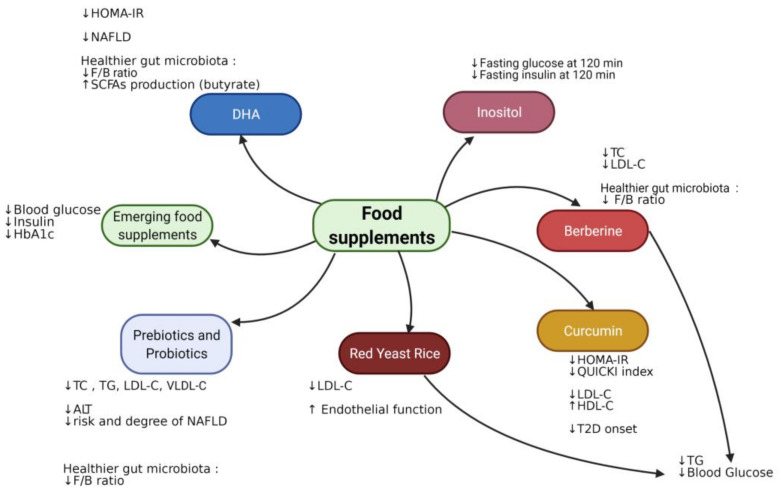
“Other supplements, particularly red yeast rice, DHA, berberine and curcumin, have proven to be useful in PCOS treatment by means of IR improvement [168].”
BackgroundRosenfield, R. L. (2020) · Journal of Pediatric and Adolescent Gynecology · doi:10.1016/j.jpag.2020.06.017 · Cited by 39 · cited 5×
“Adolescents with PCOS often have hyperinsulinemia and insulin resistance (IR).”
BackgroundInfluentialSolorzano, C. M. B., & McCartney, C. R. (2021) · Endocrinology and Metabolism Clinics of North America · doi:10.1016/j.ecl.2020.10.003 · Cited by 39 · cited 3×
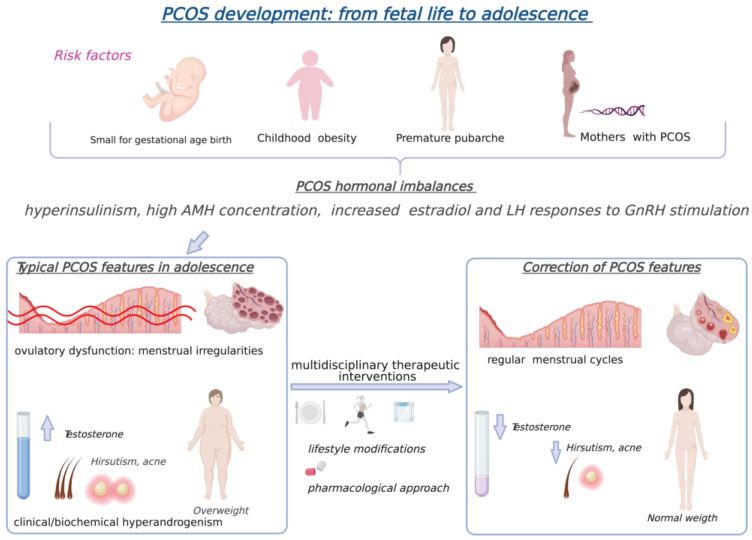
“These neuroendocrine imbalances support the progression to PCOS development, further enhancing hyperandrogenemia and ovulatory dysfunction [11] (Figure 1).”
BackgroundFarvid, M. S., Homayouni, F., Shokoohi, M., Fallah, A., & Farvid, M. (2014) · European Journal of Clinical Nutrition · doi:10.1038/ejcn.2013.288 · Cited by 38 · cited 2×
“Nevertheless, glycemic response also depends on the total intake of dietary carbohydrate, leading to the concept of GL, which represents both the quality and quantity of carbohydrate intake [155].”
BackgroundNemer, L. B., Shi, H., Carr, B. R., Word, R. A., & Bükülmez, O. (2019) · Reproductive Sciences · doi:10.1177/1933719118776787 · Cited by 37 · cited 1×
“IR has a pivotal role in the genesis of the syndrome; it is often seen in patients affected by PCOS and it is exacerbated by obesity [9,60].”
BackgroundPolycystic ovary syndrome in adult women
Ortiz-Flores, A. E., Luque-Ramírez, M., & Escobar-Morreale, H. F. (2019) · Medicina Clínica (English Edition) · doi:10.1016/j.medcle.2019.02.019 · Cited by 37 · cited 1×
“In adolescents, determining not only the etiology of PCOS but also the diagnostic criteria is a challenge, because the criteria used for diagnosis [31] in adulthood cannot be applied to adolescents, and because the criteria for diagnosis during adolescence have not been uniformly defined yet.”
BackgroundMancini, M., Andreassi, A., Salvioni, M., Pelliccione, F., Mantellassi, G., & Banderali, G. (2016) · International Journal of Endocrinology · doi:10.1155/2016/8720342 · Cited by 37 · cited 2×
“6 mg + folic acid 400 μg), a greater reduction in fasting insulin as well as both blood glucose and insulin after 120 min was observed than in the control group [176].”
BackgroundMethodSohrevardi, S. M., Heydari, B., Azarpazhooh, M. R., Teymourzadeh, M., Simental‐Mendía, L. E., Atkin, S. L., Sahebkar, A., & Karimi‐Zarchi, M. (2021) · Advances in experimental medicine and biology · doi:10.1007/978-3-030-64872-5_9 · Cited by 36 · cited 1×
“For this reason, several formulations have been developed [205], including milk exosomes encapsulation in order to improve gastric resistance and increase intestinal absorption as well as combination with piperine, which promotes hepatic glucuronidation [206].”
BackgroundWang, Y., Fu, X., Xu, J., Wang, Q., & Kuang, H. (2016) · Scientific Reports · doi:10.1038/srep28089 · Cited by 35
Polycystic ovary syndrome in adolescents
Dabadghao, P. (2019) · Best Practice & Research Clinical Endocrinology & Metabolism · doi:10.1016/j.beem.2019.04.006 · Cited by 35 · cited 1×
“However, they raise the risk of metabolic complications such as metabolic syndrome, type 2 diabetes mellitus and dyslipidemia in adolescents and women with PCOS [54].”
BackgroundEpigenetic Effects of n-3 LCPUFAs: A Role in Pediatric Metabolic Syndrome
Amatruda, M., Ippolito, G., Vizzuso, S., Vizzari, G., Banderali, G., & Verduci, E. (2019) · International Journal of Molecular Sciences · doi:10.3390/ijms20092118 · Cited by 34 · cited 8×
“A recent systematic review examining the role of prebiotics, probiotics, postbiotics and synbiotics in the management of adult obesity found poor results for MetS, with little change in BMI or body weight.”
BackgroundInfluentialSelf-citationInsulin Resistance in Adolescents
Rodden, A. M., Díaz, V. A., Mainous, A. G., Koopman, R. J., & Geesey, M. E. (2007) · The Journal of Pediatrics · doi:10.1016/j.jpeds.2007.03.023 · Cited by 26 · cited 1×
“Obesity is one of the best known risk factors for IR, in adults as well as among adolescents [71].”
BackgroundPsychological experiences of adolescent girls with polycystic ovary syndrome: A qualitative study
Noroozi, M., Ekramzadeh, M., Hajivandi, L., & Mostafavi, F. (2020) · Iranian Journal of Nursing and Midwifery Research · doi:10.4103/ijnmr.ijnmr_276_19 · Cited by 25 · cited 1×
“As PCOS is of great clinical and psychological concern [35] for adolescent girls with lifelong metabolic [36] and reproductive repercussions [3], early and patient-centered treatment is crucial [19].”
BackgroundOrtmeyer, H. K., Bodkin, N. L., HANSEN, B. C., & Larner, J. (1995) · The Journal of Nutritional Biochemistry · doi:10.1016/0955-2863(95)00080-j · Cited by 24
Antidiabetic activity of flavone from Ipomoea Batatas leaf in non‐insulin dependent diabetic rats
Zhao, R., Li, Q., Long, L., Li, J., Yang, R., & Gao, D. (2006) · International Journal of Food Science & Technology · doi:10.1111/j.1365-2621.2006.01215.x · Cited by 24
Is ultrasound useful in the diagnosis of adolescents with polycystic ovary syndrome?
Senaldi, L., Gopi, R. P., Milla, S. S., & Shah, B. C. (2014) · Journal of Pediatric Endocrinology and Metabolism · doi:10.1515/jpem-2014-0307 · Cited by 23 · cited 1×
“Moreover, the three international expert conferences agree that neither polycystic ovary morphology (and, thus, radiologic procedures to assess it [34]) nor obesity, insulin resistance or severe cystic acne—although common in these patients—alone can be considered diagnostic criteria in adolescents [18,20,33].”
BackgroundLeblanc, S., Battista, M., Noll, C., Hallberg, A., Gallo‐Payet, N., Carpentier, A. C., Vine, D. F., & Baillargeon, J. (2014) · Endocrinology · doi:10.1210/en.2014-1185 · Cited by 23 · cited 4×
“Growing evidence suggests that lipotoxicity, which is the excessive exposure of nonadipose tissues to free fatty acids (FFAs), causing numerous functional cellular defects, plays a role in the development of peripheral and hepatic insulin resistance and β-cell dysfunction.”
BackgroundInfluentialCurrent treatment for polycystic ovary syndrome: focus on adolescence
Street, M. E., Cirillo, F., Catellani, C., Dauriz, M., Lazzeroni, P., Sartori, C., & Moghetti, P. (2020) · Minerva Pediatrics · doi:10.23736/s0026-4946.20.05861-2 · Cited by 21 · cited 1×
“Although randomized controlled trials on the use of such compounds in pediatrics are scarce and mostly conducted on small sample sizes, particularly in children with MetS or PCOS, clinical benefits on lipid and glucose balance have been reported in both the short and medium term [169].”
BackgroundMacDonald‐Wicks, L. K., & Garg, M. L. (2002) · The Journal of Nutritional Biochemistry · doi:10.1016/s0955-2863(01)00199-1 · Cited by 21
Possible effect of DHA intake on body weight reduction and lipid metabolism in obese children.
Vašícková, L., Stávek, P., & Suchánek, P. (2011) · PubMed · Cited by 21
Association of polycystic ovary syndrome with cardiovascular risk factors
Akram, T., Hasan, S., Imran, M., Karim, A., & Arslan, M. (2009) · Gynecological Endocrinology · doi:10.3109/09513590903159565 · Cited by 19 · cited 1×
“Many studies have shown the benefits of weight loss and lifestyle changes for improving PCOS signs and symptoms, also considering that women with PCOS have a greater risk of cardiovascular disease than women of the same age without the condition [162].”
BackgroundBravo, J., Raimundo, A. M. D. M., Santos, D. A., Timón, R., & Sardinha, L. B. (2017) · American Journal of Human Biology · doi:10.1002/ajhb.23036 · Cited by 19 · cited 1×
“However, BMI has some limitations, mainly related to not providing an accurate index of body composition, nor of fat distribution [62].”
Backgroundde Medeiros, S. F., de Medeiros, M. A. S., Barbosa, B. B., Yamamoto, M. M. W., & Maciel, G. A. R. (2020) · Archives of Gynecology and Obstetrics · doi:10.1007/s00404-020-05867-x · Cited by 18
Oğuz, S. H., İdilman, İ. S., Helvacı, N., Guzelce, E. C., Eyüpoğlu, D., Karçaaltıncaba, M., & Yıldız, B. O. (2020) · Reproductive BioMedicine Online · doi:10.1016/j.rbmo.2020.04.024 · Cited by 17 · cited 1×
“Higher visceral adipose tissue (VAT) has been described even in lean women affected by the syndrome, and it may be associated with worse metabolic outcomes [64,65].”
BackgroundMediterranean diet and oxidative stress
Górska, P., Górna, I., & Przysławski, J. (2020) · Nutrition & Food Science · doi:10.1108/nfs-07-2020-0264 · Cited by 17 · cited 1×
“Additionally, the MD is a low-glycemic-load diet that is rich in antioxidants—potential oxidative stress reducers [150].”
BackgroundPrevalence and Characteristics of the Polycystic Ovary Syndrome in Overweight and Obese Women
(2007) · Obstetrics and Gynecology · doi:10.1097/01.aog.0000254953.58934.28 · Cited by 17
Yetim, A., Baş, F., Yetim, Ç., Uçar, A., Poyrazoğlu, Ş., Bundak, R., & Darendelıler, F. (2019) · TURKISH JOURNAL OF MEDICAL SCIENCES · doi:10.3906/sag-1808-52 · Cited by 16 · cited 1×
“Obese and overweight adolescents with PCOS also presented a higher frequency of hirsutism and acanthosis nigricans [53].”
BackgroundDietary underreporting in women affected by polycystic ovary syndrome: A pilot study
De Giuseppe, R., Braschi, V., Bosoni, D., Biino, G., Stanford, F. C., Nappi, R. E., & Cena, H. (2019) · Nutrition & Dietetics · doi:10.1111/1747-0080.12460 · Cited by 15 · cited 2×
“Women with PCOS tend to underreport their dietary intake, which may be an obstacle to providing the effective nutritional counselling necessary to achieve meaningful clinical outcomes [145].”
BackgroundSelf-citation[Evaluation of the treatment with D-chiro-inositol on levels of oxidative stress in PCOS patients].
Leo, V. D., Marca, A. L., Cappelli, V., Stendardi, A., Focarelli, R., Musacchio, M. C., & Piomboni, P. (2012) · PubMed · Cited by 14
Verduci, E., Radaelli, G., Salvioni, M., Riva, E., & Giovannini, M. (2010) · Acta Paediatrica · doi:10.1111/j.1651-2227.2010.02120.x · Cited by 12 · cited 1×
“Another study of 57 obese children with normal lipidemia, aged between 8 and 13 years, reported, after a year of nutritional intervention, that obese children had a reduced plasma level of saturated fatty acids and an increased concentration of monounsaturated fatty acids, PUFAω-6,ω-3, arachidonic acid (AA), DHA and D…”
BackgroundSelf-citation(2019) · Contemporary Endocrinology · doi:10.1007/978-3-030-25057-7 · Cited by 11 · cited 3×
“Nevertheless, during this period, the risk of developing conditions associated with IR is higher, including PCOS [49].”
BackgroundZhao, Y., Xu, J., Ming-wei, Z., & Lin, J.-F. (2010) · PubMed · Cited by 2
Amatruda, M., Vizzuso, S., Fabiano, V., Borghi, E., Zuccotti, G., & Verduci, E. (2020) · International Electronic Conference on Nutrients (IECN) · doi:10.3390/iecn2020-07012 · Cited by 1
Self-citation
Research works printed but not linked: 2
- Philip Z. Kristen N. Insulin Resistance Humana Press Totowa, NJ, USA 2020 978-3-030-25057-7
- Directive E.U. Directive 2002/46/EC of the European Parliament and of the Council of 10 June 2002 on the approximation of the laws of the Member States relating to food supplements (Text with EEA relevance) Off. J. Eur. Communities Legis. 2002 45 51 57
Cited by
Obesity and Dyslipidemia: A Review of Current Evidence
Vekić, J., Stefanović, A., & Zeljković, A. (2023) · Current Obesity Reports · doi:10.1007/s13679-023-00518-z · Cited by 196
Trends of obesity and overweight among children and adolescents in China
Ye, H., Ullah, R., Wang, J., & Fu, J. (2023) · World Journal of Pediatrics · doi:10.1007/s12519-023-00709-7 · Cited by 120
Insulin Resistance in Polycystic Ovarian Syndrome
Purwar, A., & Nagpure, S. (2022) · Cureus · doi:10.7759/cureus.30351 · Cited by 153
Szukiewicz, D., Trojanowski, S., Kociszewska, A., & Szewczyk, G. (2022) · International Journal of Molecular Sciences · doi:10.3390/ijms232314663 · Cited by 92
Micronutrient Deficiency in Children and Adolescents with Obesity—A Narrative Review
Calcaterra, V., Verduci, E., Milanta, C., Agostinelli, M., Todisco, C. F., Bona, F., Dolor, J., Mendola, A. L., Tosi, M., & Zuccotti, G. (2023) · Children · doi:10.3390/children10040695 · Cited by 262
“Indeed, obesity is linked to a state of persistent low-grade inflammation because of metabolic problems brought on by cells’ increased exposure to fatty acids [42].”
BackgroundSelf-citation
Metadata
- Authors
- Calcaterra, V., Verduci, E., Cena, H., Magenes, V. C., Todisco, C. F., Tenuta, E., Gregorio, C., De Giuseppe, R., Bosetti, A., Di Profio, E., & Zuccotti, G.
- Affiliations
- University of Pavia (IT)
- University of Milan (IT)
- Laboratory of Dietetics and Clinical Nutrition, Department of Public Health, Experimental and Forensic Medicine, University of Pavia, 27100 Pavia, Italy
- Ospedale dei Bambini Vittore Buzzi (IT)
- Pediatric Department, “Vittore Buzzi” Children’s Hospital, 20154 Milan, Italy
- Corresponding author
- Calcaterra, Valeria
- ORCID
- Venue
- Nutrients
- Publisher
- MDPI AG
- Published
- 2021-05-28
- Volume
- 13
- Issue
- 6
- Pages
- 1848
- ISSN
- 2072-6643 (ISSN-L)
- PMC
- PMC8228678
- OpenAlex
- W3164931028
- Semantic Scholar
- 7e9382154b04d8a12a023ed52557b5a94d03db42
- Cited by
- 183
- References
- 238
- Citations by year
- 2026: 25 · 2025: 31 · 2024: 43 · 2023: 45 · 2022: 31 · 2021: 7
- FWCI
- 5.18
- Type
- journal article
- Language
- en
- Open access
- gold
- doi.org
- Licence
- Locations
- Nutrients (publishedVersion, cc-by)
- PubMed Central (publishedVersion, cc-by)
- PubMed (publishedVersion)
- Archivio Istituzionale della Ricerca (Universita Degli Studi Di Milano) (submittedVersion, other-oa)
- DOAJ (DOAJ: Directory of Open Access Journals) (submittedVersion, cc-by-sa)
- Topics
- Health Sciences › Medicine › Reproductive Medicine › Ovarian function and disorders
- Health Sciences › Medicine › Reproductive Medicine › Reproductive Biology and Fertility
- Health Sciences › Medicine › Endocrinology, Diabetes and Metabolism › Diabetes, Cardiovascular Risks, and Lipoproteins
- Keywords
- polycystic ovary syndrome, insulin resistance, adolescent obesity, medical nutrition therapy, dietary supplements, fertility preservation, hyperinsulinemia, chronic inflammation, dietary intervention, weight loss
- MeSH terms
- Adolescent, Female, Humans, Insulin Resistance, Polycystic Ovary Syndrome, Dietary Supplements, Nutrition Therapy, Pediatric Obesity
About these checks
Registry, retraction, Cites and statistics results are computed, not judged, with one exception: a printed reference that no index lists is read once by a model before it counts as a citation error. Claims are extracted by a model and kept only when their quote appears verbatim in the text; each cited source is then checked, with a model’s help, for whether it says what the claim relies on. Those verdicts can be wrong — read the claim’s quote and the cited source before relying on one.
Statistics and arithmetic are recomputed, not judged.
Confidence bands are shown only for fields calibrated on our annotated test set. None is calibrated yet, so no band is shown.
What counts as a claim ›How we measure confidence ›How we check this ›
Are you an author, or do you see a problem with this page? Request a review
Data sources
Bibliographic data: Semantic Scholar, OpenAlex, Crossref.
Contains information from the Semantic Scholar Academic Graph Datasets, made available under the ODC Attribution License (ODC-BY 1.0).
Semantic Scholar’s data is described in: Kinney, R., et al. (2023). The Semantic Scholar Open Data Platform. arXiv:2301.10140.
