

The DOI matches its Crossref record; 35 of the 36 references it cites were found in a registry or an index; none of the 12 sources its claims cite is checked for support yet.
Nutrition Knowledge and Perceived Dietary Requirements of Adolescent Student-Athletes: A Pilot Study
Open accessAbstract
Background/Objectives: Adherence to sports-specific nutritional guidelines can help optimize athlete performance and health. However, adolescent athletes may not have adequate nutrition knowledge and understanding of specific nutritional requirements. The objective of the current study was to examine the nutrition knowledge and perceived dietary requirements of adolescent athletes. Methods: Male (n = 29, age: 15.7 ± 1.3 yrs.; height: 178.9 ± 8.3 cm; body mass: 74.7 ± 17.2 kg; body fat %: 13.9 ± 7.9%) and female (n = 15, age: 16.5 ± 1.4 yrs.; height: 169.9 ± 6.5 cm; body mass: 63.3 ± 4.5 kg; body fat %: 23.7 ± 3.8%) secondary school student-athletes completed body composition testing (hydrostatic weighing) and electronic surveys (Abridged Sports Nutrition Knowledge Questionnaire (ASNKQ); self-perception of dietary energy and macronutrient requirements). Results: Athletes demonstrated poor sports nutrition knowledge, with no differences observed between sexes for the number of questions answered correctly (males: 45.1 ± 9.8% vs. females: 43.1 ± 12.7%; p = 0.57). No relationships were observed between ASNKQ scores and body composition parameters or between ASNKQ scores and self-reported perception of dietary energy and macronutrient requirements (p > 0.05). Athletes self-reported a lower perceived energy (−560 ± 1272 kcal/d; p = 0.014) and carbohydrate intake (−73 ± 376 g/d; p = 0.014) requirement compared to calculated nutritional recommendations. Athletes self-reported a higher perceived protein intake (263 ± 586 g/d; p = 0.026) requirement compared to calculated nutritional requirements. Conclusions: The current sample of adolescent athletes from the secondary school level appears to have a poor level of sports nutrition knowledge and understanding of energy and macronutrient requirements.
Overview
CoChat Summary
TL;DR
In 44 secondary school student-athletes, sports nutrition knowledge was poor, with ASNKQ overall correct scores of 45.1 ± 9.8% in males and 43.1 ± 12.7% in females and no sex difference (p = 0.57). Athletes perceived lower energy and carbohydrate requirements and higher protein requirements than calculated ISSN-based recommendations, with no relationship between knowledge and perceived requirements or body composition.
Key findings
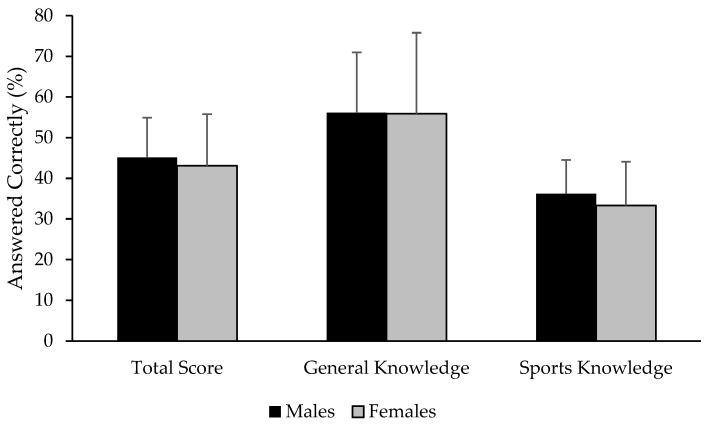
- Sports nutrition knowledge was poor: males answered 45.1 ± 9.8% of ASNKQ questions correctly vs. females 43.1 ± 12.7% (p = 0.57), with no between-sex differences for general (p = 0.97) or sports-specific (p = 0.35) subsections.
- No relationships were observed between ASNKQ scores and body composition parameters or self-reported perceived energy/macronutrient requirements (p > 0.05).
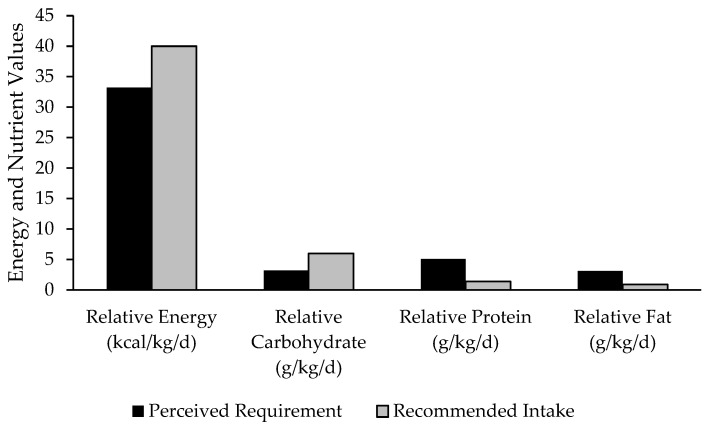
- Compared with calculated recommendations, athletes self-reported lower perceived energy (−560 ± 1272 kcal/d; p = 0.014) and carbohydrate (−73 ± 376 g/d; p = 0.014) requirements and higher protein (263 ± 586 g/d; p = 0.026) requirements.
- Top nutrition information sources were family/friends (43%), coaches (39%), and athletic trainers/strength and conditioning staff (18%); 41% (n = 18) reported neither nutritional information nor access to a nutritionist/dietitian, and top barriers were lack of knowledge (37%) and lack of energy/motivation (34%). Self-rated nutrition knowledge averaged 4.8 ± 1.7 on a 1–10 scale.
Methods
- Design: prior to the competitive season, athletes completed hydrostatic weighing body composition assessment, the electronic Abridged Sports Nutrition Knowledge Questionnaire (ASNKQ; 37 questions: 17 general, 20 sports-specific), and an internally developed 21-question perceived dietary requirements questionnaire.
- Sample: 44 secondary school student-athletes (male n = 29; female n = 15), recruited via social media, emails, word of mouth, and flyers; inclusion required ages 14–18 and participation in a sanctioned varsity sport.
- Analysis: sex-stratified descriptive statistics; paired samples t-tests for normal data and Mann–Whitney U tests for non-normal data; Pearson correlations between ASNKQ scores, perceived requirements, and body composition; p < 0.05; SPSS V.28. Calculated recommendations used 40 kcal/kg/day energy, 1.4 g/kg/day protein, 6 g/kg/day carbohydrate, and fat at 20% of predicted energy needs.
Limitations
- Stated: low sample size (n = 44) limits sports-specific comparisons and generalizability; the internally developed perceived dietary requirements questionnaire was not cross-validated or shown to have high test–retest reliability; convenience sampling and recruitment through word of mouth/local media may increase selection bias and limit generalizability across socioeconomic status or ethnicities.
- Evident from the design/text: the one-time pre-season assessment cannot establish causality, and the reliance on self-reported surveys/perceptions may introduce recall or social-desirability bias; no actual dietary intake data were collected.
Model-written summary. Check it against the paper before relying on it.
Integrity signals
Registry
Cites
Statistics
Figures
Verification
Claims the paper makes
0 Valid · 0 Not valid · 8 Not checked · 21 Own results and interpretations
A result the paper reports from its own data — it cites no other source for it, so there is none to check. The quote shows it is in the paper.
In the paper
“No relationships between sports nutrition knowledge scores and any body composition parameters were observed (p > 0.05).”
- Also stated in: § Abstract · plain
“No relationships were observed between ASNKQ scores and body composition parameters or between ASNKQ scores and self-reported perception of dietary energy and macronutrient requirements (p > 0.05).”
§ Nutrition Knowledge and Perceived Dietary Requirements of Adolescent Student-Athletes: A Pilot Study > 3. Results > 3.1. Nutrition Knowledge
plain- Asserted: passes — The authors put it forward as true.
- Checkable: passes — It can be checked against evidence.
- Load-bearing: unclear — It is unclear whether the paper’s conclusions depend on it.
- Based: passes — The paper gives a reason why it holds.
- Also stated in: § Abstract · plain
A result the paper reports from its own data — it cites no other source for it, so there is none to check. The quote shows it is in the paper.
In the paper
“When athletes were asked to rate the most common barriers to eating healthy and meeting the nutritional requirements for their sport, lack of knowledge was identified as the top barrier (37%), followed by lack of energy/motivation (34%), access to food (10%), lack of time (7%), financial restrictions (7%), and travel demands for their sport (5%).”
§ Nutrition Knowledge and Perceived Dietary Requirements of Adolescent Student-Athletes: A Pilot Study > 3. Results > 3.4. Nutritional Barriers
plain- Asserted: passes — The authors put it forward as true.
- Checkable: passes — It can be checked against evidence.
- Load-bearing: unclear — It is unclear whether the paper’s conclusions depend on it.
- Based: passes — The paper gives a reason why it holds.
A result the paper reports from its own data — it cites no other source for it, so there is none to check. The quote shows it is in the paper.
In the paper
“When examining the different subsections of nutrition knowledge, athletes in the current study exhibited higher general nutrition knowledge scores compared to sports-specific nutrition knowledge.”
§ Nutrition Knowledge and Perceived Dietary Requirements of Adolescent Student-Athletes: A Pilot Study > 4. Discussion
plain- Asserted: passes — The authors put it forward as true.
- Checkable: passes — It can be checked against evidence.
- Load-bearing: passes — The paper’s conclusions depend on it.
- Based: passes — The paper gives a reason why it holds.
A result the paper reports from its own data — it cites no other source for it, so there is none to check. The quote shows it is in the paper.
In the paper
“Further, 43% (n = 19) of athletes reported that their sports organization provided nutritional information, 11% (n = 5) reported that their sporting organization provided both nutritional information and access to a nutritionist/dietitian, and 41% (n = 18) reported neither.”
§ Nutrition Knowledge and Perceived Dietary Requirements of Adolescent Student-Athletes: A Pilot Study > 3. Results > 3.3. Sources of Nutritional Information and Desired Resources for Nutritional Support
plainn = 18- Asserted: passes — The authors put it forward as true.
- Checkable: passes — It can be checked against evidence.
- Load-bearing: unclear — It is unclear whether the paper’s conclusions depend on it.
- Based: passes — The paper gives a reason why it holds.
A result the paper reports from its own data — it cites no other source for it, so there is none to check. The quote shows it is in the paper.
In the paper
“Athletes demonstrated poor sports nutrition knowledge, with no differences observed between sexes for the number of questions answered correctly (males: 45.1 ± 9.8% vs. females: 43.1 ± 12.7%; p = 0.57).”
- Also stated in: § 3.1. Nutrition Knowledge · plain
“Athletes demonstrated poor sports nutrition knowledge, with no differences observed between sexes for the percentage of overall questions answered correctly on the ASNKQ (p = 0.57), as seen in Figure 1.”
- Also stated in: § 5. Conclusions · plain
“Adolescent student-athletes have poor nutrition knowledge of sports-specific dietary concepts and fail to understand the unique dietary intake requirements representative of their sports-related activities.”
§ Nutrition Knowledge and Perceived Dietary Requirements of Adolescent Student-Athletes: A Pilot Study > Abstract
plain- Asserted: passes — The authors put it forward as true.
- Checkable: passes — It can be checked against evidence.
- Load-bearing: passes — The paper’s conclusions depend on it.
- Based: passes — The paper gives a reason why it holds.
- Also stated in: § 3.1. Nutrition Knowledge · plain
12 more claims
Create a free account to see all 29 claims and to verify the 12 references still open.
- It may state two separate claims as one. 11
- Probably not a substantial claim. 4
- The quote only partly states this claim. 1
Claims other papers make about this one
Each is checked against this paper’s own text: does it say what the citing paper says it does?
In the citing paper
“Despite increasing interest in sports nutrition for youth, most existing guidelines are based on adult populations [4].”
From Optimizing Performance Nutrition for Adolescent Athletes: A Review of Dietary Needs, Risks, and Practical Strategies (2025) · cites this paper as [4]
In the citing paper
“Although dietary inadequacy is multifactorial, inadequate sports nutrition knowledge (SNK) represents a major contributing factor (10, 11).”
Citations
Cites
Body composition from fluid spaces and density: analysis of methods. 1961.
Siri, W. E. (1993) · PubMed · Cited by 2,572
Mountjoy, M., Ackerman, K. E., Bailey, D. M., Burke, L. M., Constantini, N., Hackney, A. C., Heikura, I. A., Melin, A., Pensgaard, A. M., Stellingwerff, T., et al. (2023) · British Journal of Sports Medicine · doi:10.1136/bjsports-2023-106994 · Cited by 974 · cited 4×
“Failure to adhere to sports-specific nutritional recommendations may increase the risk of energy and nutrient deficiencies in adolescent athletes, which may subsequently increase the risk of conditions such as REDs and the female or male athlete triads [5,6].”
InfluentialISSN exercise & sports nutrition review update: research & recommendations
Kerksick, C. M., Wilborn, C. D., Roberts, M. D., Smith-Ryan, A., Kleiner, S. M., Jäger, R., Collins, R., Cooke, M., Davis, J. N., Galvan, E., et al. (2018) · Journal of the International Society of Sports Nutrition · doi:10.1186/s12970-018-0242-y · Cited by 945 · cited 3×
“The higher energy and nutrient intake requirements are largely influenced by higher activity levels and higher body mass, specifically lean body mass [3].”
A simplified method for determination of residual lung volumes.
Wilmore, J. H. (1969) · Journal of Applied Physiology · doi:10.1152/jappl.1969.27.1.96 · Cited by 533
Logue, D. M., Madigan, S. M., Melin, A., Delahunt, E., Heinen, M., Donnell, S.-J. M., & Corish, C. A. (2020) · Nutrients · doi:10.3390/nu12030835 · Cited by 321
Torres-McGehee, T. M., Pritchett, K. L., Zippel, D., Minton, D. M., Cellamare, A., & Sibilia, M. (2012) · Journal of Athletic Training · doi:10.4085/1062-6050-47.2.205 · Cited by 290
Energy Availability in Athletics: Health, Performance, and Physique
Melin, A. K., Heikura, I. A., Tenforde, A., & Mountjoy, M. (2019) · International Journal of Sport Nutrition and Exercise Metabolism · doi:10.1123/ijsnem.2018-0201 · Cited by 258
Marshall, S., Burrows, T. L., & Collins, C. E. (2014) · Journal of Human Nutrition and Dietetics · doi:10.1111/jhn.12208 · Cited by 202
Trakman, G., Forsyth, A., Devlin, B., & Belski, R. (2016) · Nutrients · doi:10.3390/nu8090570 · Cited by 198
Jenner, S., Buckley, G., Belski, R., Devlin, B. L., & Forsyth, A. K. (2019) · Nutrients · doi:10.3390/nu11051160 · Cited by 170
Cited by
Everett, S. (2025) · Nutrients · doi:10.3390/nu17172792 · Cited by 37
Altınok, Ö., & Baş, M. (2025) · Nutrients · doi:10.3390/nu17030589 · Cited by 5
Lotti, S., Asensi, M. T., Creti, D., Mollo, E., Sarti, A., Sciattella, F., Dinu, M., Colombini, B., Rizzo, L., & Sofi, F. (2025) · Nutrients · doi:10.3390/nu17132213 · Cited by 4
Veloso-Pulgar, M., & Farran-Codina, A. (2026) · Frontiers in Nutrition · doi:10.3389/fnut.2026.1821345 · Cited by 1
Simsek, A., Ulker, M. T., Kaya, A. K., Aksu, A., Kurtulus, A., & Temiz, D. (2026) · Sport Sciences for Health · doi:10.1007/s11332-026-01655-3 · Cited by 1
Metadata
- Authors
- Jagim, A. R., Merfeld, B. R., Ambrosius, A., Carpenter, M., Fields, J. B., & Jones, M. T.
- Affiliations
- George Mason University (US)
- University of Wisconsin–La Crosse (US)
- University of Connecticut (US)
- Corresponding author
- Jones, Margaret T.
- Venue
- Nutrients
- Publisher
- MDPI AG
- Published
- 2024-12-31
- Volume
- 17
- Issue
- 1
- Pages
- 133
- ISSN
- 2072-6643 (ISSN-L)
- PMC
- PMC11722962
- OpenAlex
- W4405945662
- Cited by
- 19
- References
- 36
- Citations by year
- 2026: 13 · 2025: 6
- FWCI
- 4.33
- Type
- journal article
- Language
- en
- Open access
- gold
- doi.org
- Licence
- Locations
- Nutrients (publishedVersion, cc-by)
- PubMed Central (publishedVersion, cc-by)
- PubMed (publishedVersion)
- Topics
- Health Sciences › Nursing › Nutrition and Dietetics › Nutrition, Health and Food Behavior
- Health Sciences › Nursing › Nutrition and Dietetics › Muscle metabolism and nutrition
- Health Sciences › Medicine › Public Health, Environmental and Occupational Health › Nutrition and Health Studies
- Keywords
- youth athletes, sports nutrition knowledge, energy requirements, macronutrient requirements, protein intake, carbohydrate intake, body composition, high school students, sex differences
- MeSH terms
- Adolescent, Body Composition, Diet, Female, Humans, Health Knowledge, Attitudes, Practice, Male, Nutritional Requirements, Pilot Projects, Surveys and Questionnaires, Students, Athletes, Sports Nutritional Physiological Phenomena
About these checks
Registry, retraction, Cites and statistics results are computed, not judged, with one exception: a printed reference that no index lists is read once by a model before it counts as a citation error. Claims are extracted by a model and kept only when their quote appears verbatim in the text; each cited source is then checked, with a model’s help, for whether it says what the claim relies on. Those verdicts can be wrong — read the claim’s quote and the cited source before relying on one.
A language model drew the claims from the paper on 2026-11-14, under version 3 of the claim definition (model deepseek-v4.1-flash, prompt extract-v3).
A second model labelled each claim on 2026-11-14 (model jev-1.13-20260917, definition revision gold-guideline-v0.2).
Statistics and arithmetic are recomputed, not judged.
Confidence bands are shown only for fields calibrated on our annotated test set. None is calibrated yet, so no band is shown.
What counts as a claim ›How we measure confidence ›How we check this ›
Are you an author, or do you see a problem with this page? Request a review
Data sources
Bibliographic data: Semantic Scholar, OpenAlex, Crossref.
Contains information from the Semantic Scholar Academic Graph Datasets, made available under the ODC Attribution License (ODC-BY 1.0).
Semantic Scholar’s data is described in: Kinney, R., et al. (2023). The Semantic Scholar Open Data Platform. arXiv:2301.10140.
