

The DOI matches its Crossref record; 134 of the 141 references it cites were found in a registry or an index.
Bismuth-213 for targeted radionuclide therapy: from atom to bedside.
Open accessPublished version of a preprint
Abstract
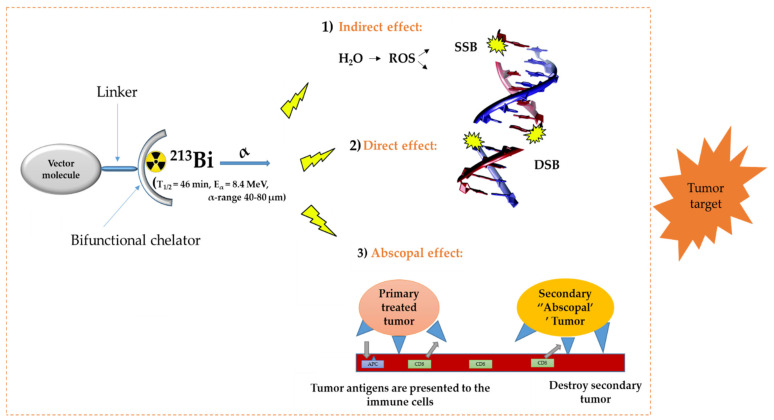
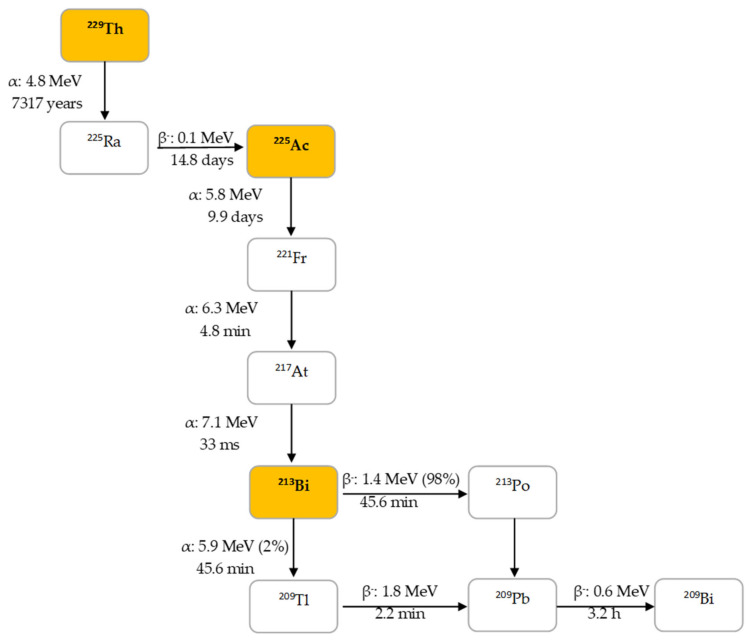
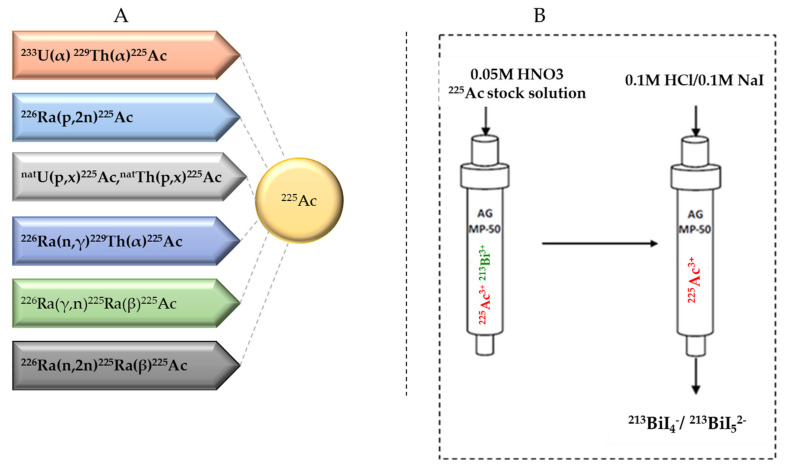
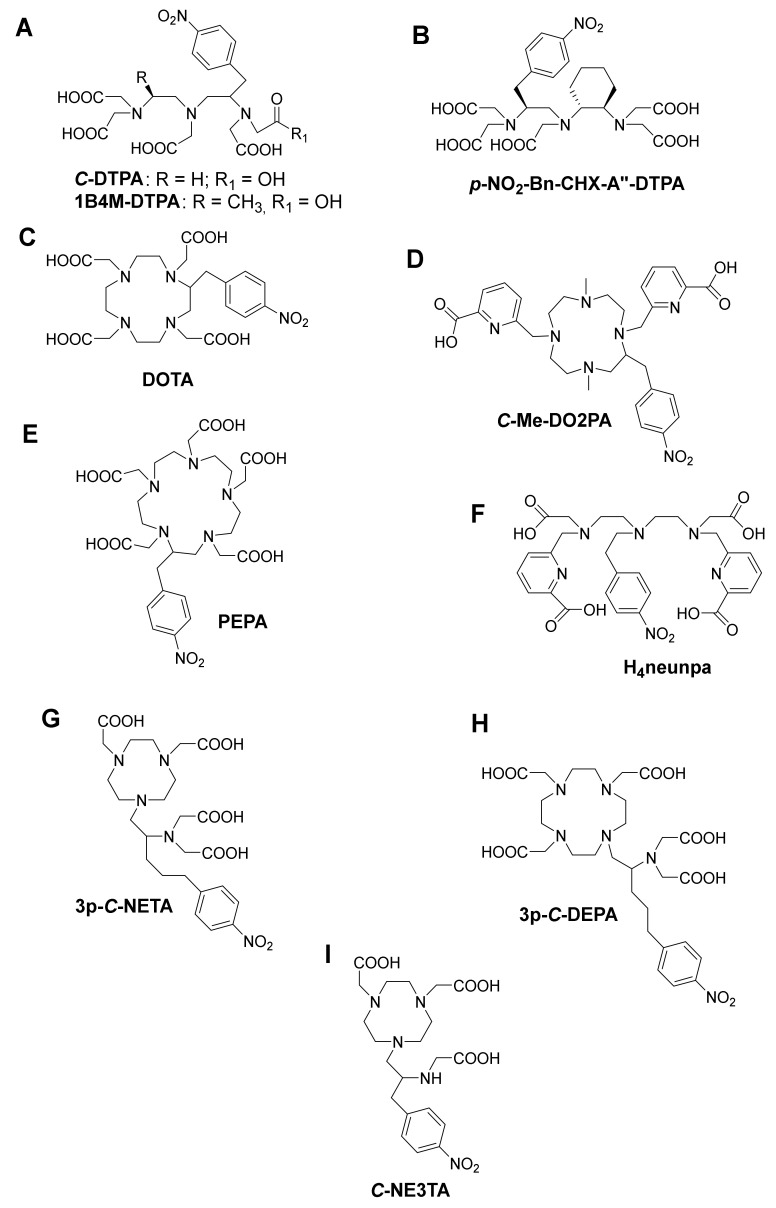
Besides external high-energy photon or proton beam therapy, targeted radionuclide therapy (TRNT) is an alternative approach to deliver radiation to cancer cells. TRNT is distributed within the body by the vascular system and allows targeted irradiation of a primary tumor and all its metastases, resulting in substantially less collateral damage to normal tissues as compared to ex-ternal beam radiotherapy (EBRT). It is a systemic cancer therapy, tackling systemic spread of the disease, which is the cause of death in most cancer patients. The α-emitting radionuclide bis-muth-213 (213Bi) has interesting properties and can be considered as a magic bullet for TRNT. The benefits and drawbacks of targeted alpha therapy with 213Bi are discussed in this review, covering the entire chain from radionuclide production to bedside. First, the radionuclide properties and production of 225Ac and its daughter 213Bi are discussed, followed by the fundamental chemical properties of bismuth. Next, an overview of available acyclic and macrocyclic bifunctional chelators for bismuth, and general considerations for designing a 213Bi-radiopharmaceutical are provided. Finally, we will provide an overview of preclinical and clinical studies involving 213Bi-radiopharmaceuticals, as well as the future perspectives of this promising cancer treatment option.
Overview
The claims and statistics of this paper haven’t been checked yet.
Run the check — free, no account needed. It reads the open-access text and checks the sources it cites.
Integrity signals
Registry
Cites
Statistics
Figures
Verification
Claims the paper makes
The claims and statistics of this paper haven’t been checked yet.
Run the check — free, no account needed. It reads the open-access text and checks the sources it cites.
Claims other papers make about this one
Each is checked against this paper’s own text: does it say what the citing paper says it does?
In the citing paper
“It is important to mention that the availability of appropriate cyclotrons worldwide [energy range 15–25 MeV (101)] makes the production of 225Ac feasible for basic and applied research (94).”
From Alpha-peptide receptor radionuclide therapy using actinium-225 labeled somatostatin receptor agonists and antagonists (2022) · cites this paper as [94]
Self-check
Percentages, sums and reported differences re-computed from the paper’s own numbers.
The self-check needs the paper’s full text.
Citations
Cites
Phase 3 Trial of 177 Lu-Dotatate for Midgut Neuroendocrine Tumors
Strosberg, J., El-Haddad, G., Wolin, E., Hendifar, A., Yao, J., Chasen, B., Mittra, E., Kunz, P. L., Kulke, M. H., Jacene, H., et al. (2017) · New England Journal of Medicine · doi:10.1056/nejmoa1607427 · Cited by 3,308
Relativistic effects in structural chemistry
Pyykkö, P. (1988) · Chemical Reviews · doi:10.1021/cr00085a006 · Cited by 3,077 · cited 1×
“, core-like nature of the 6s electrons), the term “inert pair effect” [36], or “nonhybridization effect” has often been used [37].”
MethodHard and soft acids and bases, HSAB, part 1: Fundamental principles
Pearson, R. G. (1968) · Journal of Chemical Education · doi:10.1021/ed045p581 · Cited by 2,566
Engineered antibody fragments and the rise of single domains
Holliger, P., & Hudson, P. J. (2005) · Nature Biotechnology · doi:10.1038/nbt1142 · Cited by 1,928 · cited 1×
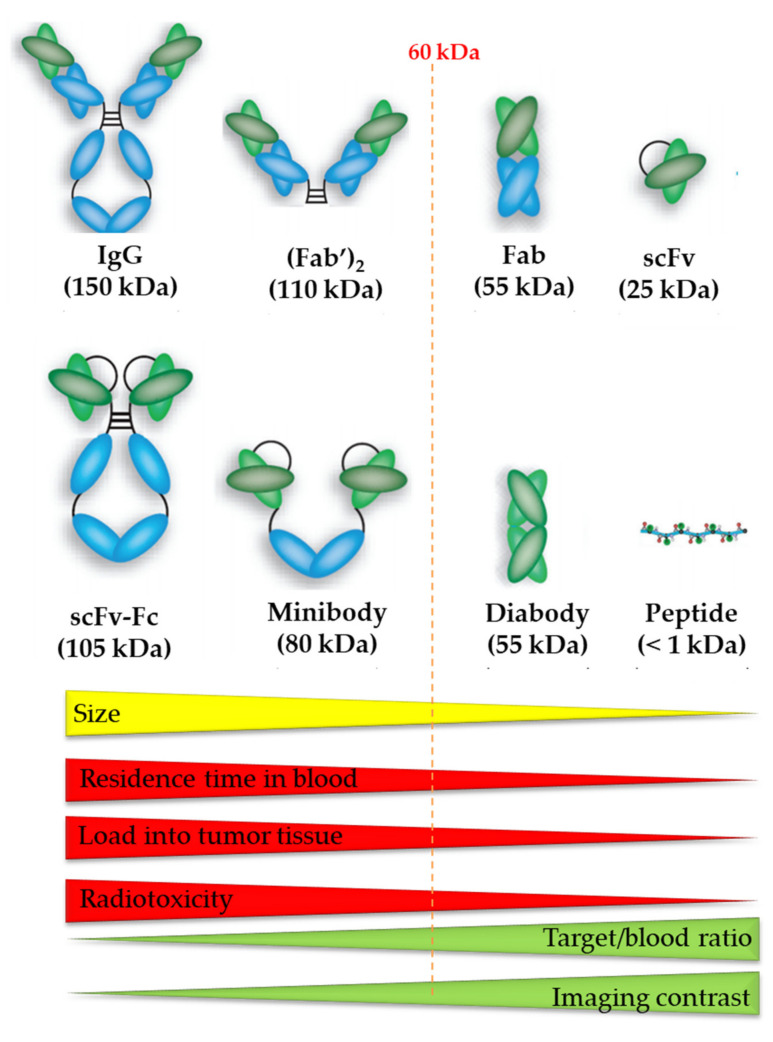
“2 Antibody fragments Recent advances in bioengineering have led to the the development of antibody fragments such as Fab (50 kDa), F(ab’)2 (110kDa), 25-kDa single-chain Fv (scFv), diabodies (55 kDa), nanobodies (15kDa) and minibodies (80 kDa) without affecting their affinity and specificity [94].”
BackgroundMatching chelators to radiometals for radiopharmaceuticals
Price, E. W., & Orvig, C. (2013) · Chemical Society Reviews · doi:10.1039/c3cs60304k · Cited by 1,064 · cited 6×
“The presence of the cyclohexyl moiety of CHX-A”-DTPA provides the chelator with additional rigidity and imposes a significant degree of preorganization on the metal ion binding site, augmenting kinetic inertness, but impeding radiolabeling kinetics as compared with DTPA [3].”
BackgroundMethodInfluentialLindner, T., Loktev, A., Altmann, A., Giesel, F. L., Kratochwil, C., Debus, J., Jäger, D., Mier, W., & Haberkorn, U. (2018) · Journal of Nuclear Medicine · doi:10.2967/jnumed.118.210443 · Cited by 961
Guo, Z., & Sadler, P. J. (1999) · Angewandte Chemie International Edition · doi:10.1002/(sici)1521-3773(19990601)38:11 · Cited by 840
A Tumor-Imaging Method Targeting Cancer-Associated Fibroblasts
Loktev, A., Lindner, T., Mier, W., Debus, J., Altmann, A., Jäger, D., Giesel, F. L., Kratochwil, C., Barthe, P., Roumestand, C., et al. (2018) · Journal of Nuclear Medicine · doi:10.2967/jnumed.118.210435 · Cited by 784
Giesel, F. L., Kratochwil, C., Lindner, T., Marschalek, M. M., Loktev, A., Lehnert, W., Debus, J., Jäger, D., Flechsig, P., Altmann, A., et al. (2018) · Journal of Nuclear Medicine · doi:10.2967/jnumed.118.215913 · Cited by 748
Bismuth Compounds and Preparations with Biological or Medicinal Relevance
Briand, G. G., & Burford, N. (1999) · Chemical Reviews · doi:10.1021/cr980425s · Cited by 599 · cited 1×
“However, Bi compounds are or were used in a wide spectrum of applications ranging from non-toxic pigments and catalysts to biocompatible additives in dental materials and remedies in human and veterinary medicine [34,35].”
Background
Research works printed but not linked: 1
- Finn, 2017, A Phase 2 Study of Actinium-225 (225Ac)-Lintuzumab in Older Patients with Previously Untreated Acute Myeloid Leukemia (AML) Unfit for Intensive Chemotherapy, Blood, 130, 2638
Cited by
Sorted by citations
Salih, S., Alkatheeri, A., Alomaim, W., & Elliyanti, A. (2022) · Molecules · doi:10.3390/molecules27165231 · Cited by 101
Dosimetry in Radiopharmaceutical Therapy
O’Donoghue, J. A., ZANZONICO, P. B., Humm, J. L., & Kesner, A. (2022) · Journal of Nuclear Medicine · doi:10.2967/jnumed.121.262305 · Cited by 100
“Alpha-particle–emitting radionuclides that have been used in clinical trials include (213)Bi (84,85), (211)At (86,87), (212)Pb (88), (223)Ra (89), (225)Ac (90,91), and (227)Th (92), listed in Table 1.”
Recent Advances in 64Cu/67Cu-Based Radiopharmaceuticals
Krasnovskaya, O. O., Abramchuk, D., Erofeev, A. S., Gorelkin, P. V., Kuznetsov, A. A., Shemukhin, A. A., & Beloglazkina, E. K. (2023) · International Journal of Molecular Sciences · doi:10.3390/ijms24119154 · Cited by 85
Alpha-Emitting Radionuclides: Current Status and Future Perspectives
Miederer, M., Benešová, M., Mamat, C., Kästner, D., Pretze, M., Michler, E., Brogsitter, C., Kotzerke, J., Kopka, K., Scheinberg, D. A., et al. (2024) · Pharmaceuticals · doi:10.3390/ph17010076 · Cited by 78
“The DOTA chelator [25] has been widely used for the alpha-emitting radionuclides actinium-225, bismuth-213, and terbium-149, frequently for thorium-227, and some trials were made for radium-223 [12,26–28].”
MethodShi, M., Jakobsson, V., Greifenstein, L., Khong, P.-L., Chen, X., Baum, R. P., & Zhang, J. (2022) · Frontiers in Medicine · doi:10.3389/fmed.2022.1034315 · Cited by 68
Metadata
- Authors
- Ahenkorah, S., Cassells, I., Deroose, C. M., Cardinaels, T., Burgoyne, A. R., Bormans, G., Ooms, M., & Cleeren, F.
- Affiliations
- Belgian Nuclear Research Centre (BE)
- Universitair Ziekenhuis Leuven (BE)
- KU Leuven (BE)
- Corresponding author
- Ooms, Maarten
- Cleeren, Frederik
- ORCID
- Venue
- Pharmaceutics
- Publisher
- MDPI AG
- Published
- 2021-04-21
- Volume
- 13
- Issue
- 5
- Pages
- 599
- ISSN
- 1999-4923 (ISSN-L)
- PMC
- PMC8143329
- OpenAlex
- W3145208530
- Cited by
- 120
- References
- 141
- Citations by year
- 2026: 21 · 2025: 26 · 2024: 24 · 2023: 24 · 2022: 19 · 2021: 6
- FWCI
- 2.98
- Type
- journal article
- Language
- en
- Open access
- gold
- doi.org
- Licence
- Locations
- Pharmaceutics (publishedVersion, cc-by)
- Preprints.org (acceptedVersion, cc-by)
- PubMed Central (publishedVersion, cc-by)
- PubMed (publishedVersion)
- Lirias (submittedVersion, other-oa)
- DOAJ (DOAJ: Directory of Open Access Journals) (submittedVersion, cc-by-sa)
- Funders
- Fonds Wetenschappelijk Onderzoek (12R3119N)
- Topics
- Health Sciences › Medicine › Radiology, Nuclear Medicine and Imaging › Radiopharmaceutical Chemistry and Applications
- Physical Sciences › Physics and Astronomy › Radiation › Radioactivity and Radon Measurements
- Life Sciences › Pharmacology, Toxicology and Pharmaceutics › Pharmaceutical Science › Chemical Reactions and Isotopes
- Keywords
- bismuth-213, targeted radionuclide therapy, targeted alpha therapy, actinium-225, radioisotope production, bifunctional chelators, macrocyclic chelators, radiopharmaceutical design, bismuth chemistry, alpha-emitting radionuclides, cancer therapy
About these checks
Registry, retraction, Cites and statistics results are computed, not judged, with one exception: a printed reference that no index lists is read once by a model before it counts as a citation error. Claims are extracted by a model and kept only when their quote appears verbatim in the text; each cited source is then checked, with a model’s help, for whether it says what the claim relies on. Those verdicts can be wrong — read the claim’s quote and the cited source before relying on one.
Statistics and arithmetic are recomputed, not judged.
Confidence bands are shown only for fields calibrated on our annotated test set. None is calibrated yet, so no band is shown.
What counts as a claim ›How we measure confidence ›How we check this ›
Are you an author, or do you see a problem with this page? Request a review
