

The DOI matches its Crossref record.
Pathogenesis-Related Proteins (PRs) with Enzyme Activity Activating Plant Defense Responses
Abstract
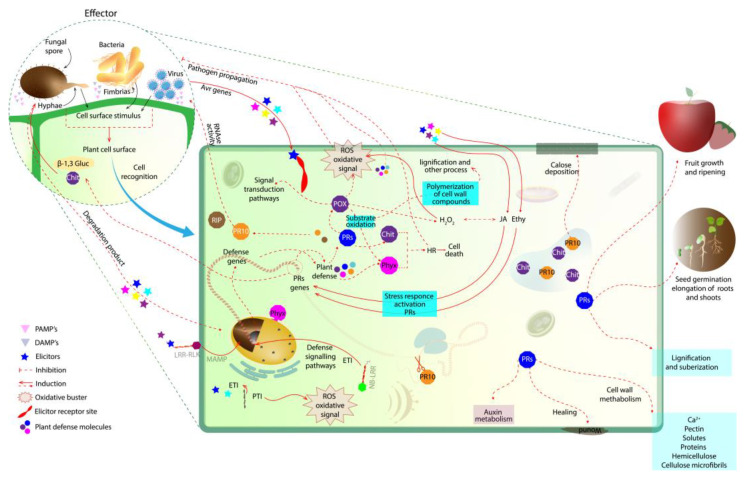
Throughout evolution, plants have developed a highly complex defense system against different threats, including phytopathogens. Plant defense depends on constitutive and induced factors combined as defense mechanisms. These mechanisms involve a complex signaling network linking structural and biochemical defense. Antimicrobial and pathogenesis-related (PR) proteins are examples of this mechanism, which can accumulate extra- and intracellular space after infection. However, despite their name, some PR proteins are present at low levels even in healthy plant tissues. When they face a pathogen, these PRs can increase in abundance, acting as the first line of plant defense. Thus, PRs play a key role in early defense events, which can reduce the damage and mortality caused by pathogens. In this context, the present review will discuss defense response proteins, which have been identified as PRs, with enzymatic action, including constitutive enzymes, β-1,3 glucanase, chitinase, peroxidase and ribonucleases. From the technological perspective, we discuss the advances of the last decade applied to the study of these enzymes, which are important in the early events of higher plant defense against phytopathogens.
Overview
The claims and statistics of this paper haven’t been checked yet.
Run the check — free, no account needed. It reads the open-access text and checks the sources it cites.
Integrity signals
Registry
Cites
Statistics
Figures
Verification
Claims the paper makes
The claims and statistics of this paper haven’t been checked yet.
Run the check — free, no account needed. It reads the open-access text and checks the sources it cites.
Claims other papers make about this one
Each is checked against this paper’s own text: does it say what the citing paper says it does?
In the citing paper
“These proteins are part of the pathogenesis-related protein class 10 family, which plays a defensive role in plants, helping them respond to environmental stressors such as pathogens, pests, and physical damage [123-125].”
From Pollen–Food Allergy Syndrome: Allergens, Clinical Insights, Diagnostic and Therapeutic Challenges (2024) · cites this paper as [125]
Self-check
Percentages, sums and reported differences re-computed from the paper’s own numbers.
The self-check needs the paper’s full text.
Citations
Cites
No references could be resolved yet.
Research works printed but not linked: 110
- Li, 2020, The Lifecycle of the Plant Immune System, CRC Crit. Rev. Plant Sci., 39, 72, 10.1080/07352689.2020.1757829 · DOI
- Nishad, 2020, Modulation of Plant Defense System in Response to Microbial Interactions, Front. Microbiol., 11, 1298, 10.3389/fmicb.2020.01298 · DOI
- Pieterse, 2014, Induced systemic resistance by beneficial microbes, Annu. Rev. Phytopathol., 52, 347, 10.1146/annurev-phyto-082712-102340 · DOI · Paper page
- Nguyen, Q.-M., Iswanto, A.B.B., Son, G.H., and Kim, S.H. (2021). Recent advances in effector-triggered immunity in plants: New pieces in the puzzle create a different paradigm. Int. J. Mol. Sci., 22. · DOI
- Yuan, 2021, PTI-ETI crosstalk: An integrative view of plant immunity, Curr. Opin. Plant Biol., 62, 102030, 10.1016/j.pbi.2021.102030 · DOI
- Freeman, B., and Beattie, G. (2008). An overview of plant defenses against pathogens and herbivores. Overv. Plant Def. · DOI
- Mhlongo, 2018, The chemistry of plant–microbe interactions in the rhizosphere and the potential for metabolomics to reveal signaling related to defense priming and induced systemic resistance, Front. Plant Sci., 9, 112, 10.3389/fpls.2018.00112 · DOI
- Souza, 2017, Defense-related proteins involved in sugarcane responses to biotic stress, Genet. Mol. Biol., 40, 360, 10.1590/1678-4685-gmb-2016-0057 · DOI
- Ali, 2018, Pathogenesis-related proteins and peptides as promising tools for engineering plants with multiple stress tolerance, Microbiol. Res., 212, 29, 10.1016/j.micres.2018.04.008 · DOI
- Finkina, 2017, Plant pathogenesis-related proteins PR-10 and PR-14 as components of innate immunity system and ubiquitous allergens, Curr. Med. Chem., 24, 1772, 10.2174/0929867323666161026154111 · DOI
- Akbudak, 2020, Pathogenesis related protein-1 (PR-1) genes in tomato (Solanum lycopersicum L.): Bioinformatics analyses and expression profiles in response to drought stress, Genomics, 112, 4089, 10.1016/j.ygeno.2020.07.004 · DOI
- Pejchar, 2022, Immunity functions of Arabidopsis pathogenesis-related 1 are coupled but not confined to its C-terminus processing and trafficking, Mol. Plant Pathol., 23, 664, 10.1111/mpp.13187 · DOI
- Venancio, 2022, Pathogenesis-related protein 1 (PR-1) genes in soybean: Genome-wide identification, structural analysis and expression profiling under multiple biotic and abiotic stresses, Gene, 809, 146013, 10.1016/j.gene.2021.146013 · DOI
- Lu, 2018, Molecular characterization and functional analysis of PR-1-like proteins identified from the wheat head blight fungus Fusarium graminearum, Phytopathology, 108, 510, 10.1094/PHYTO-08-17-0268-R · DOI
- Chandrasekaran, 2016, Development of broad virus resistance in non-transgenic cucumber using CRISPR/Cas9 technology, Mol. Plant Pathol., 17, 1140, 10.1111/mpp.12375 · DOI · Paper page
- Shaw, 2019, Interaction of a plant virus protein with the signature Cajal body protein coilin facilitates salicylic acid-mediated plant defence responses, New Phytol., 224, 439, 10.1111/nph.15994 · DOI
- Sung, 2021, PR1-mediated defence via C-terminal peptide release is targeted by a fungal pathogen effector, New Phytol., 229, 3467, 10.1111/nph.17128 · DOI
- Anisimova, O.K., Shchennikova, A.V., Kochieva, E.Z., and Filyushin, M.A. (2021). Pathogenesis-Related Genes of PR1, PR2, PR4, and PR5 Families Are Involved in the Response to Fusarium Infection in Garlic (Allium sativum L.). Int. J. Mol. Sci., 22. · DOI
- Boccardo, 2019, Expression of pathogenesis-related proteins in transplastomic tobacco plants confers resistance to filamentous pathogens under field trials, Sci. Rep., 9, 2791, 10.1038/s41598-019-39568-6 · DOI
- Enoki, 2016, Pathogenesis-related proteins in grape, Grape Wine Biotechnol., 43, 46
- Santos, 2019, Proteomic analysis and functional validation of a Brassica oleracea endochitinase involved in resistance to Xanthomonas campestris, Front. Plant Sci., 10, 414, 10.3389/fpls.2019.00414 · DOI
- Zhang, J., Wang, F., Liang, F., Zhang, Y., Ma, L., Wang, H., and Liu, D. (2018). Functional analysis of a pathogenesis-related thaumatin-like protein gene TaLr35PR5 from wheat induced by leaf rust fungus. BMC Plant Biol., 18. · DOI
- Bashir, M.A., Silvestri, C., Ahmad, T., Hafiz, I.A., Abbasi, N.A., Manzoor, A., Cristofori, V., and Rugini, E. (2020). Osmotin: A cationic protein leads to improve biotic and abiotic stress tolerance in plants. Plants, 9. · DOI
- Rodríguez-Sifuentes, L., Marszalek, J.E., Chuck-Hernández, C., and Serna-Saldívar, S.O. (2020). Legumes protease inhibitors as biopesticides and their defense mechanisms against biotic factors. Int. J. Mol. Sci., 21. · DOI
- Sudisha, J., Sharathchandra, R.G., Amruthesh, K.N., Kumar, A., and Shetty, H.S. (2012). Plant Defence: Biological Control, Springer.
- Irigoyen, 2020, Genome-wide analyses of cassava Pathogenesis-related (PR) gene families reveal core transcriptome responses to whitefly infestation, salicylic acid and jasmonic acid, BMC Genom., 21, 93, 10.1186/s12864-019-6443-1 · DOI
- Kim, 2020, Overexpression of swpa4 peroxidase enhances tolerance to hydrogen peroxide and high salinity-mediated oxidative stress in transgenic sweetpotato plants, Plant Biotechnol. Rep., 14, 301, 10.1007/s11816-020-00602-z · DOI
- Sellami, 2022, Peroxidase enzymes as green catalysts for bioremediation and biotechnological applications: A review, Sci. Total Environ., 806, 150500, 10.1016/j.scitotenv.2021.150500 · DOI · Paper page
- Wu, 2016, Overexpression of a pathogenesis-related protein 10 enhances biotic and abiotic stress tolerance in rice, Plant Pathol. J., 32, 552, 10.5423/PPJ.OA.06.2016.0141 · DOI
- Mahmoud, 2020, Enhancing Tomato Plant Resistance Against Tobacco Mosaic Virus Using Riboflavin, Arab Univ. J. Agric. Sci., 28, 1257
- Peng, 2017, A sugarcane pathogenesis-related protein, ScPR10, plays a positive role in defense responses under Sporisorium scitamineum, SrMV, SA, and MeJA stresses, Plant Cell Rep., 36, 1427, 10.1007/s00299-017-2166-4 · DOI
- Franco, 2006, Identification of a cowpea γ-thionin with bactericidal activity, FEBS J., 273, 3489, 10.1111/j.1742-4658.2006.05349.x · DOI · Paper page
- Zhang, 2021, Antimicrobial peptides: Mechanism of action, activity and clinical potential, Mil. Med. Res., 8, 48
- Li, 2021, Plant antimicrobial peptides: Structures, functions, and applications, Bot. Stud., 62, 5, 10.1186/s40529-021-00312-x · DOI
- Höng, K., Austerlitz, T., Bohlmann, T., and Bohlmann, H. (2021). The thionin family of antimicrobial peptides. PLoS ONE, 16. · DOI
- Scheurer, 2018, Interaction of Non-Specific Lipid-Transfer Proteins With Plant-Derived Lipids and Its Impact on Allergic Sensitization, Front. Immunol., 9, 1389, 10.3389/fimmu.2018.01389 · DOI
- Wang, 2021, A nonspecific lipid transfer protein, StLTP10, mediates resistance to Phytophthora infestans in potato, Mol. Plant Pathol., 22, 48, 10.1111/mpp.13007 · DOI
- Fleury, 2019, Comprehensive classification of the plant non-specific lipid transfer protein superfamily towards its sequence–structure–function analysis, PeerJ, 7, e7504, 10.7717/peerj.7504 · DOI
- Kaur, A., Pati, P.K., Pati, A.M., and Nagpal, A.K. (2020). Physico-chemical characterization and topological analysis of pathogenesis-related proteins from Arabidopsis thaliana and Oryza sativa using in-silico approaches. PLoS ONE, 15. · DOI
- Farvardin, A., González-Hernández, A.I., Llorens, E., García-Agustín, P., Scalschi, L., and Vicedo, B. (2020). The apoplast: A key player in plant survival. Antioxidants, 9. · DOI
- Okushima, 2000, Secreted proteins of tobacco cultured BY2 cells: Identification of a new member of pathogenesis-related proteins, Plant Mol. Biol., 42, 479, 10.1023/A:1006393326985 · DOI
- Custers, 2004, Isolation and characterisation of a class of carbohydrate oxidases from higher plants, with a role in active defence, Plant J., 39, 147, 10.1111/j.1365-313X.2004.02117.x · DOI
- Sooriyaarachchi, 2011, Expression and β-glucan binding properties of Scots pine (Pinus sylvestris L.) antimicrobial protein (Sp-AMP), Plant Mol. Biol., 77, 33, 10.1007/s11103-011-9791-z · DOI
- Singh, A., and Singh, I.K. (2018). Molecular Aspects of Plant-Pathogen Interaction, Springer. · DOI
- Zribi, 2021, Pathogenesis Related Proteins (PRs): From Cellular Mechanisms to Plant Defense, Curr. Protein Pept. Sci., 22, 396, 10.2174/1389203721999201231212736 · DOI · Paper page
- Ali, 2021, The DNA–carbon nanotube binding mode determines the efficiency of carbon nanotube-mediated DNA delivery to intact plants, ACS Appl. Nano Mater., 5, 4663, 10.1021/acsanm.1c03482 · DOI
- Adrian, 2019, Recognition of Elicitors in Grapevine: From MAMP and DAMP Perception to Induced Resistance, Front. Plant Sci., 10, 1117, 10.3389/fpls.2019.01117 · DOI
- Jamiołkowska, A. (2020). Natural Compounds as Elicitors of Plant Resistance Against Diseases and New Biocontrol Strategies. Agronomy, 10. · DOI
- Wang, 2021, A novel β-1,3-glucanase Gns6 from rice possesses antifungal activity against Magnaporthe oryzae, J. Plant Physiol., 265, 153493, 10.1016/j.jplph.2021.153493 · DOI
- Stintzi, 1993, Plant ‘pathogenesis-related’proteins and their role in defense against pathogens, Biochimie, 75, 687, 10.1016/0300-9084(93)90100-7 · DOI
- Ding, 2022, Redesigning Enzymes for Biocatalysis: Exploiting Structural Understanding for Improved Selectivity, Front. Mol. Biosci., 9, 684, 10.3389/fmolb.2022.908285 · DOI
- Engqvist, 2019, Applications of protein engineering and directed evolution in plant research, Plant Physiol., 179, 907, 10.1104/pp.18.01534 · DOI
- Talavera-Caro, A.G., Alva-Sánchez, D.L., Sosa-Herrera, A., Sánchez-Muñoz, M.A., Hernández-De Lira, I.O., Hernández-Beltran, J.U., Hernández-Almanza, A.Y., and Balagurusamy, N. (2022). Value-Addition in Food Products and Processing Through Enzyme Technology, Elsevier Academic Press.
- Linton, 2020, The structure and function of cellulase (endo-β-1, 4-glucanase) and hemicellulase (β-1, 3-glucanase and endo-β-1, 4-mannase) enzymes in invertebrates that consume materials ranging from microbes, algae to leaf litter, Comp. Biochem. Physiol. Part B Biochem. Mol. Biol., 240, 110354, 10.1016/j.cbpb.2019.110354 · DOI
- Balasubramanian, 2012, Plant β-1, 3-glucanases: Their biological functions and transgenic expression against phytopathogenic fungi, Biotechnol. Lett., 34, 1983, 10.1007/s10529-012-1012-6 · DOI
- Geelen, 2014, Callose homeostasis at plasmodesmata: Molecular regulators and developmental relevance, Front. Plant Sci., 5, 138
- Russell, 2019, Barley grain (1, 3; 1, 4)-β-glucan content: Effects of transcript and sequence variation in genes encoding the corresponding synthase and endohydrolase enzymes, Sci. Rep., 9, 17250, 10.1038/s41598-019-53798-8 · DOI
- Perrot, T., Pauly, M., and Ramírez, V. (2022). Emerging Roles of β-Glucanases in Plant Development and Adaptative Responses. Plants, 11. · DOI · Paper page
- Paniagua, C., Perry, L., and Benitez-Alfonso, Y. (2021). A phylogenetic and transcriptomic study of the β-1, 3-glucanase family in tomato identifies candidate targets for fruit improvement. bioRxiv. · DOI
- Wu, Q., Dou, X., Wang, Q., Guan, Z., Cai, Y., and Liao, X. (2018). Isolation of β-1,3-Glucanase-Producing Microorganisms from Poria cocos Cultivation Soil via Molecular Biology. Molecules, 23. · DOI
- Pusztahelyi, 2018, Chitin and chitin-related compounds in plant–fungal interactions, Mycology, 9, 189, 10.1080/21501203.2018.1473299 · DOI
- Wanke, 2021, Unraveling the sugar code: The role of microbial extracellular glycans in plant–microbe interactions, J. Exp. Bot., 72, 15, 10.1093/jxb/eraa414 · DOI
- Xu, J., Zhang, N., Wang, K., Xian, Q., Dong, J., Qi, X., and Chen, X. (2022). Chitinase Chi 2 Positively Regulates Cucumber Resistance against Fusarium oxysporum f. sp. cucumerinum. Genes, 13. · DOI
- Liu, 2020, A Na2CO3-Responsive Chitinase Gene From Leymus chinensis Improve Pathogen Resistance and Saline-Alkali Stress Tolerance in Transgenic Tobacco and Maize, Front. Plant Sci., 11, 1
- Xin, Y., Wang, D., Han, S., Li, S., Gong, N., Fan, Y., and Ji, X. (2021). Characterization of the chitinase gene family in mulberry (Morus notabilis) and MnChi18 involved in resistance to Botrytis cinerea. Genes, 13. · DOI
- Ali, M., Li, Q.H., Zou, T., Wei, A.M., Gombojab, G., Lu, G., and Gong, Z.H. (2020). Chitinase Gene Positively Regulates Hypersensitive and Defense Responses of Pepper to Colletotrichum acutatum Infection. Int. J. Mol. Sci., 21. · DOI
- Franzener, 2018, Induction of defense enzymes and control of anthracnose in cucumber by Corymbia citriodora aqueous extract, Summa Phytopathol., 44, 10, 10.1590/0100-5405/2218 · DOI
- Oliveira, 2016, Induced resistance during the interaction pathogen x plant and the use of resistance inducers, Phytochem. Lett., 15, 152, 10.1016/j.phytol.2015.12.011 · DOI
- Choudhary, 2020, ROS and oxidative burst: Roots in plant development, Plant Divers., 42, 33, 10.1016/j.pld.2019.10.002 · DOI
- Sorokan, 2018, Anionic peroxidase-mediated oxidative burst requirement for jasmonic acid-dependent Solanum tuberosum defence against Phytophthora infestans, Plant Pathol., 67, 349, 10.1111/ppa.12743 · DOI
- Bela, K., Riyazuddin, R., and Csiszár, J. (2022). Plant Glutathione Peroxidases: Non-Heme Peroxidases with Large Functional Flexibility as a Core Component of ROS-Processing Mechanisms and Signalling. Antioxidants, 11. · DOI
- Twala, 2020, Breakthroughs in the discovery and use of different peroxidase isoforms of microbial origin, AIMS Microbiol., 6, 330, 10.3934/microbiol.2020020 · DOI
- Kaur, 2022, How do plants defend themselves against pathogens-Biochemical mechanisms and genetic interventions, Physiol. Mol. Biol. Plants, 28, 485, 10.1007/s12298-022-01146-y · DOI
- Blaschek, 2021, Phenoloxidases in plants—How structural diversity enables functional specificity, Front. Plant Sci., 12, 754601, 10.3389/fpls.2021.754601 · DOI
- Campos, 2004, Peroxidase and polyphenol oxidase activity in bean anthracnose resistance, Pesqui. Agropecu. Bras., 39, 637, 10.1590/S0100-204X2004000700004 · DOI
- Basumatary, 2023, The role of peroxidases in the bioremediation of organic pollutants, Nat. Prod. J., 13, 60
- Kurnik, 2015, Removal of phenol from synthetic and industrial wastewater by potato pulp peroxidases, Water Air Soil Pollut., 226, 254, 10.1007/s11270-015-2517-0 · DOI
- Lakshmi, 2018, Characterization of peroxidase enzyme and detoxification of phenols using peroxidase enzyme obtained from Zea mays L waste, Appl. Water Sci., 8, 207, 10.1007/s13201-018-0820-9 · DOI
- Zechmann, B. (2020). Subcellular Roles of Glutathione in Mediating Plant Defense during Biotic Stress. Plants, 9. · DOI
- Hasanuzzaman, M., Nahar, K., Hossain, M.S., Mahmud, J.A., Rahman, A., Inafuku, M., Oku, H., and Fujita, M. (2017). Coordinated Actions of Glyoxalase and Antioxidant Defense Systems in Conferring Abiotic Stress Tolerance in Plants. Int. J. Mol. Sci., 18. · DOI
- Gullner, 2019, Contribution of cell wall peroxidase-and NADPH oxidase-derived reactive oxygen species to Alternaria brassicicola-induced oxidative burst in Arabidopsis, Mol. Plant Pathol., 20, 485, 10.1111/mpp.12769 · DOI
- Zhao, 2019, A class III peroxidase PRX34 is a component of disease resistance in Arabidopsis, J. Gen. Plant Pathol., 85, 405, 10.1007/s10327-019-00863-9 · DOI
- Carmo, 2022, Overexpression of cotton genes GhDIR4 and GhPRXIIB in Arabidopsis thaliana improves plant resistance to root-knot nematode (Meloidogyne incognita) infection, 3 Biotech, 12, 211
- Do, 2022, Development of a genome-edited tomato with high ascorbate content during later stage of fruit ripening through mutation of SlAPX4, Front. Plant Sci., 13, 1, 10.3389/fpls.2022.836916 · DOI
- Pandey, 2017, Abiotic stress tolerance in plants: Myriad roles of ascorbate peroxidase, Front. Plant Sci., 8, 581, 10.3389/fpls.2017.00581 · DOI
- Wu, B., and Wang, B. (2019). Comparative analysis of ascorbate peroxidases (APXs) from selected plants with a special focus on Oryza sativa employing public databases. PLoS ONE, 14. · DOI
- Akram, 2017, Ascorbic acid-a potential oxidant scavenger and its role in plant development and abiotic stress tolerance, Front. Plant Sci., 8, 613, 10.3389/fpls.2017.00613 · DOI
- Chin, 2019, Plant cytosolic ascorbate peroxidase with dual catalytic activity modulates abiotic stress tolerances, Iscience, 16, 31, 10.1016/j.isci.2019.05.014 · DOI
- Riyazuddin, R., Bela, K., Poór, P., Szepesi, Á., Horváth, E., Rigó, G., Szabados, L., Fehér, A., and Csiszár, J. (2022). Crosstalk between the Arabidopsis glutathione peroxidase-like 5 Isoenzyme (AtGPXL5) and ethylene. Int. J. Mol. Sci., 23. · DOI
- Li, 2020, CsPrx25, a class III peroxidase in Citrus sinensis, confers resistance to citrus bacterial canker through the maintenance of ROS homeostasis and cell wall lignification, Hortic. Res., 7, 192, 10.1038/s41438-020-00415-9 · DOI
- Kuo, 2020, Ascorbate peroxidase 4 plays a role in the tolerance of Chlamydomonas reinhardtii to photo-oxidative stress, Sci. Rep., 10, 13287, 10.1038/s41598-020-70247-z · DOI
- Aglas, 2020, Ligand binding of PR-10 proteins with a particular focus on the Bet v 1 allergen family, Curr. Allergy Asthma Rep., 20, 25, 10.1007/s11882-020-00918-4 · DOI · Paper page
- Ghorbel, 2021, Differential regulation of the durum wheat Pathogenesis-related protein (PR1) by Calmodulin TdCaM1. 3 protein, Mol. Biol. Rep., 48, 347, 10.1007/s11033-020-06053-7 · DOI
- Longsaward, R., Pengnoo, A., Kongsawadworakul, P., and Viboonjun, U. (2023). A novel rubber tree PR-10 protein involved in host-defense response against the white root rot fungus Rigidoporus microporus. BMC Plant Biol., 23. · DOI
- Zarattini, 2017, The bile acid deoxycholate elicits defences in Arabidopsis and reduces bacterial infection, Mol. Plant Pathol., 18, 540, 10.1111/mpp.12416 · DOI
- Besbes, F., Habegger, R., and Schwab, W. (2019). Induction of PR-10 genes and metabolites in strawberry plants in response to Verticillium dahliae infection. BMC Plant Biol., 19. · DOI
- Genzel, 2018, Systemic induction of salicylic acid-related plant defences in potato in response to Rhizoctonia solani AG 3 PT, Plant Pathol., 67, 337, 10.1111/ppa.12746 · DOI
- Besbes, 2019, Phosphorylation-dependent ribonuclease activity of Fra a 1 proteins, J. Plant Physiol., 233, 1, 10.1016/j.jplph.2018.12.002 · DOI
- Huh, 2013, Plant RNA binding proteins for control of RNA virus infection, Front. Physiol., 4, 397, 10.3389/fphys.2013.00397 · DOI
- Islam, M.M., Qi, S., Zhang, S., Amin, B., Yadav, V., El-Sappah, A.H., Zhang, F., and Liang, Y. (2022). Genome-Wide Identification and Functions against Tomato Spotted Wilt Tospovirus of PR-10 in Solanum lycopersicum. Int. J. Mol. Sci., 23. · DOI
- Wieczorek, 2019, Contribution of Tomato torrado virus Vp26 coat protein subunit to systemic necrosis induction and virus infectivity in Solanum lycopersicum, Virol. J., 16, 9, 10.1186/s12985-019-1117-9 · DOI
- Sinha, 2020, Role of Pathogen-Related Protein 10 (PR 10) under abiotic and biotic stresses in plants, Phyton, 89, 167, 10.32604/phyton.2020.09359 · DOI
- McBride, J.K., Cheng, H., Maleki, S.J., and Hurlburt, B.K. (2019). Purification and characterization of pathogenesis related class 10 panallergens. Foods, 8. · DOI
- Choi, 2012, Requirement of the cytosolic interaction between pathogenesis-related protein 10 and leucine-rich repear protein 1 for cell death and defense signaling in pepper, Plant Cell, 24, 1675, 10.1105/tpc.112.095869 · DOI
- Lee, 2012, Expression and stress tolerance of PR10 genes from Panax ginseng C. A. Meyer, Mol. Biol. Rep., 39, 2365, 10.1007/s11033-011-0987-8 · DOI
- Andrade, 2010, Effects of a novel pathogenesis-related class 10 (PR-10) protein from crotalaria pallida roots with papain inhibitory activity against root-knot nematode Meloidogyne incognita, J. Agric. Food Chem., 58, 4145, 10.1021/jf9044556 · DOI
- Li, 2021, Diversified regulation of cytokinin levels and signaling during Botrytis cinerea infection in Arabidopsis, Front. Plant Sci., 12, 584042, 10.3389/fpls.2021.584042 · DOI
- Gao, 2019, Structure Analysis of a Pathogenesis-Related 10 Protein from Gardenia jasminoides, IOP Conf. Ser. Earth Environ. Sci., 2019, 042005, 10.1088/1755-1315/242/4/042005 · DOI
- Wang, 2021, A Valsa mali Effector Protein 1 Targets Apple (Malus domestica) Pathogenesis-Related 10 Protein to Promote Virulence, Front. Plant Sci., 12, 1
- Romera, 2019, Induced Systemic Resistance (ISR) and Fe Deficiency Responses in Dicot Plants, Front. Plant Sci., 10, 287, 10.3389/fpls.2019.00287 · DOI
Cited by
Sorted by citations
Pollen–Food Allergy Syndrome: Allergens, Clinical Insights, Diagnostic and Therapeutic Challenges
Haidar, L., Bănărescu, C. F., Uța, C., Moldovan, S. I., Zimbru, E.-L., Zimbru, R.-I., Ciurariu, E., Georgescu, M., & Panaitescu, C. (2024) · Applied Sciences · doi:10.3390/app15010066 · Cited by 21
Metadata
- Authors
- dos Santos, C., & Franco, O. L.
- Venue
- Plants
- Publisher
- MDPI AG
- Published
- 2023-06-05
- Volume
- 12
- Issue
- 11
- Pages
- 2226
- ISSN
- 2223-7747
- PMC
- PMC10255391
- Cited by
- 259
- References
- 0
- Language
- en
About these checks
Registry, retraction, Cites and statistics results are computed, not judged, with one exception: a printed reference that no index lists is read once by a model before it counts as a citation error. Claims are extracted by a model and kept only when their quote appears verbatim in the text; each cited source is then checked, with a model’s help, for whether it says what the claim relies on. Those verdicts can be wrong — read the claim’s quote and the cited source before relying on one.
Statistics and arithmetic are recomputed, not judged.
Confidence bands are shown only for fields calibrated on our annotated test set. None is calibrated yet, so no band is shown.
What counts as a claim ›How we measure confidence ›How we check this ›
Are you an author, or do you see a problem with this page? Request a review
