

The DOI matches its Crossref record.
Conductive Compartmented Capsules Encapsulating a Bitumen Rejuvenator
Abstract
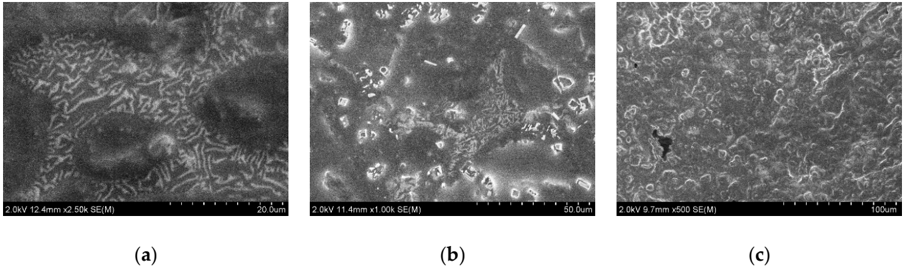
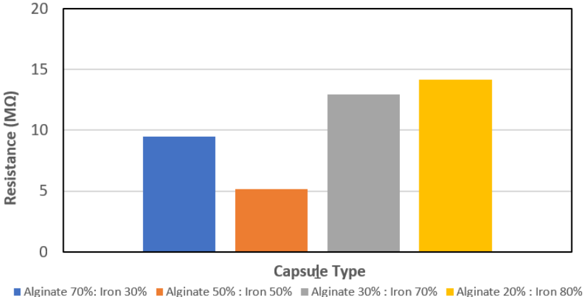
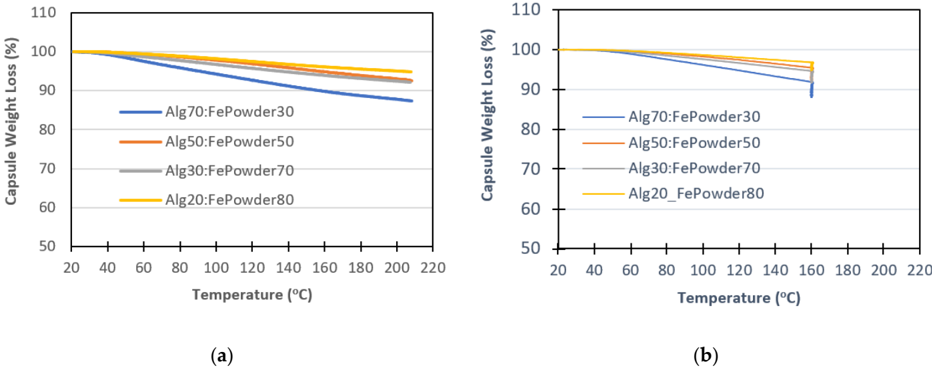
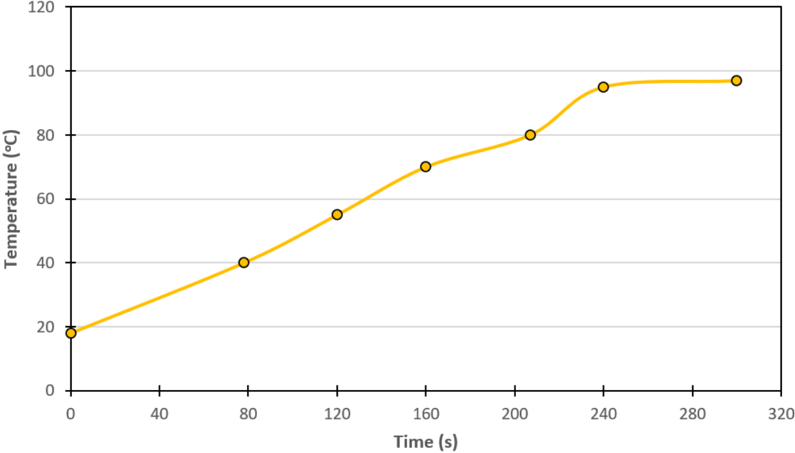
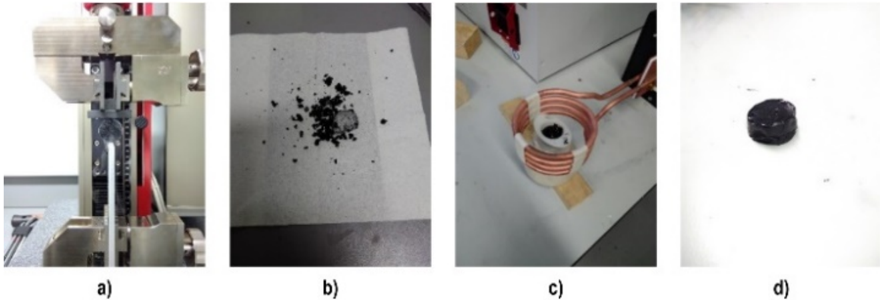
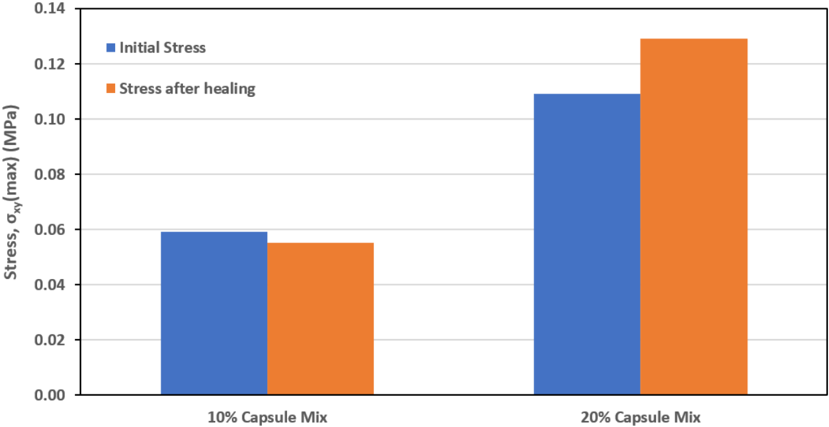
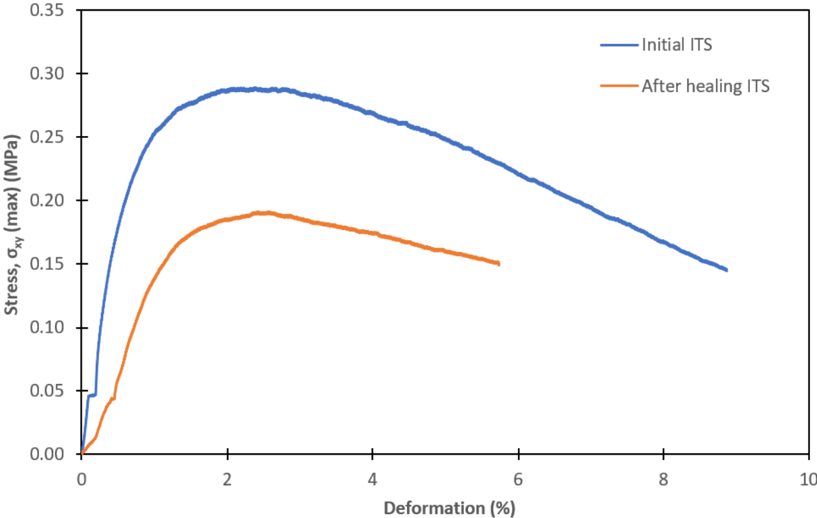
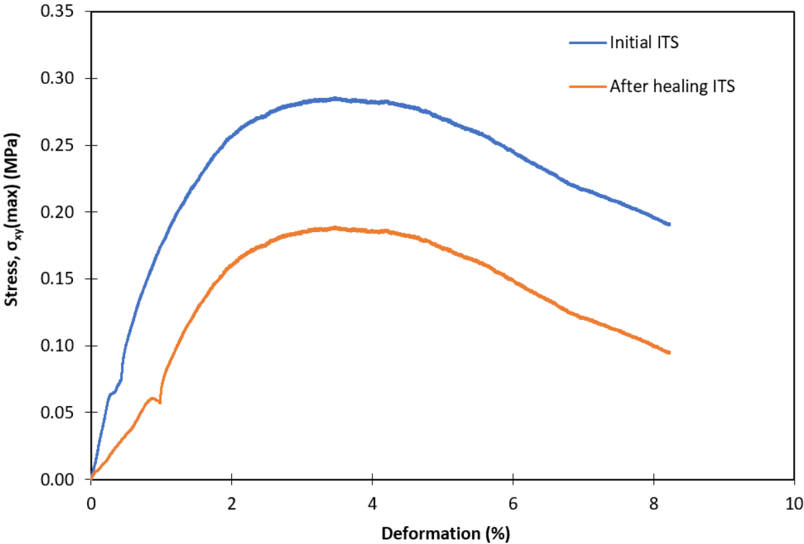
This paper explores the potential use of conductive alginate capsules encapsulating a bitumen rejuvenator as a new extrinsic self-healing asphalt method. The capsules combine two existing self-healing asphalt technologies: (1) rejuvenator encapsulation and (2) induction heating to create a self-healing system that will provide rapid and effective asphalt pavement repair. The work presents a proof of concept for the encapsulation process, which involves embedding the capsules into the bitumen mortar mixture and the survival rate of the capsules in the asphalt mixture. A drip capsule production process was adopted and scaled up to the production of 20l wet capsules at rate of 0.22 l/min. To prove the effectiveness and its ability to survive asphalt production process, the capsules were prepared and subjected to thermogravimetric analysis (TGA) and uniaxial compression Test (UCT). The test results demonstrated that the capsules had suitable thermal characteristics and mechanical strength to survive the asphalt mixing and compaction process. Scanning electron microscopy (SEM) was employed to investigate physiological properties, such as rejuvenator (oil) and iron particle distribution, within the capsules. The electrical resistance tests proved that the capsules were capable of conducting electrical current. The capsules were also tested for their conductive properties in order to determine whether they are capable of conducting and distributing the heat once subjected to induction heating. The results showed that capsules containing higher amounts of iron (alginate/iron powder in a ratio of 20:80 by weight) can efficiently conduct and distribute heat. To prove its success as an asphalt healing system, conductive alginate capsules encapsulating a bitumen rejuvenator were embedded in a bitumen mortar mix. The samples where then subjected to local damaging and healing events, and the degree of healing was quantified. The research findings indicate that conductive alginate capsules encapsulating a bitumen rejuvenator present a promising new approach for the development of an extrinsic self-healing asphalt pavement systems.
Overview
The claims and statistics of this paper haven’t been checked yet.
Run the check — free, no account needed. It reads the open-access text and checks the sources it cites.
Integrity signals
Registry
Cites
Statistics
Figures
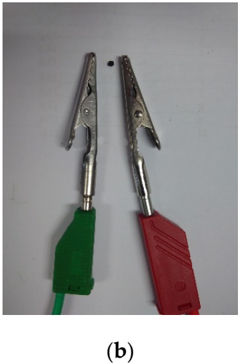
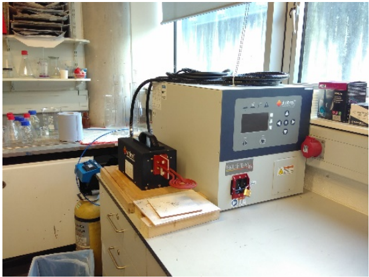
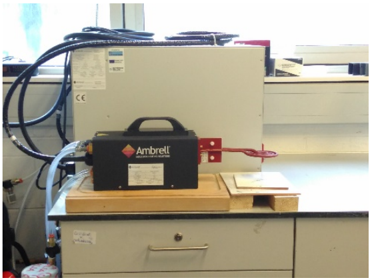
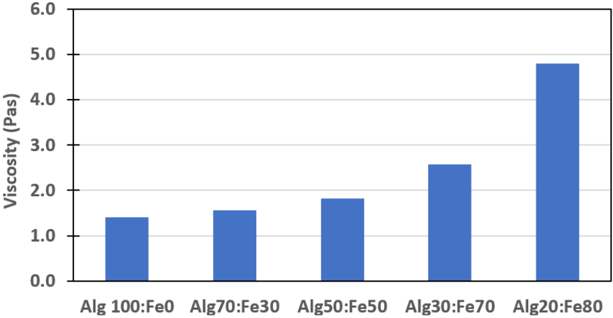
Verification
Claims the paper makes
The claims and statistics of this paper haven’t been checked yet.
Run the check — free, no account needed. It reads the open-access text and checks the sources it cites.
Claims other papers make about this one
Each is checked against this paper’s own text: does it say what the citing paper says it does?
In the citing paper
“Currently, they are applied for relatively low power in the range of 300-800 W as laboratory equipment, using cylindrical inductors for heating magnetic elements [37,38].”
Self-check
Percentages, sums and reported differences re-computed from the paper’s own numbers.
The self-check needs the paper’s full text.
Citations
Cites
No references could be resolved yet.
Research works printed but not linked: 22
- Braak, 2017, The compartmented alginate fibres optimisation for bitumen rejuvenator encapsulation, J. Traffic Transp. Eng., 4, 347
- Xu, 2018, Self-Healing Asphalt Review: From Idea to Practice, Adv. Mater. Interfaces, 5, 1800536, 10.1002/admi.201800536 · DOI
- Hager, M.D., van der Zwaag, S., and Schubert, U.S. (2016). Self-Healing Technology for Asphalt Pavements. Self-Healing Materials, Springer International Publishing. · DOI
- Leegwater, G., Tabokovi, A., Baglieri, O., and Hammoum, F. (2020, January 8–10). Terms and definitions on crack-healing and restoration of mechanical properties in bituminous materials. Proceedings of the RILEM International Symposium on Bituminous Materials, Lyon, France. · DOI
- Butt, 2012, Optimizing Highway Lifetime by Improving the Self-Healing Capacity of Asphalt, Procidia Soc. Behav. Sci., 48, 2190, 10.1016/j.sbspro.2012.06.1192 · DOI
- Schlangen, 2009, Electrical conductivity of asphalt mortar containing conductive fibers and fillers, Constr. Build. Mater., 21, 3175
- Schlangen, 2012, A simple model to define induction heating in asphalt mastic, Constr. Build. Mater., 31, 38, 10.1016/j.conbuildmat.2011.12.046 · DOI
- Liu, Q. (2012). Induction Healing of Porous Asphalt Concrete. [Ph.D. Thesis, Delft University of Technology].
- Bueno, 2016, Damage detection and artificial healing of asphalt concrete after trafficking with a load simulator, Mech. Time Depend. Mater., 20, 265, 10.1007/s11043-016-9306-z · DOI
- Garcia, 2016, Self-healing of asphalt mixture by microwave and induction heating, Mater. Des., 106, 404, 10.1016/j.matdes.2016.05.095 · DOI
- Serpell, 2016, Effect of fibres addition on the physical and mechanical properties of asphalt mixtures with crack-healing purposes by microwave radiation, Constr. Build. Mater., 127, 369, 10.1016/j.conbuildmat.2016.10.005 · DOI
- Wan, 2021, A novel microwave induced oil release pattern of calcium alginate/nano-Fe3O4 composite capsules for asphalt self-healing, J. Clean. Prod., 297, 126721, 10.1016/j.jclepro.2021.126721 · DOI
- Post, 2016, Reinforcement and healing of asphalt mixtures by rejuvenator encapsulation in alginate compartmented fibres, Smart Mater. Struct., 25, 084003, 10.1088/0964-1726/25/8/084003 · DOI
- Xu, 2018, Calcium alginate capsules encapsulating rejuvenator as healing system for asphalt mastic, Constr. Build. Mater., 169, 379, 10.1016/j.conbuildmat.2018.01.046 · DOI
- 2020, Recent advances on self-healing of bituminous materials by the action of encapsulated rejuvenators, Constr. Build. Mater., 258, 119568, 10.1016/j.conbuildmat.2020.119568 · DOI
- Tabaković, A., Schuyffel, L., Karač, A., and Schlangen, E. (2017). An Evaluation of the Efficiency of Compartmented Alginate Fibres Encapsulating a Rejuvenator as an Asphalt Pavement Healing System. Appl. Sci., 7. · DOI
- Xu, 2020, A novel self-healing system: Towards a sustainable porous asphalt, J. Clean. Prod., 259, 120815, 10.1016/j.jclepro.2020.120815 · DOI
- Zemskov, 2011, Two analytical models for the probability characteristics of a crack hitting encapsulated particles: Application to self-healing materials, J. Comput. Mater. Sci., 50, 10, 10.1016/j.commatsci.2011.06.024 · DOI
- Gibney, 2010, Modelling the quasi-static behaviour of bituminous material using a cohesive zone model, Eng. Fract. Mech., 77, 2403, 10.1016/j.engfracmech.2010.06.023 · DOI
- Mohan, 2013, Effect of prepreg storage humidity on the mixed-mode fracture toughness of a co-cured composite joint, Compos. Part A Appl. Sci. Manuf., 45, 12, 10.1016/j.compositesa.2012.09.010 · DOI
- Johnson, K.L. (1985). Contact Mechanics, Cambridge University Press. · DOI
- Liu, 2010, Induction heating of electrically conductive porous asphalt concrete, Constr. Build. Mater., 24, 1207, 10.1016/j.conbuildmat.2009.12.019 · DOI
Cited by
Dimitrov, B., Hayatleh, K., Barker, S., & Collier, G. (2021) · Electricity · doi:10.3390/electricity2040026 · Cited by 3
Metadata
- Authors
- Tabaković, A., Mohan, J., & Karač, A.
- Venue
- Processes
- Publisher
- MDPI AG
- Published
- 2021-08-03
- Volume
- 9
- Issue
- 8
- Pages
- 1361
- ISSN
- 2227-9717
- Cited by
- 17
- References
- 0
- Language
- en
- Funders
- Enterprise Ireland (CF 20191063P)
About these checks
Registry, retraction, Cites and statistics results are computed, not judged, with one exception: a printed reference that no index lists is read once by a model before it counts as a citation error. Claims are extracted by a model and kept only when their quote appears verbatim in the text; each cited source is then checked, with a model’s help, for whether it says what the claim relies on. Those verdicts can be wrong — read the claim’s quote and the cited source before relying on one.
Statistics and arithmetic are recomputed, not judged.
Confidence bands are shown only for fields calibrated on our annotated test set. None is calibrated yet, so no band is shown.
What counts as a claim ›How we measure confidence ›How we check this ›
Are you an author, or do you see a problem with this page? Request a review
How to cite
Cite CoChat for the checks on this page, and the paper for its own findings.
- This page
- CoChat. (2026). Citation check: Conductive Compartmented Capsules Encapsulating a Bitumen Rejuvenator. https://app.cochat.ai/papers/10.3390/pr9081361
- The paper
- Tabaković, A., Mohan, J., & Karač, A. (2021). Conductive Compartmented Capsules Encapsulating a Bitumen Rejuvenator. Processes. https://doi.org/10.3390/pr9081361
Data sources
Bibliographic data: Semantic Scholar, OpenAlex, Crossref.
Contains information from the Semantic Scholar Academic Graph Datasets, made available under the ODC Attribution License (ODC-BY 1.0).
Semantic Scholar’s data is described in: Kinney, R., et al. (2023). The Semantic Scholar Open Data Platform. arXiv:2301.10140.
