

Algorithms based on CWT and classifiers to control cardiac alterations and stress using an ECG and a SCR.
Open accessThe DOI matches its Crossref record; 45 of the 45 references it cites were found in a registry or an index.
Abstract
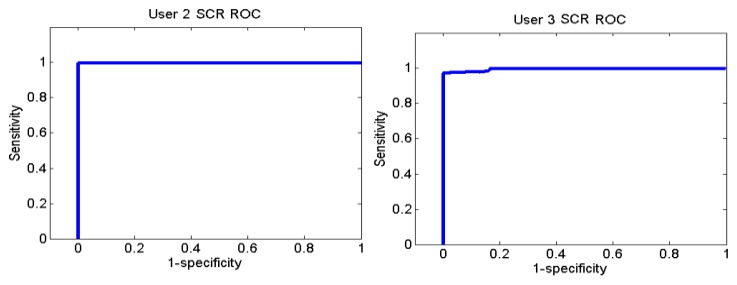
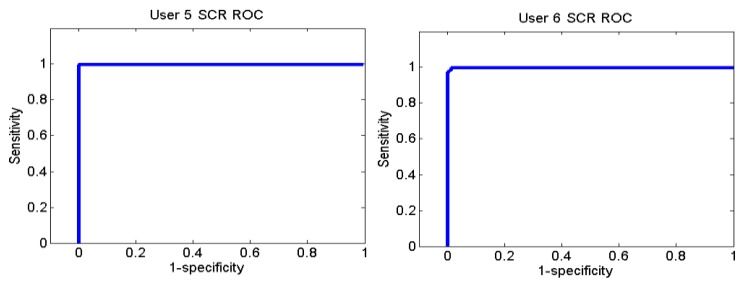
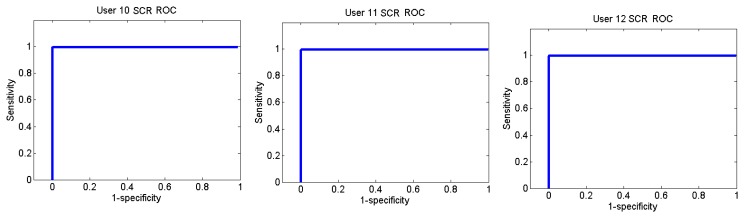
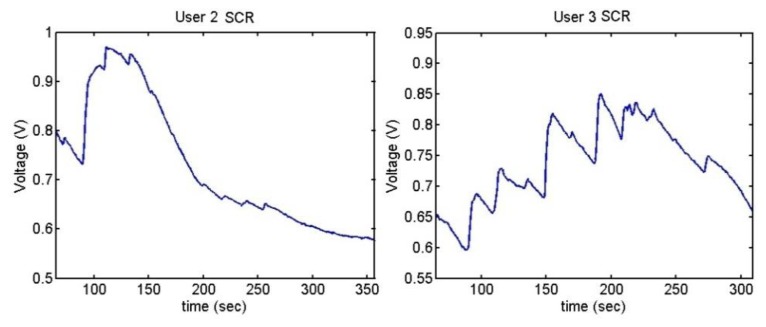
This paper presents the results of using a commercial pulsimeter as an electrocardiogram (ECG) for wireless detection of cardiac alterations and stress levels for home control. For these purposes, signal processing techniques (Continuous Wavelet Transform (CWT) and J48) have been used, respectively. The designed algorithm analyses the ECG signal and is able to detect the heart rate (99.42%), arrhythmia (93.48%) and extrasystoles (99.29%). The detection of stress level is complemented with Skin Conductance Response (SCR), whose success is 94.02%. The heart rate variability does not show added value to the stress detection in this case. With this pulsimeter, it is possible to prevent and detect anomalies for a non-intrusive way associated to a telemedicine system. It is also possible to use it during physical activity due to the fact the CWT minimizes the motion artifacts.
Overview
The claims and statistics of this paper haven’t been checked yet.
Free: it reads the open-access text and checks the first 5 claims that cite a source we can check. Create a free account to check every claim.
Integrity signals
Registry
Cites
Statistics
Figures






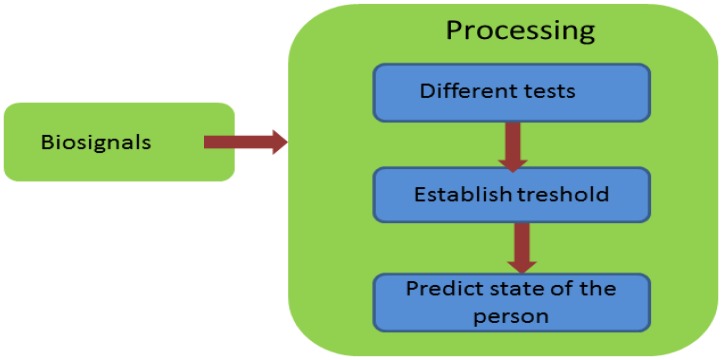
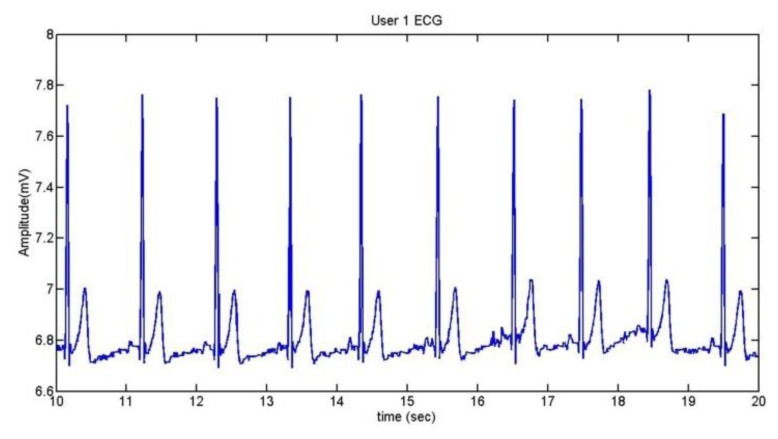

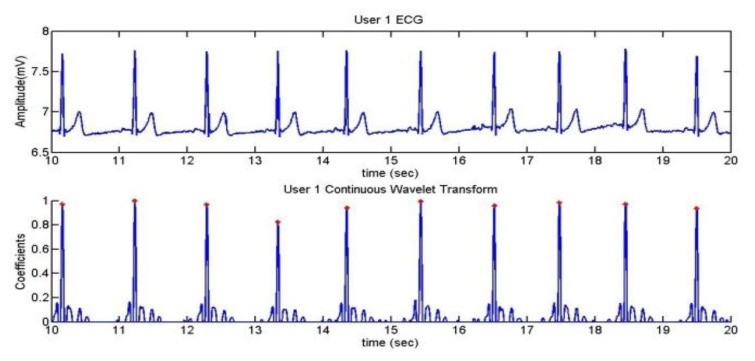


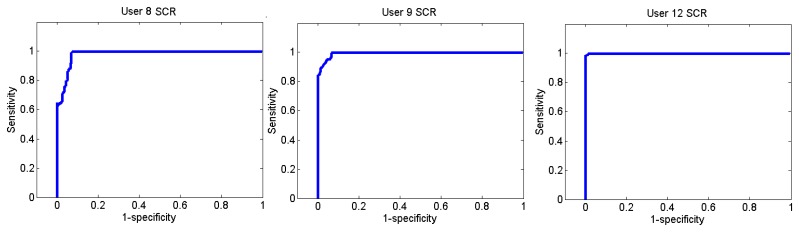




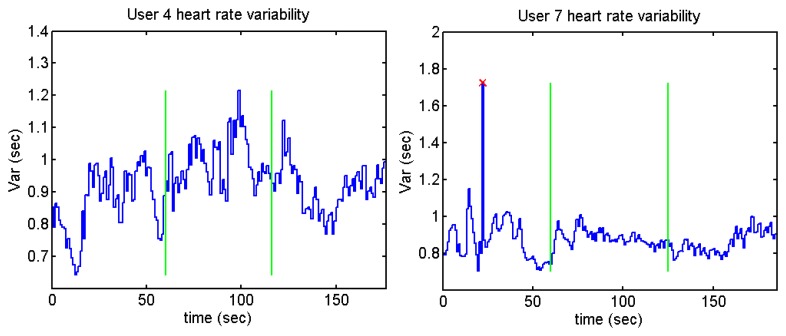

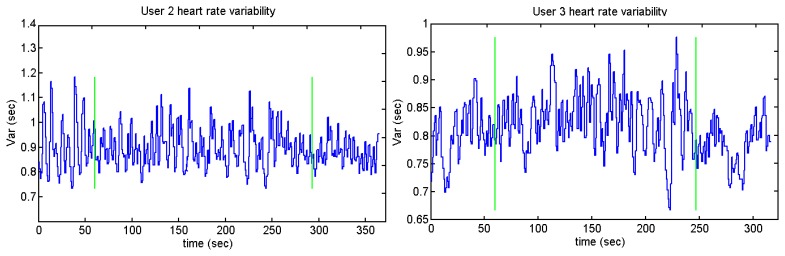
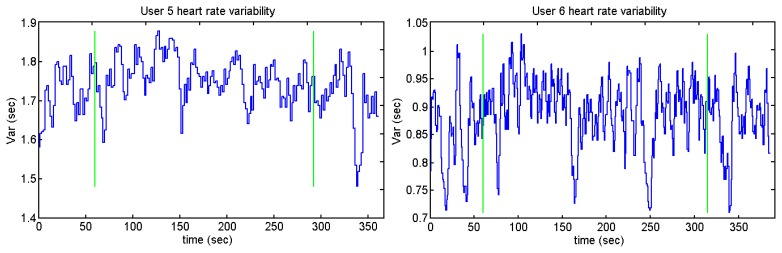
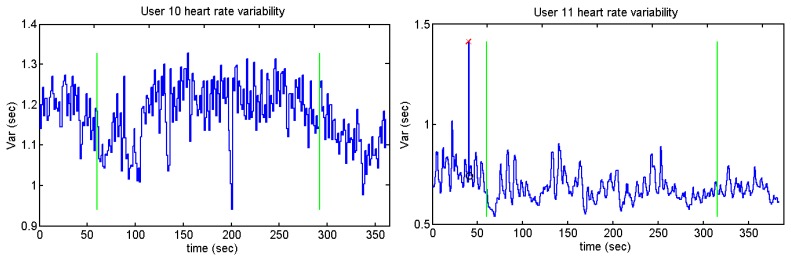

Verification
Claims the paper makes
The claims and statistics of this paper haven’t been checked yet.
Free: it reads the open-access text and checks the first 5 claims that cite a source we can check. Create a free account to check every claim.
Claims other papers make about this one
Each is checked against this paper’s own text: does it say what the citing paper says it does?
The cited source says what the claim attributes to it.
In the citing paper
“Specific algorithms like continuous wavelet transformation minimizes motion artifact (Villarejo et al., 2013), however, this only addresses one aspect of the issue because concerns related to interpretation of the data remain (Malik, 1996).”
From Heart Rate Variability and Cardiac Vagal Tone in Psychophysiological Research – Recommendations for Experiment Planning, Data Analysis, and Data Reporting (2017) · cites this paper as Villarejo et al., 2013
Self-check
Percentages, sums and reported differences re-computed from the paper’s own numbers.
The self-check needs the paper’s full text.
Citations
Cites
Detecting Stress During Real-World Driving Tasks Using Physiological Sensors
Healey, J. A., & Picard, R. W. (2005) · IEEE Transactions on Intelligent Transportation Systems · doi:10.1109/tits.2005.848368 · Cited by 2,207 · cited 1×
“In [31] Healey and Picard describe methods of detecting stress levels in drivers with an accuracy of 90% by recording ECG, electromyogram (EMG), skin response and breathing rate (BR).”
MethodThe principles of software QRS detection
Kohler, B.-U., Hennig, C., & Orglmeister, R. (2002) · IEEE Engineering in Medicine and Biology Magazine · doi:10.1109/51.993193 · Cited by 1,242 · cited 1×
“In [21], Koheler et al. reviewed and compared different algorithms to detect the QRS complex.”
The use of the Hilbert transform in ECG signal analysis
Benitez, D., Gaydecki, P. A., Zaidi, A., & Fitzpatrick, A. P. (2001) · Computers in Biology and Medicine · doi:10.1016/s0010-4825(01)00009-9 · Cited by 489 · cited 1×
“In [22], Benitez et al. describe an algorithm based on the Hilbert transform which differentiates the R wave, the T peak and the P wave with an average of 99.87% sensitivity while minimising the motion artefacts.”
MethodInfluentialSmart Vest: Wearable multi-parameter remote physiological monitoring system
Pandian, P. S., Mohanavelu, K., Safeer, K. P., Kotresh, T. M., Shakunthala, D. T., Gopal, P., & Padaki, V. C. (2008) · Medical Engineering & Physics · doi:10.1016/j.medengphy.2007.05.014 · Cited by 423 · cited 1×
“There are other wearable systems which acquire more data such as [19]: they use one shirt which measures ECG, PPG, BP, temperature, GSR and HR.”
BackgroundWireless sensor network based wearable smart shirt for ubiquitous health and activity monitoring
Lee, Y.-D., & Chung, W.-Y. (2009) · Sensors and Actuators B: Chemical · doi:10.1016/j.snb.2009.04.040 · Cited by 382 · cited 1×
“In [17] a shirt which combines an ECG and an accelerometer is presented.”
BackgroundUltra short term analysis of heart rate variability for monitoring mental stress in mobile settings.
Salahuddin, L., Cho, J., Jeong, M. G., & Kim, D. (2007) · 2007 29th Annual International Conference of the IEEE Engineering in Medicine and Biology Society · doi:10.1109/iembs.2007.4353378 · Cited by 374 · cited 1×
“This test has been used in different studies to induce stress in people [11,12].”
MethodStress monitoring using a distributed wireless intelligent sensor system
Jovanov, E., O'Donnell Lords, A., Raskovic, D., Cox, P. G., Adhami, R., & Andrasik, F. (2003) · IEEE Engineering in Medicine and Biology Magazine · doi:10.1109/memb.2003.1213626 · Cited by 373 · cited 1×
“The heart rate variability (HRV) is acquired in [33] to detect stress parameters.”
BackgroundA Stress Sensor Based on Galvanic Skin Response (GSR) Controlled by ZigBee
Villarejo, M. V., Zapirain, B. G., & Zorrilla, A. M. (2012) · Sensors · doi:10.3390/s120506075 · Cited by 315 · cited 1×
“The different components of the device can be seen in [39].”
BackgroundSelf-citationAbstract Harmonic Analysis of Continuous Wavelet Transforms
Führ, H. (2005) · Lecture Notes in Mathematics · doi:10.1007/b104912 · Cited by 274 · cited 1×
“In this case, the signals to analyse have been given by the ECG and the method used to analyse them is the Continuous Wavelet Transform (CWT) [9].”
MethodBury, M. R. (2005) · Medical Entomology and Zoology · Cited by 243
A Stress-Detection System Based on Physiological Signals and Fuzzy Logic
de Santos Sierra, A., Sanchez Avila, C., Guerra Casanova, J., & Bailador del Pozo, G. (2011) · IEEE Transactions on Industrial Electronics · doi:10.1109/tie.2010.2103538 · Cited by 224 · cited 1×
“In [35], Santos et al.”
Pervasive Healthcare Computing
Varshney, U. (2009) · Springer eBooks · doi:10.1007/978-1-4419-0215-3 · Cited by 215
A Mobile Care System With Alert Mechanism
Lee, R.-G., Chen, K.-C., Hsiao, C.-C., & Tseng, C.-L. (2007) · IEEE Transactions on Information Technology in Biomedicine · doi:10.1109/titb.2006.888701 · Cited by 209 · cited 1×
“In this case, the system could act by warning the specialist about any problem detected [4].”
BackgroundA new QRS detection algorithm based on the Hilbert transform
Benitez, D. S., Gaydecki, P. A., Zaidi, A., & Fitzpatrick, A. P. (2002) · Computers in Cardiology 2000. Vol.27 (Cat. 00CH37163) · doi:10.1109/cic.2000.898536 · Cited by 198
A Real-Time Human Stress Monitoring System Using Dynamic Bayesian Network
Liao, W., Zhang, W., Zhu, Z., & Ji, Q. (2006) · 2005 IEEE Computer Society Conference on Computer Vision and Pattern Recognition (CVPR'05) - Workshops · doi:10.1109/cvpr.2005.394 · Cited by 169 · cited 1×
“A real time system that monitors stress is presented in [37], using the Dynamic Bayesian Network (DBN) to model the stress of the user.”
MethodDuration of QRS Complex in Resting Electrocardiogram Is a Predictor of Sudden Cardiac Death in Men
Kurl, S., Mäkikallio, T. H., Rautaharju, P., Kiviniemi, V., & Laukkanen, J. A. (2012) · Circulation · doi:10.1161/circulationaha.111.025577 · Cited by 159 · cited 1×
“In [5] Kurl et al. show that the duration of the QRS complex is related to cardiac death, which indicates that it is necessary to record the electrocardiogram (ECG) regularly to avoid sudden cardiac death episodes.”
BackgroundSympathetic neural responses to mental stress: responders, nonresponders and sex differences
Carter, J. R., & Ray, C. A. (2009) · American Journal of Physiology-Heart and Circulatory Physiology · doi:10.1152/ajpheart.01234.2008 · Cited by 139 · cited 1×
“In [32], Carter et al. study the relationship between muscle sympathetic nerve activity (MSNA), BP and HR.”
BackgroundA review on stress inducement stimuli for assessing human stress using physiological signals
Karthikeyan, P., Murugappan, M., & Yaacob, S. (2011) · 2011 IEEE 7th International Colloquium on Signal Processing and its Applications · doi:10.1109/cspa.2011.5759914 · Cited by 86 · cited 1×
“This test has been used in different studies to induce stress in people [11,12].”
MethodRemoval of Respiratory Influences From Heart Rate Variability in Stress Monitoring
Choi, J., & Gutierrez-Osuna, R. (2011) · IEEE Sensors Journal · doi:10.1109/jsen.2011.2150746 · Cited by 58 · cited 1×
“Jongyoon and Gutierrez-Osuna [34] propose removing the respiratory influences in HRV in order to obtain a better analysis.”
BackgroundJan, Y., Struck, B. D., Foreman, R. D., & Robinson, C. (2009) · Microvascular Research · doi:10.1016/j.mvr.2009.05.004 · Cited by 57 · cited 1×
“The study described in [29], analyses blood flow oscillations (BFO) to study their contribution to the skin vasodilatory response.”
BackgroundSteptoe, A. (2008) · SAGE Publications Ltd eBooks · doi:10.4135/9781848608153.n7 · Cited by 52 · cited 1×
“Within the field of monitoring, it is also important to detect the stress levels of a person because they can negatively affect health [6].”
BackgroundZigBee Device Access Control and Reliable Data Transmission in ZigBee Based Health Monitoring System
Jung, J.-W., & Lee, J. (2008) · International Conference on Advanced Communication Technology · doi:10.1109/icact.2008.4493875 · Cited by 51 · cited 1×
“However, there are healthcare applications that communicate via ZigBee, as seen in [7,8].”
BackgroundAutomatic Detection of ECG Ventricular Activity Waves using Continuous Spline Wavelet Transform
Alvarado-Serrano, C., Arregui, J., Ramos, J. M., & Pallas-Areny, R. (2005) · National Conference on Electrical and Electronics Engineering (ELECO) · doi:10.1109/iceee.2005.1529605 · Cited by 48 · cited 2×
“Alvarado et al. [25] propose a method based on the CWT with splines taking various scales into consideration to detect the QRS complex, obtaining an accuracy of 99.5%.”
MethodInfluentialEasiMed: A remote health care solution
Zhao, Z. P., & Cui, L. (2005) · Annual International Conference of the IEEE Engineering in Medicine and Biology Society (EMBC) · doi:10.1109/iembs.2005.1616885 · Cited by 44 · cited 1×
“However, there are healthcare applications that communicate via ZigBee, as seen in [7,8].”
BackgroundDetection of Small Variations Of ECG Features Using Wavelet
Haque, A., Ali, M. H., Kiber, M. A., & Hasan, M. T. (2009) · Cited by 43
Support Vector Machine for Cardiac Beat Detection in Single Lead Electrocardiogram
Mehta, S. S., & Lingayat, N. S. (2007) · International MultiConference of Engineers and Computer Scientists · Cited by 41
Understanding affective interaction: Emotion, engagement, and internet videos
Bardzell, S., Bardzell, J., & Pace, T. (2009) · International Conference on Affective Computing and Intelligent Interaction and workshops · doi:10.1109/acii.2009.5349551 · Cited by 40 · cited 1×
“This pulsimeter has been used in other studies before [38].”
MethodFukui, S., Fujita, J., Tsujimura, M., Sumikawa, Y., & Hayashi, Y. (2011) · International Journal of Nursing Studies · doi:10.1016/j.ijnurstu.2011.05.001 · Cited by 38 · cited 1×
“Remote monitoring systems are not only used to detect anomalies, but they are also used by chronic patients to control their constants while at home, without the need to be in hospital, thus improving the patients’ quality of life [2,3].”
BackgroundEstrés, enfermedad cardiovascular e hipertensión arterial
Armario, P., del Rey, R. H., & Martín‐Baranera, M. (2002) · Medicina Clínica · doi:10.1016/s0025-7753(02)73301-0 · Cited by 33 · cited 1×
“Excessive stress can increase the risk of contracting diseases [10], so it is important to control some emotional states to reduce stress levels.”
BackgroundRobust Detection Of R-Wave Using Wavelet Technique
Pachauri, A., & Bhuyan, M. (2009) · doi:10.5281/zenodo.1327826 · Cited by 27
Continuous monitoring versus HOLTER ECG for detection of atrial fibrillation in patients with stroke
Gumbinger, C., Krumsdorf, U., Veltkamp, R. C., Hacke, W., & Ringleb, P. A. (2011) · European Journal of Neurology · doi:10.1111/j.1468-1331.2011.03519.x · Cited by 25 · cited 1×
“In recent years, there has been an increase in the number of remote health monitoring applications due to the importance of detecting anomalies and illness or diseases [1].”
BackgroundBluetooth Portable Device for Continuous ECG and Patient Motion Monitoring During Daily Life
Bifulco, P., Gargiulo, G. D., Romano, M., Fratini, A., & Cesarelli, M. (2007) · Springer eBooks · doi:10.1007/978-3-540-73044-6_94 · Cited by 25
Saponara, S., Donati, M., Bacchillone, T., Sanchez-Tato, I., Carmona, C., Fanucci, L., & Barba, P. (2012) · IEEE Sensors Applications Symposium (SAS) · doi:10.1109/sas.2012.6166310 · Cited by 24 · cited 1×
“In [14] a solution which integrates different devices via Bluetooth is described, providing a solution for the monitoring of patients who suffer Chronic Heart Failure (CHF).”
Real-Time Monitoring of ECG and GSR Signals during Computer-Based Training
Brawner, K., & Goldberg, B. (2012) · Lecture notes in computer science · doi:10.1007/978-3-642-30950-2_10 · Cited by 22 · cited 1×
“In [30] Brawner and Goldberg describe an experiment whose objective is to provide teachers with the physiological answers (GSR and ECG) of their students in order to find out the reaction to different questions.”
BackgroundGil, Y., Wu, W., & Lee, J. (2012) · Sensors · doi:10.3390/s120810381 · Cited by 21 · cited 1×
“Gil et al. [16] show a developed system that measures EEG, ECG, respiration and PPG via Bluetooth.”
BackgroundEEG Spectral Analysis in Serious Gaming: An Ad Hoc Experimental Application
Minchev, Z. B., Dukov, G., & Georgiev, S. (2009) · DOAJ (DOAJ: Directory of Open Access Journals) · Cited by 14
ECG Analysis using Continuous Wavelet Transform (CWT)
Gautam, A. (2012) · IOSR Journal of Engineering · doi:10.9790/3021-0204632635 · Cited by 12
WEARABLE TECHNOLOGIES FOR EMOTION COMMUNICATION
Mura, G. (2008) · Cited by 12
Application of Wavelet Based Denoising for T-Wave Alternans Analysis in High Resolution ECG Maps
Janusek, D., Kania, M., Zaczek, R., Zavala-Fernandez, H., Zbiec, A., Opolski, G., & Maniewski, R. (2011) · Measurement Science Review · doi:10.2478/v10048-011-0036-8 · Cited by 11 · cited 1×
“In [24], the authors implement a method based on a Wavelet Transform to analyse TWA in order to predict the vulnerability of ventricular arrhythmia.”
MethodThe Effect of Palliative Care in Home Care and Hospital on Quality of Life
Jocham, H. R., Dassen, T. W. N., Widdershoven, G. A. M., Middel, B. J., & Halfens, R. J. G. (2009) · Journal of Hospice and Palliative Nursing · doi:10.1097/njh.0b013e31819985d9 · Cited by 10 · cited 1×
“Remote monitoring systems are not only used to detect anomalies, but they are also used by chronic patients to control their constants while at home, without the need to be in hospital, thus improving the patients’ quality of life [2,3].”
BackgroundPandey, B., & Mishra, R. B. (2010) · International Journal of Knowledge Engineering and Soft Data Paradigms · doi:10.1504/ijkesdp.2010.034682 · Cited by 9 · cited 1×
“In [20], Pandey and Mishra describe a method for detecting cardiac diseases from ECG.”
MethodA QRS Detector Based on Haar Wavelet, Evaluation with MIT-BIH Arrhythmia and European ST-T Databases
Gutiérrez-Santiago, A., Lara, M., & Hernández, P. R. (2005) · LA Referencia (Red Federada de Repositorios Institucionales de Publicaciones Científicas) · doi:10.13053/cys-8-4-1096 · Cited by 9 · cited 1×
“The results obtained have a similar success than studies that used MIT-BIH Arrhythmia Database: 96.65% in [42], 98.81% for T wave and ST segment detection in [43] and 99.64% in [44].”
ResultInfluentialGutiérrez-Santiago, A., Lara, M., & Hernández, P. R. (2005) · LA Referencia (Red Federada de Repositorios Institucionales de Publicaciones Científicas) · Cited by 8
A Simple Wavelet Method for Automated Detection of Epileptic Neural Spikes in Electroencephalogram
Abibullaev, B., Kang, W., Lee, S. H., & An, J. (2010) · INTERNATIONAL JOURNAL ON Advances in Information Sciences and Service Sciences · doi:10.4156/aiss.vol2.issue2.11 · Cited by 8 · cited 1×
“In [27], the authors present a method based on CWT to identify EEG seizure activities in order to detect epileptic events.”
MethodRamirez, O. J. V., Cardona, E. D., & Piedrahita, J. H. R. (2006) · Scientia et technica · doi:10.22517/23447214.6379 · Cited by 5 · cited 1×
“Once this peak is detected it is possible to obtain the QRST features, according to the time intervals in each wave [40].”
Background
Research works printed but not linked: 1
- Steptoe, A., and Ayers, S. (2005). The SAGE Handbook of Health Psychology, SAGE Publication. Chapter 7.
Cited by
Laborde, S., Mosley, E., & Thayer, J. F. (2017) · Frontiers in Psychology · doi:10.3389/fpsyg.2017.00213 · Cited by 2,336
“Specific algorithms like continuous wavelet transformation minimizes motion artifact (Villarejo et al., 2013), however, this only addresses one aspect of the issue because concerns related to interpretation of the data remain (Malik, 1996).”
BackgroundMohammed, M. A., Abdulkareem, K. H., Al-Waisy, A. S., Mostafa, S. A., Al-Fahdawi, S., Dinar, A. M., Alhakami, W., Baz, A., Al-Mhiqani, M. N., Alhakami, H., et al. (2020) · IEEE Access · doi:10.1109/access.2020.2995597 · Cited by 193
“Medical professionals facing a big challenge when making decisions of using the computer-decision support system [6], [11] to provide a reliable solution which helps them investigate a particular sophisticated disease such as COVID-19 [2].”
BackgroundSoon, S., Svavarsdottir, H. S., Downey, C. L., & Jayne, D. G. (2020) · BMJ Innovations · doi:10.1136/bmjinnov-2019-000354 · Cited by 151
A scoping review of heart rate variability in sport and exercise psychology
Mosley, E., & Laborde, S. (2022) · International Review of Sport and Exercise Psychology · doi:10.1080/1750984x.2022.2092884 · Cited by 96
Resting high frequency heart rate variability selectively predicts cooperative behavior
Beffara, B., Bret, A., Vermeulen, N., & Mermillod, M. (2016) · Physiology & Behavior · doi:10.1016/j.physbeh.2016.06.011 · Cited by 67
Metadata
- Authors
- Villarejo, M., Zapirain, B., & Zorrilla, A.
- Affiliations
- Universidad de Deusto (ES)
- DeustoTech-Life Unit, DeustoTech Institute of Technology, University of Deusto, 48007 Bilbao, Spain
- Corresponding author
- Zorrilla, Amaia
- Venue
- Sensors
- Publisher
- MDPI AG
- Published
- 2013-05-10
- Volume
- 13
- Issue
- 5
- Pages
- 6141-6170
- ISSN
- 1424-8220 (ISSN-L)
- PMC
- PMC3690048
- OpenAlex
- W1985714831
- Cited by
- 20
- References
- 45
- Citations by year
- 2024: 1 · 2023: 1 · 2022: 1 · 2021: 2 · 2020: 4 · 2019: 1 · 2018: 1 · 2017: 1 · 2016: 5 · 2015: 3
- FWCI
- 1.81
- Type
- journal article
- Language
- en
- Open access
- gold
- doi.org
- Licence
- Locations
- Sensors (publishedVersion, cc-by)
- Europe PMC (PubMed Central) (publishedVersion, cc-by)
- PubMed Central (publishedVersion, cc-by)
- PubMed (publishedVersion)
- DOAJ (DOAJ: Directory of Open Access Journals) (submittedVersion, cc-by-sa)
- Funders
- Eusko Jaurlaritza
- Topics
- Health Sciences › Medicine › Cardiology and Cardiovascular Medicine › ECG Monitoring and Analysis
- Physical Sciences › Engineering › Biomedical Engineering › Non-Invasive Vital Sign Monitoring
- Health Sciences › Medicine › Cardiology and Cardiovascular Medicine › Heart Rate Variability and Autonomic Control
- Keywords
- arrhythmia detection, heartbeat detection, stress detection, skin conductance response, electrocardiogram, continuous wavelet transform, J48 classifier, wireless physiological monitoring, telemedicine, motion artifact reduction, home health monitoring
- MeSH terms
- Adult, Algorithms, Electricity, Electrocardiography, Female, Galvanic Skin Response, Heart, Heart Rate, Humans, Male, Monitoring, Physiologic, ROC Curve, Stress, Physiological, Young Adult, Stroop Test, Wavelet Analysis
About these checks
Registry, retraction, Cites and statistics results are computed, not judged, with one exception: a printed reference that no index lists is read once by a model before it counts as a citation error. Claims are extracted by a model and kept only when their quote appears verbatim in the text; each cited source is then checked, with a model’s help, for whether it says what the claim relies on. Those verdicts can be wrong — read the claim’s quote and the cited source before relying on one.
Statistics and arithmetic are recomputed, not judged.
Confidence bands are shown only for fields calibrated on our annotated test set. None is calibrated yet, so no band is shown.
What counts as a claim ›How we measure confidence ›How we check this ›
Are you an author, or do you see a problem with this page? Request a review
Data sources
Bibliographic data: Semantic Scholar, OpenAlex, Crossref.
Contains information from the Semantic Scholar Academic Graph Datasets, made available under the ODC Attribution License (ODC-BY 1.0).
Semantic Scholar’s data is described in: Kinney, R., et al. (2023). The Semantic Scholar Open Data Platform. arXiv:2301.10140.
