

A Locomotion Intent Prediction System Based on Multi-Sensor Fusion
Open accessThe DOI matches its Crossref record; 48 of the 49 references it cites were found in a registry or an index.
Abstract
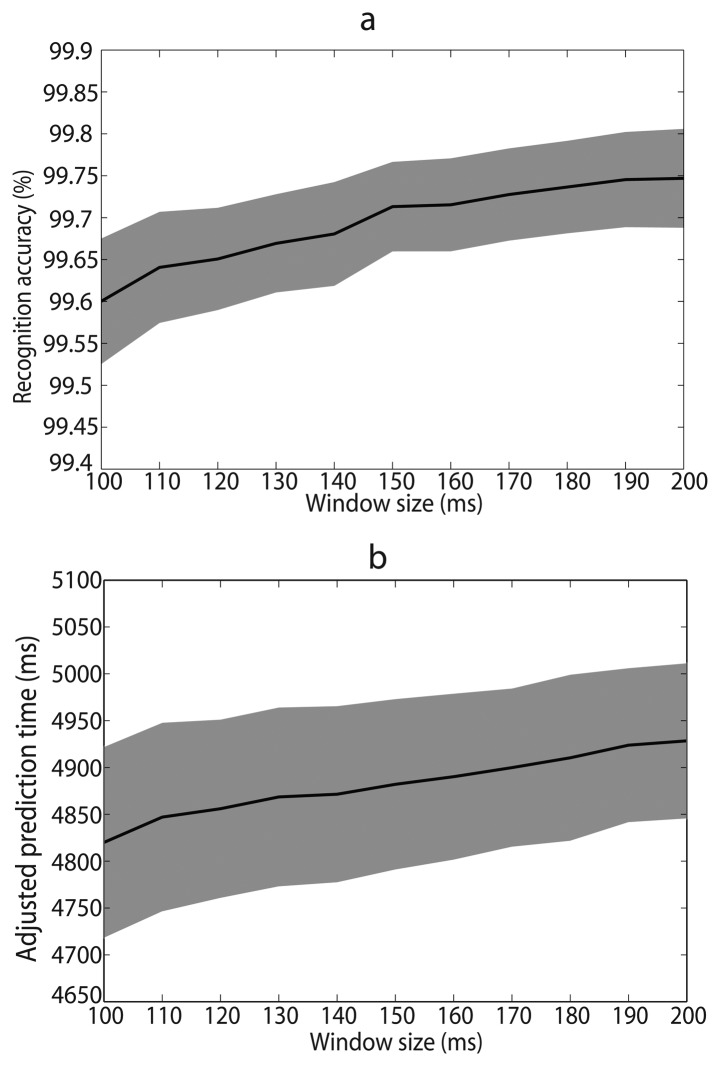
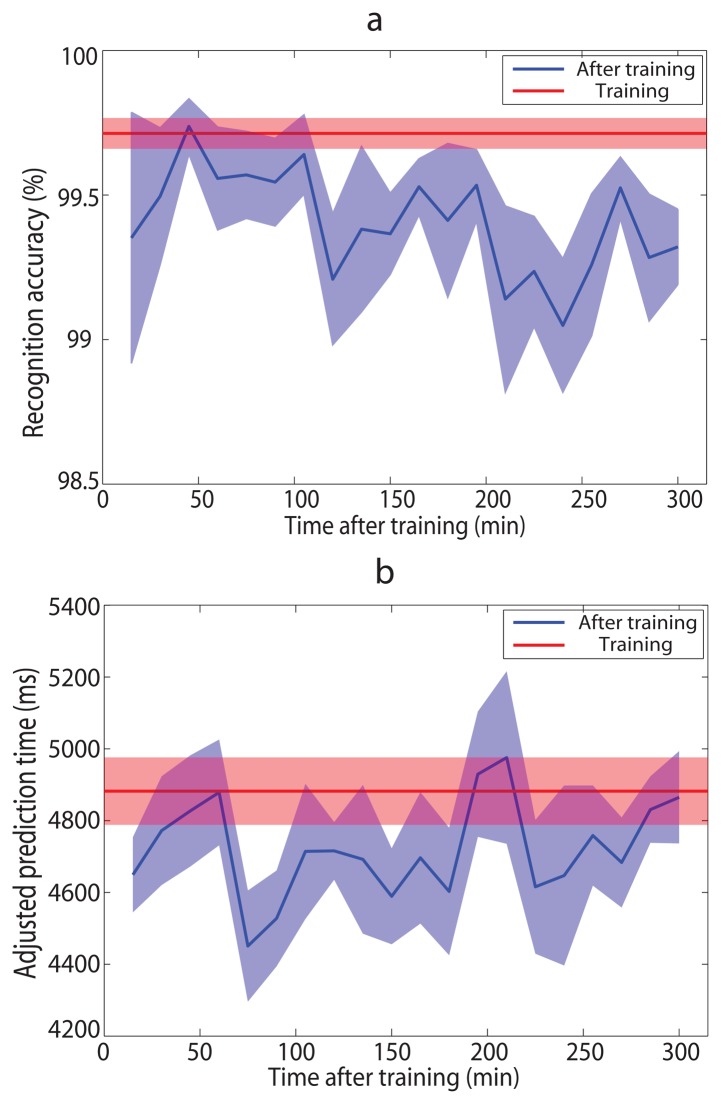
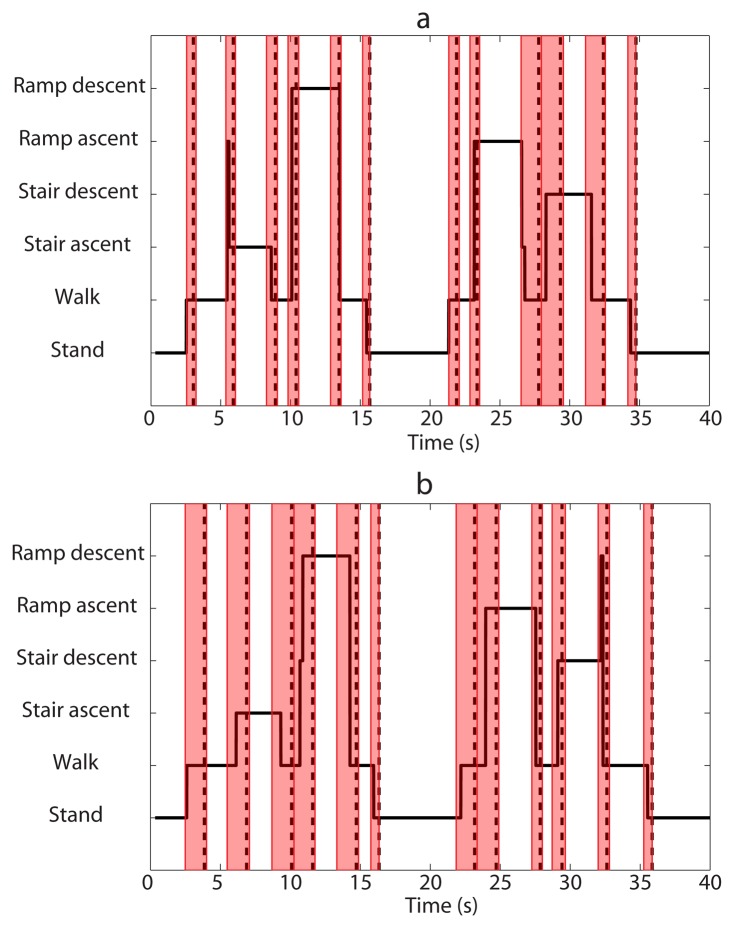
Locomotion intent prediction is essential for the control of powered lower-limb prostheses to realize smooth locomotion transitions. In this research, we develop a multi-sensor fusion based locomotion intent prediction system, which can recognize current locomotion mode and detect locomotion transitions in advance. Seven able-bodied subjects were recruited for this research. Signals from two foot pressure insoles and three inertial measurement units (one on the thigh, one on the shank and the other on the foot) are measured. A two-level recognition strategy is used for the recognition with linear discriminate classifier. Six kinds of locomotion modes and ten kinds of locomotion transitions are tested in this study. Recognition accuracy during steady locomotion periods (i.e., no locomotion transitions) is 99.71% ± 0.05% for seven able-bodied subjects. During locomotion transition periods, all the transitions are correctly detected and most of them can be detected before transiting to new locomotion modes. No significant deterioration in recognition performance is observed in the following five hours after the system is trained, and small number of experiment trials are required to train reliable classifiers.
Overview
The claims and statistics of this paper haven’t been checked yet.
Free: it reads the open-access text and checks the first 5 claims that cite a source we can check. Create a free account to check every claim.
Integrity signals
Registry
Cites
Statistics
Figures




Verification
Claims the paper makes
The claims and statistics of this paper haven’t been checked yet.
Free: it reads the open-access text and checks the first 5 claims that cite a source we can check. Create a free account to check every claim.
Claims other papers make about this one
Each is checked against this paper’s own text: does it say what the citing paper says it does?
The source backs part of the claim, not all of it — or backs it for a different population, condition or comparison.
In the citing paper
“| IMU and plantar pressure insoles | Control prosthesis | 6 | 99.7% | 129 |”
From Recent advances in intelligent wearable systems: from multiscale biomechanical features towards human motion intent prediction (2026) · cites this paper as [129]
Experimental — accuracy not yet measuredIn the citing paper
“In the studies of Chen et al. 129 and Papapicco et al. 124 , the recognition accuracy of steadystate stride length exceeded 98.0%.”
From Recent advances in intelligent wearable systems: from multiscale biomechanical features towards human motion intent prediction (2026) · cites this paper as [129]
Self-check
Percentages, sums and reported differences re-computed from the paper’s own numbers.
The self-check needs the paper’s full text.
Citations
Cites
A new strategy for multifunction myoelectric control
Hudgins, B., Parker, P., & Scott, R. N. (1993) · IEEE Transactions on Biomedical Engineering · doi:10.1109/10.204774 · Cited by 2,149 · cited 1×
“Six time-domain feature values (maximum, minimum, mean value, waveform length [41], standard deviation and root mean square) were calculated for signal channels of pressure insoles as well as IMUs.”
MethodMultisensor data fusion: A review of the state-of-the-art
Khaleghi, B., Khamis, A., Karray, F. O., & Razavi, S. N. (2013) · Information Fusion · doi:10.1016/j.inffus.2011.08.001 · Cited by 2,074 · cited 1×
“In principle, fusion of multi-sensor data provides significant advantages over single source data [23].”
BackgroundA robust, real-time control scheme for multifunction myoelectric control
Englehart, K., & Hudgins, B. (2003) · IEEE Transactions on Biomedical Engineering · doi:10.1109/tbme.2003.813539 · Cited by 1,743 · cited 1×
“Majority voting is a widely used post-processing approach [43], which utilizes classification results of multiple adjacent analysis windows to produce more accurate recognition decisions.”
MethodGait Analysis Using a Shoe-Integrated Wireless Sensor System
Bamberg, S., Benbasat, A. Y., Scarborough, D. M., Krebs, D. E., & Paradiso, J. A. (2008) · IEEE Transactions on Information Technology in Biomedicine · doi:10.1109/titb.2007.899493 · Cited by 737 · cited 1×
“The position selection is similar to previous studies [38,39].”
ResultYun, X., & Bachmann, E. R. (2006) · IEEE Transactions on Robotics · doi:10.1109/tro.2006.886270 · Cited by 569 · cited 1×
“Many works have been done on signal processing technologies for these sensors, and some methods have been proposed to deal with signal drift and interference [36].”
BackgroundHuang, H., Zhang, F., Hargrove, L. J., Dou, Z., Rogers, D. R., & Englehart, K. B. (2011) · IEEE Transactions on Biomedical Engineering · doi:10.1109/tbme.2011.2161671 · Cited by 542 · cited 4×
“More and more intent prediction systems for powered lower-limb prosthesis control also developed with multi-sensor fusion [14,18].”
BackgroundMethodResultInfluentialA Strategy for Identifying Locomotion Modes Using Surface Electromyography
Huang, H., Kuiken, T. A., & Lipschutz, R. D. (2009) · IEEE Transactions on Biomedical Engineering · doi:10.1109/tbme.2008.2003293 · Cited by 512 · cited 1×
“Some methods have been proposed for lower-limb locomotion mode recognition using signals measured from mechanical sensors [13–15] and bioelectric signals such as electromyography (EMG) signals [16–20].”
MethodPowered Ankle--Foot Prosthesis Improves Walking Metabolic Economy
Au, S. K., Weber, J., & Herr, H. (2009) · IEEE Transactions on Robotics · doi:10.1109/tro.2008.2008747 · Cited by 487 · cited 3×
“Though they are widely used, they have inevitable deficiencies such as more metabolic power consumption and asymmetrical gait pattern [1].”
BackgroundMulticlass Real-Time Intent Recognition of a Powered Lower Limb Prosthesis
Varol, H. A., Sup, F., & Goldfarb, M. (2010) · IEEE Transactions on Biomedical Engineering · doi:10.1109/tbme.2009.2034734 · Cited by 425 · cited 4×
“More and more intent prediction systems for powered lower-limb prosthesis control also developed with multi-sensor fusion [14,18].”
BackgroundMethodResultInfluentialControl of a Powered Ankle–Foot Prosthesis Based on a Neuromuscular Model
Eilenberg, M. F., Geyer, H., & Herr, H. (2010) · IEEE Transactions on Neural Systems and Rehabilitation Engineering · doi:10.1109/tnsre.2009.2039620 · Cited by 419 · cited 1×
“Compared with passive lower-limb prostheses, powered prostheses can provide necessary power in certain periods to make the locomotion more natural, but they need more complex control strategies [7–12] and more locomotion information from amputees.”
Background
Cited by
Nweke, H. F., Teh, Y. W., Mujtaba, G., & Al-garadi, M. A. (2019) · Information Fusion · doi:10.1016/j.inffus.2018.06.002 · Cited by 394
Fusion of Bilateral Lower-Limb Neuromechanical Signals Improves Prediction of Locomotor Activities
Hu, B. H., Rouse, E. J., & Hargrove, L. J. (2018) · Frontiers in Robotics and AI · doi:10.3389/frobt.2018.00078 · Cited by 90
A Phase Variable Approach for IMU-Based Locomotion Activity Recognition
Bartlett, H. L., & Goldfarb, M. T. (2017) · IEEE Transactions on Biomedical Engineering · doi:10.1109/tbme.2017.2750139 · Cited by 89
“support vector machines [5]–[7], hidden Markov models [8], Gaussian mixture models [9], [10], linear discriminant analysis [11], [12], neural networks and decision tree [7], and logistic”
BackgroundA Novel Gait Pattern Recognition Method Based on LSTM-CNN for Lower Limb Exoskeleton
Chen, C., Du, Z., He, L., Yong-jun, S., Wang, J., & Dong, W. (2021) · Journal of Bionic Engineering · doi:10.1007/s42235-021-00083-y · Cited by 84
PSO-SVM-Based Online Locomotion Mode Identification for Rehabilitation Robotic Exoskeletons
Long, Y., Du, Z., Wang, W., Zhao, G., Xu, G., He, L., Mao, X., & Dong, W. (2016) · Sensors · doi:10.3390/s16091408 · Cited by 84
“This work presents both of steady locomotion mode identification and the transition between them as [18,19] do.”
Background
Metadata
- Authors
- Chen, B., Zheng, E., & Wang, Q.
- Affiliations
- Peking University (CN)
- Corresponding author
- Wang, Qining
- Venue
- Sensors
- Publisher
- MDPI AG
- Published
- 2014-07-10
- Volume
- 14
- Issue
- 7
- Pages
- 12349-12369
- ISSN
- 1424-8220 (ISSN-L)
- PMC
- PMC4168424
- OpenAlex
- W2090283616
- Cited by
- 69
- References
- 49
- Citations by year
- 2026: 3 · 2025: 8 · 2024: 7 · 2023: 3 · 2022: 5 · 2021: 11 · 2020: 9 · 2019: 7 · 2018: 9 · 2017: 5 · 2016: 1 · 2014: 1
- FWCI
- 1.21
- Type
- journal article
- Language
- en
- Open access
- gold
- doi.org
- Licence
- Locations
- Sensors (publishedVersion, cc-by)
- PubMed Central (publishedVersion, cc-by)
- PubMed (publishedVersion)
- DOAJ (DOAJ: Directory of Open Access Journals) (submittedVersion, cc-by-sa)
- Funders
- National Natural Science Foundation of China (61005082, 61020106005)
- Peking University (3J0865600)
- Beijing Nova Program (Z141101001814001)
- Topics
- Physical Sciences › Engineering › Biomedical Engineering › Prosthetics and Rehabilitation Robotics
- Physical Sciences › Engineering › Biomedical Engineering › Muscle activation and electromyography studies
- Physical Sciences › Computer Science › Computer Vision and Pattern Recognition › Context-Aware Activity Recognition Systems
- Keywords
- multi-sensor fusion, lower limb prosthesis, powered prostheses, locomotion mode recognition, inertial measurement unit, linear discriminant analysis, gait control
- MeSH terms
- Algorithms, Artificial Limbs, Electromyography, Humans, Leg, Locomotion, Prosthesis Design, Signal Processing, Computer-Assisted, Walking
About these checks
Registry, retraction, Cites and statistics results are computed, not judged, with one exception: a printed reference that no index lists is read once by a model before it counts as a citation error. Claims are extracted by a model and kept only when their quote appears verbatim in the text; each cited source is then checked, with a model’s help, for whether it says what the claim relies on. Those verdicts can be wrong — read the claim’s quote and the cited source before relying on one.
Statistics and arithmetic are recomputed, not judged.
Confidence bands are shown only for fields calibrated on our annotated test set. None is calibrated yet, so no band is shown.
What counts as a claim ›How we measure confidence ›How we check this ›
Are you an author, or do you see a problem with this page? Request a review
How to cite
Cite CoChat for the checks on this page, and the paper for its own findings.
- This page
- CoChat. (2026). Citation check: A Locomotion Intent Prediction System Based on Multi-Sensor Fusion. https://app.cochat.ai/papers/10.3390/s140712349
- The paper
- Chen, B., Zheng, E., & Wang, Q. (2014). A Locomotion Intent Prediction System Based on Multi-Sensor Fusion. Sensors. https://doi.org/10.3390/s140712349
Data sources
Bibliographic data: Semantic Scholar, OpenAlex, Crossref.
Contains information from the Semantic Scholar Academic Graph Datasets, made available under the ODC Attribution License (ODC-BY 1.0).
Semantic Scholar’s data is described in: Kinney, R., et al. (2023). The Semantic Scholar Open Data Platform. arXiv:2301.10140.
