

A Locomotion Intent Prediction System Based on Multi-Sensor Fusion
Open accessThe DOI matches its Crossref record; 48 of the 49 references it cites were found in a registry or an index.
Abstract
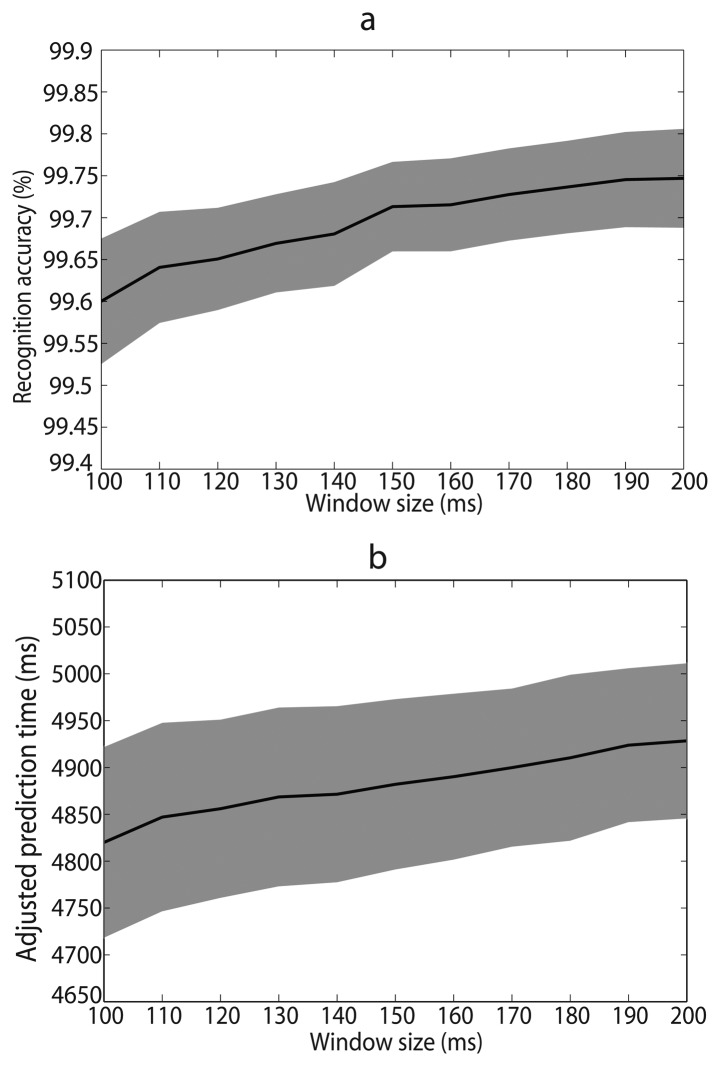
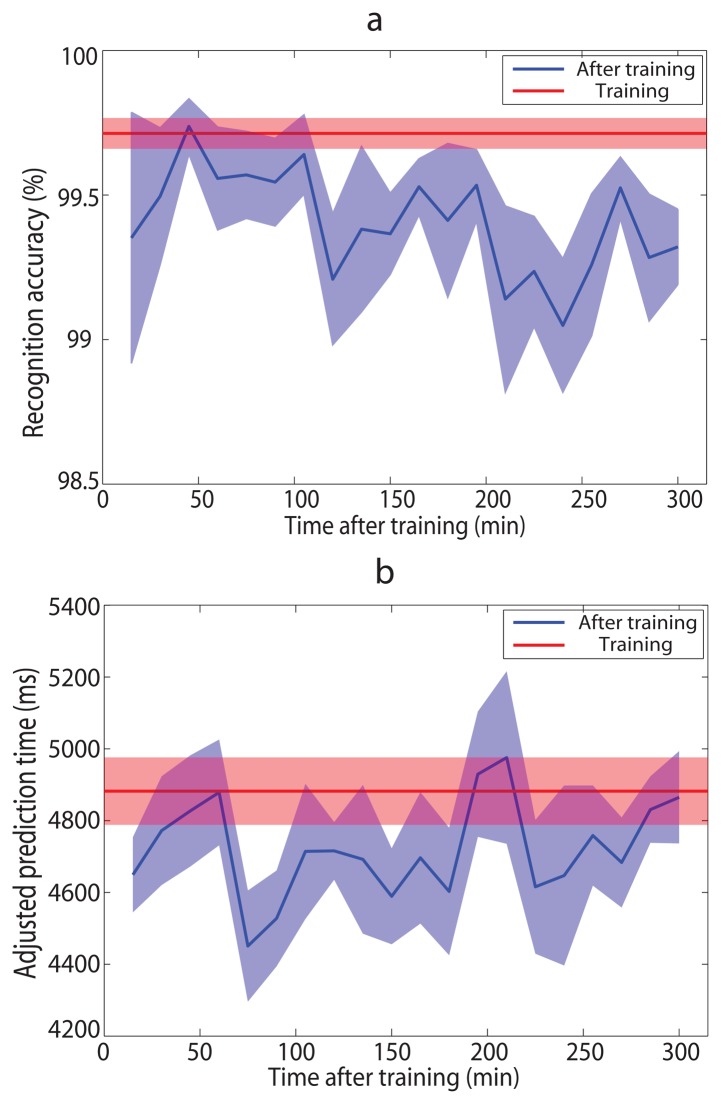
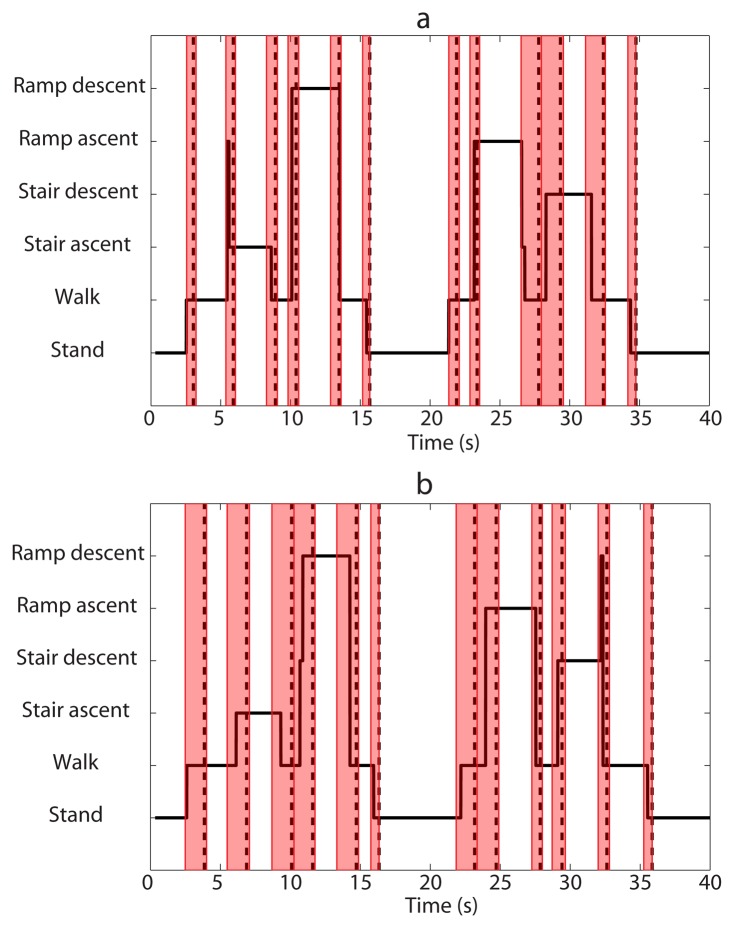
Locomotion intent prediction is essential for the control of powered lower-limb prostheses to realize smooth locomotion transitions. In this research, we develop a multi-sensor fusion based locomotion intent prediction system, which can recognize current locomotion mode and detect locomotion transitions in advance. Seven able-bodied subjects were recruited for this research. Signals from two foot pressure insoles and three inertial measurement units (one on the thigh, one on the shank and the other on the foot) are measured. A two-level recognition strategy is used for the recognition with linear discriminate classifier. Six kinds of locomotion modes and ten kinds of locomotion transitions are tested in this study. Recognition accuracy during steady locomotion periods (i.e., no locomotion transitions) is 99.71% ± 0.05% for seven able-bodied subjects. During locomotion transition periods, all the transitions are correctly detected and most of them can be detected before transiting to new locomotion modes. No significant deterioration in recognition performance is observed in the following five hours after the system is trained, and small number of experiment trials are required to train reliable classifiers.
Overview
The claims and statistics of this paper haven’t been checked yet.
Free: it reads the open-access text and checks the first 5 claims that cite a source we can check. Create a free account to check every claim.
Integrity signals
Registry
Cites
Statistics
Figures




Verification
Claims the paper makes
The claims and statistics of this paper haven’t been checked yet.
Free: it reads the open-access text and checks the first 5 claims that cite a source we can check. Create a free account to check every claim.
Claims other papers make about this one
Each is checked against this paper’s own text: does it say what the citing paper says it does?
The source backs part of the claim, not all of it — or backs it for a different population, condition or comparison.
In the citing paper
“| IMU and plantar pressure insoles | Control prosthesis | 6 | 99.7% | 129 |”
From Recent advances in intelligent wearable systems: from multiscale biomechanical features towards human motion intent prediction (2026) · cites this paper as [129]
Experimental — accuracy not yet measuredIn the citing paper
“In the studies of Chen et al. 129 and Papapicco et al. 124 , the recognition accuracy of steadystate stride length exceeded 98.0%.”
From Recent advances in intelligent wearable systems: from multiscale biomechanical features towards human motion intent prediction (2026) · cites this paper as [129]
Self-check
Percentages, sums and reported differences re-computed from the paper’s own numbers.
The self-check needs the paper’s full text.
Citations
Cites
A new strategy for multifunction myoelectric control
Hudgins, B., Parker, P., & Scott, R. N. (1993) · IEEE Transactions on Biomedical Engineering · doi:10.1109/10.204774 · Cited by 2,149 · cited 1×
“Six time-domain feature values (maximum, minimum, mean value, waveform length [41], standard deviation and root mean square) were calculated for signal channels of pressure insoles as well as IMUs.”
MethodMultisensor data fusion: A review of the state-of-the-art
Khaleghi, B., Khamis, A., Karray, F. O., & Razavi, S. N. (2013) · Information Fusion · doi:10.1016/j.inffus.2011.08.001 · Cited by 2,074 · cited 1×
“In principle, fusion of multi-sensor data provides significant advantages over single source data [23].”
BackgroundA robust, real-time control scheme for multifunction myoelectric control
Englehart, K., & Hudgins, B. (2003) · IEEE Transactions on Biomedical Engineering · doi:10.1109/tbme.2003.813539 · Cited by 1,743 · cited 1×
“Majority voting is a widely used post-processing approach [43], which utilizes classification results of multiple adjacent analysis windows to produce more accurate recognition decisions.”
MethodGait Analysis Using a Shoe-Integrated Wireless Sensor System
Bamberg, S., Benbasat, A. Y., Scarborough, D. M., Krebs, D. E., & Paradiso, J. A. (2008) · IEEE Transactions on Information Technology in Biomedicine · doi:10.1109/titb.2007.899493 · Cited by 737 · cited 1×
“The position selection is similar to previous studies [38,39].”
ResultYun, X., & Bachmann, E. R. (2006) · IEEE Transactions on Robotics · doi:10.1109/tro.2006.886270 · Cited by 569 · cited 1×
“Many works have been done on signal processing technologies for these sensors, and some methods have been proposed to deal with signal drift and interference [36].”
BackgroundHuang, H., Zhang, F., Hargrove, L. J., Dou, Z., Rogers, D. R., & Englehart, K. B. (2011) · IEEE Transactions on Biomedical Engineering · doi:10.1109/tbme.2011.2161671 · Cited by 542 · cited 4×
“More and more intent prediction systems for powered lower-limb prosthesis control also developed with multi-sensor fusion [14,18].”
BackgroundMethodResultInfluentialA Strategy for Identifying Locomotion Modes Using Surface Electromyography
Huang, H., Kuiken, T. A., & Lipschutz, R. D. (2009) · IEEE Transactions on Biomedical Engineering · doi:10.1109/tbme.2008.2003293 · Cited by 512 · cited 1×
“Some methods have been proposed for lower-limb locomotion mode recognition using signals measured from mechanical sensors [13–15] and bioelectric signals such as electromyography (EMG) signals [16–20].”
MethodPowered Ankle--Foot Prosthesis Improves Walking Metabolic Economy
Au, S. K., Weber, J., & Herr, H. (2009) · IEEE Transactions on Robotics · doi:10.1109/tro.2008.2008747 · Cited by 487 · cited 3×
“Though they are widely used, they have inevitable deficiencies such as more metabolic power consumption and asymmetrical gait pattern [1].”
BackgroundMulticlass Real-Time Intent Recognition of a Powered Lower Limb Prosthesis
Varol, H. A., Sup, F., & Goldfarb, M. (2010) · IEEE Transactions on Biomedical Engineering · doi:10.1109/tbme.2009.2034734 · Cited by 425 · cited 4×
“More and more intent prediction systems for powered lower-limb prosthesis control also developed with multi-sensor fusion [14,18].”
BackgroundMethodResultInfluentialControl of a Powered Ankle–Foot Prosthesis Based on a Neuromuscular Model
Eilenberg, M. F., Geyer, H., & Herr, H. (2010) · IEEE Transactions on Neural Systems and Rehabilitation Engineering · doi:10.1109/tnsre.2009.2039620 · Cited by 419 · cited 1×
“Compared with passive lower-limb prostheses, powered prostheses can provide necessary power in certain periods to make the locomotion more natural, but they need more complex control strategies [7–12] and more locomotion information from amputees.”
Background
Cited by
Nweke, H. F., Teh, Y. W., Mujtaba, G., & Al-garadi, M. A. (2019) · Information Fusion · doi:10.1016/j.inffus.2018.06.002 · Cited by 394
Fusion of Bilateral Lower-Limb Neuromechanical Signals Improves Prediction of Locomotor Activities
Hu, B. H., Rouse, E. J., & Hargrove, L. J. (2018) · Frontiers in Robotics and AI · doi:10.3389/frobt.2018.00078 · Cited by 90
A Phase Variable Approach for IMU-Based Locomotion Activity Recognition
Bartlett, H. L., & Goldfarb, M. T. (2017) · IEEE Transactions on Biomedical Engineering · doi:10.1109/tbme.2017.2750139 · Cited by 89
“support vector machines [5]–[7], hidden Markov models [8], Gaussian mixture models [9], [10], linear discriminant analysis [11], [12], neural networks and decision tree [7], and logistic”
BackgroundA Novel Gait Pattern Recognition Method Based on LSTM-CNN for Lower Limb Exoskeleton
Chen, C., Du, Z., He, L., Yong-jun, S., Wang, J., & Dong, W. (2021) · Journal of Bionic Engineering · doi:10.1007/s42235-021-00083-y · Cited by 84
PSO-SVM-Based Online Locomotion Mode Identification for Rehabilitation Robotic Exoskeletons
Long, Y., Du, Z., Wang, W., Zhao, G., Xu, G., He, L., Mao, X., & Dong, W. (2016) · Sensors · doi:10.3390/s16091408 · Cited by 84
“This work presents both of steady locomotion mode identification and the transition between them as [18,19] do.”
BackgroundA Novel Motion Intention Recognition Approach for Soft Exoskeleton via IMU
Zhu, L., Wang, Z., Ning, Z., Zhang, Y., Liu, Y., Cao, W., Wu, X., & Chen, C. (2020) · Electronics · doi:10.3390/electronics9122176 · Cited by 84
“Multi-sensor fusion, which is able to enhance system performance and robustness, has been widely used in recent years [15–17].”
MethodComparison of Different Sets of Features for Human Activity Recognition by Wearable Sensors
Rosati, S., Balestra, G., & Knaflitz, M. (2018) · Sensors · doi:10.3390/s18124189 · Cited by 87
Adaptive Slope Walking With a Robotic Transtibial Prosthesis Based on Volitional EMG Control
Chen, B., Wang, Q., & Wang, L. (2014) · IEEE/ASME Transactions on Mechatronics · doi:10.1109/tmech.2014.2365877 · Cited by 73
“gated how to realize adaptive walking on slopes and level ground with robotic prostheses, most of them focused on locomotion mode recognition [9]–[14].”
BackgroundSelf-citationXu, D., Feng, Y., Mai, J., & Wang, Q. (2018) · IEEE Transactions on Neural Systems and Rehabilitation Engineering · doi:10.1109/tnsre.2018.2870152 · Cited by 67
“Phase-dependent method has been proved effective in lower-limb locomotion modes recognition [7], [10], [36].”
MethodSelf-citationInertial Sensing for Gait Event Detection and Transfemoral Prosthesis Control Strategy
Ledoux, E. D. (2018) · IEEE Transactions on Biomedical Engineering · doi:10.1109/tbme.2018.2813999 · Cited by 67
“Other methods, such as fuzzy logic [40], [41], neural networks [28], [33], [41], [42], hiddenMarkovModels [5], [43], [44], Gaussian Mixture Models [44]–[46], and other machine learning methods [34], [37], [38], [44], [47] have also been used.”
BackgroundMethodForce Myography Based Novel Strategy for Locomotion Classification
Godiyal, A. K., Mondal, M., Joshi, S. D., & Joshi, D. (2018) · IEEE Transactions on Human-Machine Systems · doi:10.1109/thms.2018.2860598 · Cited by 55
“at par to inertial measurement unit (IMU) in combination with pressure insole as reported in [12], which uses IMU at thigh, shank, and foot.”
BackgroundMethodInfluentialGupta, R., & Agarwal, R. (2019) · Journal of Applied Biomedicine · doi:10.1016/j.bbe.2019.07.002 · Cited by 53
A review of terrain detection systems for applications in locomotion assistance
Aldabbagh, A. H. A., & Ronsse, R. (2020) · Robotics and Autonomous Systems · doi:10.1016/j.robot.2020.103628 · Cited by 55
Research of intent recognition in rehabilitation robots: a systematic review
Luo, S., Meng, Q., Li, S., & Yu, H. (2023) · Disability and Rehabilitation Assistive Technology · doi:10.1080/17483107.2023.2170477 · Cited by 64
“Wang [145–147] presents an approach to sense human capacitance and apply it to recognize lower limb locomotion modes.”
BackgroundNoninvasive Human-Prosthesis Interfaces for Locomotion Intent Recognition: A Review
Xu, D., & Wang, Q. (2021) · Cyborg and Bionic Systems · doi:10.34133/2021/9863761 · Cited by 52
“have adopted some ideas to improve the MV approach by adding weight value for each decision, which is determined by the posterior probability of the recognized decision with the LDA classifier, and have gotten good performance in their real-time locomotion recognition [109].”
Self-citationBruinsma, J., & Carloni, R. (2021) · IEEE Transactions on Neural Systems and Rehabilitation Engineering · doi:10.1109/tnsre.2021.3086843 · Cited by 49
“LDAs are also used to predict both the locomotion modes and transitions of healthy subjects from handcrafted features in the time domain of IMUs combined with pressure sensors in [7], and to predict the locomotion modes of transfemoral amputees from handcrafted features in the time domain of IMUs combined with mechani…”
BackgroundMethodNgueleu, A.-M., Blanchette, A. K., Maltais, D. B., Moffet, H., McFadyen, B. J., Bouyer, L. J., & Batcho, C. S. (2019) · Sensors · doi:10.3390/s19112438 · Cited by 49
“Regarding types of posture and activity, instrumented insoles were used to identify when participants were sitting [26,31–33,40,42–54,56–58], standing [26,31–33,38–40,42–54,56–59], walking [26, 31–33,38–40,42–46,48–60], running [41,48,49,51–54,57,59], jumping [43,57,59], cycling [26,42,44,48,49, 51,53–55,58,59], ascen…”
BackgroundMethodInfluentialMazon, D. M., Groefsema, M., Schomaker, L., & Carloni, R. (2022) · Sensors · doi:10.3390/s22228871 · Cited by 43
“Compared to [22,23] (where locomotion modes, transitions, and gait phases are jointly classified), this study makes use of only one or two IMUs (no force sensors nor pressure insoles are used) and considers a higher number of classes (especially for the gait phases).”
BackgroundMethodA Flexible Lower Extremity Exoskeleton Robot with Deep Locomotion Mode Identification
Wang, C., Wu, X., Ma, Y., Wu, G., & Luo, Y. (2018) · Complexity · doi:10.1155/2018/5712108 · Cited by 43
“As for locomotion mode identification methods, machine learning methods are usually employed, such as principal component analysis (PCA) [11], linear discriminate analysis (LDA) [14], support vector machine (SVM) [10–13], and dynamic Bayesian network [15].”
BackgroundMethodAccurate Heuristic Terrain Prediction in Powered Lower-Limb Prostheses Using Onboard Sensors
Stolyarov, R., Carney, M. E., & Herr, H. (2020) · IEEE Transactions on Biomedical Engineering · doi:10.1109/tbme.2020.2994152 · Cited by 39
Gao, S., Wang, Y., Fang, C., & Xu, L. (2020) · Applied Sciences · doi:10.3390/app10082638 · Cited by 41
Daily Locomotion Recognition and Prediction: A Kinematic Data-Based Machine Learning Approach
Figueiredo, J., Carvalho, S. P., Goncalve, D., Moreno, J. C., & Santos, C. P. (2020) · IEEE Access · doi:10.1109/access.2020.2971552 · Cited by 37
Gupta, R., & Agarwal, R. (2018) · Arabian Journal for Science and Engineering · doi:10.1007/s13369-018-3193-3 · Cited by 25
Kinematic-based locomotion mode recognition for power augmentation exoskeleton
Kim, H., Shin, Y. J., & Kim, J. (2017) · International Journal of Advanced Robotic Systems · doi:10.1177/1729881417730321 · Cited by 24
“Chen et al.10 proposed a wearable capacitive sensing system for recognizing locomotion modes.”
MethodMa, X., Liu, Y., Xiao-hui, Z., Masia, L., & Song, Q. (2024) · IEEE Journal of Biomedical and Health Informatics · doi:10.1109/jbhi.2024.3462826 · Cited by 21
“…many studies utilized multi-sensor fusion method to recognize the locomotion mode, which were combing sEMG with IMUs [5], [19] or accelerometer [20], combing IMUs with plantar pressure, load cell or potentiometer [21], [22], [23], and combing depth camera with IMUs or eye-tracker [24], [25].”
InfluentialIMU-based Deep Neural Networks for Locomotor Intention Prediction
Lu, H., Schomaker, L., & Carloni, R. (2020) · IEEE/RSJ International Conference on Intelligent Robots and Systems (IROS) · doi:10.1109/iros45743.2020.9341649 · Cited by 24
“pressure sensors’ data [9], to name few.”
Locomotion Mode Recognition Algorithm Based on Gaussian Mixture Model Using IMU Sensors
Shin, D., Lee, S., & Hwang, S. (2021) · Sensors · doi:10.3390/s21082785 · Cited by 21
“The IMU sensors were attached to the thigh, shank, and foot, and the linear discriminant analysis (LDA) method was used [7].”
MethodEnvironment-Aware Locomotion Mode Transition Prediction System
Carvalho, S. P., Figueiredo, J., & Santos, C. P. (2019) · IEEE International Conference on Autonomous Robot Systems and Competitions · doi:10.1109/icarsc.2019.8733658 · Cited by 19
“To note that our system approached an LM transition prediction strategy without the need to consider critical prediction time limits depending on the terrain change as proposed in previous studies [8], [14].”
MethodVu, H. T. T., Cao, H.-L., Dong, D., Verstraten, T., Geeroms, J., & Vanderborght, B. (2022) · Frontiers in Neurorobotics · doi:10.3389/fnbot.2022.923164 · Cited by 18
“This sensor measures the reaction force between the human body and the ground (Chen et al., 2014, 2015; Parri et al., 2017; Godiyal et al., 2018).”
BackgroundFSM-HSVM-Based Locomotion Mode Recognition for Exoskeleton Robot
Qi, Z., Song, Q., Liu, Y., & Guo, C.-Y. (2022) · Applied Sciences · doi:10.3390/app12115483 · Cited by 13
A Systematic Literature Review of Intent Sensing for Control of Medical Devices
Russell, J., & Bergmann, J. (2021) · IEEE Transactions on Medical Robotics and Bionics · doi:10.1109/tmrb.2021.3135704 · Cited by 16
“Note that some papers included multiple types of action intent, so the sum of the columns is greater than the total number of papers. high-accuracy methods available, and multiple studies report accuracies in the region of > 99% [29], [30].”
BackgroundSingle Muscle Surface EMGs Locomotion Identification Module for Prosthesis Control
Gupta, R., & Agarwal, R. (2019) · Neurophysiology · doi:10.1007/s11062-019-09812-w · Cited by 15
Qi, Z., Liu, Y., Song, Q., & Zhou, N. (2021) · IEEE Sensors Journal · doi:10.1109/jsen.2021.3121422 · Cited by 13
A real-time walking pattern recognition method for soft knee power assist wear
Wang, W., Zhang, L., Liu, J., Zhang, B., & Huang, Q. (2020) · International Journal of Advanced Robotic Systems · doi:10.1177/1729881420925291 · Cited by 11
Wang, Z., Pang, J., Tao, P., Ji, Z., Chen, J., Meng, L., Xu, R., & Ming, D. (2024) · Biomedical Signal Processing and Control · doi:10.1016/j.bspc.2024.106105 · Cited by 12
Tiwari, A. K., Pai, A., & Joshi, D. (2020) · Measurement · doi:10.1016/j.measurement.2020.108458 · Cited by 10
Chen, S., Peng, C., Yang, B., Lin, J., Zhou, L., Jiang, Z., Liu, Z., Liu, Y., & Tang, L. (2026) · npj Artificial Intelligence · doi:10.1038/s44387-026-00083-5 · Cited by 9
Godiyal, A. K., & Joshi, D. (2020) · IEEE Journal of Biomedical and Health Informatics · doi:10.1109/jbhi.2020.3015317 · Cited by 9
“domain features have been utilized in order to reduce the computational time [5], [7], [28], [33], [34].”
BackgroundMethodLocomotion mode classification using force myography
Godiyal, A. K., Pandit, S., Vimal, A. K., Singh, U., Anand, S., & Joshi, D. (2017) · IEEE Life Sciences Conference (LSC) · doi:10.1109/lsc.2017.8268158 · Cited by 8
“Previously there have been attempts that were mainly focused on three sensing methods based on solely surface Electromyography (sEMG) sensors [5,6], mechanical sensors [7, 8], and the combination of both [9].”
BackgroundSurface Electromyogram Feature Set Optimization for Lower Limb Activity Classification
Gupta, R., Dhindsa, I. S., & Agarwal, R. (2021) · IETE Journal of Research · doi:10.1080/03772063.2021.1973589 · Cited by 8
Multi-Class Classification of Human Activity and Gait Events Using Heterogeneous Sensors
Javed, T., Raza, A., Maqbool, H. F., Zafar, S., Taborri, J., & Rossi, S. (2024) · Journal of Sensor and Actuator Networks · doi:10.3390/jsan13060085 · Cited by 9
Locomotion mode prediction in real-life walking with and without ankle–foot exoskeleton assistance
Carvalho, S. P., Figueiredo, J., Cerqueira, J., & Santos, C. P. (2025) · Applied Intelligence · doi:10.1007/s10489-025-06416-2 · Cited by 9
“…used to address the LM decoding problem, including heuristic rule-based classifiers [16, 29, 30], machine learning classifiers (e.g., support vector machine (SVM), linear discriminant analysis (LDA), k-nearest neighbors (KNN), random forest (RA)) [3, 6, 13, 31, 32], and combinations of them [17].”
Real-time locomotion mode detection in individuals with transfemoral amputation and osseointegration
Ahkami, B., Kristoffersen, M., & Ortiz-Catalan, M. (2025) · Journal of NeuroEngineering and Rehabilitation · doi:10.1186/s12984-025-01672-2 · Cited by 7
Liu, X., Zhou, Z., Mai, J., & Wang, Q. (2017) · Lecture notes in computer science · doi:10.1007/978-3-319-65289-4_25 · Cited by 7
Self-citationEvaluation of CNN algorithm at locomotion mode identification for a knee-assisted exoskeleton
Xu, A., Qu, C., Yang, L., Yin, P., Lv, J., & Qu, S. (2023) · Advanced Robotics · doi:10.1080/01691864.2023.2197966 · Cited by 6
“It has been effectively applied on locomotionmode identification for lower limb exoskeleton such as linear discriminate analysis (LDA) [16], support vector machine (SVM) [17], and dynamic Bayesian network [18].”
MethodInfluentialForce Myography and Its Application to Human Locomotion
Godiyal, A. K., Verma, V., Khanna, N., & Joshi, D. (2019) · Series in bioengineering · doi:10.1007/978-981-13-9097-5_3 · Cited by 6
A Task-Agnostic Approach to Unified Multi-Activity Gait Phase Estimation via Bilateral Sensing
Posh, R. R., & Gregg, R. D. (2025) · International Conference on Rehabilitation Robotics · doi:10.1109/icorr66766.2025.11062952 · Cited by 6
GaitWay: Gait Data-Based VR Locomotion Prediction System Robust to Visual Distraction
Kim, Y., Hwang, S., Oh, J., & Kim, S. (2024) · CHI Conference Extended Abstracts on Human Factors in Computing Systems (CHI EA) · doi:10.1145/3613905.3651073 · Cited by 6
“Gait data, such as CoP and foot acceleration, effectively represent current walking motion information [10, 22, 40].”
BackgroundA Fuzzy sequential locomotion mode recognition system for lower limb prosthesis control
Shahmoradi, S., & Shouraki, S. B. (2017) · Iranian Conference on Electrical Engineering · doi:10.1109/iraniancee.2017.7985417 · Cited by 5
Posh, R. R., Li, S., & Wensing, P. M. (2025) · IEEE/RSJ International Conference on Intelligent Robots and Systems (IROS) · doi:10.1109/iros60139.2025.11247386 · Cited by 4
“ML approaches such as linear discriminant analysis (LDA, [13]– [15]), support vector machines (SVMs, [16]), Gaussian mixture models (GMMs, [17], [18]), dynamic Bayesian networks (DBNs, [19], [20]), convolutional neural networks (CNNs, [21]–[24]), and others have been used to distinguish between…”
Fu, Z., Lin, Y., Xu, G., & Zhang, M. (2025) · IEEE Journal of Biomedical and Health Informatics · doi:10.1109/jbhi.2025.3623132 · Cited by 5
“5, after four cumulative sums, the leading modality for each label becomes fixed—sEMG leads for all cyclic gaits, and IMU leads for all non-cyclic gaits except labels 15 and 16.”
Continuous Classification of Locomotion in Response to Task Complexity and Anticipatory State
Kazemimoghadam, M., & Fey, N. P. (2021) · Frontiers in Bioengineering and Biotechnology · doi:10.3389/fbioe.2021.628050 · Cited by 3
“, level ground to ramp or stairs locomotion (Au et al., 2008; Tkach and Hargrove, 2013; Chen et al., 2014).”
BackgroundA Study on the Exoskeleton Motion Intent Recognition Algorithm for Embedded Calculation
Shi, L., Peng, Y., Yang, M., Qu, S., & Liu, Z. (2022) · IEEE International Conference on Trust, Security and Privacy in Computing and Communications (TrustCom) · doi:10.1109/trustcom56396.2022.00150 · Cited by 3
Multi-Stage Hybrid-CNN Transformer Model for Human Intent-Prediction
Cervantes, C., Mesa, M. D., Ramos, J., Singer, S., Carmen, D. J. R. D., & Cajote, R. D. (2023) · IEEE Region 10 Conference (TENCON) · doi:10.1109/tencon58879.2023.10322395 · Cited by 2
“These include human motion [3, 4], gaze behavior [5, 6], and even bioelectric signals [7, 8].”
BackgroundHuman Motion Intention Recognition with Thigh Mounted IMUs
Ansah, S., Yoon, S. Y., & Chen, D. (2024) · Annual International Conference of the IEEE Engineering in Medicine and Biology Society (EMBC) · doi:10.1109/embc53108.2024.10782040 · Cited by 5
“By integrating data from multiple sensors, these systems use information such as limb movements, ground reaction forces, and muscle activation to infer a user’s motion intention [6]– [8].”
A Preliminary Study on Locomotion Mode Recognition with Wearable Sensors
Chen, B., Papapicco, V., Parri, A., Crea, S., Munih, M., & Vitiello, N. (2018) · Biosystems & biorobotics · doi:10.1007/978-3-030-01845-0_130 · Cited by 2
Self-citationA comparative study on human loco-motor activity recognition using wearable sensors
Abdallah, A., Abdulsadig, R. S., & Amien, M. B. M. (2019) · International Conference on Computer, Control, Electrical, and Electronics Engineering (ICCCEEE) · doi:10.1109/iccceee46830.2019.9070840 · Cited by 2
“Several studies identified locomotion using both mechanical and surface EMG (sEMG) sensors unilaterally, these studies reached a steady-state accuracy that ranges from 87%-99% using only 1 algorithm for predicting the activities which were either SVM, decision trees, LDA, PSO-SVM or LDA [2]–[7].”
BackgroundInternal intelligent fire extinguishing system
Jingdi, W., & Tatarinov, V. V. (2022) · AIP conference proceedings · doi:10.1063/5.0074618 · Cited by 2
Ma, C., Zhou, K., Hao, L., & Zhan, Y. (2021) · China Automation Congress (CAC) · doi:10.1109/cac53003.2021.9727430 · Cited by 2
Zhang, G., Ji, Z., Wang, Z., Meng, L., & Xu, R. (2024) · International Conference on Biomedical and Bioinformatics Engineering (ICBBE) · doi:10.1145/3707127.3707150 · Cited by 1
Human Activity Recognition of Exoskeleton Robot Based on Adaptive DTW Classifier
Li, H., Yu, Z., Yin, Y., Yan, G., & Quan, J. (2021) · Lecture notes in electrical engineering · doi:10.1007/978-981-16-6324-6_22 · Cited by 1
Neuromechanical and Environment Aware Machine Learning Tool for Human Locomotion Intent Recognition
Carvalho, S. P., Figueiredo, J., & Santos, C. P. (2019) · World Congress on Medical Physics and Biomedical Engineering, September 7 - 12, 2009, Munich, Germany · doi:10.1007/978-3-030-31635-8_240
“Six kinds of LMs were accurately recognized (99.71% ± 0.05), however no LM prediction was addressed [7].”
BackgroundMethodInfluentialHuman motion pattern recognition method and experiment based on dynamic time warping
Geng, K., Mo, F., & Hu, Z. (2021) · Journal of Physics Conference Series · doi:10.1088/1742-6596/1966/1/012001
Kumar, V., Hrishikesh, M. V., Shijas, M., & Pratihar, D. K. (2024) · IEEE India Conference · doi:10.1109/indicon63790.2024.10958532
“They employed both LDA and SVM classifiers, reporting a detection accuracy of up to 99% with SVM, and a mean detection time of 254 ± 132 ms. Chen et al. [11] developed a multi-sensor fusion system utilizing mechanical sensors and a two-level LDA classifier.”
Cotugno, L., Pellegrino, S., & Siciliano, R. (2025) · Studies in classification, data analysis, and knowledge organization · doi:10.1007/978-3-032-03042-9_10 · Cited by 1
MyGO: Virtual Reality Locomotion Prediction Using Multitask Learning
Liu, Z., Ding, D., Li, Z., & Shi, C. (2025) · Proceedings - International Symposium on Mixed and Augmented Reality, ISMAR · doi:10.1109/ismar67309.2025.00041
Multidimensional Feature-Guided Cross-Population Human Activity Recognition and Prediction
Liu, R., Zhao, Y., Lv, P., Wang, K., Zhang, W., Ge, Z., & Xu, M. (2025) · IEEE Journal of Biomedical and Health Informatics · doi:10.1109/jbhi.2025.3639166
“Traditional multi-sensor fusion methods, such as the serial feature encoding approaches used in references [52], [53], typically flatten heterogeneous sensor data into one-dimensional vectors.”
Intent sensing for assistive technology
Russell, J. (2023) · Oxford University Research Archive (ORA) (University of Oxford) · doi:10.5287/ora-2n0qmq0xz
A Human Vision Aided Method for Real-Time Foot Placement Prediction on Rough Terrains
Chen, Z., Xu, H., Chen, X., Wang, Y., & Fu, C. (2026) · IEEE Robotics and Automation Letters · doi:10.1109/lra.2026.3675906
“Previous studies have proposed various meth-ods for intention prediction, utilizing wearable sensors such as inertial measurement units (IMUs) [7], [8], [9] and electromyography (EMG) [10], [11] for those prediction systems.”
IMU- and LSTM-CNN-based multi-gait recognition for a lower limb exoskeleton
Zheng, L., Ramli, R., Li, X., Ghazali, M. H. M., & Wang, M. (2026) · Frontiers in Mechanical Engineering · doi:10.3389/fmech.2026.1906456
Metadata
- Authors
- Chen, B., Zheng, E., & Wang, Q.
- Affiliations
- Peking University (CN)
- Corresponding author
- Wang, Qining
- Venue
- Sensors
- Publisher
- MDPI AG
- Published
- 2014-07-10
- Volume
- 14
- Issue
- 7
- Pages
- 12349-12369
- ISSN
- 1424-8220 (ISSN-L)
- PMC
- PMC4168424
- OpenAlex
- W2090283616
- Cited by
- 69
- References
- 49
- Citations by year
- 2026: 3 · 2025: 8 · 2024: 7 · 2023: 3 · 2022: 5 · 2021: 11 · 2020: 9 · 2019: 7 · 2018: 9 · 2017: 5 · 2016: 1 · 2014: 1
- FWCI
- 1.21
- Type
- journal article
- Language
- en
- Open access
- gold
- doi.org
- Licence
- Locations
- Sensors (publishedVersion, cc-by)
- PubMed Central (publishedVersion, cc-by)
- PubMed (publishedVersion)
- DOAJ (DOAJ: Directory of Open Access Journals) (submittedVersion, cc-by-sa)
- Funders
- National Natural Science Foundation of China (61005082, 61020106005)
- Peking University (3J0865600)
- Beijing Nova Program (Z141101001814001)
- Topics
- Physical Sciences › Engineering › Biomedical Engineering › Prosthetics and Rehabilitation Robotics
- Physical Sciences › Engineering › Biomedical Engineering › Muscle activation and electromyography studies
- Physical Sciences › Computer Science › Computer Vision and Pattern Recognition › Context-Aware Activity Recognition Systems
- Keywords
- multi-sensor fusion, lower limb prosthesis, powered prostheses, locomotion mode recognition, inertial measurement unit, linear discriminant analysis, gait control
- MeSH terms
- Algorithms, Artificial Limbs, Electromyography, Humans, Leg, Locomotion, Prosthesis Design, Signal Processing, Computer-Assisted, Walking
About these checks
Registry, retraction, Cites and statistics results are computed, not judged, with one exception: a printed reference that no index lists is read once by a model before it counts as a citation error. Claims are extracted by a model and kept only when their quote appears verbatim in the text; each cited source is then checked, with a model’s help, for whether it says what the claim relies on. Those verdicts can be wrong — read the claim’s quote and the cited source before relying on one.
Statistics and arithmetic are recomputed, not judged.
Confidence bands are shown only for fields calibrated on our annotated test set. None is calibrated yet, so no band is shown.
What counts as a claim ›How we measure confidence ›How we check this ›
Are you an author, or do you see a problem with this page? Request a review
Data sources
Bibliographic data: Semantic Scholar, OpenAlex, Crossref.
Contains information from the Semantic Scholar Academic Graph Datasets, made available under the ODC Attribution License (ODC-BY 1.0).
Semantic Scholar’s data is described in: Kinney, R., et al. (2023). The Semantic Scholar Open Data Platform. arXiv:2301.10140.
