

Secure Data Aggregation with Fully Homomorphic Encryption in Large-Scale Wireless Sensor Networks
Open accessThe DOI matches its Crossref record; 31 of the 31 references it cites were found in a registry or an index.
Abstract
With the rapid development of wireless communication technology, sensor technology, information acquisition and processing technology, sensor networks will finally have a deep influence on all aspects of people’s lives. The battery resources of sensor nodes should be managed efficiently in order to prolong network lifetime in large-scale wireless sensor networks (LWSNs). Data aggregation represents an important method to remove redundancy as well as unnecessary data transmission and hence cut down the energy used in communication. As sensor nodes are deployed in hostile environments, the security of the sensitive information such as confidentiality and integrity should be considered. This paper proposes Fully homomorphic Encryption based Secure data Aggregation (FESA) in LWSNs which can protect end-to-end data confidentiality and support arbitrary aggregation operations over encrypted data. In addition, by utilizing message authentication codes (MACs), this scheme can also verify data integrity during data aggregation and forwarding processes so that false data can be detected as early as possible. Although the FHE increase the computation overhead due to its large public key size, simulation results show that it is implementable in LWSNs and performs well. Compared with other protocols, the transmitted data and network overhead are reduced in our scheme.
Overview
The claims and statistics of this paper haven’t been checked yet.
Free: it reads the open-access text and checks the first 5 claims that cite a source we can check. Create a free account to check every claim.
Integrity signals
Registry
Cites
Statistics
Figures

Verification
Claims the paper makes
The claims and statistics of this paper haven’t been checked yet.
Free: it reads the open-access text and checks the first 5 claims that cite a source we can check. Create a free account to check every claim.
Claims other papers make about this one
Each is checked against this paper’s own text: does it say what the citing paper says it does?
The source backs part of the claim, not all of it — or backs it for a different population, condition or comparison.
In the citing paper
“It can also be used in federated learning scenarios (with or without additional DP 61 ) to securely aggregate encrypted algorithm updates 72 .”
From Secure, privacy-preserving and federated machine learning in medical imaging (2020) · cites this paper as [72]
Experimental — accuracy not yet measured
Self-check
Percentages, sums and reported differences re-computed from the paper’s own numbers.
The self-check needs the paper’s full text.
Citations
Cites
Akyildiz, I. F., Su, W., Sankarasubramaniam, Y., & Cayirci, E. (2002) · IEEE Communications Magazine · doi:10.1109/mcom.2002.1024422 · Cited by 13,644
A method for obtaining digital signatures and public-key cryptosystems
Rivest, R. L., Shamir, A., & Adleman, L. (1978) · Communications of the ACM · doi:10.1145/359340.359342 · Cited by 13,462 · cited 2×
“FHE originally called a privacy homomorphism [16,17], was introduced by Rivest, Adleman and Dertouzous shortly after the invention of RSA [24].”
BackgroundA method for obtaining digital signatures and public-key cryptosystems
Rivest, R. L., Shamir, A., & Adleman, L. (1983) · Communications of the ACM · doi:10.1145/357980.358017 · Cited by 13,012
Fully homomorphic encryption using ideal lattices
Gentry, C. (2009) · Proceedings of the forty-first annual ACM symposium on Theory of computing · doi:10.1145/1536414.1536440 · Cited by 6,806 · cited 6×
“In [18], Dijk using the elementary modular arithmetic to construct a simple and secure SWHE scheme, based on the idea of Gentry in [17], to convert it to an FHE scheme over the integers, called DGHV scheme.”
BackgroundMethodInfluentialWireless sensor network survey
Yick, J., Mukherjee, B., & Ghosal, D. (2008) · Computer Networks · doi:10.1016/j.comnet.2008.04.002 · Cited by 6,255
SPINS: Security Protocols for Sensor Networks
Perrig, A., Szewczyk, R., Tygar, J. D., Wen, V., & Culler, D. E. (2002) · Wireless Networks · doi:10.1023/a:1016598314198 · Cited by 2,264
(1978) · Cited by 1,875
Fully Homomorphic Encryption over the Integers
van Dijk, M., Gentry, C., Halevi, S., & Vaikuntanathan, V. (2010) · Lecture Notes in Computer Science · doi:10.1007/978-3-642-13190-5_2 · Cited by 1,858 · cited 1×
“In [18], Dijk using the elementary modular arithmetic to construct a simple and secure SWHE scheme, based on the idea of Gentry in [17], to convert it to an FHE scheme over the integers, called DGHV scheme.”
MethodTinySec: a link layer security architecture for wireless sensor networks
Karlof, C., Sastry, N., & Wagner, D. (2004) · Proceedings of the 2nd international conference on Embedded networked sensor systems · doi:10.1145/1031495.1031515 · Cited by 1,612 · cited 1×
“The data packet structure in this paper is the link layer data packet structure under TinySec authentication mode [27], which uses a MAC field to verify the whole packet data.”
MethodA pairwise key predistribution scheme for wireless sensor networks
Du, W., Deng, J., Han, Y. S., Varshney, P. K., Katz, J., & Khalili, A. (2005) · ACM Transactions on Information and System Security · doi:10.1145/1065545.1065548 · Cited by 1,038 · cited 2×
“establishment protocol proposed in [20] using direct key establishment mechanism for neighboring nodes and path key establishment mechanism for multi-hop nodes.”
BackgroundMethod
Cited by
Secure, privacy-preserving and federated machine learning in medical imaging
Kaissis, G. A., Makowski, M. R., Rückert, D., & Braren, R. F. (2020) · Nature Machine Intelligence · doi:10.1038/s42256-020-0186-1 · Cited by 1,676
Federated Learning for Internet of Things: Recent Advances, Taxonomy, and Open Challenges
Khan, L. U., Saad, W., Han, Z., Hossain, E., & Hong, C. S. (2021) · IEEE Communications Surveys & Tutorials · doi:10.1109/comst.2021.3090430 · Cited by 892
Cybersecurity Threats and Their Mitigation Approaches Using Machine Learning—A Review
Ahsan, M., Nygard, K. E., Gomes, R., Chowdhury, M. M., Rifat, N., & Connolly, J. F. (2022) · Journal of Cybersecurity and Privacy · doi:10.3390/jcp2030027 · Cited by 197
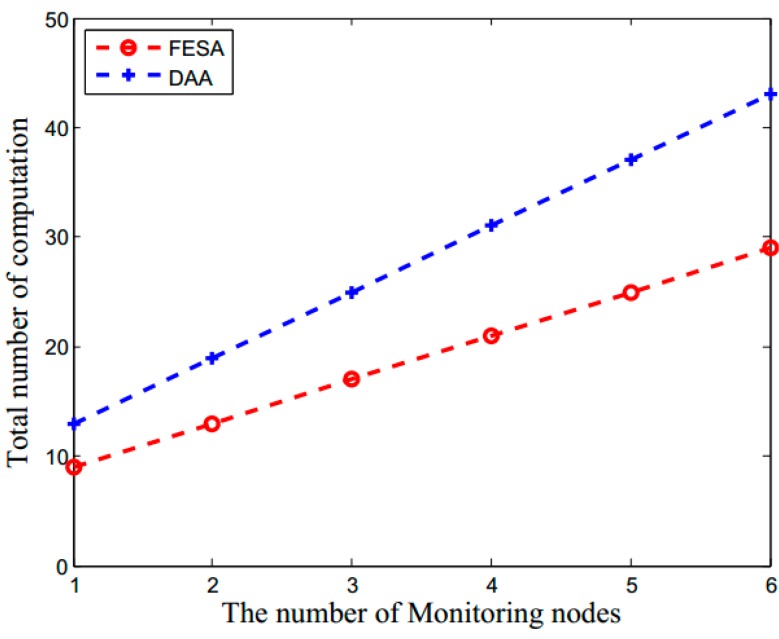
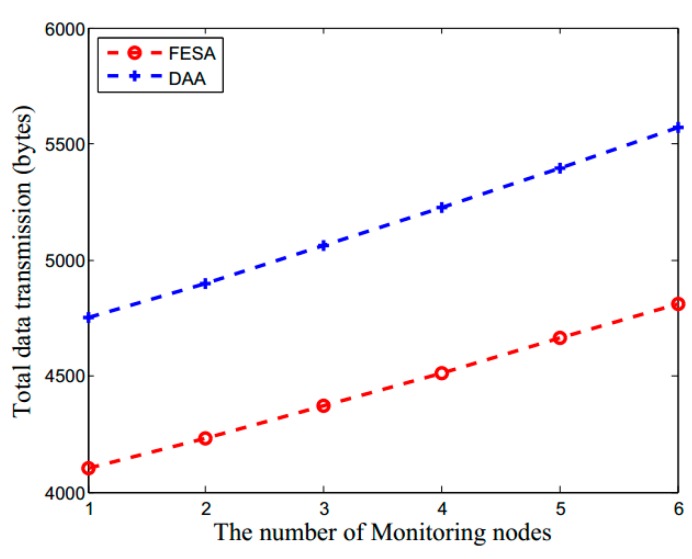
“For data aggregation operation, FHE consumed less time than DAA, which decrypts hop-by-hop, and achieved the time complexity of O(n) [184].”
MethodAli, M., Karimipour, H., & Tariq, M. (2021) · Computers & Security · doi:10.1016/j.cose.2021.102355 · Cited by 177
Chandnani, N., & Khairnar, C. N. (2022) · Theoretical Computer Science · doi:10.1016/j.tcs.2022.06.032 · Cited by 68
Metadata
- Authors
- Li, X., Chen, D., Li, C., & Wang, L.
- Affiliations
- Jiangsu University (CN)
- Sichuan University (CN)
- Corresponding author
- Wang, Liangmin
- Venue
- Sensors
- Publisher
- MDPI AG
- Published
- 2015-07-03
- Volume
- 15
- Issue
- 7
- Pages
- 15952-15973
- ISSN
- 1424-8220 (ISSN-L)
- PMC
- PMC4541862
- OpenAlex
- W1481916896
- Cited by
- 41
- References
- 31
- Citations by year
- 2026: 1 · 2024: 4 · 2023: 2 · 2022: 4 · 2021: 7 · 2020: 3 · 2019: 4 · 2018: 5 · 2017: 6 · 2016: 5
- FWCI
- 6.11
- Type
- journal article
- Language
- en
- Open access
- gold
- dx.doi.org
- Licence
- Locations
- Sensors (publishedVersion, cc-by)
- Europe PMC (PubMed Central) (publishedVersion, cc-by)
- PubMed Central (publishedVersion, cc-by)
- PubMed (publishedVersion)
- DOAJ (DOAJ: Directory of Open Access Journals) (submittedVersion, cc-by-sa)
- Funders
- the National Natural Science Foundation of China (61272074, U1405255)
- the Industrial Science and Technology Foundation of Zhenjiang City (GY2013030)
- Topics
- Physical Sciences › Computer Science › Computer Networks and Communications › Security in Wireless Sensor Networks
- Physical Sciences › Computer Science › Computer Networks and Communications › Cryptography and Data Security
- Physical Sciences › Engineering › Electrical and Electronic Engineering › Wireless Communication Security Techniques
- Keywords
- secure aggregation, fully homomorphic encryption, large-scale wireless sensor networks, data confidentiality, data integrity, message authentication codes, false data detection, energy efficiency, network lifetime, computational overhead
- MeSH terms
- Algorithms, Computer Communication Networks, Confidentiality, Computer Security, Remote Sensing Technology, Wireless Technology
About these checks
Registry, retraction, Cites and statistics results are computed, not judged, with one exception: a printed reference that no index lists is read once by a model before it counts as a citation error. Claims are extracted by a model and kept only when their quote appears verbatim in the text; each cited source is then checked, with a model’s help, for whether it says what the claim relies on. Those verdicts can be wrong — read the claim’s quote and the cited source before relying on one.
Statistics and arithmetic are recomputed, not judged.
Confidence bands are shown only for fields calibrated on our annotated test set. None is calibrated yet, so no band is shown.
What counts as a claim ›How we measure confidence ›How we check this ›
Are you an author, or do you see a problem with this page? Request a review
How to cite
Cite CoChat for the checks on this page, and the paper for its own findings.
- This page
- CoChat. (2026). Citation check: Secure Data Aggregation with Fully Homomorphic Encryption in Large-Scale Wireless Sensor Networks. https://app.cochat.ai/papers/10.3390/s150715952
- The paper
- Li, X., Chen, D., Li, C., & Wang, L. (2015). Secure Data Aggregation with Fully Homomorphic Encryption in Large-Scale Wireless Sensor Networks. Sensors. https://doi.org/10.3390/s150715952
Data sources
Bibliographic data: Semantic Scholar, OpenAlex, Crossref.
Contains information from the Semantic Scholar Academic Graph Datasets, made available under the ODC Attribution License (ODC-BY 1.0).
Semantic Scholar’s data is described in: Kinney, R., et al. (2023). The Semantic Scholar Open Data Platform. arXiv:2301.10140.
