

A Machine Learning Framework for Gait Classification Using Inertial Sensors: Application to Elderly, Post-Stroke and Huntington’s Disease Patients
Open accessThe DOI matches its Crossref record; 49 of the 49 references it cites were found in a registry or an index.
Abstract
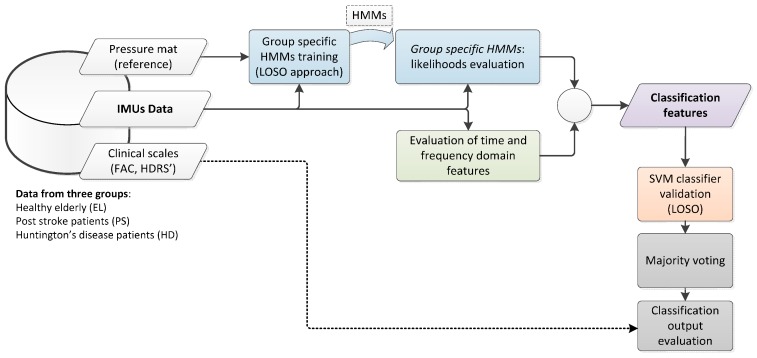
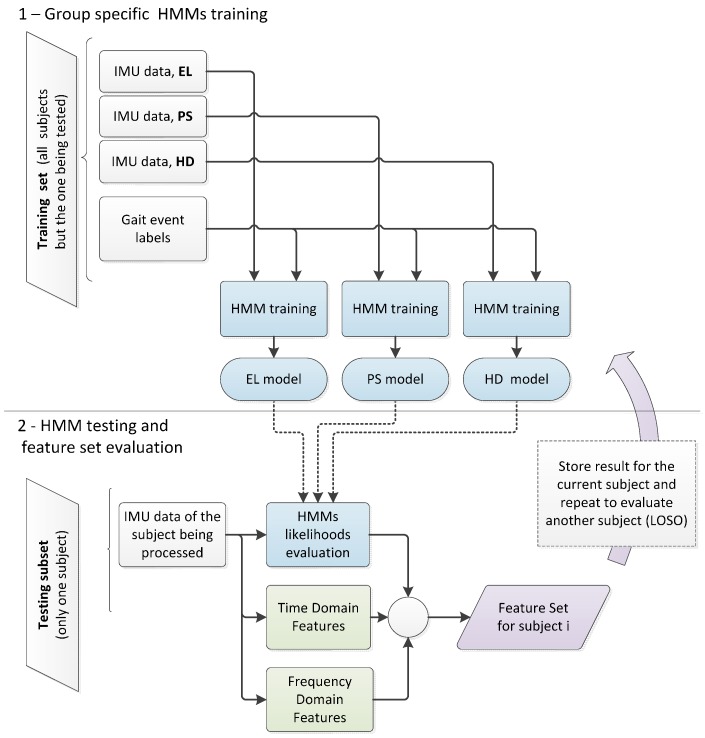
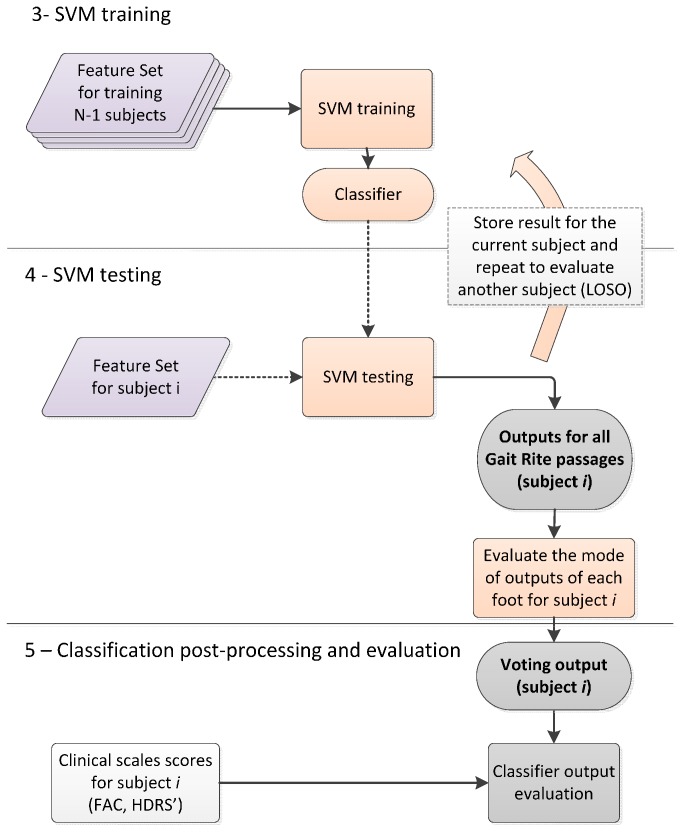
Machine learning methods have been widely used for gait assessment through the estimation of spatio-temporal parameters. As a further step, the objective of this work is to propose and validate a general probabilistic modeling approach for the classification of different pathological gaits. Specifically, the presented methodology was tested on gait data recorded on two pathological populations (Huntington’s disease and post-stroke subjects) and healthy elderly controls using data from inertial measurement units placed at shank and waist. By extracting features from group-specific Hidden Markov Models (HMMs) and signal information in time and frequency domain, a Support Vector Machines classifier (SVM) was designed and validated. The 90.5% of subjects was assigned to the right group after leave-one-subject–out cross validation and majority voting. The long-term goal we point to is the gait assessment in everyday life to early detect gait alterations.
Overview
The claims and statistics of this paper haven’t been checked yet.
Free: it reads the open-access text and checks the first 5 claims that cite a source we can check. Create a free account to check every claim.
Integrity signals
Registry
Cites
Statistics
Figures
Verification
Claims the paper makes
The claims and statistics of this paper haven’t been checked yet.
Free: it reads the open-access text and checks the first 5 claims that cite a source we can check. Create a free account to check every claim.
Claims other papers make about this one
Each is checked against this paper’s own text: does it say what the citing paper says it does?
The source backs part of the claim, not all of it — or backs it for a different population, condition or comparison.
In the citing paper
“Similarly, Maninini et al proposed a wearable device for collecting data about normal/pathological gaits for stroke prediction.49”
From Artificial intelligence in healthcare: past, present and future (2017) · cites this paper as [49]
Experimental — accuracy not yet measuredThe source backs part of the claim, not all of it — or backs it for a different population, condition or comparison.
In the citing paper
“Some researchers implemented systems to distinguish between normal and abnormal gaits for lower-limb rehabilitation [56,59,60], in which participants executed 10 m walks.”
From Wearable sensors and machine learning in post-stroke rehabilitation assessment: A systematic review (2022) · cites this paper as [56]
Experimental — accuracy not yet measuredThe check wasn’t confident either way, so it gives no verdict — never disputed.
In the citing paper
“All of these reasons resulted in IoT systems locally processing data [41,56,55].”
From Wearable sensors and machine learning in post-stroke rehabilitation assessment: A systematic review (2022) · cites this paper as [56]
Experimental — accuracy not yet measuredIn the citing paper
“The data would be extracted and modelled by hidden Markov models and SVM, and the algorithm could correctly classify 90.5% of the subjects to the right group.”
From Artificial intelligence in healthcare: past, present and future (2017) · cites this paper as [49]
Self-check
Percentages, sums and reported differences re-computed from the paper’s own numbers.
The self-check needs the paper’s full text.
Citations
Cites
LIBSVM: A library for support vector machines
Chang, C.-C., & Lin, C.-J. (2011) · ACM Transactions on Intelligent Systems and Technology · doi:10.1145/1961189.1961199 · Cited by 40,918 · cited 1×
“In this work, in particular, we used the LibSVM implementation of these algorithms [41].”
MethodThe Nature of Statistical Learning Theory
Vapnik, V. N. (1995) · doi:10.1007/978-1-4757-2440-0 · Cited by 39,138
A tutorial on hidden Markov models and selected applications in speech recognition
Rabiner, L. R. (1989) · Proceedings of the IEEE · doi:10.1109/5.18626 · Cited by 22,743
The Nature of Statistical Learning Theory
Vapnik, V. N. (2000) · Springer eBooks · doi:10.1007/978-1-4757-3264-1 · Cited by 10,696
‘Small Changes' to Diet and Physical Activity Behaviors for Weight Management
Hills, A. P., Byrne, N. M., Lindstrom, R., & Hill, J. O. (2013) · Obesity Facts · doi:10.1159/000345030 · Cited by 9,493
Physical Activity in the United States Measured by Accelerometer
TROIANO, R. P., BERRIGAN, D., DODD, K. W., MÂSSE, L. C., TILERT, T., & MCDOWELL, M. (2008) · Medicine & Science in Sports & Exercise · doi:10.1249/mss.0b013e31815a51b3 · Cited by 7,638 · cited 1×
“, gait spatio-temporal parameters, gait variability) and the quality and quantity of physical activity in both healthy and pathological populations [5–7].”
BackgroundStatistical pattern recognition: a review
Jain, A. K., Duin, P. W., & Mao, J. (2000) · IEEE Transactions on Pattern Analysis and Machine Intelligence · doi:10.1109/34.824819 · Cited by 6,767 · cited 1×
“To improve the final prediction and summarize the results, a majority voting (MV) strategy was finally applied [43].”
MethodThe Nature of Statistical Learning
Vapnik, V. N. (1995) · Medical Entomology and Zoology · Cited by 2,295
Unified Huntington's disease rating scale: Reliability and consistency
(1996) · Movement Disorders · doi:10.1002/mds.870110204 · Cited by 2,079
Clinical Gait Assessment in the Neurologically Impaired
Holden, M. K., Gill, K. M., Magliozzi, M. R., Nathan, J., & Piehl-Baker, L. (1984) · Physical Therapy · doi:10.1093/ptj/64.1.35 · Cited by 1,499
Cited by
Items 101–200 of 244
Mekruksavanich, S., Jantawong, P., & Jitpattanakul, A. (2022) · International Conference on Information Technology · doi:10.1109/incit56086.2022.10067733 · Cited by 18
“To acquire the three-axis acceleration at various points and the three-axis rotation angular velocity in a gyroscope, the most popular locations for wearable sensors are the calf, spine, head, pelvis, and feet [14].”
BackgroundCNN‐Based Neurodegenerative Disease Classification Using QR‐Represented Gait Data
Erdaş, Ç. B., & Sümer, E. (2024) · Brain and Behavior · doi:10.1002/brb3.70100 · Cited by 19
“Mannini et al. (2016) proposed a general probabilistic modeling approach to classify different pathological gaits in their study.”
BackgroundAlaskar, H., Hussain, A. J., Khan, W., Tawfik, H., Trevorrow, P., Liatsis, P., & Sbaï, Z. (2020) · Journal of Reliable Intelligent Environments · doi:10.1007/s40860-020-00114-1 · Cited by 16
A Review of Machine Learning Network in Human Motion Biomechanics
Low, W. S., Chan, C. K., Chuah, J. H., Tee, Y. K., Hum, Y. C., Salim, M. I. M., & Lai, K. W. (2021) · Journal of Grid Computing · doi:10.1007/s10723-021-09595-7 · Cited by 18
“(1234567890) post-stroke and Huntington’s disease using data from inertia sensors [109].”
BackgroundA Low-Cost Telerehabilitation Paradigm for Bimanual Training
Ventura, R. B., Marín, M. R., Nov, O., Raghavan, P., & Porfiri, M. (2021) · IEEE/ASME Transactions on Mechatronics · doi:10.1109/tmech.2021.3064930 · Cited by 17
“detection and classification [31], [32], [33].”
Bernal, V. C. E., Hiremath, S. V., Wolf, B., Riley, B., Mendonca, R. J., & Johnson, M. J. (2021) · Journal of Rehabilitation and Assistive Technologies Engineering · doi:10.1177/20556683211044640 · Cited by 17
Advances in Vision-Based Gait Recognition: From Handcrafted to Deep Learning
Mogan, J. N., Lee, C. P., & Lim, K. M. (2022) · Sensors · doi:10.3390/s22155682 · Cited by 17
Smart Annotation of Cyclic Data Using Hierarchical Hidden Markov Models
Martindale, C. F., Hoenig, F., Strohrmann, C., & Eskofier, B. M. (2017) · Sensors · doi:10.3390/s17102328 · Cited by 15
A survey of step length estimation models based on inertial sensors for indoor navigation systems
Soni, R., & Trapasiya, S. (2021) · International Journal of Communication Systems · doi:10.1002/dac.5053 · Cited by 14
“72 A quantitative comparison is challenging due to the lack of standard testing procedures.”
BackgroundIdentification of Gait Motion Patterns Using Wearable Inertial Sensor Network
Moon, K. S., Lee, S. Q., Öztürk, Y., Gaidhani, A., & Cox, J. A. (2019) · Sensors · doi:10.3390/s19225024 · Cited by 14
Gait Phase Detection Based on Muscle Deformation with Static Standing-Based Calibration
Miyake, T., Yamamoto, S., Hosono, S., Funabashi, S., Cheng, Z., Zhang, C., Tamaki, E., & Sugano, S. (2021) · Sensors · doi:10.3390/s21041081 · Cited by 13
“LR, SVM with tuned hyperparameters, and LR-a (adjusted LR using angular velocity data) were used as the detection algorithm.”
MethodInfluentialJiménez‐Grande, D., Atashzar, S. F., Devecchi, V., Martinez‐Valdes, E., & Falla, D. (2022) · Gait & Posture · doi:10.1016/j.gaitpost.2022.05.015 · Cited by 13
Taborri, J., Palermo, E., & Rossi, S. (2023) · Sensors · doi:10.3390/s23115245 · Cited by 15
“Support vector machines are among the most widespread machine learning algorithms for the classification of physical activities [26,27].”
BackgroundMethodRazfar, N., Kashef, R. F., & Mohammadi, F. A. (2023) · Sensors · doi:10.3390/s23125513 · Cited by 16
Artificial intelligence in diagnosis and management of Huntington’s disease
Parekh, N., Bhagat, A., Raj, B., Chhabra, R. S., Buttar, H. S., Kaur, G., Ramniwas, S., & Tuli, H. S. (2023) · Beni-Suef University Journal of Basic and Applied Sciences · doi:10.1186/s43088-023-00427-z · Cited by 19
Hsu, W.-C., Sugiarto, T., Liao, Y.-Y., Lin, Y., Yang, F., Hueng, D., Sun, C.-T., & Chou, K.-N. (2021) · Applied Sciences · doi:10.3390/app11041541 · Cited by 14
“According to a previous study classifying normal and pathological gait patterns, this result is also expected because this type of classification method focused on gait alteration caused by pathology, not on the pathology itself [12].”
InfluentialPathological Gait Classification Using Early and Late Fusion of Foot Pressure and Skeleton Data
Naseem, M. T., Seo, H., Kim, N., & Lee, C.-S. (2024) · Applied Sciences · doi:10.3390/app14020558 · Cited by 11
Classification-Based Screening of Phlebopathic Patients using Smart Socks
D’Angelantonio, E., Lucangeli, L., Camomilla, V., Mari, F., Mascia, G., & Pallotti, A. (2021) · IEEE International Symposium on Medical Measurements and Applications (MeMeA) · doi:10.1109/memea52024.2021.9478688 · Cited by 11
Video-Based Gait Analysis for Assessing Alzheimer’s Disease and Dementia with Lewy Bodies
Wang, D., Zouaoui, C., Jang, J., Drira, H., & Seo, H. (2023) · Lecture notes in computer science · doi:10.1007/978-3-031-47076-9_8 · Cited by 24
“In order to facilitate quantitative gait analysis, previous works have often relied on wearable sensors [12,27,6,17] or electronic walkways [19,22].”
MethodSegmentation of gait sequences using inertial sensor data in hereditary spastic paraplegia
Martindale, C. F., Strauss, M., Gaßner, H., List, J., Müller, M., Klucken, J., Kohl, Z., & Eskofier, B. M. (2017) · Annual International Conference of the IEEE Engineering in Medicine and Biology Society (EMBC) · doi:10.1109/embc.2017.8037062 · Cited by 20
“DTW and HMM algorithms, or variants thereof, were chosen for this segmentation task due to their successful use in IMU-based gait analysis of other neurological diseases such as Parkinson’s and Huntington’s disease [15], [19].”
MethodPedestrian Stride-Length Estimation Based on Bidirectional LSTM Network
Ping, Z., Meng, Z., Pengyu, W., & Deng, Z. (2020) · Chinese Automation Congress · doi:10.1109/cac51589.2020.9327734 · Cited by 12
Advances in Neural Signal Processing
Vinjamuri, R. K. (2020) · IntechOpen eBooks · doi:10.5772/intechopen.81424 · Cited by 12
Lozano‐García, M., Doheny, E. P., Mann, E., Morgan-Jones, P., Drew, C. J. G., Busse, M. E., & Lowery, M. M. (2024) · IEEE Transactions on Neural Systems and Rehabilitation Engineering · doi:10.1109/tnsre.2024.3407887 · Cited by 11
“A machine learning approach, based on a support vector machine classifier, has been used for gait analysis in HD, but validated only in the clinic [15].”
MethodZheng, X., Wilhelm, E., Otten, E., Reneman, M. F., & Lamoth, C. J. C. (2025) · Biomedical Signal Processing and Control · doi:10.1016/j.bspc.2024.107406 · Cited by 12
Human Gait Modelling Using Hidden Markov Model For Abnormality Detection
Chattopadhyay, S., & Nandy, A. (2018) · IEEE Region 10 Conference (TENCON) · doi:10.1109/tencon.2018.8650194 · Cited by 9
Toward Predicting Infant Developmental Outcomes From Day-Long Inertial Motion Recordings
Fitter, N. T., Funke, R., Pulido, J. C., Matarić, M. J., & Smith, B. A. (2020) · IEEE Transactions on Neural Systems and Rehabilitation Engineering · doi:10.1109/tnsre.2020.3016916 · Cited by 11
Wearable Fall Detection Based on Motion Signals Using Hybrid Deep Residual Neural Network
Mekruksavanich, S., Jantawong, P., Hnoohom, N., & Jitpattanakul, A. (2022) · Lecture notes in computer science · doi:10.1007/978-3-031-20992-5_19 · Cited by 9
Alaskar, H., & Hussain, A. J. (2018) · Lecture notes in computer science · doi:10.1007/978-3-319-95957-3_80 · Cited by 9
Permatasari, J., Connie, T., & Ong, T. S. (2020) · Multimedia Tools and Applications · doi:10.1007/s11042-020-09438-9 · Cited by 9
“A number of researchers perform feature extraction on the time and frequency domains [24, 39, 41], and conduct classification using machine learning methods.”
BackgroundMethodTanaka, H., Kazuta, Y., Naruse, Y., Tominari, Y., Umehara, H., Sowa, Y., Sagawa, T., Oiwa, K., Okada, M., Kawagishi, I., et al. (2022) · Scientific Reports · doi:10.1038/s41598-022-06732-4 · Cited by 7
Human Personality Assessment Based on Gait Pattern Recognition Using Smartphone Sensors
Ibrar, K., Fayyaz, A. M., Khan, M. A., Alhaisoni, M. M., Tariq, U., Jeon, S., & Nam, Y. (2023) · Computer Systems Science and Engineering · doi:10.32604/csse.2023.036185 · Cited by 7
Salama, W. M., Aly, M. H., Abed, A. M., & Eladly, A. M. (2023) · Textile Research Journal · doi:10.1177/00405175231171720 · Cited by 8
“Mannini et al.30 classified distinct gait patterns for post-stroke patients, Huntington’s disease patients, and healthy older adults with an accuracy of 90.5% using the SVM method.”
BackgroundInfluentialIntelligent Big Data Analytics in Health
Bayrak, E. A., & Kirci, P. (2019) · Advances in medical technologies and clinical practice book series · doi:10.4018/978-1-5225-8567-1.ch014 · Cited by 7
Sports Motion Recognition based on Foot Trajectory State Sequence Mapping
Huang, L., Ma, H., Yan, W., Liu, W., Liu, H., & Yang, Z. (2019) · International Joint Conference on Neural Networks (IJCNN) · doi:10.1109/ijcnn.2019.8851921 · Cited by 7
Fernandes, C., Ferreira, F., Gago, M. F., Azevedo, O. M., Sousa, N., Erlhagen, W., & Bicho, E. G. (2019) · IEEE International Conference on Bioinformatics and Biomedicine (BIBM) · doi:10.1109/bibm47256.2019.8983241 · Cited by 8
Lu, Z., Zhou, H., Lyu, H., Wu, H., Tian, S., & Yang, G. (2025) · Bioengineering · doi:10.3390/bioengineering12040395 · Cited by 6
“A low-pass Butterworth filter (4th order, cut-off frequency 20 Hz) was used to remove high-frequency noise [16].”
Ma, Y., Zhang, P., Tang, Y., Pan, C., Li, G., Liu, N., Hu, Y., & Tang, Z. (2020) · Brain Hemorrhages · doi:10.1016/j.hest.2020.01.006 · Cited by 7
Between-Day Reliability of Commonly Used IMU Features during a Fatiguing Run and the Effect of Speed
Dimmick, H. L., van Rassel, C. R., MacInnis, M. J., & Ferber, R. (2022) · Sensors · doi:10.3390/s22114129 · Cited by 8
“IMUs have been used in clinical contexts [1,2], team sports [3,4], activity recognition [5,6], and to investigate various aspects of walking and running gait [7–10].”
MethodSensor Selection for Classification of Physical Activity in Long-Term Wearable Devices
Kirchner, J., Faghih-Naini, S., Bisgin, P., & Fischer, G. (2018) · Proceedings of IEEE Sensors/Proceedings of IEEE Sensors ... · doi:10.1109/icsens.2018.8589663 · Cited by 6
“2) Feature Generation: For each measurement variable, the following quantities were derived in time space: (1) arithmetic mean [10], (2) root mean square value [11], (3–4) variance and standard deviation [10], (5) mean absolute deviation from mean [11], [12], (6–8) maximum, minimum and range [10],”
MethodArtificial intelligence and machine learning for the healthcare sector
Guleria, P., & Sood, M. (2022) · Elsevier eBooks · doi:10.1016/b978-0-323-85751-2.00007-4 · Cited by 5
Self-Supervised Human Activity Representation for Embodied Cognition Assessment
Zadeh, M. Z., Babu, A. R., Jaiswal, A., & Makedon, F. S. (2022) · Technologies · doi:10.3390/technologies10010033 · Cited by 7
Smart sock-based machine learning models development for phlebopathic patient screening
D’Angelantonio, E., Lucangeli, L., Camomilla, V., & Pallotti, A. (2022) · IEEE International Workshop on Metrology for Industry 4.0 & IoT (MetroInd4.0&IoT) · doi:10.1109/metroind4.0iot54413.2022.9831481 · Cited by 6
Correlations of Gait Phase Kinematics and Cortical EEG: Modelling Human Gait with Data from Sensors
Nutakki, C. S., Bodda, S., & Diwakar, S. (2020) · IntechOpen eBooks · doi:10.5772/intechopen.88465 · Cited by 7
Bibbo, D., Marchis, C. D., Schmid, M., & Ranaldi, S. (2023) · Physiological Measurement · doi:10.1088/1361-6579/ad133b · Cited by 5
Potential Use of Artificial Intelligence in a Healthcare System
Agrawal, O. D., & Madhavi, J. S. (2022) · The Chinese Journal of Artificial Intelligence · doi:10.2174/2666782701666220805105655 · Cited by 5
Fine-Grained Intoxicated Gait Classification Using a Bilinear CNN
Li, R., Agu, E., Sarwar, A., Grimone, K., Herman, D. S., Abrantes, A. M., & Stein, M. D. (2023) · IEEE Sensors Journal · doi:10.1109/jsen.2023.3248868 · Cited by 8
“Today, gait analysis is widely used to monitor diseases that affect the locomotor system, such as Parkinson’s disease (PD) [35], Huntington’s disease [36], traumatic brain injury (TBI), and tetanus [7].”
BackgroundWearable systems in movement disorders
Bianchini, E., & Maetzler, W. (2023) · International review of movement disorders · doi:10.1016/bs.irmvd.2023.04.002 · Cited by 9
Diagnosis of generalized joint hypermobility with gait patterns using a deep neural network
Zhong, G., Huang, S., Zhang, Z., Xie, Z., Liu, H., Huang, W., Zeng, X., Hu, L., Liang, H., & Zhang, Y. (2023) · Computers in Biology and Medicine · doi:10.1016/j.compbiomed.2023.107360 · Cited by 5
Automatic recognition of altered gait using wearable inertial sensors
Mannini, A., Trojaniello, D., Croce, U. D., & Sabatini, A. M. (2016) · Gait & Posture · doi:10.1016/j.gaitpost.2016.07.035 · Cited by 5
Self-citationA Classification Model Based on an Adaptive Neuro-fuzzy Inference System for Disease Prediction
Mohanty, R., Solanki, S. S., Mallick, P. K., & Pani, S. K. (2020) · Studies in computational intelligence · doi:10.1007/978-981-15-5495-7_7 · Cited by 8
Na, J., Kim, H., Lee, G., & Nam, W. (2023) · IEEE Transactions on Neural Systems and Rehabilitation Engineering · doi:10.1109/tnsre.2023.3272887 · Cited by 7
“To address this problem related to rule-based models, researchers have introduced machine learning (ML) techniques for gait phase prediction [9], [13], [14], [15], [16], [17] because they are relatively robust to speed variations.”
MethodLee, C.-H., Mendoza, T., Huang, C.-H., & Sun, T. (2023) · Healthcare · doi:10.3390/healthcare11131938 · Cited by 7
“Researchers have identified features that can be used with statistical or machinelearning models to identify older adults at risk of falling [18], as well as post-stroke individuals at risk of falling [19] using data collected by inertial sensors from the TUG test.”
BackgroundDeep Learning-Based Gait Event Prediction through a Single Waist-worn Wearable Sensor
Arshad, M. Z., Lee, D.-H., Jung, D., Jamsrandorj, A., Kim, J., & Mun, K.-R. (2023) · International Conference on Consumer Electronics · doi:10.1109/icce56470.2023.10043541 · Cited by 4
“Although the emergence of AI with adaptive methods like Hidden Markov Models (HMM) [26], Support Vector Machines (SVM) [27],”
MethodImplementation of Artificial Intelligence and Machine Learning in Manufacturing
Chohan, J. S., Kumar, R., Kumar, S., Goyal, B., Dogra, A., & Kukreja, V. (2023) · International Conference on Edge Computing and Applications (ICECAA) · doi:10.1109/icecaa58104.2023.10212238 · Cited by 6
“There are 16 sub-categories within this category of artificial intelligence [13 – 15].”
BackgroundA Systematic Review of Medical Expert Systems for Cardiac Arrest Prediction
Kaur, I., Ahmad, T., & Doja, M. N. (2023) · Current Bioinformatics · doi:10.2174/0115748936251658231002043812 · Cited by 5
Wang, C., Long, Z., Wang, X., Kong, Y.-Q., Zhou, L., Jia, W.-H., Li, P., Wang, J., Wang, X., & Tian, T. (2025) · Frontiers in Neuroinformatics · doi:10.3389/fninf.2025.1544372 · Cited by 4
Park, S. G., Mun, S. B., Kim, Y. J., & Kim, K. G. (2025) · Scientific Reports · doi:10.1038/s41598-025-04065-6 · Cited by 4
“Inertial measurement unit-based gait analysis has also been reported to be effective in classifying older adults, patients with stroke, and patients with Huntington disease 22 .”
The reliability test of a smart insole for gait analysis in stroke patients
Seo, T.-W., Lee, J.-Y., & Lee, B. (2022) · The Journal of Korean Academy of Physical Therapy Science · doi:10.26862/jkpts.2022.03.29.1.30 · Cited by 5
The Strategic Efficacy of Artificial Intelligence (AI) in Medical Tourism
Gbobaniyi, O., Tincani, D., & Emelone, P. (2024) · Advances in hospitality, tourism and the services industry (AHTSI) book series · doi:10.4018/979-8-3693-2248-2.ch005 · Cited by 5
Siebra, C., & Siebra, H. A. (2018) · Computer Methods and Programs in Biomedicine · doi:10.1016/j.cmpb.2018.01.029 · Cited by 4
A Brunnstrom Stage Evaluation System with Fuzzy-Accelerometer
Su, T., Lo, K.-L., Tsai, J. S.-H., Yeh, W.-A., & Kuo, C. F. (2019) · Applied Sciences · doi:10.3390/app9183718 · Cited by 4
Shukurov, K., Mirjamolov, M., Kholdorov, S., & Malikova, N. (2025) · Lecture notes in electrical engineering · doi:10.1007/978-981-97-4784-9_29 · Cited by 3
Huang, J., Lin, L., Lin, J., Zhou, J., Yin, B., Lyu, W., Su, F., Yuan, K., Cai, M., Li, Y., et al. (2025) · IEEE Transactions on Instrumentation and Measurement · doi:10.1109/tim.2025.3544325 · Cited by 3
“Sensors [14], [18] are placed at designated locations and patients need to carry them for a long time which may provide discomfort with the consecutive data variability.”
Human Gait Abnormality Detection Using Low Cost Sensor Technology
Jain, S., & Nandy, A. (2021) · Communications in computer and information science · doi:10.1007/978-981-16-1092-9_28 · Cited by 3
Gait-based Human Identification through Minimum Gait-phases and Sensors
Arshad, M. Z., Jung, D., Park, M., Mun, K.-R., & Kim, J. (2021) · Annual International Conference of the IEEE Engineering in Medicine and Biology Society (EMBC) · doi:10.1109/embc46164.2021.9630468 · Cited by 3
“[11], [12], detection of abnormalities [13], [14], activity recognition [15], [16], [17] and person identification [18], [19], [20], [21].”
BackgroundGait classification of stroke survivors - An analytical study
Mathur, D., & Bhatia, D. (2022) · Journal of Interdisciplinary Mathematics · doi:10.1080/09720502.2021.2006332 · Cited by 3
Piatkowska, W., Spolaor, F., Romanato, M., Polli, R., Huang, A., Murgia, A., & SAWACHA, Z. (2022) · Applied Sciences · doi:10.3390/app12031612 · Cited by 4
Multi Attributes Recognition from Human Gait Analysis using MotionSense Dataset
Ibrar, K., Shaikh, A., & Zafar, S. (2022) · Mohammad Ali Jinnah University International Conference on Computing (MAJICC) · doi:10.1109/majicc56935.2022.9994092 · Cited by 3
“| , where n is normalized signal 1) Support Vector Machine (SVM): The Support Vector Machine (SVM) [9] is a popular machine learning classifier due to its great efficiency and cheap processing power.”
BackgroundMethodAutomated Algorithm for Neurodegenerative Disorder Detection Using Gait-Based Features
Tengshe, R., Singh, A., Raj, P., Yadav, S., Fathima, S. K., & Fatimah, B. (2023) · Lecture notes in networks and systems · doi:10.1007/978-981-19-7874-6_19 · Cited by 3
Enhancing gait pattern analysis with deep learning on image data
Kumar, M., Mishra, D. K., Semwal, V. B., & Gautam, P. (2025) · AIP conference proceedings · doi:10.1063/5.0247035 · Cited by 3
Leite, P., & Postolache, O. A. (2017) · E-Health and Bioengineering Conference (EHB) · doi:10.1109/ehb.2017.7995455 · Cited by 3
“Inertial measurement units (IMUs) including combinations of accelerometers and gyroscopes have been successfully used for assessing gait characteristics and the quality and quantity of physical activity in both healthy and motor impaired population [5].”
InfluentialLow-cost sensors for gait analysis
Nandy, A., Chakraborty, S., Chakraborty, J., & Venture, G. (2021) · Elsevier eBooks · doi:10.1016/b978-0-323-85245-6.00008-4 · Cited by 3
Applied Machine Learning on Phase of Gait Classification and Joint-Moment Regression
Jung, E. A., Lin, C., Contreras, M., & Teodorescu, M. (2022) · Biomechanics · doi:10.3390/biomechanics2010006 · Cited by 3
Application of Machine Learning Techniques in Healthcare
H, S. D., Sudha, V., & Jagadeesan, D. (2022) · IGI Global eBooks · doi:10.4018/978-1-6684-6291-1.ch067 · Cited by 5
Silva, G. L., Zaruz, M. J. F., Milagre, S. T., Andrade, A. D. O., & Pereira, A. A. (2023) · Research on Biomedical Engineering · doi:10.1007/s42600-023-00271-1 · Cited by 3
“2019), where KNN, RF, NB, and SVM are widely used to predict events related to age (Alizadeh et al. 2021; Begg et al. 2005; Cuaya-Simbro et al. 2021; Fujio and Takeuchi 2021; Fukuchi et al. 2011; Mannini et al. 2016; Tarekegn et al. 2020; Tavakolan et al. 2011; Wu and Wang 2008).”
BackgroundMethodMulti-class Model MOV-OVR for Automatic Evaluation of Tremor Disorders in Huntington’s Disease
Maskeliūnas, R., Lauraitis, A., Damaševičius, R., & Misra, S. (2021) · Communications in computer and information science · doi:10.1007/978-3-030-69143-1_1 · Cited by 3
Attention-based Deep Learning Framework in the Classification of Post-Stroke Kinematic Parameters
Pantonial, R., & Simić, M. (2025) · Procedia Computer Science · doi:10.1016/j.procs.2025.09.125 · Cited by 3
A BiLSTM-Attention Model for Fall Event Prediction
Sun, X., Chen, X., Chen, H., & Han, Z. (2025) · International Conference on Mechatronics, Robotics, and Artificial Intelligence (MRAI) · doi:10.1109/mrai65197.2025.11135822 · Cited by 2
“The calf, spine, head, pelvis, and feet constitute the prevalent parts in wearable sensors [5] , aiming to yield the three-axis acceleration and three-axis rotational angular velocity at different positions in the gyroscope.”
Machine Learning in Neuromuscular Disease Classification
Farid, N. (2022) · Springer eBooks · doi:10.1007/978-981-19-1550-5_56-1 · Cited by 2
Galey, L., Fuentes, O., & Gonzalez, R. V. (2024) · Prosthesis · doi:10.3390/prosthesis6020018 · Cited by 3
Automatic selection model to identify neurodegenerative diseases
Sánchez-DelaCruz, E., Loeza-Mejía, C.-I., Primero-Huerta, C., & Fuentes-Ramos, M. (2024) · Digital Health · doi:10.1177/20552076241284376 · Cited by 3
Automated system to measure Tandem Gait to assess executive functions in children
Zadeh, M. Z., Babu, A. R., Jaiswal, A., Kyrarini, M., Bell, M., & Makedon, F. (2021) · International Conference on PErvasive Technologies Related to Assistive Environments (PETRA) · doi:10.1145/3453892.3453999 · Cited by 2
“): Example of an valid step 2 RELATED WORKS There has been a plethora of research in recent years that tackle the problem of analysing body gait for prediction and diagnosis of multiple disorders. In [14], machine learning methods have been widely used for gait assessment through the estimation of spatio-temporal para…”
MethodMachine Learning for Interpretation of Brain Images: A Detailed Analysis through survey
Bagavathi, C. (2021) · International Conference on Computing, Communication, and Intelligent Systems (ICCCIS) · doi:10.1109/icccis51004.2021.9397238 · Cited by 2
“A wearable device was designed using Markov models - SVM and produced 90.5% accuracy [28].”
MethodInfluentialGait events detection using inertial sensors, Apple Watch, and the G-WALK reference system
Navarro, H. J., Salinas, S. A., Arenas, W. J., Sotelo, S. A., Rueda, C., Otero, M. E., Altuve, M., & Jaimes, W. J. (2021) · Global Medical Engineering Physics Exchanges/Pan American Health Care Exchanges (GMEPE/PAHCE) · doi:10.1109/gmepe/pahce50215.2021.9434858 · Cited by 4
DDSS: denge decision support system to recommend the athlete-specific workouts on balance data
Abidin, D., & Cinsdikici, M. G. (2022) · Neural Computing and Applications · doi:10.1007/s00521-022-07208-2 · Cited by 2
Liu, X., Wu, Y., Meng, C., Liang, T., Han, F., & Liu, X. (2023) · Mathematical Biosciences & Engineering · doi:10.3934/mbe.2023349 · Cited by 2
Machine Learning based Comparative Analysis and Prediction for Sustainable Additive Manufacturing
Harsha, P. S., Chohan, J. S., & Gill, H. S. (2022) · International Conference on Parallel, Distributed and Grid Computing (PDGC) · doi:10.1109/pdgc56933.2022.10053152 · Cited by 2
“…machine learning, neural networks, expert systems, knowledge representation, programming, data mining, reasoning, artificial life, systems, distributed AI, belief revision, theory computation, constraint satisfaction, natural language understanding, genetic algorithm and theorem proving [8]–[10].”
BackgroundGait Recognition Based on Tensor Analysis of Acceleration Data from Wearable Sensors
Bichave, K., Brewer, O., Gusinov, M., Markopoulos, P. P., & Puchades, I. (2018) · IEEE Western New York Image and Signal Processing Workshop (WNYISPW) · doi:10.1109/wnyipw.2018.8576383 · Cited by 2
Braga, J., Ferreira, F., Fernandes, C., Gago, M. F., Azevedo, O. M., Sousa, N., Erlhagen, W., & Bicho, E. G. (2020) · Lecture notes in computer science · doi:10.1007/978-3-030-58808-3_30 · Cited by 2
Sensing Methodologies for Gait Parameters Estimation and Control
Pinto-Bernal, M. J., M., S. D. S., Múnera, M., & Cifuentes, C. A. (2021) · Springer eBooks · doi:10.1007/978-3-030-79630-3_5 · Cited by 2
Realization and validation of a piezoresistive textile-based insole for gait-related measurements
Mileti, I., Pasinetti, S., Taborri, J., Patanè, F., Lancini, M., & Rossi, S. (2023) · IEEE International Instrumentation and Measurement Technology Conference · doi:10.1109/i2mtc53148.2023.10176102 · Cited by 2
“Several studies demonstrated as data gathered from linear accelerometers and gyroscope can be used to fully described the quality of movements both in terms of gait and posture [4], [5].”
BackgroundMethodActivity Classification with Inertial Sensors to Perform Gait Analysis
Martínez-Pascual, D., Catalan, J. M., García-Pérez, J. V., Sanchís, M., Arán‐Aís, F., & García-Aracil, N. (2023) · Lecture notes in networks and systems · doi:10.1007/978-3-031-38333-5_8 · Cited by 2
Hedjazi, N., Kharboutly, H., Benali, A., & Dibi, Z. (2018) · Australasian Physical & Engineering Sciences in Medicine · doi:10.1007/s13246-018-0628-9 · Cited by 3
Activity Recognition for Stroke Patients
Vågeskar, E. (2017) · BIBSYS Brage (BIBSYS (Norway)) · Cited by 4
Application and investigation of wearable devices in the field of health care (Preprint)Preprint
Ye, Z., Zhang, J., Xie, Y., Xu, S., Gao, F., & Wu, X. (2020) · doi:10.2196/preprints.18905 · Cited by 2
Personal Identification Using Gait Spectrograms and Deep Convolutional Neural Networks
Jung, D., Nguyen, M. D., Arshad, M. Z., Kim, J., & Mun, K.-R. (2021) · Annual International Conference of the IEEE Engineering in Medicine and Biology Society (EMBC) · doi:10.1109/embc46164.2021.9630315 · Cited by 1
“…was challenged by imperfect foreground segmentation of the walker from the background scene, variations in the camera viewing angle, alterations in clothing and in carrying condition of the walker, changes in illumination, ambient occlusion, clutter, and other perceptual distortions [5, 12].”
Gait Analysis Using Principal Component Analysis and Long Short Term Memory Models
Maheswari, R., Pattabiraman, V., & Raja, A. S. (2023) · Advances in computer and electrical engineering book series · doi:10.4018/978-1-6684-6523-3.ch004 · Cited by 1
Brasiliano, P., Bustos, A. S. O., Belluscio, V., Cereatti, A., Croce, U. D., Trabassi, D., Salis, F., Tramontano, M., Buzzi, M. G., Vannozzi, G., et al. (2026) · Scientific Reports · doi:10.1038/s41598-026-43666-7 · Cited by 1
“The classification performance achieved in this study is slightly lower compared to those obtained in previous studies on patients with stroke 13–16, 20, 21 but there are several methodological differences to consider.”
Self-citationMachine Learning in Public Health: A Review
Asadullah, M., Rashid, M. B., Bosu, P., Ahmed, E., & Tamanna, S. (2021) · Global Journal of Researches in Engineering · Cited by 3
Jayashree, L. S., Madhana, K., Kumar, V. P., Swathi, S., & Soundharyan, P. (2024) · Topics in Geriatric Rehabilitation · doi:10.1097/tgr.0000000000000419 · Cited by 1
“Second, most of the studies concentrated on a single pathological population compared with healthy controls, except two articles, 3,37 which studied 2 and 3 sets of motor-impaired disorders, respectively, in view of the fact that analyzing different kinds of gait disorders enables sensitive outcome…”
Background
Metadata
- Authors
- Mannini, A., Trojaniello, D., Cereatti, A., & Sabatini, A.
- Affiliations
- Scuola Superiore Sant'Anna (IT)
- University of Sassari (IT)
- Corresponding author
- Mannini, Andrea
- Venue
- Sensors
- Publisher
- MDPI AG
- Published
- 2016-01-21
- Volume
- 16
- Issue
- 1
- Pages
- 134
- ISSN
- 1424-8220 (ISSN-L)
- PMC
- PMC4732167
- OpenAlex
- W2258968934
- Cited by
- 242
- References
- 49
- Citations by year
- 2026: 6 · 2025: 15 · 2024: 21 · 2023: 41 · 2022: 33 · 2021: 34 · 2020: 29 · 2019: 25 · 2018: 21 · 2017: 11 · 2016: 6
- FWCI
- 10.11
- Type
- journal article
- Language
- en
- Open access
- gold
- doi.org
- Licence
- Locations
- Sensors (publishedVersion, cc-by)
- PubMed Central (publishedVersion, cc-by)
- PubMed (publishedVersion)
- PORTO@Iris (submittedVersion, cc-by)
- UnissResearch (Università degli Studi di Sassari) (submittedVersion, cc-by)
- DOAJ (DOAJ: Directory of Open Access Journals) (submittedVersion, cc-by-sa)
- CINECA IRIS Institutional Research Information System (Sant'Anna School of Advanced Studies) (submittedVersion, other-oa)
- Funders
- Ministero dell’Istruzione, dell’Università e della Ricerca (PRIN project “A quantitative and multi-factorial approach for estimating and preventing the risk of falls in the elderly people.”)
- Topics
- Physical Sciences › Engineering › Biomedical Engineering › Gait Recognition and Analysis
- Health Sciences › Health Professions › Physical Therapy, Sports Therapy and Rehabilitation › Balance, Gait, and Falls Prevention
- Physical Sciences › Computer Science › Computer Vision and Pattern Recognition › Context-Aware Activity Recognition Systems
- Keywords
- gait classification, inertial sensors, pathological gait, Huntington's disease, post-stroke gait, elderly gait, hidden Markov models, support vector machine, gait analysis, gait deviations, wearable sensors
- MeSH terms
- Machine Learning, Aged, Female, Gait, Humans, Huntington Disease, Male, Markov Chains, Middle Aged, Paresis, Signal Processing, Computer-Assisted, Monitoring, Ambulatory, Stroke, Support Vector Machine, Accelerometry
About these checks
Registry, retraction, Cites and statistics results are computed, not judged, with one exception: a printed reference that no index lists is read once by a model before it counts as a citation error. Claims are extracted by a model and kept only when their quote appears verbatim in the text; each cited source is then checked, with a model’s help, for whether it says what the claim relies on. Those verdicts can be wrong — read the claim’s quote and the cited source before relying on one.
Statistics and arithmetic are recomputed, not judged.
Confidence bands are shown only for fields calibrated on our annotated test set. None is calibrated yet, so no band is shown.
What counts as a claim ›How we measure confidence ›How we check this ›
Are you an author, or do you see a problem with this page? Request a review
Data sources
Bibliographic data: Semantic Scholar, OpenAlex, Crossref.
Contains information from the Semantic Scholar Academic Graph Datasets, made available under the ODC Attribution License (ODC-BY 1.0).
Semantic Scholar’s data is described in: Kinney, R., et al. (2023). The Semantic Scholar Open Data Platform. arXiv:2301.10140.
