

A Machine Learning Framework for Gait Classification Using Inertial Sensors: Application to Elderly, Post-Stroke and Huntington’s Disease Patients
Open accessThe DOI matches its Crossref record; 49 of the 49 references it cites were found in a registry or an index.
Abstract
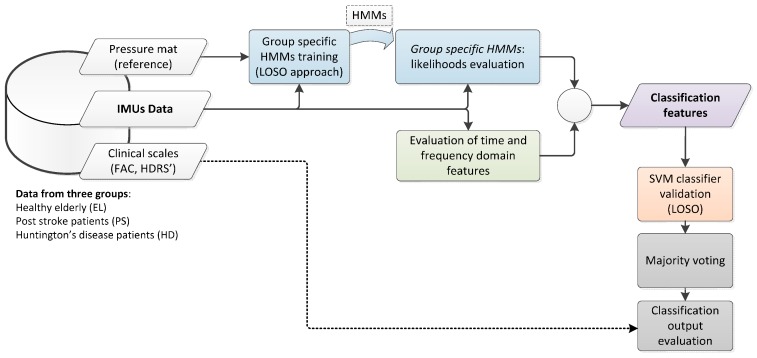
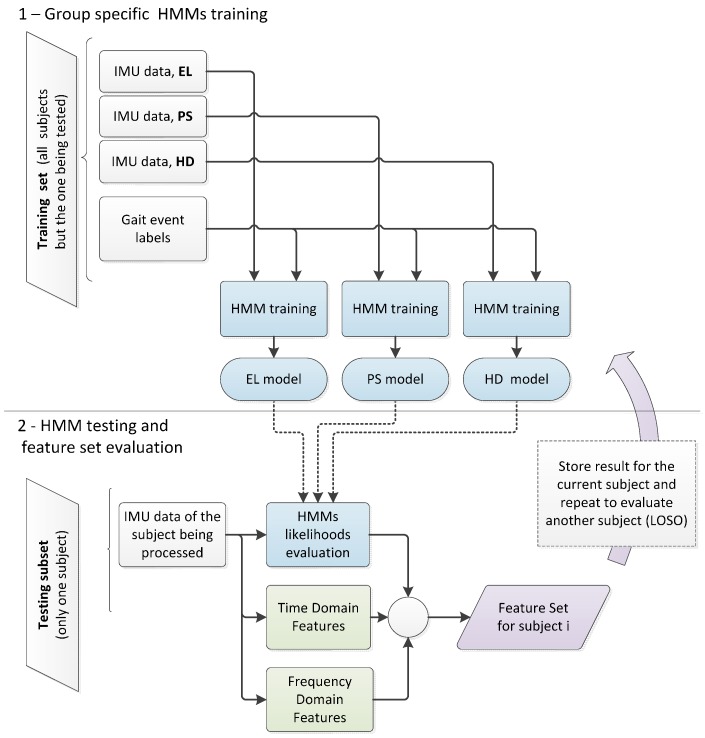
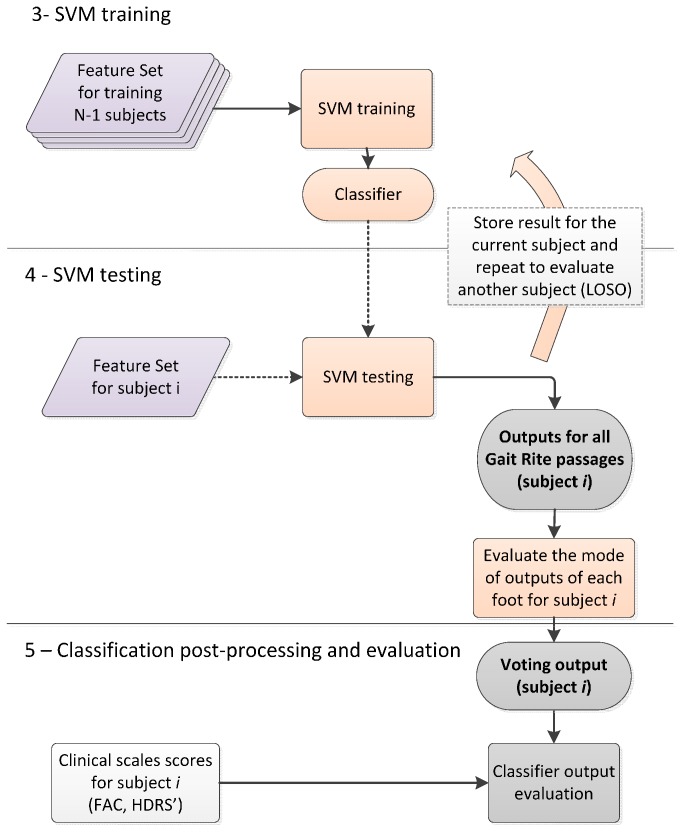
Machine learning methods have been widely used for gait assessment through the estimation of spatio-temporal parameters. As a further step, the objective of this work is to propose and validate a general probabilistic modeling approach for the classification of different pathological gaits. Specifically, the presented methodology was tested on gait data recorded on two pathological populations (Huntington’s disease and post-stroke subjects) and healthy elderly controls using data from inertial measurement units placed at shank and waist. By extracting features from group-specific Hidden Markov Models (HMMs) and signal information in time and frequency domain, a Support Vector Machines classifier (SVM) was designed and validated. The 90.5% of subjects was assigned to the right group after leave-one-subject–out cross validation and majority voting. The long-term goal we point to is the gait assessment in everyday life to early detect gait alterations.
Overview
The claims and statistics of this paper haven’t been checked yet.
Free: it reads the open-access text and checks the first 5 claims that cite a source we can check. Create a free account to check every claim.
Integrity signals
Registry
Cites
Statistics
Figures
Verification
Claims the paper makes
The claims and statistics of this paper haven’t been checked yet.
Free: it reads the open-access text and checks the first 5 claims that cite a source we can check. Create a free account to check every claim.
Claims other papers make about this one
Each is checked against this paper’s own text: does it say what the citing paper says it does?
The source backs part of the claim, not all of it — or backs it for a different population, condition or comparison.
In the citing paper
“Similarly, Maninini et al proposed a wearable device for collecting data about normal/pathological gaits for stroke prediction.49”
From Artificial intelligence in healthcare: past, present and future (2017) · cites this paper as [49]
Experimental — accuracy not yet measuredThe source backs part of the claim, not all of it — or backs it for a different population, condition or comparison.
In the citing paper
“Some researchers implemented systems to distinguish between normal and abnormal gaits for lower-limb rehabilitation [56,59,60], in which participants executed 10 m walks.”
From Wearable sensors and machine learning in post-stroke rehabilitation assessment: A systematic review (2022) · cites this paper as [56]
Experimental — accuracy not yet measuredThe check wasn’t confident either way, so it gives no verdict — never disputed.
In the citing paper
“All of these reasons resulted in IoT systems locally processing data [41,56,55].”
From Wearable sensors and machine learning in post-stroke rehabilitation assessment: A systematic review (2022) · cites this paper as [56]
Experimental — accuracy not yet measuredIn the citing paper
“The data would be extracted and modelled by hidden Markov models and SVM, and the algorithm could correctly classify 90.5% of the subjects to the right group.”
From Artificial intelligence in healthcare: past, present and future (2017) · cites this paper as [49]
Self-check
Percentages, sums and reported differences re-computed from the paper’s own numbers.
The self-check needs the paper’s full text.
Citations
Cites
LIBSVM: A library for support vector machines
Chang, C.-C., & Lin, C.-J. (2011) · ACM Transactions on Intelligent Systems and Technology · doi:10.1145/1961189.1961199 · Cited by 40,918 · cited 1×
“In this work, in particular, we used the LibSVM implementation of these algorithms [41].”
MethodThe Nature of Statistical Learning Theory
Vapnik, V. N. (1995) · doi:10.1007/978-1-4757-2440-0 · Cited by 39,138
A tutorial on hidden Markov models and selected applications in speech recognition
Rabiner, L. R. (1989) · Proceedings of the IEEE · doi:10.1109/5.18626 · Cited by 22,743
The Nature of Statistical Learning Theory
Vapnik, V. N. (2000) · Springer eBooks · doi:10.1007/978-1-4757-3264-1 · Cited by 10,696
‘Small Changes' to Diet and Physical Activity Behaviors for Weight Management
Hills, A. P., Byrne, N. M., Lindstrom, R., & Hill, J. O. (2013) · Obesity Facts · doi:10.1159/000345030 · Cited by 9,493
Physical Activity in the United States Measured by Accelerometer
TROIANO, R. P., BERRIGAN, D., DODD, K. W., MÂSSE, L. C., TILERT, T., & MCDOWELL, M. (2008) · Medicine & Science in Sports & Exercise · doi:10.1249/mss.0b013e31815a51b3 · Cited by 7,638 · cited 1×
“, gait spatio-temporal parameters, gait variability) and the quality and quantity of physical activity in both healthy and pathological populations [5–7].”
BackgroundStatistical pattern recognition: a review
Jain, A. K., Duin, P. W., & Mao, J. (2000) · IEEE Transactions on Pattern Analysis and Machine Intelligence · doi:10.1109/34.824819 · Cited by 6,767 · cited 1×
“To improve the final prediction and summarize the results, a majority voting (MV) strategy was finally applied [43].”
MethodThe Nature of Statistical Learning
Vapnik, V. N. (1995) · Medical Entomology and Zoology · Cited by 2,295
Unified Huntington's disease rating scale: Reliability and consistency
(1996) · Movement Disorders · doi:10.1002/mds.870110204 · Cited by 2,079
Clinical Gait Assessment in the Neurologically Impaired
Holden, M. K., Gill, K. M., Magliozzi, M. R., Nathan, J., & Piehl-Baker, L. (1984) · Physical Therapy · doi:10.1093/ptj/64.1.35 · Cited by 1,499
Cited by
Artificial intelligence in healthcare: past, present and future
Jiang, F., Jiang, Y., Zhi, H., Dong, Y., Li, H., Ma, S., Wang, Y., Dong, Q., Shen, H., & Wang, Y. (2017) · Stroke and Vascular Neurology · doi:10.1136/svn-2017-000101 · Cited by 4,837
Adams, J. L., Dinesh, K., Xiong, M., Tarolli, C. G., Sharma, S., Sheth, N., Aranyosi, A. J., Zhu, W., Goldenthal, S., Biglan, K. M., et al. (2017) · Digital Biomarkers · doi:10.1159/000479018 · Cited by 3,171
Agri-food 4.0: A survey of the supply chains and technologies for the future agriculture
Lezoche, M., Hernandez, J. E., Alemany Díaz, M. D. M. E., Panetto, H., & Kacprzyk, J. (2020) · Computers in Industry · doi:10.1016/j.compind.2020.103187 · Cited by 835
Wearable health devices in health care: narrative systematic review
Lu, L., Zhang, J., Xie, Y., Gao, F., Xu, S., Wu, X., & Ye, Z. (2020) · JMIR mHealth and uHealth · doi:10.2196/18907 · Cited by 701
Machine learning in medical applications: a review of state-of-the-art methods
Shehab, M., Abualigah, L., Shambour, Q., Abu-Hashem, M. A., Shambour, M. K. Y., Alsalibi, A. I., & Gandomi, A. H. (2022) · Computers in Biology and Medicine · doi:10.1016/j.compbiomed.2022.105458 · Cited by 542
Halilaj, E., Rajagopal, A., Fiterau, M., Hicks, J. L., Hastie, T. J., & Delp, S. L. (2018) · Journal of Biomechanics · doi:10.1016/j.jbiomech.2018.09.009 · Cited by 460
A systematic review of gait analysis methods based on inertial sensors and adaptive algorithms
Caldas, R., Mundt, M., Potthast, W., Buarque de Lima Neto, F., & Markert, B. (2017) · Gait & Posture · doi:10.1016/j.gaitpost.2017.06.019 · Cited by 297
Deep 1D-Convnet for accurate Parkinson disease detection and severity prediction from gait
El Maachi, I., Bilodeau, G.-A., & Bouachir, W. (2020) · Expert Systems with Applications · doi:10.1016/j.eswa.2019.113075 · Cited by 289
Opportunities and challenges in the development of exoskeletons for locomotor assistance
Siviy, C., Baker, L. M., Quinlivan, B. T., Porciuncula, F., Swaminathan, K., Awad, L. N., & Walsh, C. J. (2022) · Nature Biomedical Engineering · doi:10.1038/s41551-022-00984-1 · Cited by 258
Buckley, C., Alcock, L., McArdle, R., Rehman, R., Del Din, S., Mazzà, C., Yarnall, A., & Rochester, L. (2019) · Brain Sciences · doi:10.3390/brainsci9020034 · Cited by 197
Wearable sensors and machine learning in post-stroke rehabilitation assessment: A systematic review
Boukhennoufa, I., Zhai, X., Utti, V., Jackson, J., & McDonald-Maier, K. D. (2022) · Biomedical Signal Processing and Control · doi:10.1016/j.bspc.2021.103197 · Cited by 180
Eskofier, B. M., Lee, S., Baron, M., Simon, A., Martindale, C. F., Gaßner, H., & Klucken, J. (2017) · Applied Sciences · doi:10.3390/app7100986 · Cited by 172
“The respective approaches use algorithms such as support vector machines [58], artificial neural networks [59], hidden Markov model classifiers [60], and Gaussian mixture model classifiers [61].”
MethodDetecting free-living steps and walking bouts: validating an algorithm for macro gait analysis
Hickey, A., Din, S. D., Rochester, L., & Godfrey, A. (2016) · Physiological Measurement · doi:10.1088/1361-6579/38/1/n1 · Cited by 152
Machine Learning Approach to Support the Detection of Parkinson’s Disease in IMU-Based Gait Analysis
Trabassi, D., Serrao, M., Varrecchia, T., Ranavolo, A., Coppola, G., Icco, R. D., Tassorelli, C., & Castiglia, S. F. (2022) · Sensors · doi:10.3390/s22103700 · Cited by 166
Zhang, Y., & Ma, Y. (2019) · Computers in Biology and Medicine · doi:10.1016/j.compbiomed.2019.01.009 · Cited by 127
The Impact of Artificial Intelligence in the Odyssey of Rare Diseases
Visibelli, A., Roncaglia, B., Spiga, O., & Santucci, A. (2023) · Biomedicines · doi:10.3390/biomedicines11030887 · Cited by 141
“The objective of the work described in [43] was instead to propose a validated SVM classifier that takes advantage of Hidden Markov Model-derived information for the classification of different pathological gaits.”
Chang, H.-C., Hsu, Y., Yang, S.-C., Lin, J.-C., & Wu, Z.-H. (2016) · IEEE Access · doi:10.1109/access.2016.2633304 · Cited by 109
“Gait analysis is widely utilized in monitoring human gait movement affected by stroke rehabilitation [24], [36] and PD [7], [9].”
BackgroundHsu, W.-C., Sugiarto, T., Lin, Y.-J., Yang, F.-C., Lin, Z.-Y., Sun, C.-T., Hsu, C.-L., & Chou, K.-N. (2018) · Sensors · doi:10.3390/s18103397 · Cited by 101
“Other studies have also reported that time domain and frequency domain features achieved higher accuracy than other classification methods using group-specific features based on the Hidden Markov Model (HMM) [12].”
BackgroundMethodInfluentialWearable Sensors in Sports for Persons with Disability: A Systematic Review
Rum, L., Sten, O., Vendrame, E., Belluscio, V., Camomilla, V., Vannozzi, G., Truppa, L., Notarantonio, M., Sciarra, T., Lazich, A., et al. (2021) · Sensors · doi:10.3390/s21051858 · Cited by 104
Self-citationSánchez Manchola, M. D., Bernal, M. J. P., Munera, M., & Cifuentes, C. A. (2019) · Sensors · doi:10.3390/s19132988 · Cited by 92
“These adaptive methods extract patterns on the basis of Support Vector Machines (SVM) [5], Linear Discriminant Analysis (LDA) [30], Gaussian Mixture Model (GMM) [4,24], HMM [11,31–33,44–46], Artificial Neural Network (ANN) [25,47,48], and hybrid algorithms [49].”
BackgroundMethodED-FNN: A New Deep Learning Algorithm to Detect Percentage of the Gait Cycle for Powered Prostheses
Vu, H. T. T., Gomez, F., Cherelle, P., Lefeber, D., Nowé, A., & Vanderborght, B. (2018) · Sensors · doi:10.3390/s18072389 · Cited by 86
“Currently, wearable sensors are widely used for gait phase recognition systems: wearable sensors such as foot switches [14,24,25], foot pressure insoles [6,16,26,27], electromyography (EMG) [28,29], IMUs [3,8,9,15,30–34], and joint angular sensors [20,21] are used specifically for gait detection.”
BackgroundTwo Shank-Mounted IMUs-Based Gait Analysis and Classification for Neurological Disease Patients
Wang, L., Sun, Y. T., Li, Q., Liu, T., & Yi, J. (2020) · IEEE Robotics and Automation Letters · doi:10.1109/lra.2020.2970656 · Cited by 88
“Four types of patient gaits were classified in this study by the same set of gait parameters and this is new compared with the existing studies [14], [25]–[27].”
MethodResultInfluentialCavedoni, S., Chirico, A., Pedroli, E., Cipresso, P., & Riva, G. (2020) · Frontiers in Human Neuroscience · doi:10.3389/fnhum.2020.00245 · Cited by 85
“, 2019), gait kinematics extracted and analyzed by means of ML, which will be discussed further (Begg and Kamruzzaman, 2005; Pogorelc et al., 2012; Zhang and Wang, 2012; Eskofier et al., 2013; Akl et al., 2015; Costa et al., 2016; Mannini et al., 2016; Caldas et al., 2017; Farah et al., 2017; Ur Rehman et al., 2019),…”
MethodTeufl, W., Taetz, B., Miezal, M., Lorenz, M., Pietschmann, J., Jöllenbeck, T., Fröhlich, M., & Bleser, G. (2019) · Sensors · doi:10.3390/s19225006 · Cited by 77
Trabassi, D., Castiglia, S. F., Bini, F., Marinozzi, F., Ajoudani, A., Lorenzini, M., Chini, G., Varrecchia, T., Ranavolo, A., Icco, R. D., et al. (2024) · Sensors · doi:10.3390/s24113613 · Cited by 98
Taborri, J., Palermo, E., & Rossi, S. (2019) · Sensors · doi:10.3390/s19061461 · Cited by 80
“In addition, the proposed methodology can be a useful tool to embed in smart mobile systems for applications in clinics; in fact, the feasibility of a machine-learning approach to investigate anomalies in human gaits has already been demonstrated [41,50].”
BackgroundMethodGymSoles: Improving Squats and Dead-Lifts by Visualizing the User's Center of Pressure
Elvitigala, D. S., Matthies, D. J. C., David, L., Weerasinghe, C., & Nanayakkara, S. (2019) · Proceedings of the 2019 CHI Conference on Human Factors in Computing Systems · doi:10.1145/3290605.3300404 · Cited by 75
Learning Efficient Spatial-Temporal Gait Features with Deep Learning for Human Identification
Liu, W., Zhang, C., Ma, H., & Li, S. (2018) · Neuroinformatics · doi:10.1007/s12021-018-9362-4 · Cited by 80
“Moreover, the gait information can also be utilized to diagnose and cure many diseases, such as Neurodegenerative Diseases (Ren et al. 2017; Xia et al. 2015), Parkinson’s disease (Samȧ et al. 2017), Huntington’s Disease (Mannini et al. 2016), and so on.”
Das, R., Paul, S., Mourya, G. K., Kumar, N., & Hussain, M. (2022) · Frontiers in Neuroscience · doi:10.3389/fnins.2022.859298 · Cited by 80
Kiprijanovska, I., Gjoreski, H., & Gams, M. (2020) · Sensors · doi:10.3390/s20185373 · Cited by 75
“These comprehensive sets of features are mainly extracted from tri-axial accelerometers and gyroscopes located at various locations on the body, from which the most exploited are the shanks, spine, head, pelvis, and feet [22,23].”
BackgroundGait variability as digital biomarker of disease severity in Huntington’s disease
Gaßner, H., Jensen, D., Marxreiter, F., Kletsch, A., Bohlen, S. C., Schubert, R., Muratori, L. M., Eskofier, B. M., Klucken, J., Winkler, J., et al. (2020) · Journal of Neurology · doi:10.1007/s00415-020-09725-3 · Cited by 66
Deep Learning based Gait Abnormality Detection using Wearable Sensor System
Potluri, S., Ravuri, S., Diedrich, C., & Schega, L. (2019) · 2019 41st Annual International Conference of the IEEE Engineering in Medicine and Biology Society (EMBC) · doi:10.1109/embc.2019.8856454 · Cited by 59
“[13] used a wearable inertial sensor with machine learning to evaluate gait phases.”
MethodArshad, M. Z., Jamsrandorj, A., Kim, J., & Mun, K.-R. (2022) · Sensors · doi:10.3390/s22218226 · Cited by 66
“The advent of machine learning-based methods such as Hidden Markov Models (HMM) [12, 13, 14], and Support Vector Machines (SVM) [15], Deep CNN [16], and Recurrent Neural Networks (RNN) [17] eased the burden of gait measurement further and opened a new horizon of accurate gait assessments.”
MethodChakraborty, J., & Nandy, A. (2020) · Biomedical Signal Processing and Control · doi:10.1016/j.bspc.2020.102076 · Cited by 62
The use of wearable/portable digital sensors in Huntington's disease: A systematic review
Tortelli, R., Rodrigues, F. B., & Wild, E. J. (2021) · Parkinsonism & Related Disorders · doi:10.1016/j.parkreldis.2021.01.006 · Cited by 66
Exploring Huntington’s Disease Diagnosis via Artificial Intelligence Models: A Comprehensive Review
Sowmiyalakshmi, G., Chithambaram, T., Krishnan, N. R., Vincent, P. M. D. R., Kaliappan, J., & Srinivasan, K. (2023) · Diagnostics · doi:10.3390/diagnostics13233592 · Cited by 64
Using a deep learning network to recognise low back pain in static standing
Hu, B., Kim, C. H., Ning, X., & Xu, X. (2018) · Ergonomics · doi:10.1080/00140139.2018.1481230 · Cited by 62
“For instance, studies have reported that algorithms can classify older adults into groups with different fall risks based on their gait performance and use inertial measurement unit (IMU) data to classify healthy and pathologic populations (Lin et al. 2015; Mannini et al. 2016).”
BackgroundResultApplication of Artificial Intelligence in Modern Healthcare System
Datta, S., Barua, R., & Das, J. (2020) · IntechOpen eBooks · doi:10.5772/intechopen.90454 · Cited by 63
Ma, Z., Luo, G., Qin, K., Wang, N., & Niu, W. (2018) · Sensors · doi:10.3390/s18030742 · Cited by 50
“For example, wearable sensors make health monitoring and early disease classification with minimum discomfort possible [1,2], optical sensors used in clinical diagnosis have made the detection of specific compound such as calcium more easy-to-use [3], and motion sensors have made smart phones not only tools for commun…”
BackgroundLauraitis, A., Maskeliūnas, R., Damaševičius, R., Połap, D., & Woźniak, M. (2019) · IEEE Journal of Biomedical and Health Informatics · doi:10.1109/jbhi.2019.2891729 · Cited by 50
“5% accuracy is obtained in [52] with inertial measurement units on waist as features from gait data.”
BackgroundGait Analysis for Post-Stroke Hemiparetic Patient by Multi-Features Fusion Method
Li, M., Tian, S., Sun, L., & Chen, X. (2019) · Sensors · doi:10.3390/s19071737 · Cited by 55
Kobsar, D., & Ferber, R. (2018) · Sensors · doi:10.3390/s18092828 · Cited by 57
Automatically Evaluating Balance: A Machine Learning Approach
Bao, T., Klatt, B. N., Whitney, S. L., Sienko, K. H., & Wiens, J. (2019) · IEEE Transactions on Neural Systems and Rehabilitation Engineering · doi:10.1109/tnsre.2019.2891000 · Cited by 50
Fall Detection with CNN-Casual LSTM Network
Wu, J. Y., Wang, J., Zhan, A., & Wu, C. (2021) · Information · doi:10.3390/info12100403 · Cited by 40
“The most commonly used parts of wearable sensors are the calf, spine, head, pelvis, and feet [22] to obtain the three-axis acceleration at different positions and the three-axis rotation angular velocity in a gyroscope.”
Jun, K., Lee, S., Lee, D.-W., & Kim, M. S. (2021) · IEEE Access · doi:10.1109/access.2021.3131613 · Cited by 42
“sensor-attached joint are obtained by using the sensor [1], [2].”
BackgroundMethodBidabadi, S. S., Murray, I. D., Lee, G., Morris, S. L., & Tan, T. (2019) · Gait & Posture · doi:10.1016/j.gaitpost.2019.05.010 · Cited by 43
Lim, A. C. Y., Natarajan, P., Fonseka, R. D., Maharaj, M. M., & Mobbs, R. J. (2022) · Digital Health · doi:10.1177/20552076221074128 · Cited by 38
“Mannini et al.(39) Gait task Clinical environment, level surface (12 m walkway) Self-selected 1 min Moon et al.”
InfluentialEvaluation of human standing balance using wearable inertial sensors: A machine learning approach
Lattanzi, E., & Freschi, V. (2020) · Engineering Applications of Artificial Intelligence · doi:10.1016/j.engappai.2020.103812 · Cited by 36
Mundt, M., Koeppe, A., Bamer, F., David, S., & Markert, B. A. (2020) · Sensors · doi:10.3390/s20164581 · Cited by 38
“Introduction The analysis of human motion is of great interest to many different applications: it can be used to identify injury risk or to increase performance during sports-related tasks [1], but also in many clinical applications [2,3].”
BackgroundReliability of gait analysis using wearable sensors in patients with knee osteoarthritis
Kobsar, D., Osis, S. T., Phinyomark, A., Boyd, J. E., & Ferber, R. (2016) · Journal of Biomechanics · doi:10.1016/j.jbiomech.2016.11.047 · Cited by 34
Discovering individual-specific gait signatures from data-driven models of neuromechanical dynamics
Winner, T. S., Rosenberg, M. C., Jain, K., Kesar, T. M., Ting, L. H., & Berman, G. J. (2023) · PLoS Computational Biology · doi:10.1371/journal.pcbi.1011556 · Cited by 40
Feature Analysis of Smart Shoe Sensors for Classification of Gait Patterns
Sunarya, U., Hariyani, Y. S., Cho, T., Roh, J., Hyeong, J., Sohn, I., Kim, S., & Park, C. (2020) · Sensors · doi:10.3390/s20216253 · Cited by 37
“Using Counter+HMM, Silhouette+HMM, Counter+Naive Bayes and Silhouette+Naive Bayes accuracy performances of 83.33%, 76.24%, 65.85%, and 63.28%, respectively, were obtained.”
MethodInfluentialSuquilanda-Pesántez, J. D., Zambonino, M. C., Ramos, D. L., Pineda-Molina, G., Cucuri, N. S. M., Muñoz, M. C., Villalba-Meneses, F., & Almeida-Galárraga, D. A. (2021) · Advances in intelligent systems and computing · doi:10.1007/978-3-030-68080-0_1 · Cited by 34
1D-convolutional transformer for Parkinson disease diagnosis from gait
Naimi, S., Bouachir, W., & Bilodeau, G.-A. (2023) · Neural Computing and Applications · doi:10.1007/s00521-023-09193-6 · Cited by 38
“Handcrafted features can be used as inputs to train machine learning algorithms such as support vector machines (SVMs) [14], decision trees, and deep learning algorithms to classify a given signal as belonging to a PD patient or a healthy individual.”
Nukala, B. T., Nakano, T., Rodriguez, A. I., Tsay, J., Lopez, J., Nguyen, T., Zupancic, S., & Lie, D. Y. C. (2016) · Biosensors · doi:10.3390/bios6040058 · Cited by 33
“[22] used three IMUs featuring a tri-axial accelerometer and a tri-axial gyroscope and collected the raw data from the testing subjects.”
MethodPerez-Ibarra, J. C., Siqueira, A. A. G., & Krebs, H. I. (2020) · IEEE Transactions on Neural Systems and Rehabilitation Engineering · doi:10.1109/tnsre.2020.3039999 · Cited by 32
“Proper identification of gait phases has important applications in gait rehabilitation – for example: classification of abnormalities for pathological gait [2], triggering of electrical stimulation [3], [4], or control of robotic devices for lower limbs [5], [6].”
Neurodegenerative diseases detection and grading using gait dynamics
Erdaş, Ç. B., Sümer, E., & Kibaroğlu, S. (2023) · Multimedia Tools and Applications · doi:10.1007/s11042-023-14461-7 · Cited by 32
“In their study, Mannini et al. [36] suggested a new probabilistic modeling approach to classifying multiple disease gaits.”
BackgroundPre-Impact and Impact Fall Detection Based on a Multimodal Sensor Using a Deep Residual Network
Hnoohom, N., Mekruksavanich, S., & Jitpattanakul, A. (2023) · Intelligent Automation & Soft Computing · doi:10.32604/iasc.2023.036551 · Cited by 36
Remote Gait Type Classification System Using Markerless 2D Video
Albuquerque, P., Machado, J. P., Verlekar, T. T., Correia, P. L., & Soares, L. D. (2021) · Diagnostics · doi:10.3390/diagnostics11101824 · Cited by 31
“Wearable sensors are portable, allowing data acquisition of three-dimensional information related to walking patterns over long periods of time [4,12].”
BackgroundCo-simulation of human digital twins and wearable inertial sensors to analyse gait event estimation
Uhlenberg, L., Derungs, A., & Amft, O. (2023) · Frontiers in Bioengineering and Biotechnology · doi:10.3389/fbioe.2023.1104000 · Cited by 36
“, Hidden Markov Models (HMMs), Artificial Neural Networks and hybrids by (Mannini and Sabatini, 2010; Taborri et al., 2015; Mannini et al., 2016; Zhao et al., 2019), respectively.”
BackgroundGait Recognition for Lower Limb Exoskeletons Based on Interactive Information Fusion
Chen, W., Li, J., Zhu, S., Zhang, X., Men, Y., & Wu, H. (2022) · Applied Bionics and Biomechanics · doi:10.1155/2022/9933018 · Cited by 32
“Currently, these commonly used adaptive pattern extraction methods mainly include support vector machine (SVM) [11], linear discriminant analysis (LDA) [12], Gaussian mixture model (GMM) [13, 14], artificial neural network (ANN) [15–17], hybrid algorithm [18], and other machine learning algorithms.”
MethodInfluentialDeep Learning-Based Motion Style Transfer Tools, Techniques and Future Challenges
Akber, S. M. A., Kazmi, S. N., Mohsin, S. M., & Szczęsna, A. (2023) · Sensors · doi:10.3390/s23052597 · Cited by 40
Automated Assessment of Movement Impairment in Huntington’s Disease
Bennasar, M., Hicks, Y., Clinch, S. P., Morgan-Jones, P., Holt, C. A., Rosser, A., & Busse, M. E. (2018) · IEEE Transactions on Neural Systems and Rehabilitation Engineering · doi:10.1109/tnsre.2018.2868170 · Cited by 31
“In the two latter studies, machine learning techniques were used to automatically classify people into HD and healthy controls groups based on gait analysis [9] or arm movements [13] and data from IMUs.”
BackgroundMethodA Longitudinal Wearable Sensor Study in Huntington’s Disease
Dinesh, K., Snyder, C. W., Xiong, M., Tarolli, C. G., Sharma, S., Dorsey, E. R., Sharma, G., & Adams, J. (2019) · Journal of Huntington s Disease · doi:10.3233/jhd-190375 · Cited by 34
Is My Patient Improving? Individualized Gait Analysis in Rehabilitation
Marín, J., Marín, J. J., Blanco, T., de la Torre, J., Salcedo, I. V., & Martitegui, E. (2020) · Applied Sciences · doi:10.3390/app10238558 · Cited by 31
“In gait analysis, machine learning techniques are usually applied to classify types of gait, identify human physical activity, or detect gait events [8,81,82].”
MethodChen, X., Hu, D., Zhang, R., Pan, Z., Chen, Y., Xie, L., Luo, J., & Zhu, Y. (2022) · Frontiers in Neuroinformatics · doi:10.3389/fninf.2022.1006494 · Cited by 31
“However, this part of the study could only detect the presence or absence of hemiplegic gait or abnormal gait type and could not quantify the degree, making it difficult to obtain a definite severity of hemiplegia (Mannini et al., 2016; Hsu et al., 2018).”
BackgroundCharlton, J. M., Xia, H., Shull, P. B., & Hunt, M. A. (2019) · Journal of Biomechanics · doi:10.1016/j.jbiomech.2019.04.012 · Cited by 26
“Laboratory-based motion capture is currently the gold standard method of measuring FPA, which has exhibited good to excellent reliability during treadmill and over-ground walking with healthy participants (Bechard et al., 2011; Meldrum et al., 2014).”
MethodResultInfluentialMazurek, P., Wagner, J., & Morawski, R. Z. (2017) · Biomedical Signal Processing and Control · doi:10.1016/j.bspc.2017.09.006 · Cited by 26
Sick Moves! Motion Parameters as Indicators of Simulator Sickness
Feigl, T., Roth, D., Gradl, S., Wirth, M., Latoschik, M. E., Eskofier, B. M., Philippsen, M., & Mutschler, C. (2019) · IEEE Transactions on Visualization and Computer Graphics · doi:10.1109/tvcg.2019.2932224 · Cited by 29
“This is in line with findings in [44, 53].”
ResultApplication of Machine Learning Techniques in Healthcare
H, S. D., Sudha, V., & Jagadeesan, D. (2019) · Advances in computational intelligence and robotics book series · doi:10.4018/978-1-5225-9902-9.ch015 · Cited by 26
Poleur, M., Markati, T., & Servais, L. (2023) · Orphanet Journal of Rare Diseases · doi:10.1186/s13023-023-02813-3 · Cited by 29
“, movement impairment scores) as well as complex [68] and standard [59] spatiotemporal variables (e.”
BackgroundA survey of artificial intelligence in gait-based neurodegenerative disease diagnosis
Rao, H., Zeng, M., Zhao, X., & Miao, C. (2025) · Neurocomputing · doi:10.1016/j.neucom.2025.129533 · Cited by 33
Scoliosis Screening through a Machine Learning Based Gait Analysis Test
Cho, J., Cho, Y.-S., Moon, S.-B., Kim, M. J., Lee, H. D., Lee, S. Y., Ji, Y., Park, Y., Han, C.-S., & Jang, S. (2018) · International Journal of Precision Engineering and Manufacturing · doi:10.1007/s12541-018-0215-8 · Cited by 23
de la Torre, J., Marín, J., Ilarri, S., & Marín, J. J. (2020) · Applied Sciences · doi:10.3390/app10175942 · Cited by 28
Adaptive neural fuzzy reasoning method for recognizing human movement gait phase
Song, J., Zhu, A., Tu, Y., Mao, H., & Zhang, X. (2022) · Robotics and Autonomous Systems · doi:10.1016/j.robot.2022.104087 · Cited by 23
Seo, K., Chung, B., Panchaseelan, H. P., Kim, T., Park, H.-J., Oh, B., Chun, M.-H., Won, S. J., Kim, D., Beom, J., et al. (2021) · Diagnostics · doi:10.3390/diagnostics11061096 · Cited by 25
“Although there exist similar studies [14,15] to ours, the former employed only support vector machines (SVM) [16] for gait classification after extracting features using hidden Markov models [17] and the latter only used lasso regression [18] to prevent overfitting from the small sample size when investigating factors…”
MethodTeufl, W., Taetz, B., Miezal, M., Dindorf, C., Fröhlich, M., Trinler, U. K., Hogan, A., & Bleser, G. (2021) · Clinical Biomechanics · doi:10.1016/j.clinbiomech.2021.105452 · Cited by 26
Dutta, D., Sen, S., Aruchamy, S., & Mandal, S. (2022) · Smart Health · doi:10.1016/j.smhl.2022.100264 · Cited by 31
Villalba-Meneses, F., Guevara, C., Lojan, A. B., Gualsaquí, M. G., Arias-Serrano, I., Velásquez-López, P. A., Almeida-Galárraga, D. A., Tirado-Espín, A., Marín, J., & Marín-Zurdo, J. (2024) · Sensors · doi:10.3390/s24030831 · Cited by 27
Mannini, A., Martinez‐Manzanera, O., Lawerman, T. F., Trojaniello, D., Croce, U. D., Sival, D. A., Maurits, N. M., & Sabatini, A. M. (2016) · Gait & Posture · doi:10.1016/j.gaitpost.2016.12.002 · Cited by 23
Self-citationDetection of Hemiplegic Walking Using a Wearable Inertia Sensing Device
Lee, J., Park, S., & Shin, H. (2018) · Sensors · doi:10.3390/s18061736 · Cited by 24
“5% accuracy with 90 probability and spatiotemporal features of inertial signal in distinguishing gait of the elderly, post-stroke patient and subjects with Huntington’s disease [21].”
Convolutional Neural Network Application in Biomedical Signals
Alaskar, H. (2018) · Journal of Computer Science and Information Technology · doi:10.15640/jcsit.v6n2a5 · Cited by 26
“Recently, machine learning techniques have proved to be successful in all science and engineering research, as well as the biomedical field (Begg et al., 2005; Gil and Manuel, 2009; Joshi et al., 2010; Khalaf et al., 2016; Mannini et al., 2016; Shoeb, 2009).”
BackgroundMachine learning applied to gait analysis data in cerebral palsy and stroke: A systematic review
Kohnehshahri, F. S., Merlo, A., Mazzoli, D., Bò, M. C., & Stagni, R. (2024) · Gait & Posture · doi:10.1016/j.gaitpost.2024.04.007 · Cited by 28
Human Body Mixed Motion Pattern Recognition Method Based on Multi-Source Feature Parameter Fusion
Song, J., Zhu, A., Tu, Y., Wang, Y., Arif, M. A., Shen, H., Shen, Z., Zhang, X., & Cao, G. (2020) · Sensors · doi:10.3390/s20020537 · Cited by 21
“In addition, gait phase division is also important in the diagnosis and prevention of pathological gait [5], medical monitoring [6,7], and of rehabilitation effect evaluation [8].”
BackgroundDeep Neural Network-Based Gait Classification Using Wearable Inertial Sensor Data
Jung, D., Nguyen, M. D., Han, J., Park, M., Lee, K., Yoo, S., Kim, J., & Mun, K.-R. (2019) · Annual International Conference of the IEEE Engineering in Medicine and Biology Society (EMBC) · doi:10.1109/embc.2019.8857872 · Cited by 21
“Besides the Doppler radar and video camera, abovementioned tools, wearable inertial measurement units (IMUs) have been widely used to obtain gait-related information [6].”
MethodJung, D., Nguyen, M. D., Park, M., Kim, J., & Mun, K.-R. (2020) · IEEE Transactions on Neural Systems and Rehabilitation Engineering · doi:10.1109/tnsre.2020.2977049 · Cited by 21
“5% accuracy [11].”
Automatic Assessments of Parkinsonian Gait with Wearable Sensors for Human Assistive Systems
Han, Y., Liu, X., Zhang, N., Zhang, X., Zhang, B., Wang, S., Liu, T., & Yi, J. (2023) · Sensors · doi:10.3390/s23042104 · Cited by 25
“Leave-one-subject-out (LOSO) cross-validation [28] is performed.”
Novel deep neural network for individual re recognizing physically disabled individuals
Murthy, A. S. D., Karthikeyan, T., Jagan, B. O. L., & Kumari, C. U. (2020) · Materials Today Proceedings · doi:10.1016/j.matpr.2020.07.447 · Cited by 20
Acosta, F., Beltrán-Naturi, E., Boll, M., Hernández-Nolasco, J. A., & Pancardo, P. (2018) · IEEE Access · doi:10.1109/access.2018.2840327 · Cited by 20
“78%, however, we used additional gyroscopes data that provided a greater impact on the classification results, in a similar way than in [34].”
BackgroundMethodInfluentialSystematic review of automatic post-stroke gait classification systems
Jiao, Y., Hart, R., Reading, S. A., & Zhang, Y. (2024) · Gait & Posture · doi:10.1016/j.gaitpost.2024.02.011 · Cited by 22
Sprint Assessment Using Machine Learning and a Wearable Accelerometer
Gurchiek, R. D., Don, H. S. R. A., Watagoda, L. C. R. P., McGinnis, R. S., van Werkhoven, H., Needle, A. R., McBride, J. M., & Arnholt, A. T. (2019) · Journal of Applied Biomechanics · doi:10.1123/jab.2018-0107 · Cited by 19
Classification and Kinetic Analysis of Healthy Gait using Multiple Accelerometer Sensors
Nutakki, C. S., Mathew, R. J., Suresh, A., Vijay, A. R., Krishna, S., Babu, A. S., & Diwakar, S. (2020) · Procedia Computer Science · doi:10.1016/j.procs.2020.04.041 · Cited by 19
Unsupervised Gait Phase Estimation With Domain-Adversarial Neural Network and Adaptive Window
Choi, W., Yang, W., Na, J., Park, J., Lee, G., & Nam, W. (2021) · IEEE Journal of Biomedical and Health Informatics · doi:10.1109/jbhi.2021.3137413 · Cited by 19
“In another study, the gait signals of healthysubjects andthoseof patients withnervous disorders were discriminated via SVM [31].”
MethodInfluentialPredicting physical activity levels from kinematic gait data using machine learning techniques
Galasso, S., Baptista, R., Molinara, M., Pizzocaro, S., Calabrò, R. S., & Nunzio, A. M. D. (2023) · Engineering Applications of Artificial Intelligence · doi:10.1016/j.engappai.2023.106487 · Cited by 21
Vizcarra, J. A., Yarlagadda, S., Xie, K., Ellis, C. A., Spindler, M., & Hammer, L. H. (2024) · Journal of Clinical Medicine · doi:10.3390/jcm13237009 · Cited by 23
Ullrich, M., Küderle, A., Reggi, L., Cereatti, A., Eskofier, B. M., & Kluge, F. (2021) · Annual International Conference of the IEEE Engineering in Medicine and Biology Society (EMBC) · doi:10.1109/embc46164.2021.9630653 · Cited by 18
Self-citationMartínez-Pascual, D., Catalan, J. M., Blanco, A., Sanchís, M., Arán‐Aís, F., & García-Aracil, N. (2024) · IEEE Sensors Journal · doi:10.1109/jsen.2024.3400296 · Cited by 17
“Extracting temporal and frequency domain features from the IMUs can be used to train machine learning models for gait activity classification [17].”
MethodTransition toward Healthcare 5.0: Impact of COVID-19 in the healthcare industry
Raisa, J. F., Rahman, M. S., Mahmud, I., Kaiser, M. S., & Han, D. S. (2025) · ICT Express · doi:10.1016/j.icte.2025.04.002 · Cited by 19
Automatic Health Problem Detection from Gait Videos Using Deep Neural NetworksPreprint
Mehrizi, R., Peng, X., Zhang, S., Liao, R., & Li, K. (2019) · arXiv (Cornell University) · doi:10.48550/arxiv.1906.01480 · Cited by 18
Zhang, S., Han, Q., Wang, P., & Li, J. (2025) · Scientific Reports · doi:10.1038/s41598-025-12020-8 · Cited by 16
Metadata
- Authors
- Mannini, A., Trojaniello, D., Cereatti, A., & Sabatini, A.
- Affiliations
- Scuola Superiore Sant'Anna (IT)
- University of Sassari (IT)
- Corresponding author
- Mannini, Andrea
- Venue
- Sensors
- Publisher
- MDPI AG
- Published
- 2016-01-21
- Volume
- 16
- Issue
- 1
- Pages
- 134
- ISSN
- 1424-8220 (ISSN-L)
- PMC
- PMC4732167
- OpenAlex
- W2258968934
- Cited by
- 242
- References
- 49
- Citations by year
- 2026: 6 · 2025: 15 · 2024: 21 · 2023: 41 · 2022: 33 · 2021: 34 · 2020: 29 · 2019: 25 · 2018: 21 · 2017: 11 · 2016: 6
- FWCI
- 10.11
- Type
- journal article
- Language
- en
- Open access
- gold
- doi.org
- Licence
- Locations
- Sensors (publishedVersion, cc-by)
- PubMed Central (publishedVersion, cc-by)
- PubMed (publishedVersion)
- PORTO@Iris (submittedVersion, cc-by)
- UnissResearch (Università degli Studi di Sassari) (submittedVersion, cc-by)
- DOAJ (DOAJ: Directory of Open Access Journals) (submittedVersion, cc-by-sa)
- CINECA IRIS Institutional Research Information System (Sant'Anna School of Advanced Studies) (submittedVersion, other-oa)
- Funders
- Ministero dell’Istruzione, dell’Università e della Ricerca (PRIN project “A quantitative and multi-factorial approach for estimating and preventing the risk of falls in the elderly people.”)
- Topics
- Physical Sciences › Engineering › Biomedical Engineering › Gait Recognition and Analysis
- Health Sciences › Health Professions › Physical Therapy, Sports Therapy and Rehabilitation › Balance, Gait, and Falls Prevention
- Physical Sciences › Computer Science › Computer Vision and Pattern Recognition › Context-Aware Activity Recognition Systems
- Keywords
- gait classification, inertial sensors, pathological gait, Huntington's disease, post-stroke gait, elderly gait, hidden Markov models, support vector machine, gait analysis, gait deviations, wearable sensors
- MeSH terms
- Machine Learning, Aged, Female, Gait, Humans, Huntington Disease, Male, Markov Chains, Middle Aged, Paresis, Signal Processing, Computer-Assisted, Monitoring, Ambulatory, Stroke, Support Vector Machine, Accelerometry
About these checks
Registry, retraction, Cites and statistics results are computed, not judged, with one exception: a printed reference that no index lists is read once by a model before it counts as a citation error. Claims are extracted by a model and kept only when their quote appears verbatim in the text; each cited source is then checked, with a model’s help, for whether it says what the claim relies on. Those verdicts can be wrong — read the claim’s quote and the cited source before relying on one.
Statistics and arithmetic are recomputed, not judged.
Confidence bands are shown only for fields calibrated on our annotated test set. None is calibrated yet, so no band is shown.
What counts as a claim ›How we measure confidence ›How we check this ›
Are you an author, or do you see a problem with this page? Request a review
Data sources
Bibliographic data: Semantic Scholar, OpenAlex, Crossref.
Contains information from the Semantic Scholar Academic Graph Datasets, made available under the ODC Attribution License (ODC-BY 1.0).
Semantic Scholar’s data is described in: Kinney, R., et al. (2023). The Semantic Scholar Open Data Platform. arXiv:2301.10140.
