

An Adaptive Multi-Sensor Data Fusion Method Based on Deep Convolutional Neural Networks for Fault Diagnosis of Planetary Gearbox
Open accessThe DOI matches its Crossref record; 46 of the 46 references it cites were found in a registry or an index.
Abstract
A fault diagnosis approach based on multi-sensor data fusion is a promising tool to deal with complicated damage detection problems of mechanical systems. Nevertheless, this approach suffers from two challenges, which are (1) the feature extraction from various types of sensory data and (2) the selection of a suitable fusion level. It is usually difficult to choose an optimal feature or fusion level for a specific fault diagnosis task, and extensive domain expertise and human labor are also highly required during these selections. To address these two challenges, we propose an adaptive multi-sensor data fusion method based on deep convolutional neural networks (DCNN) for fault diagnosis. The proposed method can learn features from raw data and optimize a combination of different fusion levels adaptively to satisfy the requirements of any fault diagnosis task. The proposed method is tested through a planetary gearbox test rig. Handcraft features, manual-selected fusion levels, single sensory data, and two traditional intelligent models, back-propagation neural networks (BPNN) and a support vector machine (SVM), are used as comparisons in the experiment. The results demonstrate that the proposed method is able to detect the conditions of the planetary gearbox effectively with the best diagnosis accuracy among all comparative methods in the experiment.
Overview
The claims and statistics of this paper haven’t been checked yet.
Free: it reads the open-access text and checks the first 5 claims that cite a source we can check. Create a free account to check every claim.
Integrity signals
Registry
Cites
Statistics
Figures
Verification
Claims the paper makes
The claims and statistics of this paper haven’t been checked yet.
Free: it reads the open-access text and checks the first 5 claims that cite a source we can check. Create a free account to check every claim.
Self-check
Percentages, sums and reported differences re-computed from the paper’s own numbers.
The self-check needs the paper’s full text.
Citations
Cites
Very Deep Convolutional Networks for Large-Scale Image Recognition
Simonyan, K., & Zisserman, A. (2014) · arXiv · doi:10.48550/arxiv.1409.1556 · Cited by 114,148 · cited 1×
“Sensors 2017 , 17 , 414 where C cn is the cn -th output of the convolutional layer, and the output number is CN , which is also equal to the filter number; ∗ is an operator of convolution; X cc represents the input data of cc-th channel of previous layer l − 1, and the channel number is CC ; W lcn…”
BackgroundImageNet classification with deep convolutional neural networks
Krizhevsky, A., Sutskever, I., & Hinton, G. E. (2017) · Communications of the ACM · doi:10.1145/3065386 · Cited by 112,155 · cited 1×
“DCNN contains three kinds of layers [25], which are the convolutional layer, pooling layer, and fully-connected layer.”
BackgroundLeCun, Y., Bengio, Y., & Hinton, G. (2015) · Nature · doi:10.1038/nature14539 · Cited by 84,126
Rich Feature Hierarchies for Accurate Object Detection and Semantic Segmentation
Girshick, R., Donahue, J., Darrell, T., & Malik, J. (2014) · 2014 IEEE Conference on Computer Vision and Pattern Recognition · doi:10.1109/cvpr.2014.81 · Cited by 32,684
Rethinking the Inception Architecture for Computer Vision
Szegedy, C., Vanhoucke, V., Ioffe, S., Shlens, J., & Wojna, Z. (2016) · 2016 IEEE Conference on Computer Vision and Pattern Recognition (CVPR) · doi:10.1109/cvpr.2016.308 · Cited by 32,138
Human-level control through deep reinforcement learning
Mnih, V., Kavukcuoglu, K., Silver, D., Rusu, A. A., Veness, J., Bellemare, M. G., Graves, A., Riedmiller, M., Fidjeland, A. K., Ostrovski, G., et al. (2015) · Nature · doi:10.1038/nature14236 · Cited by 30,357
Deep learning in neural networks: an overview
Schmidhuber, J. (2015) · Neural Networks · doi:10.1016/j.neunet.2014.09.003 · Cited by 18,570
Representation Learning: A Review and New Perspectives
Bengio, Y., Courville, A., & Vincent, P. (2013) · IEEE Transactions on Pattern Analysis and Machine Intelligence · doi:10.1109/tpami.2013.50 · Cited by 13,001
Learning Deep Architectures for AI
Bengio, Y. (2009) · Foundations and Trends® in Machine Learning · doi:10.1561/2200000006 · Cited by 9,239
3D Convolutional Neural Networks for Human Action Recognition
Ji, S., Xu, W., Yang, M., & Yu, K. (2013) · IEEE Transactions on Pattern Analysis and Machine Intelligence · doi:10.1109/tpami.2012.59 · Cited by 6,235
Research works printed but not linked: 1
- Fedala, S., Rémond, D., Zegadi, R., and Felkaoui, A. (2016). Condition Monitoring of Machinery in Non-Stationary Operations, Springer.
Cited by
Items 201–300 of 380
Chen, J., Xu, Q., Guo, Y., & Chen, R. (2022) · Sensors · doi:10.3390/s22041367 · Cited by 17
“The proposed method can learn features from raw data and adaptively optimize a combination of different fusion levels to effectively diagnose different faults of planetary gearboxes [6].”
MethodSong, D., Shen, J., Ma, T., & Xu, F. (2022) · Structural Health Monitoring · doi:10.1177/14759217221116599 · Cited by 19
“Specifically, it includes the WPT-feature-level fusion based on 1D CNN,16 the feature-level fusion based on 1D CNN,36 decision-level fusion in the voting process,10 D-S evidence decision-level fusion method,37 and decision-level fusion using CNN.15 The raw and data-level fusion samples under mixed working conditions w…”
BackgroundMethodInfluentialHeterogeneous Multi-Sensor Fusion for AC Motor Fault Diagnosis via Graph Neural Networks
Liao, Y., Li, W., Lian, G., & Li, J. (2025) · Electronics · doi:10.3390/electronics14102005 · Cited by 15
Encoder-based weak fault detection for rotating machinery using improved Gaussian process regression
Ma, Z., Zhao, M. J., Chen, S., & Guo, D. G. (2020) · Structural Health Monitoring · doi:10.1177/1475921720929755 · Cited by 15
“Jing et al.(15) proposed a new multi-information fusion method building on deep convolutional neural networks (DCNN) for fault detection.”
MethodSelf-citationYang, Q., Liu, T., Wu, X. F., Deng, Y., & Chen, Q. (2020) · ISA Transactions · doi:10.1016/j.isatra.2020.12.016 · Cited by 15
A Data Fusion Method for Non-Destructive Testing by Means of Artificial Neural Networks
Cormerais, R., Duclos, A., Wasselynck, G., Berthiau, G., & Longo, R. (2021) · Sensors · doi:10.3390/s21082598 · Cited by 15
Vibration-based Condition Monitoring in Wind Turbine Gearbox Using Convolutional Neural Network
Amin, A., Bibo, A., Panyam, M., & Tallapragada, P. (2022) · Proceedings of the ... American Control Conference/Proceedings of the American Control Conference · doi:10.23919/acc53348.2022.9867477 · Cited by 15
“A convolutional neural network (CNN) is often used in image recognition for damage classification [15], [16].”
MethodAmin, A., Bibo, A., Panyam, M., & Tallapragada, P. (2022) · IFAC-PapersOnLine · doi:10.1016/j.ifacol.2022.11.276 · Cited by 15
Cell Coverage Degradation Detection Using Deep Learning Techniques
Mulvey, D., Foh, C. H., Imran, M. A., & Tafazolli, R. (2018) · International Conference on Information and Communication Technology Convergence (ICTC) · doi:10.1109/ictc.2018.8539449 · Cited by 15
Fusion of High-Dynamic and Low-Drift Sensors Using Kalman Filters
Wu, B., Huang, T., Jin, Y., Pan, J., & Song, K. (2019) · Sensors · doi:10.3390/s19010186 · Cited by 16
Han, S., Yang, T., Zhu, Q., Zhao, Y., & Han, Q. (2023) · Proceedings of the Institution of Mechanical Engineers Part C Journal of Mechanical Engineering Science · doi:10.1177/09544062221149316 · Cited by 14
A new multichannel deep adaptive adversarial network for cross-domain fault diagnosis
Han, B., Xing, S., Wang, J., Zhang, Z., Bao, H., Zhang, X., Jiang, X., Liu, Z., Yang, Z., & Ma, H. (2023) · Measurement Science and Technology · doi:10.1088/1361-6501/acbb96 · Cited by 15
Lou, C., Atoui, M. A., & Li, X. (2023) · Transactions of the Institute of Measurement and Control · doi:10.1177/01423312231157118 · Cited by 17
“Max-pooling, average-pooling, and stochastic-pooling are common methods for generating feature maps with low resolution (Jing et al., 2017b).”
InfluentialZhu, D., Zhang, Y., & Zhao, L. (2019) · Journal of Intelligent & Fuzzy Systems · doi:10.3233/jifs-190101 · Cited by 15
“CNN is an important type of the deep neural networks which is inspired by visual structure [34], which has been widely accepted as an effective tool for numerous classification problems.”
Kim, J., Hwang, J. Y., Park, E., Nam, H.-U., & Cheon, S.-H. (2020) · IEEE Access · doi:10.1109/access.2020.3033826 · Cited by 17
Divya, S., Suresh, L. P., & John, A. (2022) · International Journal of Pattern Recognition and Artificial Intelligence · doi:10.1142/s0218001422510077 · Cited by 12
Deepa, S. N., & Rasi, D. (2022) · Applied Intelligence · doi:10.1007/s10489-022-03834-4 · Cited by 12
“2016) [23] is used to perform image classification task based on the segmented image result(X).”
MethodZou, T., Wang, Y., Wang, M., & Lin, S. (2017) · Sensors · doi:10.3390/s17112555 · Cited by 12
A Deep Learning Approach for Fusing Sensor Data from Screw Compressors
Alonso, S., Pérez, D., Morán, A., Fuertes, J. J., Díaz, I., & Domínguez, M. (2019) · Sensors · doi:10.3390/s19132868 · Cited by 14
“An adaptive multi-sensor data fusion method is also proposed in [24] for fault diagnosis of a planetary gearbox, where the best accuracy is achieved using a deep convolutional neural network for several fusion levels.”
MethodHa, J. M., & Youn, B. D. (2021) · IEEE Access · doi:10.1109/access.2021.3083804 · Cited by 12
“To prepare the training and validation data, the raw time-domain signal is divided into multiple segments from which features from the normal and fault states of the gear can be identified [42], [43].”
MethodMulti-sensor and multi-level information fusion model for compressor blade crack detection
Ma, T., Shen, J., Song, D., & Xu, F. (2023) · Measurement · doi:10.1016/j.measurement.2023.113622 · Cited by 11
Wang, Y., Xu, Z., Zhao, S., Zhao, J., & Fan, Y. (2024) · Journal of Mechanical Science and Technology · doi:10.1007/s12206-024-0702-z · Cited by 11
Gao, S., Noman, K., Mao, G., Deng, Z., Li, Y., & Ge, W. (2025) · IEEE Transactions on Instrumentation and Measurement · doi:10.1109/tim.2025.3579843 · Cited by 11
“CNNs have also been trained to learn features from fault samples, including vibration, acoustic, motor current, and shaft speed signals [7], [8].”
Zhao, X., Cheng, J., Wang, P., & Yang, Y. (2020) · Measurement Science and Technology · doi:10.1088/1361-6501/abbd11 · Cited by 11
Self-citationSun, Z., Wang, Y., & Sun, G. (2022) · Journal of Vibration Engineering & Technologies · doi:10.1007/s42417-022-00649-y · Cited by 11
An Intelligent Diagnostic Method for Multisource Coupling Faults of Complex Mechanical Systems
Sun, X., Wang, M., Zhan, B., Xiong, Y., & Yu, W. (2023) · Shock and Vibration · doi:10.1155/2023/6928871 · Cited by 14
A Crack Detection Method for Pipelines Using Wavelet-Based Decision-Level Data Fusion
Wang, Y., Guo, J., Shi, Q., & Hu, T. (2023) · IEEE Transactions on Instrumentation and Measurement · doi:10.1109/tim.2023.3244211 · Cited by 11
“To further illustrate the advantages of the proposed method for crack detection in pipelines, other three state-of-theart detection methods, called the comparable methods here, including the data and decision level fusion method [14], adaptive data fusion based on DCNN [17], and the decision level fusion using CNN [18…”
MethodA Multimodel Decision Fusion Method Based on DCNN-IDST for Fault Diagnosis of Rolling Bearing
Xu, W., Jing, L., Tan, J., & Dou, L. (2020) · Shock and Vibration · doi:10.1155/2020/8856818 · Cited by 11
“used the deep convolution model to adaptively extract the original fault signal characteristics and identified the fault of the motor [19].”
MethodSelf-citationEstimating Harvestable Solar Energy from Atmospheric Pressure Using Deep Learning
Paterova, T., & Prauzek, M. (2021) · Elektronika ir Elektrotechnika · doi:10.5755/j02.eie.28874 · Cited by 13
“; ; . d d x t The parameter is updated for each training sample and its corresponding result [15].”
BackgroundData Fusion-Based AI Algorithms in the Context of IIoTS
Aileni, R. M., Suciu, G. D., Pasca, S., & Valderrama, C. A. (2019) · EAI/Springer Innovations in Communication and Computing · doi:10.1007/978-3-030-32530-5_2 · Cited by 14
Gu, M. (2025) · Informatica · doi:10.31449/inf.v49i10.7122 · Cited by 16
Bi, X., Xu, S., Qi, M., Lv, W., Wan, H. X., & Ma, G. (2025) · IEEE Transactions on Instrumentation and Measurement · doi:10.1109/tim.2025.3644571 · Cited by 10
“Jing et al. [23] proposed a DCNN method that combines multiple vibration signals into a 2-”
Monteiro, R. D. P., Bastos-Filho, C. J. A., Cerrada, M., Cabrera, D. R., & Sánchez, R. (2018) · International Conference on Sensing, Diagnostics, Prognostics, and Control (SDPC) · doi:10.1109/sdpc.2018.8664985 · Cited by 11
“[11] and Xia et al.”
Márquez, D. G., Félix, P., Martínez, C. A. G., Tejedor, J., Fred, A. L. N., & Otero, A. (2019) · Sensors · doi:10.3390/s19214635 · Cited by 10
An Graph-Based Adaptive Method for Fast Detection of Transformed Data Leakage in IOT Via WSN
Yu, X., Qiu, J., Yang, X., Cong, Y., & Du, L. (2019) · IEEE Access · doi:10.1109/access.2019.2942335 · Cited by 12
“As a widely adopted index, the validity of TF-IDF(Term Frequency-Inverse Document Frequency) has already been verified in various fields, such as information retrieval and text mining, etc [17].”
MethodFault Detection of Elevator Systems Using Deep Autoencoder Feature Extraction
Mishra, K. M., Krogerus, T. R., & Huhtala, K. J. (2019) · International Conference on Research Challenges in Information Science (RCIS) · doi:10.1109/rcis.2019.8876984 · Cited by 11
Amin, A., Bibo, A., Panyam, M., & Tallapragada, P. (2023) · IFAC-PapersOnLine · doi:10.1016/j.ifacol.2023.12.030 · Cited by 10
Cho, Y. S., & Kim, S. B. (2024) · IEEE Transactions on Industrial Informatics · doi:10.1109/tii.2024.3363189 · Cited by 13
“Jing et al. [23] used CNNs for multiple fault classification by constructing two-dimensional multisensor data.”
Jiang, W., Gu, X., Zhao, Y., Tang, E., Jiang, X., Song, Z., & Zeng, L. (2025) · Sensors · doi:10.3390/s25227018 · Cited by 10
Amin, A., Bibo, A., Panyam, M., & Tallapragada, P. (2023) · Wind Engineering · doi:10.1177/0309524x231206723 · Cited by 10
“A convolutional neural network (CNN) is often used in image recognition for damage classification (Jing et al., 2017).”
MethodWu, J., Jiang, B., Chen, H., & Liu, J. (2019) · Sensors · doi:10.3390/s19061440 · Cited by 10
Multi-Sourced Monitoring Fusion Diagnosis for Rotating Machinery Faults
Zhuang, Y., Zhang, L., & Duan, L. (2019) · Annual Reliability and Maintainability Symposium (RAMS) · doi:10.1109/rams.2019.8769018 · Cited by 9
Qu, J., & Shi, C. (2021) · IEEE Access · doi:10.1109/access.2021.3074655 · Cited by 9
LSTM Residual Signal for Gear Tooth Crack Diagnosis
Wang, W., Galati, F. A., & Szibbo, D. (2020) · Smart innovation, systems and technologies · doi:10.1007/978-3-030-57745-2_89 · Cited by 9
Zhang, Y., Jing, L., Chen, C., Bai, X., & Tan, J. (2020) · Materials Research Express · doi:10.1088/2053-1591/abb69b · Cited by 9
Self-citationJiang, Z., Hong, S. H., Albia, B., Hood, A., Hall, A. J., Cornelius, J., & Wang, Y. (2022) · Neural Computing and Applications · doi:10.1007/s00521-022-07982-z · Cited by 8
“In this sub-section, the proposed MCFF in MSFF is compared with two widely used methods of multi-sensor fusion, including raw data fusion (RDF) [41] and single-channel feature fusion (SCFF) [35], and superior performance achieved by MCFF justifies why it is selected as the finalized structure in our…”
BackgroundMethodA Fault Identification Method of Mechanical Element Action Unit Based on CWT-2DCNN
Ge, H., Guo, Y., Luo, T., Yang, M., & Zhang, C. (2022) · Shock and Vibration · doi:10.1155/2022/9330859 · Cited by 8
Multi-source adaptive thresholding adaboost with application to virtual metrology
Xie, Y., Wang, T., Jeong, M. K., & Lee, G. T. (2024) · International Journal of Production Research · doi:10.1080/00207543.2024.2314151 · Cited by 9
“It has been widely studied in fields where information must be synthe-sised from various sources such as fault diagnosis (Chao et al. 2022; Jing et al. 2017; Liu, Liu, and Sang 2020; Long et al. 2021; Wang and Xiao 2018), quality control in manufacturing (Wei, Wu, and Terpenny 2020), intelligent…”
Self-citationXu, Y., Wang, H., Xu, F., Bi, S., & Ye, J. (2025) · Processes · doi:10.3390/pr13041200 · Cited by 8
Zhao, L., Wang, G., Fan, X., & Li, Y. (2021) · Frontiers in Neurorobotics · doi:10.3389/fnbot.2021.634340 · Cited by 8
Gupta, V., & Pawar, S. (2022) · Soft Computing · doi:10.1007/s00500-022-07107-7 · Cited by 11
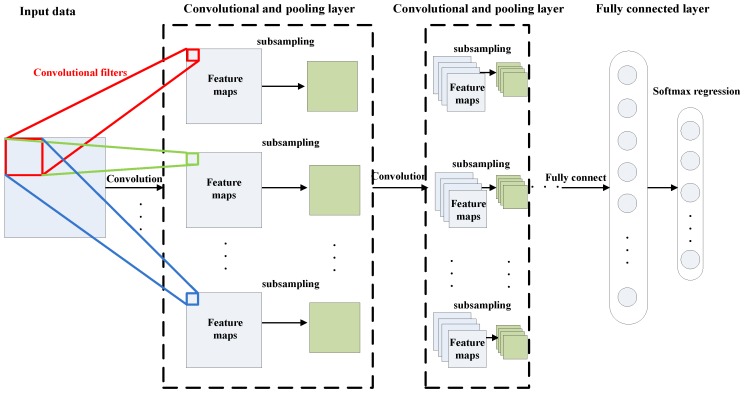
“The input data are convoluted with these filters and attained feature maps as an output (Jing et al., 2017).”
BackgroundA Novel 1D-CNN-Based Diagnosis Method for a Rolling Bearing with Dual-Sensor Vibration Data Fusion
Yu, F., Liao, L., Zhang, K., Xing, H., Zhao, Q., Zhang, L., & Luo, Z. (2022) · Mathematical Problems in Engineering · doi:10.1155/2022/8986900 · Cited by 12
Practically Motivated Adaptive Fusion Method with Tie Analysis for Multilabel Dispersed Data
Przybyła‐Kasperek, M. (2022) · Expert Systems with Applications · doi:10.1016/j.eswa.2023.119601 · Cited by 8
Anomaly Detection Method for Rocket Engines Based on Convex Optimized Information Fusion
Sun, H., Cheng, Y., Jiang, B., Lü, F., & Wang, N. (2024) · Sensors · doi:10.3390/s24020415 · Cited by 7
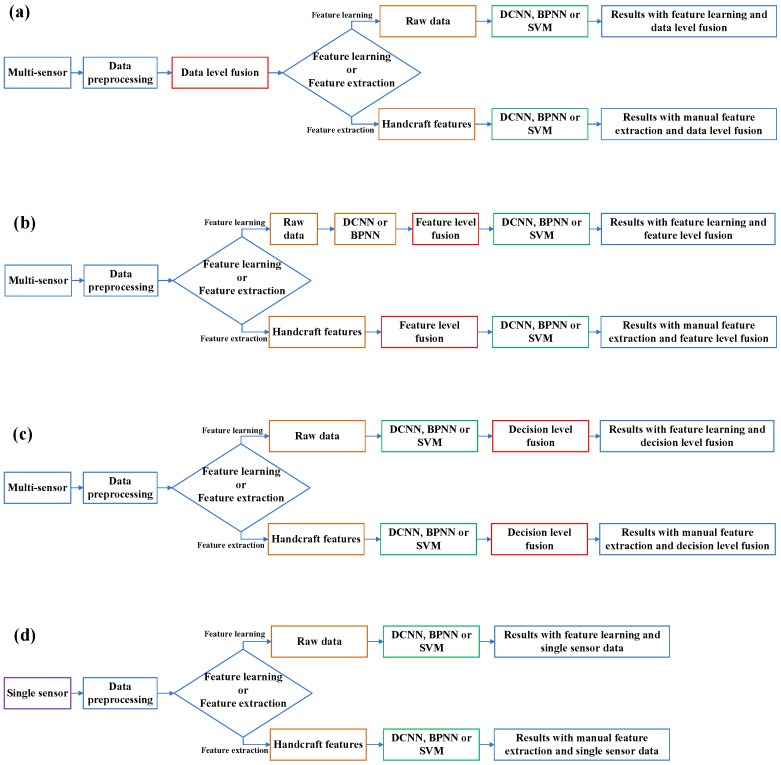
“The method learns features from raw data, adaptively optimizes different combinations of fusion levels, and finally meets the requirements of the fault diagnosis task [16].”
MethodFeng, B., Zhou, Q., Xing, J., & Yang, Q. (2024) · Journal of Building Engineering · doi:10.1016/j.jobe.2024.110031 · Cited by 7
State-Degradation-Oriented Fault Diagnosis for High-Speed Train Running Gears System
Cheng, C., Wang, W., Luo, H., Zhang, B., Cheng, G., & Teng, W. (2020) · Sensors · doi:10.3390/s20041017 · Cited by 7
“[25] realized multi-sensor data fusion of the planetary gearbox by fusing vibration signal, sound signal, drive motor current, shaft speed, oil chip and other measurements, and then detected various system faults.”
BackgroundGecgel, O., Ekwaro-Osire, S., Gülbulak, U., & Morais, T. S. (2021) · Journal of vibration and acoustics · doi:10.1115/1.4052364 · Cited by 7
Suawa, P. F., & Hübner, M. (2022) · Design, Automation, and Test in Europe · doi:10.23919/date54114.2022.9774570 · Cited by 7
Osteoarthritis Disease Detection using Efficient Hyper-Tuning Parameters
Challa, N. P., Naseeba, B., Vyshnavi, G., Priyanka, T., Jajam, N., & Prasanna, K. S. L. (2023) · International Conference on Advances in Computing, Communication and Applied Informatics (ACCAI) · doi:10.1109/accai58221.2023.10200102 · Cited by 7
“Multiple research has utilized deep learning approaches to identify various issues using multiple types of data, including projects that employ machine learning or deep learning to detect or predict osteoarthritis[4,5,6,7,8].”
BackgroundKuang, J., Xu, G., Tao, T., Yang, C., & Wei, F. (2021) · International Conference on Algorithms, Computing and Artificial Intelligence (ACAI) · doi:10.1145/3508546.3508648 · Cited by 7
“An adaptive multi-sensor data fusion method based on deep convolutional neural networks (DCNN) is proposed [6], and the DCNN is trained with input being an optimized combination that satisfies the”
MethodMousavi, Z., Feng, R.-M., Farhadi, M., Ettefagh, M. M., Bayat, M., Varahram, S., & Feng, W.-Q. (2025) · Applied Ocean Research · doi:10.1016/j.apor.2025.104856 · Cited by 8
Zhao, R., & Hu, X. (2023) · Machines · doi:10.3390/machines11080847 · Cited by 6
Gao, J., Ma, L., Qing, C., Zhao, T., Wang, Z., Geng, J., & Li, Y. (2024) · Sensors · doi:10.3390/s24144486 · Cited by 7
Shi, H., Sun, H., Bai, X., Song, Z., & Gao, T. (2024) · Measurement Science and Technology · doi:10.1088/1361-6501/ad9ca7 · Cited by 8
“Xia et al [21] and Jing et al [22] both utilize concatenation of multi-source vibration signals into a two-dimensional matrix for feature extraction via CNN. Shao et al [23] first convert the collected vibration and current signals into time–frequency distributions (TFD) using wavelet transform,…”
Multi-sensor Data Fusion Algorithm Based on Adaptive Trust Estimation and Neural Network
Zhao, X., Wu, J., Wang, M., Li, G., Yu, H., & Feng, W. (2020) · IEEE/CIC International Conference on Communications in China (ICCC) · doi:10.1109/iccc49849.2020.9238952 · Cited by 7
“Jing et al. [12] proposed an adaptive multi-sensor data fusion method based on deep convolutional neural network (DCNN).”
MethodApplication Research of Big Data for Launch Support System at Space Launch Site
Dong, W., Xiao, L., Niu, S., Niu, J., & Wang, F. (2019) · International Conference on Computer Science and Application Engineering (CSAE) · doi:10.1145/3331453.3360973 · Cited by 6
“Different methods have different pertinence, but there is no method that can be applied to all kinds of sensor information and data fusion [22][23].”
MethodFault Diagnosis Based on A Stacked Sparse Auto-Encoder Network and KNN Classifier
Yan, Z., Yuan, X., Zhou, F., Song, Y. H., Xu, Q., & Shao, Y. (2019) · Chinese Automation Congress · doi:10.1109/cac48633.2019.8996595 · Cited by 6
“In order to overcome the mechanical damage detection problems, an adaptive multi-sensor data fusion method and the deep convolutional neural networks (DCNN) are adopted in [12].”
MethodFault diagnosis method for worm gearbox using convolutional network and ensemble learning
Hsiao, J.-C., Shivam, K., & Kam, T. Y. (2020) · Journal of Physics Conference Series · doi:10.1088/1742-6596/1509/1/012030 · Cited by 7
“An adaptive CNN based fault diagnosis method was proposed in [10], which uses DNN (dense neural networks) for feature fusion of CNN extracted features of multiple sensors.”
MethodA Fault Diagnosis Method Based on EMD-SVM with Multi-Feature Fusion via Sound Signals
Yin, X., He, Q., Peng, S., Zhang, Y., & Zhang, B. (2022) · IEEE International Conference on Real-time Computing and Robotics (RCAR) · doi:10.1109/rcar54675.2022.9872243 · Cited by 6
“The fifteen features and three frequency-domain features were calculated, and fused through the stacked auto-encoder (SAE) [14].”
MethodMesa, J., Vasquez, D. B., Valencia-Aguirre, J., & Botero-Valencia, J. (2019) · IEEE Latin America Transactions · doi:10.1109/tla.2019.8931134 · Cited by 5
“Por otro lado, las redes neuronales artificiales han surgido como una excelente herramienta para fusión de datos de múltiples sensores [13], y se han empleado en aplicaciones como diagnóstico de fallas y monitoreo [14], [15], [16], [17], [18].”
BackgroundCondition Monitoring of Elevator Systems using Deep Neural Network
Mishra, K. M., & Huhtala, K. J. (2020) · International Conference on Operations Research and Enterprise Systems · doi:10.5220/0009348803810387 · Cited by 6
“…the art include fault diagnosis methods having feature extraction methodologies based on deep neural networks (Zhang et al., 2017), (Jia et al., 2016), (Bulla et al., 2018) and convolutional neural networks (Xia et al., 2018), (Jing et al., 2017) for rotatory machines similar to elevator systems.”
BackgroundConvolutional Neural Networks for Structural Damage Identification in Assembled Buildings
You, C., Liu, W., & Hou, L. (2022) · Mathematical Problems in Engineering · doi:10.1155/2022/2326903 · Cited by 5
“Distinguishing themselves from previous work, [13] et al.”
ResultDiagnosis Electromechanical System by Means CNN and SAE: An Interpretable-Learning Study
Arellano-Espitia, F., Delgado-Prieto, M., Martínez-Viol, V., Saucedo-Dorantes, J. J., & Osornio-Rios, R. A. (2022) · IEEE International Conference on Industrial Cyber-Physical Systems (ICPS) · doi:10.1109/icps51978.2022.9816942 · Cited by 5
Spatiotemporal Fusion in Remote Sensing
Albanwan, H., & Qin, R. (2020) · IntechOpen eBooks · doi:10.5772/intechopen.93111 · Cited by 7
Diagnosis of Mechanical Faults Affecting a Hydroelectric Group by Vibration Analysis
Bouaicha, M., Guerroum, M., Adraoui, I. E., Gziri, H., Elmahjoub, A. A., & Zegrari, M. (2021) · International Journal of Emerging Technology and Advanced Engineering · doi:10.46338/ijetae1121_11 · Cited by 5
Lee, J. H., & Kim, M. Y. (2025) · International Journal of Control Automation and Systems · doi:10.1007/s12555-024-0448-5 · Cited by 4
Early Detection of Rheumatoid Arthritis in Knee using Deep Learning
Parashar, A., & Rishi, R. (2021) · International Conference on Data Science, Machine Learning and Artificial Intelligence (DSMLAI) · doi:10.1145/3484824.3484888 · Cited by 4
“Several research [9–13] also used deep learning methodologies focused on complex data to identify various issues.”
BackgroundLiu, Z., Xiao, W., Cui, J., & Mei, L. (2024) · Geoenergy Science and Engineering · doi:10.1016/j.geoen.2024.212734 · Cited by 5
Research on Data-Driven Intelligent Fault Diagnosis Method for Industrial Robots
Wang, L., Zhou, X., Peng, J., Zhang, Q., Liu, J., Fu, W., & Fu, H. (2024) · International Journal of High Speed Electronics and Systems · doi:10.1142/s0129156424400998 · Cited by 4
Lu, Y., Mi, J., He, L., Cheng, Y., & Bai, L. (2020) · Proceedings of the Institution of Mechanical Engineers Part O Journal of Risk and Reliability · doi:10.1177/1748006x20965016 · Cited by 6
“Jing et al. 28 proposed an adaptive multisensor data fusion method based on a DCNN for fault diagnosis.”
MethodMethod of Estimating Heatstroke Risk Using Wristwatch-type Device
Kaiho, Y., Takamatsu, S., & Itoh, T. (2019) · Sensors and Materials · doi:10.18494/sam.2019.2452 · Cited by 4
Zarch, M. G., & Soltani, M. N. (2020) · Annual Conference of the IEEE Industrial Electronics Society (IECON) · doi:10.1109/iecon43393.2020.9255330 · Cited by 3
“In [14], a CNN is proposed for multi-sensor data fusion, feature extraction and fault diagnosis in planetary gearbox.”
MethodResearch on Fault Diagnosis of Air Compressor Bearings Based on VMD BiLSTM Attention
Wang, Z., Wu, A., Liu, Z., Wu, T., Ma, X., & Liu, J. (2024) · International Conference on Energy Engineering and Power Systems (EEPS) · doi:10.1109/eeps63402.2024.10804471 · Cited by 3
Shi, H., Sun, H., Zhao, C., Han, G., Wu, R., & Liu, Y. (2025) · IEEE Transactions on Instrumentation and Measurement · doi:10.1109/tim.2025.3562986 · Cited by 3
“Jing et al. [13] proposed a DCNN method, which integrates multisource vibration signals into a 2-”
Macancela, J.-C., Cabrera, D. R., Lucero, P., Cerrada, M., Li, C., Villacres, S., & Sánchez, R. (2019) · Prognostics and System Health Management Conference · doi:10.1109/phm-paris.2019.00058 · Cited by 3
A Fault Diagnosis Scheme for High-Speed Train Bogie based on Depth-wise Convolution
Wu, Y., & Jin, W. (2018) · IEEE International Conference on Progress in Informatics and Computing · doi:10.1109/pic.2018.8706307 · Cited by 3
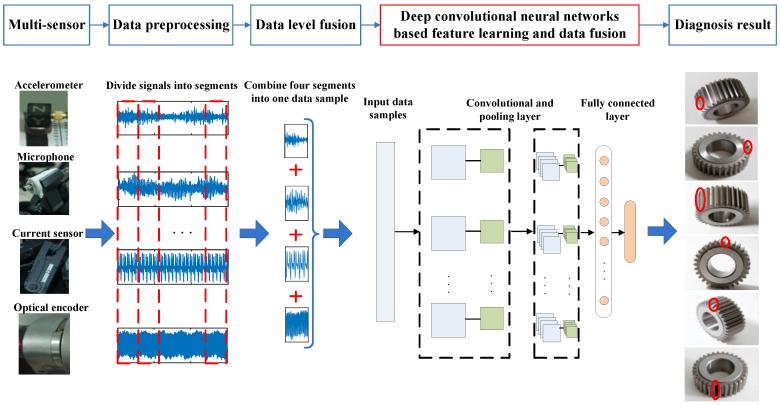
“The literature [12] uses the output of multiple neural networks for data fusion, and [13] choose to join fragments from every channel as a way of signal fusion.”
BackgroundUnderwater Multi-modal Sensing for Environmental Mapping and Vehicle Navigation
Kampmann, P., Bachmayer, R., Buscher, D., & Burgard, W. (2019) · International series on intelligent systems, control and automation: science and engineering · doi:10.1007/978-3-030-30683-0_12 · Cited by 3
Han, J.-H., Choi, D., Park, S.-U., & Hong, S.-K. (2019) · International Conference on Electrical Machines and Systems (ICEMS) · doi:10.1109/icems.2019.8921844 · Cited by 3
“Deep learning algorithms are used for fault diagnosis in various fields [5].”
MethodOptimal Burn-in Strategy for High Reliable Products Using Convolutional Neural Network
Lyu, Y., Gao, J., Chen, C., Jiang, Y., Li, H., Chen, K., & Zhang, Y. (2019) · IEEE Access · doi:10.1109/access.2019.2958570 · Cited by 3
An adaptive model for the location of low-frequency sound sources in shallow sea environments
Sun, X., Jia, X., Zheng, Y., & Wang, Z. (2020) · Applied Acoustics · doi:10.1016/j.apacoust.2020.107569 · Cited by 3
Algorithm and Simulation of Association Rules of Drug Relationship Based on Network Model
Teng, H., Ma, Y., & Teng, D. (2020) · Complexity · doi:10.1155/2020/8839563 · Cited by 3
“(is requires the network to be able to learn by itself [2].”
BackgroundYang, Y., Wang, H., Gao, J., Gong, X., & Du, W. (2023) · Global Reliability and Prognostics and Health Management Conference (PHM) · doi:10.1109/phm-hangzhou58797.2023.10482561 · Cited by 3
“Considering the above application limitations of a single signal source, Jing [8] spliced the four sensor signals in the data layer and utilized 1D-CNN to realize the fault diagnosis of gearbox.”
MethodZhang, H., Gao, Y., Liu, H., & Chen, Y. (2024) · Scalable Computing Practice and Experience · doi:10.12694/scpe.v25i4.2800 · Cited by 3
Zhuang, K., Deng, B., Chen, H., Jiang, L., Li, Y., Hu, J. L., & Lam, H. (2024) · Structural Health Monitoring · doi:10.1177/14759217241298490 · Cited by 2
“31 However, the fully connected layer structure of CNNs requires substantial computing resources during training.”
Wang, X., Hao, R., Yang, K., Sang, S., Kang, R., & He, C. (2025) · Forschung im Ingenieurwesen · doi:10.1007/s10010-025-00811-4 · Cited by 2
“The method similar to Chen et al. [21] was adopted by Jing et al. [22], in which the output signals of multiple sensors were spliced together in the time domain.”
Wang, T., Wang, M., Wang, B., & Ma, L. (2025) · Chinese Journal of Mechanical Engineering · doi:10.1186/s10033-025-01341-4 · Cited by 2
Self-citationQiu, Y., Gan, Z., Li, Z., & Zhang, Q. (2025) · Engineering Research Express · doi:10.1088/2631-8695/ae0c57 · Cited by 2
Ogaili, A. A. F., Jweri, A.-R. K., Flayyih, H. A., Jaber, A. A., & Ali, K. M. (2026) · Nondestructive Testing And Evaluation · doi:10.1080/10589759.2026.2710390 · Cited by 2
Method of Multi-Mode Sensor Data Fusion with an Adaptive Deep Coupling Convolutional Auto-Encoder
Feng, X., & Liu, J. (2023) · Journal of Sensor Technology · doi:10.4236/jst.2023.134007 · Cited by 2
Fault diagnosis of aircraft engines based on multi-sensor fusion sparse denoising autoencoder
He, S., Wang, Z., Liu, K., & Sun, X. (2024) · Chinese Control Conference (CCC) · doi:10.23919/ccc63176.2024.10662274 · Cited by 2
“Feature-level fusion is capable of compressing high-dimensional data into highly representative low-dimensional data; however, selecting appropriate extraction methods is challenging[12].”
Background
Metadata
- Authors
- Jing, L., Wang, T., Zhao, M., & Wang, P.
- Affiliations
- School of Mechanical Engineering, Tianjin University, Tianjin 300354, China
- Tianjin University (CN)
- Xi'an Jiaotong University (CN)
- Corresponding author
- Wang, Taiyong
- ORCID
- Venue
- Sensors
- Publisher
- MDPI AG
- Published
- 2017-02-21
- Volume
- 17
- Issue
- 2
- Pages
- 414
- ISSN
- 1424-8220 (ISSN-L)
- PMC
- PMC5335931
- OpenAlex
- W2589171657
- Cited by
- 379
- References
- 44
- Citations by year
- 2026: 14 · 2025: 27 · 2024: 35 · 2023: 41 · 2022: 52 · 2021: 48 · 2020: 60 · 2019: 69 · 2018: 27 · 2017: 4
- FWCI
- 27.48
- Type
- journal article
- Language
- en
- Open access
- gold
- doi.org
- Licence
- Locations
- Sensors (publishedVersion, cc-by)
- PubMed Central (publishedVersion, cc-by)
- PubMed (publishedVersion)
- DOAJ (DOAJ: Directory of Open Access Journals) (submittedVersion, cc-by-sa)
- Funders
- National Natural Science Foundation of China (51475324)
- National Natural Science Foundation of China and Civil Aviation Administration of China jointly funded project (U1533103)
- Topics
- Physical Sciences › Engineering › Control and Systems Engineering › Machine Fault Diagnosis Techniques
- Physical Sciences › Engineering › Mechanical Engineering › Gear and Bearing Dynamics Analysis
- Physical Sciences › Engineering › Control and Systems Engineering › Fault Detection and Control Systems
- Keywords
- planetary gearbox, fault diagnosis, sensor fusion, deep convolutional neural networks, condition monitoring, mechanical fault detection
About these checks
Registry, retraction, Cites and statistics results are computed, not judged, with one exception: a printed reference that no index lists is read once by a model before it counts as a citation error. Claims are extracted by a model and kept only when their quote appears verbatim in the text; each cited source is then checked, with a model’s help, for whether it says what the claim relies on. Those verdicts can be wrong — read the claim’s quote and the cited source before relying on one.
Statistics and arithmetic are recomputed, not judged.
Confidence bands are shown only for fields calibrated on our annotated test set. None is calibrated yet, so no band is shown.
What counts as a claim ›How we measure confidence ›How we check this ›
Are you an author, or do you see a problem with this page? Request a review
Data sources
Bibliographic data: Semantic Scholar, OpenAlex, Crossref.
Contains information from the Semantic Scholar Academic Graph Datasets, made available under the ODC Attribution License (ODC-BY 1.0).
Semantic Scholar’s data is described in: Kinney, R., et al. (2023). The Semantic Scholar Open Data Platform. arXiv:2301.10140.
