

The DOI matches its Crossref record; 54 of the 56 references it cites were found in a registry or an index.
Convolutional Neural Network-Based Human Detection in Nighttime Images Using Visible Light Camera Sensors
Open accessAbstract
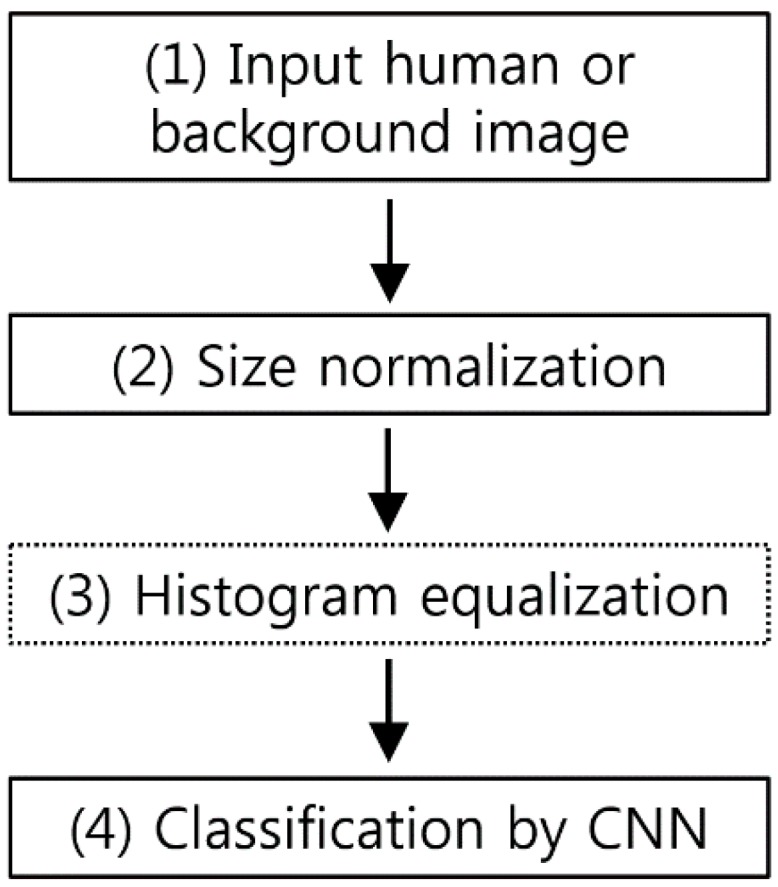
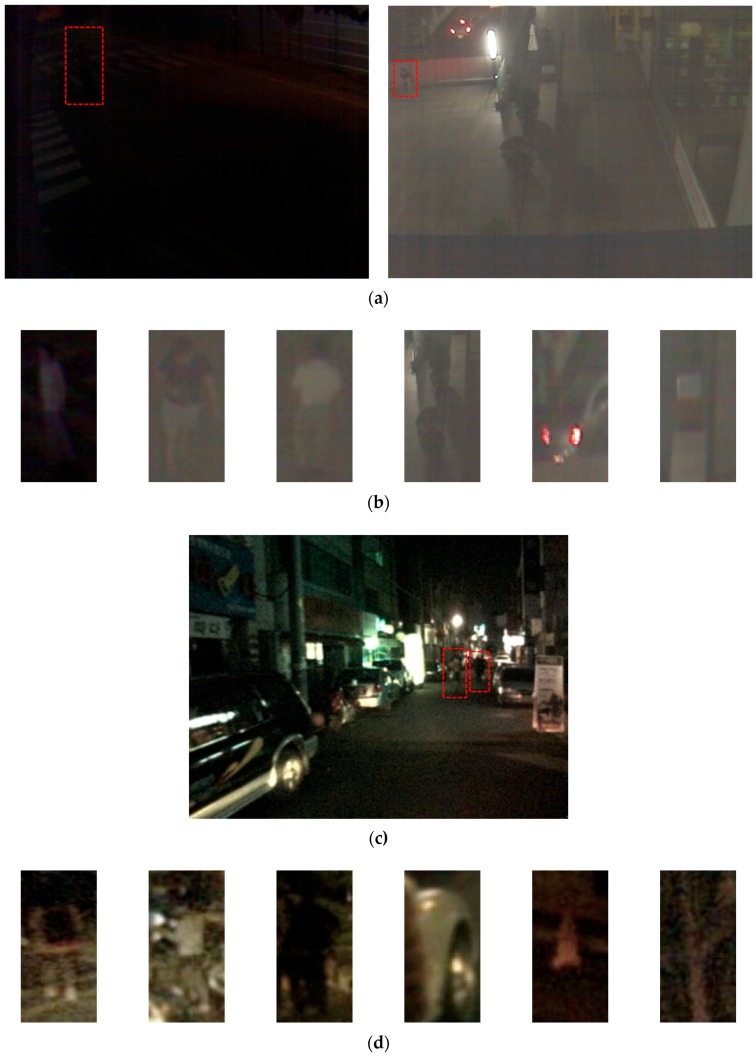
Because intelligent surveillance systems have recently undergone rapid growth, research on accurately detecting humans in videos captured at a long distance is growing in importance. The existing research using visible light cameras has mainly focused on methods of human detection for daytime hours when there is outside light, but human detection during nighttime hours when there is no outside light is difficult. Thus, methods that employ additional near-infrared (NIR) illuminators and NIR cameras or thermal cameras have been used. However, in the case of NIR illuminators, there are limitations in terms of the illumination angle and distance. There are also difficulties because the illuminator power must be adaptively adjusted depending on whether the object is close or far away. In the case of thermal cameras, their cost is still high, which makes it difficult to install and use them in a variety of places. Because of this, research has been conducted on nighttime human detection using visible light cameras, but this has focused on objects at a short distance in an indoor environment or the use of video-based methods to capture multiple images and process them, which causes problems related to the increase in the processing time. To resolve these problems, this paper presents a method that uses a single image captured at night on a visible light camera to detect humans in a variety of environments based on a convolutional neural network. Experimental results using a self-constructed Dongguk night-time human detection database (DNHD-DB1) and two open databases (Korea advanced institute of science and technology (KAIST) and computer vision center (CVC) databases), as well as high-accuracy human detection in a variety of environments, show that the method has excellent performance compared to existing methods.
Overview
The claims and statistics of this paper haven’t been checked yet.
Free: it reads the open-access text and checks the first 5 claims that cite a source we can check. Create a free account to check every claim.
Integrity signals
Registry
Cites
Statistics
Figures

Verification
Claims the paper makes
The claims and statistics of this paper haven’t been checked yet.
Free: it reads the open-access text and checks the first 5 claims that cite a source we can check. Create a free account to check every claim.
Claims other papers make about this one
Each is checked against this paper’s own text: does it say what the citing paper says it does?
The source backs part of the claim, not all of it — or backs it for a different population, condition or comparison.
In the citing paper
“Studies such as Kim et al. [145] have demonstrated the effectiveness of CNNs in low-light conditions, a significant advancement for nighttime AV navigation.”
From Object Detection in Autonomous Vehicles under Adverse Weather: A Review of Traditional and Deep Learning Approaches (2024) · cites this paper as [145]
Experimental — accuracy not yet measuredThe cited source says what the claim attributes to it.
In the citing paper
“The research presented in [145] demonstrates a significant advancement in nighttime human detection using visible light cameras, particularly through the application of convolutional neural networks (CNNs).The method's effectiveness is evident in its superior performance across various contexts, including open and self-constructed databases such as DNHD-DB1, KAIST, and CVC.”
From Object Detection in Autonomous Vehicles under Adverse Weather: A Review of Traditional and Deep Learning Approaches (2024) · cites this paper as [145]
Self-check
Percentages, sums and reported differences re-computed from the paper’s own numbers.
The self-check needs the paper’s full text.
Citations
Cites
Very Deep Convolutional Networks for Large-Scale Image Recognition
Simonyan, K., & Zisserman, A. (2014) · arXiv · doi:10.48550/arxiv.1409.1556 · Cited by 114,148 · cited 2×
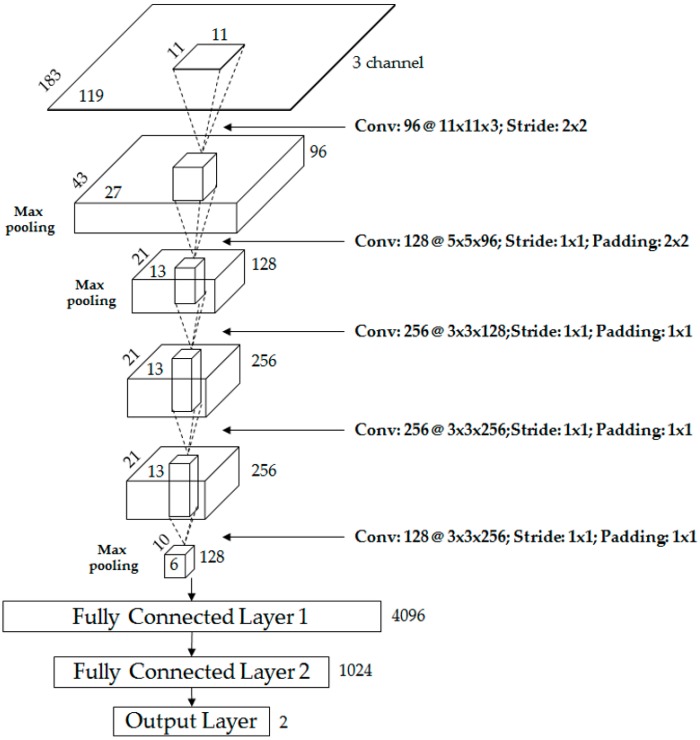
“The 1st convolutional layer’s filter size is relatively large, unlike those in previ us studies [52,53], because the input images are dark, with a fairly large amount of noise in their features.”
BackgroundImageNet classification with deep convolutional neural networks
Krizhevsky, A., Sutskever, I., & Hinton, G. E. (2017) · Communications of the ACM · doi:10.1145/3065386 · Cited by 112,155 · cited 10×
“In Equation (2), cx,y is a value obtained by normalization [47].”
BackgroundMethodInfluentialGradient-based learning applied to document recognition
Lecun, Y., Bottou, L., Bengio, Y., & Haffner, P. (1998) · Proceedings of the IEEE · doi:10.1109/5.726791 · Cited by 58,805 · cited 1×
“AlexNet [47] and other existing methods from the literature [48,49] used square input images with the same height and width.”
MethodGoing deeper with convolutions
Szegedy, C., Liu, W., Jia, Y., Sermanet, P., Reed, S., Anguelov, D., Erhan, D., Vanhoucke, V., & Rabinovich, A. (2015) · 2015 IEEE Conference on Computer Vision and Pattern Recognition (CVPR) · doi:10.1109/cvpr.2015.7298594 · Cited by 48,562
Histograms of Oriented Gradients for Human Detection
Dalal, N., & Triggs, B. (2005) · 2005 IEEE Computer Society Conference on Computer Vision and Pattern Recognition (CVPR'05) · doi:10.1109/cvpr.2005.177 · Cited by 33,584 · cited 7×
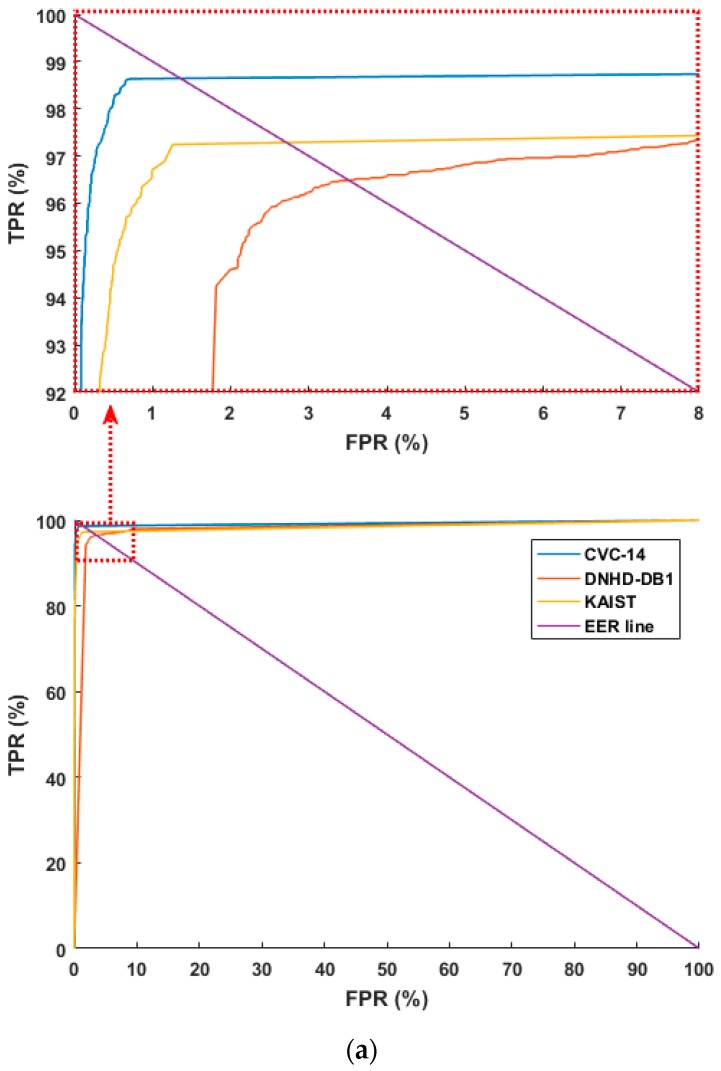
“As shown in Figure 9, the accuracies with the proposed m thod re higher t an those using previous methods [16,42].”
MethodInfluential(2014) · Cited by 33,419
(2010) · International Conference on Machine Learning · Cited by 13,995
(2011) · Cited by 6,993
DeepFace: Closing the Gap to Human-Level Performance in Face Verification
Taigman, Y., Yang, M., Ranzato, M., & Wolf, L. (2014) · 2014 IEEE Conference on Computer Vision and Pattern Recognition · doi:10.1109/cvpr.2014.220 · Cited by 6,542
A Dynamic Histogram Equalization for Image Contrast Enhancement
Abdullah-Al-Wadud, M., Kabir, M., Akber Dewan, M., & Chae, O. (2007) · IEEE Transactions on Consumer Electronics · doi:10.1109/tce.2007.381734 · Cited by 1,346 · cited 1×
“To resolve these problems, research has been performed on a variety of histogram processing and intensity mapping-based image enhancement methods [33–37].”
Method
Research works printed but not linked: 2
- Oren, M., Papageorgiou, C., Sinha, P., Osuna, E., and Poggio, T. (1997, January 17–19). Pedestrian detection using wavelet templates. Proceedings of the IEEE Computer Society Conference on Computer Vision and Pattern Recognition, San Juan, Puerto Rico.
- Gonzalez, R.C., and Woods, R.E. (2010). Digital Image Processing, Prentice Hall. [3rd ed.].
Cited by
Gupta, A., Anpalagan, A., Guan, L., & Khwaja, A. S. (2021) · Array · doi:10.1016/j.array.2021.100057 · Cited by 565
Zhang, Y.-D., Dong, Z., Chen, X., Jia, W., Du, S., Muhammad, K., & Wang, S.-H. (2019) · Multimedia Tools and Applications · doi:10.1007/s11042-017-5243-3 · Cited by 395
“Here the hyperparameters are obtained by experiences, following the settings in open published literature [4, 7, 16].”
Sakaridis, C., Dai, D., & Van Gool, L. (2019) · 2019 IEEE/CVF International Conference on Computer Vision (ICCV) · doi:10.1109/iccv.2019.00747 · Cited by 281
“Several works pertain to human detection at nighttime, using FIR cameras [10, 37], visible light cameras [15], or a combination of both [4].”
BackgroundDark Model Adaptation: Semantic Image Segmentation from Daytime to Nighttime
Dai, D., & Gool, L. V. (2018) · 2018 21st International Conference on Intelligent Transportation Systems (ITSC) · doi:10.1109/itsc.2018.8569387 · Cited by 207
Sakaridis, C., Dai, D., & Van Gool, L. (2022) · IEEE Transactions on Pattern Analysis and Machine Intelligence · doi:10.1109/tpami.2020.3045882 · Cited by 186
Metadata
- Authors
- Kim, J., Hong, H., & Park, K.
- Affiliations
- Dongguk University (KR)
- Corresponding author
- Park, Kang
- ORCID
- Venue
- Sensors
- Publisher
- MDPI AG
- Published
- 2017-05-08
- Volume
- 17
- Issue
- 5
- Pages
- 1065
- ISSN
- 1424-8220 (ISSN-L)
- PMC
- PMC5469670
- OpenAlex
- W2613296094
- Semantic Scholar
- 03b2ac1d53b91f986b03e11eb50187aea6e73108
- Cited by
- 78
- References
- 56
- Citations by year
- 2026: 5 · 2025: 5 · 2024: 6 · 2023: 3 · 2022: 5 · 2021: 16 · 2020: 9 · 2019: 15 · 2018: 10 · 2017: 4
- FWCI
- 4.31
- Type
- journal article
- Language
- en
- Open access
- gold
- doi.org
- Licence
- Locations
- Sensors (publishedVersion, cc-by)
- Europe PMC (PubMed Central) (publishedVersion, cc-by)
- PubMed Central (publishedVersion, cc-by)
- PubMed (publishedVersion)
- DOAJ (DOAJ: Directory of Open Access Journals) (submittedVersion, cc-by-sa)
- Topics
- Physical Sciences › Computer Science › Computer Vision and Pattern Recognition › Advanced Neural Network Applications
- Physical Sciences › Computer Science › Computer Vision and Pattern Recognition › Video Surveillance and Tracking Methods
- Physical Sciences › Computer Science › Computer Vision and Pattern Recognition › Human Pose and Action Recognition
- Keywords
- visible camera, convolutional neural networks, intelligent surveillance
About these checks
Registry, retraction, Cites and statistics results are computed, not judged, with one exception: a printed reference that no index lists is read once by a model before it counts as a citation error. Claims are extracted by a model and kept only when their quote appears verbatim in the text; each cited source is then checked, with a model’s help, for whether it says what the claim relies on. Those verdicts can be wrong — read the claim’s quote and the cited source before relying on one.
Statistics and arithmetic are recomputed, not judged.
Confidence bands are shown only for fields calibrated on our annotated test set. None is calibrated yet, so no band is shown.
What counts as a claim ›How we measure confidence ›How we check this ›
Are you an author, or do you see a problem with this page? Request a review
How to cite
Cite CoChat for the checks on this page, and the paper for its own findings.
- This page
- CoChat. (2026). Citation check: Convolutional Neural Network-Based Human Detection in Nighttime Images Using Visible Light Camera Sensors. https://app.cochat.ai/papers/10.3390/s17051065
- The paper
- Kim, J., Hong, H., & Park, K. (2017). Convolutional Neural Network-Based Human Detection in Nighttime Images Using Visible Light Camera Sensors. Sensors. https://doi.org/10.3390/s17051065
Data sources
Bibliographic data: Semantic Scholar, OpenAlex, Crossref.
Contains information from the Semantic Scholar Academic Graph Datasets, made available under the ODC Attribution License (ODC-BY 1.0).
Semantic Scholar’s data is described in: Kinney, R., et al. (2023). The Semantic Scholar Open Data Platform. arXiv:2301.10140.
