

An Ensemble Deep Convolutional Neural Network Model with Improved D-S Evidence Fusion for Bearing Fault Diagnosis
Open accessThe DOI matches its Crossref record; 46 of the 46 references it cites were found in a registry or an index.
Abstract
Intelligent machine health monitoring and fault diagnosis are becoming increasingly important for modern manufacturing industries. Current fault diagnosis approaches mostly depend on expert-designed features for building prediction models. In this paper, we proposed IDSCNN, a novel bearing fault diagnosis algorithm based on ensemble deep convolutional neural networks and an improved Dempster–Shafer theory based evidence fusion. The convolutional neural networks take the root mean square (RMS) maps from the FFT (Fast Fourier Transformation) features of the vibration signals from two sensors as inputs. The improved D-S evidence theory is implemented via distance matrix from evidences and modified Gini Index. Extensive evaluations of the IDSCNN on the Case Western Reserve Dataset showed that our IDSCNN algorithm can achieve better fault diagnosis performance than existing machine learning methods by fusing complementary or conflicting evidences from different models and sensors and adapting to different load conditions.
Overview
The claims and statistics of this paper haven’t been checked yet.
Free: it reads the open-access text and checks the first 5 claims that cite a source we can check. Create a free account to check every claim.
Integrity signals
Registry
Cites
Statistics
Figures


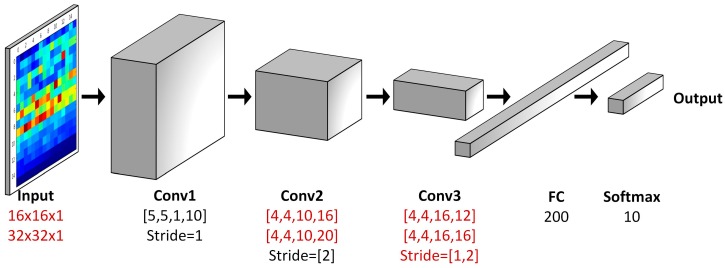

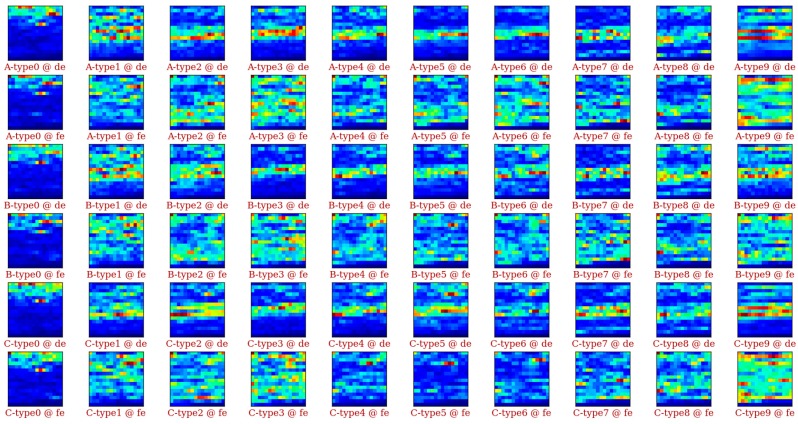


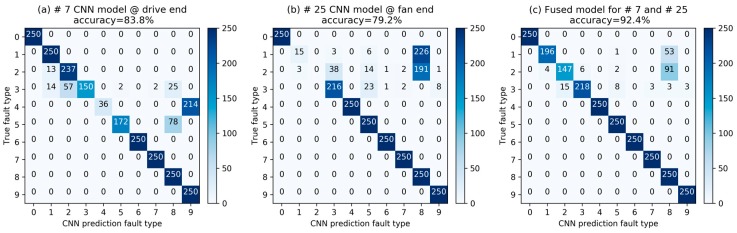

Verification
Claims the paper makes
The claims and statistics of this paper haven’t been checked yet.
Free: it reads the open-access text and checks the first 5 claims that cite a source we can check. Create a free account to check every claim.
Self-check
Percentages, sums and reported differences re-computed from the paper’s own numbers.
The self-check needs the paper’s full text.
Citations
Cites
Smith, W. A., & Randall, R. B. (2015) · Mechanical Systems and Signal Processing · doi:10.1016/j.ymssp.2015.04.021 · Cited by 2,719
Zhang, W., Peng, G., Li, C., Chen, Y., & Zhang, Z. (2017) · Sensors · doi:10.3390/s17020425 · Cited by 1,925
Jia, F., Lei, Y., Lin, J., Zhou, X., & Lu, N. (2016) · Mechanical Systems and Signal Processing · doi:10.1016/j.ymssp.2015.10.025 · Cited by 1,710 · cited 1×
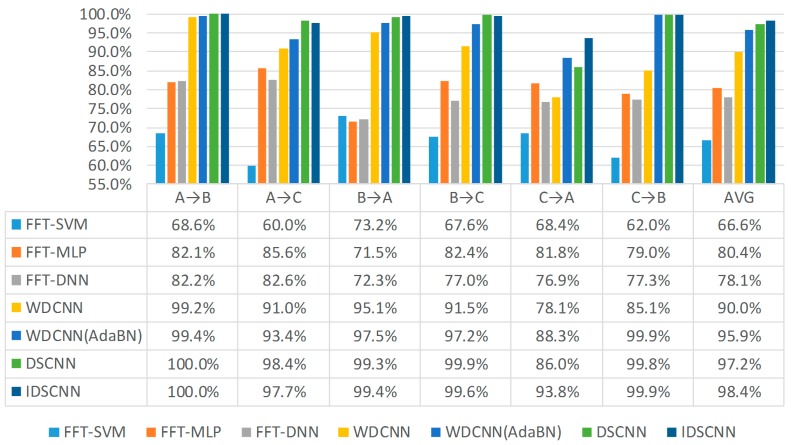
“We can see that the DSCNN method, which combines the CNN models with traditional D-S evidence theory has higher accuracy than FFT-SVM, FFT-MLP, FFT-DNN [48], WDCNN [49] and WDCNN (AdaBN) [49] on all nine conditions but has lower accuracy than the WDCNN (AdaBN) model on C→A.”
On the dempster-shafer framework and new combination rules
Yager, R. R. (1987) · Information Sciences · doi:10.1016/0020-0255(87)90007-7 · Cited by 1,572 · cited 1×
“In this paper, we propose a novel algorithm that integrates deep neural networks with multiple sensor information with an improved Dempster–Shafer (D-S) evidence theory [30] based data fusion model for bearing fault diagnosis.”
Real-Time Motor Fault Detection by 1-D Convolutional Neural Networks
Ince, T., Kiranyaz, S., Eren, L., Askar, M., & Gabbouj, M. (2016) · IEEE Transactions on Industrial Electronics · doi:10.1109/tie.2016.2582729 · Cited by 1,407
Combining belief functions when evidence conflicts
Murphy, C. K. (2000) · Decision Support Systems · doi:10.1016/s0167-9236(99)00084-6 · Cited by 1,042 · cited 1×
“Here we take four modified D-S evidence fusion algorithms from Yager [44], Sun [45], Murphy [46] and Deng [47] for comprehensive analysis.”
Deep convolutional neural networks for multi-modality isointense infant brain image segmentation
Zhang, W., Li, R., Deng, H., Wang, L., Lin, W., Ji, S., & Shen, D. (2015) · NeuroImage · doi:10.1016/j.neuroimage.2014.12.061 · Cited by 817 · cited 1×
“Many classification problems have been successfully solved by various deep learning models such as deep belief network [22], deep Boltzmann machine [23], deep auto encoder [24], convolutional neural network (CNN) [25] and so on.”
Hierarchical adaptive deep convolution neural network and its application to bearing fault diagnosis
Guo, X., Chen, L., & Shen, C. (2016) · Measurement · doi:10.1016/j.measurement.2016.07.054 · Cited by 782 · cited 1×
“Guo [26] proposed a hierarchical adaptive deep convolution neural network (ADCNN) on bearing fault analysis, which first output the fault type and then analyze the fault size.”
Gearbox Fault Identification and Classification with Convolutional Neural Networks
Chen, Z., Li, C., & Sanchez, R.-V. (2015) · Shock and Vibration · doi:10.1155/2015/390134 · Cited by 391 · cited 2×
“As shown in Figure 1, we use root mean square (RMS) over a sub band of the frequency spectrum as feature for our CNN model, which has the advantage of maintaining the energy shape at the spectrum peaks [27,41].”
Tran, V. T., AlThobiani, F., & Ball, A. (2014) · Expert Systems with Applications · doi:10.1016/j.eswa.2013.12.026 · Cited by 386
Research works printed but not linked: 3
- Muralidharan, 2016, Bearing Fault Diagnosis Using Vibration Signals by Variational Mode Decomposition and Naïve Bayes Classifier, Int. J. Robot. Autom., 1, 1
- Xing, 2016, Quantitative MMM evaluation of weld levels based on information entropy and DS evidence theory, Chin. J. Sci. Instrum., 37, 610
- Kang, 2012, Multi-sensor information fusion algorithm based on DS evidence theory, J. Chin. Inert. Technol., 20, 670
Cited by
Items 101–200 of 209
He, J., Ouyang, M., Chen, Y., Chen, D., Guo, J., & Zhou, Y. (2020) · Sensors · doi:10.3390/s20061774 · Cited by 26
“A common ensemble strategy is voting method, which has been wildly applied in different ensemble learning models [40,41].”
MethodA Weight Multinet Architecture for Bearing Fault Classification Under Complex Speed Conditions
Ding, X., Lin, L., He, D. K., Wang, L., Huang, W., & Shao, Y. (2020) · IEEE Transactions on Instrumentation and Measurement · doi:10.1109/tim.2020.3026461 · Cited by 26
“These new network models with special architectures have shown their strong potential in complex health detection and fault recognition [23]–[25].”
BackgroundDong, S., Pei, X., Wu, W., Tang, B., & Xingxin, Z. (2021) · Journal of Mechanical Engineering · doi:10.3901/jme.2021.01.148 · Cited by 26
Xing, Z., Liu, Y., Wang, Q., & Li, J. (2022) · AIP Advances · doi:10.1063/5.0095530 · Cited by 27
Chen, X., Xu, Y., Guo, H., Hu, S., Gu, C., Hu, J., Qin, X., & Guo, J. (2024) · Measurement · doi:10.1016/j.measurement.2024.114172 · Cited by 24
Self-citationWang, Y., Huang, S., Dai, J., & Tang, J. (2020) · Shock and Vibration · doi:10.1155/2020/1850286 · Cited by 26
“In [20], the one-dimensional signal was converted into two-dimensional gray map as the input of 2DCNN, and the input of 2DCNN in [31] was the root mean square (RMS) map of the characteristics of the vibration signal after Fourier transform (FT).”
MethodA Multi-Sensor Data-Fusion Method Based on Cloud Model and Improved Evidence Theory
Xiang, X., Li, K., Huang, B., & Cao, Y. (2022) · Sensors · doi:10.3390/s22155902 · Cited by 23
“It has been widely employed in areas such as target identification [9], multi-attribute decision analysis [10], fault diagnostics [11], and robotics research [12] due to its capacity to better handle uncertain and unknown situations with unknown prior probabilities.”
Convolutional Neural Networks for Fault Diagnosis Using Rotating Speed Normalized Vibration
Wei, D., Wang, K., Heyns, S., & Zuo, M. J. (2019) · Applied condition monitoring · doi:10.1007/978-3-030-11220-2_8 · Cited by 25
Towards An Active Learning Approach To Tool Condition Monitoring With Bayesian Deep Learning
Martínez-Arellano, G., & Ratchev, S. M. (2019) · European Conference on Modelling and Simulation (ECMS) · doi:10.7148/2019-0223 · Cited by 23
“CNNs (LeCun, 2015), for example, have been used for the detection of faulty bearings (Li et al., 2017) by feeding raw vibration data, reducing the computational complexity of feature extraction.”
MethodYang, A., Zhi, J.-M., Yang, K., Wang, J., & Xue, T. (2021) · IEEE Sensors Journal · doi:10.1109/jsen.2021.3077468 · Cited by 23
A Predictive Maintenance Methodology: Predicting the Time-to-Failure of Machines in Industry 4.0
Züfle, M., Agne, J., Grohmann, J., Dortoluk, I., & Kounev, S. (2021) · IEEE International Conference on Industrial Informatics (INDIN) · doi:10.1109/indin45523.2021.9557387 · Cited by 30
“applied fast Fourier transform, root mean square maps, and convolutional neural networks for the classification of different bearing fault types [13].”
MethodAccurate Fault Location Using Deep Belief Network for Optical Fronthaul Networks in 5G and Beyond
Yu, A., Yang, H., Yao, Q., Li, Y., Guo, H., Peng, T., Li, H., & Zhang, J. (2019) · IEEE Access · doi:10.1109/access.2019.2921329 · Cited by 21
“But we exploit the hybrid training method to train the CNN, which is similar to the hybrid pre-training phase of DBN-FL model [27].”
MethodThe Importance of Feature Processing in Deep-Learning-Based Condition Monitoring of Motors
Kumar, D., Daudpoto, J., Harris, N. R., Hussain, M., Mehran, S., Kalwar, I. H., Hussain, T., & Memon, T. D. (2021) · Mathematical Problems in Engineering · doi:10.1155/2021/9927151 · Cited by 25
“In [89], authors have used an ensemble deep CNN model with the improved Dempster–Shafer (D-S) evidence theory (IDSCNN) for bearing fault classification under varying load conditions.”
MethodSupervised-Learning-Based Intelligent Fault Diagnosis for Mechanical Equipment
Hong, G., & Suh, D. (2021) · IEEE Access · doi:10.1109/access.2021.3104189 · Cited by 23
“To increase the amount of data, the overlapping samples in the time-series-based data were extracted using the sliding window method [37]–[39].”
MethodJiang, P., Wang, Y., Shuang, W., Zhang, L., & Yang, C. (2025) · Measurement · doi:10.1016/j.measurement.2025.117985 · Cited by 23
Li, H., Huang, J., Gao, M., Yang, L., & Bao, Y. (2022) · Applied Sciences · doi:10.3390/app122211410 · Cited by 22
“[18] proposed an ensemble deep Convolutional Neural Network model with improved D-S evidence (IDSCNN), taking the root mean square (RMS) maps from the FFT (Fast Fourier Transformation) features of the vibration signals as the input of model.”
MethodA hybrid approach for gearbox fault diagnosis based on deep learning techniques
Bessaoudi, M., Habbouche, H., Benkedjouh, T., & Mesloub, A. (2024) · The International Journal of Advanced Manufacturing Technology · doi:10.1007/s00170-024-13873-5 · Cited by 25
“The accuracies of the rest confusion matrices are presented in Table 4 with mean accuracy equal to 99 .”
Impraimakis, M. (2024) · Structural Health Monitoring · doi:10.1177/14759217241262972 · Cited by 23
Gong, Y., Ma, Z., Wang, M., Deng, X., & Jiang, W. R. (2020) · Symmetry · doi:10.3390/sym12091435 · Cited by 19
Zhao, B., Yuan, Q., & Zhang, H. (2020) · Applied Sciences · doi:10.3390/app10051802 · Cited by 18
Dyfusion: Dynamic IR/RGB Fusion for Maritime Vessel Recognition
dos Santos, C. E., & Bhanu, B. (2018) · Proceedings - International Conference on Image Processing · doi:10.1109/icip.2018.8451745 · Cited by 18
Bearing Fault Detection and Diagnosis Based on Densely Connected Convolutional Networks
Niyongabo, J., Zhang, Y., & Ndikumagenge, J. (2022) · Acta Mechanica et Automatica · doi:10.2478/ama-2022-0017 · Cited by 17
Structural damage detection based on decision-level fusion with multi-vibration signals
Zhang, J., Jin, Z., Teng, S., Chen, G., & Bassir, D. (2022) · Measurement Science and Technology · doi:10.1088/1361-6501/ac7940 · Cited by 16
“Li et al [27] proposed an ensemble deep CNN model with improved D–S evidence fusion for bearing fault diagnosis.”
One-Dimensional Convolutional Neural Networks for Real-Time Damage Detection of Rotating Machinery
Avcı, O., Abdeljaber, O., Serkan Kiranyaz, B., Sassi, S., Ibrahim, A., & Gabbouj, M. (2021) · Conference proceedings of the Society for Experimental Mechanics · doi:10.1007/978-3-030-76335-0_7 · Cited by 19
Wang, J., Xu, H., Liu, J., Peng, X., & He, C. (2023) · Measurement Science and Technology · doi:10.1088/1361-6501/acbc3b · Cited by 16
A Fault Diagnosis Method of Modular Analog Circuit Based on SVDD and D–S Evidence Theory
Sun, P., Yang, Z., Jiang, Y., Jia, S., & Peng, X. (2021) · Sensors · doi:10.3390/s21206889 · Cited by 14
A convolutional neural network deep learning method for model class selection
Impraimakis, M. (2023) · Earthquake Engineering & Structural Dynamics · doi:10.1002/eqe.4045 · Cited by 15
Active Broad-Transfer Learning Algorithm for Class-Imbalanced Fault Diagnosis
Liu, G., Shen, W., Gao, L., & Kusiak, A. (2022) · IEEE Transactions on Instrumentation and Measurement · doi:10.1109/tim.2022.3227995 · Cited by 14
“…have helped establish powerful networks, including deep neural networks (DNNs) [9], deep-stacked autoencoders (DSAEs) [10], convolutional neural networks (CNNs) [11], recurrent neural networks (RNNs) [12], long short-term memory (LSTMs) networks [13], and graph neural networks (GNNs) [14].”
BackgroundSelf-citationA comprehensive Overview of Decision Fusion Technique in Healthcare: A Systematic Scoping Review
Nazari, E., Chang, H.-C. H., Deldar, K., Pour, R., Avan, A., Tara, M., Mehrabian, A., & Tabesh, H. (2020) · Iranian Red Crescent Medical Journal · doi:10.32592/ircmj.2020.22.10.30 · Cited by 18
“(103) Evidential method (104-107) New methods”
Li, X., Zhang, F., Wang, G., & Fang, F. (2020) · Measurement Science and Technology · doi:10.1088/1361-6501/abb551 · Cited by 12
“However, the good performance with these signal processing methods highly depends on expert experience and domain knowledge [22–24].”
BackgroundLu, J., Zhang, H., & Tang, X. (2019) · Entropy · doi:10.3390/e21070687 · Cited by 12
Self-citationMao, K., Lu, D., Dazhi, E., & Tan, Z. (2018) · Sensors · doi:10.3390/s18061871 · Cited by 13
An Online Fault Detection and Remaining Life Prediction Method Based on SVDD for Rolling Bearings
Yan, A., Zhao, Y., Lu, Z., Pang, Y., Jin, S., Liu, Z., Xu, H., & He, H. (2024) · IEEE Transactions on Instrumentation and Measurement · doi:10.1109/tim.2024.3378268 · Cited by 10
Xu, Q., Wu, D., Jiang, C., & Wang, X. (2022) · Journal of Ambient Intelligence and Humanized Computing · doi:10.1007/s12652-022-04484-7 · Cited by 9
“…deep learning networks, such as deep belief network (Shang et al. 2018; Sudha and Valarmathi 2021; Xing et al. 2021), convolutional neural networks (Li et al. 2017; Wang et al. 2022; Zhao et al. 2022) and deep automatic encoders (Zhao et al. 2018), have been developed and applied in anomaly…”
BackgroundChung, C.-C., Liang, Y.-P., Chang, Y.-C., & Chang, C.-M. (2023) · International Symposium on VLSI Technology, Systems and Applications (VLSI-TSA) · doi:10.1109/vlsi-tsa/vlsi-dat57221.2023.10134316 · Cited by 9
“For example, some researchers [3,4,5,6] made the continuously sampled vibration signals in the CWRU dataset into images to train deep neural networks and classify the data into several categories.”
BackgroundResultIntelligent diagnosis of petroleum equipment faults using a deep hybrid model
Alguliyev, R. M., İmamverdiyev, Y., & Sukhostat, L. V. (2020) · SN Applied Sciences · doi:10.1007/s42452-020-2741-0 · Cited by 10
Comparison of CWRU Dataset-Based Diagnosis Approaches: Review of Best Approaches and Results
Wei, X. L., & Söffker, D. (2021) · Lecture notes in civil engineering · doi:10.1007/978-3-030-64594-6_51 · Cited by 9
Bearing Fault Diagnosis Based on Small Sample Learning of Maml–Triplet
Cheng, Q., He, Z., Zhang, T., Li, Y., Liu, Z., & Zhang, Z. (2022) · Applied Sciences · doi:10.3390/app122110723 · Cited by 10
Zhang, L., & Tao, J. (2018) · Algorithms · doi:10.3390/a11020021 · Cited by 8
“[4] introduced the root-mean-square (RMS) characteristics of the vibration signal based on the fast Fourier transform to obtain a distance matrix, which was used as an input convolution neural network to diagnose bearing faults.”
MethodBai, L., Feng, Y., Li, N., & Xue, X. (2019) · Micromachines · doi:10.3390/mi10030196 · Cited by 8
“The evidence theory does not require prior knowledge and has outstanding performance for handling uncertain or inexact information, which makes it an indispensable tool for state diagnosis and defect inspection [35,36].”
BackgroundPredictive Modeling With an Adaptive Unsupervised Broad Transfer Algorithm
Liu, G., Shen, W., Gao, L., & Kusiak, A. (2021) · IEEE Transactions on Instrumentation and Measurement · doi:10.1109/tim.2021.3088496 · Cited by 7
Self-citationLi, Y., Hong, F., Tian, L., Chen, J., Du, H. Y., & Liu, J. (2023) · Frontiers in Energy Research · doi:10.3389/fenrg.2022.1037539 · Cited by 8
“The experimental results of the above studies show that deep learning networks outperform the existing intelligent approaches such as SVM, ANN, and CNN (Lei et al., 2019).”
BackgroundInfluentialEdge devices object detection by filter pruning
Crescitelli, V., Miura, S., Ono, G., & Kohmu, N. (2021) · IEEE International Conference on Emerging Technologies and Factory Automation (ETFA) · doi:10.1109/etfa45728.2021.9613668 · Cited by 7
Research on Innovative Design of Product Packaging Based on Big Data Technology
Gan, F., Romainoor, N. H., & Guo, Z. (2022) · Scientific Programming · doi:10.1155/2022/4973875 · Cited by 7
A Novel Bearing Fault Diagnosis of Raw Signals Based on 1D Residual Convolution Neural Network
Li, C., Yu, L., Zhang, A., He, Q., Yang, W., & Duan, Z. (2020) · International Conference on High Performance Big Data and Intelligent Systems (HPBD&IS) · doi:10.1109/hpbdis49115.2020.9130567 · Cited by 7
“The first paper applying CNN in bearing fault diagnosis was published in 2016 [12], and from then on many papers have tried to apply the same technique in this field and obtained pretty results [13]-[14][15][16][17].”
Xiao, L., Han, F., Zhang, C., Duan, S., Wang, L., & Jia, Y. (2025) · IEEE Sensors Journal · doi:10.1109/jsen.2025.3569844 · Cited by 6
“2) The DSConv Block consists of two parts [24]: depthwise convolution and pointwise convolution. a) Depthwise Convolution: In this step, we use convolution kernels of size 3 × 3 × 1 to perform convolution operations on each input channel separately.”
Pană, C. F., Maican, C. A., Vrăjitoru, N.-R., Pătrașcu-Pană, D. M., & Rădulescu, V. M. (2026) · Sensors · doi:10.3390/s26123661 · Cited by 8
Rony, M. H., Touti, E., Ramiah, H., Koondhar, M. A., Elloumi, M., Habib, A., Madhuranga, H. P. D. S., Shuyuti, N. A. S. A., Ahmed, M. M. R., & Kanesan, J. (2026) · Quality and Reliability Engineering International · doi:10.1002/qre.70302 · Cited by 6
“In a variety of computer vision applications [ 71, 72 ] where the input data are typically 2D data, CNN models have demonstrated their effectiveness.”
Vibration Signal-based Diagnosis of Defect Embedded in Outer Race of Ball Bearing using 1-D CNN
Sharma, P., Chandan, S., & Agrawal, B. P. (2020) · International Conference on Computational Performance Evaluation (ComPE) · doi:10.1109/compe49325.2020.9199994 · Cited by 6
Sahu, P. K., & Nandan, R. (2023) · International Conference on Digital Signal Processing and its Applications (DSPA) · doi:10.1109/dspa57594.2023.10113425 · Cited by 5
Transfer Learning for Anomaly Detection Using Bearings' Vibration Signals
Avendano, D. N., Deschrijver, D., & Hoecke, S. V. (2023) · The International Journal of Acoustics and Vibration · doi:10.20855/ijav.2023.28.41993 · Cited by 5
Kawale, P., Mishra, S. K., & Shakya, P. (2024) · Journal of Vibration and Control · doi:10.1177/10775463241234960 · Cited by 7
Pavithra, R., & Ramachandran, P. (2024) · Journal of Intelligent & Fuzzy Systems · doi:10.3233/jifs-237546 · Cited by 5
“In this section, another class of ML method considered for discussion is EL in which [9, 26, 35, 38–40, 52, 55] a global decision is taken from the outputs of several independent classifiers to get very high accuracy.”
Song, M., Zhang, Z., Xiao, S., Xiong, Z., & Li, M. (2022) · Measurement Science and Technology · doi:10.1088/1361-6501/ac9078 · Cited by 6
“model and a slightly better accuracy than the IDSCNN [30] model (a bearing fault diagnosis algorithm based on a fusion of ensemble deep CNNs and an improved Dempster–Shafer theory); the average accuracy reaches 0.”
Status Recognition of Marine Centrifugal Pumps Based on a Stacked Sparse Auto-Encoder
He, Y., Yao, Y., & Ou, H. (2024) · Applied Sciences · doi:10.3390/app14041371 · Cited by 4
Pan, Y., Wang, J., An, Z., Li, J., & Weng, G. (2025) · SAGE Open · doi:10.1177/21582440241309881 · Cited by 4
“In the case of high conflict evidence, the classic D-S evidence theory is prone to unreasonable conclusions (S. Li et al., 2017).”
Yao, Y., Dai, Y., & Luo, W. (2021) · Sensors · doi:10.3390/s21238075 · Cited by 4
“On the premise of the sufficient data, it has a good fault identification effect and feature extraction ability for highly nonlinear processes [17].”
BackgroundA novel bearing fault detection approach using a convolutional neural network
Aydın, T., Erdem, E., Erkayman, B., Kocadağistan, M. E., & Teker, T. (2024) · Materials Testing · doi:10.1515/mt-2023-0334 · Cited by 4
End-to-End Intelligent Fault Diagnosis of Transmission Bearings in Electric Vehicles Based on CNN
Chen, Y., Li, G., Li, A. H., & He, B. (2024) · Lubricants · doi:10.3390/lubricants12110364 · Cited by 4
Hosseini, S. M., Dibaji, A., & Sulaimany, S. (2024) · Engineering Research Express · doi:10.1088/2631-8695/ad8ff0 · Cited by 4
Rotating Shaft Fault Prediction Using Convolutional Neural Network: A Preliminary Study
Kolar, D., Lisjak, D., & Pająk, M. (2019) · Journal of KONES Powertrain and Transport · doi:10.2478/kones-2019-0060 · Cited by 4
“Its main application CNN has gained in processing, classifying and recognizing objects in the images, but recently examples of the application of such architecture in the maintenance field can be found [8-10].”
BackgroundA Novel Hybrid Algorithm of Sea Object Classification Based on Multi-sensor and Multi-level Track
Zhu, D., Zhang, Z., & Yan, M. (2022) · International Journal of Fuzzy Systems · doi:10.1007/s40815-022-01252-9 · Cited by 4
“The basic principles of the target classification decision [19] are as follows.”
BackgroundRunning State Monitoring of Induction Motors Based on KPCA_RBF and Stator Current Characteristics
Song, X., Hu, Y., Dai, B., & Zheng, X. (2023) · IEEE Access · doi:10.1109/access.2023.3290150 · Cited by 3
Chung, C.-C., Liang, Y.-P., & Huang, J.-C. (2023) · IEEE International Conference on Consumer Electronics - Taiwan (ICCE-Taiwan) · doi:10.1109/icce-taiwan58799.2023.10227058 · Cited by 3
“Deep learning neural networks (DNNs) have been applied to this research topic, including autoencoders [1], restricted Boltzmann machines (RBMs), deep belief networks (DBNs) [2], convolutional neural networks (CNNs) [3,4], and multilayer perceptron (MLP) neural networks [5].”
MethodEvaluation feedback information for optimization of mental health courses with deep learning methods
Liu, W., & Zhang, Y. (2019) · Soft Computing · doi:10.1007/s00500-019-04569-0 · Cited by 3
Review of Artificial Intelligence-based Bearing Vibration Monitoring
Sheng, H., Chen, Z., Xia, Y., & He, J. (2020) · Prognostics and System Health Management Conference · doi:10.1109/phm-jinan48558.2020.00018 · Cited by 3
“In [80], a new bearing fault diagnosis algorithm based on integrated deep CNN and the Dempster-Shafer theory based on evidence fusion is proposed.”
MethodResearch on Position Recognition System of Gantry Hoisting Based on Machine Vision
Guo, J., Qin, Y., Wu, H., & Jiang, X. (2021) · Integrated ferroelectrics · doi:10.1080/10584587.2021.1911312 · Cited by 3
“proposed IDSCNN, a novel bearing fault diagnosis algorithm based on ensemble deep convolutional neural networks [21].”
Fault diagnosis for rolling bearing of road heading machine via SVDS-ICNN
Qu, X., Zhang, Y., & Li, Y. (2023) · Journal of the Brazilian Society of Mechanical Sciences and Engineering · doi:10.1007/s40430-023-04344-1 · Cited by 3
“Li et al. [22] used the root-mean-square feature graph of multi-sensor signal acquisition after FFT processing as the input of CNN, combined with an improved D-S evidence theory to identify rolling bearing faults.”
MethodZhang, P., Liu, S., Tao, A., Cheng, J., & Gao, P. (2021) · Measurement Science and Technology · doi:10.1088/1361-6501/ac3854 · Cited by 3
Hoang, D.-T., & Kang, H. (2019) · Lecture notes in computer science · doi:10.1007/978-3-030-26766-7_26 · Cited by 3
A New Transfer Learning Ensemble Model with New Training Methods for Gear Wear Particle Recognition
Zhao, C., Lin, Z., Tan, J., Hu, H., & Li, Q. (2022) · Shock and Vibration · doi:10.1155/2022/3696091 · Cited by 3
“Using the open bearing dataset of Case Western Reserve University to verify the model, the conclusion that the model performance is better than the existing machine learning method is obtained [23].”
MethodExplainable artificial intelligence approaches for fault diagnosis in rotating machinery
Brito, L. C. (2022) · doi:10.14393/ufu.te.2022.557 · Cited by 4
Jayapal, U., & Mutt, S. K. (2025) · Journal Européen des Systèmes Automatisés · doi:10.18280/jesa.580605 · Cited by 2
“In order to investigate the identification of bearing irregularities, Li et al. [15] employed a CNN model, the rapid Fourier Transformation analysis of vibration, and the root mean square results from the rapid Fourier transform computation.”
Research progress on bearing fault diagnosis with deep learning methods for rolling element bearings
Patel, S., & Patel, S. (2025) · Noise & Vibration Worldwide · doi:10.1177/09574565251382130 · Cited by 2
“35 Despite the signi fi cant noise and unpredictability in the inputs, LiftingNet is designed for categorizing mechanical data by Pan et al. 36 The split, predict, update, pooling, and full-connection layers make up the LiftingNet.”
Intelligent Diagnosis of Bearing Failures Based on Recurrence Quantification and Energy Difference
Wang, M.-K., Wang, T., Lu, D.-H., & Cui, S. (2024) · Applied Sciences · doi:10.3390/app14219643 · Cited by 2
“In 2017, Li et al. [5] proposed a novel bearing fault diagnosis algorithm, IDSCNN, based on an ensemble of deep convolutional neural networks and an improved evidence fusion algorithm based on Dempster’s theory, which achieved better fault diagnosis performance than the existing machine learning…”
Heated Metal Mark Attribute Recognition Based on Compressed CNNs Model
Yin, H., Mao, K., Zhao, J., Chang, H., Dazhi, E., & Tan, Z. (2019) · Applied Sciences · doi:10.3390/app9091955 · Cited by 2
Lan, G., & Shi, H. (2024) · Journal of Vibroengineering · doi:10.21595/jve.2024.23612 · Cited by 4
“For the method proposed in this study, several conventional bearing fault recognition models are used for comparison: 1D-CNN [29], EMD+SVM [30], DNN network [31].”
MethodDesigning an Improved VMD-CNNs-DS Algorithm for the Port Crane Bearing Fault Diagnosis
Wu, S., Lei, X., Zhang, J., & Chen, X. (2024) · Advances in transdisciplinary engineering · doi:10.3233/atde231363 · Cited by 2
A multi-task deep learning model for rolling element-bearing diagnostics
Hinchi, A. Z. (2018) · PHM Society European Conference · doi:10.36001/phme.2018.v4i1.448 · Cited by 2
Bynum, J. (2020) · doi:10.13021/mars/5063 · Cited by 2
D-S Evidence Theory and Its Application for Fault Diagnosis of Machinery
Wen, G., Lei, Z., Chen, X., & Huang, X. (2024) · Smart sensors, measurement and instrumentation · doi:10.1007/978-981-97-1176-5_14 · Cited by 1
Damage localisation based on fusion of multi-source vehicle-induced response of bridges
Zhou, B., Zhu, J., Jiao, X., & Yessoufou, F. (2026) · Structure and Infrastructure Engineering · doi:10.1080/15732479.2026.2656716 · Cited by 1
Wang, X. (2023) · Soft Computing · doi:10.1007/s00500-023-08129-5 · Cited by 1
“R 3 Basic model and improvement of neural network for image task A”
RetractedEvaluation of Bearing Fault Detection on Different _K-Folds using Deep Learning Ensemble Models
Singh, E. A. D. P. (2023) · International Journal on Recent and Innovation Trends in Computing and Communication · doi:10.17762/ijritcc.v11i9.9104 · Cited by 1
Wang, Y., & Cui, X. (2025) · Journal of Vibroengineering · doi:10.21595/jve.2025.24722 · Cited by 1
“…fault diagnosis techniques based on signal analysis utilize bearing vibration signals in different domains, such as time-domain analysis [3], frequency-domain analysis [4], time-frequency domain analysis [5], empirical mode decomposition (EMD) [6], and variational mode decomposition (VMD) [7], [8].”
Ensemble Intelligent Diagnosis for Bearing Faults
Liu, H., Cheng, F., & Li, Y. (2025) · Springer eBooks · doi:10.1007/978-981-96-7218-9_3 · Cited by 1
Xu, X., & Liu, X. (2018) · International Journal of Pattern Recognition and Artificial Intelligence · doi:10.1142/s021800141858003x · Cited by 1
Yu, S., & Wang, X. (2021) · Chinese Control Conference (CCC) · doi:10.23919/ccc52363.2021.9550064 · Cited by 1
“[13] improved the formula based on the D-S theory power average operator and distance of evidence; [14] evaluated the similarity of evidence and weighted the evidence based on the norm distance, which improved the traditional D-S evidence theory.”
MethodA Fault Diagnosis Model for Rolling Bearings Based on Improved Convolutional Neural Network
陈, 子. (2024) · Modeling and Simulation · doi:10.12677/mos.2024.131018 · Cited by 1
Nandi, A. K., & Ahmed, H. (2019) · Wiley eBooks · doi:10.1002/9781119544678.ch14 · Cited by 2
A Deep Learning Method for Rolling Bearing Fault Diagnosis through Heterogeneous Data
Zhou, W., & Hou, Y. (2020) · IEEE Data Driven Control and Learning Systems Conference (DDCLS) · doi:10.1109/ddcls49620.2020.9275189
“An effective fault diagnosis system is of great significance to ensure the safety of equipment production and avoid the loss of personnel and property [1].”
BackgroundThe Fault Re-decision Method based on the Different Decreasing Functions
Bin, R., Cui, J., Zhi-Xin, J., & Gang, L. (2021) · Global Reliability and Prognostics and Health Management Conference (PHM) · doi:10.1109/phm-nanjing52125.2021.9613008
Significance of Machine Learning in Industry 4.0 Scenario—A Review
Kiran, M. B. (2022) · Lecture notes in mechanical engineering · doi:10.1007/978-981-16-9952-8_17
Fault Detection through Vibration Signal Analysis based on HSM with TRIPPY Classifier
(2020) · International Journal of Mathematics and Computers in Simulation · doi:10.46300/9102.2020.14.21
The fault re-decision method based on the different decreasing functionsPreprint
Cui, J., Ren, B., Li, G., & Jia, Z.-X. (2021) · Research Square · doi:10.21203/rs.3.rs-306546/v1
Chen, M., Chen, S.-L., Lin, Y.-S., & Chen, Y.-J. (2023) · Applied Sciences · doi:10.3390/app13137763
Deep learning based methodologies applied to industrial electromechanical systems monitoring
Arellano-Espitia, F. (2023) · UPCommons institutional repository (Universitat Politècnica de Catalunya) · doi:10.5821/dissertation-2117-403958 · Cited by 1
IGBT Fault Diagnosis Method Based on Information Gain and Least Squares Support Vector Machine
Xie, D., Zheng, H. Y., Bao, M., Lu, Y., Ou, S., Chen, T., & Yue, M. (2024) · IEEE International Electrical and Energy Conference (CIEEC) · doi:10.1109/cieec60922.2024.10583300
Gupta, S., Maiti, J., & Kumar, A. (2023) · International Conference on Data Analytics for Business and Industry (ICDABI) · doi:10.1109/icdabi60145.2023.10629554
Qiu, H., Tao, J., Xiao, Z. Y., & Yang, W. (2024) · Mechanisms and machine science · doi:10.1007/978-3-031-69483-7_16
Metadata
- Authors
- Li, S., Liu, G., Tang, X., Lu, J., & Hu, J.
- Affiliations
- Guizhou University (CN)
- University of South Carolina (US)
- Corresponding author
- Hu, Jianjun
- Venue
- Sensors
- Publisher
- MDPI AG
- Published
- 2017-07-28
- Volume
- 17
- Issue
- 8
- Pages
- 1729
- ISSN
- 1424-8220 (ISSN-L)
- PMC
- PMC5579931
- OpenAlex
- W2741289421
- Semantic Scholar
- 3155ce032d96f273cbaa2d17f83af5905a3fa8ca
- Cited by
- 211
- References
- 45
- Citations by year
- 2026: 9 · 2025: 15 · 2024: 23 · 2023: 26 · 2022: 24 · 2021: 30 · 2020: 34 · 2019: 34 · 2018: 15 · 2017: 1
- FWCI
- 14.39
- Type
- journal article
- Language
- en
- Open access
- gold
- doi.org
- Licence
- Locations
- Sensors (publishedVersion, cc-by)
- PubMed Central (publishedVersion, cc-by)
- PubMed (publishedVersion)
- Scholar Commons (University of South Carolina) (submittedVersion, cc-by)
- DOAJ (DOAJ: Directory of Open Access Journals) (submittedVersion, cc-by-sa)
- Funders
- National Natural Science Foundation Project of China (51475097)
- Topics
- Physical Sciences › Engineering › Control and Systems Engineering › Machine Fault Diagnosis Techniques
- Physical Sciences › Engineering › Control and Systems Engineering › Fault Detection and Control Systems
- Health Sciences › Health Professions › Health Information Management › Artificial Intelligence in Healthcare
- Keywords
- bearing fault diagnosis, Dempster-Shafer theory, evidence combination, vibration signals, multi-sensor fusion, distance matrix, machine condition monitoring
About these checks
Registry, retraction, Cites and statistics results are computed, not judged, with one exception: a printed reference that no index lists is read once by a model before it counts as a citation error. Claims are extracted by a model and kept only when their quote appears verbatim in the text; each cited source is then checked, with a model’s help, for whether it says what the claim relies on. Those verdicts can be wrong — read the claim’s quote and the cited source before relying on one.
Statistics and arithmetic are recomputed, not judged.
Confidence bands are shown only for fields calibrated on our annotated test set. None is calibrated yet, so no band is shown.
What counts as a claim ›How we measure confidence ›How we check this ›
Are you an author, or do you see a problem with this page? Request a review
Data sources
Bibliographic data: Semantic Scholar, OpenAlex, Crossref.
Contains information from the Semantic Scholar Academic Graph Datasets, made available under the ODC Attribution License (ODC-BY 1.0).
Semantic Scholar’s data is described in: Kinney, R., et al. (2023). The Semantic Scholar Open Data Platform. arXiv:2301.10140.
