

Cyber and Physical Security Vulnerability Assessment for IoT-Based Smart Homes
Open accessThe DOI matches its Crossref record; 55 of the 55 references it cites were found in a registry or an index.
Abstract
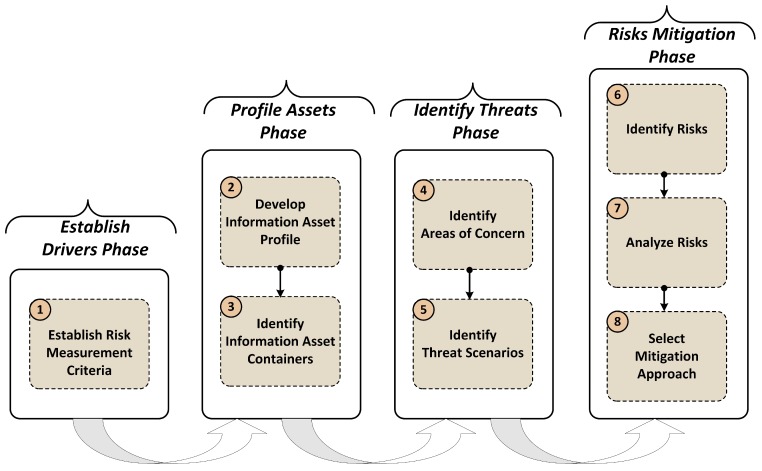
The Internet of Things (IoT) is an emerging paradigm focusing on the connection of devices, objects, or “things” to each other, to the Internet, and to users. IoT technology is anticipated to become an essential requirement in the development of smart homes, as it offers convenience and efficiency to home residents so that they can achieve better quality of life. Application of the IoT model to smart homes, by connecting objects to the Internet, poses new security and privacy challenges in terms of the confidentiality, authenticity, and integrity of the data sensed, collected, and exchanged by the IoT objects. These challenges make smart homes extremely vulnerable to different types of security attacks, resulting in IoT-based smart homes being insecure. Therefore, it is necessary to identify the possible security risks to develop a complete picture of the security status of smart homes. This article applies the operationally critical threat, asset, and vulnerability evaluation (OCTAVE) methodology, known as OCTAVE Allegro, to assess the security risks of smart homes. The OCTAVE Allegro method focuses on information assets and considers different information containers such as databases, physical papers, and humans. The key goals of this study are to highlight the various security vulnerabilities of IoT-based smart homes, to present the risks on home inhabitants, and to propose approaches to mitigating the identified risks. The research findings can be used as a foundation for improving the security requirements of IoT-based smart homes.
Overview
The claims and statistics of this paper haven’t been checked yet.
Free: it reads the open-access text and checks the first 5 claims that cite a source we can check. Create a free account to check every claim.
Integrity signals
Registry
Cites
Statistics
Figures
Verification
Claims the paper makes
The claims and statistics of this paper haven’t been checked yet.
Free: it reads the open-access text and checks the first 5 claims that cite a source we can check. Create a free account to check every claim.
Claims other papers make about this one
Each is checked against this paper’s own text: does it say what the citing paper says it does?
The source backs part of the claim, not all of it — or backs it for a different population, condition or comparison.
In the citing paper
“For attacks related to emails or link clicks, software vendors become more aware of the social engineering treats by building strong products with security measures [54].”
From Social Engineering Attacks: A Survey (2019) · cites this paper as [54]
Experimental — accuracy not yet measuredThe cited source says what the claim attributes to it.
In the citing paper
“OCTAVE helps to find out various security vulnerabilities of IoT-based smart homes, presents the risks on home inhabitants, and proposes approaches to mitigate the identified risks.”
From IoT cyber risk: A holistic analysis of cyber risk assessment frameworks, risk vectors, and risk ranking process (2020) · cites this paper as [42]
In the citing paper
“OCTAVE is appropriate for the risk assessment of smart homes as it has an asset container to cover cyber and physical security [42].”
From IoT cyber risk: A holistic analysis of cyber risk assessment frameworks, risk vectors, and risk ranking process (2020) · cites this paper as [42]
Self-check
Percentages, sums and reported differences re-computed from the paper’s own numbers.
The self-check needs the paper’s full text.
Citations
Cites
Internet of Things: A Survey on Enabling Technologies, Protocols, and Applications
Al-Fuqaha, A., Guizani, M., Mohammadi, M., Aledhari, M., & Ayyash, M. (2015) · IEEE Communications Surveys & Tutorials · doi:10.1109/comst.2015.2444095 · Cited by 8,630 · cited 1×
“The IoT deployment process involves different technologies, such as wireless sensor networks (WSNs), RFID, Bluetooth, near field communication (NFC), internet protocol (IP), electronic product code (EPC), wireless fidelity (Wi-Fi), sensors, and actuators [3,4].”
BackgroundFuture Internet: The Internet of Things Architecture, Possible Applications and Key Challenges
Khan, R., Khan, S. U., Zaheer, R., & Khan, S. (2012) · 2012 10th International Conference on Frontiers of Information Technology · doi:10.1109/fit.2012.53 · Cited by 1,367 · cited 1×
“Interconnected device networks can produce numerous intelligent and autonomous applications and services that offer personal and economic benefits to society [6].”
BackgroundSecurity of the Internet of Things: perspectives and challenges
Jing, Q., Vasilakos, A. V., Wan, J., Lu, J., & Qiu, D. (2014) · Wireless Networks · doi:10.1007/s11276-014-0761-7 · Cited by 1,245 · cited 1×
“Several risk assessment studies are available in the literature, such as [36–38].”
Background(2003) · Springer eBooks · doi:10.1007/b97527 · Cited by 412
The Smart Home Concept : our immediate future
Ricquebourg, V., Menga, D., Durand, D., Marhic, B., Delahoche, L., & Loge, C. (2006) · 2006 1ST IEEE International Conference on E-Learning in Industrial Electronics · doi:10.1109/icelie.2006.347206 · Cited by 301 · cited 1×
“An attack against the home gateway can immediately lead to an attack against the whole household network, as it is the point at which an outside connection can be made [26–28].”
BackgroundA risk analysis of a smart home automation system
Jacobsson, A., Boldt, M., & Carlsson, B. (2016) · Future Generation Computer Systems · doi:10.1016/j.future.2015.09.003 · Cited by 299 · cited 2×
“While the study in [35] focused on cyber risks, the work done in this research considers a holistic view of smart home environments by identifying cyber and physical security vulnerabilities using OCTAVE Allegro methodology.”
BackgroundMethodState of the art of smart homes
De Silva, L. C., Morikawa, C., & Petra, I. M. (2012) · Engineering Applications of Artificial Intelligence · doi:10.1016/j.engappai.2012.05.002 · Cited by 297
Introducing OCTAVE Allegro: Improving the Information Security Risk Assessment Process
Caralli, R. A., Stevens, J. F., Young, L. R., & Wilson, W. R. (2007) · doi:10.21236/ada470450 · Cited by 294
Moosavi, S. R., Gia, T. N., Rahmani, A.-M., Nigussie, E., Virtanen, S., Isoaho, J., & Tenhunen, H. (2015) · Procedia Computer Science · doi:10.1016/j.procs.2015.05.013 · Cited by 279
A Novel Secure IoT-Based Smart Home Automation System Using a Wireless Sensor Network
Pirbhulal, S., Zhang, H., E Alahi, M., Ghayvat, H., Mukhopadhyay, S., Zhang, Y.-T., & Wu, W. (2016) · Sensors · doi:10.3390/s17010069 · Cited by 245 · cited 1×
“…secure connection between the IoT devices and the gateway inside the smart home environment, a distributed encryption mechanism [1] or an energy-efficient data encryption approached like a triangle based security algorithm that uses efficient key generation [58] should be taken into consideration.”
Background
Research works printed but not linked: 4
- Ning H. Unit and Ubiquitous Internet of Things CRC Press, Inc. Boca Raton, FL, USA 2013
- Kyas O. How to Smart Home Key Concept Press Wyk auf Föhr, Germany 2013
- Montano C. Lundmark M. Mähr W. Control vs. Convenience: Critical Factors of Smart Homes Proceedings of the 2nd Scandinavian Student Interaction Design Research Conference Gothenburg, Sweden 25–26 February 2006
- Stallings W. Brown L. Computer Security: Principles and Practice 3rd ed. Prentice Hall Press Upper Saddle River, NJ, USA 2014
Cited by
Internet of Things: A survey on machine learning-based intrusion detection approaches
da Costa, K. A. P., Papa, J. P., Lisboa, C. O., Munoz, R., & de Albuquerque, V. H. C. (2019) · Computer Networks · doi:10.1016/j.comnet.2019.01.023 · Cited by 520
IoT Elements, Layered Architectures and Security Issues: A Comprehensive Survey
Burhan, M., Rehman, R. A., Khan, B., & Kim, B.-S. (2018) · Sensors · doi:10.3390/s18092796 · Cited by 518
Social Engineering Attacks: A Survey
Salahdine, F., & Kaabouch, N. (2019) · Future Internet · doi:10.3390/fi11040089 · Cited by 509
“Thus, there are numerous jobs in this cyber-security field that are not filled because of the lack of graduates.”
BackgroundIntrusion detection systems for IoT-based smart environments: a survey
Elrawy, M. F., Awad, A. I., & Hamed, H. F. A. (2018) · Journal of Cloud Computing · doi:10.1186/s13677-018-0123-6 · Cited by 481
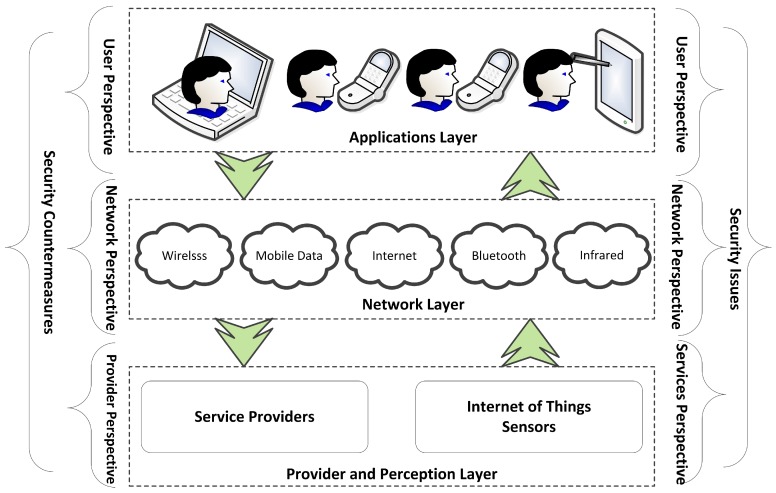
“and privacy challenges that span all layers of the IoT architecture [31].”
BackgroundSelf-citationA Survey on Smart Agriculture: Development Modes, Technologies, and Security and Privacy Challenges
Yang, X., Shu, L., Chen, J., Ferrag, M. A., Wu, J., Nurellari, E., & Huang, K. (2021) · IEEE/CAA Journal of Automatica Sinica · doi:10.1109/jas.2020.1003536 · Cited by 460
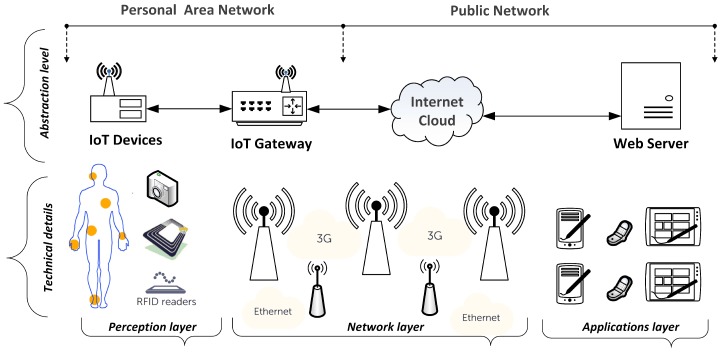
“Physical countermeasure Ali and Awad [124] 2018 The network model of composed of three parts, including, IoT devices, a gateway, and a web server.”
Background
Metadata
- Authors
- Ali, B., & Awad, A.
- Affiliations
- Luleå University of Technology (SE)
- Al-Azhar University (EG)
- Corresponding author
- Awad, Ali
- Venue
- Sensors
- Publisher
- MDPI AG
- Published
- 2018-03-08
- Volume
- 18
- Issue
- 3
- Pages
- 817
- ISSN
- 1424-8220 (ISSN-L)
- PMC
- PMC5876893
- OpenAlex
- W2790360011
- Cited by
- 344
- References
- 55
- Citations by year
- 2026: 9 · 2025: 22 · 2024: 36 · 2023: 43 · 2022: 70 · 2021: 55 · 2020: 51 · 2019: 43 · 2018: 15
- FWCI
- 15.69
- Type
- journal article
- Language
- en
- Open access
- gold
- doi.org
- Licence
- Locations
- Sensors (publishedVersion, cc-by)
- Europe PMC (PubMed Central) (publishedVersion, cc-by)
- PubMed Central (publishedVersion, cc-by)
- PubMed (publishedVersion)
- Epubl LTU (submittedVersion, other-oa)
- DOAJ (DOAJ: Directory of Open Access Journals) (submittedVersion, cc-by-sa)
- Topics
- Physical Sciences › Engineering › Electrical and Electronic Engineering › IoT-based Smart Home Systems
- Physical Sciences › Computer Science › Computer Networks and Communications › IoT and Edge/Fog Computing
- Physical Sciences › Computer Science › Information Systems › Information and Cyber Security
- Keywords
- Internet of Things, home automation, security vulnerability assessment, OCTAVE Allegro, cyber-physical security, IoT security risks, information assets, risk mitigation, privacy, data confidentiality
About these checks
Registry, retraction, Cites and statistics results are computed, not judged, with one exception: a printed reference that no index lists is read once by a model before it counts as a citation error. Claims are extracted by a model and kept only when their quote appears verbatim in the text; each cited source is then checked, with a model’s help, for whether it says what the claim relies on. Those verdicts can be wrong — read the claim’s quote and the cited source before relying on one.
Statistics and arithmetic are recomputed, not judged.
Confidence bands are shown only for fields calibrated on our annotated test set. None is calibrated yet, so no band is shown.
What counts as a claim ›How we measure confidence ›How we check this ›
Are you an author, or do you see a problem with this page? Request a review
Data sources
Bibliographic data: Semantic Scholar, OpenAlex, Crossref.
Contains information from the Semantic Scholar Academic Graph Datasets, made available under the ODC Attribution License (ODC-BY 1.0).
Semantic Scholar’s data is described in: Kinney, R., et al. (2023). The Semantic Scholar Open Data Platform. arXiv:2301.10140.
