

Feature Representation and Data Augmentation for Human Activity Classification Based on Wearable IMU Sensor Data Using a Deep LSTM Neural Network
Open accessThe DOI matches its Crossref record; 50 of the 50 references it cites were found in a registry or an index.
Abstract
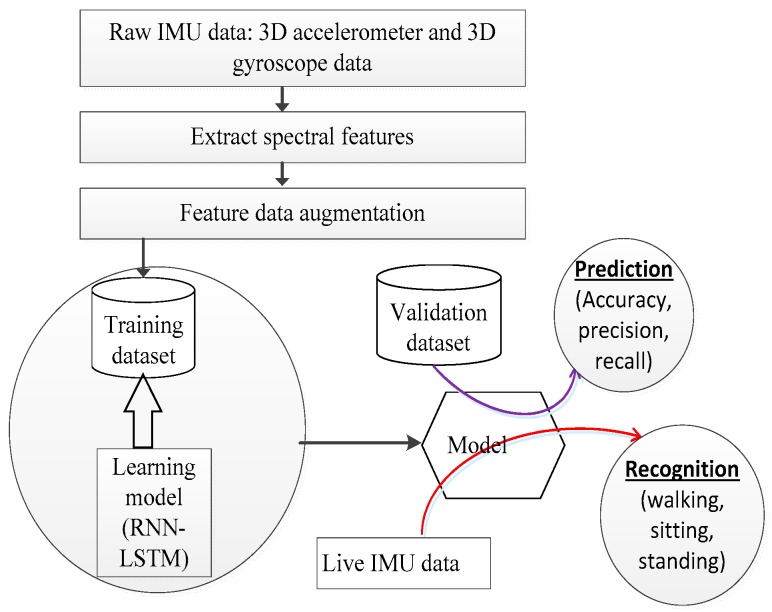
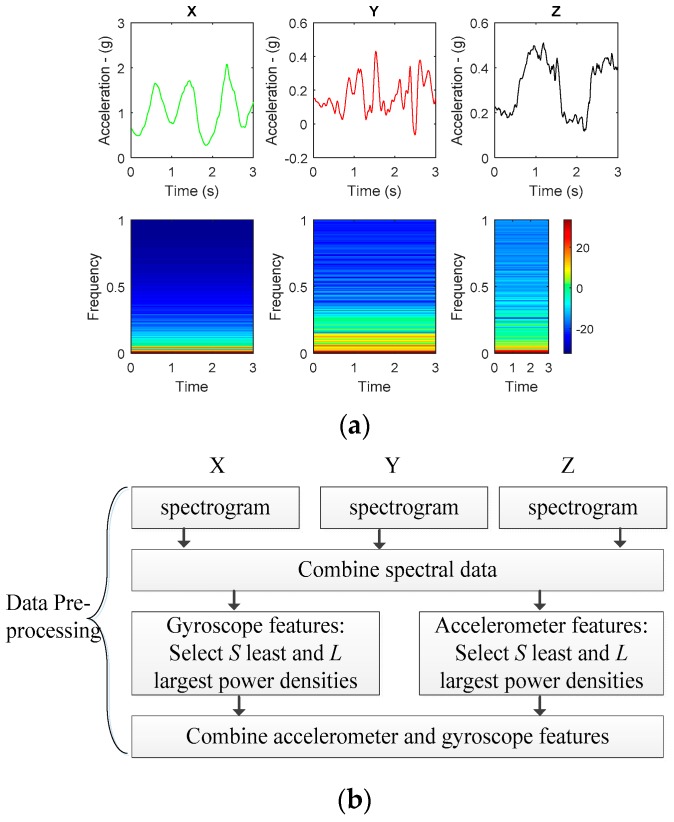
Wearable inertial measurement unit (IMU) sensors are powerful enablers for acquisition of motion data. Specifically, in human activity recognition (HAR), IMU sensor data collected from human motion are categorically combined to formulate datasets that can be used for learning human activities. However, successful learning of human activities from motion data involves the design and use of proper feature representations of IMU sensor data and suitable classifiers. Furthermore, the scarcity of labelled data is an impeding factor in the process of understanding the performance capabilities of data-driven learning models. To tackle these challenges, two primary contributions are in this article: first; by using raw IMU sensor data, a spectrogram-based feature extraction approach is proposed. Second, an ensemble of data augmentations in feature space is proposed to take care of the data scarcity problem. Performance tests were conducted on a deep long term short term memory (LSTM) neural network architecture to explore the influence of feature representations and the augmentations on activity recognition accuracy. The proposed feature extraction approach combined with the data augmentation ensemble produces state-of-the-art accuracy results in HAR. A performance evaluation of each augmentation approach is performed to show the influence on classification accuracy. Finally, in addition to using our own dataset, the proposed data augmentation technique is evaluated against the University of California, Irvine (UCI) public online HAR dataset and yields state-of-the-art accuracy results at various learning rates.
Overview
The claims and statistics of this paper haven’t been checked yet.
Free: it reads the open-access text and checks the first 5 claims that cite a source we can check. Create a free account to check every claim.
Integrity signals
Registry
Cites
Statistics
Figures
Verification
Claims the paper makes
The claims and statistics of this paper haven’t been checked yet.
Free: it reads the open-access text and checks the first 5 claims that cite a source we can check. Create a free account to check every claim.
Claims other papers make about this one
Each is checked against this paper’s own text: does it say what the citing paper says it does?
The cited source says what the claim attributes to it.
In the citing paper
“In sensor-based HAR leveraging the temporal nature of IMU signals allows for the application of augmentation methods grounded in signal processing [32,34,99,132,141,178,193].”
From Past, Present, and Future of Sensor-based Human Activity Recognition Using Wearables: A Surveying Tutorial on a Still Challenging Task (2025) · cites this paper as [178]
Experimental — accuracy not yet measuredIn the citing paper
“In general, using the dataset augmented with synthetic training samples yields higher classification accuracy when compared to using the original dataset [36,56,261,262].”
From Deep Learning in Human Activity Recognition with Wearable Sensors: A Review on Advances (2022) · cites this paper as [261]
Self-check
Percentages, sums and reported differences re-computed from the paper’s own numbers.
The self-check needs the paper’s full text.
Citations
Cites
SMOTE synthetic minority over-sampling technique
Chawla, N. V., Bowyer, K. W., Hall, L. O., & Kegelmeyer, W. P. (2002) · Journal of Artificial Intelligence Research · doi:10.1613/jair.953 · Cited by 32,865 · cited 1×
“The synthetic minority over-sampling technique (SMOTE) by [49] is the most popular of these.”
MethodHe, H., & Garcia, E. A. (2009) · IEEE Transactions on Knowledge and Data Engineering · doi:10.1109/tkde.2008.239 · Cited by 10,359
Saito, T., & Rehmsmeier, M. (2015) · PLOS ONE · doi:10.1371/journal.pone.0118432 · Cited by 5,309 · cited 1×
“This phenomenon is common in binary classification [19,20] where only two classes are involved.”
BackgroundTwo-dimensional pca: a new approach to appearance-based face representation and recognition
Yang, J., Zhang, D., Frangi, A. F., & Yang, J.-Y. (2004) · IEEE Transactions on Pattern Analysis and Machine Intelligence · doi:10.1109/tpami.2004.1261097 · Cited by 3,563
Activity recognition using cell phone accelerometers
Kwapisz, J. R., Weiss, G. M., & Moore, S. A. (2011) · ACM SIGKDD Explorations Newsletter · doi:10.1145/1964897.1964918 · Cited by 2,912 · cited 2×
“…standard deviation [36,37], root mean square [38,39], zero or mean crossing rate [40], derivative, peak counts [41,42] Human activity recognition [37,38], speech recognition [39], eye movement analysis [42] Frequency-domain Discrete fast Fourier transforms coefficient, spectral energy [7,43]…”
BackgroundThe recognition of human movement using temporal templates
Bobick, A. F., & Davis, J. W. (2001) · IEEE Transactions on Pattern Analysis and Machine Intelligence · doi:10.1109/34.910878 · Cited by 2,811 · cited 1×
“Various feature extraction approaches in image processing include using the spatio-temporal interest point (STIP) [27] detector, motion–energy images (MEI) and motion history images (MHI) [28].”
BackgroundOpensmile: the munich versatile and fast open-source audio feature extractor
Eyben, F., Wöllmer, M., & Schuller, B. (2010) · Proceedings of the 18th ACM international conference on Multimedia · doi:10.1145/1873951.1874246 · Cited by 2,642 · cited 1×
“Time-domain Mean [35], variance, standard deviation [36,37], root mean square [38,39], zero or mean crossing rate [40], derivative, peak counts [41,42] Human activity recognition [37,38], speech recognition [39], eye movement analysis [42]”
BackgroundLaptev, I. (2005) · International Journal of Computer Vision · doi:10.1007/s11263-005-1838-7 · Cited by 2,629
(2013) · RECERCAT (Consorci de Serveis Universitaris de Catalunya) · Cited by 1,959
Activity recognition from accelerometer data
Ravi, N., Dandekar, N., Mysore, P., & Littman, M. L. (2005) · Innovative Applications of Artificial Intelligence · Cited by 1,812
Research works printed but not linked: 5
- Eyobu O.S. Kim Y. Han D.S. Activity Recognition for Infant Health Care Based on Wireless Inertial Measurement Unit Motion Data Proceedings of the Korean Institute of Communication Sciences Conference Jeju, Korea 21–23 June 2017 436
- Ohashi H. Al-Nasser M. Ahmed S. Akiyama T. Sato T. Nguyen P. Nakamura K. Dengel A. Augmenting Wearable Sensor Data with Physical Constraint for DNN-Based Human-Action Recognition Presented at ICML 2017 Times Series Workshop Sydney, Australia 6–11 August 2017
- Bächlin M. Förster K. Tröster G. SwimMaster: A wearable assistant for swimmer Proceedings of the 11th International Conference on Ubiquitous Computing Orlando, FL, USA 30 September–3 October 2009 215 224
- Cui Z. Chen W. Chen Y. Multi-scale convolutional neural networks for time series classification arXiv 2016 1603.06995
- DeVries T. Taylor G.W. Dataset Augmentation in Feature Space arXiv 2017 1702.05538
Cited by
Items 201–267 of 267
Deep learning‐based gesture recognition for surgical applications: A data augmentation approach
Santiago, S. S., & Cifuentes, J. (2024) · Expert Systems · doi:10.1111/exsy.13706 · Cited by 4
“For instance, Steven Eyobu et al (Eyobu & Han, 2018). used short Fourier transformations to extract time-frequency features and train an LSTM network for classification, achieving promising results in terms of performance.”
Li, Z., & Kuang, Y. (2024) · Journal of Data Science · doi:10.6339/24-jds1158 · Cited by 3
Contextualized Monitoring in the Marine Environment
Gabaldon, J. (2021) · Deep Blue (University of Michigan) · doi:10.7302/2801 · Cited by 4
Sigcha, L. (2021) · UPM Digital Archive (Technical University of Madrid) · doi:10.20868/upm.thesis.68904 · Cited by 4
Honrubia, M. M., Herráiz-Martínez, F. J., & Domingo, J. M. (2025) · Machine Learning Science and Technology · doi:10.1088/2632-2153/adb009 · Cited by 2
Cross-Dataset Representation Learning for Unsupervised Deep Clustering in Human Activity Recognition
Takatsu, T., Hayama, T., & Cui, H. (2025) · IEEE Access · doi:10.1109/access.2025.3562897 · Cited by 4
“Steven Eyobu and Han [36] further confirmed this variability in HAR applications, specifically demonstrating how performance in HAR classification is highly dependent on the match between augmentation strategy and dataset characteristics.”
Artificial Neural Networks for Estimating Postural Risk Levels During Work Task Cycles
González, P. E. S., Maldonado-Macías, A. A., Noriega, J. R., Sáenz-Zamarrón, D., & Casas, N. I. A.-D. L. (2025) · IEEE Access · doi:10.1109/access.2025.3620846 · Cited by 2
“Toimprove robustness, various techniques can be applied to enhance variability and reduce overfitting, among which, random feature masking and time–series augmentation are commonly used strategies [64], [65], [66].”
A neurorobotics approach to behaviour selection based on human activity recognition
Ranieri, C. M., Moioli, R. C., Vargas, P. A., & Romero, R. A. F. (2022) · Cognitive Neurodynamics · doi:10.1007/s11571-022-09886-z · Cited by 2
“For inertial data, similar architectures have been proposed, processing either raw data [35, 10] or descriptors obtained through feature extraction methods [47, 1].”
MethodStudi Literatur Human Activity Recognition (HAR) Menggunakan Sensor Inersia
Pradani, H. N., & Mahananto, F. (2021) · Jurnal RESTI (Rekayasa Sistem dan Teknologi Informasi) · doi:10.29207/resti.v5i6.3665 · Cited by 2
“Terlebih, banyak peneliti juga menambahkan beberapa analisis tambahan untuk menunjang fitur-fitur tersebut, seperti fitur Cepstral [7], fitur Spectogram-based [10], dan Wavelet Energy [15].”
BackgroundAugmentation of Accelerometer and Gyroscope Signals in Biometric Gait Systems
Sawicki, A. (2022) · Lecture notes in computer science · doi:10.1007/978-3-031-10539-5_3 · Cited by 3
Wearable Tag for Indoor Localization in the Context of Ambient Assisted Living
Rodrigues, M. J., Postolache, O. A., & Cercas, F. (2023) · Lecture notes in computer science · doi:10.1007/978-3-031-41456-5_32 · Cited by 2
UnseenSignalTFG: a signal-level expansion method for unseen acoustic data based on transfer learning
Pan, X., Sun, J., Lei, M., Wang, Y., & Zhang, J. (2024) · Applied Intelligence · doi:10.1007/s10489-024-05568-x · Cited by 2
“Thismethodinvolvesmanipulatinglimiteddatathrough interpolation, extrapolation, and transformations to generate additional training samples [26, 27].”
Lee, Y., Wu, F., & Sou, S. (2024) · International Conference on Communications · doi:10.1109/icc51166.2024.10622885 · Cited by 2
“In [7], the authors proposed a feature extraction approach to represent the intrinsic characteristic of each class of data, hence minimizing the data needed to transmit to the third party.”
BackgroundHuman Activity Recognition (HAR) via Artificial Intelligence (AI) on the Edge
Alteneiji, A., Suliman, A., Sawalha, G., Poon, K., & AlDurra, T. (2024) · Lecture notes in networks and systems · doi:10.1007/978-981-97-5035-1_48 · Cited by 2
Data Augmentation Strategies for Improving Time Series Classification Accuracy
Sankosik, P., & Ratanamahatana, C. A. (2024) · International Conference on Robot Systems and Applications (ICRSA) · doi:10.1145/3702468.3702479 · Cited by 3
Data augmentation in time series forecasting through inverted framework
Tan, H., Chen, T., Jin, R., & Chan, W. K. (2026) · Pattern Recognition Letters · doi:10.1016/j.patrec.2026.01.019 · Cited by 2
Mohmed, G., Adama, D. A., & Lotfi, A. (2019) · Advances in intelligent systems and computing · doi:10.1007/978-3-030-29933-0_2 · Cited by 2
Long Term Electricity Consumption Forecast Based on DA-LSTM
Ni, J., & Cui, M. (2024) · IEEE International Conference on Power, Electronics and Computer Applications (ICPECA) · doi:10.1109/icpeca60615.2024.10471149 · Cited by 2
“Basic data enhancement methods include geometric transformations [4] (flipping, scaling, up and down sampling), window cropping [5], adding noise [6], frequency domain changes [7], etc.”
MethodInteractive Visualization and Dexterity Analysis of Human Movement: AIMove Platform
Olivas-Padilla, B. E., Manitsaris, S., & Glushkova, A. (2024) · International Conference on Automatic Face and Gesture Recognition · doi:10.1109/fg59268.2024.10581928 · Cited by 1
“Eyobu et al. [15] enhanced classification performance in datasets of imbalanced human activities through a synergy of data augmentation techniques like the synthetic minority over-sampling technique (SMOTE) and Random Oversampling (ROS) with ensemble learning.”
A Deep Learning Framework for Single-Person Activity Recognition in Multi-Person Indoor Environments
Sain, M. K., Singha, J., & Saini, S. (2024) · IEEE International Conference on Electronics, Computing and Communication Technologies (CONECCT) · doi:10.1109/conecct62155.2024.10677100 · Cited by 1
“Health and fitness monitoring [6].”
Xu, L., & Wang, D. (2025) · Applied Soft Computing · doi:10.1016/j.asoc.2025.114227 · Cited by 1
Liu, Y., Pugliese, B. L., Vergara-Diaz, G. P., O’Brien, A., Black‐Schaffer, R. M., Bonato, P., & Lee, S. I. (2025) · IEEE Transactions on Neural Systems and Rehabilitation Engineering · doi:10.1109/tnsre.2025.3635677 · Cited by 1
“However, its e ff ectiveness in practice heavily depends on the accuracy of linear movement detection.”
Celik, Y., Kuduz, H., Engin, F. V., Kacar, F., Tarakçı, E., Pearson, L. T., Das, J., Stuart, S., Woo, W. L., & Godfrey, A. (2026) · Journal of NeuroEngineering and Rehabilitation · doi:10.1186/s12984-026-01910-1 · Cited by 4
DOD-Explainer: Explainable Drug Overdose Deaths Predictor from Crime and Socioeconomic Data
Alhamadani, A., Sarkar, S., Alkulaib, L., & Lu, C. (2022) · IEEE International Conference on Big Data (BigData) · doi:10.1109/bigdata55660.2022.10021054 · Cited by 1
“applied method is permutation [35], [37] and random shuffling [38] data augmentation, which mimics random-county data.”
MethodDeep Learning based Driving Posture Stability Analysis for People with Mobility Challenges
Huang, R., Narasaki‐Jara, M., & Chen, T. (2023) · IEEE International Conference on Big Data (BigData) · doi:10.1109/bigdata59044.2023.10386922 · Cited by 1
Advanced Exercise Classification with a Hybrid CNN-GRU Model: Utilising IMU Data from Cell Phones
Zhang, J., Lau, M. C., & Zhu, Z. (2024) · Proceedings of the International Conference of Control, Dynamic systems, and Robotics · doi:10.11159/cdsr24.115 · Cited by 1
Garcia, C. A., Quynh, N. P. V., Kaneko, H., Inoue, S., 27425, 井上, 創., 90346825, 9335840200, & 140 (2024) · Cited by 1
Augmentation of Gait Cycles Using LSTM-MDN Networks in Person Identification System
Sawicki, A. (2021) · Lecture notes in computer science · doi:10.1007/978-3-030-84340-3_4 · Cited by 1
Am I fit for this physical activity? Neural embedding of physical conditioning from inertial sensorsPreprint
de Aguiar, D. P., & Murai, F. (2021) · arXiv (Cornell University) · doi:10.48550/arxiv.2103.12095 · Cited by 1
Building generalizable deep learning solutions for mobile sensing
Xu, H. (2024) · DR-NTU (Nanyang Technological University) · doi:10.32657/10356/174809 · Cited by 1
Haresamudram, H., Tang, C. I., Suh, S., Lukowicz, P., & Ploetz, T. (2024) · arXiv · Cited by 31
“Virtual IMU data generation has emerged as a viable solution to overcome data scarcity, with cross-modality transfer approaches [53, 103, 104, 153, 154] being instrumental in extracting virtual IMU data from 2D RGB videos of human activities.”
Sensing-HH: A Deep Hybrid Attention Model for Footwear Recognition
Yao, Y., Wen, Y., & Wang, J. (2020) · Electronics · doi:10.3390/electronics9091552
Activity recognition and bioinspired approaches for robotics in intelligent environments
Ranieri, C. M. (2021) · Digital Library of Theses and Dissertations (Universidade de São Paulo) · doi:10.11606/t.55.2021.tde-11082021-112227 · Cited by 1
Encoding Physical Conditioning from Inertial Sensors for Multi-step Heart Rate Estimation
de Aguiar, D. P., & Murai, F. (2021) · Lecture notes in computer science · doi:10.1007/978-3-030-91699-2_5
Deep neural networks for vehicle driving characterization by means of smartphone sensors
Sánchez, S. H. (2020) · UPM Digital Archive (Technical University of Madrid) · doi:10.20868/upm.thesis.65646
Büscher, N., Gis, D., Wolff, J.-P., & Haubelt, C. D. (2021) · International Workshop on Rapid System Prototyping (RSP) · doi:10.1109/rsp53691.2021.9806209
Data-efficient human walking speed intent identification
Higgins, T. M., Bresingham, K. J., Schmiedeler, J. P., & Wensing, P. M. (2023) · Wearable Technologies · doi:10.1017/wtc.2023.15
Biometric Gait Analysis Using Wrist-Mounted Wearable Sensors
Sawicki, A. (2023) · Lecture notes in computer science · doi:10.1007/978-3-031-42823-4_3
Adikane, N., & Nirmalrani, V. (2023) · Intelligent Decision Technologies · doi:10.3233/idt-230191
Classification Methods Performance On Logistic Package State Recognition
Auzan, M., Fudholi, D. R., Paulus Josianlie, P., & Fuadin, M. R. (2023) · IJCCS (Indonesian Journal of Computing and Cybernetics Systems) · doi:10.22146/ijccs.82697
Data augmentation for inertial sensor based human action recognition using deep learning
Kuschan, J., Filaretov, H., & Krüger, J. (2024) · AIP conference proceedings · doi:10.1063/5.0190203 · Cited by 1
Human-based gait authentication using multi-modal sensors at the tactical edge device: smartphone
Sandrakumar, S., & Khan, S. (2024) · doi:10.1117/12.3013442
“In our analysis, we opted for a window size of 512, a sampling frequency of 50 Hz, and a Hann window type.”
Deep Learning Approaches for Analyzing Movement Patterns in Developing Children
Daniel Lazar, L., Naganna, M. S., Priyadarshini, S., Sreedev, S. A., Ramakrishnan, R., & Parasuraman, T. (2024) · doi:10.1109/icait61638.2024.10690707
“To investigate the potential effects of feature representations and enhancements on activity recognition accuracy, Steven Eyobu et al. [7] employed an LSTM neural network architecture.”
BackgroundKrause, C., Harkämper, L., Ciortuz, G., & Fudickar, S. (2025) · Lecture notes in computer science · doi:10.1007/978-3-031-80856-2_2
“As no features are learned automatically in this context, we utilize handcrafted features from the preprocessed segments that are suitable for IMU data [26].”
Kim, H., Lim, Y., & Kim, D. (2025) · Journal of the Korean Society for Precision Engineering · doi:10.7736/jkspe.025.058
Additional file 1 of Real-time motion onset recognition for robot-assisted gait rehabilitation
Haji Hassani, R., Bannwart, M., Bolliger, M., Seel, T., Brunner, R., & Rauter, G. (2022) · Figshare · doi:10.6084/m9.figshare.19090995
Human Daily Activity Recognition using Spectrogram and 2D-CNN Through Doppler Radar
Bhingikar, S., & Sharma, R. R. (2025) · IEEE International Conference on Electronics, Computing and Communication Technologies (CONECCT) · doi:10.1109/conecct65861.2025.11306358
“HAR can be perform using different sensors such as radar [6], inertial measurement unit (IMU) [7], optical camera [8] etc.”
Modeling Real-Time Bicep Muscle Fatigue With IMU Sensors Using LSTM Regression
Liu, E. Y., Arco, L. D., Múnera, M., Moghayedi, A., Diaz, C. A. R., & Cifuentes, C. A. (2026) · IEEE Sensors Journal · doi:10.1109/jsen.2026.3661360
“Proof-of-concept studies have been conducted on IMU data with LSTMs, such as in gait phase estimation [32] and human activity classification [33].”
Contribution à la reconnaissance d'activités à partir d'un objet connecté
Auber, R. (2019) · theses.fr (ABES) · doi:10.70675/70621b80z9fc0z4379za036z1c915d879cc9 · Cited by 1
Research of human motion classification algorithm with adaptive weight adjustment module
Wei, J., Qu, C., Zhou, Y., Li, F., & Qu, S. (2026) · Journal of the Brazilian Society of Mechanical Sciences and Engineering · doi:10.1007/s40430-026-06432-4
Doshmanziari, R., Danielsson, M. L., Wouda, M. F., Brurok, B., Aasan, V., Varagnolo, D., & Baumgart, J. K. (2026) · JMIR mhealth and uhealth · doi:10.2196/103975
Ccnl-fallnet: an ensemble deep learning approach for fall detection with the humCareFall dataset
Ashraf, A., Khan, M. H., Ashfaq, N., & Farid, M. S. (2026) · The Journal of Supercomputing · doi:10.1007/s11227-026-08628-w
Guo, Z., Huang, X., & Wang, N. (2026) · Physica Scripta · doi:10.1088/1402-4896/ae7ac6
“Steven et al achieved the classification and recognition of human actions based on inertial measurement unit (IMUs) [7].”
Wang, S., Guan, X., Li, H., (13940), R. Z., Bai, Y., & Zhou, Q. (2026) · PLoS ONE · doi:10.1371/journal.pone.0350941 · Cited by 1
NeuralHabit: an AI-powered habit analysis and recommendation system
Manjula, S., Shobha, T., Sharath, R., & Agarwal, P. K. (2025) · IEEE International Conference on Cybernetics, Cognition and Machine Learning Applications (ICCCMLA) · doi:10.1109/icccmla66092.2025.11580773
ATAuth: Adaptive Transformer-Based Continuous Authentication via Neural Architecture Search
Li, Y., Zhou, Y., Zhao, W., Qin, H., Huang, H., & Deng, S. (2026) · IEEE Internet of Things Journal · doi:10.1109/jiot.2026.3715711
“The compared baselines include FRDA-HAR [49], MODALS [50], MSEnet [51], GMM-UBM [52], ADFFDA [27], Sen-sorAuth [53], PAMM [54], MAuGANs [55], CAuSe [26], CAGANet [56], LSTMAuth-S [57], MSCA [58], SearchAuth [33], FuMeAuth [32], CALL [35], and MBCA [59].”
GMACAuth: Generative Continuous Authentication via Memory-Augmented Causal Attention
Li, Y., Zhou, Y., Hu, H., & Qin, H. (2026) · IEEE International Conference on Distributed Computing Systems (ICDCS) · doi:10.1109/2575-8411.2026.00012
“We further compare GMACAuth with representative state-of-the-art sensor-based continuous authentication methods, including FRDA-HAR [44], LSTMAuth-S [45], GMM-UBM [46], CAGANet [22], CAuSe [34], MSEnet [47], Sen-sorAuth [21], MODALS [48], PAMM [49], SearchAuth [35], CALL [37], MBCA [50], MAuGANs…”
Enhancing human activity recognition through GAN-augmented data and multi-branch CNN-LSTM networks
Shahid, A., Khan, M. H., Nisar, M. A., & Farid, M. S. (2026) · Knowledge-Based Systems · doi:10.1016/j.knosys.2026.116783 · Cited by 1
A Comprehensive Full Body Kinematics Dataset with and without Head-Mounted AR/VR Display
Yeung, T., Balachandran, B. K., Leelaratna, V., Besier, T. F., Billinghurst, M., Stamenkovic, A., Lukosch, S. G., & Mahnan, A. (2026) · Scientific Data · doi:10.1038/s41597-026-07861-5
Activity contextualisation and terrain classification via wearables in Parkinson’s
Engin, F. V., Kuduz, H., Kaçar, F., Pearson, L. T., Das, J., Stuart, S., Woo, W. L., Godfrey, A., & Çelik, Y. (2026) · Computer Methods and Programs in Biomedicine · doi:10.1016/j.cmpb.2026.109622
Humcareadl: A diverse multimodal dataset and HyMCL-Net for robust human activity recognition
Ashraf, A., Ali, M. H., Ashfaq, N., Khan, M. H., & Farid, M. S. (2026) · Multimedia Tools and Applications · doi:10.1007/s11042-026-21905-3
“Accelerometers capture linear acceleration, gyroscopes measure angular velocity, and magnetometers track magnetic field orientation [15].”
Li, R., Cai, Z., Song, S., Cai, M., & Fu, Y.-L. (2026) · Sensors · doi:10.3390/s26196151
Nguyen, H.-T., Giang, D. X., & Mai, N.-D. (2026) · International Conference on Green Technology and Sustainable Development (GTSD) · doi:10.1109/gtsd70918.2026.11722427
“The statistical features extracted from the IMU signals [9], [10] in this study are used as key inputs for the physical activity classification model.”
(2026) · International Journal of Drug Delivery Technology · doi:10.25258/ijddt.16.68s.167
Fazail, M. N., Najib, M. H. M., Zainddin, A. A., Tamrin, M. I. M., Subramaniam, K., Sadikan, S. F. N., & Kamarudin, S. I. (2026) · Malaysian Journal of Science and Advanced Technology · doi:10.56532/mjsat.v6i3.751
“The top ML models used are random forest (RF) [18, 21], LSTM [1, 23] and CNN with its subclasses [1, 22].”
Li, J., & Sun, D. (2026) · Fibers · doi:10.3390/fib14110128
Single-Sensor Fall Prevention Integrating Activity Gating, TUG Estimation, and Real-Time Detection
Burkhardt, T., Kofler, G., Winkler, S., & Kim, Y. (2026) · Procedia Computer Science · doi:10.1016/j.procs.2026.10.274
Metadata
- Authors
- Steven Eyobu, O., & Han, D. S.
- Affiliations
- School of Electronics Engineering, Kyungpook National University, 80 Daehak-ro, Buk-gu, Daegu 41566, Korea
- Kyungpook National University (KR)
- Corresponding author
- Han, Dong Seog
- Venue
- Sensors
- Publisher
- MDPI AG
- Published
- 2018-08-31
- Volume
- 18
- Issue
- 9
- Pages
- 2892
- ISSN
- 1424-8220 (ISSN-L)
- PMC
- PMC6165524
- OpenAlex
- W2889505988
- Cited by
- 259
- References
- 50
- Citations by year
- 2026: 15 · 2025: 27 · 2024: 36 · 2023: 45 · 2022: 32 · 2021: 55 · 2020: 31 · 2019: 17 · 2018: 1
- FWCI
- 13.01
- Type
- journal article
- Language
- en
- Open access
- gold
- dx.doi.org
- Licence
- Locations
- Sensors (publishedVersion, cc-by)
- Europe PMC (PubMed Central) (publishedVersion, other-oa)
- PubMed Central (publishedVersion, cc-by)
- PubMed (publishedVersion)
- DOAJ (DOAJ: Directory of Open Access Journals) (submittedVersion, cc-by-sa)
- Funders
- Institute for Information and communications Technology Promotion (R7124-16- 0004)
- Topics
- Physical Sciences › Computer Science › Computer Vision and Pattern Recognition › Context-Aware Activity Recognition Systems
- Physical Sciences › Engineering › Biomedical Engineering › Gait Recognition and Analysis
- Physical Sciences › Computer Science › Signal Processing › Time Series Analysis and Forecasting
- Keywords
- human activity recognition, inertial measurement unit, spectrogram feature extraction, data augmentation, feature representation, LSTM neural network, labeled data scarcity, UCI HAR dataset
- MeSH terms
- Wearable Electronic Devices, Deep Learning, Humans, Human Activities, Movement, Neural Networks, Computer
About these checks
Registry, retraction, Cites and statistics results are computed, not judged, with one exception: a printed reference that no index lists is read once by a model before it counts as a citation error. Claims are extracted by a model and kept only when their quote appears verbatim in the text; each cited source is then checked, with a model’s help, for whether it says what the claim relies on. Those verdicts can be wrong — read the claim’s quote and the cited source before relying on one.
Statistics and arithmetic are recomputed, not judged.
Confidence bands are shown only for fields calibrated on our annotated test set. None is calibrated yet, so no band is shown.
What counts as a claim ›How we measure confidence ›How we check this ›
Are you an author, or do you see a problem with this page? Request a review
Data sources
Bibliographic data: Semantic Scholar, OpenAlex, Crossref.
Contains information from the Semantic Scholar Academic Graph Datasets, made available under the ODC Attribution License (ODC-BY 1.0).
Semantic Scholar’s data is described in: Kinney, R., et al. (2023). The Semantic Scholar Open Data Platform. arXiv:2301.10140.
