

Feature Representation and Data Augmentation for Human Activity Classification Based on Wearable IMU Sensor Data Using a Deep LSTM Neural Network
Open accessThe DOI matches its Crossref record; 50 of the 50 references it cites were found in a registry or an index.
Abstract
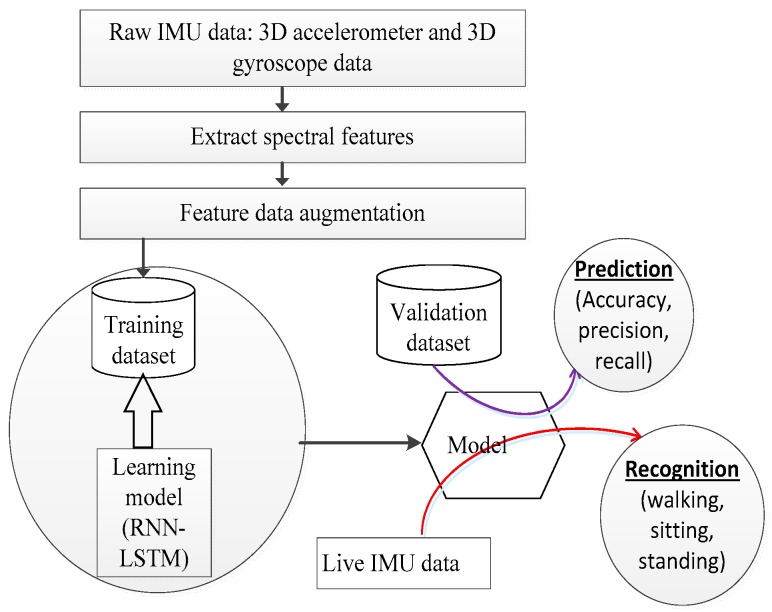
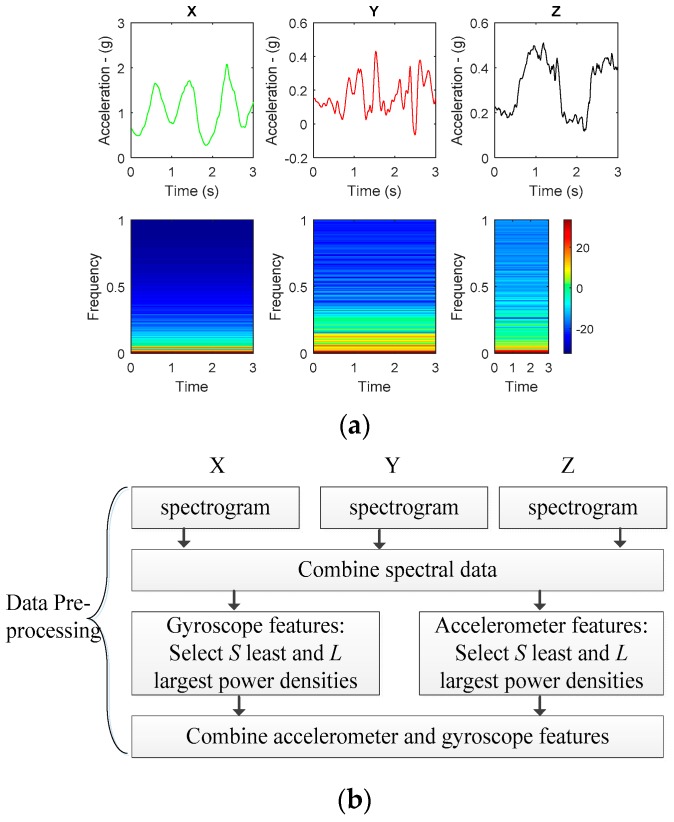
Wearable inertial measurement unit (IMU) sensors are powerful enablers for acquisition of motion data. Specifically, in human activity recognition (HAR), IMU sensor data collected from human motion are categorically combined to formulate datasets that can be used for learning human activities. However, successful learning of human activities from motion data involves the design and use of proper feature representations of IMU sensor data and suitable classifiers. Furthermore, the scarcity of labelled data is an impeding factor in the process of understanding the performance capabilities of data-driven learning models. To tackle these challenges, two primary contributions are in this article: first; by using raw IMU sensor data, a spectrogram-based feature extraction approach is proposed. Second, an ensemble of data augmentations in feature space is proposed to take care of the data scarcity problem. Performance tests were conducted on a deep long term short term memory (LSTM) neural network architecture to explore the influence of feature representations and the augmentations on activity recognition accuracy. The proposed feature extraction approach combined with the data augmentation ensemble produces state-of-the-art accuracy results in HAR. A performance evaluation of each augmentation approach is performed to show the influence on classification accuracy. Finally, in addition to using our own dataset, the proposed data augmentation technique is evaluated against the University of California, Irvine (UCI) public online HAR dataset and yields state-of-the-art accuracy results at various learning rates.
Overview
The claims and statistics of this paper haven’t been checked yet.
Free: it reads the open-access text and checks the first 5 claims that cite a source we can check. Create a free account to check every claim.
Integrity signals
Registry
Cites
Statistics
Figures
Verification
Claims the paper makes
The claims and statistics of this paper haven’t been checked yet.
Free: it reads the open-access text and checks the first 5 claims that cite a source we can check. Create a free account to check every claim.
Claims other papers make about this one
Each is checked against this paper’s own text: does it say what the citing paper says it does?
The cited source says what the claim attributes to it.
In the citing paper
“In sensor-based HAR leveraging the temporal nature of IMU signals allows for the application of augmentation methods grounded in signal processing [32,34,99,132,141,178,193].”
From Past, Present, and Future of Sensor-based Human Activity Recognition Using Wearables: A Surveying Tutorial on a Still Challenging Task (2025) · cites this paper as [178]
Experimental — accuracy not yet measuredIn the citing paper
“In general, using the dataset augmented with synthetic training samples yields higher classification accuracy when compared to using the original dataset [36,56,261,262].”
From Deep Learning in Human Activity Recognition with Wearable Sensors: A Review on Advances (2022) · cites this paper as [261]
Self-check
Percentages, sums and reported differences re-computed from the paper’s own numbers.
The self-check needs the paper’s full text.
Citations
Cites
SMOTE synthetic minority over-sampling technique
Chawla, N. V., Bowyer, K. W., Hall, L. O., & Kegelmeyer, W. P. (2002) · Journal of Artificial Intelligence Research · doi:10.1613/jair.953 · Cited by 32,865 · cited 1×
“The synthetic minority over-sampling technique (SMOTE) by [49] is the most popular of these.”
MethodHe, H., & Garcia, E. A. (2009) · IEEE Transactions on Knowledge and Data Engineering · doi:10.1109/tkde.2008.239 · Cited by 10,359
Saito, T., & Rehmsmeier, M. (2015) · PLOS ONE · doi:10.1371/journal.pone.0118432 · Cited by 5,309 · cited 1×
“This phenomenon is common in binary classification [19,20] where only two classes are involved.”
BackgroundTwo-dimensional pca: a new approach to appearance-based face representation and recognition
Yang, J., Zhang, D., Frangi, A. F., & Yang, J.-Y. (2004) · IEEE Transactions on Pattern Analysis and Machine Intelligence · doi:10.1109/tpami.2004.1261097 · Cited by 3,563
Activity recognition using cell phone accelerometers
Kwapisz, J. R., Weiss, G. M., & Moore, S. A. (2011) · ACM SIGKDD Explorations Newsletter · doi:10.1145/1964897.1964918 · Cited by 2,912 · cited 2×
“…standard deviation [36,37], root mean square [38,39], zero or mean crossing rate [40], derivative, peak counts [41,42] Human activity recognition [37,38], speech recognition [39], eye movement analysis [42] Frequency-domain Discrete fast Fourier transforms coefficient, spectral energy [7,43]…”
BackgroundThe recognition of human movement using temporal templates
Bobick, A. F., & Davis, J. W. (2001) · IEEE Transactions on Pattern Analysis and Machine Intelligence · doi:10.1109/34.910878 · Cited by 2,811 · cited 1×
“Various feature extraction approaches in image processing include using the spatio-temporal interest point (STIP) [27] detector, motion–energy images (MEI) and motion history images (MHI) [28].”
BackgroundOpensmile: the munich versatile and fast open-source audio feature extractor
Eyben, F., Wöllmer, M., & Schuller, B. (2010) · Proceedings of the 18th ACM international conference on Multimedia · doi:10.1145/1873951.1874246 · Cited by 2,642 · cited 1×
“Time-domain Mean [35], variance, standard deviation [36,37], root mean square [38,39], zero or mean crossing rate [40], derivative, peak counts [41,42] Human activity recognition [37,38], speech recognition [39], eye movement analysis [42]”
BackgroundLaptev, I. (2005) · International Journal of Computer Vision · doi:10.1007/s11263-005-1838-7 · Cited by 2,629
(2013) · RECERCAT (Consorci de Serveis Universitaris de Catalunya) · Cited by 1,959
Activity recognition from accelerometer data
Ravi, N., Dandekar, N., Mysore, P., & Littman, M. L. (2005) · Innovative Applications of Artificial Intelligence · Cited by 1,775
Research works printed but not linked: 5
- Eyobu, O.S., Kim, Y., and Han, D.S. (2017, January 21–23). Activity Recognition for Infant Health Care Based on Wireless Inertial Measurement Unit Motion Data. Proceedings of the Korean Institute of Communication Sciences Conference, Jeju, Korea.
- Ohashi, H., Al-Nasser, M., Ahmed, S., Akiyama, T., Sato, T., Nguyen, P., Nakamura, K., and Dengel, A. (2017, January 6–11). Augmenting Wearable Sensor Data with Physical Constraint for DNN-Based Human-Action Recognition. Presented at ICML 2017 Times Series Workshop, Sydney, Australia.
- Bächlin, M., Förster, K., and Tröster, G. (October, January 30). SwimMaster: A wearable assistant for swimmer. Proceedings of the 11th International Conference on Ubiquitous Computing, Orlando, FL, USA.
- Cui, Z., Chen, W., and Chen, Y. (arXiv, 2016). Multi-scale convolutional neural networks for time series classification, arXiv.
- DeVries, T., and Taylor, G.W. (arXiv, 2017). Dataset Augmentation in Feature Space, arXiv.
Cited by
Items 101–200 of 267
Multimodal Emotion Recognition Using CNN-SVM with Data Augmentation
Guo, G., Gao, P., Zheng, X., & Ji, C. (2022) · IEEE International Conference on Bioinformatics and Biomedicine (BIBM) · doi:10.1109/bibm55620.2022.9994936 · Cited by 23
Using Wearable Sensors and a Convolutional Neural Network for Catch Detection in American Football
Hollaus, B., Stabinger, S., Mehrle, A. H., & Raschner, C. (2020) · Sensors · doi:10.3390/s20236722 · Cited by 18
“As a result, applying machine learning is challenging in many situations yet the combination of machine learning with IMUs has shown promising results [11,32,34,35].”
BackgroundAvola, D., Cinque, L., Foresti, G. L., Lanzino, R., Marini, M. R., Mecca, A., & Scarcello, F. (2023) · Sensors · doi:10.3390/s23052655 · Cited by 18
“Concurrently, the inertial measurement unit (IMU) [7] can also be exploited due to its adaptive nature: it is accurate enough to identify a person [8], but it can even detect actions [9].”
BackgroundPhysically rational data augmentation for energy consumption estimation of electric vehicles
Ma, Y., Sun, W., Zhao, Z., Gu, L., Zhang, H., Jin, Y., & Yuan, X. (2024) · Applied Energy · doi:10.1016/j.apenergy.2024.123871 · Cited by 16
Domain-Adaptive Fall Detection Using Deep Adversarial Training
Liu, K.-C., Chan, M., Kuo, H.-C., Hsieh, C.-Y., Huang, H.-Y., Chan, C.-T., & Tsao, Y. (2021) · IEEE Transactions on Neural Systems and Rehabilitation Engineering · doi:10.1109/tnsre.2021.3089685 · Cited by 16
Kostikis, N., Rigas, G., Konitsiotis, S., & Fotiadis, D. I. (2021) · Sensors · doi:10.3390/s21237801 · Cited by 16
ThumbUp: Secure Smartwatch Controller for Smart Homes Using Simple Hand Gestures
Yu, X., Zhou, Z., Zhang, L., & Li, X. (2022) · IEEE Transactions on Mobile Computing · doi:10.1109/tmc.2022.3216927 · Cited by 17
Paszek, K., & Grzechca, D. E. (2023) · Sensors · doi:10.3390/s23198270 · Cited by 15
Mohammadzadeh, M., Ghadami, A., Taheri, A., & Behzadipour, S. (2025) · Biomedical Signal Processing and Control · doi:10.1016/j.bspc.2024.107476 · Cited by 17
“In these methods, as the generated data should mimic the real data, it is necessary to ensure that the augmented data maintains the inherent features of an activity's signal and constructs a valid output [13].”
MethodTime-Frequency Analysis of Daily Activities for Fall Detection
Huynh, Q. T., & Tran, B. Q. (2021) · Signals · doi:10.3390/signals2010001 · Cited by 15
“[10] developed Deep Long Term Short Term Memory (LSTM) neural network architecture to classify falls with 88.”
BackgroundMethodKwon, H., Tong, C., Haresamudram, H., Gao, Y., Abowd, G. D., Lane, N. D., & Ploetz, T. (2020) · arXiv · doi:10.48550/arxiv.2006.05675 · Cited by 14
“ng, rotation and warping are detailed and their effects relative to no augmentation is studied. Further, the authors observed that combining multiple transformations results in higher performance. In [85], augmentation is performed on IMU spectrogram features to improve the activity recognition performance. Another ap…”
BackgroundGAN for Generating User-Specific Human Activity Data From An Incomplete Training Corpus
Gerych, W., Kim, H., DeOliveira, J., Martin, M., Buquicchio, L., Chandrasekaran, K., Alajaji, A. S., Mansoor, H., Rundensteiner, E. A., & Agu, E. (2021) · IEEE International Conference on Big Data (BigData) · doi:10.1109/bigdata52589.2021.9671280 · Cited by 13
“The expense and difficulty associated with HAR data collection has motivated much research towards augmenting HAR data [16]–[18].”
BackgroundLiu, M., Srivastava, G. N., Ramanujam, J., & Bryliński, M. (2024) · Scientific Reports · doi:10.1038/s41598-024-51940-9 · Cited by 14
Kim, J., Hwang, J. Y., Park, E., Nam, H.-U., & Cheon, S.-H. (2020) · IEEE Access · doi:10.1109/access.2020.3033826 · Cited by 17
Sensor-Based Transportation Mode Recognition Using Variational Autoencoder
Islam, Z., & Abdel-Aty, M. A. (2021) · Journal of Big Data Analytics in Transportation · doi:10.1007/s42421-021-00035-2 · Cited by 14
Gait Synergy Analysis and Modeling on Amputees and Stroke Patients for Lower Limb Assistive Devices
Liang, F., Gao, F., Cao, J., Law, S. W., & Liao, W. (2022) · Sensors · doi:10.3390/s22134814 · Cited by 13
“For example, LSTM can be employed to classify human activity [40], forecast PM 2.”
MethodSynthetic 3D full-body skeletal motion from 2D paths using RNN with LSTM cells and linear networks
Carneros-Prado, D., Dobrescu, C. C., Cabañero, L., Villa, L., Altamirano-Flores, Y. V., López-Nava, I. H., Gónzalez, I., Fontecha, J., & Hervás, R. (2024) · Computers in Biology and Medicine · doi:10.1016/j.compbiomed.2024.108943 · Cited by 14
Synthetic data generation methods for longitudinal and time series health data: a systematic review
Miletic, M., & Sariyar, M. (2025) · BMC Medical Informatics and Decision Making · doi:10.1186/s12911-025-03326-8 · Cited by 18
“Others emphasize augmentation rather than generation – using smoothing, permutations, or frequency transformation (Choi and Kim [87], Alawneh et al. [88], Eyobu and Han [89]).”
Setiawan, B. D., Serdült, U., & Kryssanov, V. V. (2021) · IEEE International Conference on Big Data and Smart Computing (BigComp) · doi:10.1109/bigcomp51126.2021.00052 · Cited by 12
“The latter is achieved without any additional steps, such as shuffling, etc. [28].”
BackgroundEffective 2D Stroke-based Gesture Augmentation for RNNs
Maslych, M., Taranta, E. M., Aldilati, M., & LaViola, J. J. (2023) · CHI Conference on Human Factors in Computing Systems · doi:10.1145/3544548.3581358 · Cited by 14
“Data augmentation techniques [22, 24, 40, 56, 75] ofer a solution to the lack of training samples problem.”
BackgroundHybrid Learning Models for IMU-Based HAR with Feature Analysis and Data Correction
Tseng, Y.-H., & Wen, C.-Y. (2023) · Sensors · doi:10.3390/s23187802 · Cited by 15
Data-Driven Investigation of Gait Patterns in Individuals Affected by Normal Pressure Hydrocephalus
Kuruvithadam, K., Menner, M., Taylor, W. R., Zeilinger, M. N., Stieglitz, L. H., & Daners, M. S. (2021) · Sensors · doi:10.3390/s21196451 · Cited by 12
CROMOSim: A Deep Learning-Based Cross-Modality Inertial Measurement Simulator
Hao, Y., Lou, X., Wang, B., & Zheng, R. (2022) · IEEE Transactions on Mobile Computing · doi:10.1109/tmc.2022.3230370 · Cited by 14
“Eyobu et al. went even further in [16] to transform handcrafted features rather than the raw recordings of wearable sensors.”
BackgroundWang, H., Ullah, Z., Gazit, E., Brozgol, M., Tan, T., Hausdorff, J. M., Shull, P. B., & Ponger, P. (2024) · IEEE Journal of Biomedical and Health Informatics · doi:10.1109/jbhi.2024.3470310 · Cited by 11
“However, applying these methods to wearable sensor data poses a challenge due to the difficulty in preserving accurate labels [46], [47].”
BackgroundMethodYang, W., Yuan, J., & Wang, X. (2022) · Neural Processing Letters · doi:10.1007/s11063-022-10965-9 · Cited by 16
“Anotherfrequency-basedmethodthatutilizesshort-timeFouriertransformationfeatureswasappliedforhuman activityclassification[18].”
Liu, D., Wu, Y., Hong, D., & Wang, S. (2022) · Concurrency and Computation Practice and Experience · doi:10.1002/cpe.7331 · Cited by 14
Data Augmentation vs. Domain Adaptation—A Case Study in Human Activity Recognition
Evaggelos Spyrou, A., Mathe, E., Pikramenos, G., Kechagias, K., & Phivos Mylonas, B. (2020) · Technologies · doi:10.3390/technologies8040055 · Cited by 11
Ship Diesel Engine Fault Diagnosis Using Data Science and SVM Classifier
Pająk, M., Kluczyk, M., Muślewski, Ł., Lisjak, D., & Kolar, D. (2023) · Applied condition monitoring · doi:10.1007/978-3-031-31719-4_1 · Cited by 10
Wang, T., Li, J., Wang, R., Kara, D., Liu, S., Wertheimer, D., Martin, A. V., Ganti, R., Srivatsa, M., & Abdelzaher, T. (2023) · ACM Conference on Embedded Networked Sensor Systems (SenSys) · doi:10.1145/3625687.3625785 · Cited by 13
Fall-Risk Monitoring in Diverse Terrains Using Dual-Task Learning and Wearable Sensing System
Lin, C., Ho, Y.-H., Lin, F.-Y., Sung, P., & Huang, C.-Y. (2025) · IEEE Journal of Biomedical and Health Informatics · doi:10.1109/jbhi.2025.3536030 · Cited by 11
SVSL: A Human Activity Recognition Method Using Soft-Voting and Self-Learning
Albeshri, A. A. (2021) · Algorithms · doi:10.3390/a14080245 · Cited by 10
Wang, X., He, M., Liu, Y., Wang, H., & Zhong, Y. (2022) · Electronics · doi:10.3390/electronics12010050 · Cited by 11
Single Accelerometer to Recognize Human Activities Using Neural Networks
Vakacherla, S. S., Kantharaju, P., Mevada, M. N., & Kim, M. (2023) · Journal of Biomechanical Engineering · doi:10.1115/1.4056767 · Cited by 11
Shang, G., Li, L., Zhang, L., Liu, X., Li, D., Qin, G., & Li, H. (2023) · Applied Sciences · doi:10.3390/app132011158 · Cited by 10
A low-cost and unobtrusive system for fall detection
Ruiz, J. F.-B., Dorado, J., Peño, C. B., Llumiguano, H., García, X., & López, J. C. (2021) · Procedia Computer Science · doi:10.1016/j.procs.2021.08.229 · Cited by 10
“In [9] it is discussed that the most commonly used features are those in the time domain and the frequency domain.”
BackgroundMei, Q., & Li, M. (2021) · Journal of Intelligent & Fuzzy Systems · doi:10.3233/jifs-219033 · Cited by 9
Caramaschi, S., Papini, G. B., & Caiani, E. G. (2023) · Applied Sciences · doi:10.3390/app13074175 · Cited by 11
Towards Diverse and Coherent Augmentation for Time-Series Forecasting
Zhang, X., Chowdhury, R. R., Shang, J., Gupta, R. K., & Hong, D. (2023) · IEEE International Conference on Acoustics Speech and Signal Processing · doi:10.1109/icassp49357.2023.10097273 · Cited by 17
Khaked, A. A., Oishi, N., Roggen, D., & Lago, P. (2023) · ACM International Joint Conference on Pervasive and Ubiquitous Computing (UbiComp) · doi:10.1145/3594739.3610742 · Cited by 9
Zou, J., Zhang, X., Zhang, Y., & Jin, Z. M. (2024) · Medical & Biological Engineering & Computing · doi:10.1007/s11517-023-03011-w · Cited by 9
“Machine learning has been introduced to biomechanical data mining as an alternative approach in signal prediction [26–29] and pattern classification [30–32] due to its advantages of modeling simplicity and promising prediction accuracy.”
Empirical Mode Decomposition Based Data Augmentation for Time Series Prediction Using NARX Network
Abayomi‐Alli, O., Sidekerskienė, T., Damaševičius, R., Siłka, J., & Połap, D. (2020) · Lecture notes in computer science · doi:10.1007/978-3-030-61401-0_65 · Cited by 9
Real-time motion onset recognition for robot-assisted gait rehabilitation
Hassani, R. H., Bannwart, M., Bolliger, M., Seel, T., Brunner, R., & Rauter, G. (2022) · Journal of NeuroEngineering and Rehabilitation · doi:10.1186/s12984-022-00984-x · Cited by 13
“The algorithms differ from several points of view, such as the feature set, the number of classified activities, computational cost, calculational speed, memory usage, and classification accuracy [40, 41].”
BackgroundOkita, S., Yakunin, R., Korrapati, J., Ibrahim, M., de Lucena, D. S., Chan, V., & Reinkensmeyer, D. J. (2023) · Sensors · doi:10.3390/s23125690 · Cited by 9
Nassuna, H., Eyobu, O. S., Kim, J., & Lee, D. (2019) · IEEE Conference on Industrial Electronics and Applications (ICIEA) · doi:10.1109/iciea.2019.8834349 · Cited by 9
“In [12], a spectrogram based feature extraction approach was proposed for learning human activity recognition.”
BackgroundZhao, C., Jin, Y., An, R., Uchitomi, H., & Miyake, Y. (2025) · Engineering Applications of Artificial Intelligence · doi:10.1016/j.engappai.2025.111561 · Cited by 8
Hosamani, R., & Yerriswamy, T. (2024) · SN Computer Science · doi:10.1007/s42979-024-03422-y · Cited by 8
Deep stair walking detection using wearable inertial sensor via long short-term memory network
Nie, G. W., Ghazali, N. F., Shahar, N., & As’ari, M. A. (2020) · Bulletin of Electrical Engineering and Informatics · doi:10.11591/eei.v9i1.1685 · Cited by 8
“Steven Eyobu et.al [18] had proposed a human activities recognition ranging from walking, sitting, falling, climbing and stair walking.”
BackgroundA Learning-Based Approach for Bias Elimination in Low-Cost Gyroscopes
Engelsman, D., & Klein, I. (2022) · IEEE International Symposium on Robotic and Sensors Environments · doi:10.1109/rose56499.2022.9977422 · Cited by 8
“This way, the augmented dataset reached a total of 5,000 samples, improving the model generalizability and robustness to noise [19].”
BackgroundDeep Skeleton Modeling and Hybrid Hand-crafted Cues over Physical Exercises
Akhter, I., Javeed, M., & Jalal, A. (2023) · International Conference on Communication, Computing and Digital Systems (C-CODE) · doi:10.1109/c-code58145.2023.10139863 · Cited by 8
“In [36], a features extraction technique along with data augmentation approach is proposed in order to improve the classification accuracy of the system.”
MethodChen, Y., Du, T., Jiang, C., & Sun, S. (2019) · EURASIP Journal on Wireless Communications and Networking · doi:10.1186/s13638-019-1363-y · Cited by 8
Robust Elbow Angle Prediction With Aging Soft Sensors via Output-Level Domain Adaptation
Zhu, Z., Guo, S., Qin, Y., Chen, X., Wu, R., Shi, Y., Liu, X., & Liao, M. (2021) · IEEE Sensors Journal · doi:10.1109/jsen.2021.3091004 · Cited by 8
“[22] addressed the data scarcity problem of IMU-based BMM by incorporating novel feature representation and data augmentation methods.”
BackgroundHuman Age Estimation from Gene Expression Data using Artificial Neural Networks
Mohamadi, S., Nasrabadi, N. M., Doretto, G., & Adjeroh, D. (2021) · IEEE International Conference on Bioinformatics and Biomedicine (BIBM) · doi:10.1109/bibm52615.2021.9669893 · Cited by 8
Human activity recognition based on multi-modal fusion
Zhang, C., Zu, T., Hou, Y., He, J., Yang, S., & Dong, R. (2023) · CCF Transactions on Pervasive Computing and Interaction · doi:10.1007/s42486-023-00132-x · Cited by 8
“Steven Eyobu and Han (2018) apply the short-time Fourier method to analyze IMU data to obtain the spectral features, and adopt an LSTM network to capture sequential patterns, then feed the outputs into an MLP layer to recognize human activities.”
MethodExploring the Benefits of Time Series Data Augmentation for Wearable Human Activity Recognition.
Hasan, M. A., Li, F., Piet, A., Gouverneur, P., Irshad, M. T., & Grzegorzek, M. (2023) · International Workshop on Sensor-based Activity Recognition and Interaction (iWOAR) · doi:10.1145/3615834.3615842 · Cited by 10
“The majority of TSDA techniques, including for example, jittering [2, 32], slicing or cropping [20], time warping [9], and convolve or frequency warping [29] is part of the RT family since they involve applying random transformations to the training data like for image data augmentation.”
BackgroundAugmentation of Segmented Motion Capture Data for Improving Generalization of Deep Neural Networks
Sawicki, A., & Zieliński, S. K. (2020) · Lecture notes in computer science · doi:10.1007/978-3-030-47679-3_24 · Cited by 7
Effect of Reduced Dimensionality on Deep learning for Human Activity Recognition
Kumari, G., Chakraborty, J., & Nandy, A. (2020) · International Conference on Computing, Communication and Networking Technologies (ICCCNT) · doi:10.1109/icccnt49239.2020.9225419 · Cited by 7
“Experimented results in [15], supported the temporal spectral feature learning advantage of LSTM model.”
ResultXue, H., Herzog, R., Berger, T. M., Bäumer, T., Weißbach, A., & Rueckert, E. (2021) · Frontiers in Robotics and AI · doi:10.3389/frobt.2021.721890 · Cited by 10
Osteoarthritis Disease Detection using Efficient Hyper-Tuning Parameters
Challa, N. P., Naseeba, B., Vyshnavi, G., Priyanka, T., Jajam, N., & Prasanna, K. S. L. (2023) · International Conference on Advances in Computing, Communication and Applied Informatics (ACCAI) · doi:10.1109/accai58221.2023.10200102 · Cited by 7
“Multiple research has utilized deep learning approaches to identify various issues using multiple types of data, including projects that employ machine learning or deep learning to detect or predict osteoarthritis[4,5,6,7,8].”
BackgroundTransformer Networks for Data Augmentation of Human Physical Activity RecognitionPreprint
Ramachandra, S., Hoelzemann, A., & Laerhoven, K. V. (2021) · arXiv (Cornell University) · doi:10.48550/arxiv.2109.01081 · Cited by 10
Efficient few-shot human activity recognition via meta-learning and data augmentation
Vettoruzzo, A., Bouguelia, M.-R., & Rognvaldsson, T. S. (2025) · Neural Computing and Applications · doi:10.1007/s00521-025-11408-x · Cited by 9
“Models like recurrent neural networks (RNN) [20], long short-term memory networks (LSTM) [19], and convolutional neural networks (CNN) [65] have demonstrated promising results in HAR [1, 23, 49, 52, 53, 64, 66].”
Moghaddam, E. S., Ellis, C., & Hejrati, B. (2025) · IEEE Access · doi:10.1109/access.2025.3606339 · Cited by 6
“These methods address the issue of data scarcity and have been shown to produce promising results when applied to datasets such as the UCI HAR dataset [14].”
Zheng, J., Wang, C., Huang, L., Gao, Y., Yan, R., Yang, C., Gao, Y., & Wang, Y. (2024) · Expert Systems · doi:10.1111/exsy.13659 · Cited by 6
Kattenbeck, M., Giannopoulos, I., Alinaghi, N., Golab, A., & Montello, D. R. (2025) · Scientific Reports · doi:10.1038/s41598-025-92274-4 · Cited by 6
Magneto: Joint Angle Analysis Using an Electromagnet-Based Sensing Method
Watson, A., Lyubovsky, A., Koltermann, K., & Zhou, G. (2021) · ACM/IEEE International Conference on Information Processing in Sensor Networks (IPSN) · doi:10.1145/3412382.3458253 · Cited by 6
“In certain situations IMUs are known to Magneto avoids the problem of integration drift as our system does not accumulate a drift error.”
BackgroundInfluentialHuman Action Recognition using Computer Vision and Deep Learning Techniques
Ganta, S., Desu, D. S., Golla, A., & Kumar, M. (2023) · Advanced Computing and Communication Technologies for High Performance Applications (ACCTHPA) · doi:10.1109/accthpa57160.2023.10083351 · Cited by 6
Data Augmentation for Multivariate Time Series Classification: An Experimental Study
Ilbert, R., Hoang, T. V., & Zhang, Z. (2024) · IEEE International Conference on Data Engineering Workshops (ICDEW) · doi:10.1109/icdew61823.2024.00023 · Cited by 11
“2) Frequency Domain: Frequency domain augmentation applies amplitude and phase perturbations [42], with STFT for spectrograms [30].”
MethodHeravi, M. Y., Demeke, A. Y., Dola, I. S., Jang, Y., Jeong, I., & Le, C. (2025) · Automation in Construction · doi:10.1016/j.autcon.2025.106291 · Cited by 6
The stability of cannon position on tank prototype using PID controller
Putra, D. F. A., & Muharom, A. S. (2021) · Indonesian Journal of Electrical Engineering and Computer Science · doi:10.11591/ijeecs.v23.i3.pp1565-1575 · Cited by 6
“This study used IMU 6 axes that consisting of 3 axes gyroscope sensor and 3 axes accelerometer sensor [16], [17].”
MethodCofre-Martel, S., Droguett, E. L., & Modarres, M. (2021) · Sensors · doi:10.3390/s21206841 · Cited by 56
Konings, D., Grace, R. F., & Alam, F. (2021) · IEEE Sensors Letters · doi:10.1109/lsens.2021.3075671 · Cited by 7
“However many of these suffer privacy concerns (video cameras [3], microphones [4]), require users to wear a device [5], require significant infrastructure investment [6], or require significant calibration for different environment dynamics [7].”
BackgroundOpenMAE: Efficient Masked Autoencoder for Vibration Sensing with Open-domain Data Enrichment
Hu, C., Chen, Y., Kara, D., Liu, S., Abdelzaher, T., Wu, F., & Chen, G. (2025) · Proceedings of the ACM on Interactive Mobile Wearable and Ubiquitous Technologies · doi:10.1145/3729485 · Cited by 6
Boxing action recognition using inertial data and deep learning
Brindha, J., Nallavan, G., Kahankova, R. V., & Martínek, R. (2025) · Applied Soft Computing · doi:10.1016/j.asoc.2025.113745 · Cited by 5
Lin, J. C., & Yang, F. (2022) · International Symposium on Advanced Control of Industrial Processes · doi:10.1109/adconip55568.2022.9894177 · Cited by 5
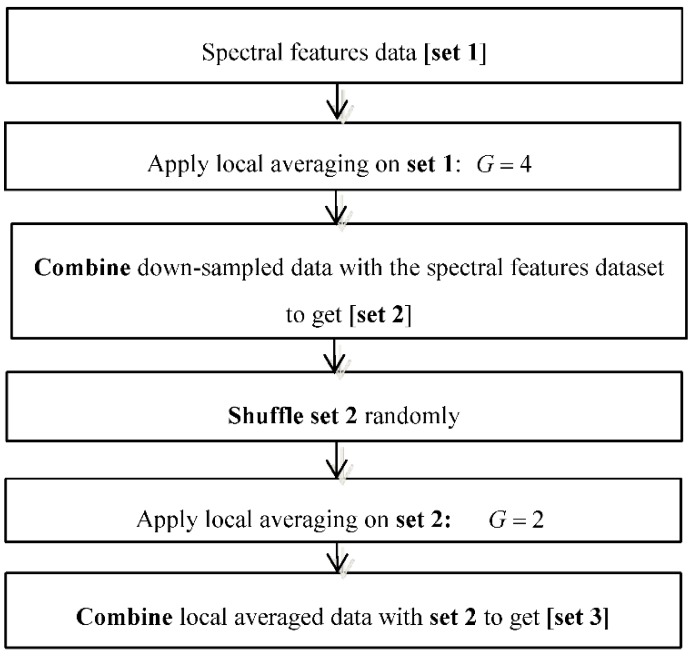
“uses raw inertial measurement unit sensor data, and proposes a spectrogram-based feature extraction approach, and then an ensemble of data augmentations in feature space is proposed to take care of the data scarcity problem [22].”
MethodGuan, L., Zhang, X., Cong, X., Zhang, Z., Yang, Z., Li, N., & Noureldin, A. M. (2024) · Measurement · doi:10.1016/j.measurement.2024.115682 · Cited by 5
Underwater target perception algorithm based on pressure sequence generative adversarial network
Zhao, J. B., Wang, S., Jia, X., Gao, Y. B., Zhu, W. D., Ma, F., & Liu, Q. (2023) · Ocean Engineering · doi:10.1016/j.oceaneng.2023.115547 · Cited by 5
Mohmed, G., Lotfi, A., & Pourabdollah, A. (2020) · IEEE International Conference on Fuzzy Systems (FUZZ-IEEE) · doi:10.1109/fuzz48607.2020.9177851 · Cited by 5
“Researchers in [11] proposed a Spectrogram-based technique for representing human activity data collected by inertial measurement units.”
BackgroundMethodTo Augment or Not to Augment? Data Augmentation in User Identification Based on Motion Sensors
Benegui, C., & Ionescu, R. T. (2020) · Communications in computer and information science · doi:10.1007/978-3-030-63823-8_93 · Cited by 5
Sensor2Vec: an Embedding Learning for Heterogeneous Sensors for Activity Classification
Zhong, J., & Lotfi, A. (2020) · International Symposium on Community-centric Systems (CcS) · doi:10.1109/ccs49175.2020.9231478 · Cited by 5
“Despite the fact that their training needs even more data, the Convolutional Neural Network (CNN) [12], Recurrent neural network (RNN) [15], [36] and Long Short-term Memory (LSTM) [31] have been adopted in human activity classification.”
BackgroundInfluentialConvLSTM for Human Activity Recognition
Singla, R., Mittal, S., Jain, A., & Gupta, D. K. (2021) · Advances in intelligent systems and computing · doi:10.1007/978-981-16-2597-8_28 · Cited by 5
Hybrid CNN-GRU Model for Exercise Classification Using IMU Time-Series Data
Zhang, J., Lau, M. C., & Zhu, Z. (2024) · Journal of Machine Intelligence and Data Science · doi:10.11159/jmids.2024.007 · Cited by 4
Holistic quantified-self for context-aware wearable augmented reality
Song, E., Ha, T., Park, J., Lee, H., & Woo, W. (2025) · International Journal of Human-Computer Studies · doi:10.1016/j.ijhcs.2025.103568 · Cited by 5
Early Detection of Rheumatoid Arthritis in Knee using Deep Learning
Parashar, A., & Rishi, R. (2021) · International Conference on Data Science, Machine Learning and Artificial Intelligence (DSMLAI) · doi:10.1145/3484824.3484888 · Cited by 4
Gourrame, K., Griškevičius, J., Haritopoulos, M., Lukšys, D., Jatužis, D., Lokominienė, R. K., Buneviciute, R., & Mickutė, G. (2023) · Technology and Health Care · doi:10.3233/thc-235010 · Cited by 4
Self-Supervised Learning from Unlabeled IoT Data
Liu, D., & Abdelzaher, T. (2023) · Springer eBooks · doi:10.1007/978-3-031-40787-1_2 · Cited by 5
Rahman, A., Nahid, N., Schuller, B. W., & Ahad, M. A. R. (2024) · Scientific Reports · doi:10.1038/s41598-024-81228-x · Cited by 6
ECG-based Daily Activity Recognition Using 1D Convolutional Neural Networks
Yun, S., Lee, S., Kim, G., Cho, S. P., Ryu, S., & Jeong, I. C. (2024) · Annual International Conference of the IEEE Engineering in Medicine and Biology Society (EMBC) · doi:10.1109/embc53108.2024.10782143 · Cited by 4
In-Bed Human Pose Classification Using Sparse Inertial Signals
Elnaggar, O., Coenen, F., & Paoletti, P. (2020) · Lecture notes in computer science · doi:10.1007/978-3-030-63799-6_25 · Cited by 4
Shared learning activity labels across heterogeneous datasets
Ye, J. (2021) · Journal of Ambient Intelligence and Smart Environments · doi:10.3233/ais-210590 · Cited by 4
“Also, recent data augmentation techniques [4,14,24] can be applied to either simulate data samples and augment data with variations.”
Forecasting High-risk Areas of COVID-19 Infection Through Socioeconomic and Static Spatial Analysis
Alhamadani, A., Sarkar, S., Zhang, L., Alkulaib, L., & Lu, C. (2021) · IEEE International Conference on Big Data (BigData) · doi:10.1109/bigdata52589.2021.9671896 · Cited by 4
“We applied permutation [28], [49] and shuffling [48] a combined pseudo-zipcode data augmentation methods that have enhanced accuracies of other models and which can be further extended for any level of a geographical area such as county, tract or census block).”
Optimization of SVM Classification Accuracy with Bayesian Optimization Utilizing Data Augmentation
Lubis, A. R., Lase, Y. Y., Darwis, A. R., & Witarsyah, D. (2023) · International Conference of Computer and Informatics Engineering (IC2IE) · doi:10.1109/ic2ie60547.2023.10331580 · Cited by 4
Human Activity Recognition with IMU and Vital Signs Feature Fusion
Xefteris, V.-R., Tsanousa, A., Mavropoulos, T., Μεδίτσκος, Γ., Vrochidis, S., & Kompatsiaris, I. Y. (2022) · Lecture notes in computer science · doi:10.1007/978-3-030-98358-1_23 · Cited by 3
Sun, T., Tan, T., Li, D., Markert, B. A., Shull, P. B., & Bamer, F. (2025) · IEEE Sensors Journal · doi:10.1109/jsen.2024.3521896 · Cited by 3
“…transformation-based data augmentation techniques, such as random data rotation, scaling, perturbation, warping, and jittering (adding noise), have been successfully applied to augment datasets collected from wearable IMUs for the training of deep-learning models [25], [26], [28], [29], [30], [31].”
InfluentialZheng, J., Zhou, X., Gao, Y., Chen, Z., Gao, Y., Zhou, C., & Zhang, Y. (2025) · IEEE Access · doi:10.1109/access.2025.3608775 · Cited by 3
“…recurrent neural networks (RNNs) and their long short-term memory (LSTM) variants demonstrate strong temporal modeling capabilities through sequential dependency extraction from IMU data [34], they remain constrained by catastrophic forgetting phenomena and non-parallelizable training schemes [35].”
Time series fault prediction via dual enhancement
Wang, Y., Xu, W.-C., Wang, C., Huang, Y.-B., & Zhang, H.-M. (2024) · Journal of Intelligent Manufacturing · doi:10.1007/s10845-024-02515-y · Cited by 4
“Eyobu and Han (2018) adopted short Fourier transform (STFT) to generate time–frequency features for sensor time series, and conducted data augmentation on the time–frequency features.”
Fault Detection of Diesel Engines Using Artificial Neural Network
Pająk, M., Kluczyk, M., Muślewski, Ł., & Lisjak, D. (2025) · SAE International Journal of Engines · doi:10.4271/03-18-02-0010 · Cited by 3
Inconsistent Multivariate Time Series Forecasting
Shen, L., Wang, Y., Fan, X., Xu, Y., & Qiu, H. (2025) · IEEE Transactions on Knowledge and Data Engineering · doi:10.1109/tkde.2025.3556940 · Cited by 3
Sawicki, A. (2025) · Computer Animation and Virtual Worlds · doi:10.1002/cav.70016 · Cited by 5
Octave Mix: Data Augmentation Using Frequency Decomposition for Activity Recognition
Hasegawa, T. (2021) · IEEE Access · doi:10.1109/access.2021.3070778 · Cited by 5
“Some studies adopted DAs for sensor-based HAR using deep learning [35, 36, 37, 38, 39].”
The Gender, Height and Weight Prediction Based on Gait Using MEMS Sensor
Xing, H., Ren, L., & Zhao, Y. (2021) · IEEE International Conference on Cyber Technology in Automation, Control, and Intelligent Systems · doi:10.1109/cyber53097.2021.9588183 · Cited by 3
ANTIGONE: Accurate Navigation Path Caching in Dynamic Road Networks leveraging Route APIs
Yu, X., Li, X., Zhao, J., Shen, G., Freris, N. M., & Zhang, L. (2022) · IEEE Conference on Computer Communications (INFOCOM) · doi:10.1109/infocom48880.2022.9796817 · Cited by 3
Metadata
- Authors
- Steven Eyobu, O., & Han, D. S.
- Affiliations
- School of Electronics Engineering, Kyungpook National University, 80 Daehak-ro, Buk-gu, Daegu 41566, Korea
- Kyungpook National University (KR)
- Corresponding author
- Han, Dong Seog
- Venue
- Sensors
- Publisher
- MDPI AG
- Published
- 2018-08-31
- Volume
- 18
- Issue
- 9
- Pages
- 2892
- ISSN
- 1424-8220 (ISSN-L)
- PMC
- PMC6165524
- OpenAlex
- W2889505988
- Cited by
- 259
- References
- 50
- Citations by year
- 2026: 15 · 2025: 27 · 2024: 36 · 2023: 45 · 2022: 32 · 2021: 55 · 2020: 31 · 2019: 17 · 2018: 1
- FWCI
- 13.01
- Type
- journal article
- Language
- en
- Open access
- gold
- dx.doi.org
- Licence
- Locations
- Sensors (publishedVersion, cc-by)
- Europe PMC (PubMed Central) (publishedVersion, other-oa)
- PubMed Central (publishedVersion, cc-by)
- PubMed (publishedVersion)
- DOAJ (DOAJ: Directory of Open Access Journals) (submittedVersion, cc-by-sa)
- Funders
- Institute for Information and communications Technology Promotion (R7124-16- 0004)
- Topics
- Physical Sciences › Computer Science › Computer Vision and Pattern Recognition › Context-Aware Activity Recognition Systems
- Physical Sciences › Engineering › Biomedical Engineering › Gait Recognition and Analysis
- Physical Sciences › Computer Science › Signal Processing › Time Series Analysis and Forecasting
- Keywords
- human activity recognition, inertial measurement unit, spectrogram feature extraction, data augmentation, feature representation, LSTM neural network, labeled data scarcity, UCI HAR dataset
- MeSH terms
- Wearable Electronic Devices, Deep Learning, Humans, Human Activities, Movement, Neural Networks, Computer
About these checks
Registry, retraction, Cites and statistics results are computed, not judged, with one exception: a printed reference that no index lists is read once by a model before it counts as a citation error. Claims are extracted by a model and kept only when their quote appears verbatim in the text; each cited source is then checked, with a model’s help, for whether it says what the claim relies on. Those verdicts can be wrong — read the claim’s quote and the cited source before relying on one.
Statistics and arithmetic are recomputed, not judged.
Confidence bands are shown only for fields calibrated on our annotated test set. None is calibrated yet, so no band is shown.
What counts as a claim ›How we measure confidence ›How we check this ›
Are you an author, or do you see a problem with this page? Request a review
Data sources
Bibliographic data: Semantic Scholar, OpenAlex, Crossref.
Contains information from the Semantic Scholar Academic Graph Datasets, made available under the ODC Attribution License (ODC-BY 1.0).
Semantic Scholar’s data is described in: Kinney, R., et al. (2023). The Semantic Scholar Open Data Platform. arXiv:2301.10140.
