

Reducing Message Collisions in Sensing-Based Semi-Persistent Scheduling (SPS) by Using Reselection Lookaheads in Cellular V2X
Open accessThe DOI matches its Crossref record; 22 of the 22 references it cites were found in a registry or an index.
Abstract
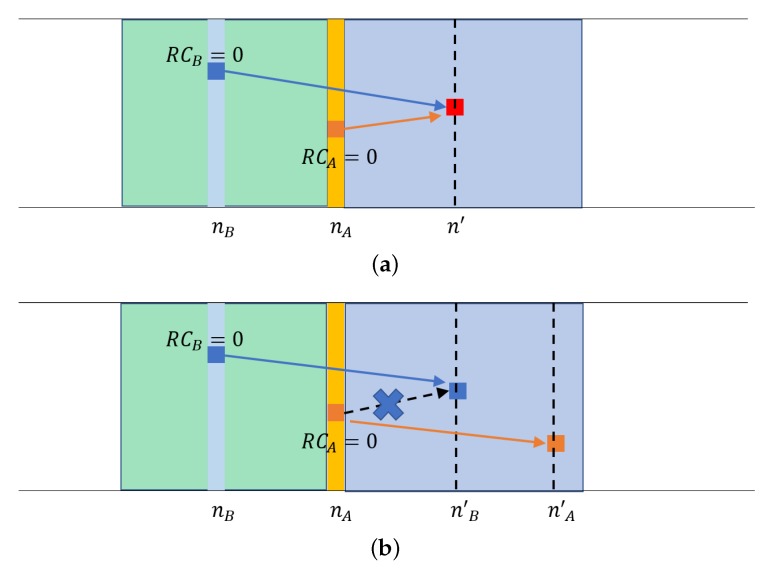
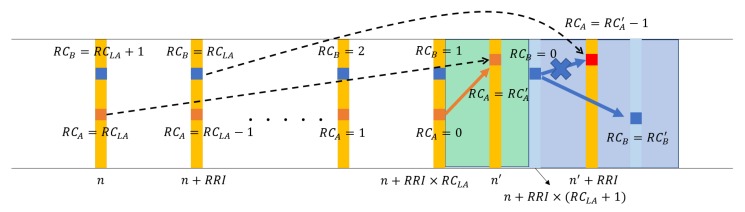
In the C-V2X sidelink Mode 4 communication, the sensing-based semi-persistent scheduling (SPS) implements a message collision avoidance algorithm to cope with the undesirable effects of wireless channel congestion. Still, the current standard mechanism produces a high number of packet collisions, which may hinder the high-reliability communications required in future C-V2X applications such as autonomous driving. In this paper, we show that by drastically reducing the uncertainties in the choice of the resource to use for SPS, we can significantly reduce the message collisions in the C-V2X sidelink Mode 4. Specifically, we propose the use of the “lookahead”, which contains the next starting resource location in the time-frequency plane. By exchanging the lookahead information piggybacked on the periodic safety message, vehicular user equipment (UEs) can eliminate most message collisions arising from the ignorance of other UEs’ internal decisions. Although the proposed scheme would require the inclusion of the lookahead in the control part of the packet, the benefit may outweigh the bandwidth cost, considering the stringent reliability requirement in future C-V2X applications.
Overview
The claims and statistics of this paper haven’t been checked yet.
Free: it reads the open-access text and checks the first 5 claims that cite a source we can check. Create a free account to check every claim.
Integrity signals
Registry
Cites
Statistics
Figures





Verification
Claims the paper makes
The claims and statistics of this paper haven’t been checked yet.
Free: it reads the open-access text and checks the first 5 claims that cite a source we can check. Create a free account to check every claim.
Claims other papers make about this one
Each is checked against this paper’s own text: does it say what the citing paper says it does?
The cited source says what the claim attributes to it.
In the citing paper
“SB-SPS is widely used for sidelink resource allocation due to its better reliability and latency [6].”
From Reinforcement Learning-Based Resource Allocation Scheme of NR-V2X Sidelink for Joint Communication and Sensing (2025) · cites this paper as [6]
Self-check
Percentages, sums and reported differences re-computed from the paper’s own numbers.
The self-check needs the paper’s full text.
Citations
Cites
Vehicle-to-Everything (v2x) Services Supported by LTE-Based Systems and 5G
Chen, S., Hu, J., Shi, Y., Peng, Y., Fang, J., Zhao, R., & Zhao, L. (2017) · IEEE Communications Standards Magazine · doi:10.1109/mcomstd.2017.1700015 · Cited by 921 · cited 1×
“vantages over DSRC [10–13]. Although DSRC is a mature technology and does not require a coordinating network infrastructure or bulky signaling procedures, it has weaknesses in the spectral efficiency [14] and the capability to deal with congestion and hidden terminal problem at scale [15]. Typically, C-V2X is consider…”
BackgroundMolina-Masegosa, R., & Gozalvez, J. (2017) · IEEE Vehicular Technology Magazine · doi:10.1109/mvt.2017.2752798 · Cited by 755
LTE and IEEE 802.11p for vehicular networking: a performance evaluation
Hameed Mir, Z., & Filali, F. (2014) · EURASIP Journal on Wireless Communications and Networking · doi:10.1186/1687-1499-2014-89 · Cited by 375 · cited 1×
“Although some argue that cellular V2X (C-V2X) is not as ready, has compatibility problems between different 3GPP Releases, and has exaggerated coverage when measured in reality [9], proponents of the C-V2X argue that the cellular alternative has multiple advantages over DSRC [10–13].”
BackgroundOn the Performance of IEEE 802.11p and LTE-V2V for the Cooperative Awareness of Connected Vehicles
Bazzi, A., Masini, B. M., Zanella, A., & Thibault, I. (2017) · IEEE Transactions on Vehicular Technology · doi:10.1109/tvt.2017.2750803 · Cited by 350 · cited 2×
“n performance of C-V2X over DSRC is highly affected by the modulation and channel coding scheme (MCS) [18], and the capacity can be lower than DSRC under very high vehicle density and short distances [16]. Therefore, C-V2X must be less reliant on the cellular infrastructure for efficiency, by leveraging the sidelink c…”
BackgroundVinel, A. (2012) · IEEE Wireless Communications Letters · doi:10.1109/wcl.2012.022012.120073 · Cited by 277 · cited 1×
“Although some argue that cellular V2X (C-V2X) is not as ready, has compatibility problems between different 3GPP Releases, and has exaggerated coverage when measured in reality [9], proponents of the C-V2X argue that the cellular alternative has multiple advantages over DSRC [10–13].”
BackgroundRadio Resource Management for D2D-Based V2V Communication
Sun, W., Strom, E. G., Brannstrom, F., Sou, K. C., & Sui, Y. (2016) · IEEE Transactions on Vehicular Technology · doi:10.1109/tvt.2015.2479248 · Cited by 274 · cited 1×
“n the context of C-V2X, radio resource management is an actively studied topic. Recent works in this topic are classified into network-controlled and autonomous approaches. For the former, Sun et al. [22] transformed the latency and reliability constraints of C-V2X into optimization constraints that are computable usi…”
BackgroundStandards for vehicular communication—from IEEE 802.11p to 5G
Festag, A. (2015) · e+i Elektrotechnik und Informationstechnik · doi:10.1007/s00502-015-0343-0 · Cited by 191 · cited 2×
“Although DSRC is a mature technology and does not require a coordinating network infrastructure or bulky signaling procedures, it has weaknesses in the spectral efficiency [14] and the capability to deal with congestion and hidden terminal problem at scale [15].”
BackgroundStudy of the Impact of PHY and MAC Parameters in 3GPP C-V2V Mode 4
Bazzi, A., Cecchini, G., Zanella, A., & Masini, B. M. (2018) · IEEE Access · doi:10.1109/access.2018.2883401 · Cited by 143
Masini, B. M., Bazzi, A., & Zanella, A. (2018) · Sensors · doi:10.3390/s18072207 · Cited by 109 · cited 3×
“However, the sensing-based SPS should not be considered a fully-fledged congestion control algorithm, which would use various available means such as power control, MCS control, retransmission control, or packet drop [20,36].”
BackgroundInfluentialPerformance Analysis of Sensing-Based Semi-Persistent Scheduling in C-V2X Networks
Nabil, A., Kaur, K., Dietrich, C., & Marojevic, V. (2018) · 2018 IEEE 88th Vehicular Technology Conference (VTC-Fall) · doi:10.1109/vtcfall.2018.8690600 · Cited by 92
Research works printed but not linked: 4
- IEEE Std 802.11p-2010 (2010). Part 11: Wireless LAN Medium Access Control (MAC) and Physical Layer (PHY) Specifications, Amendment 6: Wireless Access in Vehicular Environments, Institute of Electrical and Electronics Engineers (IEEE).
- IEEE Std 1609.2-2013 (2013). IEEE Standard for Wireless Access in Vehicular Environments (WAVE)—Security Services for Applications and Management Messages, Institute of Electrical and Electronics Engineers (IEEE).
- IEEE Std 1609.3-2010 (2010). IEEE Standard for Wireless Access in Vehicular Environments (WAVE)—Networking Services, Institute of Electrical and Electronics Engineers (IEEE).
- IEEE Std 1609.4-2010 (2010). IEEE Standard for Wireless Access in Vehicular Environments (WAVE)—Multi-Channel Operation, Institute of Electrical and Electronics Engineers (IEEE).
Cited by
Geo-Based Scheduling for C-V2X Networks
Molina-Masegosa, R., Sepulcre, M., & Gozalvez, J. (2019) · IEEE Transactions on Vehicular Technology · doi:10.1109/tvt.2019.2924698 · Cited by 59
“[12][15] propose modifications or extensions to the SPS algorithm but maintain most of its functionality.”
BackgroundHaider, A., & Hwang, S. (2019) · Electronics · doi:10.3390/electronics8080846 · Cited by 53
Performance Analysis and Optimization for Semi-Persistent Scheduling in C-V2X
Gu, X., Peng, J., Cai, L., Cheng, Y., Zhang, X., Liu, W., & Huang, Z. (2022) · IEEE Transactions on Vehicular Technology · doi:10.1109/tvt.2022.3223414 · Cited by 51
“(SPS) algorithm was developed for distributed resource reservation in the C-V2X MAC layer [7], which is beneficial for periodical transmissions of packets with constant sizes [8].”
MethodWijesiri, G. P., Haapola, J., & Samarasinghe, T. (2020) · IEEE Transactions on Communications · doi:10.1109/tcomm.2020.3044340 · Cited by 51
“Since our primary focus is on the MAC layer performance, [22]–[24] can be considered to be the most related to our work.”
BackgroundMethodInfluentialH-V2X Mode 4 Adaptive Semipersistent Scheduling Control for Cooperative Internet of Vehicles
Heo, S., Yoo, W., Jang, H., & Chung, J. (2021) · IEEE Internet of Things Journal · doi:10.1109/jiot.2020.3048993 · Cited by 50
“In [25], a new method to reduce the collision probability of CAMs in C-V2X mode 4 is proposed, where vehicles carry out the resource reselection process early such that information can be shared in advance with other vehicles.”
BackgroundMethodResource Allocation in 5G Platoon Communication: Modeling, Analysis and Optimization
Cao, L., Roy, S., & Yin, H. (2023) · IEEE Transactions on Vehicular Technology · doi:10.1109/tvt.2022.3223351 · Cited by 35
“which has been detected by many literature [23], [25], [26], [27], [28], [29].”
BackgroundResultAge of Information Optimized MAC in V2X Sidelink via Piggyback-Based Collaboration
Peng, F., Jiang, Z., Zhang, S., & Xu, S. (2020) · IEEE Transactions on Wireless Communications · doi:10.1109/twc.2020.3027353 · Cited by 37
“Therefore, collaboration in our scheme aims to directly solve the packet collisions by the receiver transmitting the collaboration message, which is fundamentally different from the existing collaboration schemes that announce self parameter configurations [9], [10].”
BackgroundMethodInfluentialAn explicit reservation-augmented resource allocation scheme for C-V2X sidelink mode 4
Jeon, Y., & Kim, H. (2020) · IEEE Access · doi:10.1109/access.2020.3015549 · Cited by 34
“[18] proposed to broadcast the reselected resource location immediately before the reselection.”
BackgroundSelf-citationWang, P., & Wang, S. (2023) · Tsinghua Science and Technology · doi:10.26599/tst.2021.9010099 · Cited by 32
Rolich, A., Turcanu, I., Vinel, A. V., & Baiocchi, A. (2024) · Computer Networks · doi:10.1016/j.comnet.2024.110503 · Cited by 26
“Jeon et al. [35] show that message collisions in LTE-V2X Mode 4 can be reduced by reducing the uncertainties in the resources to be used for the next sequence of messages, though at the cost of higher overhead.”
BackgroundC-V2X Centralized Resource Allocation with Spectrum Re-Partitioning in Highway Scenario
Sabeeh, S., Wesołowski, K., & Sroka, P. (2022) · Electronics · doi:10.3390/electronics11020279 · Cited by 26
“A 100 ms interval with the RC range [5, 15] is proposed as the simulation time step (CAM interval) and RC range according to standard [36], which is proposed for Mode 4 as the maximum allowed latency.”
BackgroundMethodInfluentialOn Reliability Bound and Improvement of Sensing-Based Semipersistent Scheduling in LTE-V2X
Zhang, F., Wang, M. M., & Deng, R. (2020) · IEEE Internet of Things Journal · doi:10.1109/jiot.2020.3034132 · Cited by 25
“In [21], a lookahead proposal is put forward to reduce the PCR, which contains the next starting resource location in the time-frequency plane.”
BackgroundMethodUrmonov, O., Aliev, H., & Kim, H. (2023) · IEEE Systems Journal · doi:10.1109/jsyst.2022.3197880 · Cited by 24
“Apart from the hidden terminal interference problem, C-V2X network also suffers from a half-duplex (time division duplex) problem [9].”
BackgroundSelf-citationVehicle Selection for C-V2X Mode 4-Based Federated Edge Learning Systems
Wang, X., Wu, Q., Fan, P., Fan, Q., Zhu, H., & Wang, J. (2024) · IEEE Systems Journal · doi:10.1109/jsyst.2024.3459926 · Cited by 23
“Each resource is adopted to transmit a data packet and the corresponding control information, where a packet is transmitted through a transport block and the control information is transmitted through a sidelink control information (SCI) [38].”
Reducing Consecutive Collisions in Sensing Based Semi Persistent Scheduling for Cellular-V2X
Jung, S., Cheon, H.-R., & Kim, J. (2019) · IEEE Vehicular Technology Conference · doi:10.1109/vtcfall.2019.8891226 · Cited by 22
“[8] suggested the use of the lookahead, contains the next starting resource location.”
BackgroundMethodA Study of LTE-V2X Mode 4 Performances in a Multiapplication Context
Ghodhbane, C., Kassab, M., Maaloul, S., Aniss, H., & Berbineau, M. (2022) · IEEE Access · doi:10.1109/access.2022.3182508 · Cited by 22
“Several researchers have started looking at possible improvements [12] and [13].”
BackgroundImpact of Persistence on the Age of Information in 5G NR-V2X Sidelink Communications
Rolich, A., Turcanu, I., Vinel, A. V., & Baiocchi, A. (2023) · Mediterranean Communication and Computer Networking Conference (MedComNet) · doi:10.1109/medcomnet58619.2023.10168874 · Cited by 21
“[26] show that message collisions in LTE-V2X Mode 4 can be reduced by reducing the uncertainties in the resources to be used for the next sequence of messages.”
BackgroundPerformance Enhancement of C-V2X Mode 4 with Balanced Resource Allocation
Ali, M., Hwang, H., & Kim, Y. (2022) · International Conference on Communications · doi:10.1109/icc45855.2022.9839138 · Cited by 19
“However, the schemes in [7] and [13] do not resolve the collisions by newly joining vehicles which are not aware of the reservation of ongoing vehicles, moreover their schemes waste the resources due to the passing vehicles in opposite lane.”
BackgroundScaling and Offloading Optimization in Pre-CORD and Post-CORD Multi-Access Edge Computing
Yahya, W., Oki, E., Lin, Y., & Lai, Y. (2021) · IEEE Transactions on Network and Service Management · doi:10.1109/tnsm.2021.3101862 · Cited by 17
“Rather than considering only three different latency constraints, 1 ms for URLLC, 4 ms for eMBB and 100 ms for mMTC, this investigation extended 25 ms [28] and 50 ms [29] latency constraints for mMTC.”
BackgroundA Cluster-Based UE-Scheduling Scheme for NR-V2X
He, X., Yang, X., Lv, J., Zhao, J., Luo, T., & Chen, S. (2022) · IEEE Transactions on Vehicular Technology · doi:10.1109/tvt.2022.3221794 · Cited by 16
“It has been proposed by the authors of [13] that vehicles select their resources in advance and inform surrounding vehicles of information about their reserved resources.”
BackgroundLi, Z., Wang, P., Shen, Y., & Li, S. (2025) · Sensors · doi:10.3390/s25020302 · Cited by 15
Resource Reservation Coordination for Vehicle Platooning in C-V2X Networks
Gu, X., Peng, J., Cai, L., Liu, W., Zhang, X., & Huang, Z. (2023) · IEEE Transactions on Wireless Communications · doi:10.1109/twc.2023.3326852 · Cited by 13
“To handle the simultaneous resource selection conflict, recent literature proposed to detect the conflict before-hand, but the hidden terminal problem remains unsolved [9].”
BackgroundInfluentialDaw, S., Kar, A., & Tamma, B. R. (2023) · International Conference on Distributed Computing and Networking (ICDCN) · doi:10.1145/3571306.3571409 · Cited by 12
“The past works on C-V2X that focused on reducing collision of CAM messages used the concept of reselection lookahead counters [13].”
BackgroundReducing Collision Probability in Sensing-Based SPS Algorithm for V2X Sidelink Communications
Lee, T., & Lin, C.-F. (2020) · IEEE Region 10 Conference (TENCON) · doi:10.1109/tencon50793.2020.9293919 · Cited by 11
“Several improvements to the sensing-based SPS algorithm were proposed previously [11-13].”
MethodPerformance Analysis on Access Collision in Semi-Persistent Scheduling of C-V2X Mode 4
Gu, X., Peng, J., Cheng, Y., Zhang, X., Liu, W., Huang, Z., & Cai, L. (2021) · IEEE Vehicular Technology Conference · doi:10.1109/vtc2021-fall52928.2021.9625157 · Cited by 9
“The main reason behind the choice is that SPS benefits cyclic transmissions of packets of constant size and with predictable resource requirements [6].”
BackgroundCognitive Collision Resolution for Enhanced Performance in C-V2X Sidelink Mode 4
Ali, M., & Kim, Y. (2021) · Asia-Pacific Network Operations and Management Symposium (APNOMS) · doi:10.23919/apnoms52696.2021.9562603 · Cited by 9
Foreseeing Semi-Persistent Scheduling in Mode-4 for 5G enhanced V2X communication
Honnaiah, P. J., Maturo, N., & Chatzinotas, S. (2020) · IEEE Consumer Communications and Networking Conference · doi:10.1109/ccnc46108.2020.9045276 · Cited by 8
“Much of the related works [1] [2] [3] have only focused on the collision due to Transmission case and none have discussed the collision due to Re-transmission as a separate case.”
BackgroundPRESS: Predictive Assessment of Resource Usage for C-V2V Mode 4
Yang, J. M., Yoon, H., Hwang, S., & Bahk, S. (2021) · IEEE Wireless Communications and Networking Conference · doi:10.1109/wcnc49053.2021.9417396 · Cited by 8
“proposed reservation-based collision coordination among the vehicles allocating resource simultaneously [9].”
BackgroundAslam, S., Khan, D., & Chang, K. (2024) · Sensors · doi:10.3390/s24206769 · Cited by 8
Disseminating a Fair Emergency Message With V2V Communication Technology in VANET
Firdissa, N., Gemeda, K. A., Mishra, S., Rathee, D. S., Singh, R. S., & Darejew, T. (2025) · Security and Communication Networks · doi:10.1155/sec/8882649 · Cited by 7
“Te author in [23] described that an early warning message was disseminated among vehicles with the help of RSU.”
SNB: Reduction of Consecutive Message Reception Failures in C-V2X Communications
Park, T.-J., & Shin, K. G. (2020) · IEEE Vehicular Technology Conference · doi:10.1109/vtc2020-fall49728.2020.9348629 · Cited by 7
Signaling Design for Cooperative Resource Allocation and Its Impact to Message Reliability
Bruun, R. L., García, C. S. M., Sørensen, T. B., Pratas, N. K., Madsen, T. K., & Mogensen, P. (2023) · IEEE Access · doi:10.1109/access.2023.3317269 · Cited by 7
“The piggybacking of control signals to periodic safety messages in [25] indicates the future resource allocation of SPS transmissions (method 2 in Fig.”
MethodEnhanced C-V2X Mode-4 With Virtual Cell, Resource Usage Bitmap, and Smart Roaming
Ali, M., Hwang, H., & Kim, Y. (2023) · IEEE Access · doi:10.1109/access.2023.3341915 · Cited by 7
“Jeon et al. [25] proposed sharing information on the location of resources with other vehicles by using a CAM immediately before resource selection to avoid CAM collisions under SB-SPS.”
BackgroundDynamic power and platoon management for reliable vehicle platooning in mode 4 C-V2X communications
Kumar, A., Pal, R., & Mandloi, A. S. (2025) · AEU - International Journal of Electronics and Communications · doi:10.1016/j.aeue.2025.156085 · Cited by 6
Sanada, K., Hatano, H., & Mori, K. (2024) · International Conference on Communications · doi:10.1109/icc51166.2024.10622860 · Cited by 6
“Figure 1 shows the resource selection mechanism in SB-SPS [7], [8].”
BackgroundFeraudo, A., Garbugli, A., & Bellavista, P. (2025) · IEEE Open Journal of the Communications Society · doi:10.1109/ojcoms.2025.3556513 · Cited by 6
“In cellular-based environments, researchers are working on improving scheduling algorithms to mitigate or detect packet collisions, particularly in scenarios where vehicles operate outside base station coverage (5G Sidelink) [16], [29], [30].”
Probabilistic resource rescheduling for C-V2X based on delivery rate estimation
Hyeon, D., Lee, C., Kim, H., Cho, S., Paek, J., & Govindan, R. (2024) · Journal of Communications and Networks · doi:10.23919/jcn.2024.000006 · Cited by 6
“[18], [19] execute the resource reselection process on average 1 second earlier than the Mode 4.”
BackgroundSelf-citationEnhanced SPS Velocity-Adaptive Scheme: Access Fairness in 5G NR V2I Networks
Xu, X., Wu, Q., Fan, P., & Wang, K. (2025) · IEEE International Workshop on Radio Frequency and Antenna Technologies (iWRF&AT) · doi:10.1109/iwrfat65352.2025.11102889 · Cited by 5
“In [13], Jeon et al. signifi-cantly reduced data packet conflicts in the C-V2X mode-4 by minimizing the uncertainty in resource selection.”
Embedded system based on IoT and V2X for Smart Cities
Campero-Jurado, I., Gomez, J. Q., Vargas-Buitrón, O. D., Trejo-Macotela, F. R., Robles-Camarillo, D., & Simancas-Acevedo, E. (2019) · International Journal of Combinatorial Optimization Problems and Informatics. · Cited by 5
Performance of Sensing-Based Semi-Persistent Scheduling (SPS) in LTE-V2X Release 14 Distributed Mode
Lopez, L. M. W. (2019) · LA Referencia (Red Federada de Repositorios Institucionales de Publicaciones Científicas) · Cited by 4
Wang, S., & Wang, P. (2021) · IEEE International Conference on Communication Technology (ICCT) · doi:10.1109/icct52962.2021.9657921 · Cited by 3
Adaptive Keeping Probability Algorithm to Reduce Resource Collisions in LTE-V2X
Wang, Y., Cui, W., Zhao, X., & Liu, X. (2023) · International Conference on Transportation Information and Safety · doi:10.1109/ictis60134.2023.10243998 · Cited by 3
“RRI counter’s range 20 ms [25,75] 50ms [10,30] ≥ 100ms [5,15] Prepare for the next transmission counter=0 ? no: keep”
BackgroundSubchannel selection methods for 3GPP C-V2X networks by considering vehicular mobility
Pan, M.-S., & Kao, S.-W. (2024) · Telecommunication Systems · doi:10.1007/s11235-024-01138-1 · Cited by 3
Optimization of C-V2X Mode 4 Resource Scheduling Protocol Based on CAM Generation Frequency
Wang, Y., & Dou, Z. (2024) · International Conference on Information Science, Parallel and Distributed Systems (ISPDS) · doi:10.1109/ispds62779.2024.10667523 · Cited by 2
“Several improvements to the S-SPS algorithm have been proposed in [5-7].”
MethodPiggyback-Based Distributed MAC Optimization for V2X Sidelink Communications
Peng, F., Jiang, Z., Zhang, S., & Xu, S. (2020) · IEEE Vehicular Technology Conference · doi:10.1109/vtc2020-fall49728.2020.9348847 · Cited by 2
“On the basis of [12], the SPS scheme with collaboration is further improved in [13], wherein the values of the re-selection counter are replaced by the resource location of next re-selection of each vehicle, so that each vehicle can improve the reliability by avoiding the resources that will be…”
BackgroundMethodInfluentialA Novel Procedure of Enhancing the Throughput of a Mode-2 Sidelink Based on Partial Sensing
Kang, S., & Choi, S. (2021) · Sensors · doi:10.3390/s21186128 · Cited by 2
“Although a number of pioneering works [7–10] have addressed the scheduling techniques for resource allocation, most efforts in these studies have been focused on preserving the Basic Safety Message (BSM) [11] by reducing the collision rate among mode-2 sidelink devices.”
BackgroundMethodA Packet Collision Reduction Based on Reselection for LTE V2X Mode 4
Asano, M., & Fujii, M. (2022) · Applied Sciences · doi:10.3390/app12178733 · Cited by 2
Hegde, A. R. (2024) · doi:10.25593/open-fau-899 · Cited by 2
RSU‐Assisted Resource Map Sharing to Enhance Reliability in 5G NR V2X Mode 2
Yu, S. S., & Mun, C. (2026) · Electronics Letters · doi:10.1049/ell2.70566 · Cited by 1
IRS-Assisted Weighted Sum-Rate Maximization Semi-persistent Scheduling in NR-V2X
Chen, J., Wu, F., Zhang, K., Huang, X., & Leng, S. (2022) · IEEE International Conference on Communication Technology (ICCT) · doi:10.1109/icct56141.2022.10072739 · Cited by 1
“Some efforts have been made through adding look-ahead information to packets [1], but reduced efficiency.”
BackgroundSinusoidal Regression Modelling of Vehicular Data Communication Employing NP-CSMA
(2023) · International journal of intelligent engineering and systems · doi:10.22266/ijies2023.0630.50 · Cited by 1
Wu, Q., Wang, X., Fan, P., & Fan, Q. (2024) · International Conference on Computer and Communication Systems (ICCCS) · doi:10.1109/icccs61882.2024.10603059 · Cited by 1
“Each resource is adopted to transmit a data packet and the corresponding control information, where a packet is transmitted through a transport block (TB) and the control information is transmitted through a sidelink control information (SCI) [27].”
BackgroundCooperative Resource Allocation in 6G Proximity Networks for Robotic Swarms
Morejon, S. (2022) · VBN Forskningsportal (Aalborg Universitet) · doi:10.54337/aau504482035 · Cited by 1
Improving One-Shot Transmission in NR Sidelink Resource Allocation for V2X CommunicationPreprint
Lee, H., & Kim, H. (2023) · arXiv (Cornell University) · doi:10.48550/arxiv.2312.15914 · Cited by 1
“Consequently, it causes more packet collisions and generally leads to poor packet delivery performance [4].”
BackgroundSelf-citationControlling Communications Quality in V2V Platooning: a TSN-like Slot-Based Scheduler ApproachPreprint
Feraudo, A., Garbugli, A., & Bellavista, P. (2024) · arXiv (Cornell University) · doi:10.48550/arxiv.2405.01301 · Cited by 1
“In cellular-based environments (C-V2X), researchers are exploring methods to enhance scheduling ) [12], [13], [29].”
BackgroundMethodAnalysis of Probability of Collision of CAMs in Opportunistic Vehicular Communication
Das, A., Pathak, D., & Khanikar, K. (2021) · IEEE International Conference on Advanced Networks and Telecommunications Systems · doi:10.1109/ants52808.2021.9937019
Distributed Resource Management Algorithm Based on LSTM Dueling Double DQN in V2V Communication
陈, 志. (2023) · Computer Science and Application · doi:10.12677/csa.2023.131012
Hybrid Markov-GNN Framework for Real-Time Collision Mitigation in NR V2X Mode 2Preprint
Annu, A., & Rajalakshmi, P. (2025) · SSRN Electronic Journal · doi:10.2139/ssrn.5849185
New Traffic Control Based on VANETs Protocols Technique
M.Jawad, B. J. (2025) · Iraqi Journal of Computer Communication Control and System Engineering · doi:10.33103/uot.ijccce.25.2.6
Refining Reselection Counter Configuration for Safety and Fairness in 5G NR V2X
Shin, H., & Kim, H. (2025) · IEEE Vehicular Technology Conference · doi:10.1109/vtc2025-fall65116.2025.11309893
“In SPS, it is well known that decreasing p keep to shorten the mean successive collision times results in degraded PRR performance due to more frequent resource reselections [2], [14].”
Self-citationHybrid Markov-GNN Framework for Real-Time Collision Mitigation in NR V2X Mode 2Preprint
Annu, A., & Pachamuthu, R. (2026) · SSRN Electronic Journal · doi:10.2139/ssrn.6378254
Enhanced Semi-persistent Scheduling for Resource Collision Avoidance in C-V2X
Li, X., & Lu, L. (2026) · Lecture notes in computer science · doi:10.1007/978-981-95-8414-7_7
González, E. E., Monserrat, J. F., & Montaño, M. (2026) · IEEE Access · doi:10.1109/access.2026.3696149
“On the other hand, [7] and [8] explore the impact of sensing thresholds on packet collisions when using the 3GPP SPS algorithm.”
The Critical Role of Co-Channel Interference in V2V Performance Under Dynamic Vehicular Blockage
Raro, R. V. C. B., Magoli, M. B., Calindatas, M. A. A., Castillano, U. K. I., Cadubla, R. M. D., & Asido, M. D. (2026) · IEEE Vehicular Networking Conference (VNC) · doi:10.1109/vnc69225.2026.11629127
“…Latency Histogram of LTE-V2V Sidelink on Urban and Highway plausible explanation is that co-channel interference increases first-transmission failures, while SB-SPS and hidden-terminal effects preserve unfavorable resource overlaps that further delay successful transmission opportunities [15]–[17].”
Metadata
- Authors
- Jeon, Y., Kuk, S., & Kim, H.
- Affiliations
- Korea University (KR)
- Corresponding author
- Kim, Hyogon
- Venue
- Sensors
- Publisher
- MDPI AG
- Published
- 2018-12-11
- Volume
- 18
- Issue
- 12
- Pages
- 4388
- ISSN
- 1424-8220 (ISSN-L)
- PMC
- PMC6308456
- OpenAlex
- W2963889250
- Semantic Scholar
- d494f51945d885d8fe3acf104f12b4dcb3e50dc1
- Cited by
- 59
- References
- 22
- Citations by year
- 2026: 3 · 2025: 6 · 2024: 8 · 2023: 8 · 2022: 11 · 2021: 10 · 2020: 8 · 2019: 5
- FWCI
- 2.20
- Type
- journal article
- Language
- en
- Open access
- gold
- dx.doi.org
- Licence
- Locations
- Sensors (publishedVersion, cc-by)
- Europe PMC (PubMed Central) (publishedVersion, other-oa)
- PubMed Central (publishedVersion, cc-by)
- PubMed (publishedVersion)
- arXiv (Cornell University) (submittedVersion)
- DOAJ (DOAJ: Directory of Open Access Journals) (submittedVersion, cc-by-sa)
- arXiv (Cornell University)
- Funders
- Ministry of Land, Infrastructure and Transport
- Topics
- Physical Sciences › Engineering › Electrical and Electronic Engineering › Vehicular Ad Hoc Networks (VANETs)
- Physical Sciences › Engineering › Control and Systems Engineering › Traffic control and management
- Physical Sciences › Engineering › Civil and Structural Engineering › Road Transport and Highway Systems
- Keywords
- C-V2X, sidelink communication, Mode 4, semi-persistent scheduling, lookahead, resource selection, autonomous driving, channel congestion, time-frequency resource allocation
About these checks
Registry, retraction, Cites and statistics results are computed, not judged, with one exception: a printed reference that no index lists is read once by a model before it counts as a citation error. Claims are extracted by a model and kept only when their quote appears verbatim in the text; each cited source is then checked, with a model’s help, for whether it says what the claim relies on. Those verdicts can be wrong — read the claim’s quote and the cited source before relying on one.
Statistics and arithmetic are recomputed, not judged.
Confidence bands are shown only for fields calibrated on our annotated test set. None is calibrated yet, so no band is shown.
What counts as a claim ›How we measure confidence ›How we check this ›
Are you an author, or do you see a problem with this page? Request a review
Data sources
Bibliographic data: Semantic Scholar, OpenAlex, Crossref.
Contains information from the Semantic Scholar Academic Graph Datasets, made available under the ODC Attribution License (ODC-BY 1.0).
Semantic Scholar’s data is described in: Kinney, R., et al. (2023). The Semantic Scholar Open Data Platform. arXiv:2301.10140.
