

A Feature Extraction Method Based on Differential Entropy and Linear Discriminant Analysis for Emotion Recognition
Open accessThe DOI matches its Crossref record; 46 of the 46 references it cites were found in a registry or an index.
Abstract
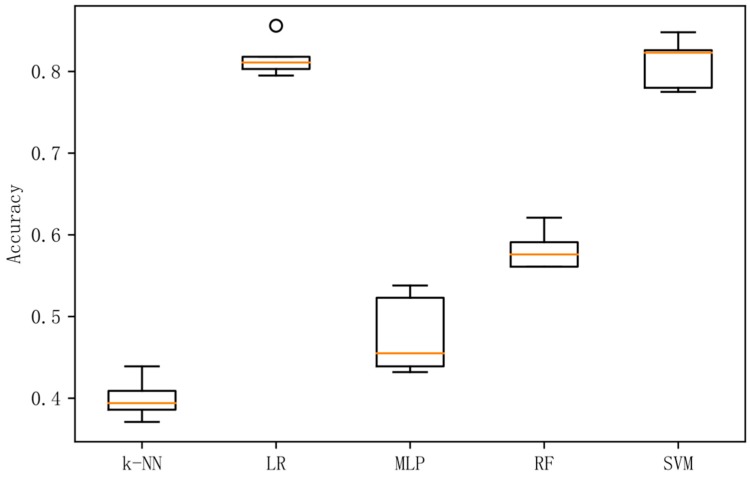
Feature extraction of electroencephalography (EEG) signals plays a significant role in the wearable computing field. Due to the practical applications of EEG emotion calculation, researchers often use edge calculation to reduce data transmission times, however, as EEG involves a large amount of data, determining how to effectively extract features and reduce the amount of calculation is still the focus of abundant research. Researchers have proposed many EEG feature extraction methods. However, these methods have problems such as high time complexity and insufficient precision. The main purpose of this paper is to introduce an innovative method for obtaining reliable distinguishing features from EEG signals. This feature extraction method combines differential entropy with Linear Discriminant Analysis (LDA) that can be applied in feature extraction of emotional EEG signals. We use a three-category sentiment EEG dataset to conduct experiments. The experimental results show that the proposed feature extraction method can significantly improve the performance of the EEG classification: Compared with the result of the original dataset, the average accuracy increases by 68%, which is 7% higher than the result obtained when only using differential entropy in feature extraction. The total execution time shows that the proposed method has a lower time complexity.
Overview
The claims and statistics of this paper haven’t been checked yet.
Free: it reads the open-access text and checks the first 5 claims that cite a source we can check. Create a free account to check every claim.
Integrity signals
Registry
Cites
Statistics
Figures
Verification
Claims the paper makes
The claims and statistics of this paper haven’t been checked yet.
Free: it reads the open-access text and checks the first 5 claims that cite a source we can check. Create a free account to check every claim.
Claims other papers make about this one
Each is checked against this paper’s own text: does it say what the citing paper says it does?
The cited source says what the claim attributes to it.
In the citing paper
“Although researchers have proposed a variety of EEG feature extraction and fusion methods, these methods have problems such as high time complexity and insuf cient precision [8].”
From Multimodal Emotion Recognition Using a Hierarchical Fusion Convolutional Neural Network (2021) · cites this paper as [8]
Self-check
Percentages, sums and reported differences re-computed from the paper’s own numbers.
The self-check needs the paper’s full text.
Citations
Cites
Brain–computer interfaces for communication and control
Wolpaw, J. R., Birbaumer, N., McFarland, D. J., Pfurtscheller, G., & Vaughan, T. M. (2002) · Clinical Neurophysiology · doi:10.1016/s1388-2457(02)00057-3 · Cited by 7,927
Deep learning with convolutional neural networks for EEG decoding and visualization
Schirrmeister, R. T., Springenberg, J. T., Fiederer, L. D. J., Glasstetter, M., Eggensperger, K., Tangermann, M., Hutter, F., Burgard, W., & Ball, T. (2017) · Human Brain Mapping · doi:10.1002/hbm.23730 · Cited by 3,751
Emotion recognition in human-computer interaction
Cowie, R., Douglas-Cowie, E., Tsapatsoulis, N., Votsis, G., Kollias, S., Fellenz, W., & Taylor, J. G. (2001) · IEEE Signal Processing Magazine · doi:10.1109/79.911197 · Cited by 2,603 · cited 1×
“Emotional recognition generally refers to the acquisition of an individual’s physiological or non-physiological signals to automatically identify the individual’s emotional state [10,11].”
BackgroundZheng, W.-L., & Lu, B.-L. (2015) · IEEE Transactions on Autonomous Mental Development · doi:10.1109/tamd.2015.2431497 · Cited by 2,595 · cited 1×
“In the past two years, many researchers have used differential entropy as a feature extraction method to achieve good results on different datasets [19,20].”
MethodBrain-computer interface technology: a review of the first international meeting
Wolpaw, J. R., Birbaumer, N., Heetderks, W. J., McFarland, D. J., Peckham, P. H., Schalk, G., Donchin, E., Quatrano, L. A., Robinson, C. J., & Vaughan, T. M. (2000) · IEEE Transactions on Rehabilitation Engineering · doi:10.1109/tre.2000.847807 · Cited by 2,324
EEG signal classification using PCA, ICA, LDA and support vector machines
Subasi, A., & Ismail Gursoy, M. (2010) · Expert Systems with Applications · doi:10.1016/j.eswa.2010.06.065 · Cited by 1,209 · cited 1×
“Subasi proposed a data reduction method based on linear discriminant analysis (LDA), which proved that the LDA method can effectively improve the classification of epileptic datasets [22].”
MethodDifferential entropy feature for EEG-based emotion classification
Duan, R.-N., Zhu, J.-Y., & Lu, B.-L. (2013) · 2013 6th International IEEE/EMBS Conference on Neural Engineering (NER) · doi:10.1109/ner.2013.6695876 · Cited by 1,100 · cited 3×
“In 2013, Duan proposed a feature extraction method based on differential entropy, which achieved good results on emotion-based datasets [18].”
BackgroundMethodInfluentialDeep learning for healthcare applications based on physiological signals: A review
Faust, O., Hagiwara, Y., Hong, T. J., Lih, O. S., & Acharya, U. R. (2018) · Computer Methods and Programs in Biomedicine · doi:10.1016/j.cmpb.2018.04.005 · Cited by 1,026
Brain–computer interfaces for communication and rehabilitation
Chaudhary, U., Birbaumer, N., & Ramos-Murguialday, A. (2016) · Nature Reviews Neurology · doi:10.1038/nrneurol.2016.113 · Cited by 928
Analysis of emotion recognition using facial expressions, speech and multimodal information
Busso, C., Deng, Z., Yildirim, S., Bulut, M., Lee, C. M., Kazemzadeh, A., Lee, S., Neumann, U., & Narayanan, S. (2004) · Proceedings of the 6th international conference on Multimodal interfaces · doi:10.1145/1027933.1027968 · Cited by 840 · cited 1×
“Emotional recognition generally refers to the acquisition of an individual’s physiological or non-physiological signals to automatically identify the individual’s emotional state [10,11].”
BackgroundDimension Reduction by Local Principal Component Analysis
Kambhatla, N., & Leen, T. K. (1997) · Neural Computation · doi:10.1162/neco.1997.9.7.1493 · Cited by 717 · cited 1×
“It was introduced in the field of pattern recognition and artificial intelligence by Belhumeur in 1997 [38].”
Orhan, U., Hekim, M., & Ozer, M. (2011) · Expert Systems with Applications · doi:10.1016/j.eswa.2011.04.149 · Cited by 645 · cited 1×
“Finally, MLP, also called an artificial neural network, is a kind of neural network method which is often used in various fields, including EEG signal classification [34,35].”
MethodAutomated diagnosis of epileptic EEG using entropies
Acharya, U. R., Molinari, F., Sree, S. V., Chattopadhyay, S., Ng, K.-H., & Suri, J. S. (2012) · Biomedical Signal Processing and Control · doi:10.1016/j.bspc.2011.07.007 · Cited by 626 · cited 1×
“The k-NN method is a kind of classical data-mining method that has been used in EEG emotion recognition for many years [29,30].”
MethodClassification of EEG signals using neural network and logistic regression
Subasi, A., & Erçelebi, E. (2005) · Computer Methods and Programs in Biomedicine · doi:10.1016/j.cmpb.2004.10.009 · Cited by 573
Brain computer interface: control signals review
Ramadan, R. A., & Vasilakos, A. V. (2017) · Neurocomputing · doi:10.1016/j.neucom.2016.10.024 · Cited by 551 · cited 1×
“It is a direct connection pathway established between a human or animal brain (or culture of brain cells) and an external device [3–7].”
BackgroundImproving BCI-based emotion recognition by combining EEG feature selection and kernel classifiers
Atkinson, J., & Campos, D. (2016) · Expert Systems with Applications · doi:10.1016/j.eswa.2015.10.049 · Cited by 506
Fraiwan, L., Lweesy, K., Khasawneh, N., Wenz, H., & Dickhaus, H. (2012) · Computer Methods and Programs in Biomedicine · doi:10.1016/j.cmpb.2011.11.005 · Cited by 432
Brightness preserving histogram equalization with maximum entropy: a variational perspective
Wang, C., & Ye, Z. (2005) · IEEE Transactions on Consumer Electronics · doi:10.1109/tce.2005.1561863 · Cited by 386 · cited 1×
“The method of using the differential entropy algorithm for feature extraction has been widely used in the field of image and signal processing [36,37].”
MethodEEG-based emotion recognition during watching movies
Nie, D., Wang, X.-W., Shi, L.-C., & Lu, B.-L. (2011) · 2011 5th International IEEE/EMBS Conference on Neural Engineering · doi:10.1109/ner.2011.5910636 · Cited by 360 · cited 1×
“The research on brain–computer interface has also made great progress, from the earliest two-category epilepsy recognition [39] and left-right hand movement imagination [40] to more complex two-classification motion recognition [41], and finally to multi-class emotion recognition [42].”
BackgroundReal-Time EEG-Based Emotion Recognition and Its Applications
Liu, Y., Sourina, O., & Nguyen, M. K. (2011) · Lecture Notes in Computer Science · doi:10.1007/978-3-642-22336-5_13 · Cited by 266 · cited 1×
“The research on brain–computer interface has also made great progress, from the earliest two-category epilepsy recognition [39] and left-right hand movement imagination [40] to more complex two-classification motion recognition [41], and finally to multi-class emotion recognition [42].”
BackgroundPetrantonakis, P. C., & Hadjileontiadis, L. J. (2010) · IEEE Transactions on Affective Computing · doi:10.1109/t-affc.2010.7 · Cited by 260 · cited 1×
“…density (EEG signal with a specific frequency band) [15], logarithmic power (Log BP) (band power based on the oscillation process in the signal) [16], Hjorth parameters (EEG signals described by activity, mobility, and complexity) [17], wavelet transform (decomposition of EEG signals) [15], etc.”
BackgroundCross-correlation aided support vector machine classifier for classification of EEG signals
Chandaka, S., Chatterjee, A., & Munshi, S. (2009) · Expert Systems with Applications · doi:10.1016/j.eswa.2007.11.017 · Cited by 258
EEG Classification of Motor Imagery Using a Novel Deep Learning Framework
Dai, M., Zheng, D., Na, R., Wang, S., & Zhang, S. (2019) · Sensors · doi:10.3390/s19030551 · Cited by 229 · cited 1×
“Therefore, since the concept of BCI was proposed, researchers have conducted numerous studies on how to effectively extract features from EEG signals [13,14].”
BackgroundEarly Seizure Detection Algorithm Based on Intracranial EEG and Random Forest Classification
Donos, C., Dümpelmann, M., & Schulze‐Bonhage, A. (2015) · International Journal of Neural Systems · doi:10.1142/s0129065715500239 · Cited by 180
Spelling with non-invasive Brain–Computer Interfaces – Current and future trends
Cecotti, H. (2011) · Journal of Physiology-Paris · doi:10.1016/j.jphysparis.2011.08.003 · Cited by 172
Automatic seizure detection in EEG using logistic regression and artificial neural network
Alkan, A., Koklukaya, E., & Subasi, A. (2005) · Journal of Neuroscience Methods · doi:10.1016/j.jneumeth.2005.04.009 · Cited by 168
Feature Extraction of EEG Signals Using Power Spectral Entropy
Zhang, A., Yang, B., & Huang, L. (2008) · 2008 International Conference on BioMedical Engineering and Informatics · doi:10.1109/bmei.2008.254 · Cited by 160 · cited 1×
“) of the first difference of the signal for feature extraction, and then proposed the spectral density (EEG signal with a specific frequency band) [15], logarithmic power (Log BP) (band power based on the oscillation process in the signal) [16], Hjorth parameters (EEG signals described by activity, mobility, and compl…”
BackgroundSelf-citationAutomatic EEG Artifact Removal: A Weighted Support Vector Machine Approach With Error Correction
Shao, S.-Y., Shen, K.-Q., Ong, C. J., Wilder-Smith, E., & Li, X.-P. (2009) · IEEE Transactions on Biomedical Engineering · doi:10.1109/tbme.2008.2005969 · Cited by 151
A P300 Brain–Computer Interface Based on a Modification of the Mismatch Negativity Paradigm
Jin, J., Sellers, E. W., Zhou, S., Zhang, Y., Wang, X., & Cichocki, A. S. (2015) · International Journal of Neural Systems · doi:10.1142/s0129065715500112 · Cited by 138 · cited 1×
“The role of BCI is to establish communication between the human brain and external computers or other intelligent electronic devices [8,9].”
BackgroundLi, Y., Pan, J., Long, J., Yu, T., Wang, F., Yu, Z., & Wu, W. (2016) · Proceedings of the IEEE · doi:10.1109/jproc.2015.2469106 · Cited by 117 · cited 1×
“The role of BCI is to establish communication between the human brain and external computers or other intelligent electronic devices [8,9].”
BackgroundLogistic Regression for Single Trial EEG Classification
Tomioka, R., Aihara, K., & Müller, K. (2007) · The MIT Press eBooks · doi:10.7551/mitpress/7503.003.0177 · Cited by 113
PCA+HMM+SVM for EEG pattern classification
Lee, H., & Choi, S. (2003) · Seventh International Symposium on Signal Processing and Its Applications, 2003. Proceedings. · doi:10.1109/isspa.2003.1224760 · Cited by 109
Classification of EEG signals using Dempster Shafer theory and a k-nearest neighbor classifier
Yazdani, A., Ebrahimi, T., & Hoffmann, U. (2009) · International IEEE/EMBS Conference on Neural Engineering · doi:10.1109/ner.2009.5109299 · Cited by 96 · cited 1×
“The k-NN method is a kind of classical data-mining method that has been used in EEG emotion recognition for many years [29,30].”
MethodDeep learning-based classification for brain-computer interfaces
Thomas, J., Maszczyk, T., Sinha, N., Kluge, T., & Dauwels, J. (2017) · 2017 IEEE International Conference on Systems, Man, and Cybernetics (SMC) · doi:10.1109/smc.2017.8122608 · Cited by 95
A differential entropy based method for determining the optimal embedding parameters of a signal
Gautama, T., Mandic, D. P., & Hulle, M. M. V. (2004) · IEEE International Conference on Acoustics Speech and Signal Processing · doi:10.1109/icassp.2003.1201610 · Cited by 93 · cited 1×
“The method of using the differential entropy algorithm for feature extraction has been widely used in the field of image and signal processing [36,37].”
MethodBhattacharyya, S., Khasnobish, A., Konar, A., Tibarewala, D. N., & Nagar, A. K. (2011) · IEEE Symposium on Computational Intelligence, Cognitive Algorithms, Mind, and Brain (CCMB) · doi:10.1109/ccmb.2011.5952111 · Cited by 82 · cited 1×
“The research on brain–computer interface has also made great progress, from the earliest two-category epilepsy recognition [39] and left-right hand movement imagination [40] to more complex two-classification motion recognition [41], and finally to multi-class emotion recognition [42].”
BackgroundEpileptic activity recognition in EEG recording
Diambra, L. A., de Figueiredo, J. C. B., & Malta, C. P. (1999) · Physica A Statistical Mechanics and its Applications · doi:10.1016/s0378-4371(99)00368-4 · Cited by 77 · cited 1×
“The research on brain–computer interface has also made great progress, from the earliest two-category epilepsy recognition [39] and left-right hand movement imagination [40] to more complex two-classification motion recognition [41], and finally to multi-class emotion recognition [42].”
BackgroundAn EEG Experimental Study Evaluating the Performance of Texas Instruments ADS1299
Rashid, U., Niazi, I. K., Signal, N., & Taylor, D. (2018) · Sensors · doi:10.3390/s18113721 · Cited by 77 · cited 1×
“Electroencephalography (EEG) is a means of data acquisition via sensors [1,2].”
BackgroundYang, Y.-X., Gao, Z.-K., Wang, X.-M., Li, Y.-L., Han, J.-W., Marwan, N., & Kurths, J. (2018) · Chaos: An Interdisciplinary Journal of Nonlinear Science · doi:10.1063/1.5023857 · Cited by 74 · cited 1×
“In the past two years, many researchers have used differential entropy as a feature extraction method to achieve good results on different datasets [19,20].”
MethodSchirrmeister, R. T., Springenberg, J. T., Fiederer, L. D. J., et al. (2017) · arXiv (Cornell University) · Cited by 62
Zeng, Y., Wu, Q., Yang, K., Tong, L., Yan, B., Shu, J., & Yao, D. (2018) · Sensors · doi:10.3390/s19010006 · Cited by 59 · cited 1×
“Therefore, since the concept of BCI was proposed, researchers have conducted numerous studies on how to effectively extract features from EEG signals [13,14].”
BackgroundDevelopment of a Modular Board for EEG Signal Acquisition
Uktveris, T., & Jusas, V. (2018) · Sensors · doi:10.3390/s18072140 · Cited by 56
Brunner, C., Billinger, M., Vidaurre, C., & Neuper, C. (2011) · Medical & Biological Engineering & Computing · doi:10.1007/s11517-011-0828-x · Cited by 39
Liu, S., Tong, J., Meng, J., Yang, J., Zhao, X. W., He, F., Qi, H., & Ming, D. (2016) · International Journal of Machine Learning and Cybernetics · doi:10.1007/s13042-016-0601-4 · Cited by 38 · cited 1×
“The SVM method is a classic machine-learning The SVM method is a classic machine-learning method. classification based on EEG signals [26–28].”
MethodNarang, A., Batra, B., Ahuja, A., Yadav, J., & Pachauri, N. (2018) · Journal of Intelligent & Fuzzy Systems · doi:10.3233/jifs-169460 · Cited by 33 · cited 1×
“Finally, MLP, also called an artificial neural network, is a kind of neural network method which is often used in various fields, including EEG signal classification [34,35].”
MethodBehri, M. G., Subaşı, A., & Qaisar, S. M. (2018) · Advances in Science and Engineering Technology International Conferences (ASET) · doi:10.1109/icaset.2018.8376886 · Cited by 30
Cited by
Review of the emotional feature extraction and classification using EEG signals
Wang, J., & Wang, M. (2021) · Cognitive Robotics · doi:10.1016/j.cogr.2021.04.001 · Cited by 195
Obaido, G., Mienye, I. D., Egbelowo, O. F., Emmanuel, I. D., Ogunleye, A., Ogbuokiri, B., Mienye, P., & Aruleba, K. (2024) · Machine Learning with Applications · doi:10.1016/j.mlwa.2024.100576 · Cited by 154
A systematic review on EEG-based neuromarketing: recent trends and analyzing techniques
Khondakar, M. F. K., Sarowar, M. H., Chowdhury, M. H., Majumder, S., Hossain, M. A., Dewan, M. A. A., & Hossain, Q. D. (2024) · Brain Informatics · doi:10.1186/s40708-024-00229-8 · Cited by 138
“Apart from these features, some studies also used Hjorth parameters as features in Neuromarketing [10, 158].”
MethodCross-Subject EEG-Based Emotion Recognition Through Neural Networks With Stratified Normalization
Fdez, J., Guttenberg, N., Witkowski, O., & Pasquali, A. (2021) · Frontiers in Neuroscience · doi:10.3389/fnins.2021.626277 · Cited by 85
Physiological Sensors Based Emotion Recognition While Experiencing Tactile Enhanced Multimedia
Raheel, A., Majid, M., Alnowami, M. R., & Anwar, S. M. (2020) · Sensors · doi:10.3390/s20144037 · Cited by 98
“A feature extraction method was proposed to improve emotion recognition accuracy using EEG signals [73].”
Method
Metadata
- Authors
- Chen, D.-W., Miao, R., Yang, W.-Q., Liang, Y., Chen, H.-H., Huang, L., Deng, C.-J., & Han, N.
- Affiliations
- University of Electronic Science and Technology of China (CN)
- Macau University of Science and Technology (MO)
- Beijing Institute of Technology (CN)
- Corresponding author
- Han, Na
- Venue
- Sensors
- Publisher
- MDPI AG
- Published
- 2019-04-05
- Volume
- 19
- Issue
- 7
- Pages
- 1631
- ISSN
- 1424-8220 (ISSN-L)
- PMC
- PMC6479375
- OpenAlex
- W2932154953
- Cited by
- 104
- References
- 45
- Citations by year
- 2026: 5 · 2025: 15 · 2024: 18 · 2023: 19 · 2022: 15 · 2021: 15 · 2020: 14 · 2019: 3
- FWCI
- 13.81
- Type
- journal article
- Language
- en
- Open access
- gold
- dx.doi.org
- Licence
- Locations
- Sensors (publishedVersion, cc-by)
- PubMed Central (publishedVersion, cc-by)
- PubMed (publishedVersion)
- DOAJ (DOAJ: Directory of Open Access Journals) (submittedVersion, cc-by-sa)
- Funders
- Zhongshan City Team Project (180809162197874)
- Research Projects for High-Level Talents of University of Electronic Science and Technology of China, Zhongshan (417YKQ8)
- Characteristic Innovation Project of Guangdong Province (2017GXJK217)
- Topics
- Physical Sciences › Computer Science › Artificial Intelligence › Emotion and Mood Recognition
- Life Sciences › Neuroscience › Cognitive Neuroscience › EEG and Brain-Computer Interfaces
- Physical Sciences › Computer Science › Computer Vision and Pattern Recognition › Face and Expression Recognition
- Keywords
- EEG feature extraction, differential entropy, linear discriminant analysis, EEG-based emotion recognition, wearable computing, EEG classification, computational efficiency, edge computing
- MeSH terms
- Algorithms, Electroencephalography, Emotions, Humans, Discriminant Analysis, Entropy
About these checks
Registry, retraction, Cites and statistics results are computed, not judged, with one exception: a printed reference that no index lists is read once by a model before it counts as a citation error. Claims are extracted by a model and kept only when their quote appears verbatim in the text; each cited source is then checked, with a model’s help, for whether it says what the claim relies on. Those verdicts can be wrong — read the claim’s quote and the cited source before relying on one.
Statistics and arithmetic are recomputed, not judged.
Confidence bands are shown only for fields calibrated on our annotated test set. None is calibrated yet, so no band is shown.
What counts as a claim ›How we measure confidence ›How we check this ›
Are you an author, or do you see a problem with this page? Request a review
Data sources
Bibliographic data: Semantic Scholar, OpenAlex, Crossref.
Contains information from the Semantic Scholar Academic Graph Datasets, made available under the ODC Attribution License (ODC-BY 1.0).
Semantic Scholar’s data is described in: Kinney, R., et al. (2023). The Semantic Scholar Open Data Platform. arXiv:2301.10140.
