

A Role-Based Access Control Model in Modbus SCADA Systems. A Centralized Model Approach
Open accessThe DOI matches its Crossref record; 27 of the 29 references it cites were found in a registry or an index.
Abstract
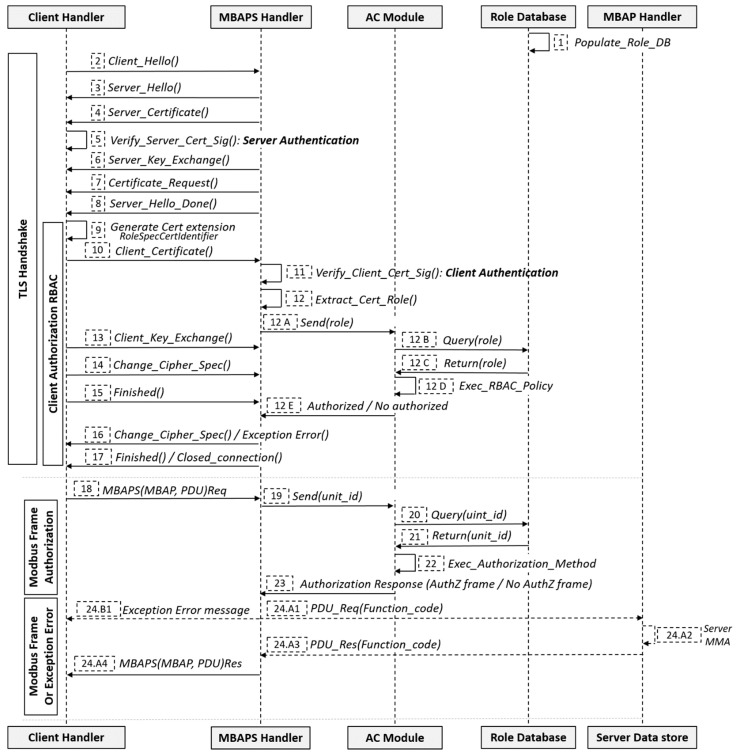
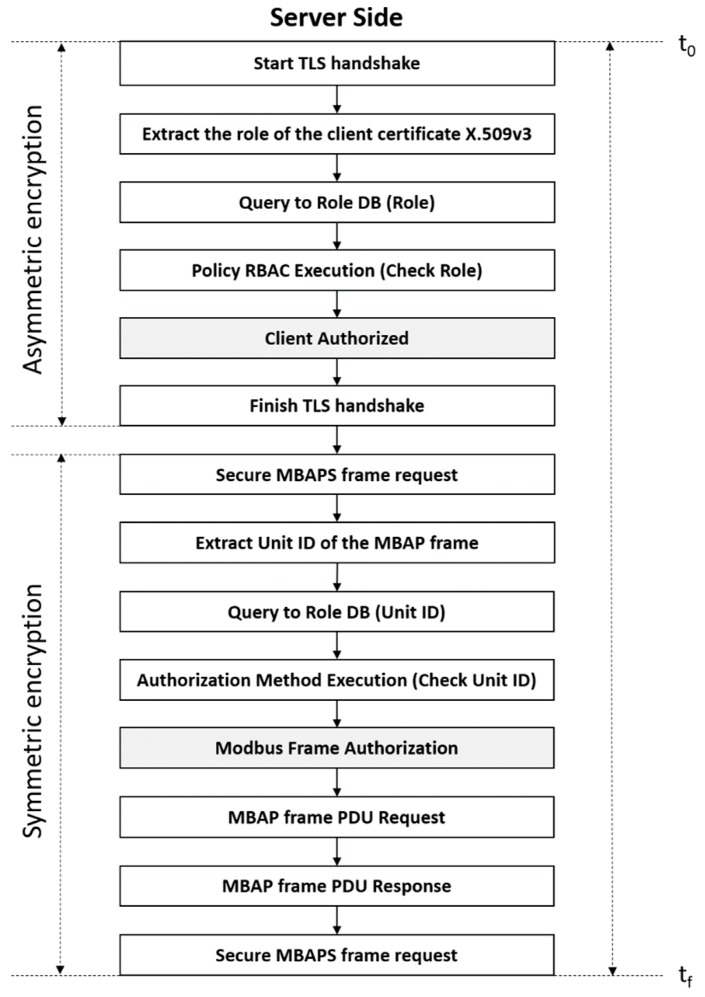
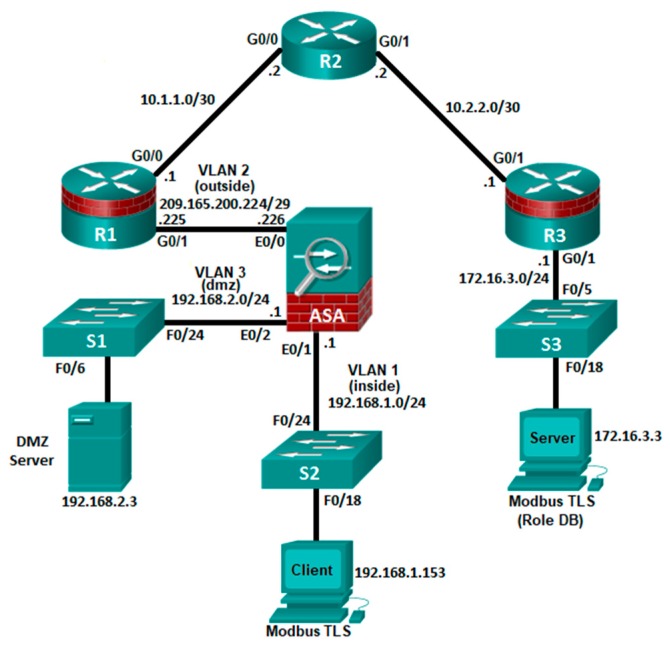
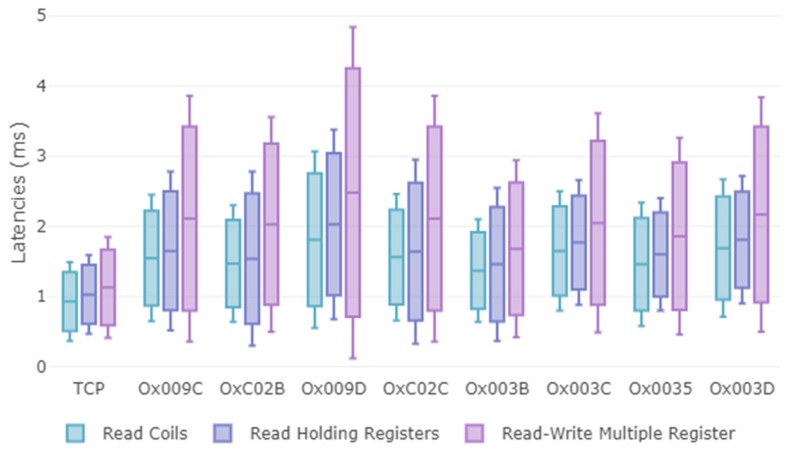
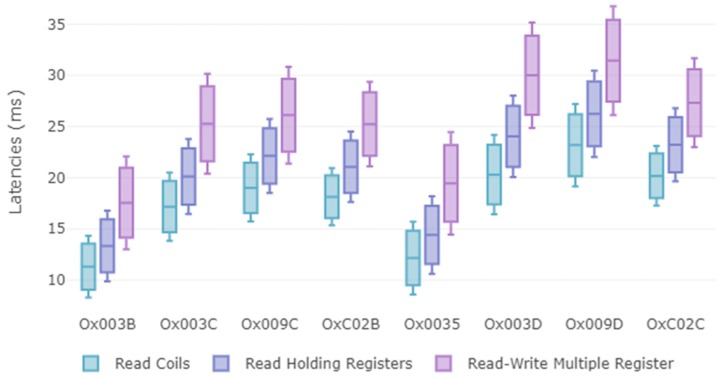
Industrial Control Systems (ICS) and Supervisory Control systems and Data Acquisition (SCADA) networks implement industrial communication protocols to enable their operations. Modbus is an application protocol that allows communication between millions of automation devices. Unfortunately, Modbus lacks basic security mechanisms, and this leads to multiple vulnerabilities, due to both design and implementation. This issue enables certain types of attacks, for example, man in the middle attacks, eavesdropping attacks, and replay attack. The exploitation of such flaws may greatly influence companies and the general population, especially for attacks targeting critical infrastructural assets, such as power plants, water distribution and railway transportation systems. In order to provide security mechanisms to the protocol, the Modbus organization released security specifications, which provide robust protection through the blending of Transport Layer Security (TLS) with the traditional Modbus protocol. TLS will encapsulate Modbus packets to provide both authentication and message-integrity protection. The security features leverage X.509v3 digital certificates for authentication of the server and client. From the security specifications, this study addresses the security problems of the Modbus protocol, proposing a new secure version of a role-based access control model (RBAC), in order to authorize both the client on the server, as well as the Modbus frame. This model is divided into an authorization process via roles, which is inserted as an arbitrary extension in the certificate X.509v3 and the message authorization via unit id, a unique identifier used to authorize the Modbus frame. Our proposal is evaluated through two approaches: A security analysis and a performance analysis. The security analysis involves verifying the protocol’s resistance to different types of attacks, as well as that certain pillars of cybersecurity, such as integrity and confidentiality, are not compromised. Finally, our performance analysis involves deploying our design over a testnet built on GNS3. This testnet has been designed based on an industrial security standard, such as IEC-62443, which divides the industrial network into levels. Then both the client and the server are deployed over this network in order to verify the feasibility of the proposal. For this purpose, different latencies measurements in industrial environments are used as a benchmark, which are matched against the latencies in our proposal for different cipher suites.
Overview
The claims and statistics of this paper haven’t been checked yet.
Free: it reads the open-access text and checks the first 5 claims that cite a source we can check. Create a free account to check every claim.
Integrity signals
Registry
Cites
Statistics
Figures

Verification
Claims the paper makes
The claims and statistics of this paper haven’t been checked yet.
Free: it reads the open-access text and checks the first 5 claims that cite a source we can check. Create a free account to check every claim.
Claims other papers make about this one
Each is checked against this paper’s own text: does it say what the citing paper says it does?
The cited source says what the claim attributes to it.
In the citing paper
“However, because it is widespread in the industry, the option to provide security to the protocol is a solution that many organizations are likely to adopt [13].”
From Enhanced Modbus/TCP Security Protocol: Authentication and Authorization Functions Supported (2022) · cites this paper as [13]
In the citing paper
“Cyber-security measures have not been implemented in the proposal so far; nonetheless, measures in this regard for vulnerabilities of the Modbus TCP network should be taken into account [55].”
From Innovative Multi-Layered Architecture for Heterogeneous Automation and Monitoring Systems: Application Case of a Photovoltaic Smart Microgrid (2021) · cites this paper as [55]
Self-check
Percentages, sums and reported differences re-computed from the paper’s own numbers.
The self-check needs the paper’s full text.
Citations
Cites
The Transport Layer Security (TLS) Protocol Version 1.3
Rescorla, E. (2018) · doi:10.17487/rfc8446 · Cited by 1,897
Guide to Industrial Control Systems (ICS) Security
Stouffer, K., Pillitteri, V., Lightman, S., Abrams, M., & Hahn, A. (2015) · doi:10.6028/nist.sp.800-82r2 · Cited by 1,377
Turner, S. (2014) · IEEE Internet Computing · doi:10.1109/mic.2014.126 · Cited by 452
Attack taxonomies for the Modbus protocols
Huitsing, P., Chandia, R., Papa, M., & Shenoi, S. (2008) · International Journal of Critical Infrastructure Protection · doi:10.1016/j.ijcip.2008.08.003 · Cited by 249 · cited 2×
“The same work ([18]) identifies several taxonomies, divided into the serial transmission mode and Modbus TCP / IP protocol.”
BackgroundMethodAn experimental investigation of malware attacks on SCADA systems
Fovino, I. N., Carcano, A., Masera, M., & Trombetta, A. (2009) · International Journal of Critical Infrastructure Protection · doi:10.1016/j.ijcip.2009.10.001 · Cited by 119
OpenPLC: An open source alternative to automation
Rodrigues Alves, T., Buratto, M., de Souza, F. M., & Rodrigues, T. V. (2014) · IEEE Global Humanitarian Technology Conference (GHTC 2014) · doi:10.1109/ghtc.2014.6970342 · Cited by 114 · cited 1×
“In addition, at the Defconf security conference in 2018, a study was presented where an injection attack was made upon three types of PLC (one Modicon, another Allen-Bradley and the third based on an open source PLC, known as OpenPLC [8]) which supported the Modbus protocol.”
A computational interpretation of Dolev–Yao adversaries
Herzog, J. C. (2005) · Theoretical Computer Science · doi:10.1016/j.tcs.2005.03.003 · Cited by 72 · cited 1×
“The attacker model used is the classic Dolev-Yao [31].”
MethodFigueroa-Lorenzo, S., Añorga, J., & Arrizabalaga, S. (2019) · Computers · doi:10.3390/computers8030057 · Cited by 70 · cited 1×
“Since one of our lines of research is access control, based on attributes (ABAC) in decentralized systems ([40,41]) and this model of access control based on roles (RBAC) has been applied in a centralized environment (Role Database), the first future line of research is to apply this model in a…”
MethodSelf-citationStandards landscape and directions for smart manufacturing systems
Lu, Y., Morris, K. C., & Frechette, S. (2015) · 2015 IEEE International Conference on Automation Science and Engineering (CASE) · doi:10.1109/coase.2015.7294229 · Cited by 66 · cited 2×
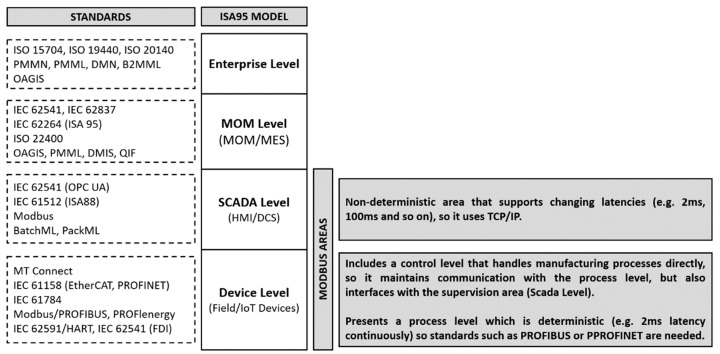
“cti fiel s f s ase t e I 95 el a relate sta ar s [3,4].”
BackgroundMethodHayes, G., & El-Khatib, K. (2013) · 2013 Third International Conference on Communications and Information Technology (ICCIT) · doi:10.1109/iccitechnology.2013.6579545 · Cited by 65 · cited 1×
“A solution based on SCTP (Stream Control Transmission Protocol) and HMAC (Hash-based Message Authentication Code) named ModbusSec, is presented by the reference [23].”
Method
Research works printed but not linked: 1
- Bullema, J.E. (2019, July 22). Available online: https://www.researchgate.net/publication/321770622_2017_-_Bullema_-_Smart_Manufacturing_-_not_only_for_greenfield_high_tech_factories.
Cited by
Innovation and challenges of artificial intelligence technology in personalized healthcare
Li, Y.-H., Li, Y.-L., Wei, M.-Y., & Li, G.-Y. (2024) · Scientific Reports · doi:10.1038/s41598-024-70073-7 · Cited by 275
“A combination of technical and organizational measures can be employed to tackle these issues, including data encryption, access control, and data breach prevention and response planning 42 .”
BackgroundKayes, A. S. M., Kalaria, R., Sarker, I. H., Islam, M. S., Watters, P., Ng, A., Hammoudeh, M. A. A., Badsha, S., & Kumara, I. (2020) · Sensors · doi:10.3390/s20092464 · Cited by 143
“Recently, a new secure version of an RBAC approach has also been introduced [70].”
A Survey of IIoT Protocols: A Measure of Vulnerability Risk Analysis Based on CVSS
Figueroa-Lorenzo, S., Añorga, J., & Arrizabalaga, S. (2021) · ACM Computing Surveys · doi:10.1145/3381038 · Cited by 89
“In addition, Reference [207], addresses the security problems of the Modbus protocol, through a new secure version of a RBAC model, which takes advantage of the authentication provided by TLS, as well as granting authorization of the client on the server, as well as of the Modbus frame.”
Self-citationGonzález, I., Calderón, A. J., & Portalo, J. M. (2021) · Sustainability · doi:10.3390/su13042234 · Cited by 90
“Cyber-security measures have not been implemented in the proposal so far; nonetheless, measures in this regard for vulnerabilities of the Modbus TCP network should be taken into account [55].”
BackgroundContainer-based Virtualization for Real-time Industrial Systems—A Systematic Review
Queiroz, R., Cruz, T., Mendes, J., Sousa, P., & Simões, P. (2023) · ACM Computing Surveys · doi:10.1145/3617591 · Cited by 84
“There are also indicative values for the end-to-end latency [ 23 ]—as shown in Table 1 —from which the deadlines can be gauged.”
Background
Metadata
- Authors
- Figueroa-Lorenzo, S., Añorga, J., & Arrizabalaga, S.
- Affiliations
- Centro de Estudios e Investigaciones Técnicas de Gipuzkoa (ES)
- Corresponding author
- Figueroa-Lorenzo, Santiago
- Venue
- Sensors
- Publisher
- MDPI AG
- Published
- 2019-10-14
- Volume
- 19
- Issue
- 20
- Pages
- 4455
- ISSN
- 1424-8220 (ISSN-L)
- PMC
- PMC6832255
- OpenAlex
- W2980075564
- Cited by
- 58
- References
- 29
- Citations by year
- 2026: 6 · 2025: 9 · 2024: 7 · 2023: 4 · 2022: 11 · 2021: 11 · 2020: 8 · 2019: 2
- FWCI
- 4.43
- Type
- journal article
- Language
- en
- Open access
- gold
- dx.doi.org
- Licence
- Locations
- Sensors (publishedVersion, cc-by)
- Europe PMC (PubMed Central) (publishedVersion, cc-by)
- PubMed Central (publishedVersion, cc-by)
- PubMed (publishedVersion)
- Deposito Adademico Digital Universidad De Navarra (University of Navarra) (submittedVersion, cc-by)
- DOAJ (DOAJ: Directory of Open Access Journals) (submittedVersion, cc-by-sa)
- Topics
- Physical Sciences › Engineering › Control and Systems Engineering › Smart Grid Security and Resilience
- Physical Sciences › Computer Science › Computer Networks and Communications › Access Control and Trust
- Physical Sciences › Computer Science › Computer Networks and Communications › Advanced Authentication Protocols Security
- Keywords
- Modbus, role-based access control, SCADA security, industrial control systems, IEC 62443, man-in-the-middle attacks, replay attacks, eavesdropping, network latency, critical infrastructure security
About these checks
Registry, retraction, Cites and statistics results are computed, not judged, with one exception: a printed reference that no index lists is read once by a model before it counts as a citation error. Claims are extracted by a model and kept only when their quote appears verbatim in the text; each cited source is then checked, with a model’s help, for whether it says what the claim relies on. Those verdicts can be wrong — read the claim’s quote and the cited source before relying on one.
Statistics and arithmetic are recomputed, not judged.
Confidence bands are shown only for fields calibrated on our annotated test set. None is calibrated yet, so no band is shown.
What counts as a claim ›How we measure confidence ›How we check this ›
Are you an author, or do you see a problem with this page? Request a review
How to cite
Cite CoChat for the checks on this page, and the paper for its own findings.
- This page
- CoChat. (2026). Citation check: A Role-Based Access Control Model in Modbus SCADA Systems. A Centralized Model Approach. https://app.cochat.ai/papers/10.3390/s19204455
- The paper
- Figueroa-Lorenzo, S., Añorga, J., & Arrizabalaga, S. (2019). A Role-Based Access Control Model in Modbus SCADA Systems. A Centralized Model Approach. Sensors. https://doi.org/10.3390/s19204455
Data sources
Bibliographic data: Semantic Scholar, OpenAlex, Crossref.
Contains information from the Semantic Scholar Academic Graph Datasets, made available under the ODC Attribution License (ODC-BY 1.0).
Semantic Scholar’s data is described in: Kinney, R., et al. (2023). The Semantic Scholar Open Data Platform. arXiv:2301.10140.
