

The DOI matches its Crossref record; 300 of the 300 references it cites were found in a registry or an index.
A Survey on AI-Driven Digital Twins in Industry 4.0: Smart Manufacturing and Advanced Robotics
Open accessAbstract
Digital twin (DT) and artificial intelligence (AI) technologies have grown rapidly in recent years and are considered by both academia and industry to be key enablers for Industry 4.0. As a digital replica of a physical entity, the basis of DT is the infrastructure and data, the core is the algorithm and model, and the application is the software and service. The grounding of DT and AI in industrial sectors is even more dependent on the systematic and in-depth integration of domain-specific expertise. This survey comprehensively reviews over 300 manuscripts on AI-driven DT technologies of Industry 4.0 used over the past five years and summarizes their general developments and the current state of AI-integration in the fields of smart manufacturing and advanced robotics. These cover conventional sophisticated metal machining and industrial automation as well as emerging techniques, such as 3D printing and human-robot interaction/cooperation. Furthermore, advantages of AI-driven DTs in the context of sustainable development are elaborated. Practical challenges and development prospects of AI-driven DTs are discussed with a respective focus on different levels. A route for AI-integration in multiscale/fidelity DTs with multiscale/fidelity data sources in Industry 4.0 is outlined.
Overview
The claims and statistics of this paper haven’t been checked yet.
Run the check — free, no account needed. It reads the open-access text and checks the sources it cites.
Integrity signals
Registry
Cites
Statistics
Figures

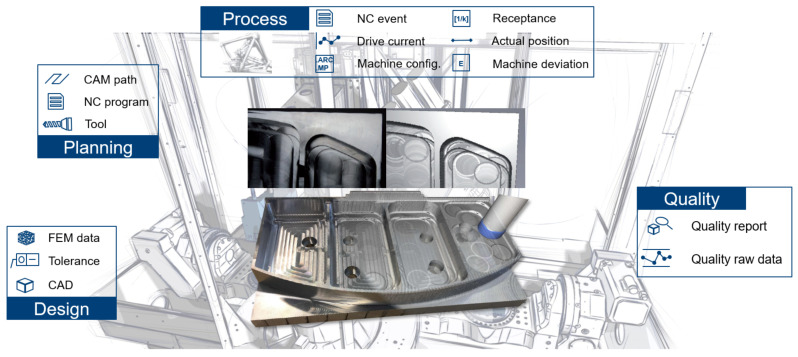
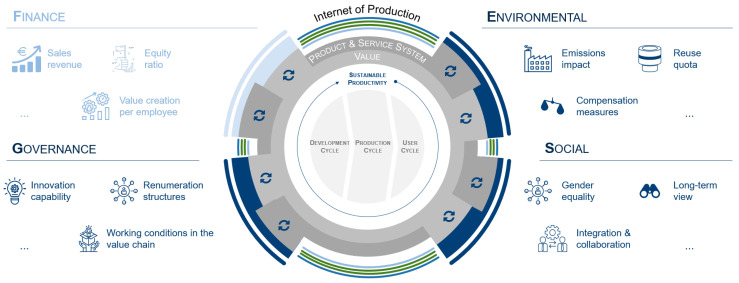
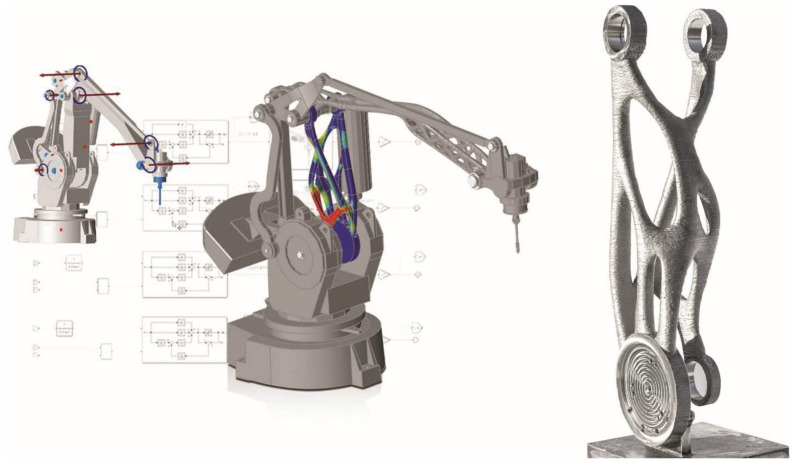
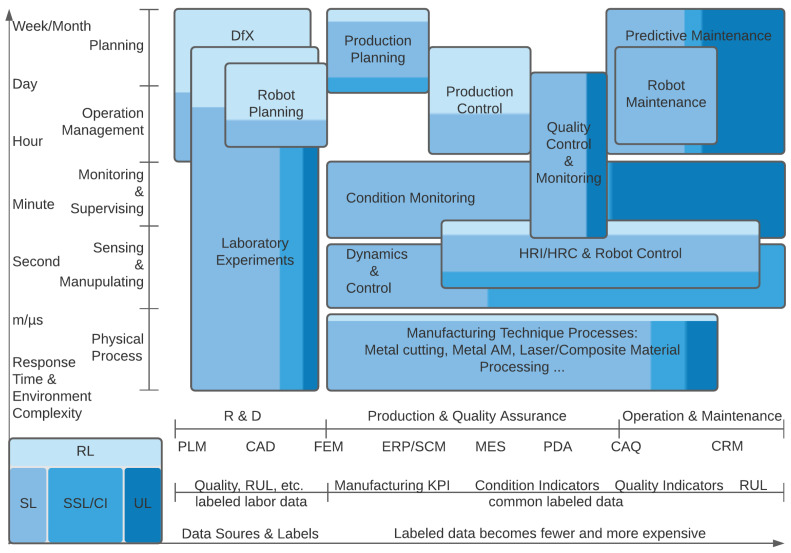
Verification
Claims the paper makes
The claims and statistics of this paper haven’t been checked yet.
Run the check — free, no account needed. It reads the open-access text and checks the sources it cites.
Claims other papers make about this one
Each is checked against this paper’s own text: does it say what the citing paper says it does?
The source backs part of the claim, not all of it — or backs it for a different population, condition or comparison.
In the citing paper
“This helps manufacturers to identify and eliminate bottlenecks, reduce waste, and increase productivity [63] .”
From Artificial intelligence, machine learning and deep learning in advanced robotics, a review (2023) · cites this paper as [63]
Experimental — accuracy not yet measuredThe cited source says what the claim attributes to it.
In the citing paper
“Recent studies indicate that incorporating AI has the potential to enhance the adaptability of DTs to cope with dynamic alterations in workshops and factories.”
From Digital Twins in the IIoT: Current Practices and Future Directions Toward Industry 5.0 (2025) · cites this paper as [53]
The check wasn’t confident either way, so it gives no verdict — never disputed.
In the citing paper
“In the same way, real-time AR instruction for technicians can revolutionize remote help by decreasing the requirement of physical presence, increasing productivity, and reducing cost [53].”
From Digital Twins in the IIoT: Current Practices and Future Directions Toward Industry 5.0 (2025) · cites this paper as [53]
Experimental — accuracy not yet measured
Self-check
Percentages, sums and reported differences re-computed from the paper’s own numbers.
The self-check needs the paper’s full text.
Citations
Cites
Representation Learning: A Review and New Perspectives
Bengio, Y., Courville, A., & Vincent, P. (2013) · IEEE Transactions on Pattern Analysis and Machine Intelligence · doi:10.1109/tpami.2013.50 · Cited by 13,001
MuJoCo: A physics engine for model-based control
Todorov, E., Erez, T., & Tassa, Y. (2012) · 2012 IEEE/RSJ International Conference on Intelligent Robots and Systems · doi:10.1109/iros.2012.6386109 · Cited by 4,767
Digital Twin in Industry: State-of-the-Art
Tao, F., Zhang, H., Liu, A., & Nee, A. Y. C. (2019) · IEEE Transactions on Industrial Informatics · doi:10.1109/tii.2018.2873186 · Cited by 4,391
Digital Twin: Mitigating Unpredictable, Undesirable Emergent Behavior in Complex Systems
Grieves, M., & Vickers, J. (2017) · Transdisciplinary Perspectives on Complex Systems · doi:10.1007/978-3-319-38756-7_4 · Cited by 3,727 · cited 1×
“Later, DT was indicated by Grieves and Vickers as a dynamic model based on massive amounts of information and computing capability that change over the lifecycle, including creation, production, operations and disposal [17].”
MethodDigital twin: Enabling technologies, challenges and open research
Fuller, A., Fan, Z., Day, C., & Barlow, C. (2020) · IEEE Access · doi:10.1109/access.2020.2998358 · Cited by 2,965
Digital twin-driven product design, manufacturing and service with big data
Tao, F., Cheng, J., Qi, Q., Zhang, M., Zhang, H., & Sui, F. (2018) · The International Journal of Advanced Manufacturing Technology · doi:10.1007/s00170-017-0233-1 · Cited by 2,920
Characterising the Digital Twin: A systematic literature review
Jones, D., Snider, C., Nassehi, A., Yon, J., & Hicks, B. (2020) · CIRP Journal of Manufacturing Science and Technology · doi:10.1016/j.cirpj.2020.02.002 · Cited by 2,422
The Digital Twin Paradigm for Future NASA and U.S. Air Force Vehicles
Glaessgen, E., & Stargel, D. (2012) · 53rd AIAA/ASME/ASCE/AHS/ASC Structures, Structural Dynamics and Materials Conference 20th AIAA/ASME/AHS Adaptive Structures Conference 14th AIAA · doi:10.2514/6.2012-1818 · Cited by 2,404
Ivanov, D., & Dolgui, A. B. (2020) · Production Planning & Control · doi:10.1080/09537287.2020.1768450 · Cited by 2,254
Review of digital twin about concepts, technologies, and industrial applications
Liu, M., Fang, S., Dong, H., & Xu, C. (2020) · Journal of Manufacturing Systems · doi:10.1016/j.jmsy.2020.06.017 · Cited by 2,075
Research works printed but not linked: 5
- Zhang, M., Zuo, Y., and Tao, F. (2018, January 27–29). Equipment Energy Consumption Management in Applications. Proceedings of the 2018 IEEE 15th International Conference on Networking, Sensing and Control (ICNSC), Zhuhai, China.
- Zambal, S., Eitzinger, C., Clarke, M., Klintworth, J., and Mechin, P.y. (2018, January 18–20). Effects of defects analysis based on manufacturing data. Proceedings of the 2018 IEEE 16th International Conference on Industrial Informatics (INDIN), Porto, Portugal.
- Malik, A.A., and Brem, A. (2020). Man, machine and work in a digital twin setup: A case study. arXiv.
- Schluse, M., and Rossmann, J. (2016, January 3–5). From Simulation to Experimentable Digital Twins. Proceedings of the IEEE International Symposium on Systems Engineering, Edinburgh, UK.
- Stehling, M., Schmiedinger, T., and Affenzeller, P. (2021, September 21). Why Robots do not matter! Using Digital Twin and Augmented Learning for Continuous Improvement in the context of Manufacturing. Researchgate.Net. Available online: https://www.researchgate.net/publication/329218023_Why_Robots_do_not_matter_Using_Digital_Twin_and_Augmented_Learning_for_Continuous_Improvement_in_the_context_of_Manufacturing.
Cited by
Sorted by citations
Artificial intelligence, machine learning and deep learning in advanced robotics, a review
Soori, M., Arezoo, B., & Dastres, R. (2023) · Cognitive Robotics · doi:10.1016/j.cogr.2023.04.001 · Cited by 1,131
Digital Twins: A Survey on Enabling Technologies, Challenges, Trends and Future Prospects
Mihai, S., Yaqoob, M., Hưng, Đ. V., Davis, W., Towakel, P., Raza, M., Karamanoglu, M., Barn, B. S., Shetve, D., Prasad, R. V., et al. (2022) · IEEE Communications Surveys & Tutorials · doi:10.1109/comst.2022.3208773 · Cited by 1,195
“In [14], Huang et al. put together a detailed survey on the AI-driven DTs in the context of smart manufacturing and advanced robotics.”
BackgroundSerrano, D. R., Luciano, F. C., Anaya, B. J., Öngoren, B., Kara, A., Molina, G., Ramirez, B. I., Sánchez-Guirales, S. A., Simon, J. A., Tomietto, G., et al. (2024) · Pharmaceutics · doi:10.3390/pharmaceutics16101328 · Cited by 594
“AI-driven digital twins will simulate and optimize manufacturing processes in real-time, while predictive maintenance algorithms will prevent equipment failures and minimize downtime, facilitating more agile and responsive manufacturing operations [171–173].”
Zafar, M. H., Langås, E. F., & Sanfilippo, F. (2024) · Robotics and Computer-Integrated Manufacturing · doi:10.1016/j.rcim.2024.102769 · Cited by 338
Zong, Z., & Guan, Y. (2024) · Journal of the Knowledge Economy · doi:10.1007/s13132-024-02001-z · Cited by 375
“With the increased interconnection of devices, processes, and systems in Industry 4.0, the potential for AI-driven insights and optimizations is growing dramatically (Huang et al., 2021).”
Influential
Metadata
- Authors
- Huang, Z., Shen, Y., Li, J., Fey, M., & Brecher, C.
- Affiliations
- RWTH Aachen University (DE)
- UBTECH North America Research and Development Center, Pasadena, CA 91101-4858, USA
- University of California, Los Angeles (US)
- Corresponding author
- Huang, Ziqi
- Shen, Yang
- Venue
- Sensors
- Publisher
- MDPI AG
- Published
- 2021-09-23
- Volume
- 21
- Issue
- 19
- Pages
- 6340
- ISSN
- 1424-8220 (ISSN-L)
- PMC
- PMC8512418
- OpenAlex
- W3199754434
- Cited by
- 418
- References
- 296
- Citations by year
- 2026: 75 · 2025: 129 · 2024: 112 · 2023: 59 · 2022: 41 · 2021: 2
- FWCI
- 5.00
- Type
- journal article
- Language
- en
- Open access
- gold
- doi.org
- Licence
- Locations
- Sensors (publishedVersion, cc-by)
- PubMed Central (publishedVersion, cc-by)
- PubMed (publishedVersion)
- RWTH Publications (RWTH Aachen) (submittedVersion, cc-by)
- DOAJ (DOAJ: Directory of Open Access Journals) (submittedVersion, cc-by-sa)
- Funders
- Deutsche Forschungsgemeinschaft (390621612)
- Topics
- Physical Sciences › Engineering › Industrial and Manufacturing Engineering › Digital Transformation in Industry
- Social Sciences › Decision Sciences › Management Science and Operations Research › Impact of AI and Big Data on Business and Society
- Physical Sciences › Engineering › Industrial and Manufacturing Engineering › Applied Advanced Technologies
- Keywords
- digital twin, artificial intelligence, Industry 4.0, smart manufacturing, advanced robotics, metal machining, industrial automation, 3D printing, human-robot interaction, human-robot collaboration, sustainable development, artificial intelligence integration
- MeSH terms
- Algorithms, Artificial Intelligence, Automation, Humans, Industry, Robotics
About these checks
Registry, retraction, Cites and statistics results are computed, not judged, with one exception: a printed reference that no index lists is read once by a model before it counts as a citation error. Claims are extracted by a model and kept only when their quote appears verbatim in the text; each cited source is then checked, with a model’s help, for whether it says what the claim relies on. Those verdicts can be wrong — read the claim’s quote and the cited source before relying on one.
Statistics and arithmetic are recomputed, not judged.
Confidence bands are shown only for fields calibrated on our annotated test set. None is calibrated yet, so no band is shown.
What counts as a claim ›How we measure confidence ›How we check this ›
Are you an author, or do you see a problem with this page? Request a review
