

Human Activity Recognition via Hybrid Deep Learning Based Model
Open accessThe DOI matches its Crossref record; 50 of the 51 references it cites were found in a registry or an index.
Abstract
In recent years, Human Activity Recognition (HAR) has become one of the most important research topics in the domains of health and human-machine interaction. Many Artificial intelligence-based models are developed for activity recognition; however, these algorithms fail to extract spatial and temporal features due to which they show poor performance on real-world long-term HAR. Furthermore, in literature, a limited number of datasets are publicly available for physical activities recognition that contains less number of activities. Considering these limitations, we develop a hybrid model by incorporating Convolutional Neural Network (CNN) and Long Short-Term Memory (LSTM) for activity recognition where CNN is used for spatial features extraction and LSTM network is utilized for learning temporal information. Additionally, a new challenging dataset is generated that is collected from 20 participants using the Kinect V2 sensor and contains 12 different classes of human physical activities. An extensive ablation study is performed over different traditional machine learning and deep learning models to obtain the optimum solution for HAR. The accuracy of 90.89% is achieved via the CNN-LSTM technique, which shows that the proposed model is suitable for HAR applications.
Overview
The claims and statistics of this paper haven’t been checked yet.
Free: it reads the open-access text and checks the first 5 claims that cite a source we can check. Create a free account to check every claim.
Integrity signals
Registry
Cites
Statistics
Figures

Verification
Claims the paper makes
The claims and statistics of this paper haven’t been checked yet.
Free: it reads the open-access text and checks the first 5 claims that cite a source we can check. Create a free account to check every claim.
Claims other papers make about this one
Each is checked against this paper’s own text: does it say what the citing paper says it does?
The source backs part of the claim, not all of it — or backs it for a different population, condition or comparison.
In the citing paper
“For example, wearable sensors such as accelerometers, gyroscopes, and magnetometers capture detailed information about a person's movements and posture, whereas cameras capture visual information about the person and their surroundings [114,116,164,165].”
From A Survey of Video Surveillance Systems in Smart City (2023) · cites this paper as [114]
Experimental — accuracy not yet measuredThe cited source says what the claim attributes to it.
In the citing paper
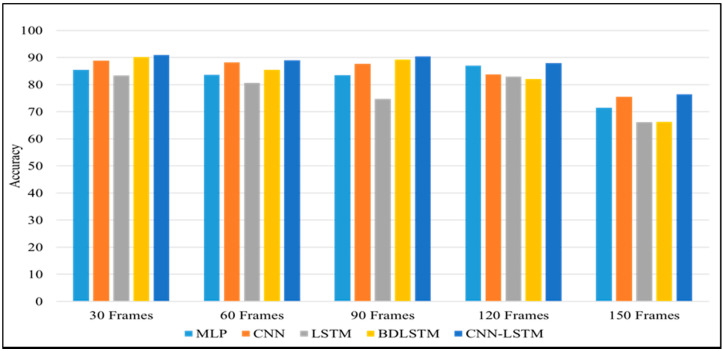
“To combine the strengths of both models, a CNN-LSTM hybrid architecture was developed in [114] to monitor and recognize human actions in indoor environments in 2022 with an accuracy of 90.89% on 30 frames.”
From A Survey of Video Surveillance Systems in Smart City (2023) · cites this paper as [114]
The check wasn’t confident either way, so it gives no verdict — never disputed.
In the citing paper
“Indeed, as mentioned in [114,157], when new types of operations and objects are not labeled or known in advance, unsupervised deep learning techniques can be explored to improve object classification and recognition.”
From A Survey of Video Surveillance Systems in Smart City (2023) · cites this paper as [114]
Experimental — accuracy not yet measured
Self-check
Percentages, sums and reported differences re-computed from the paper’s own numbers.
The self-check needs the paper’s full text.
Citations
Cites
Faster R-CNN: Towards Real-Time Object Detection with Region Proposal Networks
Ren, S., He, K., Girshick, R., & Sun, J. (2017) · IEEE Transactions on Pattern Analysis and Machine Intelligence · doi:10.1109/tpami.2016.2577031 · Cited by 73,472 · cited 1×
“The proposed dataset includes 12 different activities taken from 20 individuals aged between 25–35 years.”
MethodCortes, C., & Vapnik, V. (1995) · Machine Learning · doi:10.1007/bf00994018 · Cited by 59,421
Neural networks and physical systems with emergent collective computational abilities.
Hopfield, J. J. (1982) · Proceedings of the National Academy of Sciences · doi:10.1073/pnas.79.8.2554 · Cited by 19,270 · cited 1×
“To capture the unique features of action or activity, complex machine learning-based models such as various flavors of SVM [22] (Linear SVM (LSVM), Quadratic SVM (QSVM), Cubic SVM (CSVM), Fine Gaussian SVM (FGSVM), Medium Gaussian SVM (MGSVM), Coarse Gaussian SVM (CGSVM)), KNN [23] (Fine KNN (FKNN), Medium KNN (MKNN),…”
BackgroundTHE USE OF MULTIPLE MEASUREMENTS IN TAXONOMIC PROBLEMS
FISHER, R. A. (1936) · Annals of Eugenics · doi:10.1111/j.1469-1809.1936.tb02137.x · Cited by 15,227 · cited 1×
“To capture the unique features of action or activity, complex machine learning-based models such as various flavors of SVM [22] (Linear SVM (LSVM), Quadratic SVM (QSVM), Cubic SVM (CSVM), Fine Gaussian SVM (FGSVM), Medium Gaussian SVM (MGSVM), Coarse Gaussian SVM (CGSVM)), KNN [23] (Fine KNN (FKNN), Medium KNN (MKNN),…”
BackgroundAn Introduction to Kernel and Nearest-Neighbor Nonparametric Regression
Altman, N. S. (1992) · The American Statistician · doi:10.1080/00031305.1992.10475879 · Cited by 5,708 · cited 2×
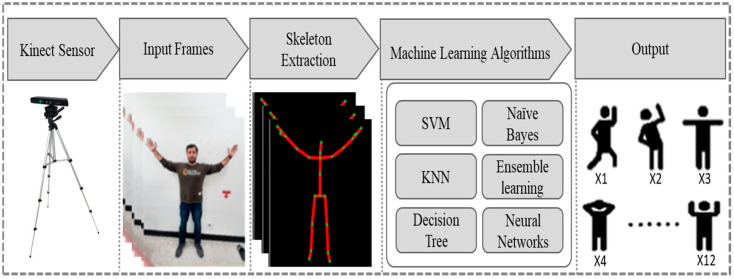
“…various flavors of SVM [22] (Linear SVM (LSVM), Quadratic SVM (QSVM), Cubic SVM (CSVM), Fine Gaussian SVM (FGSVM), Medium Gaussian SVM (MGSVM), Coarse Gaussian SVM (CGSVM)), KNN [23] SVM is a supervised learning model that strives for maximal margin separation with a little amount of training data.”
MethodPopular Ensemble Methods: An Empirical Study
Opitz, D., & Maclin, R. (1999) · Journal of Artificial Intelligence Research · doi:10.1613/jair.614 · Cited by 2,953 · cited 1×
“To capture the unique features of action or activity, complex machine learning-based models such as various flavors of SVM [22] (Linear SVM (LSVM), Quadratic SVM (QSVM), Cubic SVM (CSVM), Fine Gaussian SVM (FGSVM), Medium Gaussian SVM (MGSVM), Coarse Gaussian SVM (CGSVM)), KNN [23] (Fine KNN (FKNN), Medium KNN (MKNN),…”
BackgroundOn Human Motion Prediction Using Recurrent Neural Networks
Martinez, J., Black, M. J., & Romero, J. (2017) · 2017 IEEE Conference on Computer Vision and Pattern Recognition (CVPR) · doi:10.1109/cvpr.2017.497 · Cited by 984 · cited 1×
“For instance, Julieta et al. [19] focus on human motion by utilizing the recurrent neural network, the goal is time-dependent representations to perform tasks including short-term prediction as well as long-term human motion synthesis.”
BackgroundLi, C., Zhong, Q., Xie, D., & Pu, S. (2018) · Proceedings of the Twenty-Seventh International Joint Conference on Artificial Intelligence · doi:10.24963/ijcai.2018/109 · Cited by 582
Human action recognition using a temporal hierarchy of covariance descriptors on 3D joint locations
Hussein, M. E., Torki, M., Gowayyed, M. A., & El-Saban, M. (2013) · Cited by 507
Beyond English-Centric Multilingual Machine Translation
Fan, A., Bhosale, S., Schwenk, H., Ma, Z., El-Kishky, A., Goyal, S., Baines, M., Çelebi, O., Wenzek, G., Chaudhary, V., et al. (2020) · arXiv (Cornell University) · doi:10.48550/arxiv.2010.11125 · Cited by 452 · cited 1×
“…time such as anomaly recognition [37,38] speech recognition [39,40], person re-identification [41], Energy forecasting [42–45], machine translation [46], and activity recognition from sensor data [47] used a special kind of neural network called Recurrent Neural Network (RNN) specifically designed…”
MethodEigenJoints-based action recognition using Naïve-Bayes-Nearest-Neighbor
Yang, X., & Tian, Y. L. (2012) · 2012 IEEE Computer Society Conference on Computer Vision and Pattern Recognition Workshops · doi:10.1109/cvprw.2012.6239232 · Cited by 439 · cited 1×
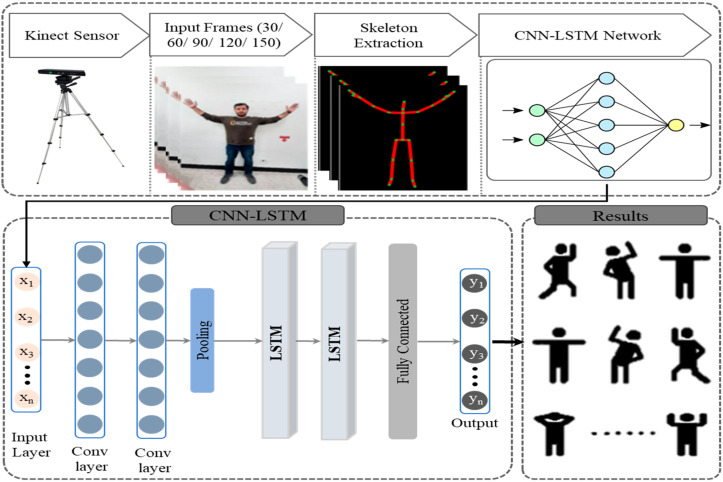
“We developed a hybrid approach for the recognition of physical activity which integrates CNN and LSTM, where CNN layers are utilized to extract spatial features followed by the LSTM network for learning temporal information.”
MethodZanfir, M., Leordeanu, M., & Sminchisescu, C. (2013) · 2013 IEEE International Conference on Computer Vision · doi:10.1109/iccv.2013.342 · Cited by 438 · cited 1×
“We developed a hybrid approach for the recognition of physical activity which integrates CNN and LSTM, where CNN layers are utilized to extract spatial features followed by the LSTM network for learning temporal information.”
MethodOfli, F., Chaudhry, R., Kurillo, G., Vidal, R., & Bajcsy, R. (2014) · Journal of Visual Communication and Image Representation · doi:10.1016/j.jvcir.2013.04.007 · Cited by 318 · cited 1×
“In [13], the authors presented the sequence of most informative joints features, and represent the information of skeletal joints for each action.”
BackgroundHuman action recognition using attention based LSTM network with dilated CNN features
Muhammad, K., Mustaqeem, Ullah, A., Imran, A. S., Sajjad, M., Kiran, M. S., Sannino, G., & de Albuquerque, V. H. C. (2021) · Future Generation Computer Systems · doi:10.1016/j.future.2021.06.045 · Cited by 254 · cited 1×
“Mostly a problem having sequential analysis over time such as anomaly recognition [37,38] speech recognition [39,40], person re-identification [41], Energy forecasting [42–45], machine translation [46], and activity recognition from sensor data [47] used a special kind of neural network called…”
BackgroundSymbiotic Graph Neural Networks for 3D Skeleton-Based Human Action Recognition and Motion Prediction
Li, M., Chen, S., Chen, X., Zhang, Y., Wang, Y., & Tian, Q. (2022) · IEEE Transactions on Pattern Analysis and Machine Intelligence · doi:10.1109/tpami.2021.3053765 · Cited by 240
Light-DehazeNet: A Novel Lightweight CNN Architecture for Single Image Dehazing
Ullah, H., Muhammad, K., Irfan, M., Anwar, S., Sajjad, M., Imran, A. S., & de Albuquerque, V. H. C. (2021) · IEEE Transactions on Image Processing · doi:10.1109/tip.2021.3116790 · Cited by 223 · cited 1×
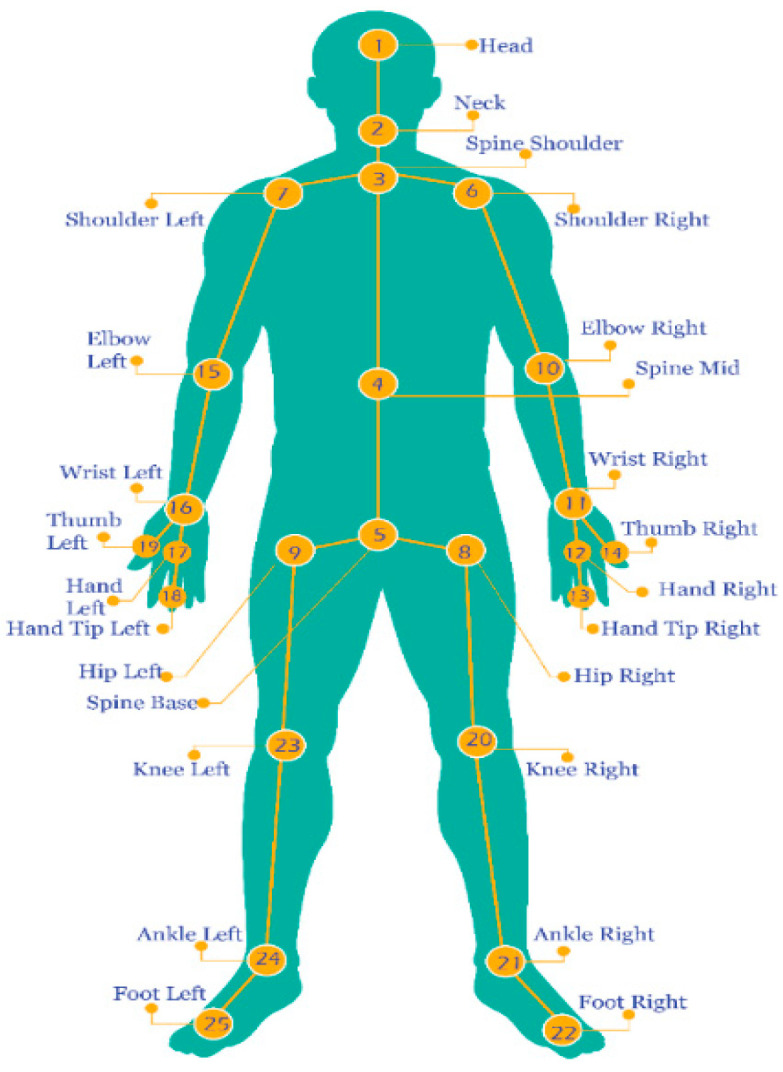
“For the collection of this data, we used Microsoft’s motion Kinect sensor V2 which can extract 25 different joints from the human body as shown in Figure 1.”
MethodKhan, Z., Hussain, T., Ullah, A., Rho, S., Lee, M., & Baik, S. (2020) · Sensors · doi:10.3390/s20051399 · Cited by 218 · cited 2×
“…can detects 25 joints of the body and it is stored in following order such as Head, Neck, Spine Shoulder, Spine Mid, Spine Base, Shoulder Right, Shoulder Left, Hip Right, Hip Left, Elbow Right, Wrist Right, Hand Right, Hand Tip Right, Thumb Right, Elbow Left, Wrist Left, Hand Left, Hand Tip Left,…”
BackgroundMLT-DNet: Speech emotion recognition using 1D dilated CNN based on multi-learning trick approach
Mustaqeem, & Kwon, S. (2021) · Expert Systems with Applications · doi:10.1016/j.eswa.2020.114177 · Cited by 204 · cited 1×
“Over the last two decades, CNNs have been actively used and achieved astonishing performance for various computer vision-related real-world problems that include activity recognition [29], object detection [30], speech recognition [31,32], and image enhancement [33].”
BackgroundDeep learning based human activity recognition (HAR) using wearable sensor data
Gupta, S. (2021) · International Journal of Information Management Data Insights · doi:10.1016/j.jjimei.2021.100046 · Cited by 197 · cited 1×
“Inspired by the work presented in [35,36], we propose a One-Dimensional (1D) CNN architecture for the problem under the observation test with different settings for efficient classification of predefined indoor activities.”
MethodAn Efficient Anomaly Recognition Framework Using an Attention Residual LSTM in Surveillance Videos
Ullah, W., Ullah, A., Hussain, T., Khan, Z. A., & Baik, S. W. (2021) · Sensors · doi:10.3390/s21082811 · Cited by 188 · cited 1×
“Mostly a problem having sequential analysis over time such as anomaly recognition [37,38] speech recognition [39,40], person re-identification [41], Energy forecasting [42–45], machine translation [46], and activity recognition from sensor data [47] used a special kind of neural network called Recurrent Neural Network…”
CLSTM: Deep Feature-Based Speech Emotion Recognition Using the Hierarchical ConvLSTM Network
Mustaqeem, M., & Kwon, S. (2020) · Mathematics · doi:10.3390/math8122133 · Cited by 168 · cited 1×
“Mostly a problem having sequential analysis over time such as anomaly recognition [37,38] speech recognition [39,40], person re-identification [41], Energy forecasting [42–45], machine translation [46], and activity recognition from sensor data [47] used a special kind of neural network called…”
BackgroundUllah, A., Muhammad, K., Ding, W., Palade, V., Haq, I. U., & Baik, S. W. (2021) · Applied Soft Computing · doi:10.1016/j.asoc.2021.107102 · Cited by 166 · cited 1×
“The current literature studies focus to recognize activities using video sequences collected by standard RGB cameras and surveillance cameras [4,5].”
BackgroundUllah, W., Ullah, A., Hussain, T., Muhammad, K., Heidari, A. A., Del Ser, J., Baik, S. W., & De Albuquerque, V. H. C. (2022) · Future Generation Computer Systems · doi:10.1016/j.future.2021.10.033 · Cited by 160 · cited 1×
“Mostly a problem having sequential analysis over time such as anomaly recognition [37,38] speech recognition [39,40], person re-identification [41], Energy forecasting [42–45], machine translation [46], and activity recognition from sensor data [47] used a special kind of neural network called Recurrent Neural Network…”
Matching and Prediction on the Principle of Biological Classification
Belson, W. A. (1959) · Journal of the Royal Statistical Society Series C (Applied Statistics) · doi:10.2307/2985543 · Cited by 142 · cited 3×
“To capture the unique features of action or activity, complex machine learning-based models such as various flavors of SVM [22] (Linear SVM (LSVM), Quadratic SVM (QSVM), Cubic SVM (CSVM), Fine Gaussian SVM (FGSVM), Medium Gaussian SVM (MGSVM), Coarse Gaussian SVM (CGSVM)), KNN [23] (Fine KNN (FKNN), Medium KNN (MKNN),…”
BackgroundMekruksavanich, S., & Jitpattanakul, A. (2021) · Electronics · doi:10.3390/electronics10141685 · Cited by 138 · cited 1×
“…recognition [39,40], person re-identification [41], Energy forecasting [42–45], machine translation [46], and activity recognition from sensor data [47] used a special kind of neural network called Recurrent Neural Network (RNN) specifically designed for sequential data analysis having the ability…”
MethodKhan, N., Haq, I. U., Khan, S. U., Rho, S., Lee, M. Y., & Baik, S. W. (2021) · International Journal of Electrical Power & Energy Systems · doi:10.1016/j.ijepes.2021.107023 · Cited by 131 · cited 1×
“Although RNN can extract the hidden time-series patterns in sequential data (i.e., sensor, audio, or video data), it is unable to remember/hold long information for a long time and usually fails to deal with the problems having long-term sequences [49,50].”
BackgroundKhan, N., Ullah, F. U. M., Afnan, Ullah, A., Lee, M. Y., & Baik, S. W. (2021) · IEEE Access · doi:10.1109/access.2020.3047732 · Cited by 98
Effective Active Skeleton Representation for Low Latency Human Action Recognition
Cai, X., Zhou, W., Wu, L., Luo, J., & Li, H. (2015) · IEEE Transactions on Multimedia · doi:10.1109/tmm.2015.2505089 · Cited by 92 · cited 1×
“We developed a hybrid approach for the recognition of physical activity which integrates CNN and LSTM, where CNN layers are utilized to extract spatial features followed by the LSTM network for learning temporal information.”
MethodConflux LSTMs Network: A Novel Approach for Multi-View Action Recognition
Ullah, A., Muhammad, K., Hussain, T., & Baik, S. W. (2020) · Neurocomputing · doi:10.1016/j.neucom.2019.12.151 · Cited by 87 · cited 1×
“The current literature studies focus to recognize activities using video sequences collected by standard RGB cameras and surveillance cameras [4,5].”
BackgroundPhysical Activity Measurement in Older Adults: Relationships with Mental Health
Parker, S. J., Strath, S. J., & Swartz, A. M. (2008) · Journal of Aging and Physical Activity · doi:10.1123/japa.16.4.369 · Cited by 85 · cited 1×
“The involvement of the elder people in particular physical activities has positive effects on mental state, satisfaction, quality of life, and physical well-being [6].”
BackgroundSkeleton‐based human activity recognition for elderly monitoring systems
Hbali, Y., Hbali, S., Ballihi, L., & Sadgal, M. (2017) · IET Computer Vision · doi:10.1049/iet-cvi.2017.0062 · Cited by 85 · cited 1×
“Youssef et al. [11] developed a skeleton-based technique to characterize the spatial-temporal features of a human activity sequence utilizing Minkowski and cosine distances between joint data extracted through Microsoft Kinect.”
Method1D-CNN: Speech Emotion Recognition System Using a Stacked Network with Dilated CNN Features
Mustaqeem, M., & Kwon, S. (2021) · Computers, materials & continua/Computers, materials & continua (Print) · doi:10.32604/cmc.2021.015070 · Cited by 82 · cited 1×
“For the collection of this data, we used Microsoft’s motion Kinect sensor V2 which can extract 25 different joints from the human body as shown in Figure 1.”
MethodIss2Image: A Novel Signal-Encoding Technique for CNN-Based Human Activity Recognition
Hur, T., Bang, J., Huynh-The, T., Lee, J., Kim, J.-I., & Lee, S. (2018) · Sensors · doi:10.3390/s18113910 · Cited by 74 · cited 1×
“Over the last two decades, CNNs have been actively used and achieved astonishing performance for various computer vision-related real-world problems that include activity recognition [29], object detection [30], speech recognition [31,32], and image enhancement [33].”
BackgroundSelf-citationConcurrent Activity Recognition with Multimodal CNN-LSTM StructurePreprint
Li, X., Zhang, Y., Zhang, J., Chen, S., Marsic, I., Farneth, R. A., & Burd, R. S. (2017) · arXiv (Cornell University) · doi:10.48550/arxiv.1702.01638 · Cited by 67 · cited 11×
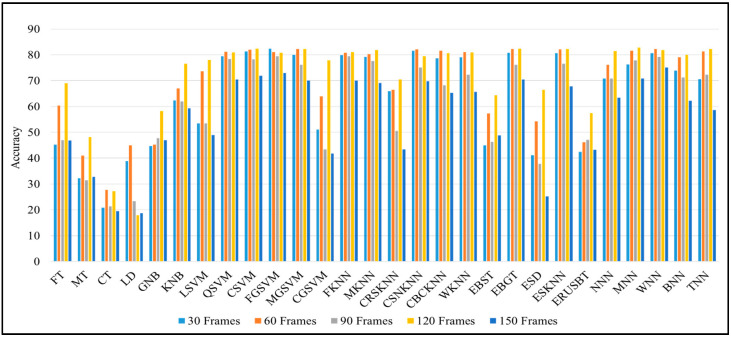
“The frames sequence also depends on the accuracy of the model, if we select a very large frames sequence then it can decrease the model accuracy and performances as shown in Figure 8, for example, the performance of all models on the 150 frames sequence in Table 5 is lower than other.”
MethodInfluentialSequential Learning-Based Energy Consumption Prediction Model for Residential and Commercial Sectors
Haq, I. U., Ullah, A., Khan, S. U., Khan, N., Lee, M. Y., Rho, S., & Baik, S. W. (2021) · Mathematics · doi:10.3390/math9060605 · Cited by 67 · cited 1×
“Such a type of problem is referred to as gradient exploding or vanishing gradients, which can be overcome with a special kind of RNN named Long Short-Term Memory (LSTM) having the capability to remember the information for a long period [51].”
BackgroundTowards Efficient Building Designing: Heating and Cooling Load Prediction via Multi-Output Model
Sajjad, M., Khan, S. U., Khan, N., Haq, I. U., Ullah, A., Lee, M. Y., & Baik, S. W. (2020) · Sensors · doi:10.3390/s20226419 · Cited by 62
An Online Continuous Human Action Recognition Algorithm Based on the Kinect Sensor
Zhu, G., Zhang, L., Shen, P., & Song, J. (2016) · Sensors · doi:10.3390/s16020161 · Cited by 60
AB-Net: A Novel Deep Learning Assisted Framework for Renewable Energy Generation Forecasting
Khan, N., Ullah, F. U. M., Haq, I. U., Khan, S. U., Lee, M. Y., & Baik, S. W. (2021) · Mathematics · doi:10.3390/math9192456 · Cited by 60 · cited 1×
“Generally, the RNN network analyzes the input hidden sequential pattern by concatenating the previous information with current information from both spatial and temporal dimensions and predicting the future sequence [48].”
MethodA Human Activity Recognition System Based on Dynamic Clustering of Skeleton Data
Manzi, A., Dario, P., & Cavallo, F. (2017) · Sensors · doi:10.3390/s17051100 · Cited by 59 · cited 1×
“Another technique [10] uses skeletal data from a depth camera and developed a machine-learning algorithm to recognize the human activity.”
MethodKhan, S. U., Hussain, T., Ullah, A., & Baik, S. W. (2021) · Multimedia Tools and Applications · doi:10.1007/s11042-020-10145-8 · Cited by 58 · cited 1×
“The Kinect V2 can detects 25 joints of the body and it is stored in following order such as Head, Neck, Spine Shoulder, Spine Mid, Spine Base, Shoulder Right, Shoulder Left, Hip Right, Hip Left, Elbow Right, Wrist Right, Hand Right, Hand Tip Right, Thumb Right, Elbow Left, Wrist Left, Hand Left,…”
BackgroundDiving Deep into Short-Term Electricity Load Forecasting: Comparative Analysis and a Novel Framework
Ullah, F. U. M., Khan, N., Hussain, T., Lee, M. Y., & Baik, S. W. (2021) · Mathematics · doi:10.3390/math9060611 · Cited by 55 · cited 1×
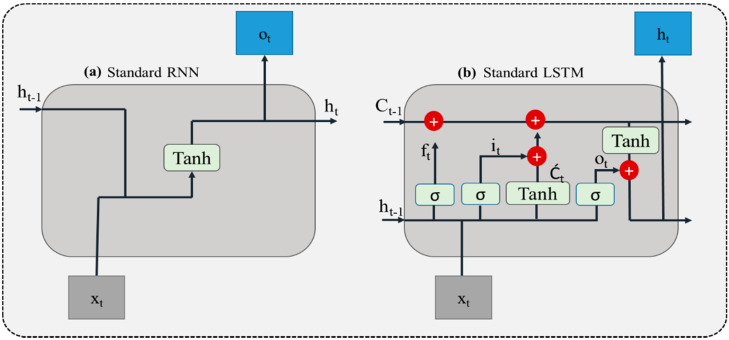
“…includes several gates (including input, forget, and output gate), where each gate processes the input from the previous gate and forward it to the next gate thereby controlling the flow of information towards the final output [52] Figure 4 demonstrates the standard unit of the (a) RNN and (b) LSTM.”
BackgroundHuman Activity Recognition for Surveillance Applications
Taha, A., Zayed, H. H., Khalifa, M. E., & El-Horbaty, E.-S. M. (2015) · doi:10.15849/icit.2015.0103 · Cited by 53 · cited 1×
“Introduction HAR gained more attention from researchers in video analysis and its different applications in various domains such as indoor gym physical activities [1], surveillance systems [2], and health care systems [3].”
BackgroundKhan, N., Ullah, A., Haq, I. U., Menon, V. G., & Baik, S. W. (2020) · Journal of Real-Time Image Processing · doi:10.1007/s11554-020-01020-8 · Cited by 51 · cited 1×
“The key factor behind the betterment of CNNs for computer vision problems is their architectural design including convolutional, pooling, normalization, and fully connected layers that extract progressive yet semantically rich features from the input data [34].”
BackgroundHuman activity recognition using 2D skeleton data and supervised machine learning
Ghazal, S., Khan, U. S., Saleem, M. M., Rashid, N., & Iqbal, J. (2019) · IET Image Processing · doi:10.1049/iet-ipr.2019.0030 · Cited by 41 · cited 1×
“In machine learning Sumaira et al. [8] performed a comparative analysis of several models for HAR using 2D-skeletal data.”
MethodKhan, S. U., & Baik, R. (2020) · Processes · doi:10.3390/pr8060725 · Cited by 35 · cited 1×
“, sensor, audio, or video data), it is unable to remember/hold long information for a long time and usually fails to deal with the problems having long-term sequences [49,50].”
BackgroundPercentage of human-occupied areas for fall detection from two views
Mousse, M. A., Motamed, C., & Ezin, E. C. (2016) · The Visual Computer · doi:10.1007/s00371-016-1296-y · Cited by 32 · cited 1×
“Introduction HAR gained more attention from researchers in video analysis and its different applications in various domains such as indoor gym physical activities [1], surveillance systems [2], and health care systems [3].”
BackgroundAtrous Convolutions and Residual GRU Based Architecture for Matching Power Demand with Supply
Khan, S. U., Haq, I. U., Khan, Z. A., Khan, N., Lee, M. Y., & Baik, S. W. (2021) · Sensors · doi:10.3390/s21217191 · Cited by 28 · cited 1×
“…sequential analysis over time such as anomaly recognition [37,38] speech recognition [39,40], person re-identification [41], Energy forecasting [42–45], machine translation [46], and activity recognition from sensor data [47] used a special kind of neural network called Recurrent Neural…”
MethodDepth-Camera-Based System for Estimating Energy Expenditure of Physical Activities in Gyms
Lin, B.-S., Wang, L., Hwang, Y., Chiang, P.-Y., & Chou, W.-J. (2018) · IEEE Journal of Biomedical and Health Informatics · doi:10.1109/jbhi.2018.2840834 · Cited by 23 · cited 1×
“HAR gained more attention from researchers in video analysis and its different applications in various domains such as indoor gym physical activities [1], surveillance systems [2], and health care systems [3].”
BackgroundTamou, A. B., Ballihi, L., & Aboutajdine, D. (2016) · International Journal of Pattern Recognition and Artificial Intelligence · doi:10.1142/s0218001417500082 · Cited by 17 · cited 1×
“We developed a hybrid approach for the recognition of physical activity which integrates CNN and LSTM, where CNN layers are utilized to extract spatial features followed by the LSTM network for learning temporal information.”
MethodWebb, G. I. (2010) · Springer eBooks · doi:10.1007/978-0-387-30164-8_443 · Cited by 11
Research works printed but not linked: 1
- Arthi, 2020, An Efficient Data Augmentation CNN-Network for Skeleton-based Human Action Recognition, IJARTET J., 7, 101
Cited by
The major human AP endonuclease (Ape1) is involved in the nucleotide incision repair pathway
Gros, L. (2004) · Nucleic Acids Research · doi:10.1093/nar/gkh165 · Cited by 209
Human Action Recognition: A Taxonomy-Based Survey, Updates, and Opportunities
Morshed, M. G., Sultana, T., Alam, A., & Lee, Y.-K. (2023) · Sensors · doi:10.3390/s23042182 · Cited by 190
“[170] created a hybrid technique by combining CNN and LSTM, the former of which was used for extracting spatial characteristics and the latter for retrieving temporal features.”
MethodA Survey of Video Surveillance Systems in Smart City
Myagmar-Ochir, Y., & Kim, W. (2023) · Electronics · doi:10.3390/electronics12173567 · Cited by 134
“Examining the hybrid systems outlined in [114,115], it becomes evident that the choice between RNNs and CNNs for human action classification hinges on the nature of the task.”
BackgroundMethodInfluential2D mapping of texture and lattice parameters of dental enamel
Al‐Jawad, M., Steuwer, A., Kilcoyne, S. H., Shore, R. C., Cywiński, R., & Wood, D. J. (2007) · Biomaterials · doi:10.1016/j.biomaterials.2007.02.019 · Cited by 119
Yin, X., Liu, Z., Liu, D., & Ren, X. (2022) · Scientific Reports · doi:10.1038/s41598-022-11880-8 · Cited by 114
“Khan et al. 17 proposed an ensemble model of CNN and LSTM.”
Background
Metadata
- Authors
- Khan, I. U., Afzal, S., & Lee, J. W.
- Affiliations
- Sejong University (KR)
- Corresponding author
- Lee, Jong Weon
- Venue
- Sensors
- Publisher
- MDPI AG
- Published
- 2022-01-01
- Volume
- 22
- Issue
- 1
- Pages
- 323
- ISSN
- 1424-8220 (ISSN-L)
- PMC
- PMC8749555
- OpenAlex
- W4206103951
- Cited by
- 256
- References
- 51
- Citations by year
- 2026: 25 · 2025: 47 · 2024: 61 · 2023: 65 · 2022: 29
- FWCI
- 16.52
- Type
- journal article
- Language
- en
- Open access
- gold
- doi.org
- Licence
- Locations
- Sensors (publishedVersion, cc-by)
- PubMed Central (publishedVersion, cc-by)
- PubMed (publishedVersion)
- DOAJ (DOAJ: Directory of Open Access Journals) (submittedVersion, cc-by-sa)
- Funders
- National Research Foundation
- Ministry of Trade, Industry and Energy (P0016038, Project No. P0016038)
- Korea Institute for Advancement of Technology (P0016038)
- National Research Foundation of Korea (NRF2017S1A5B6053101)
- Topics
- Physical Sciences › Computer Science › Computer Vision and Pattern Recognition › Context-Aware Activity Recognition Systems
- Physical Sciences › Computer Science › Computer Vision and Pattern Recognition › Human Pose and Action Recognition
- Physical Sciences › Engineering › Biomedical Engineering › Gait Recognition and Analysis
- Keywords
- human activity recognition, CNN-LSTM hybrid model, spatial feature extraction, temporal feature learning, Kinect v2, wearable sensor data
- MeSH terms
- Machine Learning, Deep Learning, Artificial Intelligence, Humans, Human Activities, Neural Networks, Computer
About these checks
Registry, retraction, Cites and statistics results are computed, not judged, with one exception: a printed reference that no index lists is read once by a model before it counts as a citation error. Claims are extracted by a model and kept only when their quote appears verbatim in the text; each cited source is then checked, with a model’s help, for whether it says what the claim relies on. Those verdicts can be wrong — read the claim’s quote and the cited source before relying on one.
Statistics and arithmetic are recomputed, not judged.
Confidence bands are shown only for fields calibrated on our annotated test set. None is calibrated yet, so no band is shown.
What counts as a claim ›How we measure confidence ›How we check this ›
Are you an author, or do you see a problem with this page? Request a review
Data sources
Bibliographic data: Semantic Scholar, OpenAlex, Crossref.
Contains information from the Semantic Scholar Academic Graph Datasets, made available under the ODC Attribution License (ODC-BY 1.0).
Semantic Scholar’s data is described in: Kinney, R., et al. (2023). The Semantic Scholar Open Data Platform. arXiv:2301.10140.
