

Wearable Sensor-Based Human Activity Recognition with Transformer Model
Open accessPublished version of a preprint
The DOI matches its Crossref record; 44 of the 44 references it cites were found in a registry or an index.
Abstract
Computing devices that can recognize various human activities or movements can be used to assist people in healthcare, sports, or human-robot interaction. Readily available data for this purpose can be obtained from the accelerometer and the gyroscope built into everyday smartphones. Effective classification of real-time activity data is, therefore, actively pursued using various machine learning methods. In this study, the transformer model, a deep learning neural network model developed primarily for the natural language processing and vision tasks, was adapted for a time-series analysis of motion signals. The self-attention mechanism inherent in the transformer, which expresses individual dependencies between signal values within a time series, can match the performance of state-of-the-art convolutional neural networks with long short-term memory. The performance of the proposed adapted transformer method was tested on the largest available public dataset of smartphone motion sensor data covering a wide range of activities, and obtained an average identification accuracy of 99.2% as compared with 89.67% achieved on the same data by a conventional machine learning method. The results suggest the expected future relevance of the transformer model for human activity recognition.
Overview
The claims and statistics of this paper haven’t been checked yet.
Free: it reads the open-access text and checks the first 5 claims that cite a source we can check. Create a free account to check every claim.
Integrity signals
Registry
Cites
Statistics
Figures


Verification
Claims the paper makes
The claims and statistics of this paper haven’t been checked yet.
Free: it reads the open-access text and checks the first 5 claims that cite a source we can check. Create a free account to check every claim.
Claims other papers make about this one
Each is checked against this paper’s own text: does it say what the citing paper says it does?
The source backs part of the claim, not all of it — or backs it for a different population, condition or comparison.
In the citing paper
“This parallel design minimizes redundancy and improves efficiency relative to the sequential attention in [24] or the resource-intensive Transformer-based attention in [23].”
From Adaptive temporal attention mechanism and hybrid deep CNN model for wearable sensor-based human activity recognition (2025) · cites this paper as [23]
Experimental — accuracy not yet measuredThe source backs part of the claim, not all of it — or backs it for a different population, condition or comparison.
In the citing paper
“Previous studies, including [10, 18, 23, 24], have amalgamated convolutional neural networks (CNN), recurrent neural networks (RNN), and attention mechanisms;”
From Adaptive temporal attention mechanism and hybrid deep CNN model for wearable sensor-based human activity recognition (2025) · cites this paper as [23]
Experimental — accuracy not yet measuredIn the citing paper
“Moreover, replacing LSTM with BiGRU and using an optimized attention mechanism reduces computational cost, making CNNd-TAm more efficient than Transformer-based [23] and hierarchical models [19], and suitable for deployment on resource-constrained wearable devices without compromising accuracy.”
From Adaptive temporal attention mechanism and hybrid deep CNN model for wearable sensor-based human activity recognition (2025) · cites this paper as [23]
Self-check
Percentages, sums and reported differences re-computed from the paper’s own numbers.
The self-check needs the paper’s full text.
Citations
Cites
Vaswani, A., Shazeer, N., Parmar, N., Uszkoreit, J., Jones, L., Gomez, A. N., Kaiser, L., & Polosukhin, I. (2017) · arXiv · doi:10.48550/arxiv.1706.03762 · Cited by 120,404 · cited 6×
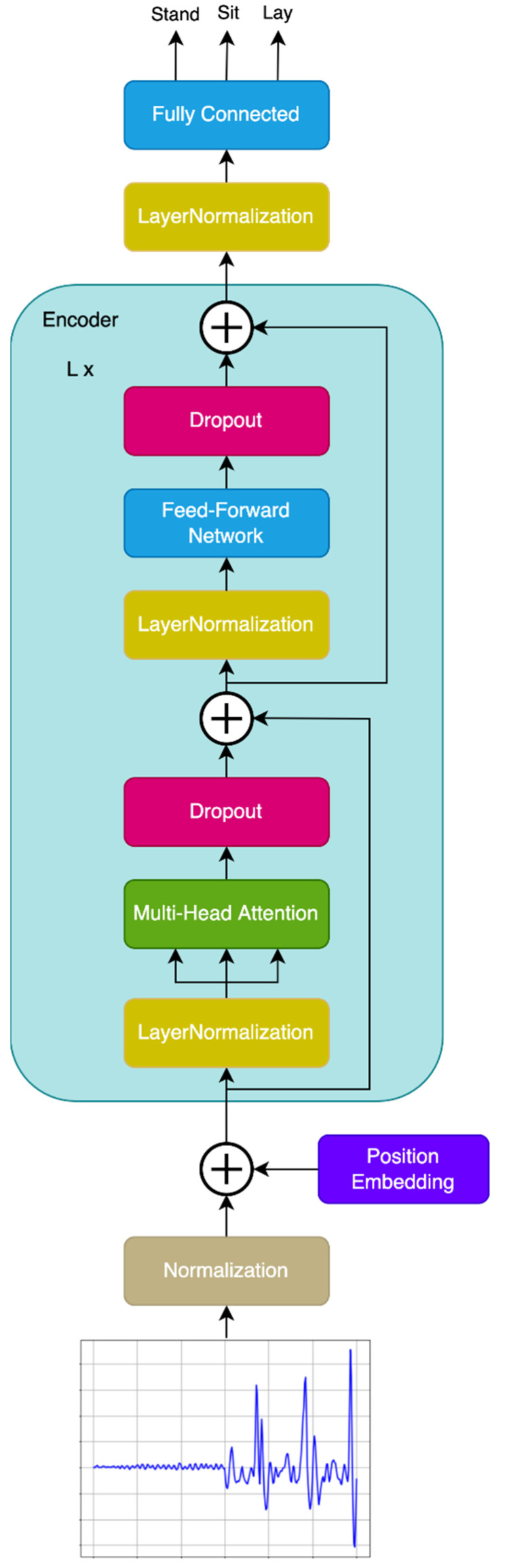
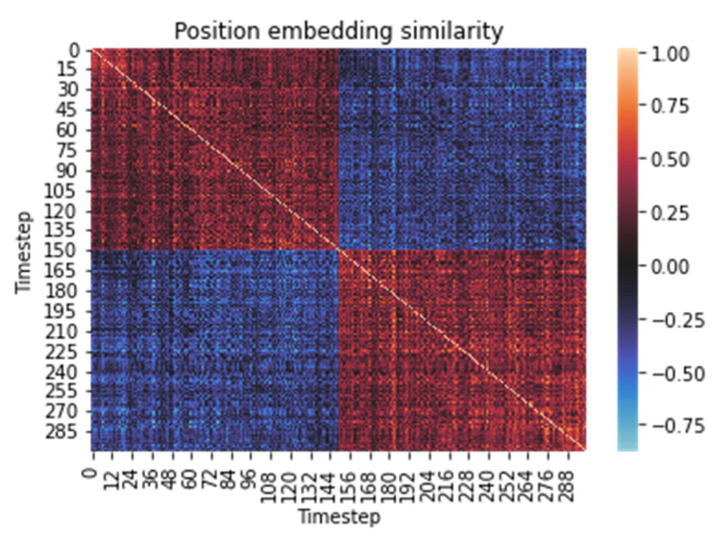
“The entry determining the position of the features within the series is also added to the network input, because the transformer does not know the order of the features, for example, within the processed sentence [34]:”
BackgroundMethodResultInfluentialExploiting Generative AI to Scale up Intelligent Tutoring Systems
Jakubův, J., Chvalovský, K., Goertzel, Z., Kaliszyk, C., Olšák, M., Piotrowski, B., Schulz, S., Suda, M., & Urban, J. (2023) · DROPS (Schloss Dagstuhl – Leibniz Center for Informatics) · doi:10.4230/lipics.itp.2023.19 · Cited by 76,658
Introducing a New Benchmarked Dataset for Activity Monitoring
Reiss, A., & Stricker, D. (2012) · 2012 16th International Symposium on Wearable Computers · doi:10.1109/iswc.2012.13 · Cited by 1,456
BEiT: BERT Pre-Training of Image Transformers
Bao, H., Dong, L., Piao, S., & Wei, F. (2021) · arXiv · doi:10.48550/arxiv.2106.08254 · Cited by 1,392
Doherty, A., Jackson, D., Hammerla, N., Plötz, T., Olivier, P., Granat, M. H., White, T., van Hees, V. T., Trenell, M. I., Owen, C. G., et al. (2017) · PLOS ONE · doi:10.1371/journal.pone.0169649 · Cited by 1,250 · cited 2×
“The dataset selected for testing is the largest currently available for smartphone motion sensor data, covering a wide range of activities [33,36–40].”
MethodMultiscale Convolutional Neural Networks for Fault Diagnosis of Wind Turbine Gearbox
Jiang, G., He, H., Yan, J., & Xie, P. (2019) · IEEE Transactions on Industrial Electronics · doi:10.1109/tie.2018.2844805 · Cited by 892 · cited 1×
“Several types of deep neural networks are typically used for time series classification of sensor signals, such as convolutional neural networks [14–16], fully convolutional neural networks [17], multiscale convolutional neural networks [18], time-LeNet [19], stacked denoising autoencoder [20], deep belief neural netw…”
MethodTransition-Aware Human Activity Recognition Using Smartphones
Reyes-Ortiz, J.-L., Oneto, L., Samà, A., Parra, X., & Anguita, D. (2016) · Neurocomputing · doi:10.1016/j.neucom.2015.07.085 · Cited by 740
Failure diagnosis using deep belief learning based health state classification
Tamilselvan, P., & Wang, P. (2013) · Reliability Engineering & System Safety · doi:10.1016/j.ress.2013.02.022 · Cited by 630 · cited 1×
“…fully convolutional neural networks [17], multiscale convolutional neural networks [18], time-LeNet [19], stacked denoising autoencoder [20], deep belief neural networks [21], Long Short-Term Memory (LSTM) deep recurrent neural network [22], echo state networks [23], or inception-ResNet [24].”
BackgroundDeep Learning in Human Activity Recognition with Wearable Sensors: A Review on Advances
Zhang, S., Li, Y., Zhang, S., Shahabi, F., Xia, S., Deng, Y., & Alshurafa, N. (2022) · Sensors · doi:10.3390/s22041476 · Cited by 625
mHealthDroid: A Novel Framework for Agile Development of Mobile Health Applications
Banos, O., Garcia, R., Holgado-Terriza, J. A., Damas, M., Pomares, H., Rojas, I., Saez, A., & Villalonga, C. (2014) · Lecture Notes in Computer Science · doi:10.1007/978-3-319-13105-4_14 · Cited by 583 · cited 3×
“The The random forest method prediction accuracy on this dataset [36] was slightly lower than deep learning methods achieved on other datasets. random forest method prediction accuracy on this dataset [36] was slightly lower than deep learning methods achieved on other datasets.”
Method
Research works printed but not linked: 1
- Dosovitskiy A. Beyer L. Kolesnikov A. Weissenborn D. Zhai X. Unterthiner T. Dehghani M. Minderer M. Heigold G. Gelly S. An image is worth 16x16 words: Transformers for image recognition at scale arXiv 2020 2010.11929
Cited by
Items 101–200 of 269
Towards Enhanced Human Activity Recognition for Real-World Human-Robot Collaboration
Yalçinkaya, B., Couceiro, M. S., Pina, L., Soares, S., Valente, A. L. G., & Fabio Remondino, A. (2024) · Proceedings - IEEE International Conference on Robotics and Automation/Proceedings · doi:10.1109/icra57147.2024.10610664 · Cited by 8
“More recently, transformer deep learning models, originally developed for natural language processing tasks, have also been adapted for other domains, including HAR [17].”
Background1-DCNN with Stacked LSTM Architecture for Human Activity Recognition Using Wearable Sensing Data
Krishnaleela, P., & Prakash, R. M. (2024) · IETE Journal of Research · doi:10.1080/03772063.2024.2402881 · Cited by 6
“Two categories could be used to group the HAR technologies which are both sensor and video-based [18–20].”
Seeking optimal and explainable deep learning models for inertial-based posture recognition
Martins, D. R., Cerqueira, S. M., & Santos, C. P. (2024) · Knowledge-Based Systems · doi:10.1016/j.knosys.2024.112700 · Cited by 8
Bracali, A., & Baldanzini, N. (2022) · Sensors · doi:10.3390/s22155592 · Cited by 6
“Finally, deep learning neural networks techniques were recently implemented to recognize human activities from wearable sensors [32,33].”
Interrogation, Intelligence and the Issue of Human Rights
Newbery, S., Brecher, B., Sands, P., & Stewart, B. (2009) · Intelligence & National Security · doi:10.1080/02684520903209381 · Cited by 6
DS-MS-TCN: Otago Exercises Recognition With a Dual-Scale Multi-Stage Temporal Convolutional Network
Shang, M., Dedeyne, L., Dupont, J., Vercauteren, L., Amini, N., Lapauw, L., Gielen, E., Verschueren, S., Varon, C., De Raedt, W., et al. (2024) · IEEE Journal of Biomedical and Health Informatics · doi:10.1109/jbhi.2024.3455426 · Cited by 5
“The model was proposed by [23].”
BackgroundWang, Z., & Kang, K. (2025) · Scientific Reports · doi:10.1038/s41598-025-18444-6 · Cited by 5
“Nonetheless, Transformer-based models are computationally demanding, rendering them less appropriate for resource-limited wearable devices [7, 23].”
InfluentialAn Interpretable Deep Learning-Based Feature Reduction in Video-Based Human Activity Recognition
Dutt, M., Goodwin, M., & Omlin, C. W. P. (2024) · IEEE Access · doi:10.1109/access.2024.3432776 · Cited by 7
“Luptáková et al. [23] adapted the transformer model for time-series analysis.”
Wei, Q., Huang, J., Gao, Y. C., & Dong, W. (2025) · Proceedings of the ACM on Interactive Mobile Wearable and Ubiquitous Technologies · doi:10.1145/3749509 · Cited by 21
Lamaakal, I., Yahyati, C., Maleh, Y., Makkaoui, K. E., & Ouahbi, I. (2026) · Machine Learning and Knowledge Extraction · doi:10.3390/make8030055 · Cited by 11
Multi-Channel Time Series Decomposition Network for Generalizable Sensor-Based Activity Recognition
Pan, J., Hu, Z., Zhang, L., & Cai, X. (2024) · IEEE Transactions on Automation Science and Engineering · doi:10.1109/tase.2024.3480119 · Cited by 8
“Recently, deep learning methods such as CNN, LSTM [12], DeepConvLSTM [13] and Transformer [14], can achieve higher prediction accuracy and have gradually become the main methods for HAR tasks.”
MethodMarhraoui, Y. E., Bounhar, O., Boukallel, M., Anastassova, M., Bouilland, S., & Ammi, M. (2024) · IEEE Internet of Things Journal · doi:10.1109/jiot.2024.3519225 · Cited by 8
Applying MLP-Mixer and gMLP to Human Activity Recognition
Miyoshi, T., Koshino, M., & Nambo, H. (2025) · Sensors · doi:10.3390/s25020311 · Cited by 6
“Transformer-based models [13] have been adapted for HAR tasks [33–35].”
Robust Human Activity Recognition Using a Transformer-Based Model for Aging Society
Liang, Q., Jitpattanakul, A., & Mekruksavanich, S. (2025) · International Conference on Big Data Analytics and Practices (IBDAP) · doi:10.1109/ibdap65587.2025.11145826 · Cited by 5
Khalid, A. M., Khafaga, D. S., Aldakheel, E. A., & Hosny, K. M. (2023) · Sensors · doi:10.3390/s23135862 · Cited by 5
“[33] proposed an alternative approach, called a transformer, for classifying human activities.”
BackgroundWang, L., Yan, Y., Huang, D., Pan, Y., Cheang, C. F., Luo, K., & Li, J. (2025) · IEEE Transactions on Consumer Electronics · doi:10.1109/tce.2025.3540853 · Cited by 6
“With the development of deep learning, HAR models based on deep learning techniques are widely applied in the feature engineering and recognition phases of HAR tasks to efficiently extract data features and recognize activities [9], [10], [11], [12].”
TrustTiny-HAR: Selective, Open-Set, and Calibrated Activity Recognition on Microcontrollers
Lamaakal, I., Yahyati, C., Maleh, Y., Makkaoui, K. E., & Ouahbi, I. (2026) · IEEE Transactions on Artificial Intelligence · doi:10.1109/tai.2026.3676723 · Cited by 6
“At its core is an int8 time-series backbone (depthwise 1-D-CNN or causal TCN) that respects memory and latency constraints while preserving discriminative power [4], [26], [28].”
GAFormer: Wearable IMU-Based Human Activity Recognition with Gramian Angular Field and Transformer
Le, T.-H., Nguyen, T.-K., Tran, T. K., Tran, T.-H., & Pham, C. (2023) · Asia-Pacific Signal and Information Processing Association Annual Summit and Conference (APSIPA ASC) · doi:10.1109/apsipaasc58517.2023.10317315 · Cited by 7
“Dirgova et al. [22] also use the Transformer model for the direct application of deep neural networks to normalized time signal sequences from sensors using a different approach to time series processing. entirely based on the attention mechanism.”
MethodImproving Freezing of Gait Detection and Prediction Using ML and Transformers
Singaravelu, M., Mubibya, G. S., & Almhana, J. (2023) · International Conference on Communications · doi:10.1109/icc45041.2023.10279746 · Cited by 4
Bai, Y., Guan, X., He, L., Wang, Z., Li, Z., & Zhu, M. S. (2024) · Sensors · doi:10.3390/s24061726 · Cited by 6
Time Series Classification on Edge with Lightweight Attention Networks
Mukhopadhyay, S., Dey, S., Mukherjee, A., Pal, A., & Ashwin, S. S. (2024) · IEEE International Conference on Pervasive Computing and Communications Workshops (PerCom Workshops) · doi:10.1109/percomworkshops59983.2024.10502748 · Cited by 7
Elahi, S., Mery, T., Panthier, C., Saad, A., Gatinel, D., & Alahi, A. (2024) · Translational Vision Science & Technology · doi:10.1167/tvst.13.9.1 · Cited by 6
“31,32 Furthermore, unsupervised pretraining techniques have been successfully applied to multivariate time series classification.”
MethodSemi-supervised Human Activity Recognition with individual difference alignment
Yang, Z., Li, T., Xu, Z., Huang, Z., Cao, Y., Li, K., & Ma, J. (2025) · Expert Systems with Applications · doi:10.1016/j.eswa.2025.126976 · Cited by 5
Zhao, Y., Gao, Q. H., Ju, Z., Zhou, J., & Chen, J. (2023) · International Conference on Advanced Robotics and Mechatronics (ICARM) · doi:10.1109/icarm58088.2023.10218954 · Cited by 4
Segment-Based Unsupervised Learning Method in Sensor-Based Human Activity Recognition
Takenaka, K., Kondo, K., & Hasegawa, T. (2023) · Sensors · doi:10.3390/s23208449 · Cited by 5
Kim, D., Ahmed, S. S., Amjad, A., Won, K., & Xian, X. (2026) · Biosensors · doi:10.3390/bios16060344 · Cited by 6
“…models have reported improvements over CNN–LSTM base-lines on accelerometer-and gyroscope-based human activity recognition benchmarks [50], and have achieved comparable or improved performance relative to ResNet-and long short-term memory (LSTM)-based architectures on single-lead…”
Ciortuz, G., Grzegorzek, M., & Fudickar, S. (2023) · International Workshop on Sensor-based Activity Recognition and Interaction (iWOAR) · doi:10.1145/3615834.3615858 · Cited by 3
“[13] proposed an adaptation of the Transformer model for HAR.”
MethodPostural Sway Classification using Modified Vision Transformer
Nehary, E. A., Rajan, S., & Andò, B. (2023) · IEEE Biomedical Circuits and Systems Conference (BioCAS) · doi:10.1109/biocas58349.2023.10389098 · Cited by 3
Begum S., S. D., Dey, S., Chakraborty, D., Hembrom, T., Hazra, S., & Barman, D. (2024) · Journal of Electrical Systems · doi:10.52783/jes.1424 · Cited by 3
BodyFlow: An Open-Source Library for Multimodal Human Activity Recognition
Alonso, R. D. H., Hernández-Ruiz, A. C., Marañes, C., López-Bosque, I., Aznar-Gimeno, R., Salvo-Ibáñez, P., Pérez-Lázaro, P., Abadía, D., & Rodrigálvarez-Chamarro, M. D. L. V. (2024) · Sensors · doi:10.3390/s24206729 · Cited by 4
“Apart from these networks, Luptáková et al. [32] adapted a Transformer, a model normally used in natural language processing and vision tasks, so that it could be trained with inertial signals from a smartphone.”
MethodExploring Cutout and Mixup for Robust Human Activity Recognition on Sensor and Skeleton Data
Dingeto, H., & Kim, J. (2024) · Applied Sciences · doi:10.3390/app142210286 · Cited by 4
CNN-SLSTM framework for human activity recognition using wearable sensor data
Krishnaleela, P., & Prakash, R. M. (2025) · Neural Computing and Applications · doi:10.1007/s00521-025-11410-3 · Cited by 7
“Lupta´kova´ et al.[28] demonstrate the effectiveness of Transformer models in HAR tasks, especially for complex ADLs.”
(2017) · BRILL eBooks · doi:10.1163/9789004360846 · Cited by 3
Human action recognition from inertial sensors with Transformer
Le, T.-H., Tran, T.-H., & Pham, C. (2022) · International Conference on Multimedia Analysis and Pattern Recognition (MAPR) · doi:10.1109/mapr56351.2022.9924794 · Cited by 5
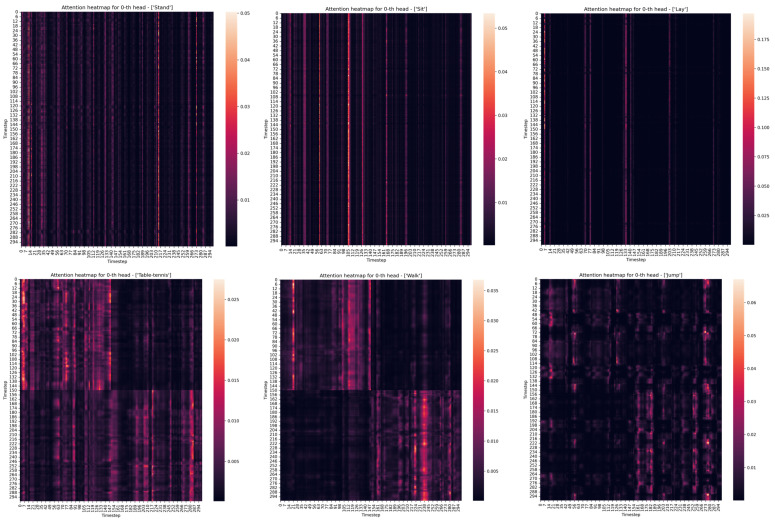
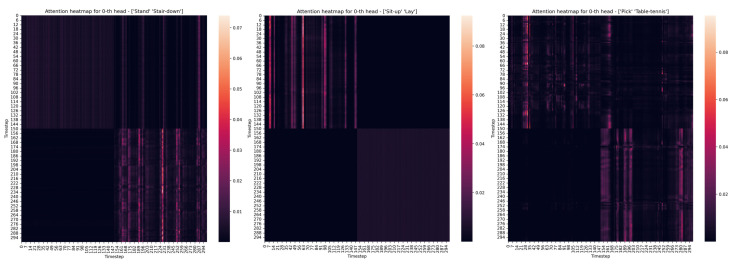
“In which, for each attention head belonging to different attention heads, it can show that there are many definitions of correlation and relevance [26].”
BackgroundOptimization with Label Weighting Extreme Learning Machine for Human Activity Recognition
Kumar, L. M. A., & Murugan, S. (2023) · International Conference on Intelligent Computing and Control Systems (ICICCS) · doi:10.1109/iciccs56967.2023.10142441 · Cited by 3
“In [14], the transformer model, for the NLP and vision tasks a DL-NN method was modified for a time-series analysis.”
MethodFederated Learning for Wearable Sensor-Based Human Activity Recognition
Sachin, D. N., Annappa, B., & Ambesenge, S. (2023) · Lecture notes in networks and systems · doi:10.1007/978-981-99-1912-3_12 · Cited by 3
Conditional Human Activity Signal Generation and Generative Classification with a GPT-2 Model
Zilelioglu, H., Khodabandelou, G., Chibani, A., & Amirat, Y. (2023) · International Joint Conference on Neural Networks (IJCNN) · doi:10.1109/ijcnn54540.2023.10191464 · Cited by 5
“For example, [3] proposed a Transformer architecture for predicting activity labels for each time step in a given windowed time series, allowing multi-label classification from a single window.”
BackgroundInfluentialMCTN: A Multi-Channel Temporal Network for Wearable Fall Prediction
Liu, J., Li, X., Liao, G., Wang, S., & Liu, L. (2023) · Lecture notes in computer science · doi:10.1007/978-3-031-43427-3_24 · Cited by 3
Transformer Model for Human Activity Recognition Using IoT Wearables
Sowmiya, S., & Menaka, D. (2023) · Lecture notes in electrical engineering · doi:10.1007/978-981-99-6690-5_21 · Cited by 3
Deep similarity segmentation model for sensor-based activity recognition
Baraka, A. M., & Noor, M. H. M. (2024) · Multimedia Tools and Applications · doi:10.1007/s11042-024-18933-2 · Cited by 4
“Since the accelerometer and gyroscope are primarily designed to capture human movements [33] and are not able to capture speech, both activities are treated in this study as belonging to the same class of activity [29].”
EHRT-RWB: A Novel Ensemble Hybrid Recurrent Transformer for Multimodal Heart Disease Risk Prediction
Irene, D. S., Peter, J. S. P., Sankarasubramanian, N., & Krishnakanth, S. P. (2024) · Journal of The Institution of Engineers (India) Series B · doi:10.1007/s40031-024-01085-0 · Cited by 5
Transformer-Based Dog Behavior Classification With Motion Sensors
Or, B. (2024) · IEEE Sensors Journal · doi:10.1109/jsen.2024.3454544 · Cited by 3
“…with trans-formers, offers a refined understanding and modeling of sequential data and might have an advantage for identifying complex patterns of movement associated with various dog behaviors, as observed in other tasks involving sensor data [18], [29], [30], [31], [32], [33], [34], [35].”
BackgroundYang, Z., Zhang, Y., Li, Y., Huang, L., Hu, P., & Lin, Y. (2025) · IEEE Transactions on Instrumentation and Measurement · doi:10.1109/tim.2025.3565250 · Cited by 6
“1) Motion-Based HAR: We explored the differences in recognition accuracy between CNN [39], Transformer [41], and their combination in inertial sensing.”
Understanding the audience experience of contemporary visual arts at Geevor Mine World Heritage Site
Bagnall, G., & Randall, J. M. (2020) · Routledge eBooks · doi:10.4324/9780429053498-14 · Cited by 3
An Intelligent Human Activity Recognizer for Visually Impaired People Using VGG-SVM Model
Saleem, R., Ahmad, T., Aslam, M., & Martínez-Enríquez, A. M. (2022) · Lecture notes in computer science · doi:10.1007/978-3-031-19496-2_28 · Cited by 3
Secure E-health Framework in Cloud-Based Environment
Tarawneh, M., Alzyoud, F. Y., Sharrab, Y. O., & Kanaker, H. (2022) · International Arab Conference on Information Technology (ACIT) · doi:10.1109/acit57182.2022.9994164 · Cited by 4
WASENN: Wavelet Assisted Stochastic Enabled Neural Network for Human Activity Recognition
Sengupta, R., Polian, I., & Hayes, J. P. (2025) · IEEE Transactions on Circuits and Systems I Regular Papers · doi:10.1109/tcsi.2025.3540564 · Cited by 2
“Recent advances in the domain of natural language processing and computer vision have led to the development of so-called Transformer networks, which have also been adapted for HAR applications [25].”
Channel-attention-based TCN-Transformer for recognition of rough handling in parcels
Zhang, Y., Wan, Y., Zhu, L., Huang, H., Duan, C., & Du, Y. (2025) · Measurement Science and Technology · doi:10.1088/1361-6501/ae0c29 · Cited by 2
“LSTM [24], CNN-LSTM [25], Transformer [26], CNN-Transformer [27], and CDCE-CNN-GRU [6].”
A Laplace diffusion-based transformer model for heart rate forecasting within daily activity context
Mateescu, A., Hadarau, I., Anghel, I. M., Cioara, T., Anchidin, O., & Nemes, A. (2025) · Machine Learning with Applications · doi:10.1016/j.mlwa.2025.100746 · Cited by 3
Hyperbolic Transformers with LLMs for Multimodal Human Activity Recognition
Soleimani, F., Khodabandelou, G., Chibani, A., & Amirat, Y. (2025) · IEEE/RSJ International Conference on Intelligent Robots and Systems (IROS) · doi:10.1109/iros60139.2025.11247069 · Cited by 3
Watanabe, K., Kano, K., Hossain, T., Katayama, S., Urano, K., Yonezawa, T., & Kawaguchi, N. (2025) · ACM International Joint Conference on Pervasive and Ubiquitous Computing (UbiComp) · doi:10.1145/3714394.3756198 · Cited by 2
“More recently, deep learning models such as CNN, LSTM, and Transformer have been increasingly applied to directly learn features from raw sensor data [3, 15].”
Equimetrics: An Open-Source Wearable System for Real-Time Feedback in Equestrian Sports
Pöhler, J., & Laerhoven, K. V. (2025) · ACM International Joint Conference on Pervasive and Ubiquitous Computing (UbiComp) · doi:10.1145/3714394.3756251 · Cited by 2
“At a higher level, we use this kinematic data to train two distinct Transformer-based models for automated activity recognition [9].”
Zhang, S.-Z., Yang, H.-Z., & Gao, Y. (2026) · Scientific Reports · doi:10.1038/s41598-026-41195-x · Cited by 5
“Dirgová Luptáková et al. 15 employed Transformer architecture to process time-series data from wearable sensors, validating the effectiveness of self-attention mechanisms in modeling long-range dependencies.”
Prototype-guided pseudo-labeling for semi-supervised federated human activity recognition
Song, M., Feng, S., & Deng, T. (2026) · Pattern Recognition · doi:10.1016/j.patcog.2026.113760 · Cited by 2
Saleem, L. A., & Jerith, G. G. (2026) · Discover Computing · doi:10.1007/s10791-026-10143-8 · Cited by 3
VUONG, T. H., Doan, T., & Takasu, A. (2026) · Neural Processing Letters · doi:10.1007/s11063-026-11854-1 · Cited by 2
“ConvTransformer consists of three convolutional layers and two Transformer encoders [41].”
Foucher, J., Collet, A., Goff, K. L., Rakotomamonjy, T., Juppet, V., Descatoire, T., Landrieu, J., Plat-Robain, M., Denquin, F., Grunwald, A. J., et al. (2022) · IEEE Access · doi:10.1109/access.2022.3210526 · Cited by 2
“Tensorflow models used standard parameter settings, such as early stopping, He initialization, and Adam optimisation; models were fit using 100 epochs and a batch size of 32 was used for all models, except for the Transformer Encoder model that used a batch size of 64.”
BackgroundMethodInfluentialResearch on hybrid transformer-based autoencoders for user biometric verification
Havrylovych, M., & Danylov, V. Y. (2023) · System research and information technologies · doi:10.20535/srit.2308-8893.2023.3.03 · Cited by 4
“In biometric fields, transformers were used for human activity recognition (HAR) problems [8; 9].”
MethodAutomated Improved Human Activity Recognition using Ensemble Modeling
Das, S., Maity, A., Jana, R., Biswas, R., Biswas, A., & Samanta, P. K. (2024) · International Conference on Recent Advances in Electrical, Electronics, Ubiquitous Communication, and Computational Intelligence (RAEEUCCI) · doi:10.1109/raeeucci61380.2024.10547875 · Cited by 2
SenseMLP: a parallel MLP architecture for sensor-based human activity recognition
Li, W., Guo, J., & Wu, H. (2024) · Multimedia Systems · doi:10.1007/s00530-024-01384-y · Cited by 2
“Dirgová Luptáková et al. [32] applied a Transformer-based model to HAR and compared its performance with a random forest-based model.”
The SES framework and Frequency domain information fusion strategy for Human activity recognition
Wu, H., Feng, H., Shi, L., Zhang, H., & Xu, H. (2024) · International Joint Conference on Neural Networks (IJCNN) · doi:10.1109/ijcnn60899.2024.10650417 · Cited by 2
“Therefore, research has begun to adopt Transformer architectures in the field of HAR to understand time-series information [29] [30] [31] [32].”
MethodImportance of Activity and Emotion Detection in the Field of Ambient Assisted Living
Mandal, R., Pal, S., & Maji, U. (2024) · Studies in computational intelligence · doi:10.1007/978-3-031-71821-2_7 · Cited by 2
Distance graph routing capsule network with vote elimination for human activity recognition
Feraydounraad, E., Hoseini, K., & Nazerfard, E. (2025) · Expert Systems with Applications · doi:10.1016/j.eswa.2025.128236 · Cited by 3
A Human Activity Recognition model based on CNN and Transformer
Wang, M., Liu, R., & Xiong, Y. (2024) · Journal of Physics Conference Series · doi:10.1088/1742-6596/2816/1/012101 · Cited by 1
Regardless of Sensor Location Human Activity Recognition Based on Transformer
He, Z., Tian, Y., He, Z., & Sun, Y. (2024) · International Conference on Cyber Security and Information Engineering (ICCSIE) · doi:10.1145/3689236.3695396 · Cited by 1
Feature selection based L1alm-DT and MHT-LSTM for human activity recogition via sensor
Ram, R. S., Boobalan, S., Prakash, S. A., & Sekhar, V. (2025) · International Journal of Machine Learning and Cybernetics · doi:10.1007/s13042-025-02598-w · Cited by 1
Mekruksavanich, S., & Jitpattanakul, A. (2025) · IEEE Access · doi:10.1109/access.2025.3605337 · Cited by 1
“Dirgová et al. [36] applied transformer networks to interpret motion-related sensor data.”
A lightweight framework for recognizing rough handling behaviours in parcel logistics
Zhang, Y., Wan, Y., Huang, H., Duan, C., & Zhu, L. (2025) · Measurement · doi:10.1016/j.measurement.2025.119693 · Cited by 1
Li, S., Chen, L., & Bo, Y. (2025) · doi:10.1145/3737903.3768570 · Cited by 1
Enhancing Human Activity Recognition using PSOOptimized 1D CNN-GRU Model on Wearable Sensor Data
K.Ramalakshmi, Shukla, V. K., Raj, J. R. F., & Krishnan, R. S. (2025) · International Conference on Soft Computing for Security Applications (ICSCSA) · doi:10.1109/icscsa66339.2025.11171374 · Cited by 1
“Luptáková et al. [7][12] implemented transformer-based models, demonstrating their ability to capture long-range dependencies in activity sequences.”
Wang, J., Shi, J., Ye, Q., Chen, D., Sun, Y., Pan, C., Tang, Y., Zhang, P., & Tang, Z. (2026) · JMIR Medical Informatics · doi:10.2196/86327 · Cited by 1
“With the attention mechanism as the core, Transformer can model the relationships between any time points in a sequence in a global scope [25], making it suitable for dealing with long sequences and complex temporal patterns.”
Xiao, S., Cai, L., & Tang, C. (2026) · IEEE Sensors Journal · doi:10.1109/jsen.2026.3651746 · Cited by 1
“Transformers gain increasing adoption in the HAR domain by leveraging their attention mechanisms [3], [4], [5], [6].”
An explainable real time sensor graph transformer for dance recognition
Han, J., Wang, S., & Gao, J. (2026) · Scientific Reports · doi:10.1038/s41598-025-34691-z · Cited by 1
Feng, C., Bačić, B., Li, W., & Xu, H. (2026) · Frontiers in Sports and Active Living · doi:10.3389/fspor.2026.1754717 · Cited by 2
“On the other hand, transformer-based architectures, originally designed for natural language processing, have shown promising results in sensor-based HAR, where their self-attention enables modeling of long-range temporal dependencies (26).”
Real-Time Human Activity Recognition Using Decision Trees and Wearable Sensor Data
Muthu, S., & Deepalakshmi, P. (2025) · IEEE International Conference on Information Technology, Electronics and Intelligent Communication Systems (ICITEICS) · doi:10.1109/iciteics64870.2025.11341227 · Cited by 1
Bayat, N., Tran, A., Kim, J.-H., & Park, J. (2026) · IEEE Transactions on Instrumentation and Measurement · doi:10.1109/tim.2026.3657490 · Cited by 1
“Furthermore, hybrids of DL models have been created, including trans-former [73], [74], which takes the physical prior knowledge of di ff erent sensors into account.”
Application of machine learning methods in flexible and wearable sensing systems
Peng, P., Li, Y., Zhang, R., Li, W., & Wang, X. (2026) · Wearable electronics. · doi:10.1016/j.wees.2025.11.002 · Cited by 2
Zhang, J., & Oh, S.-S. (2026) · International Journal of Computational Intelligence Systems · doi:10.1007/s44196-026-01196-0 · Cited by 3
A multi-resolution CNN-LSTM architecture for sensor-based human activity recognition
Pareek, G., Singh, R. K., & Nigam, S. (2026) · Neural Computing and Applications · doi:10.1007/s00521-025-11719-z · Cited by 2
Luan, Q. (2026) · Journal of Mechanics in Medicine and Biology · doi:10.1142/s0219519426400373 · Cited by 3
Wang, J. L., Mei, Y., Xia, M. Y., & Shi, C. (2026) · IEEE Sensors Journal · doi:10.1109/jsen.2026.3686009 · Cited by 3
“Luptáková et al. [30] input IMU sensor data into a Transformer to complete the recognition of human motion states.”
Toward Wearable Sensor-Based Human Activity Recognition: A Survey
Zou, H., Chen, Z., Pan, Y., & Li, J. (2026) · IEEE Internet of Things Journal · doi:10.1109/jiot.2026.3702134 · Cited by 3
“Lupt´akov´a et al. [148] validated the e ffi cacy of pure Transformer models for WHAR, showing competitive recognition performance on wearable sensor datasets.”
Huang, K., Wang, S. K., Yin, S., Shi, X., Yuan, Y., Khan, S. B., Lee, A., Gu, B., Weifeng, Y., & Hu, N. (2026) · Nano Materials Science · doi:10.1016/j.nanoms.2026.05.005 · Cited by 1
The clinical effectiveness of joint protection education and exercises in hand osteoarthritis (OA)
Dziedzic, K., Nicholls, E. E., Hill, S., Hammond, A., Jowett, S. M., Oppong, R., & Hay, E. M. (2012) · Osteoarthritis and Cartilage · doi:10.1016/j.joca.2012.02.255 · Cited by 1
Salim, B. W., Hussan, B. K., Ageed, Z. S., & Zeebaree, S. R. M. (2023) · Computers, materials & continua/Computers, materials & continua (Print) · doi:10.32604/cmc.2023.037514 · Cited by 2
Human Activity Recognition Using AutoML Approach
Alboueishi, N. H., Nagem, T. A. M. H., & Abdelnabi, E. A. (2024) · IEEE International Maghreb Meeting of the Conference on Sciences and Techniques of Automatic Control and Computer Engineering (MI-STA) · doi:10.1109/mi-sta61267.2024.10599699 · Cited by 2
“Dirgová Luptáková et al. [13] introduced a deep learning neural network model called Wearable Sensor-Based Human Activity Recognition with Transformer, achieving an accuracy of 99.2% on the KU-HAR dataset.”
MethodInfluentialLacroix, K., Gholamiangonabadi, D., Trejos, A. L., & Grolinger, K. (2024) · IEEE Sensors Journal · doi:10.1109/jsen.2024.3451291 · Cited by 2
“Dirgová Luptáková et al. [27] took a closer look at adapting the transformer model for HAR.”
BackgroundXia, K., Li, W., Shao, Y., & Lu, S. (2024) · ACM International Conference on Multimedia (ACM MM) · doi:10.1145/3664647.3681664 · Cited by 3
Equimetrics - Applying HAR Principles to Equestrian Activities
Pöhler, J., & Laerhoven, K. V. (2025) · Lecture notes in computer science · doi:10.1007/978-3-031-80856-2_5 · Cited by 1
“This test protocol involved a combination of basic gaits, such as walk, trot, and [6].”
MethodTensor-Based Factorial Hidden Markov Model for Cyber-Physical-Social Services
Lu, Z., Yang, L. T., Azman, A., Zhang, S., & Zhou, F. (2025) · IEEE Transactions on Services Computing · doi:10.1109/tsc.2025.3565382 · Cited by 1
“(cid:2) Transformer [45] is a deep learning architecture that uses self-attention mechanisms to model relationships in sequences, excelling at handling long sequences and widely applied in natural language processing and beyond.”
Application of Transformer to Wearable Sensor-based Complex Human Activity Recognition
Bhattacharya, M., Sun, Q., Lu, J., & Hou, Y. (2025) · International Conference on Artificial Intelligence and Big Data (ICAIBD) · doi:10.1109/icaibd64986.2025.11082055 · Cited by 1
“A variation of vision transformer proposed in [11] demonstrated its effectiveness on sensor-based HAR, however, this model was not particularly designed for sensory signals.”
The pro-business effects of paramilitary terror in Colombia
Maher, D. (2021) · Routledge eBooks · doi:10.4324/9780429279430-4 · Cited by 1
Hospital ratings rise, but ambulance ratings fall
Kmietowicz, Z. (2003) · BMJ · doi:10.1136/bmj.327.7407.119 · Cited by 1
Stepanyan, I. V., & Hameed, S. A. (2023) · Baghdad Science Journal · doi:10.21123/bsj.2023.9087 · Cited by 3
“Academics are interested in the usage of wireless equipment networks because of the numerous applications for identifying human physical motions, including healthcare, rehabilitation, athletics, elder monitoring, sports, and human-robot interaction 15-17 .”
BackgroundBritish Asian Muslim women, multiple spatialities and cosmopolitanism
Held, N. (2014) · Journal of Tourism and Cultural Change · doi:10.1080/14766825.2014.892699
AB1119 Is Pain Disabling Adults with Musculoskeletal Conditions?
Prior, Y., Hammond, A., & Tyson, S. F. (2014) · Annals of the Rheumatic Diseases · doi:10.1136/annrheumdis-2014-eular.3399
Rowlett, P. (2003) · Journal of French Language Studies · doi:10.1017/s0959269503311056
Frade, C. (2006) · European Journal of Sociology · doi:10.1017/s0003975606000063
Computers and Independent Study: Student Perspectives
Jarvis, H. (2009) · IGI Global eBooks · doi:10.4018/978-1-59904-994-6.ch023 · Cited by 2
Metadata
- Authors
- Dirgová Luptáková, I., Kubovčík, M., & Pospíchal, J.
- Affiliations
- Department of Applied Informatics, Faculty of Natural Sciences, University of Ss. Cyril and Methodius, J. Herdu 2, 917 01 Trnava, Slovakia
- University of Ss. Cyril and Methodius in Trnava (SK)
- Venue
- Sensors
- Publisher
- MDPI AG
- Published
- 2022-03-01
- Volume
- 22
- Issue
- 5
- Pages
- 1911
- ISSN
- 1424-8220 (ISSN-L)
- PMC
- PMC8914677
- OpenAlex
- W4214843096
- Cited by
- 270
- References
- 42
- Citations by year
- 2026: 60 · 2025: 54 · 2024: 64 · 2023: 47 · 2022: 16
- FWCI
- 14.80
- Type
- journal article
- Language
- en
- Open access
- gold
- doi.org
- Licence
- Locations
- Sensors (publishedVersion, cc-by)
- Preprints.org (acceptedVersion, cc-by)
- PubMed Central (publishedVersion, cc-by)
- PubMed (publishedVersion)
- DOAJ (DOAJ: Directory of Open Access Journals) (submittedVersion, cc-by-sa)
- Funders
- Slovak Research and Development Agency (APVV-17-0116)
- Cultural and Educational Grant Agency MŠVVaŠ SR (KEGA 012UCM-4/2021)
- Topics
- Physical Sciences › Computer Science › Computer Vision and Pattern Recognition › Context-Aware Activity Recognition Systems
- Physical Sciences › Computer Science › Signal Processing › Time Series Analysis and Forecasting
- Physical Sciences › Engineering › Biomedical Engineering › Gait Recognition and Analysis
- Keywords
- human activity recognition, wearable sensors, smartphone motion sensors, accelerometer, gyroscope, transformer models, self-attention, time series classification, motion signals
- MeSH terms
- Machine Learning, Wearable Electronic Devices, Algorithms, Humans, Human Activities, Neural Networks, Computer
About these checks
Registry, retraction, Cites and statistics results are computed, not judged, with one exception: a printed reference that no index lists is read once by a model before it counts as a citation error. Claims are extracted by a model and kept only when their quote appears verbatim in the text; each cited source is then checked, with a model’s help, for whether it says what the claim relies on. Those verdicts can be wrong — read the claim’s quote and the cited source before relying on one.
Statistics and arithmetic are recomputed, not judged.
Confidence bands are shown only for fields calibrated on our annotated test set. None is calibrated yet, so no band is shown.
What counts as a claim ›How we measure confidence ›How we check this ›
Are you an author, or do you see a problem with this page? Request a review
Data sources
Bibliographic data: Semantic Scholar, OpenAlex, Crossref.
Contains information from the Semantic Scholar Academic Graph Datasets, made available under the ODC Attribution License (ODC-BY 1.0).
Semantic Scholar’s data is described in: Kinney, R., et al. (2023). The Semantic Scholar Open Data Platform. arXiv:2301.10140.
