

A Survey on Optimization Techniques for Edge Artificial Intelligence (AI)
Open accessThe DOI matches its Crossref record; 102 of the 102 references it cites were found in a registry or an index.
Abstract
Artificial Intelligence (Al) models are being produced and used to solve a variety of current and future business and technical problems. Therefore, AI model engineering processes, platforms, and products are acquiring special significance across industry verticals. For achieving deeper automation, the number of data features being used while generating highly promising and productive AI models is numerous, and hence the resulting AI models are bulky. Such heavyweight models consume a lot of computation, storage, networking, and energy resources. On the other side, increasingly, AI models are being deployed in IoT devices to ensure real-time knowledge discovery and dissemination. Real-time insights are of paramount importance in producing and releasing real-time and intelligent services and applications. Thus, edge intelligence through on-device data processing has laid down a stimulating foundation for real-time intelligent enterprises and environments. With these emerging requirements, the focus turned towards unearthing competent and cognitive techniques for maximally compressing huge AI models without sacrificing AI model performance. Therefore, AI researchers have come up with a number of powerful optimization techniques and tools to optimize AI models. This paper is to dig deep and describe all kinds of model optimization at different levels and layers. Having learned the optimization methods, this work has highlighted the importance of having an enabling AI model optimization framework.
Overview
The claims and statistics of this paper haven’t been checked yet.
Free: it reads the open-access text and checks the first 5 claims that cite a source we can check. Create a free account to check every claim.
Integrity signals
Registry
Cites
Statistics
Figures
Verification
Claims the paper makes
The claims and statistics of this paper haven’t been checked yet.
Free: it reads the open-access text and checks the first 5 claims that cite a source we can check. Create a free account to check every claim.
Claims other papers make about this one
Each is checked against this paper’s own text: does it say what the citing paper says it does?
The source backs part of the claim, not all of it — or backs it for a different population, condition or comparison.
In the citing paper
“Better Privacy/Security: Edge computing can assist in increasing confidentiality and security by lowering the quantity of information that has to be transferred over the Internet and by offering more command over the processes and storage of confidential documents [164].”
From Edge AI: A survey (2023) · cites this paper as [164]
Experimental — accuracy not yet measuredThe source backs part of the claim, not all of it — or backs it for a different population, condition or comparison.
In the citing paper
“The upshot of this is improved uptime and dependability for AI applications that are essential to business operations [164].”
From Edge AI: A survey (2023) · cites this paper as [164]
Experimental — accuracy not yet measuredThe cited source says what the claim attributes to it.
In the citing paper
“Edge AI has the potential to revolutionize industries by enabling intelligent and autonomous devices that can make real-time decisions based on sensor data [164].”
From Edge AI: A survey (2023) · cites this paper as [164]
Self-check
Percentages, sums and reported differences re-computed from the paper’s own numbers.
The self-check needs the paper’s full text.
Citations
Cites
MobileNets: Efficient Convolutional Neural Networks for Mobile Vision Applications
Howard, A. G., Zhu, M., Chen, B., Kalenichenko, D., Wang, W., Weyand, T., Andreetto, M., & Adam, H. (2017) · arXiv · doi:10.48550/arxiv.1704.04861 · Cited by 19,015 · cited 2×
“The total_number_of_operations and reduction_ratio are obtained as given in (11) and (12) [100]”
BackgroundMethodThe MNIST Database of Handwritten Digit Images for Machine Learning Research [Best of the Web]
Deng, L. (2012) · IEEE Signal Processing Magazine · doi:10.1109/msp.2012.2211477 · Cited by 4,836 · cited 2×
“[50], the authors demonstrated that the accuracy of the deep neural network is not influenced when the 32-bit floating point values of weights are trimmed to 16-bit fixed point n mbers whe image classification has been performed using th MNIST database [51] and CIFAR10 database [52].”
MethodHan, S., Mao, H., & Dally, W. J. (2015) · arXiv · doi:10.48550/arxiv.1510.00149 · Cited by 4,662 · cited 3×
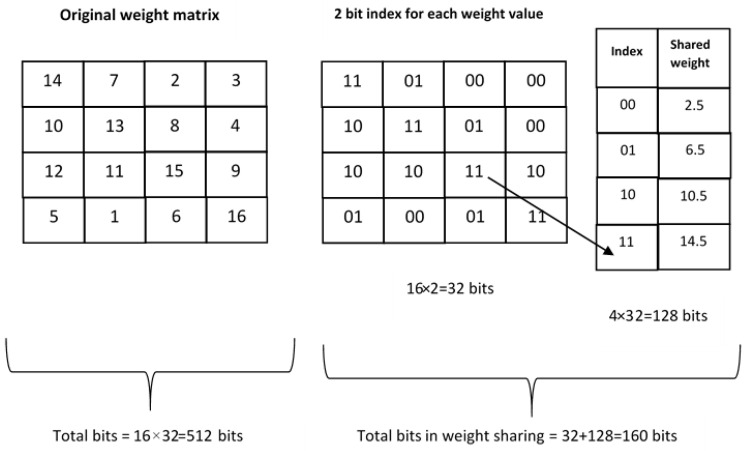
“are required to be stored is reduced by having multiple connections in a neural network share the same weight [59].”
BackgroundInfluentialXNOR-Net: ImageNet Classification Using Binary Convolutional Neural Networks
Rastegari, M., Ordonez, V., Redmon, J., & Farhadi, A. (2016) · Lecture Notes in Computer Science · doi:10.1007/978-3-319-46493-0_32 · Cited by 4,408 · cited 2×
“In other research work such as [53,54], where the layer-wise weights and inner products are approximated from 32bit floating point values are quantized into very low binary values, say −1 and +1, and then the quantization error is minimized by comparing the original and quantized models.”
BackgroundEfficient Processing of Deep Neural Networks: A Tutorial and Survey
Sze, V., Chen, Y.-H., Yang, T.-J., & Emer, J. S. (2017) · Proceedings of the IEEE · doi:10.1109/jproc.2017.2761740 · Cited by 4,215 · cited 1×
“So, the system has to access off-chip DRAM access which has latency and energy requirements higher than other computer operations [78].”
BackgroundChannel Pruning for Accelerating Very Deep Neural Networks
He, Y., Zhang, X., & Sun, J. (2017) · 2017 IEEE International Conference on Computer Vision (ICCV) · doi:10.1109/iccv.2017.155 · Cited by 2,647 · cited 1×
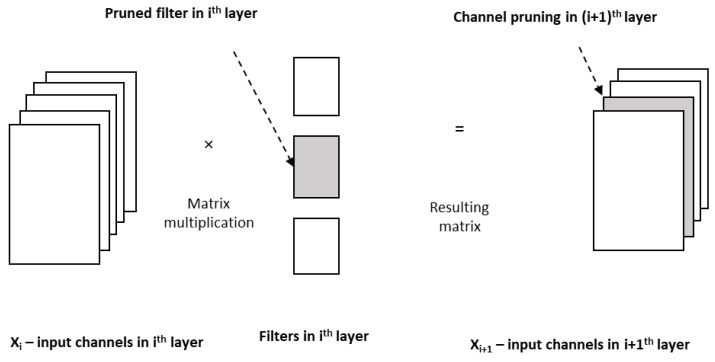
“So, filter pruning and channel pruning [48] are correlated [49].”
BackgroundEdge Intelligence: Paving the Last Mile of Artificial Intelligence With Edge Computing
Zhou, Z., Chen, X., Li, E., Zeng, L., Luo, K., & Zhang, J. (2019) · Proceedings of the IEEE · doi:10.1109/jproc.2019.2918951 · Cited by 2,455
Courbariaux, M., Hubara, I., Soudry, D., El-Yaniv, R., & Bengio, Y. (2016) · arXiv · doi:10.48550/arxiv.1602.02830 · Cited by 2,106
ThiNet: A Filter Level Pruning Method for Deep Neural Network Compression
Luo, J.-H., Wu, J., & Lin, W. (2017) · 2017 IEEE International Conference on Computer Vision (ICCV) · doi:10.1109/iccv.2017.541 · Cited by 1,832 · cited 2×
“the-shelf deep learning libraries, as discussed in [47].”
BackgroundAutomated Machine Learning: Methods, Systems, Challenges
(2019) · The Springer Series on Challenges in Machine Learning · doi:10.1007/978-3-030-05318-5 · Cited by 1,485
Research works printed but not linked: 8
- Hsu T.M.-H. Qi H. Brown M. Measuring the effects of nonidentical data distribution for federated visual classification arXiv 2019 1909.06335
- Yu F. Zhang W. Qin Z. Xu Z. Wang D. Liu C. Tian Z. Chen X. Heterogeneous Federated Learning arXiv 2020 10.48550/arXiv.2008.06767 2008.06767 · DOI
- Li D. Wang J. FedMD: Heterogenous federated learning via model distillation arXiv 2019 1910.03581
- Denil M. Shakibi B. Dinh L. Ranzato M.A. de Freitas N. Predicting Parameters in Deep Learning Advances in Neural Information Processing Systems 26 (NIPS 2013), Proceedings of the Advances in Neural Information Processing Systems 26 (NIPS 2013), Lake Tahou, NV, USA, 5–10 December 2013 Burges C.J. Bottou L. Welling M. Ghahramani Z. Weinberger K.Q. Curran Associates Inc. Red Hook, NY, USA 2013 9781632660244
- Van Leeuwen J. On the construction of huffman trees Proceedings of the Third International Colloquium on Automata, Languages and Programming Edinburgh, UK 20–23 July 1976 382 410
- Sun X. Wang N. Chen C.-y. Ni J.-M. Agrawal A. Cui X. Venkataramani S. El Maghraoui K. Srinivasan V. Gopalakrishnan K. Ultra-low precision 4-bit training of deep neural networks Proceedings of the 34th International Conference on Neural Information Processing Systems Vancouver, BC, Canada 6–12 December 2020 1796 1807
- Alkadhmawee A.A. Lu S. AlShawi S.I. An energy-efficient heuristic based routing protocol in wireless sensor networks Int. J. Innov. Res. Inf. Secur. 2016 3 5 9
- Pleiss G. Chen D. Huang G. Li T. van der Maaten L. Kilian Weinberger Q. Memory-Efficient Implementation of DenseNets arXiv 2017 1707.06990
Cited by
Singh, R., & Gill, S. S. (2023) · Internet of Things and Cyber-Physical Systems · doi:10.1016/j.iotcps.2023.02.004 · Cited by 572
Fahim, Y. A., Hasani, I. W., Kabba, S., & Ragab, W. M. (2025) · European Journal of Medical Research · doi:10.1186/s40001-025-03196-w · Cited by 329
“Together, these approaches reduce latency, improve efficiency, and enhance the responsiveness of intelligent healthcare systems [146].”
Towards sustainable AI: a comprehensive framework for Green AI
Tabbakh, A., Al Amin, L., Islam, M., Mahmud, G. M. I., Chowdhury, I. K., & Mukta, M. S. H. (2024) · Discover Sustainability · doi:10.1007/s43621-024-00641-4 · Cited by 111
“Apply model pruning to AlexNet resulted in a 90% reduction in energy consumption while causing only a minor 0.5% drop in accuracy [23].”
InfluentialDeploying AI on Edge: Advancement and Challenges in Edge Intelligence
Wang, T., Guo, J., Zhang, B., Yang, G., & Li, D. (2025) · Mathematics · doi:10.3390/math13111878 · Cited by 123
AI and Computing Horizons: Cloud and Edge in the Modern Era
Prangon, N. F., & Wu, J. (2024) · Journal of Sensor and Actuator Networks · doi:10.3390/jsan13040044 · Cited by 82
“The work presented by the researchers in [23] discusses various concepts and tools to make the edge more efficient regarding performance.”
Background
Metadata
- Authors
- Surianarayanan, C., Lawrence, J. J., Chelliah, P. R., Prakash, E., & Hewage, C.
- Affiliations
- Bharathidasan University (IN)
- Cardiff Metropolitan University (GB)
- Edge AI Division, Reliance Jio Platforms Ltd., Bangalore 560103, Karnataka, India
- University for the Creative Arts (GB)
- Corresponding author
- Surianarayanan, Chellammal
- Venue
- Sensors
- Publisher
- MDPI AG
- Published
- 2023-01-22
- Volume
- 23
- Issue
- 3
- Pages
- 1279
- ISSN
- 1424-8220 (ISSN-L)
- PMC
- PMC9919555
- OpenAlex
- W4317727238
- Cited by
- 131
- References
- 95
- Citations by year
- 2026: 46 · 2025: 43 · 2024: 25 · 2023: 17
- FWCI
- 3.40
- Type
- journal article
- Language
- en
- Open access
- gold
- doi.org
- Licence
- Locations
- Sensors (publishedVersion, cc-by)
- PubMed Central (publishedVersion, cc-by)
- PubMed (publishedVersion)
- DOAJ (DOAJ: Directory of Open Access Journals) (submittedVersion, cc-by-sa)
- Figshare (submittedVersion, cc-by)
- Topics
- Physical Sciences › Computer Science › Computer Vision and Pattern Recognition › Advanced Neural Network Applications
- Physical Sciences › Computer Science › Computer Networks and Communications › IoT and Edge/Fog Computing
- Physical Sciences › Computer Science › Information Systems › Internet of Things and AI
- Keywords
- edge AI, model compression, lightweight AI models, IoT devices, on-device processing, real-time inference, optimization framework, energy efficiency
About these checks
Registry, retraction, Cites and statistics results are computed, not judged, with one exception: a printed reference that no index lists is read once by a model before it counts as a citation error. Claims are extracted by a model and kept only when their quote appears verbatim in the text; each cited source is then checked, with a model’s help, for whether it says what the claim relies on. Those verdicts can be wrong — read the claim’s quote and the cited source before relying on one.
Statistics and arithmetic are recomputed, not judged.
Confidence bands are shown only for fields calibrated on our annotated test set. None is calibrated yet, so no band is shown.
What counts as a claim ›How we measure confidence ›How we check this ›
Are you an author, or do you see a problem with this page? Request a review
Data sources
Bibliographic data: Semantic Scholar, OpenAlex, Crossref.
Contains information from the Semantic Scholar Academic Graph Datasets, made available under the ODC Attribution License (ODC-BY 1.0).
Semantic Scholar’s data is described in: Kinney, R., et al. (2023). The Semantic Scholar Open Data Platform. arXiv:2301.10140.
