

The DOI matches its Crossref record; the references it cites are not checked yet.
Two Proposals of a Simple Analog Conditioning Circuit for Remote Resistive Sensors with a Three-Wire Connection
Open accessAbstract
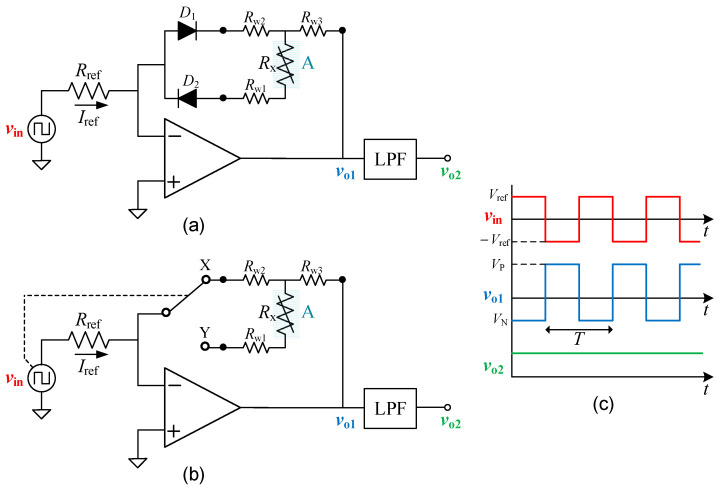
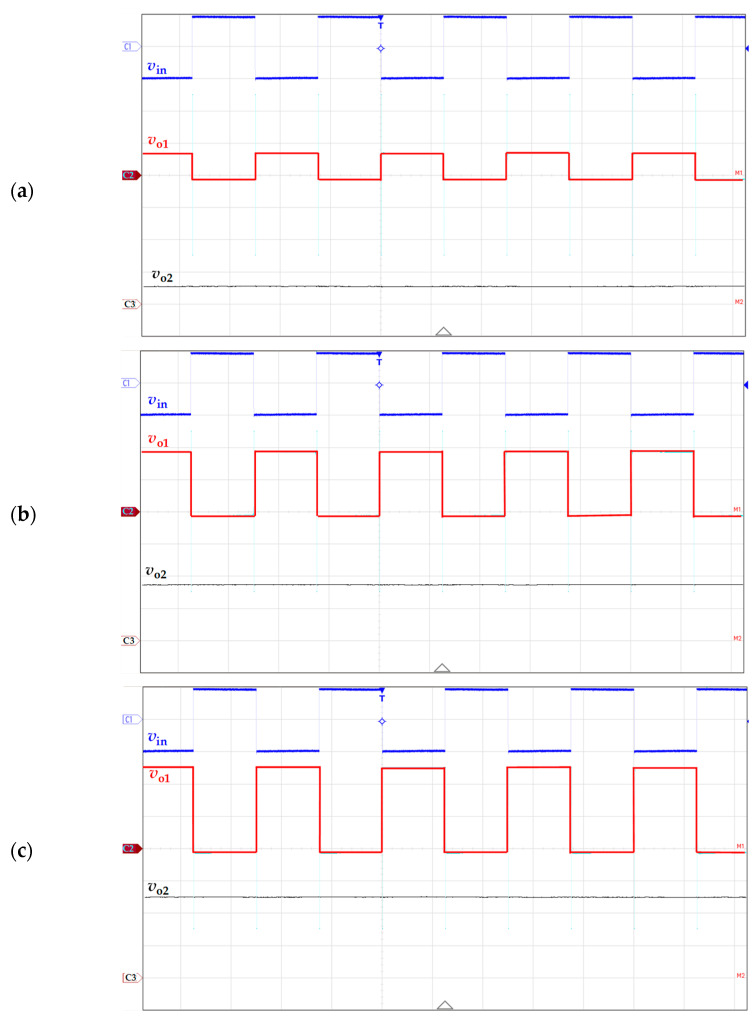
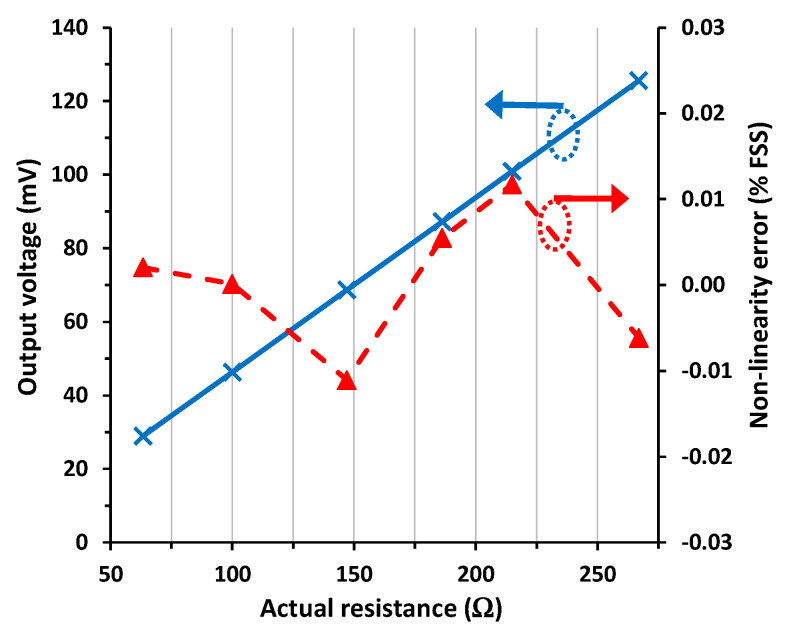
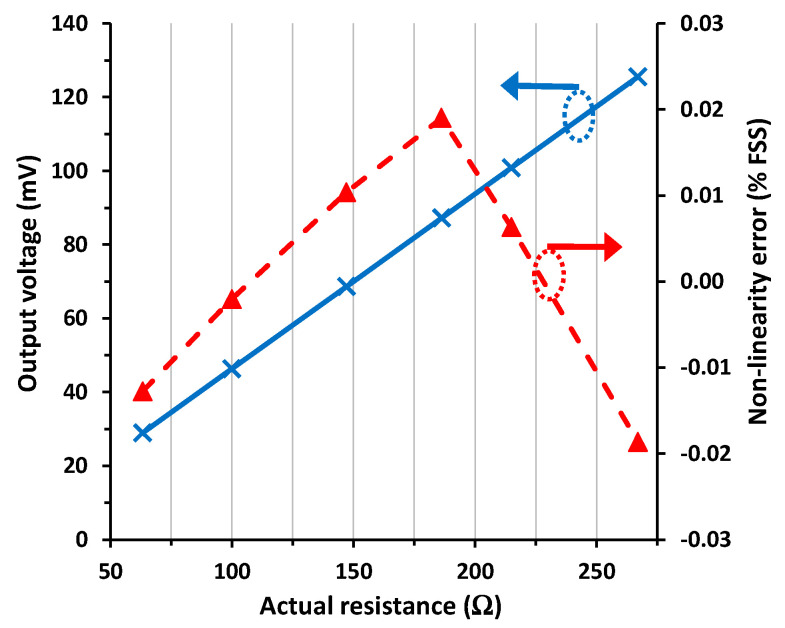
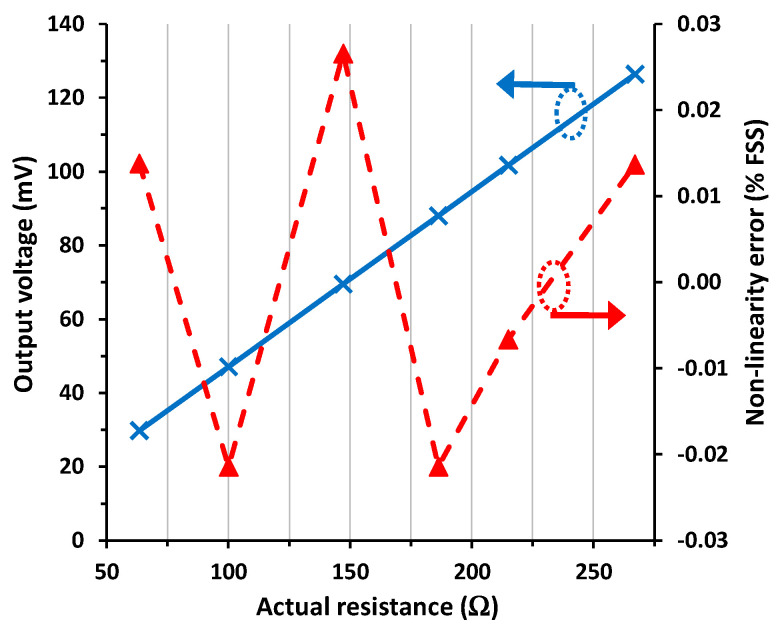
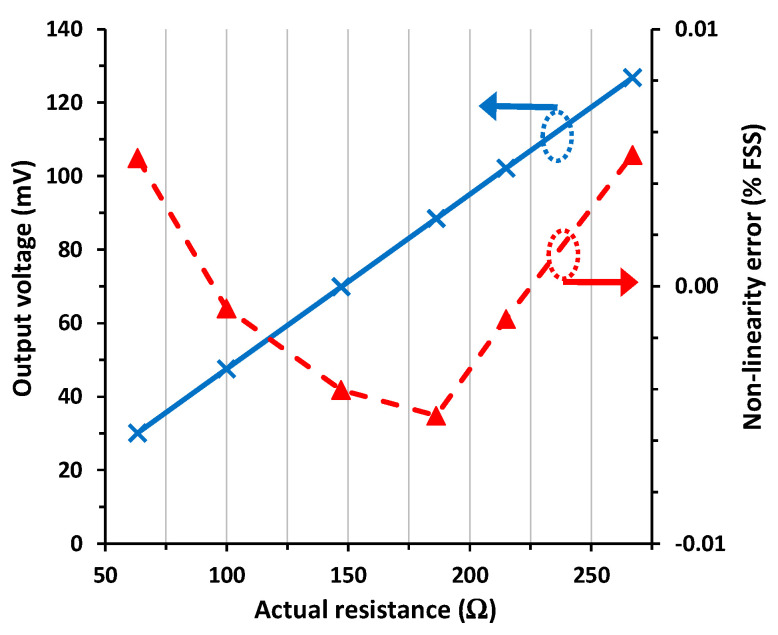
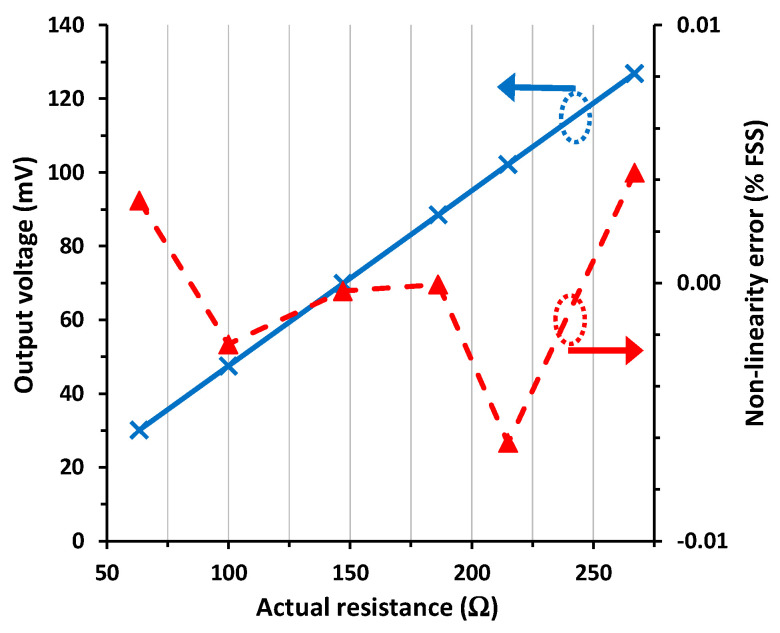
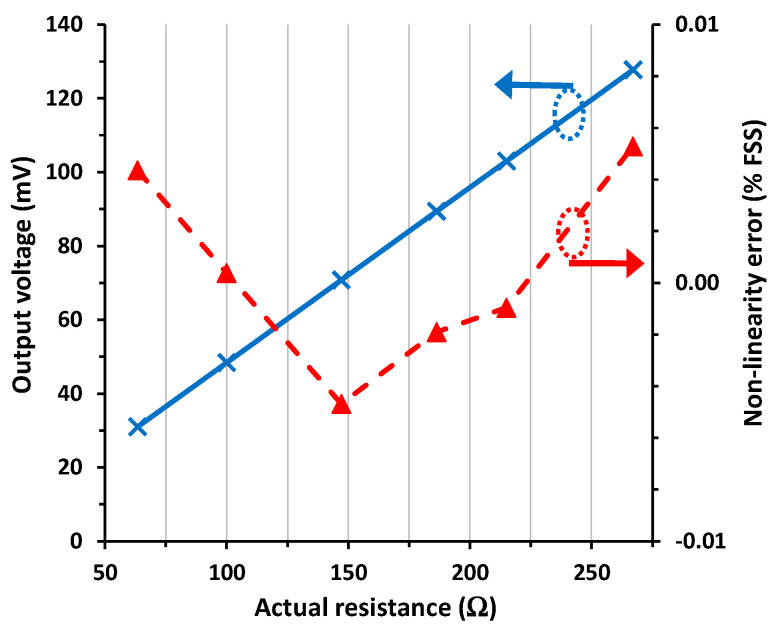
This article proposes and experimentally characterizes two implementations of a novel front-end circuit for three-wire connected resistive sensors with a wire-resistance compensation. The first implementation relies on two twin diodes, whereas the second on a switch; in both cases, those devices are non-remote (i.e., they are placed at the circuit end). The two circuit proposals have a square-wave input excitation so that a constant current with the two polarities is alternatively generated. Then, depending on that polarity, the current goes through either the sensor and the wire parasitic resistances or just the parasitic resistances. This generates a square-wave bipolar output signal whose average value, which is obtained by a low-pass filter, is proportional to the sensor resistance and only depends on the mismatch between two of the three wire resistances involved. Experimental tests applied to resistances related to a Pt100 thermal sensor show a remarkable linearity. For example, the switch-based front-end circuit offers a non-linearity error lower than 0.01% full-scale span, and this is practically insensitive to both the presence and the mismatch between the wire resistances.
Overview
The claims and statistics of this paper haven’t been checked yet.
Run the check — free, no account needed. It reads the open-access text and checks the sources it cites.
Integrity signals
Registry
Cites
Statistics
Figures
Verification
Claims the paper makes
The claims and statistics of this paper haven’t been checked yet.
Run the check — free, no account needed. It reads the open-access text and checks the sources it cites.
Self-check
Percentages, sums and reported differences re-computed from the paper’s own numbers.
The self-check needs the paper’s full text.
Citations
The citation lists haven’t been fetched yet
References 18 · Cited by 23
Research works printed but not linked: 19
- Depari, 2022, Minimal Wide-Range Resistive Sensor-to-Microcontroller Interface for Versatile IoT Nodes, IEEE Trans. Instrum. Meas., 71, 9506509, 10.1109/TIM.2022.3175045 · DOI · Paper page
- Bravo, G., Silva, J.M., Noriega, S.A., Martínez, E.A., Enríquez, F.J., and Sifuentes, E. (2021). A Power-Efficient Sensing Approach for Pulse Wave Palpation-Based Heart Rate Measurement. Sensors, 21. · DOI
- Tsirou, 2023, Robust Analog Multisensory Array System for Lossy Capacitive Sensors over Long Distances, IEEE Trans. Instrum. Meas., 72, 2000308
- Wilson, 2022, Electronic Interface Circuits for Resistance-Based Sensors, IEEE Sens. J., 22, 10223, 10.1109/JSEN.2021.3124766 · DOI
- Lakshminarayana, 2022, A Readout System for High Speed Interface of Wide Range Chemiresistive Sensor Array, IEEE Access, 10, 45726, 10.1109/ACCESS.2022.3170486 · DOI · Paper page
- Hidalgo-López, J.A., Oballe-Peinado, Ó., Castellanos-Ramos, J., and Sánchez-Durán, J.A. (2021). Two-Capacitor Direct Interface Circuit for Resistive Sensor Measurements. Sensors, 21. · DOI
- Czaja, Z. (2023). Simple Measurement Method for Resistive Sensors Based on ADCs of Microcontrollers. IEEE Sens. J., early access. · DOI · Paper page
- Nagarajan, 2017, Improved Single-Element Resistive Sensor-to-Microcontroller Interface, IEEE Trans. Instrum. Meas., 66, 2736, 10.1109/TIM.2017.2712918 · DOI
- Rerkratn, A., Prombut, S., Kamsri, T., Riewruja, V., and Petchmaneelumka, W. (2022). A Procedure for Precise Determination and Compensation of Lead-Wire Resistance of a Two-Wire Resistance Temperature Detector. Sensors, 22. · DOI
- Li, W., Xiong, S., and Zhou, X. (2020). Lead-Wire-Resistance Compensation Technique Using a Single Zener Diode for Two-Wire Resistance Temperature Detectors (RTDs). Sensors, 20. · DOI
- Reverter, F. (2023). A front-end circuit for two-wire connected resistive sensors with a wire-resistance compensation. Sensors, 23. · DOI
- Elangovan, 2021, Evaluation of New Digital Signal Conditioning Techniques for Resistive Sensors in Some Practically Relevant Scenarios, IEEE Trans. Instrum. Meas., 70, 2004709
- Elangovan, 2022, Simplified Digitizing Interface-Architectures for Three-Wire Connected Resistive Sensors: Design and Comprehensive Evaluation, IEEE Trans. Instrum. Meas., 71, 2000309, 10.1109/TIM.2021.3136176 · DOI
- Mathew, 2023, Accurate Interface Schemes for Resistance Thermometers with Lead Resistance Compensation, IEEE Trans. Instrum. Meas., 72, 2005904, 10.1109/TIM.2023.3291739 · DOI
- Reverter, 2022, A Microcontroller-Based Interface Circuit for Three-Wire Connected Resistive Sensors, IEEE Trans. Instrum. Meas., 71, 2006704, 10.1109/TIM.2022.3219492 · DOI
- Sen, 2011, An improved lead wire compensation technique for conventional four wire resistance temperature detectors (RTDs), Measurement, 44, 842, 10.1016/j.measurement.2011.01.019 · DOI
- Elangovan, 2023, An Efficient Digital Readout for Four-Lead Resistance Thermometers, IEEE Sens. Lett., 7, 6009504
- Pallàs-Areny, R., and Webster, J.G. (2001). Sensors and Signal Conditioning, Wiley.
- Reverter, 2021, A Tutorial on Thermal Sensors in the 200th Anniversary of the Seebeck Effect, IEEE Sens. J., 21, 22122, 10.1109/JSEN.2021.3105546 · DOI
Metadata
- Authors
- Reverter, F.
- Affiliations
- Universitat Politècnica de Catalunya (ES)
- Corresponding author
- Reverter, Ferran
- ORCID
- Reverter, Ferran
- Venue
- Sensors
- Publisher
- MDPI AG
- Published
- 2024-01-10
- Volume
- 24
- Issue
- 2
- Pages
- 422
- ISSN
- 1424-8220 (ISSN-L)
- PMC
- PMC10819620
- OpenAlex
- W4390703109
- Cited by
- 23
- References
- 18
- Citations by year
- 2026: 6 · 2025: 12 · 2024: 5
- FWCI
- 3.82
- Type
- journal article
- Language
- en
- Open access
- gold
- doi.org
- Licence
- Locations
- Sensors (publishedVersion, cc-by)
- PubMed Central (publishedVersion, cc-by)
- PubMed (publishedVersion)
- UPCommons institutional repository (Universitat Politècnica de Catalunya) (submittedVersion, cc-by)
- DOAJ (DOAJ: Directory of Open Access Journals) (submittedVersion, cc-by-sa)
- Topics
- Physical Sciences › Physics and Astronomy › Instrumentation › Sensor Technology and Measurement Systems
- Physical Sciences › Engineering › Electrical and Electronic Engineering › Analog and Mixed-Signal Circuit Design
- Physical Sciences › Physics and Astronomy › Instrumentation › Advanced Sensor Technologies Research
- Keywords
- front-end circuit, square wave excitation, low-pass filtering, nonlinearity error
About these checks
Registry, retraction, Cites and statistics results are computed, not judged, with one exception: a printed reference that no index lists is read once by a model before it counts as a citation error. Claims are extracted by a model and kept only when their quote appears verbatim in the text; each cited source is then checked, with a model’s help, for whether it says what the claim relies on. Those verdicts can be wrong — read the claim’s quote and the cited source before relying on one.
Statistics and arithmetic are recomputed, not judged.
Confidence bands are shown only for fields calibrated on our annotated test set. None is calibrated yet, so no band is shown.
What counts as a claim ›How we measure confidence ›How we check this ›
Are you an author, or do you see a problem with this page? Request a review
How to cite
Cite CoChat for the checks on this page, and the paper for its own findings.
- This page
- CoChat. (2026). Citation check: Two Proposals of a Simple Analog Conditioning Circuit for Remote Resistive Sensors with a Three-Wire Connection. https://app.cochat.ai/papers/10.3390/s24020422
- The paper
- Reverter, F. (2024). Two Proposals of a Simple Analog Conditioning Circuit for Remote Resistive Sensors with a Three-Wire Connection. Sensors. https://doi.org/10.3390/s24020422
