

Development and Integration of a Digital Twin Model for a Real Hydroelectric Power Plant
Open accessThe DOI matches its Crossref record; 62 of the 62 references it cites were found in a registry or an index; none of the 7 sources its claims cite is checked for support yet.
Abstract
In this study, a digital twin model of a hydroelectric power plant has been created. Models of the entire power plant have been created and malfunction situations of a sensor located after the inlet valve of the plant have been analyzed using a programmable logic controller (PLC). As a feature of the digital twin (DT), the error prediction and prevention function has been studied specifically for the pressure sensor. The accuracy and reliability of the data obtained from the sensor are compared with the data obtained from the DT model. The comparison results are evaluated and erroneous data are identified. In this way, it is determined whether the malfunction occurring in the system is a real malfunction or a malfunction caused by measurement or connection errors. In the case of sensor failure or measurement-related malfunction, this situation is determined through the digital twin-based control mechanism. In the case of actual failure, the system is stopped, but in the case of measurement or connection errors, since the data are calculated by the DT model, the value in the specified region is known and thus there is no need to stop the system. This prevents production loss in the hydroelectric power plant by ensuring the continuity of the system in case of errors.
Overview
CoChat Summary
TL;DR
The paper develops and integrates a digital twin model for a real hydroelectric power plant in Turkey, embedding DT calculations in PLCs to monitor and validate the Unit 1 outlet pressure sensor. It shows the DT can substitute calculated values when sensor data are erroneous, distinguishing measurement/connection errors from real faults and avoiding unnecessary shutdowns.
Key findings
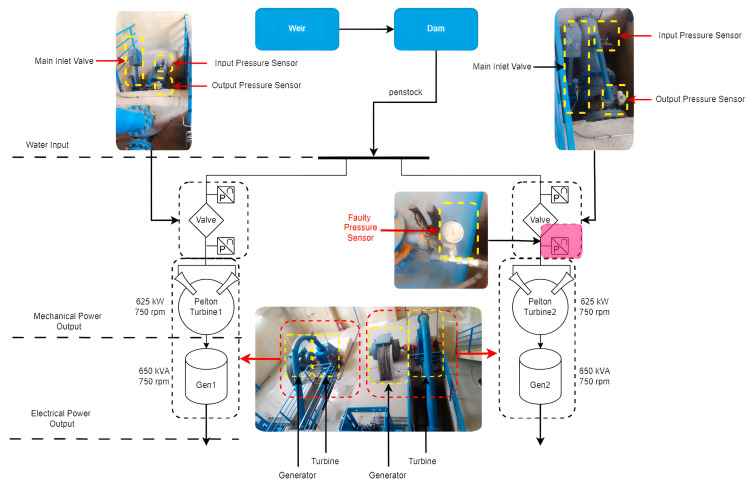
- The plant is a river-type hydroelectric facility with two units of 2 × 625 kW; pressure values are bounded by a lower limit of 24 bar and an upper limit of 28 bar, with values outside this range considered abnormal.
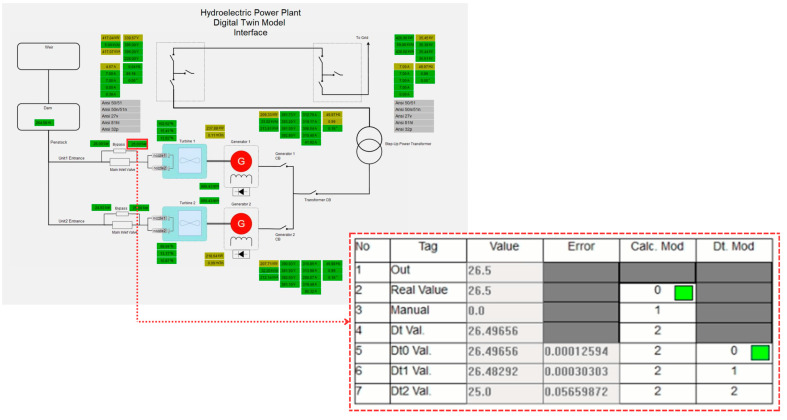
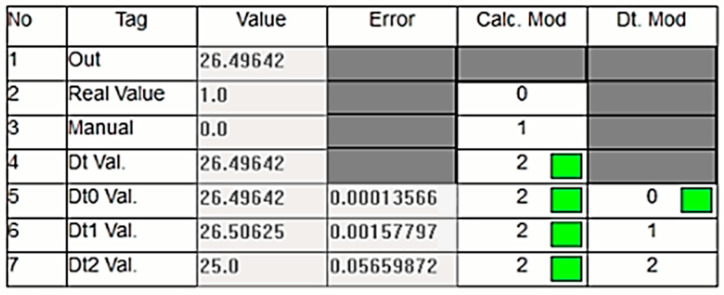
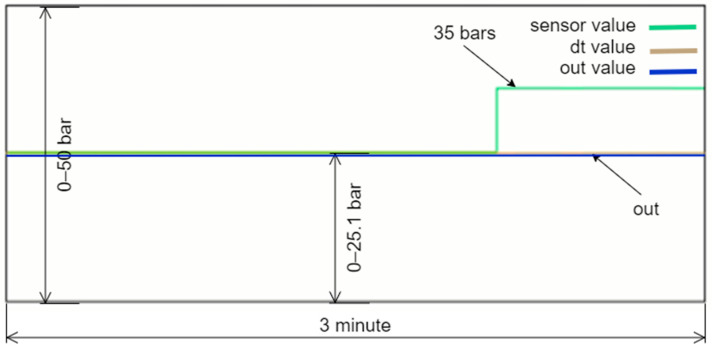
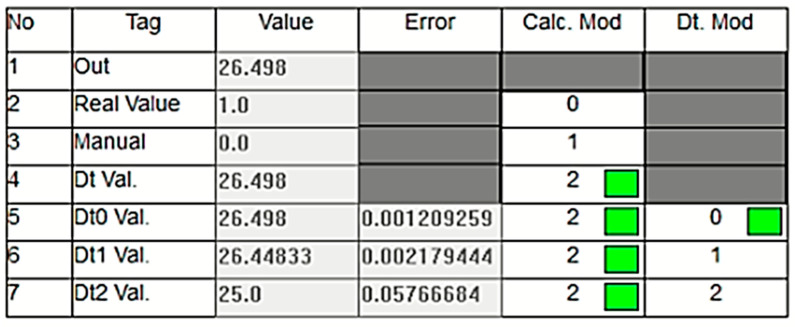
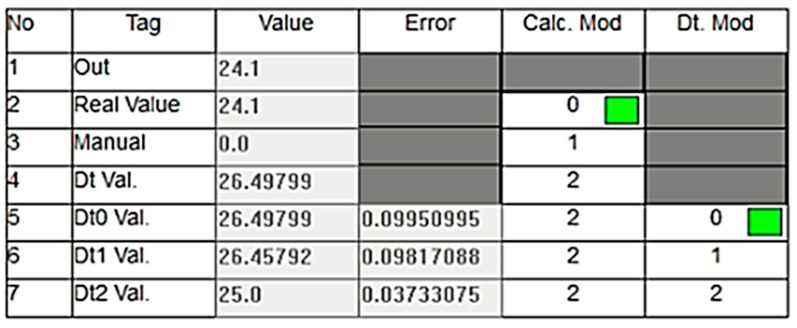
- In normal operation, the sensor read 26.5 bar, within range and close to the dt0 value, so the real sensor value was used as output.
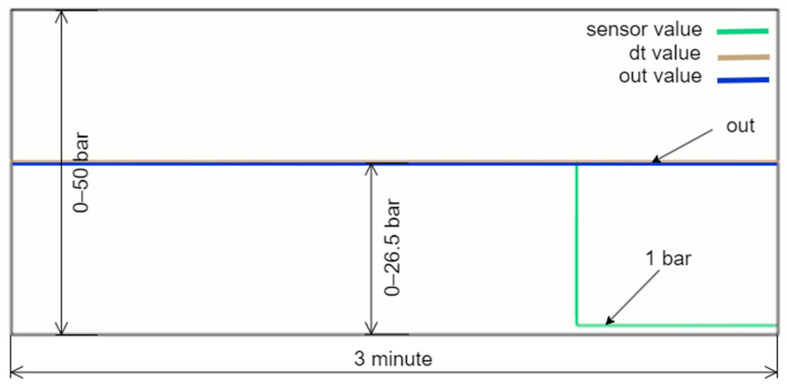
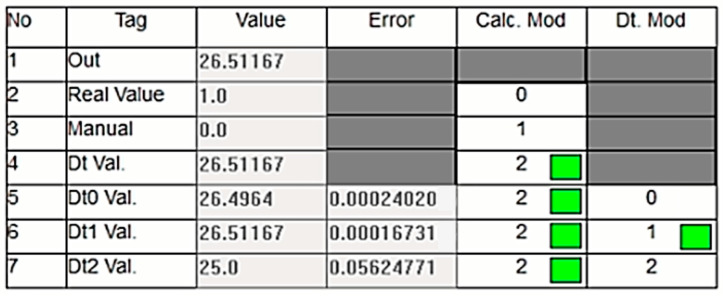
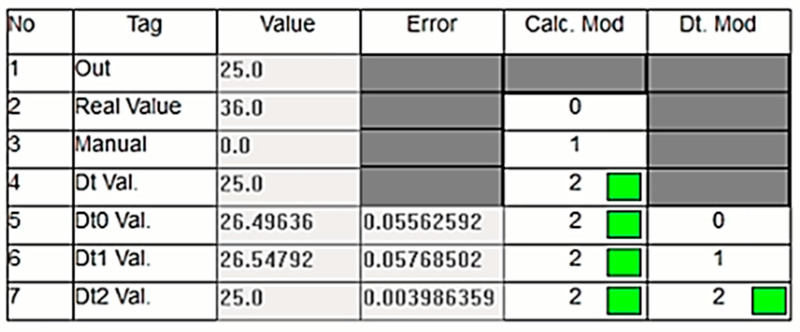
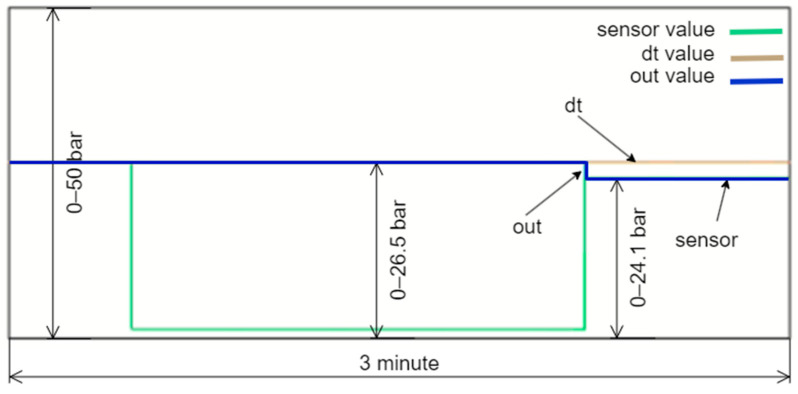
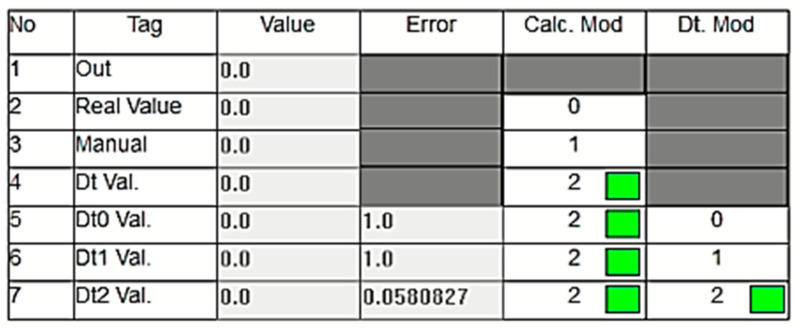
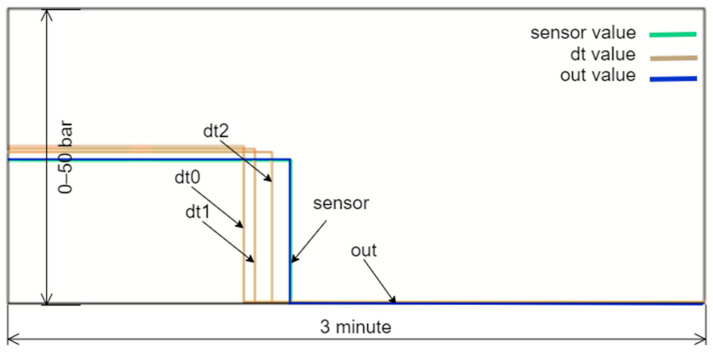
- When sensor data decreased to 1 bar, the system selected the DT value (dt0) as output because the real value was inaccurate, continuing energy supply without output oscillation; other tests selected dt1 or dt2 when they had the lowest error.
- When all dt values and the sensor value sequentially dropped to 0, the system treated it as a large-scale failure and isolated the plant from the main grid until resolved; after sensor repair, the system reverted to real sensor data.
Methods
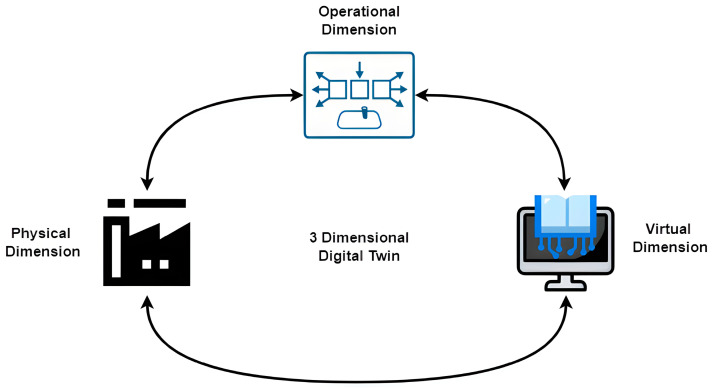
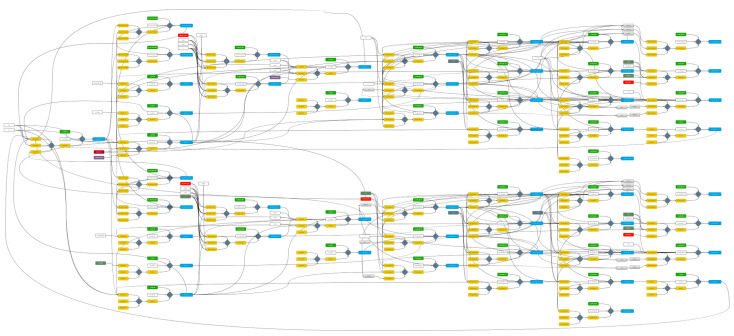
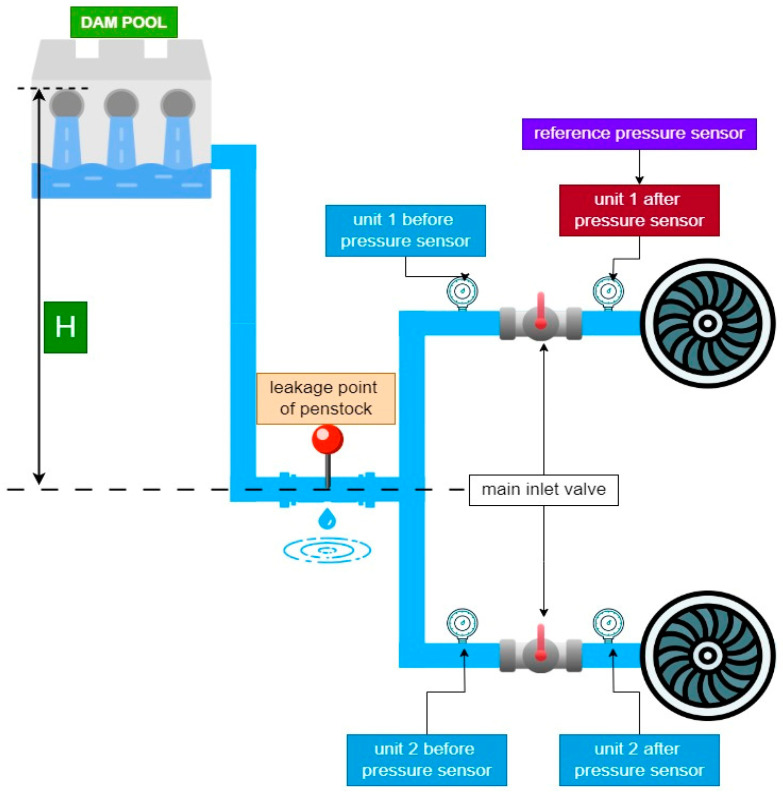
- Design: A DT model of a real hydroelectric power plant in Turkey was built with physical, operational, and functional dimensions; the full model combines sub-digital twins, but the paper details the Unit 1 outlet pressure sensor after the inlet valve as a case.
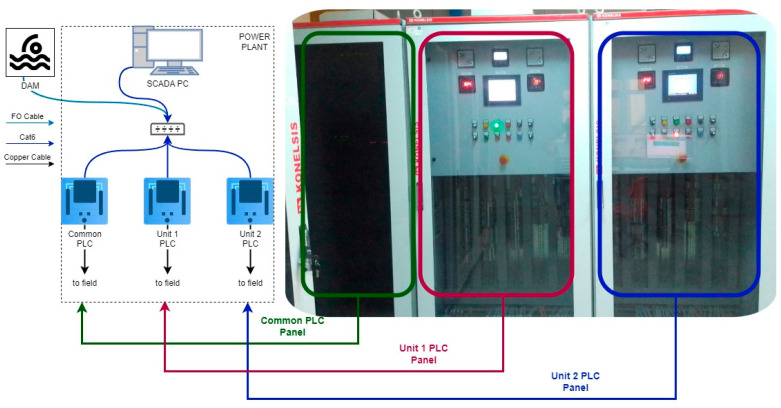
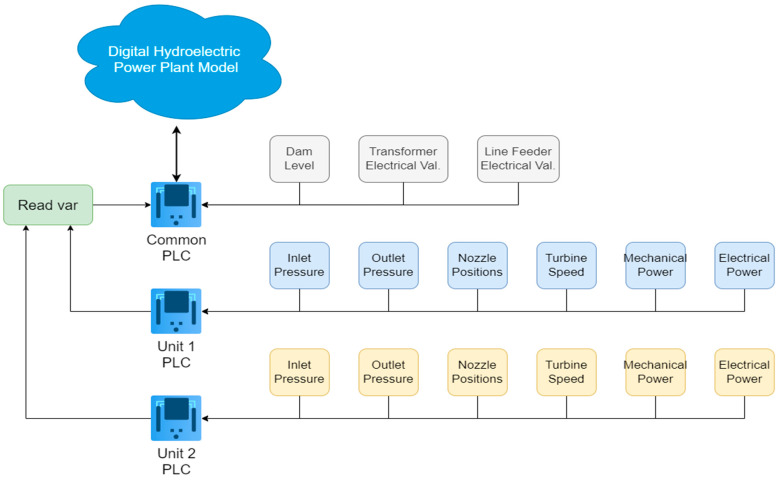
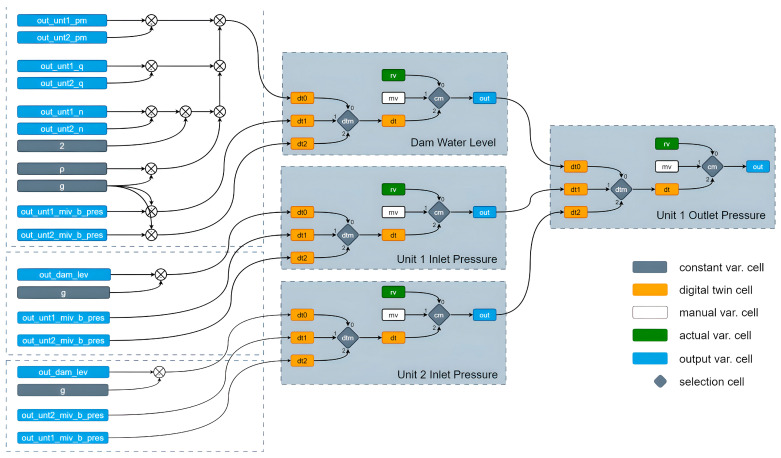
- Data/infrastructure: The plant uses PLCs and SCADA; data are retrieved via Modbus TCP/IP, with OPC UA for SCADA integration. Three DT calculation methods (dt0, dt1, dt2) use different algorithms/data sources, including dam level, pre-inlet pressures, fluid density, and gravitational acceleration.
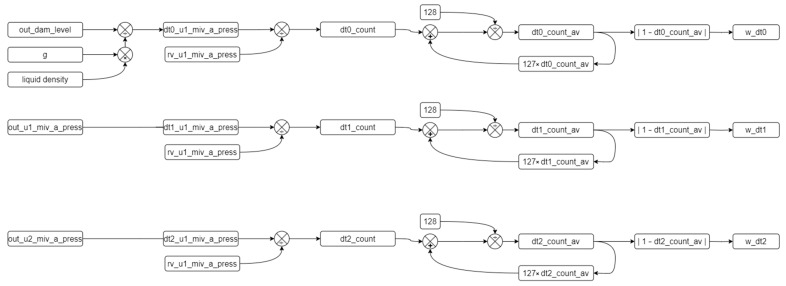
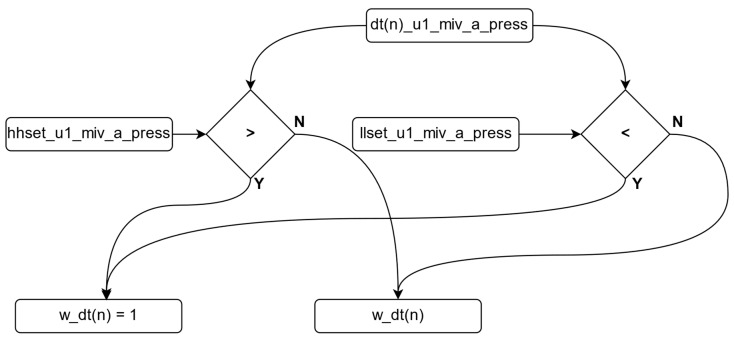
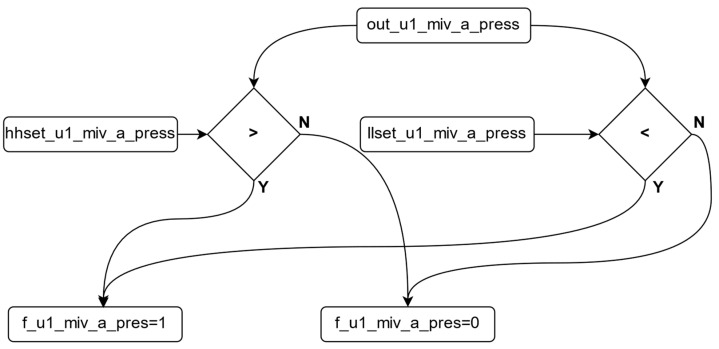
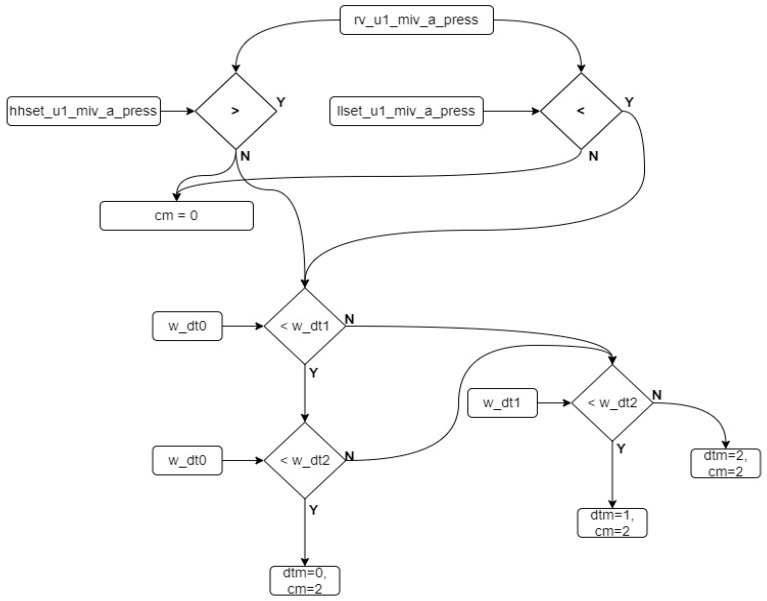
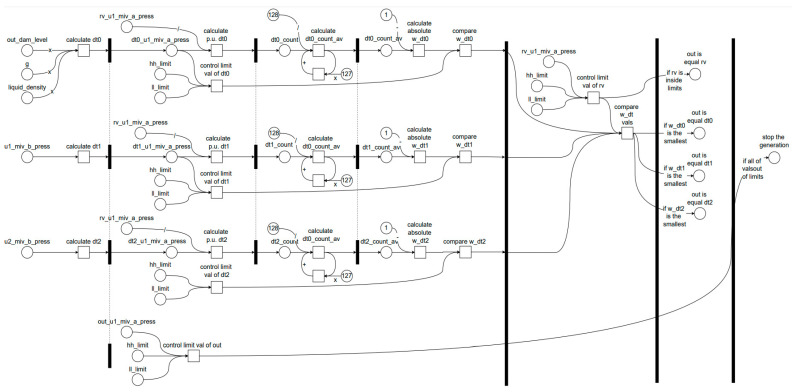
- Analysis: Control algorithms filter and smooth dt values, compare errors against reference limits, select the dt value closest to zero error, and decide whether to output the real sensor value, manual value, or DT value; a Petri Net models fault detection and decision-making. Experimental tests covered normal operation, sensor faults, recovery, and plant-wide failure.
Limitations
- Paper states: the DT scope primarily focuses on specific components and sensors; expanding to more components/systems would provide a more comprehensive view.
- Paper states: the current implementation lacks comprehensive integration of historical and external data sources, and PLCs are not inherently designed for extensive data storage, making data management/analysis cumbersome; future work should add API/database integration.
- Paper states: interoperability and cybersecurity are not fully robust; also, the study exhibits 3D and 4D DT characteristics but does not fully achieve 5D predictive–prescriptive analytics and autonomous control. Evident from text: the full DT model was too complex to explain entirely, so only one sub-digital twin is detailed.
Model-written summary. Check it against the paper before relying on it.
Integrity signals
Registry
Cites
Statistics
Figures
Verification
Claims the paper makes
0 Valid · 10 Not valid · 6 Not checked · 95 Own results and interpretations
A result the paper states — it cites no source for it, so there is none to check. The quote shows it is in the paper.
In the paper
“malfunction situations of a sensor located after the inlet valve of the plant have been analyzed using a programmable logic controller (PLC).”
§ Development and Integration of a Digital Twin Model for a Real Hydroelectric Power Plant > Abstract
plain- Asserted: passes — The authors put it forward as true.
- Checkable: passes — It can be checked against evidence.
- Load-bearing: passes — The paper’s conclusions depend on it.
- Based: passes — The paper gives a reason why it holds.
A result the paper states — it cites no source for it, so there is none to check. The quote shows it is in the paper.
In the paper
“This model is a combination of separate DTs for each piece of equipment that constitutes the plant.”
§ Development and Integration of a Digital Twin Model for a Real Hydroelectric Power Plant > 3. Development and Implementation of the Digital Twin Model
plain- Asserted: passes — The authors put it forward as true.
- Checkable: passes — It can be checked against evidence.
- Load-bearing: passes — The paper’s conclusions depend on it.
- Based: passes — The paper gives a reason why it holds.
A result the paper states — it cites no source for it, so there is none to check. The quote shows it is in the paper.
In the paper
“Consequently, within the scope of this study, the capability of anomaly detection has been applied to a hydroelectric power plant.”
§ Development and Integration of a Digital Twin Model for a Real Hydroelectric Power Plant > 2. Methodological Approach and Infrastructure Overview > 2.1. Digital Twin Application
plainSingle case- Asserted: passes — The authors put it forward as true.
- Checkable: passes — It can be checked against evidence.
- Load-bearing: passes — The paper’s conclusions depend on it.
- Based: passes — The paper gives a reason why it holds.
A result the paper states — it cites no source for it, so there is none to check. The quote shows it is in the paper.
In the paper
“Unlike traditional anomaly detection methods reliant solely on numerical computation and historical sensor data, the methodology proposed in this study integrates advanced DT capabilities directly into PLCs.”
§ Development and Integration of a Digital Twin Model for a Real Hydroelectric Power Plant > 1. Introduction
plainstates a cause- Asserted: passes — The authors put it forward as true.
- Checkable: passes — It can be checked against evidence.
- Load-bearing: passes — The paper’s conclusions depend on it.
- Based: passes — The paper gives a reason why it holds.
A result the paper states — it cites no source for it, so there is none to check. The quote shows it is in the paper.
In the paper
“Subsequently, leveraging the data collected within the common PLC, a DT model of the power plant is constructed.”
§ Development and Integration of a Digital Twin Model for a Real Hydroelectric Power Plant > 2. Methodological Approach and Infrastructure Overview > 2.3. Automation Infrastructure
plainstates a cause- Asserted: passes — The authors put it forward as true.
- Checkable: passes — It can be checked against evidence.
- Load-bearing: passes — The paper’s conclusions depend on it.
- Based: passes — The paper gives a reason why it holds.
40 more claims
Create a free account to see all 111 claims and to verify the 7 references still open.
- Probably not a substantial claim. 37
- It may state two separate claims as one. 36
- The quote only partly states this claim. 2
Self-check
Percentages, sums and reported differences re-computed from the paper’s own numbers.
Each contradiction between two passages listed here was confirmed by an independent check.
Rated minor: it would not touch a result — a value no result rests on, a p-value that stays on the same side of the significance level, or a conflict that is clerical, resolved elsewhere in the paper, or outside its own findings.
In the paper
§ Development and Integration of a Digital Twin Model for a Real Hydroelectric Power Plant > 3. Development and Implementation of the Digital Twin Model > 3.2. Control Algorithms
“else if w_dt1 < w_dt2 cm = 2 dtm = 1 end if else cm = 0 dtm = 0 end if end while”
§ Development and Integration of a Digital Twin Model for a Real Hydroelectric Power Plant > 3. Development and Implementation of the Digital Twin Model > 3.2. Control Algorithms
“Based on this control, the dt value with the least error is transferred to the output.”
Rated minor: it would not touch a result — a value no result rests on, a p-value that stays on the same side of the significance level, or a conflict that is clerical, resolved elsewhere in the paper, or outside its own findings.
In the paper
§ Development and Integration of a Digital Twin Model for a Real Hydroelectric Power Plant > 3. Development and Implementation of the Digital Twin Model > 3.1. Mathematical Framework for Calculating ‘dt’ Values
“dam_lev={(5a)(Pu1+Pu2)/((Qu1+Qu2)×ρ×g×((ηu1+ηu2)/2)); (5b)g×unt1_miv_b_pres; (5c)g×unt2_miv_b_pres where”
§ Development and Integration of a Digital Twin Model for a Real Hydroelectric Power Plant > 3. Development and Implementation of the Digital Twin Model > 3.1. Mathematical Framework for Calculating ‘dt’ Values
“Equations (5b) and (5c) convert the pressure values into altitude values as per Equation (4), and the mechanical power equation is derived from Equation (6).”
Rated minor: it would not touch a result — a value no result rests on, a p-value that stays on the same side of the significance level, or a conflict that is clerical, resolved elsewhere in the paper, or outside its own findings.
In the paper
§ Development and Integration of a Digital Twin Model for a Real Hydroelectric Power Plant > 3. Development and Implementation of the Digital Twin Model > 3.2. Control Algorithms
“dt2_u1_miv_a_press ← out_u2_miv_a_press”
§ Development and Integration of a Digital Twin Model for a Real Hydroelectric Power Plant > 3. Development and Implementation of the Digital Twin Model > 3.1. Mathematical Framework for Calculating ‘dt’ Values
“unt1_miv_a_pres={(1a)dam_lev/(10,197); (1b)unt1_miv_b_pres; (1c)unt2_miv_b_pres where”
Citations
Cites
Digital Twin in Industry: State-of-the-Art
Tao, F., Zhang, H., Liu, A., & Nee, A. Y. C. (2019) · IEEE Transactions on Industrial Informatics · doi:10.1109/tii.2018.2873186 · Cited by 5,871 · cited 1×
“DTs have become indispensable across industries, revolutionizing how organizations manage assets, optimize processes, and make decisions [4–6].”
BackgroundDigital Twin in manufacturing: A categorical literature review and classification
Kritzinger, W., Karner, M., Traar, G., Henjes, J., & Sihn, W. (2018) · IFAC-PapersOnLine · doi:10.1016/j.ifacol.2018.08.474 · Cited by 3,612 · cited 1×
“In manufacturing, they simulate production lines, predict maintenance needs, and enhance operational efficiency [7–9].”
BackgroundDigital Twin as a Service (DTaaS) in Industry 4.0: An Architecture Reference Model
Aheleroff, S., Xu, X., Zhong, R. Y., & Lu, Y. (2021) · Advanced Engineering Informatics · doi:10.1016/j.aei.2020.101225 · Cited by 658
Digital-Twin-Enabled 6G: Vision, Architectural Trends, and Future Directions
Khan, L. U., Saad, W., Niyato, D., Han, Z., & Hong, C. S. (2022) · IEEE Communications Magazine · doi:10.1109/mcom.001.21143 · Cited by 550
Towards the future of smart electric vehicles: Digital twin technology
Bhatti, G., Mohan, H., & Raja Singh, R. (2021) · Renewable and Sustainable Energy Reviews · doi:10.1016/j.rser.2021.110801 · Cited by 533 · cited 1×
“Automotive industries use DTs for vehicle design, performance analysis, and predictive maintenance [19–21].”
MethodExperimentable Digital Twins—Streamlining Simulation-Based Systems Engineering for Industry 4.0
Schluse, M., Priggemeyer, M., Atorf, L., & Rossmann, J. (2018) · IEEE Transactions on Industrial Informatics · doi:10.1109/tii.2018.2804917 · Cited by 524 · cited 1×
“DTs have become indispensable across industries, revolutionizing how organizations manage assets, optimize processes, and make decisions [4–6].”
BackgroundZhang, H., Liu, Q., Chen, X., Zhang, D., & Leng, J. (2017) · IEEE Access · doi:10.1109/access.2017.2766453 · Cited by 471 · cited 1×
“Virtual testing Design [35] Optimization [44,45]”
Machine Learning based Digital Twin Framework for Production Optimization in Petrochemical Industry
Min, Q., Lu, Y., Liu, Z., Su, C., & Wang, B. (2019) · International Journal of Information Management · doi:10.1016/j.ijinfomgt.2019.05.020 · Cited by 436 · cited 2×
“Cooling tower [46] Machine learning-based IoT-supported [47]”
MethodFan, C., Zhang, C., Yahja, A., & Mostafavi, A. (2021) · International Journal of Information Management · doi:10.1016/j.ijinfomgt.2019.102049 · Cited by 434
Industrial applications of digital twins
Jiang, Y., Yin, S., Li, K., Luo, H., & Kaynak, O. (2021) · Philosophical Transactions of the Royal Society A: Mathematical, Physical and Engineering Sciences · doi:10.1098/rsta.2020.0360 · Cited by 398 · cited 1×
“They enable organizations to effectively monitor and manage their systems, optimize operations, predict maintenance needs, and simulate scenarios in advance for better decision-making [2,3].”
Background
Cited by
Al-Shetwi, A. Q., Atawi, I. E., El‐Hameed, M. A., & Abuelrub, A. (2025) · IET Smart Grid · doi:10.1049/stg2.70026 · Cited by 182
Zeng, Y., Hussein, Z. A., Chyad, M. H., Farhadi, A., Yu, J., & Rahbarimagham, H. (2025) · Scientific Reports · doi:10.1038/s41598-025-89866-5 · Cited by 64
Tan, J., Radhi, R. M., Shirini, K., Gharehveran, S. S., Parisooz, Z., Khosravi, M., & Azarinfar, H. (2025) · Scientific Reports · doi:10.1038/s41598-025-98235-1 · Cited by 56
“Similarly, research by 18 applied this integrated approach to hydropower systems, achieving notable reductions in error rates and operational disruptions.”
Bae, C.-H., Choi, E.-T., & Lee, S. (2025) · IEEE Access · doi:10.1109/access.2025.3601615 · Cited by 55
“Additionally, digital twins are used to optimizing the operation of steam turbines in thermal power plants [214] and are integrated into hydroelectric facilities for real-time system control [215].”
Maksimović, M., Jokić, S., & Boskovic, M. C. (2025) · Process Integration and Optimization for Sustainability · doi:10.1007/s41660-024-00478-4 · Cited by 32
“An example of data collection from various sensors and data analysis from the pipeline inlet system of the hydro-electric power plant in order to prevent failure is presented in the research of Ersan and Irmak (2024).”
Erkek, İ., & Irmak, E. (2025) · IEEE Access · doi:10.1109/access.2025.3547672 · Cited by 27
“In addition, the equations used for digital twin calculations are also part of this integration [81].”
Self-citationShahmoradi, S., Imani, M. H., Mazza, A., & Pons, E. (2025) · Energies · doi:10.3390/en18215627 · Cited by 25
Digital Twin System Framework and Implementation for Grid-Integrated Electric Vehicles
Yu, J.-U., Cho, K.-S., Park, S.-W., & Son, S.-Y. (2024) · Energies · doi:10.3390/en17246249 · Cited by 22
“For instance, the DT system of [22] has been proposed as a comprehensive anomaly detection and optimization solution for hydroelectric power plant systems.”
The Concept of a Digital Twin for the Wały Śląskie Hydroelectric Power Plant: A Case Study in Poland
Machalski, A., Szulc, P., Błoński, D., Nycz, A., Nemś, M., Skrzypacz, J., Janik, P., & Satława, Z. (2025) · Energies · doi:10.3390/en18082021 · Cited by 20
Cyber–physical power systems resilience: Definition, threats, and assessment
Binqadhi, H. M., & Almuhaini, M. M. (2026) · Energy Reports · doi:10.1016/j.egyr.2026.109209 · Cited by 9
Anastasia, K., Panfilov, I., Vyacheslavovna, P. S., Mikhail, J., & Pechenkin, Z. (2026) · International Symposium INFOTEH-JAHORINA (INFOTEH) · doi:10.1109/infoteh68759.2026.11477645 · Cited by 9
“The implementation of predictive maintenance will significantly improve the operational efficiency, reliability, and safety of HPPs, ensuring their sustainable functioning in the long term [4, 5].”
Ristvej, J., Halúsková, B., Nováková, K., & Chovanec, D. (2026) · Smart Cities · doi:10.3390/smartcities9020028 · Cited by 8
“Proper, effective and rapid flood management tools [49] are essential to avoid, reduce and mitigate likely flood risks.”
Song, J., & Wang, Y. (2026) · Energy Reports · doi:10.1016/j.egyr.2026.109235 · Cited by 4
Wang, Y., Wu, C., Chen, L., Xiao, J., & Xu, Z. (2024) · Boao New Power System International Forum - Power System and New Energy Technology Innovation Forum (NPSIF) · doi:10.1109/npsif64134.2024.10883528 · Cited by 4
Rabadan, R., Simó, E., Aguiló-Gost, F., Hernández-Ramírez, F., & Masip-Bruin, X. (2026) · Electronics · doi:10.3390/electronics15030658 · Cited by 3
Zero‐shot point cloud segmentation for hydro power plant components
Su, Y., Chen, W., Ling, J., & Yu, D. (2025) · Computer-Aided Civil and Infrastructure Engineering · doi:10.1111/mice.70150 · Cited by 3
“DT technology enables lifecycle simulation and optimization of hydropower projects (Ersan & Irmak, 2024).”
Laperle, V. (2025) · PolyPublie (École Polytechnique de Montréal) · Cited by 2
Recent developments in data-driven and hybrid intelligent techniques for hydropower fault analysis
Guo, X., Fu, E., Hu, H., Chen, Z., Meng, X., Xu, Y., & Wu, S. (2026) · Frontiers in Water · doi:10.3389/frwa.2026.1887515 · Cited by 1
Reconstruction and CFD Modeling of a Kaplan Turbine for Digital Twin Applications
Szulc, P., Kontargyri, V. T., Moloshnyi, O., Machalski, A., Nycz, A., Skrzypacz, J., Nemś, M., Błoński, D., Janik, P., & Satława, Z. (2026) · Energies · doi:10.3390/en19143341 · Cited by 1
A physics-based multi-regime approach for estimation of head losses in operating hydropower plants
Alonso, A., Robert, G., & Besançon, G. (2025) · Journal of Process Control · doi:10.1016/j.jprocont.2025.103528 · Cited by 1
Palacios, J. B. S., Rodríguez, J. D. E., Rodríguez, B. D. E., & Yanez, W. A. N. (2026) · Esprint Investigación · doi:10.61347/ei.v5i2.356
Waheed, P., Tanveer, I., Yaqoob, H., Zulqarnain, Erten, B., Sher, F., & Teoh, Y. H. (2025) · Elsevier eBooks · doi:10.1016/b978-0-443-33771-0.00017-4
Vasquez-Cevallos, L., Zapata, M., Sarango-Gualan, M., Cruz, W. I. M., & Parrales–Bravo, F. (2026) · Energies · doi:10.3390/en19194499
Digital twin utilization in photovoltaic energy systems: Challenges and opportunities
Alao, K. T., Gilani, S. I. U. H., Sopian, K. K., Anshory, I., Jamaaluddin, Alao, T. O., & Sulliev, A. K. (2026) · AIP conference proceedings · doi:10.1063/5.0318798
Onsomu, O. N., Şen, O., & Yeşilata, B. (2026) · International Journal of Energy Research · doi:10.1155/er/3899054
IoT Sensors and Actuators for Digital Twins
Ryait, H., Sharma, A., & Agarwal, R. (2026) · Springer eBooks · doi:10.1007/978-981-96-8867-8_15-1
Digital Twins in Healthcare, Industry, and Infrastructure: Scoping Review with ☸️SAIMSARA
SAIMSARA (2026) · SAIMSARA Journal · doi:10.62487/saimsara7e35ff6e
Specifying Digital Twin Synchronization in Manufacturing Systems Using Stochastic and Timed Automata
Derigent, W. J. E., & Marangé, P. (2026) · Studies in computational intelligence · doi:10.1007/978-3-032-18786-4_19
Guo, P., Li, Y., Fang, C., Shen, J., Hou, Z., & Zhao, K. (2026) · Water Conservation Science and Engineering · doi:10.1007/s41101-026-00590-1
“Based on spatial scale, this framework can be divided into the basin/project, equipment, component, and local damage levels [33].”
Hybrid Multi-Criteria Simulation Model for Power Plant Optimal Performance and Control
Uwom, O. O., & Akinnuli, B. O. (2026) · International Journal of Engineering Research and Science · doi:10.25125/ijoer-aug-2026-6
Applications of model checking in the context of cyber security for digital twins
Fraser, D. (2025) · Enlighten: Theses (The University of Glasgow) · doi:10.5525/gla.thesis.85282
A Scalable AI-Driven Digital Twin Framework for Hydroelectric Power Plants
Silber, I., Warnick, S., Kieburtz, M. R., Bai, S., Beus, S., Macduff, M., Kenyon, G., & Sivaraman, C. (2026) · Hydropower · doi:10.3390/hydropower1030010
“Although different variants of DTs for hydropower have been proposed and developed, mainly over the past decade, references for interfaced, operational frameworks (e.g., [17]) are scarce.”
A Unified Digital Twin Architecture for Integrated Power Grid and Infrastructure Management
Wang, M., Yin, Q., 潘盈汕, Zhang, L., & Li, H. (2026) · EAI Endorsed Transactions on Energy Web · doi:10.4108/ew.12059
“This, in turn, can be highly effective for improving the sustainability of power grid operations [11].”
Bian, H., Li, Y., & Yin, Z. (2026) · International Conference on Recent Trends in Computer Science and Technology (ICRTCST) · doi:10.1109/icrtcst68392.2026.11545185
“Such constraints restrict earlier and precise identification and identification and can be particularly significant in sophisticated hydraulic systems, in which the interactions between components can cause minor and temporary fault signatures [5].”
Fa’alih, S. K. R., Fahmi, I., & Prasetyo, S. D. (2026) · Semarak International Journal of Applied Sciences and Engineering Technology
Hasanah, R. N., Nurwati, T., Ardhenta, L., Ariefianto, R. M., Ting, C., Suyono, H., & Muljadi, E. (2026) · Journal of Energy Storage · doi:10.1016/j.est.2026.124296
Lu, Y., & Li, Z. (2026) · International Conference on Energy, Power and Electrical Technology (ICEPET) · doi:10.1109/icepet70032.2026.11725493
“The first stream focuses on digital monitoring and predictive maintenance of hydropower equipment, emphasizing the real-time mapping of generating units, sensors, and operation and maintenance models[2, 4-6] .”
Padma, J., & Sagar, H. J. (2026) · Renewable and Sustainable Energy Reviews · doi:10.1016/j.rser.2026.117468
Padma, J., & Sagar, H. J. (2026) · IOP Conference Series Earth and Environmental Science · doi:10.1088/1755-1315/1659/1/012006
Yang, T., Xia, S., He, H., Li, J., Zhang, G., Wen, S., & Chen, M. (2025) · International Conference on Smart Grid and Sustainable Energy (SGSE) · doi:10.1109/sgse66281.2025.11200424
“Digital twin technology is being increasingly introduced into the operation optimization and condition assessment of hydropower units [6], and applications have already demonstrated its advantages in fault warning [7].”
Filling Process Optimization Through an Automated System in the Cleaning Products Industry
Espejo, A. J. C., Alejos, M. S. O., Valdivia, J. D. C., Bravo, O., & Díaz, M. A. D. (2025) · LACCEI International Multiconference on Entrepreneurship, Innovation and Regional Development (LEIRD) · doi:10.18687/leird2025.1.1.671
Yang, Z., Xu, Y., & Zhang, J. (2025) · IEEE International Conference on Smart Innovations in Systems, Infrastructure, Mechanical, Power, AI and Computing Technologies (SISIMPACT) · doi:10.1109/sisimpact67725.2025.11439481
“By comparing PLC (Programmable Logic Controller) sensor data with simulation data, it achieves error prediction and fault determination, ensuring continuous operation of the system, but has not yet solved the problems of multi-protocol fusion and cross-platform rapid migration [2].”
Alkhafaji, A. (2026) · Misan Journal of Engineering Sciences
Ren, Y., Zhang, F., Zhang, K., Linmao, R., Luo, K., Chen, J., Zhang, P., Sun, K., & Cao, J. (2026) · Water · doi:10.3390/w18202596
Saletnik, B. A., Bachleda-Księdzularz, K., & Puchalski, C. (2026) · Energies · doi:10.3390/en19215184
Foundation models and large language models for renewable and sustainable energy systems
Uzorka, A., & Makumbi, D. (2026) · Energy Reports · doi:10.1016/j.egyr.2026.109892
Metadata
- Authors
- Ersan, M., & Irmak, E.
- Affiliations
- Gazi University (TR)
- Corresponding author
- Irmak, Erdal
- Venue
- Sensors
- Publisher
- MDPI AG
- Published
- 2024-06-27
- Volume
- 24
- Issue
- 13
- Pages
- 4174
- ISSN
- 1424-8220 (ISSN-L)
- PMC
- PMC11244571
- OpenAlex
- W4400093273
- Cited by
- 48
- References
- 60
- Citations by year
- 2026: 30 · 2025: 16 · 2024: 2
- FWCI
- 6.23
- Type
- journal article
- Language
- en
- Open access
- gold
- doi.org
- Licence
- Locations
- Sensors (publishedVersion, cc-by)
- PubMed Central (publishedVersion, cc-by)
- PubMed (publishedVersion)
- DOAJ (DOAJ: Directory of Open Access Journals) (submittedVersion)
- Topics
- Physical Sciences › Engineering › Industrial and Manufacturing Engineering › Digital Transformation in Industry
- Physical Sciences › Engineering › Control and Systems Engineering › Fault Detection and Control Systems
- Physical Sciences › Engineering › Control and Systems Engineering › Industrial Automation and Control Systems
- Keywords
- digital twin, hydroelectric power plant, programmable logic controller, inlet valve, measurement error detection, fault diagnosis, power plant control
About these checks
Registry, retraction, Cites and statistics results are computed, not judged, with one exception: a printed reference that no index lists is read once by a model before it counts as a citation error. Claims are extracted by a model and kept only when their quote appears verbatim in the text; each cited source is then checked, with a model’s help, for whether it says what the claim relies on. Those verdicts can be wrong — read the claim’s quote and the cited source before relying on one.
A language model drew the claims from the paper on 2026-11-29, under version 3 of the claim definition (model deepseek-v4.1-flash, prompt extract-v3).
A second model labelled each claim on 2026-11-29 (model jev-1.13-20260917, definition revision gold-guideline-v0.2).
Statistics and arithmetic are recomputed, not judged.
Confidence bands are shown only for fields calibrated on our annotated test set. None is calibrated yet, so no band is shown.
What counts as a claim ›How we measure confidence ›How we check this ›
Are you an author, or do you see a problem with this page? Request a review
Data sources
Bibliographic data: Semantic Scholar, OpenAlex, Crossref.
Contains information from the Semantic Scholar Academic Graph Datasets, made available under the ODC Attribution License (ODC-BY 1.0).
Semantic Scholar’s data is described in: Kinney, R., et al. (2023). The Semantic Scholar Open Data Platform. arXiv:2301.10140.
