

Development and Integration of a Digital Twin Model for a Real Hydroelectric Power Plant
Open accessThe DOI matches its Crossref record; 62 of the 62 references it cites were found in a registry or an index; none of the 7 sources its claims cite is checked for support yet.
Abstract
In this study, a digital twin model of a hydroelectric power plant has been created. Models of the entire power plant have been created and malfunction situations of a sensor located after the inlet valve of the plant have been analyzed using a programmable logic controller (PLC). As a feature of the digital twin (DT), the error prediction and prevention function has been studied specifically for the pressure sensor. The accuracy and reliability of the data obtained from the sensor are compared with the data obtained from the DT model. The comparison results are evaluated and erroneous data are identified. In this way, it is determined whether the malfunction occurring in the system is a real malfunction or a malfunction caused by measurement or connection errors. In the case of sensor failure or measurement-related malfunction, this situation is determined through the digital twin-based control mechanism. In the case of actual failure, the system is stopped, but in the case of measurement or connection errors, since the data are calculated by the DT model, the value in the specified region is known and thus there is no need to stop the system. This prevents production loss in the hydroelectric power plant by ensuring the continuity of the system in case of errors.
Overview
CoChat Summary
TL;DR
The paper develops and integrates a digital twin model for a real hydroelectric power plant in Turkey, embedding DT calculations in PLCs to monitor and validate the Unit 1 outlet pressure sensor. It shows the DT can substitute calculated values when sensor data are erroneous, distinguishing measurement/connection errors from real faults and avoiding unnecessary shutdowns.
Key findings
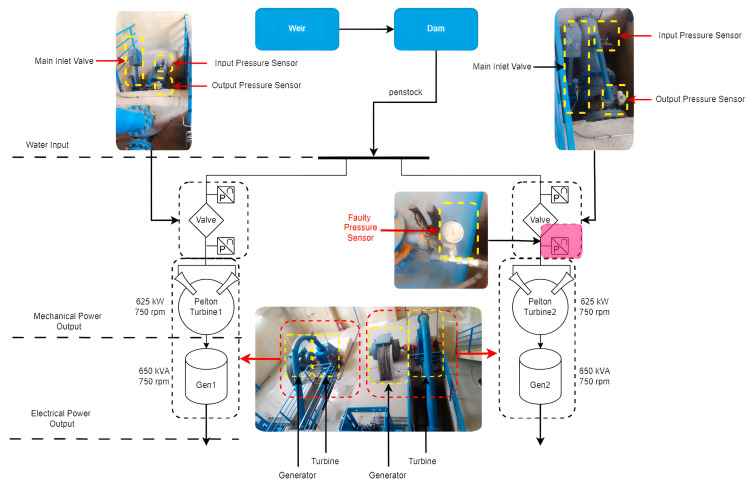
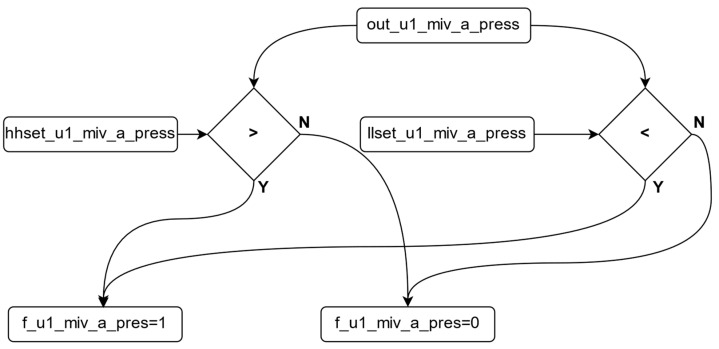
- The plant is a river-type hydroelectric facility with two units of 2 × 625 kW; pressure values are bounded by a lower limit of 24 bar and an upper limit of 28 bar, with values outside this range considered abnormal.
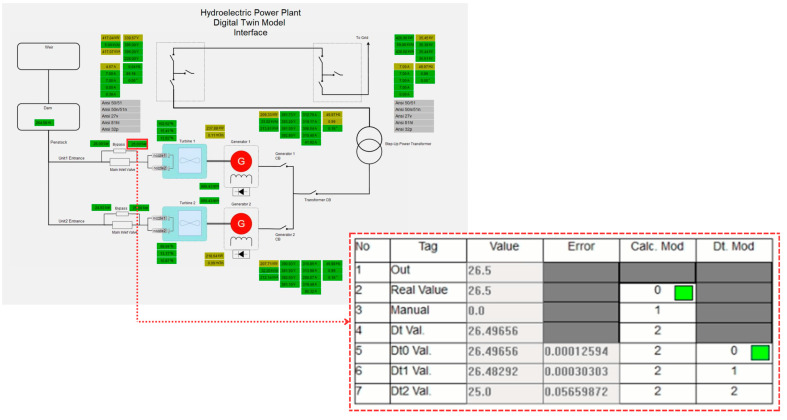
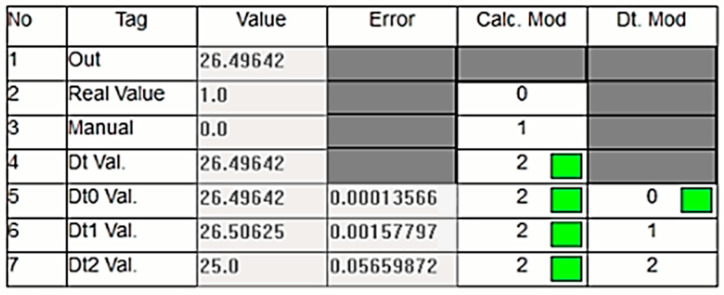
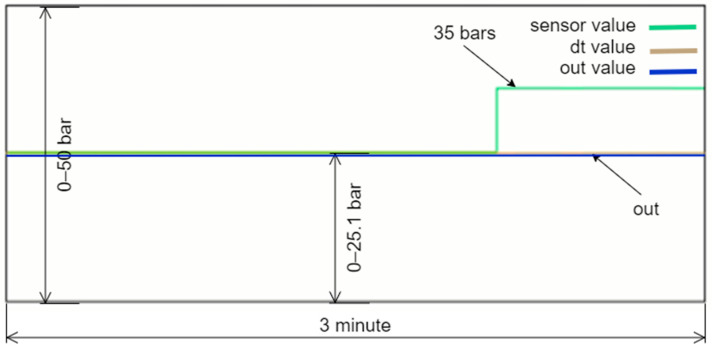
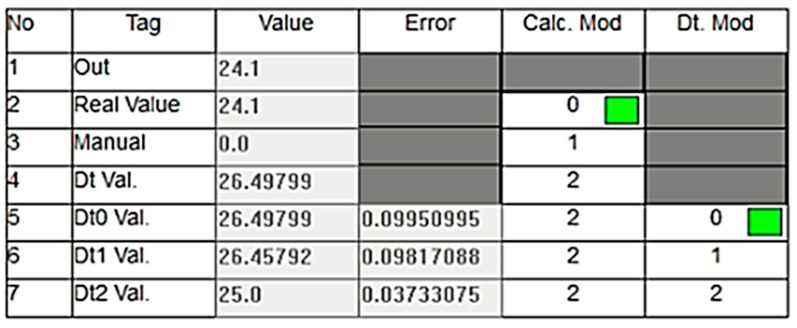
- In normal operation, the sensor read 26.5 bar, within range and close to the dt0 value, so the real sensor value was used as output.
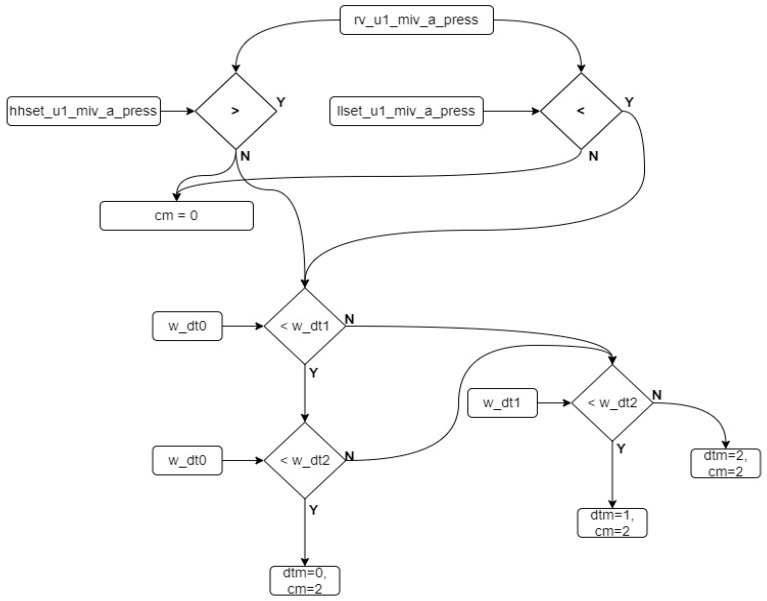
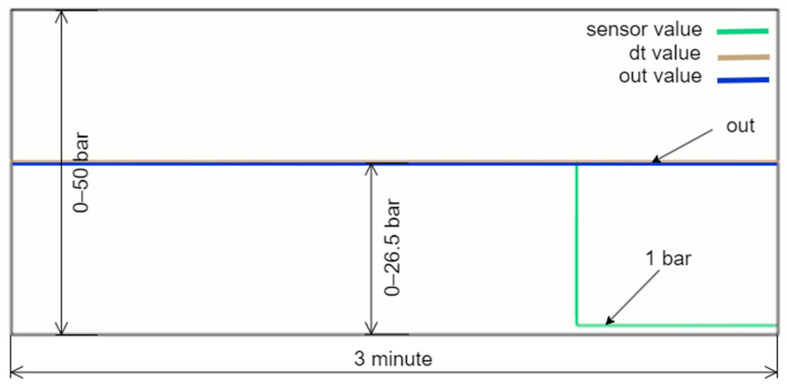
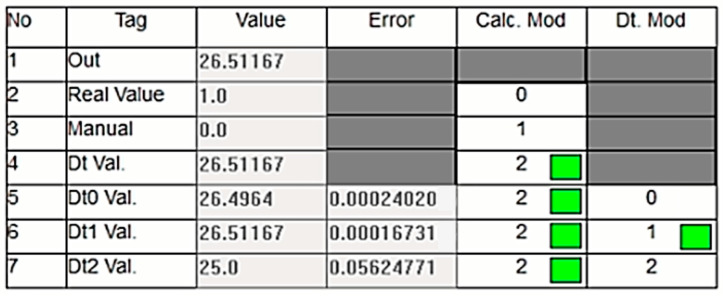
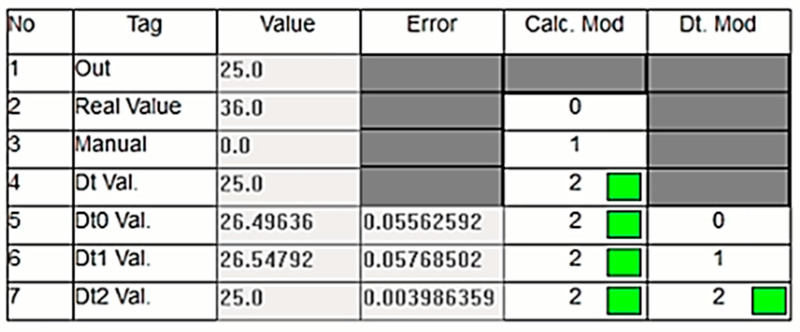
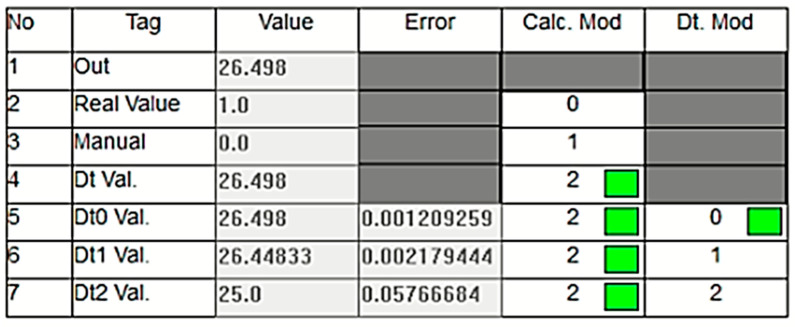
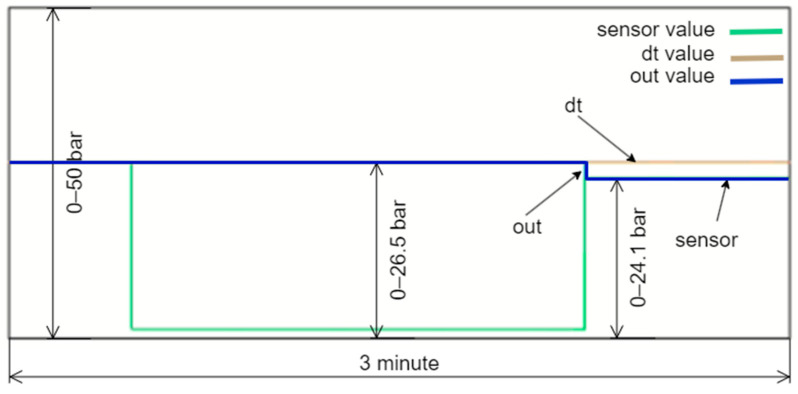
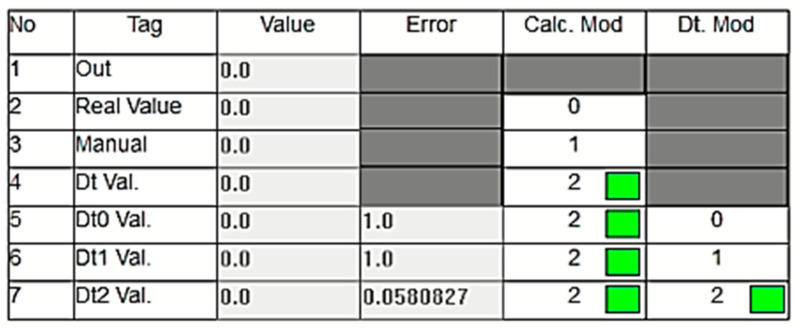
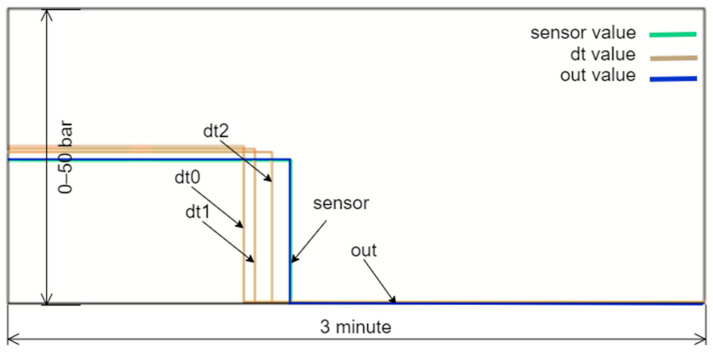
- When sensor data decreased to 1 bar, the system selected the DT value (dt0) as output because the real value was inaccurate, continuing energy supply without output oscillation; other tests selected dt1 or dt2 when they had the lowest error.
- When all dt values and the sensor value sequentially dropped to 0, the system treated it as a large-scale failure and isolated the plant from the main grid until resolved; after sensor repair, the system reverted to real sensor data.
Methods
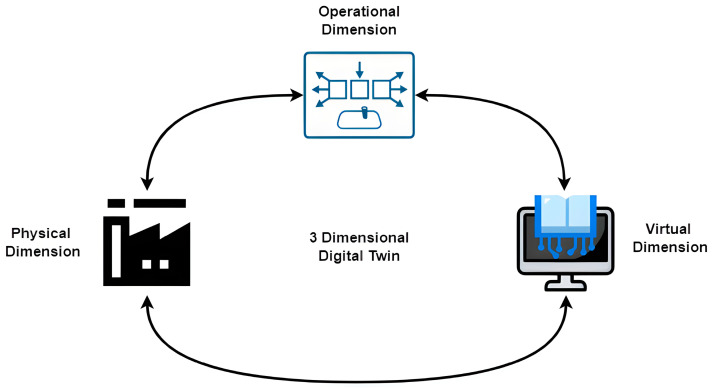
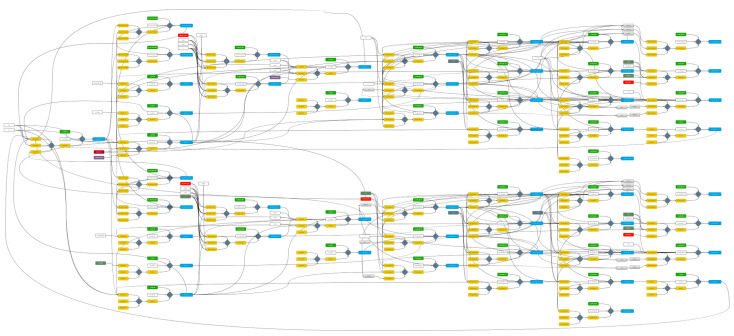
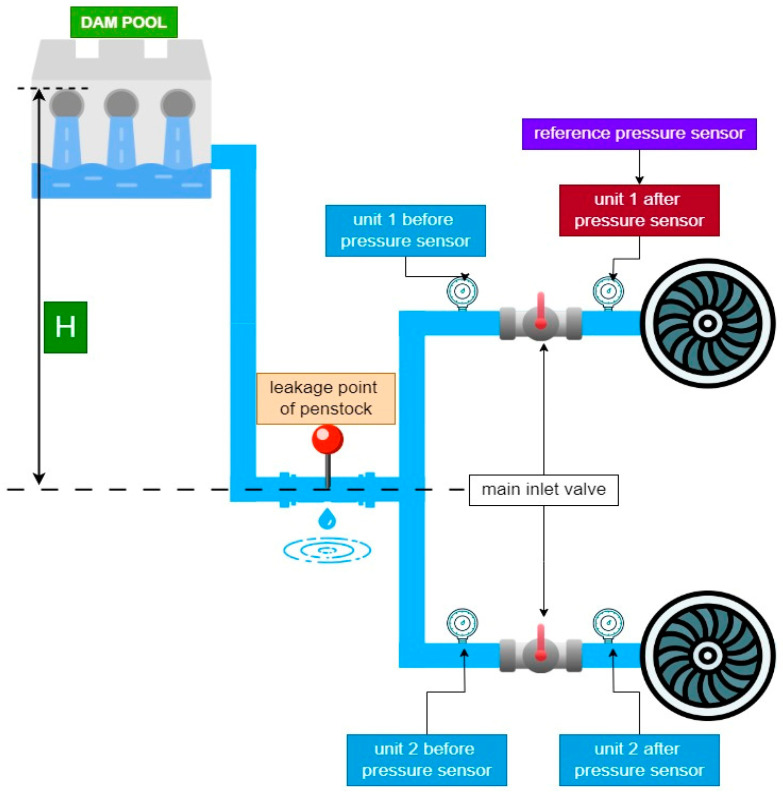
- Design: A DT model of a real hydroelectric power plant in Turkey was built with physical, operational, and functional dimensions; the full model combines sub-digital twins, but the paper details the Unit 1 outlet pressure sensor after the inlet valve as a case.
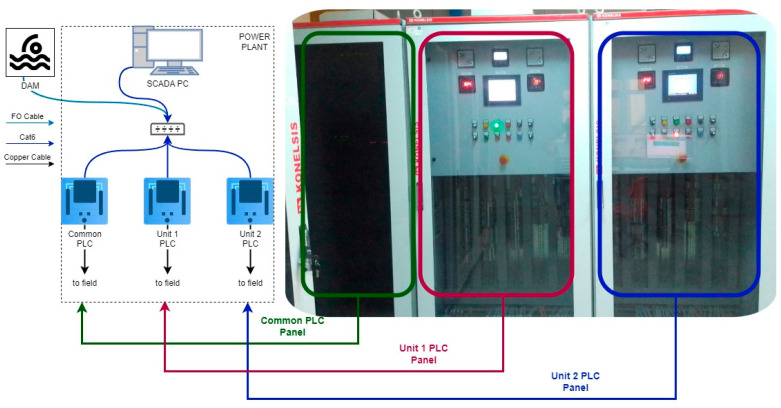
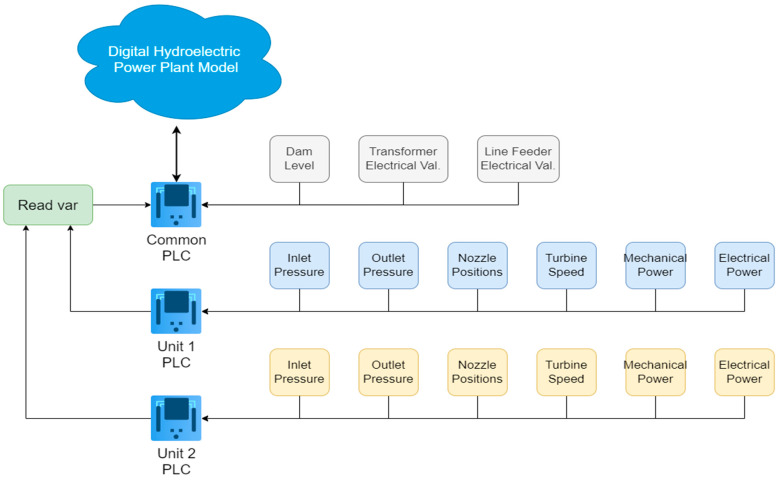
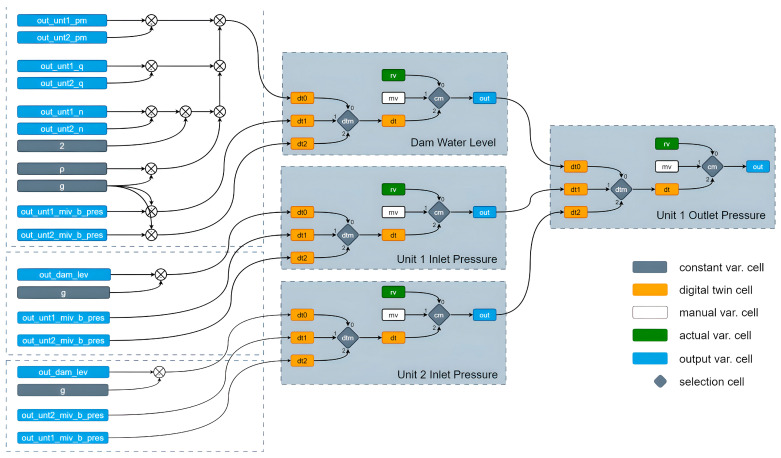
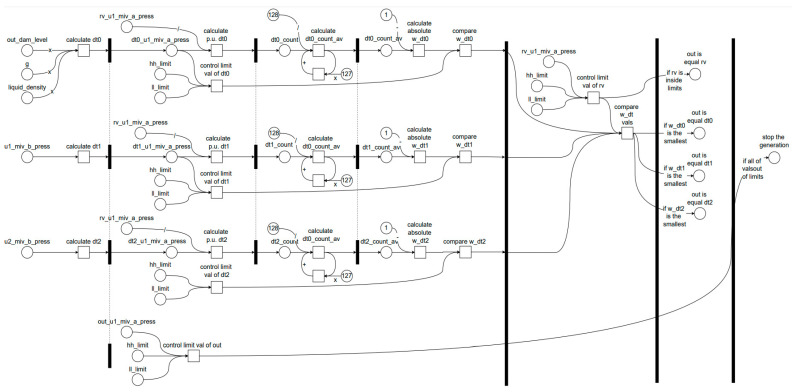
- Data/infrastructure: The plant uses PLCs and SCADA; data are retrieved via Modbus TCP/IP, with OPC UA for SCADA integration. Three DT calculation methods (dt0, dt1, dt2) use different algorithms/data sources, including dam level, pre-inlet pressures, fluid density, and gravitational acceleration.
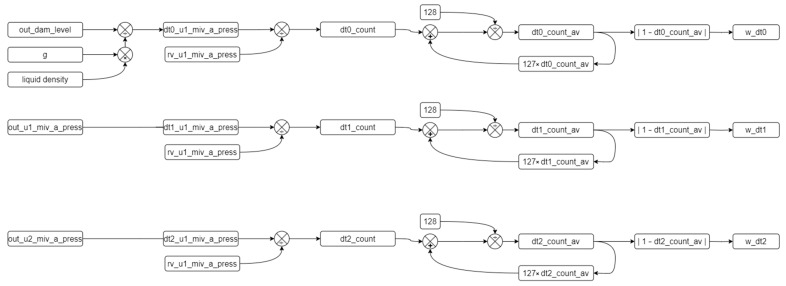
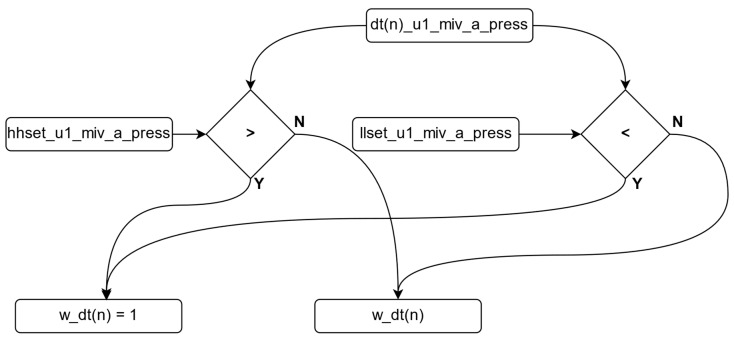
- Analysis: Control algorithms filter and smooth dt values, compare errors against reference limits, select the dt value closest to zero error, and decide whether to output the real sensor value, manual value, or DT value; a Petri Net models fault detection and decision-making. Experimental tests covered normal operation, sensor faults, recovery, and plant-wide failure.
Limitations
- Paper states: the DT scope primarily focuses on specific components and sensors; expanding to more components/systems would provide a more comprehensive view.
- Paper states: the current implementation lacks comprehensive integration of historical and external data sources, and PLCs are not inherently designed for extensive data storage, making data management/analysis cumbersome; future work should add API/database integration.
- Paper states: interoperability and cybersecurity are not fully robust; also, the study exhibits 3D and 4D DT characteristics but does not fully achieve 5D predictive–prescriptive analytics and autonomous control. Evident from text: the full DT model was too complex to explain entirely, so only one sub-digital twin is detailed.
Model-written summary. Check it against the paper before relying on it.
Integrity signals
Registry
Cites
Statistics
Figures
Verification
Claims the paper makes
0 Valid · 10 Not valid · 6 Not checked · 95 Own results and interpretations
A result the paper states — it cites no source for it, so there is none to check. The quote shows it is in the paper.
In the paper
“malfunction situations of a sensor located after the inlet valve of the plant have been analyzed using a programmable logic controller (PLC).”
§ Development and Integration of a Digital Twin Model for a Real Hydroelectric Power Plant > Abstract
plain- Asserted: passes — The authors put it forward as true.
- Checkable: passes — It can be checked against evidence.
- Load-bearing: passes — The paper’s conclusions depend on it.
- Based: passes — The paper gives a reason why it holds.
A result the paper states — it cites no source for it, so there is none to check. The quote shows it is in the paper.
In the paper
“This model is a combination of separate DTs for each piece of equipment that constitutes the plant.”
§ Development and Integration of a Digital Twin Model for a Real Hydroelectric Power Plant > 3. Development and Implementation of the Digital Twin Model
plain- Asserted: passes — The authors put it forward as true.
- Checkable: passes — It can be checked against evidence.
- Load-bearing: passes — The paper’s conclusions depend on it.
- Based: passes — The paper gives a reason why it holds.
A result the paper states — it cites no source for it, so there is none to check. The quote shows it is in the paper.
In the paper
“Consequently, within the scope of this study, the capability of anomaly detection has been applied to a hydroelectric power plant.”
§ Development and Integration of a Digital Twin Model for a Real Hydroelectric Power Plant > 2. Methodological Approach and Infrastructure Overview > 2.1. Digital Twin Application
plainSingle case- Asserted: passes — The authors put it forward as true.
- Checkable: passes — It can be checked against evidence.
- Load-bearing: passes — The paper’s conclusions depend on it.
- Based: passes — The paper gives a reason why it holds.
A result the paper states — it cites no source for it, so there is none to check. The quote shows it is in the paper.
In the paper
“Unlike traditional anomaly detection methods reliant solely on numerical computation and historical sensor data, the methodology proposed in this study integrates advanced DT capabilities directly into PLCs.”
§ Development and Integration of a Digital Twin Model for a Real Hydroelectric Power Plant > 1. Introduction
plainstates a cause- Asserted: passes — The authors put it forward as true.
- Checkable: passes — It can be checked against evidence.
- Load-bearing: passes — The paper’s conclusions depend on it.
- Based: passes — The paper gives a reason why it holds.
A result the paper states — it cites no source for it, so there is none to check. The quote shows it is in the paper.
In the paper
“Subsequently, leveraging the data collected within the common PLC, a DT model of the power plant is constructed.”
§ Development and Integration of a Digital Twin Model for a Real Hydroelectric Power Plant > 2. Methodological Approach and Infrastructure Overview > 2.3. Automation Infrastructure
plainstates a cause- Asserted: passes — The authors put it forward as true.
- Checkable: passes — It can be checked against evidence.
- Load-bearing: passes — The paper’s conclusions depend on it.
- Based: passes — The paper gives a reason why it holds.
40 more claims
Create a free account to see all 111 claims and to verify the 7 references still open.
- Probably not a substantial claim. 37
- It may state two separate claims as one. 36
- The quote only partly states this claim. 2
Self-check
Percentages, sums and reported differences re-computed from the paper’s own numbers.
Each contradiction between two passages listed here was confirmed by an independent check.
Rated minor: it would not touch a result — a value no result rests on, a p-value that stays on the same side of the significance level, or a conflict that is clerical, resolved elsewhere in the paper, or outside its own findings.
In the paper
§ Development and Integration of a Digital Twin Model for a Real Hydroelectric Power Plant > 3. Development and Implementation of the Digital Twin Model > 3.2. Control Algorithms
“else if w_dt1 < w_dt2 cm = 2 dtm = 1 end if else cm = 0 dtm = 0 end if end while”
§ Development and Integration of a Digital Twin Model for a Real Hydroelectric Power Plant > 3. Development and Implementation of the Digital Twin Model > 3.2. Control Algorithms
“Based on this control, the dt value with the least error is transferred to the output.”
Rated minor: it would not touch a result — a value no result rests on, a p-value that stays on the same side of the significance level, or a conflict that is clerical, resolved elsewhere in the paper, or outside its own findings.
In the paper
§ Development and Integration of a Digital Twin Model for a Real Hydroelectric Power Plant > 3. Development and Implementation of the Digital Twin Model > 3.1. Mathematical Framework for Calculating ‘dt’ Values
“dam_lev={(5a)(Pu1+Pu2)/((Qu1+Qu2)×ρ×g×((ηu1+ηu2)/2)); (5b)g×unt1_miv_b_pres; (5c)g×unt2_miv_b_pres where”
§ Development and Integration of a Digital Twin Model for a Real Hydroelectric Power Plant > 3. Development and Implementation of the Digital Twin Model > 3.1. Mathematical Framework for Calculating ‘dt’ Values
“Equations (5b) and (5c) convert the pressure values into altitude values as per Equation (4), and the mechanical power equation is derived from Equation (6).”
Rated minor: it would not touch a result — a value no result rests on, a p-value that stays on the same side of the significance level, or a conflict that is clerical, resolved elsewhere in the paper, or outside its own findings.
In the paper
§ Development and Integration of a Digital Twin Model for a Real Hydroelectric Power Plant > 3. Development and Implementation of the Digital Twin Model > 3.2. Control Algorithms
“dt2_u1_miv_a_press ← out_u2_miv_a_press”
§ Development and Integration of a Digital Twin Model for a Real Hydroelectric Power Plant > 3. Development and Implementation of the Digital Twin Model > 3.1. Mathematical Framework for Calculating ‘dt’ Values
“unt1_miv_a_pres={(1a)dam_lev/(10,197); (1b)unt1_miv_b_pres; (1c)unt2_miv_b_pres where”
Citations
Cites
Digital Twin in Industry: State-of-the-Art
Tao, F., Zhang, H., Liu, A., & Nee, A. Y. C. (2019) · IEEE Transactions on Industrial Informatics · doi:10.1109/tii.2018.2873186 · Cited by 5,871 · cited 1×
“DTs have become indispensable across industries, revolutionizing how organizations manage assets, optimize processes, and make decisions [4–6].”
BackgroundDigital Twin in manufacturing: A categorical literature review and classification
Kritzinger, W., Karner, M., Traar, G., Henjes, J., & Sihn, W. (2018) · IFAC-PapersOnLine · doi:10.1016/j.ifacol.2018.08.474 · Cited by 3,612 · cited 1×
“In manufacturing, they simulate production lines, predict maintenance needs, and enhance operational efficiency [7–9].”
BackgroundDigital Twin as a Service (DTaaS) in Industry 4.0: An Architecture Reference Model
Aheleroff, S., Xu, X., Zhong, R. Y., & Lu, Y. (2021) · Advanced Engineering Informatics · doi:10.1016/j.aei.2020.101225 · Cited by 658
Digital-Twin-Enabled 6G: Vision, Architectural Trends, and Future Directions
Khan, L. U., Saad, W., Niyato, D., Han, Z., & Hong, C. S. (2022) · IEEE Communications Magazine · doi:10.1109/mcom.001.21143 · Cited by 550
Towards the future of smart electric vehicles: Digital twin technology
Bhatti, G., Mohan, H., & Raja Singh, R. (2021) · Renewable and Sustainable Energy Reviews · doi:10.1016/j.rser.2021.110801 · Cited by 533 · cited 1×
“Automotive industries use DTs for vehicle design, performance analysis, and predictive maintenance [19–21].”
MethodExperimentable Digital Twins—Streamlining Simulation-Based Systems Engineering for Industry 4.0
Schluse, M., Priggemeyer, M., Atorf, L., & Rossmann, J. (2018) · IEEE Transactions on Industrial Informatics · doi:10.1109/tii.2018.2804917 · Cited by 524 · cited 1×
“DTs have become indispensable across industries, revolutionizing how organizations manage assets, optimize processes, and make decisions [4–6].”
BackgroundZhang, H., Liu, Q., Chen, X., Zhang, D., & Leng, J. (2017) · IEEE Access · doi:10.1109/access.2017.2766453 · Cited by 471 · cited 1×
“Virtual testing Design [35] Optimization [44,45]”
Machine Learning based Digital Twin Framework for Production Optimization in Petrochemical Industry
Min, Q., Lu, Y., Liu, Z., Su, C., & Wang, B. (2019) · International Journal of Information Management · doi:10.1016/j.ijinfomgt.2019.05.020 · Cited by 436 · cited 2×
“Cooling tower [46] Machine learning-based IoT-supported [47]”
MethodFan, C., Zhang, C., Yahja, A., & Mostafavi, A. (2021) · International Journal of Information Management · doi:10.1016/j.ijinfomgt.2019.102049 · Cited by 434
Industrial applications of digital twins
Jiang, Y., Yin, S., Li, K., Luo, H., & Kaynak, O. (2021) · Philosophical Transactions of the Royal Society A: Mathematical, Physical and Engineering Sciences · doi:10.1098/rsta.2020.0360 · Cited by 398 · cited 1×
“They enable organizations to effectively monitor and manage their systems, optimize operations, predict maintenance needs, and simulate scenarios in advance for better decision-making [2,3].”
BackgroundYu, W., Patros, P., Young, B., Klinac, E., & Walmsley, T. G. (2022) · Renewable and Sustainable Energy Reviews · doi:10.1016/j.rser.2022.112407 · Cited by 397 · cited 2×
“Energy and utilities leverage DTs to optimize energy use and predict equipment failures [16–18].”
BackgroundDigital twin for healthcare systems
Vallée, A. (2023) · Frontiers in Digital Health · doi:10.3389/fdgth.2023.1253050 · Cited by 335 · cited 1×
“In healthcare, DTs of patients enable personalized treatment plans and predictive health monitoring [3,10,11].”
BackgroundDigital Twin in Aerospace Industry: A Gentle Introduction
Li, L., Aslam, S., Wileman, A., & Perinpanayagam, S. (2022) · IEEE Access · doi:10.1109/access.2021.3136458 · Cited by 296 · cited 1×
“The aerospace and defense industries utilize DTs to simulate aircraft performance and mission planning [14,15].”
BackgroundSleiti, A. K., Kapat, J. S., & Vesely, L. (2022) · Energy Reports · doi:10.1016/j.egyr.2022.02.305 · Cited by 270 · cited 1×
“DTs of power plants, renewable energy facilities, and utility networks provide real-time monitoring and analysis capabilities, enabling operators to enhance efficiency and reliability while reducing costs and environmental impacts [30].”
BackgroundPredictive Maintenance in the Automotive Sector: A Literature Review
Arena, F., Collotta, M., Luca, L., Ruggieri, M., & Termine, F. (2021) · Mathematical and Computational Applications · doi:10.3390/mca27010002 · Cited by 259
Davila Delgado, J. M., & Oyedele, L. (2021) · Advanced Engineering Informatics · doi:10.1016/j.aei.2021.101332 · Cited by 257 · cited 1×
“By integrating real-time data from sensors throughout the facility, DTs provide operators with comprehensive information about the operational status, efficiency, and health of critical components [33].”
BackgroundSmart Cities with Digital Twin Systems for Disaster Management
Ford, D. N., & Wolf, C. M. (2020) · Journal of Management in Engineering · doi:10.1061/(asce)me.1943-5479.0000779 · Cited by 246 · cited 1×
“Additionally, environmental monitoring relies on DTs to simulate and evaluate environmental conditions and predict natural disasters [26–28].”
BackgroundNikolakis, N., Alexopoulos, K., Xanthakis, E., & Chryssolouris, G. (2019) · International Journal of Computer Integrated Manufacturing · doi:10.1080/0951192x.2018.1529430 · Cited by 218 · cited 1×
“This digital construct has the ability to simulate, analyze, and predict the behavior and composition of the real entity [1].”
BackgroundRecent trends of digital twin technologies in the energy sector: A comprehensive review
Ghenaï, C., Husein, L. A., Nahlawi, M. A., Hamid, A. K., & Bettayeb, M. (2022) · Sustainable Energy Technologies and Assessments · doi:10.1016/j.seta.2022.102837 · Cited by 213 · cited 1×
“In the energy sector, DTs play a crucial role in optimizing energy resources [29].”
BackgroundQin, Y., Liu, H., Wang, Y., & Mao, Y. (2024) · Knowledge-Based Systems · doi:10.1016/j.knosys.2024.111641 · Cited by 210 · cited 3×
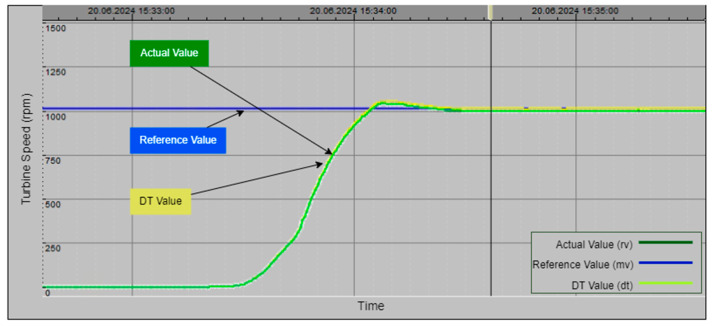
“This comparison highlights the DT model’s effectiveness in real-time monitoring and predictive analytics for turbine speed management, demonstrating its capability to accurately replicate and predict turbine performance.”
BackgroundMethodDefraeye, T., Tagliavini, G., Wu, W., Prawiranto, K., Schudel, S., Assefa Kerisima, M., Verboven, P., & Bühlmann, A. (2019) · Resources, Conservation and Recycling · doi:10.1016/j.resconrec.2019.06.002 · Cited by 202 · cited 2×
“Aspen Plus [35] Thermoflow [36] 3D Java (for Visualization) [37] Ansys [38] COMSOL [39,40] MATLAB [41] Modelica [42] Table 2.”
MethodConnecting the Twins: A Review on Digital Twin Technology & its Networking Requirements
Mashaly, M. (2021) · Procedia Computer Science · doi:10.1016/j.procs.2021.03.039 · Cited by 184 · cited 1×
“Telecommunications companies employ DTs to monitor network performance and plan upgrades [24,25].”
BackgroundRoads Infrastructure Digital Twin: A Step Toward Smarter Cities Realization
Marai, O. E., Taleb, T., & Song, J. (2021) · IEEE Network · doi:10.1109/mnet.011.2000398 · Cited by 166 · cited 1×
“Urban planners use DTs to manage infrastructure, traffic flow, and urban development [12,13].”
BackgroundDigital Twins: The New Frontier for Personalized Medicine?
Cellina, M., Cè, M., Alì, M., Irmici, G., Ibba, S., Caloro, E., Fazzini, D., Oliva, G., & Papa, S. (2023) · Applied Sciences · doi:10.3390/app13137940 · Cited by 166 · cited 2×
“In healthcare, DTs of patients enable personalized treatment plans and predictive health monitoring [3,10,11].”
BackgroundDesign and Development of Digital Twins: a Case Study in Supply Chains
Marmolejo-Saucedo, J. A. (2020) · Mobile Networks and Applications · doi:10.1007/s11036-020-01557-9 · Cited by 152 · cited 1×
“In the retail sector, DTs optimize store layouts, analyze customer behavior, and predict demand [22,23].”
BackgroundExploring the Benefits and Limitations of Digital Twin Technology in Building Energy
Tahmasebinia, F., Lin, L., Wu, S., Kang, Y., & Sepasgozar, S. M. E. (2023) · Applied Sciences · doi:10.3390/app13158814 · Cited by 151
Smart City Construction and Management by Digital Twins and BIM Big Data in COVID-19 Scenario
Lv, Z., Chen, D., & Lv, H. (2022) · ACM Transactions on Multimedia Computing Communications and Applications · doi:10.1145/3529395 · Cited by 130 · cited 1×
“Urban planners use DTs to manage infrastructure, traffic flow, and urban development [12,13].”
BackgroundQin, Y., Liu, H., & Mao, Y. (2024) · Advanced Engineering Informatics · doi:10.1016/j.aei.2024.102513 · Cited by 129 · cited 2×
“This comparison highlights the DT model’s effectiveness in real-time monitoring and predictive analytics for turbine speed management, demonstrating its capability to accurately replicate and predict turbine performance.”
BackgroundMethodAnomaly Detection for Sensor Signals Utilizing Deep Learning Autoencoder-Based Neural Networks
Esmaeili, F., Cassie, E., Nguyen, H. P. T., Plank, N. O. V., Unsworth, C. P., & Wang, A. (2023) · Bioengineering · doi:10.3390/bioengineering10040405 · Cited by 101 · cited 1×
“However, it is worth noting that LSTM-based autoencoder models exhibited lower accuracy rates in these anomaly detection tasks, highlighting the need for further exploration and optimization of the model architectures for specific sensor signal anomaly detection scenarios [52].”
BackgroundYu, J., Liu, P., & Li, Z. (2020) · Renewable and Sustainable Energy Reviews · doi:10.1016/j.rser.2020.110077 · Cited by 87 · cited 2×
“Power plants [36] Wind turbines [38] Steam turbines [43] Table 3.”
BackgroundMethodApplication and Development Prospect of Digital Twin Technology in Aerospace
Zijiao, H., & Wang, L. (2020) · IFAC-PapersOnLine · doi:10.1016/j.ifacol.2021.04.165 · Cited by 78 · cited 1×
“The aerospace and defense industries utilize DTs to simulate aircraft performance and mission planning [14,15].”
BackgroundAtalay, M., Murat, U., Oksuz, B., Parlaktuna, A. M., Pisirir, E., & Testik, M. C. (2022) · International Journal of Computer Integrated Manufacturing · doi:10.1080/0951192x.2021.2022762 · Cited by 77
Zhang, X., Shen, J., Saini, P. K., Lovati, M., Han, M., Huang, P., & Huang, Z. (2021) · Frontiers in Sustainable Cities · doi:10.3389/frsc.2021.663269 · Cited by 76 · cited 2×
“Operators can use these simulations to fine-tune control strategies, adjust work schedules, and maximize energy output while adhering to regulatory constraints and environmental considerations [32].”
BackgroundMethodA case study of digital-twin-modelling analysis on power-plant-performance optimizations
Xu, B., Wang, J., Wang, X., Liang, Z., Cui, L., Liu, X., & Ku, A. Y. (2019) · Clean Energy · doi:10.1093/ce/zkz025 · Cited by 73 · cited 3×
“Aspen Plus [35] Thermoflow [36] 3D Java (for Visualization) [37] Ansys [38] COMSOL [39,40] MATLAB [41] Modelica [42] Table 2.”
BackgroundMethodA Conceptual Framework for AI-based Operational Digital Twin in Chemical Process Engineering
Örs, E., Schmidt, R., Mighani, M., & Shalaby, M. (2020) · IEEE International Conference on Engineering, Technology and Innovation (ICE/ITMC) · doi:10.1109/ice/itmc49519.2020.9198575 · Cited by 62
Development of a digital twin of an onshore wind turbine using monitoring data
Pimenta, F., Pacheco, J., Branco, C., Teixeira, C. M., & Magalhães, F. (2020) · Journal of Physics Conference Series · doi:10.1088/1742-6596/1618/2/022065 · Cited by 54 · cited 2×
“Aspen Plus [35] Thermoflow [36] 3D Java (for Visualization) [37] Ansys [38] COMSOL [39,40] MATLAB [41] Modelica [42] Table 2.”
BackgroundMethodBlume, S. A., Blume, S. A., Thiede, S., & Herrmann, C. A. (2020) · Journal of Manufacturing and Materials Processing · doi:10.3390/jmmp4040097 · Cited by 48 · cited 2×
“Cooling tower [46] Machine learning-based IoT-supported [47]”
MethodThe Application of Digital Twin on Power Industry
Huang, J., Zhao, L., Wei, F., & Cao, B. (2021) · IOP Conference Series Earth and Environmental Science · doi:10.1088/1755-1315/647/1/012015 · Cited by 46 · cited 1×
“Power grid [51] Anomaly detection plays a crucial role in sensor technology where misleading signals can lead to significant errors.”
BackgroundPrawiranto, K., Carmeliet, J., & Defraeye, T. (2021) · Frontiers in Sustainable Food Systems · doi:10.3389/fsufs.2020.606845 · Cited by 45 · cited 2×
“Aspen Plus [35] Thermoflow [36] 3D Java (for Visualization) [37] Ansys [38] COMSOL [39,40] MATLAB [41] Modelica [42] Table 2.”
MethodVirtual testbed for model predictive control development in district cooling systems
Urrutia, L. Z., Febres, J., Sterling, R., Pérez, S. L., & Keane, M. M. (2020) · Renewable and Sustainable Energy Reviews · doi:10.1016/j.rser.2020.109920 · Cited by 44 · cited 2×
“Aspen Plus [35] Thermoflow [36] 3D Java (for Visualization) [37] Ansys [38] COMSOL [39,40] MATLAB [41] Modelica [42] Table 2.”
MethodDeveloping a Digital Twin: The Roadmap for Oil and Gas Optimization
LaGrange, E. (2019) · SPE Offshore Europe Conference and Exhibition · doi:10.2118/195790-ms · Cited by 43 · cited 1×
“Process studies [36,46] Process estimation [39,40,47] Process monitoring [43,44] Process training [48] Control [42] Service studies Fault detection and diagnosis [49] Table 4.”
MethodDigital Revolution in the Energy Sector: Effects of Using Digital Twin Technology
Strielkowski, W., Rausser, G., & Kuzmin, E. (2022) · Lecture Notes in Information Systems and Organisation · doi:10.1007/978-3-030-94617-3_4 · Cited by 38
Digital twins in healthcare and biomedicine
Subaşı, A., & Subasi, M. E. (2024) · Elsevier eBooks · doi:10.1016/b978-0-443-21598-8.00011-7 · Cited by 33
Semantic Digital Twins for Retail Logistics
Kümpel, M., Mueller, C. A., & Beetz, M. (2021) · Springer eBooks · doi:10.1007/978-3-030-88662-2_7 · Cited by 32 · cited 1×
“In the retail sector, DTs optimize store layouts, analyze customer behavior, and predict demand [22,23].”
BackgroundDigital Twin for Monitoring of Industrial Multi-Effect Evaporation
Soares, R. M., Câmara, M., Feital, T., & Pinto, J. (2019) · Processes · doi:10.3390/pr7080537 · Cited by 32 · cited 2×
“Virtual testing Design [35] Optimization [44,45]”
MethodCherdo, Y., Miramond, B., Pégatoquet, A., & Vallauri, A. (2023) · Sensors · doi:10.3390/s23115013 · Cited by 32 · cited 1×
“The best results obtained from the evaluation showcase 86 successful anomaly detections using a window size of 60 s, highlighting the algorithm’s potential for practical implementation in the automotive sector [54].”
BackgroundReview of Electric Vehicle Testing Procedures for Digital Twin Development: A Comprehensive Analysis
Rjabtšikov, V., Rassõlkin, A., Kudelina, K., Kallaste, A., & Vaimann, T. (2023) · Energies · doi:10.3390/en16196952 · Cited by 27 · cited 1×
“Automotive industries use DTs for vehicle design, performance analysis, and predictive maintenance [19–21].”
MethodWang, H., Ou, S. S., Dahlhaug, O. G., Storli, P.-T. S., Skjelbred, H. I., & Vilberg, I. (2023) · Mathematics · doi:10.3390/math11184012 · Cited by 23 · cited 1×
“One primary application in hydropower is predictive maintenance [34].”
BackgroundDigital Twins in Manufacturing
Холопов, В. А., Antonov, S. V., Kurnasov, E. V., & Kashirskaya, E. N. (2019) · Russian Engineering Research · doi:10.3103/s1068798x19120104 · Cited by 23
Coordination Model and Digital Twins for Managing Energy Consumption and Production in a Smart Grid
Glass, P., & Serugendo, G. D. M. (2023) · Energies · doi:10.3390/en16227629 · Cited by 23 · cited 1×
“Furthermore, DTs assist in grid management by predicting demand fluctuations, optimizing the energy distribution, and seamlessly integrating renewable energy sources into existing infrastructure [31].”
BackgroundMonitoring and Warning for Digital Twin-driven Mountain Geological Disaster
Zhang, H., Wang, R., & Wang, C. (2019) · IEEE International Conference on Mechatronics and Automation (ICMA) · doi:10.1109/icma.2019.8816292 · Cited by 22
Abdrakhmanova, K. N., Федосов, А. В., Idrisova, K. R., Abdrakhmanov, N. K., & Valeeva, R. R. (2020) · IOP Conference Series Materials Science and Engineering · doi:10.1088/1757-899x/862/3/032078 · Cited by 19 · cited 1×
“Process studies [36,46] Process estimation [39,40,47] Process monitoring [43,44] Process training [48] Control [42] Service studies Fault detection and diagnosis [49] Table 4.”
MethodPandey, B., & Karki, A. (2016) · doi:10.1201/9781315374840 · Cited by 16
Automatic Generation of Pipelines Into a 3D Industrial Process Model
Sierla, S., Karhela, T. A., & Vyatkin, V. V. (2017) · IEEE Access · doi:10.1109/access.2017.2774835 · Cited by 15 · cited 1×
“Aspen Plus [35] Thermoflow [36] 3D Java (for Visualization) [37] Ansys [38] COMSOL [39,40] MATLAB [41] Modelica [42] Table 2.”
MethodZecevic, N. (2021) · International Journal of Sustainable Energy · doi:10.1080/14786451.2021.1893727 · Cited by 13 · cited 1×
“Aspen Plus [35] Thermoflow [36] 3D Java (for Visualization) [37] Ansys [38] COMSOL [39,40] MATLAB [41] Modelica [42] Table 2.”
MethodWang, H., Ou, S., Dahlhaug, O. G., Storli, P.-T., Skjelbred, H. I., & Vilberg, I. (2023) · doi:10.20944/preprints202309.0319.v1 · Cited by 7
Haber, P., Lampoltshammer, T. J., Leopold, H., & Mayr, M. (2022) · Springer eBooks · doi:10.1007/978-3-658-36295-9 · Cited by 6
Heistracher, C., Jalali, A., Suendermann, A., Meixner, S., Schall, D., Haslhofer, B., & Kemnitz, J. (2022) · Springer eBooks · doi:10.1007/978-3-658-36295-9_13 · Cited by 4
Explainable Anomaly Detection System for Categorical Sensor Data in Internet of Things
Yuan, P., Tang, L., Chen, H., Sato, M., & Woodward, K. (2023) · Lecture notes in computer science · doi:10.1007/978-3-031-26422-1_37 · Cited by 3 · cited 1×
“Overall, an XADS serves as an explainable anomaly detection solution tailored for categorical sensor data, offering a blend of accuracy, simplicity, and user accessibility [55].”
BackgroundKhelil, M. I., Ladjal, M., Ouali, M. A., & Bennacer, H. (2022) · International Conference of Advanced Technology in Electronic and Electrical Engineering (ICATEEE) · doi:10.1109/icateee57445.2022.10093763 · Cited by 3 · cited 1×
“This successful application of SFOMs and HC in water quality assessment signifies their potential in improving monitoring infrastructure and ensuring reliable data collection in remote and critical environmental settings [53].”
BackgroundSimulation and Optimization of a Multitubular Reactor Train for Acrylic Acid Production
Lokhat, D., & Premlall, K. C. (2019) · Chemical engineering transactions · doi:10.3303/cet1976135 · Cited by 3 · cited 2×
“Aspen Plus [35] Thermoflow [36] 3D Java (for Visualization) [37] Ansys [38] COMSOL [39,40] MATLAB [41] Modelica [42] Table 2.”
Method(2021) · MACHINERY - Repository of the Faculty of Mechanical Engineering (University of Belgrade)
Cited by
Al-Shetwi, A. Q., Atawi, I. E., El‐Hameed, M. A., & Abuelrub, A. (2025) · IET Smart Grid · doi:10.1049/stg2.70026 · Cited by 182
Zeng, Y., Hussein, Z. A., Chyad, M. H., Farhadi, A., Yu, J., & Rahbarimagham, H. (2025) · Scientific Reports · doi:10.1038/s41598-025-89866-5 · Cited by 64
Tan, J., Radhi, R. M., Shirini, K., Gharehveran, S. S., Parisooz, Z., Khosravi, M., & Azarinfar, H. (2025) · Scientific Reports · doi:10.1038/s41598-025-98235-1 · Cited by 56
“Similarly, research by 18 applied this integrated approach to hydropower systems, achieving notable reductions in error rates and operational disruptions.”
Bae, C.-H., Choi, E.-T., & Lee, S. (2025) · IEEE Access · doi:10.1109/access.2025.3601615 · Cited by 55
“Additionally, digital twins are used to optimizing the operation of steam turbines in thermal power plants [214] and are integrated into hydroelectric facilities for real-time system control [215].”
Maksimović, M., Jokić, S., & Boskovic, M. C. (2025) · Process Integration and Optimization for Sustainability · doi:10.1007/s41660-024-00478-4 · Cited by 32
“An example of data collection from various sensors and data analysis from the pipeline inlet system of the hydro-electric power plant in order to prevent failure is presented in the research of Ersan and Irmak (2024).”
Metadata
- Authors
- Ersan, M., & Irmak, E.
- Affiliations
- Gazi University (TR)
- Corresponding author
- Irmak, Erdal
- Venue
- Sensors
- Publisher
- MDPI AG
- Published
- 2024-06-27
- Volume
- 24
- Issue
- 13
- Pages
- 4174
- ISSN
- 1424-8220 (ISSN-L)
- PMC
- PMC11244571
- OpenAlex
- W4400093273
- Cited by
- 48
- References
- 60
- Citations by year
- 2026: 30 · 2025: 16 · 2024: 2
- FWCI
- 6.23
- Type
- journal article
- Language
- en
- Open access
- gold
- doi.org
- Licence
- Locations
- Sensors (publishedVersion, cc-by)
- PubMed Central (publishedVersion, cc-by)
- PubMed (publishedVersion)
- DOAJ (DOAJ: Directory of Open Access Journals) (submittedVersion)
- Topics
- Physical Sciences › Engineering › Industrial and Manufacturing Engineering › Digital Transformation in Industry
- Physical Sciences › Engineering › Control and Systems Engineering › Fault Detection and Control Systems
- Physical Sciences › Engineering › Control and Systems Engineering › Industrial Automation and Control Systems
- Keywords
- digital twin, hydroelectric power plant, programmable logic controller, inlet valve, measurement error detection, fault diagnosis, power plant control
About these checks
Registry, retraction, Cites and statistics results are computed, not judged, with one exception: a printed reference that no index lists is read once by a model before it counts as a citation error. Claims are extracted by a model and kept only when their quote appears verbatim in the text; each cited source is then checked, with a model’s help, for whether it says what the claim relies on. Those verdicts can be wrong — read the claim’s quote and the cited source before relying on one.
A language model drew the claims from the paper on 2026-11-29, under version 3 of the claim definition (model deepseek-v4.1-flash, prompt extract-v3).
A second model labelled each claim on 2026-11-29 (model jev-1.13-20260917, definition revision gold-guideline-v0.2).
Statistics and arithmetic are recomputed, not judged.
Confidence bands are shown only for fields calibrated on our annotated test set. None is calibrated yet, so no band is shown.
What counts as a claim ›How we measure confidence ›How we check this ›
Are you an author, or do you see a problem with this page? Request a review
Data sources
Bibliographic data: Semantic Scholar, OpenAlex, Crossref.
Contains information from the Semantic Scholar Academic Graph Datasets, made available under the ODC Attribution License (ODC-BY 1.0).
Semantic Scholar’s data is described in: Kinney, R., et al. (2023). The Semantic Scholar Open Data Platform. arXiv:2301.10140.
