

Edge-Cloud Synergy for AI-Enhanced Sensor Network Data: A Real-Time Predictive Maintenance Framework
Open accessThe DOI matches its Crossref record; 63 of the 67 references it cites were found in a registry or an index; 7 of the 18 sources its claims cite were checked for support.
Abstract
Sensor networks generate vast amounts of data in real-time, which challenges existing predictive maintenance frameworks due to high latency, energy consumption, and bandwidth requirements. This research addresses these limitations by proposing an edge-cloud hybrid framework, leveraging edge devices for immediate anomaly detection and cloud servers for in-depth failure prediction. A K-Nearest Neighbors (KNNs) model is deployed on edge devices to detect anomalies in real-time, reducing the need for continuous data transfer to the cloud. Meanwhile, a Long Short-Term Memory (LSTM) model in the cloud analyzes time-series data for predictive failure analysis, enhancing maintenance scheduling and operational efficiency. The framework's dynamic workload management algorithm optimizes task distribution between edge and cloud resources, balancing latency, bandwidth usage, and energy consumption. Experimental results show that the hybrid approach achieves a 35% reduction in latency, a 28% decrease in energy consumption, and a 60% reduction in bandwidth usage compared to cloud-only solutions. This framework offers a scalable, efficient solution for real-time predictive maintenance, making it highly applicable to resource-constrained, data-intensive environments.
Overview
CoChat Summary
## TL;DR
This paper proposes a hybrid edge-cloud predictive maintenance framework for sensor networks, using KNN on a Raspberry Pi edge device for real-time anomaly detection and LSTM in the cloud for failure prediction. The reported system reduces latency by 35%, energy consumption by 28%, and bandwidth usage by 60% versus a cloud-only baseline.
## Key findings
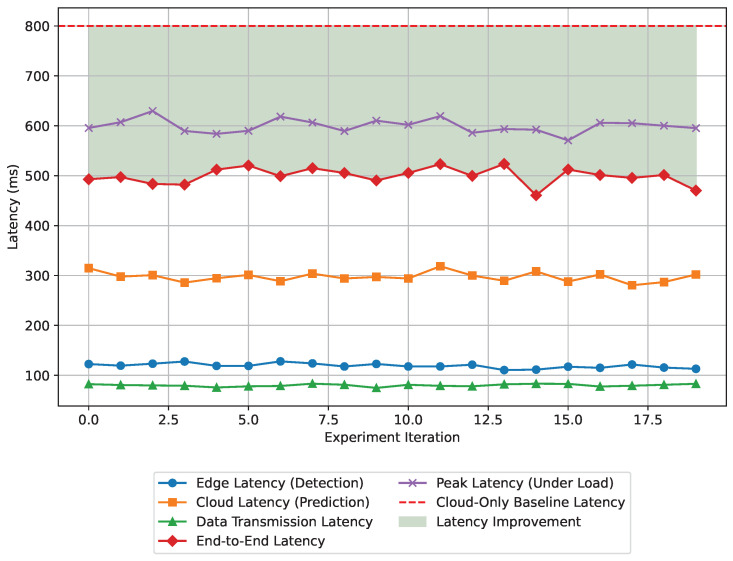
- The hybrid approach achieved a 35% reduction in latency and an average end-to-end latency of 500 ms, compared with a cloud-only baseline of 800 ms.
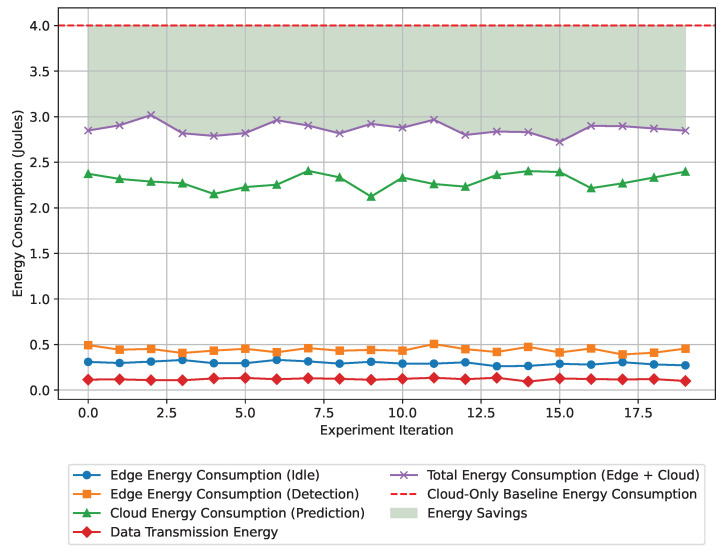
- It produced a 28% decrease in energy consumption compared with the cloud-only solution, and the paper also reports 60% energy savings relative to edge-only processing under low data flow conditions.
- Bandwidth usage was reduced by 60% compared with the cloud-only model; the paper also reports 70% less total data transmission than sending all raw data directly to the cloud.
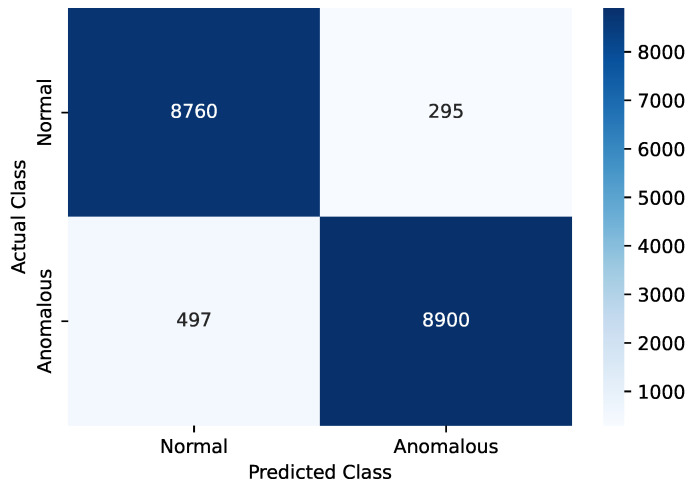
- For edge anomaly detection, the model was evaluated on 18,452 test instances; for the latency study, the paper says the summary was prepared from 20 discrete experiments.
## Methods
- The study uses a hybrid edge-cloud design: KNN runs on the edge for anomaly detection, and LSTM runs in the cloud for time-series failure prediction.
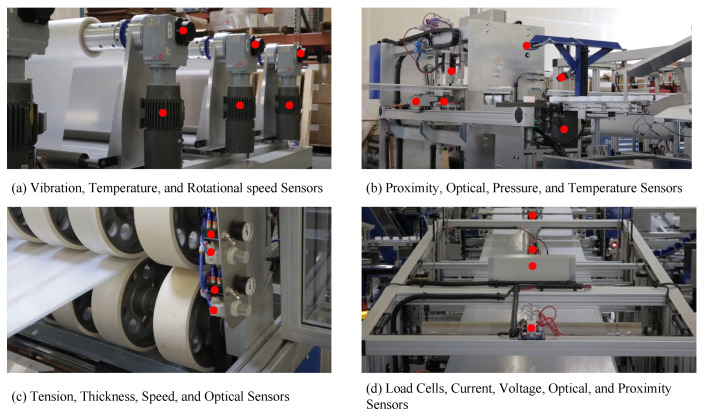
- Data come from an industrial sensor network with 123,013 instances and 20 sensors; the paper says only 20 sensors were accessible in the packaging-industry deployment, and the data were split 70:15:15 into train/validation/test using a temporal split.
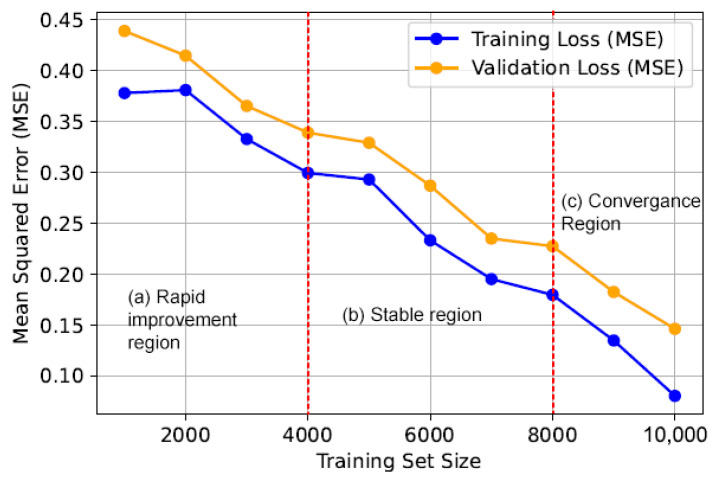
- Analysis included grid search and cross-validation for KNN parameters (selected k = 5 and a 30-time-step window), 10-fold cross-validation for both edge and cloud models, and experimental comparison against cloud-only, fog-related, and other hybrid approaches.
## Limitations
- The paper states the current framework has no exception handling if the cloud server fails to respond; it assumes the cloud system provides uninterrupted service.
- The edge device is a Raspberry Pi Zero 2 W, and the paper says this creates an extendability issue and limits workload distribution because of constrained computational capability.
- The text also notes limits evident from the setup: evaluation is based on one industrial packaging environment with 20 accessible sensors, so broader generalization is not directly demonstrated.
Model-written summary. Check it against the paper before relying on it.
Integrity signals
Registry
Cites
Statistics
Figures






Verification
Claims the paper makes
4 Valid · 3 Not valid · 8 Not checked · 66 Own results and interpretations
The cited sources support only part of this claim — read each source’s verdict below.
In the paper
“According to multiple state-of-the-art studies, the LSTM model is most suitable for time-series data.”
§ Edge-Cloud Synergy for AI-Enhanced Sensor Network Data: A Real-Time Predictive Maintenance Framework > 3. Methodology > 3.2. Comparative Analysis for Hardware and AI Model Selection
What the sources say
- Not checked — no full text of the sourcecites [41] Khan, S., and Kumar, V. (2024). A novel hybrid GRU-CNN and residual bias (RB) based RB-GRU-CNN models for prediction of PTB Diagnostic ECG time series data. Biomed. Signal Process. Control., 94. source
- Partly supportedcites [42] ArunKumar, 2022, Comparative analysis of Gated Recurrent Units (GRU), long Short-Term memory (LSTM) cells, autoregressive Integrated moving average (ARIMA), seasonal autoregressive Integrated moving average (SARIMA) for forecasting COVID-19 trends, Alex. Eng. J. sourceExperimental — accuracy not yet measured
The Mathematical modelling section describes LSTM as a way to overcome limitations of recurrent networks, supporting its suitability for time-series forecasting. But the Conclusions report that LSTM performed best for some countries’ COVID-19 fatality series while GRU performed best for others; the paper does not establish LSTM as the most suitable deep-learning model for time-series data generally. Page numbers are unavailable in our copy. (LLM, conf=0.88)
- Not checked — no full text of the sourcecites [43] Siraj, M.S., and Ahad, M. (2020, January 26–29). A hybrid deep learning framework using CNN and GRU-based RNN for recognition of pairwise similar activities. Proceedings of the 2020 Joint 9th International Conference on Informatics, Electronics & Vision (ICIEV) and 2020 4th International Conference on Imaging, Vision & Pattern Recognition (icIVPR), Kitakyushu, Japan. source
- Not checked — no full text of the sourcecites [44] Amalou, 2022, Multivariate time series prediction by RNN architectures for energy consumption forecasting, Energy Rep. source
boosted- Asserted: passes — The authors put it forward as true.
- Checkable: passes — It can be checked against evidence.
- Load-bearing: passes — The paper’s conclusions depend on it.
- Based: passes — The paper gives a reason why it holds.
The cited sources that could be checked couldn’t confirm or dispute this claim.
In the paper
“However, MQTT’s reduced reliability in high-traffic scenarios may result in dropped messages.”
§ Edge-Cloud Synergy for AI-Enhanced Sensor Network Data: A Real-Time Predictive Maintenance Framework > 3. Methodology > 3.4. Conceptual Design of the Hybrid AI Model
What the sources say
- Could not verifycites [45] Ghaleb, 2018, A survey of limitations and enhancements of the ipv6 routing protocol for low-power and lossy networks: A focus on core operations, IEEE Commun. Surv. Tutor. sourceExperimental — accuracy not yet measured
The copy discusses packet loss in RPL multipath routing (OF Enhancements Based on Multi-path Routing, p. 21), not MQTT. Searches for “MQTT” and “MQTT high traffic dropped messages” found no passage addressing MQTT reliability or dropped messages under high traffic. (LLM, conf=0.75)
hedgedstates a possible cause- Asserted: passes — The authors put it forward as true.
- Checkable: passes — It can be checked against evidence.
- Load-bearing: unclear — It is unclear whether the paper’s conclusions depend on it.
- Based: passes — The paper gives a reason why it holds.
- Could not verify
The cited sources that could be checked couldn’t confirm or dispute this claim.
In the paper
“Protocols such as HTTP introduce higher latency due to their inherent overhead, which can delay real-time detection.”
§ Edge-Cloud Synergy for AI-Enhanced Sensor Network Data: A Real-Time Predictive Maintenance Framework > 3. Methodology > 3.4. Conceptual Design of the Hybrid AI Model
What the sources say
- Could not verifycites [45] Ghaleb, 2018, A survey of limitations and enhancements of the ipv6 routing protocol for low-power and lossy networks: A focus on core operations, IEEE Commun. Surv. Tutor. sourceExperimental — accuracy not yet measured
The LLNs Routing Requirements section (p. 7) says alert traffic is sensitive to delay, while the Listen Interval Oriented Enhancements section (p. 23) discusses latency caused by Trickle’s listen-only period. Searches for HTTP and protocol overhead found no passage linking HTTP’s overhead to higher latency or delayed real-time detection. (LLM, conf=0.75)
plainstates a cause- Asserted: passes — The authors put it forward as true.
- Checkable: passes — It can be checked against evidence.
- Load-bearing: passes — The paper’s conclusions depend on it.
- Based: passes — The paper gives a reason why it holds.
- Could not verify
The cited sources support only part of this claim — read each source’s verdict below.
In the paper
“MQTT and WebSocket, with their low latency, are more suitable for timely anomaly alerts.”
§ Edge-Cloud Synergy for AI-Enhanced Sensor Network Data: A Real-Time Predictive Maintenance Framework > 3. Methodology > 3.4. Conceptual Design of the Hybrid AI Model
What the sources say
- Partly supportedcites [45] Ghaleb, 2018, A survey of limitations and enhancements of the ipv6 routing protocol for low-power and lossy networks: A focus on core operations, IEEE Commun. Surv. Tutor. sourceExperimental — accuracy not yet measured
The LLNs Routing Requirements section (p. 7) says alert traffic is highly sensitive to delay, supporting the need for timely delivery. It does not discuss MQTT or WebSocket, their latency, or whether they are more suitable for anomaly alerts; searches for both protocol names found no matching passage. (LLM, conf=0.84)
plainstates a cause- Asserted: passes — The authors put it forward as true.
- Checkable: passes — It can be checked against evidence.
- Load-bearing: passes — The paper’s conclusions depend on it.
- Based: passes — The paper gives a reason why it holds.
- Partly supported
A result the paper reports from its own data — it cites no other source for it, so there is none to check. The quote shows it is in the paper.
In the paper
“According to the comparative analysis in Table 2, the Raspberry Pi Zero 2W offers a balanced trade-off between processing power and power consumption.”
§ Edge-Cloud Synergy for AI-Enhanced Sensor Network Data: A Real-Time Predictive Maintenance Framework > 3. Methodology > 3.2. Comparative Analysis for Hardware and AI Model Selection
plainstates an association- Asserted: passes — The authors put it forward as true.
- Checkable: passes — It can be checked against evidence.
- Load-bearing: passes — The paper’s conclusions depend on it.
- Based: passes — The paper gives a reason why it holds.
38 more claims
Create a free account to see all 81 claims and to verify the 1 reference still open.
- Probably not a substantial claim. 19
- It may state two separate claims as one. 20
- The quote only partly states this claim. 2
Self-check
Percentages, sums and reported differences re-computed from the paper’s own numbers.
Self-check results appear here once an independent check has confirmed them.
Cited works that were retracted
Works this paper cites that were later retracted, from the retraction notices publishers deposit. Major when the notice came out before this paper was published.
A note, not an issue: for example, a cited work that was retracted only after this paper was published, which its authors could not have known.
In the paper
“The underlying technology is the utilization of time-series data from the sensor networks in combination with AI models to forecast when maintenance is needed [27].”
Cited work 10.1109/icocwc60930.2024.10470817 · retracted 2025-07-22 · notice 10.1109/icocwc60930.2024.10703845 · this paper published 2024-12-11
Citations
Cites
1 retracted
Prabha, S., Upadhyay, R., & Goswami, P. K. (2024) · doi:10.1109/icocwc60930.2024.10470817 · Cited by 3 · cited 1×
“The underlying technology is the utilization of time-series data from the sensor networks in combination with AI models to forecast when maintenance is needed [27].”
RetractedAll one needs to know about fog computing and related edge computing paradigms: A complete survey
Yousefpour, A., Fung, C., Nguyen, T., Kadiyala, K., Jalali, F., Niakanlahiji, A., Kong, J., & Jue, J. P. (2019) · Journal of Systems Architecture · doi:10.1016/j.sysarc.2019.02.009 · Cited by 1,368 · cited 1×
“Both edge and fog computing are decentralized approaches and contribute to reducing latency [48].”
Model Pruning Enables Efficient Federated Learning on Edge Devices
Jiang, Y., Wang, S., Valls, V., Ko, B. J., Lee, W.-H., Leung, K. K., & Tassiulas, L. (2023) · IEEE Transactions on Neural Networks and Learning Systems · doi:10.1109/tnnls.2022.3166101 · Cited by 589 · cited 1×
“Techniques such as model pruning, quantization, and knowledge distillation have been applied to make AI models more suitable for edge deployment [13].”
Predictive Maintenance and Intelligent Sensors in Smart Factory: Review
Pech, M., Vrchota, J., & Bednář, J. (2021) · Sensors · doi:10.3390/s21041470 · Cited by 461
Resource Management in Fog/Edge Computing: A Survey on Architectures, Infrastructure, and Algorithms
Hong, C.-H., & Varghese, B. (2020) · ACM Computing Surveys · doi:10.1145/3326066 · Cited by 461
Ucar, A., Karakose, M., & Kırımça, N. (2024) · Applied Sciences · doi:10.3390/app14020898 · Cited by 444 · cited 1×
“Predictive maintenance is emerging as a popular approach in industrial production, smart solutions, and automation because of its potential to minimize downtime and optimize maintenance schedules [26].”
Ghaleb, B., Al-Dubai, A. Y., Ekonomou, E., Alsarhan, A., Nasser, Y., Mackenzie, L. M., & Boukerche, A. (2019) · IEEE Communications Surveys & Tutorials · doi:10.1109/comst.2018.2874356 · Cited by 333 · cited 1×
“CoAP, being lightweight and efficient, is ideal for low-latency operations but struggles with scalability in larger deployments [45].”
Edge computing for Industry 5.0: fundamental, applications and research challenges
Sharma, M., Tomar, A., & Hazra, A. (2024) · IEEE Internet of Things Journal · doi:10.1109/jiot.2024.3359297 · Cited by 312 · cited 1×
“According to the study conducted by Sharma et al. [10], edge computing reduces latency and facilitates real-time decision-making.”
ArunKumar, K. E., Kalaga, D. V., Mohan Sai Kumar, C., Kawaji, M., & Brenza, T. M. (2022) · Alexandria Engineering Journal · doi:10.1016/j.aej.2022.01.011 · Cited by 287
Recent Trends in Internet-of-Things-Enabled Sensor Technologies for Smart Agriculture
Shaikh, F. K., Karim, S., Zeadally, S., & Nebhen, J. (2022) · IEEE Internet of Things Journal · doi:10.1109/jiot.2022.3210154 · Cited by 248
Cited by
Edge and Cloud Computing in Smart Cities
Τρίγκα, Μ., & Dritsas, E. (2025) · Future Internet · doi:10.3390/fi17030118 · Cited by 190
“Their synergy ensures adaptive resource allocation, dynamic service provisioning, and intelligent workload migration across diverse applications [1,2].”
Aylak, B. L. (2025) · Sustainability · doi:10.3390/su17062453 · Cited by 69
Mishra, L. N., & Senapati, B. (2025) · IEEE Access · doi:10.1109/access.2025.3552592 · Cited by 35
“Integrating it with the Internet of Things (IoT) and edge computing devices will enable decentralized decision-making and reduce latency, which is critical for real-time retail operations [56].”
Ramadan, M. N. A., Ali, M. A. H., Jaber, H., et al. (2025) · Ecotoxicology and Environmental Safety · doi:10.1016/j.ecoenv.2025.118442 · Cited by 21
Low-Cost IoT-Based Predictive Maintenance Using Vibration
Kolok, P., Hodoň, M., Ševčík, P., Hotz, L., & Remy, N. (2025) · Sensors · doi:10.3390/s25216610 · Cited by 30
“…algorithm adopted in this study provides unsupervised learning capability, linear inference time, and a minimal memory footprint ( 150 kB), making it an optimal compromise between accuracy, interpretability, and real-time feasibility for embedded predictive maintenance applications [3,27,30,31,39].”
InfluentialEdge AI for Smart Cities: Foundations, Challenges, and Opportunities
Velaga, K. S., Guo, Y., & Yu, W. (2025) · Smart Cities · doi:10.3390/smartcities8060211 · Cited by 44
Qiu, S., Malik, M., Ehsan, H., Wang, W., Wang, J., Cheng, R., Wei, W., & Zaheer, Q. (2025) · Journal of Railway Science and Technology · doi:10.1016/j.jrst.2025.08.003 · Cited by 33
A Survey on Video Big Data Analytics: Architecture, Technologies, and Open Research Challenges
Do, T.-T.-T., Thắng, H. Q., Kim, K., & Nguyen, V.-Q. (2025) · Applied Sciences · doi:10.3390/app15148089 · Cited by 39
Emedo, C., Wada, O. Z., David-Olawade, A. C., Ling, J., Esan, D. T., Ijiwade, J. O., & Olawade, D. B. (2025) · Digital engineering. · doi:10.1016/j.dte.2025.100068 · Cited by 20
“…Patterns demonstrate that modern predictive maintenance systems employ hierarchical AI architectures: edge computing devices perform immediate anomaly detection using light-weight algorithms, while cloud-based systems conduct complex predictive modelling using deep learning networks [63].”
Kabir, R., Watanobe, Y., Ding, D., Islam, M. R., & Naruse, K. (2025) · IEEE Access · doi:10.1109/access.2025.3619776 · Cited by 24
“For example, predictive maintenance pipelines frequently suffer from sensor drift, leading to false alarms or missed faults in industrial CPS and DTs [176], [179], [203].”
Hamasha, M. M., Albedoor, Q., Hamasha, S., Ali, H. B., Qamar, A., & Berrah, F. (2025) · Istrazivanja i projektovanja za privredu · doi:10.5937/jaes0-57002 · Cited by 15
AI edge cloud service provisioning for knowledge management smart applications
Maciá-Lillo, A., Mora, H., Jimeno-Morenilla, A. M., García-D’Urso, N., & Azorín-López, J. (2025) · Scientific Reports · doi:10.1038/s41598-025-14429-7 · Cited by 23
AI empowers intelligent chemical sensing systems
Yan, J., Kang, Y., Wang, T., Tian, Y., Wang, C., Ma, Z., & Song, Z. (2025) · The Innovation Informatics · doi:10.59717/j.xinn-inform.2025.100014 · Cited by 21
Rahnama, S. M. (2025) · IEEE Access · doi:10.1109/access.2025.3568842 · Cited by 17
“A sample of the merged dataset is shown in Table 3 [38].”
A Scalable Hybrid Edge-Cloud Approach to Minimizing Latency in IoT Applications
Radhakrishnan, P., Kurian, S., Vijayan, V. B., et al. (2025) · International Journal of Computational and Experimental Science and Engineering · doi:10.22399/ijcesen.946 · Cited by 6
Arumuganainar, R., Mubeen, S., Muthevi, A. K., et al. (2026) · Analytical Letters · doi:10.1080/00032719.2025.2609110 · Cited by 5
Thirukumaran, R., & Erkinbaev, C. (2026) · Digital Chemical Engineering · doi:10.1016/j.dche.2026.100301 · Cited by 6
Bhaskaran, S. V. (2025) · Computers · doi:10.3390/computers14030106 · Cited by 13
“To standardize the data, all text entries were normalized to lowercase using Unicode transformation rules, ensuring uniformity without affecting semantic meaning [27].”
Self-citationAI-Integrated Sensor Data Analytics for Real-Time Decision-Making in Wireless Sensor Networks
Wasim Haidar, S. K., R, W. B. N., Chaubey, S. K., Mehmood, Z., J, K. S., & Sutherlin Subitha, G. (2025) · International Conference on Machine Learning and Autonomous Systems (ICMLAS) · doi:10.1109/icmlas64557.2025.10968079 · Cited by 7
“Furthermore, Sathupadi et al. [7] proposed a hybrid edge-cloud AI model that leverages KNN-based anomaly detection on edge devices and LSTM-based predictive analytics in the cloud.”
Energy-efficient machine learning approaches for enhanced biofuel (Biodiesel) production: A review
Song, M.-K., Kim, D.-W., Mohanty, S., Son, M., Lee, S. S., Salama, E., Li, X., Kumar, R., & Jeon, B. (2026) · Energy and AI · doi:10.1016/j.egyai.2026.100696 · Cited by 8
A Framework for Integration of Machine Vision with IoT Sensing
Nwatuzie, G. A., & Peyravi, H. (2025) · Sensors · doi:10.3390/s25237237 · Cited by 3
“Sathupadi et al. [14] provide an edge–cloud synergy framework intended for the real-time processing of industrial sensor network data.”
Laghari, R. A., Memon, S., Ansari, M., Shah, W., Shakir, M., Khan, A. A., Hussain, B., & Laghari, A. A. (2025) · Archives of Computational Methods in Engineering · doi:10.1007/s11831-025-10478-3 · Cited by 5
Qiao, Y., Min, X., Ge, S., Zhu, X., & Yang, N. (2026) · Journal of environmental chemical engineering · doi:10.1016/j.jece.2026.122522 · Cited by 7
Alattas, K. A. (2025) · AIMS Mathematics · doi:10.3934/math.20251275 · Cited by 3
Jo, M. Y., & Kim, H. S. (2025) · Sensors · doi:10.3390/s25206439 · Cited by 7
“Recent work has further advanced hybrid AI frameworks for mobile and edge networks, where computation is split between the edge and the cloud [17–19].”
Trends and Frontiers of Emerging Technologies in Oil and Gas: A Scientometric Perspective
Bhatia, M., & Malik, V. (2025) · IEEE Internet of Things Journal · doi:10.1109/jiot.2025.3631090 · Cited by 3
Agentic AI Integration for Process Automation in MSMEs
Parthasarathy, V. P. (2026) · IEEE International Conference on AI in Cybersecurity (ICAIC) · doi:10.1109/icaic67076.2026.11395804 · Cited by 2
“Hughes et al. [2] give the reader the opinions of various professionals regarding AI agent and agentic systems, discussing their design principles, implementation issues, and areas of use.”
Trends in intelligent sensor‐based customized management technologies for sewer infrastructures
Kang, M., Bae, H., Lee, K., et al. (2025) · ETRI Journal · doi:10.4218/etrij.2024-0601 · Cited by 2
“It supports scalability and integrates diverse data sources, thereby enhancing predictive maintenance capabilities [16].”
AI at the Edge: Cloud-Edge Synergy
Bellala, K. R. (2025) · doi:10.38124/ijisrt/25may967 · Cited by 3
Yu, L., Fang, J., Wang, Q., Li, F., & Liu, H. (2026) · Machines · doi:10.3390/machines14050476 · Cited by 1
A hybrid online learning based predictive maintenance system for industry 4.0
Fowdur, T. P., & Ajageer, L. (2025) · Computing · doi:10.1007/s00607-025-01494-z · Cited by 1
Real-Time Monitoring and Anomaly Detection in Cloud-Based IoT Networks
Sharma, P. K., & Logeshwaran, J. (2025) · doi:10.1109/netcrypt65877.2025.11102267 · Cited by 1
“However, the increase in connected devices requires real-time monitoring and anomaly detection in these networks [9].”
Bashu, B., & Srikanth, B. (2025) · Journal of The Institution of Engineers (India) Series D · doi:10.1007/s40033-025-00971-1 · Cited by 2
Flexible Multi-Domain IoT Architecture for Smart Cities
Crespo-Aguado, M., Martínez-Palomo, L., Molner, N., Torrealba-Ferrer, A.-J., Higón-Sorribes, J.-M., Blasco, C., Ravelo, C., & Gómez‐Barquero, D. (2026) · Applied Sciences · doi:10.3390/app16031534 · Cited by 5
Rashid, S. A., Mashhadany, Y. I. M. A., & Alrawi, A. A. A. (2026) · F1000Research · doi:10.12688/f1000research.176542.1 · Cited by 1
Causal mapping of challenges in edge–cloud continuum for real-time decision systems
Ghamrawi, T. Z., Isiaku, L., & Omini, J. J. (2026) · International Journal of Intelligent Computing and Cybernetics · doi:10.1108/ijicc-11-2025-0760 · Cited by 1
Gbran, H. (2026) · International Journal of Architectural Heritage · doi:10.1080/15583058.2026.2649815 · Cited by 2
Development of a Cloud-Integrated Multi-Sensor Landslide Early Warning System (LEWS)
Mukhlisin, M., Astuti, H. W., Apriantoro, R., Rabinah, A. H., Yusuf, M., Kurniawan, A., Sumardiono, A., Alimudin, E., & Irsyadi, F. (2025) · International Conference on Artificial Intelligence, Blockchain, Cloud Computing, and Data Analytics (ICoABCD) · doi:10.1109/icoabcd67551.2025.11470772 · Cited by 1
“The cloud-integrated system supports data logging and historical trend analysis for real-time monitoring [15], [16], [17].”
Design of a Lightweight Edge-AI System for Predictive Maintenance on ESP32-S3
Kumar, G., Tērauds, M., Raji, A. A., et al. (2026) · Applied Sciences · doi:10.3390/app16115287 · Cited by 1
Niu, S., Zhang, M., Zhao, Y., Fan, D., Yu, D., & Li, S. (2026) · Food Bioscience · doi:10.1016/j.fbio.2026.109176 · Cited by 1
Benkhada, A., & Ouabida, E. (2026) · Applied Sciences · doi:10.3390/app16178601 · Cited by 1
Benalia, N. E.-H., Lakhdari, K., Hamida, S., et al. (2025) · International Conference on Electronics, Energy and Measurement (IC2EM) · doi:10.1109/ic2em63689.2025.11101188 · Cited by 1
“…behavioural analysis using cloud computing, several challenges and limitations persist: • Latency and Real Time Processing – Shanbhag et al (2024) [20] highlighted improvements in predictive maintenance for Industrial IoT (IIoT), but their approach struggled with real time decision-making due to…”
Adegbola, I. (2025) · SSRN Electronic Journal · doi:10.2139/ssrn.5366097
Peng, Y., & Zheng, L. (2025) · Journal of theoretical and applied electronic commerce research · doi:10.3390/jtaer20040263 · Cited by 2
Artificial intelligence in process safety and risk management
Ziani, I., Hassall, M. E., Maduabuchi, E., Gomes, C., Bachiri, A. E., Fauconnier, M., Sher, F., Melnyk, O., Ramírez, C. P., & Spataru, C. (2025) · Elsevier eBooks · doi:10.1016/b978-0-443-34076-5.00011-0 · Cited by 1
Kadechkar, A., Koller, M., & Labajos, A. (2025) · International Conference on Renewable Energy Research and Applications (ICRERA) · doi:10.1109/icrera66237.2025.11284228
“…edge-cloud-AI hybrid solution combining the low-latency capabilities of edge computing AI models with the extensive computational power of cloud servers achieves significant improvements in latency, energy consumption and bandwidth usage addressing the key challenges in predictive maintenance [9].”
Annapareddy, V. N., Pamisetty, A., Malempati, M., et al. (2026) · Lecture notes in networks and systems · doi:10.1007/978-3-032-08246-6_26
AI-Driven Semiconductor Optimization for Sustainable Smart Grids
Jain, V. K., Mitra, A., & Paul, S. (2026) · Advances in computational intelligence and robotics book series · doi:10.4018/979-8-3373-3481-3.ch006
Research on the Design of Edge Intelligent Acquisition System for Equipment Health Management
Chen, L., Wang, P., Zou, D., Wang, Y., Cui, L., & Shi, W. (2026) · IEEE Sensors Journal · doi:10.1109/jsen.2026.3657408
“In the feature processing stage at the edge, issues such as low synchronization accuracy among data acquisition modules and imperfect data transmission scheduling mechanisms exist [28], [29].”
AI-Driven Intelligent Operation and Maintenance and Fault Prediction for Data Center Networks
Li, Y. (2026) · Communications in computer and information science · doi:10.1007/978-3-032-17020-0_21
Edge-AI Technologies for Sustainability: A Comparative Analysis
Khaniabadi, S. M., Soares, S., & Lopes, S. I. (2025) · IEEE Region Humanitarian Technology Conference · doi:10.1109/r10-htc63995.2025.11394378
Adaptive Multimodal LSTM with Online Learning for Evolving IoT Data Streams
Okoro, O. E., Ibrahim, N. M., Kirubakan, P., & Muhammad, S. A. (2026) · International Electronic Conference on Applied Sciences (ASEC) · doi:10.3390/engproc2026124057
AI-Integrated Predictive Maintenance System with Alarm Recognition for Smart Manufacturing
Banu, A., Sharmila, K., Begum, Z., et al. (2025) · International Conference on Recent Trends in Electrical, Electronics and Computing Technologies (ICRTEECT) · doi:10.1109/icrteect67512.2025.11448741
Cloud Computing for Solar Energy Optimization
Fardin, F., & Aref, S. (2026) · doi:10.1109/elcon-peia69858.2026.11451850
Artificial intelligence in energy systems, sustainability, and decarbonization
Pourrahmani, H. (2026) · Elsevier eBooks · doi:10.1016/b978-0-443-45526-1.00003-9
Intelligent Hybrid Edge–Cloud AI Predictive Maintenance for Industrial Electrical Systems
Brindha, S., Haripriya, V., Ishvarya, K., Pavithran, M., & Abishek, M. (2026) · International Conference on Visual Analytics and Data Visualization (ICVADV) · doi:10.1109/icvadv67766.2026.11470384
“However, edge devices are limited in computational power and storage, restricting deep predictive analytics and long-term trend analysis [5], [6].”
Apolo, J. D. P., Robles, J. L. B., Zhicay, J. L. D., Guerrero, R. X. C., Guarochico, W. F. A., & Egas, P. F. B. (2026) · Sensors · doi:10.3390/s26092772 · Cited by 1
“This capability supports the development of predictive maintenance strategies in cloud-connected IIoT environments [38,39].”
Edge-Cloud Architectures for Distributed, Real-Time Systems in Mission-Critical Domains
Telalwar, S. (2025) · International Conference on Computer and Information Technology (ICCIT) · doi:10.1109/iccit68739.2025.11491302
A Systematic Literature Review on Machine Learning Methods for Improving LoRaWAN Performance
Soid, H. S. M. (2026) · EDUCATUM Journal of Social Sciences · doi:10.37134/ejoss.vol12.sp2.21.2026
AI-Driven Predictive Maintanence in Cloud Application
Premkumar, K., & Rajeswari, K. N. (2026) · IEEE International Conference on Quantum Photonics, Artificial Intelligence & Networking (QPAIN) · doi:10.1109/qpain69676.2026.11546285
“…of large-scale cloud monitoring and telemetry data provides the foundation for applying machine learning techniques for predictive maintenance, as these data-driven approaches rely on rich operational information to learn failure patterns and support proactive maintenance decisions [3].”
Sabbatini, L., Raggiunto, S., Esposito, M., et al. (2026) · Sustainability · doi:10.3390/su18136641
Bhati, N., Dhupper, R., Jain, H., Shrivastava, A., & Bhatia, M. (2026) · Circular economy and sustainability · doi:10.1007/978-3-032-22687-7_11 · Cited by 2
Chávez-Jácome, F., Guagalango-Minga, J., Salazar-Jácome, E., & la Torre-Guzmán, J. D. (2026) · Future Internet · doi:10.3390/fi18070364 · Cited by 1
“In other words, the main limitation does not appear to lie in the PLC as the control core, but in the distributed layer that mediates between user action and local execution, which reinforces the continued validity of the PLC as a robust element in control systems [13,39–41].”
Real-time predictive safety analytics in smart tourism using a hybrid edge-cloud AI framework
Almomani, O., Singh, S., Sahu, P. K., et al. (2026) · International Journal of Data Science and Analytics · doi:10.1007/s41060-026-01224-4
Edge-cloud collaboration-driven predictive modeling for high-performance computing centers
Ma, S., Cao, Y., Liu, Y., Liu, X., Liu, B., Zhuang, Y., & Hu, L. (2026) · Neural Networks · doi:10.1016/j.neunet.2026.109508
Shadap, M., & Ayyasamy, S. (2026) · Springer eBooks · doi:10.1007/978-981-92-0294-2_9
Obiora, G. N., & Adebowale, O. J. (2026) · Malaysian Journal of Science and Advanced Technology · doi:10.56532/mjsat.v6i2.679
“In the meantime, [21] suggested an edge-cloud mixed framework to address the shortcomings of traditional PdM systems in managing high-volume, real-time sensor network data.”
Hashem, R., El-Hussieny, H., Umezu, S., & El‐Bab, A. M. R. F. (2026) · International Journal of Intelligent Robotics and Applications · doi:10.1007/s41315-026-00567-2
Real-time resource optimization in smart education using edge–cloud AI collaboration
Chu, J. (2026) · International Journal of Data Science and Analytics · doi:10.1007/s41060-026-01255-x
“Sathupadi et al. [19] suggested an edge–cloud hybrid system for predictive maintenance in real time, which is a solution to sensor network problems, including latency, energy consumption, and bandwidth.”
Geng, Q., Zhang, R., Li, H., Zuo, H., & Geng, Z. (2026) · Laser & Photonics Review · doi:10.1002/lpor.71762
Baseline Mobility-Aware Fog Offloading Without Load Balancing
Chopade, S., Assudani, P. J., & Shrawankar, U. N. (2026) · doi:10.1109/icndsa68777.2026.11652233
Edge-Cloud Architecture for Sensor-Based Indoor Acoustic Monitoring in Buildings
Galassi, A., Marchionni, C., & Rotilio, M. (2026) · IEEE International Workshop on Metrology for Living Environment (MetroLivEnv) · doi:10.1109/metrolivenv70468.2026.11659863
“The value of these technologies lies not in the continuous acquisition of raw data, but in transforming them into meaningful information and actionable intelligence [11].”
Devarajan, Y., Subbiah, G., Das, S. N., Nagendra, S. V. H., Venkadeshwaran, K., Tiwari, A., Aravinda, T., Jayabal, R., & Mehar, K. (2026) · IET Generation Transmission & Distribution · doi:10.1049/gtd2.70384 · Cited by 1
Govindharaj, I., Michael, G., Vimal Raja, R., et al. (2026) · doi:10.1109/insect68872.2026.11663717
“A real-time sensor network-based maintenance framework using AI was proposed by Satthupadi et al. [6].”
Bansla, N., Sharma, O., & Sharma, P. K. (2026) · Discover Computing · doi:10.1007/s10791-026-10493-3
“…results prove the effectiveness of the proposed AI-supported workflow The adaptability ranges from 80% (Patel et al. [16]) to 88% (Sathupadi et al. [15]), with energy consumption varying between 259.7 J and 278.6 J, among all the existing methods as compared to the evaluation of various edge–cloud…”
InfluentialCost-Efficient Workload Scheduling for Cloud-Native Real-Time Event Ingestion
Lakshmanan, M. (2026) · International Conference on Inventive Systems and Control (ICISC) · doi:10.1109/icisc69558.2026.11681467
“The efficacy of PACH is shown by extensive experimentation on different workload categories such as batch processing, real-time streaming, event handling, microservices, serverless computing, and autoscaling [9][10].”
Akhmetova, R. V., & Ахметов, А. Е. (2026) · Agrarian science · doi:10.32634/0869-8155-2026-410-09-147-153
Natrayan, L. (2026) · International Conference on Electronics and Sustainable Communication Systems (ICESC) · doi:10.1109/icesc70182.2026.11687049
“In [18], the sensor information of two industrial plants is used for anomaly detection, prediction analysis, and the health monitoring of the machines on a frequency basis of the systems that evaluate the regression-based parameters to prove the efficiency of the lightweight edge anomaly model,…”
Adaptive Cloud-Edge-AI Pipelines for Context-Aware Natural Language Processing at Scale
Kaza, P. R. (2026) · Lecture notes in networks and systems · doi:10.1007/978-3-032-28924-7_14
Rashid, S. A., Mashhadany, Y. I. M. A., & Alrawi, A. A. A. (2026) · F1000Research · doi:10.12688/f1000research.176542.2
Xiong, S., Huang, T., & Cao, Y. (2026) · Sensing and Imaging · doi:10.1007/s11220-026-00892-7
“[ 19 , 20 ], and [ 21]made significant contribution in dealing with some of the challenges encountered in heterogeneous data integration and constrained environment.”
Metadata
- Authors
- Sathupadi, K., Achar, S., Bhaskaran, S. V., Faruqui, N., Abdullah-Al-Wadud, M., & Uddin, J.
- Affiliations
- Google (United States) (US)
- Department of Software Engineering, Walmart Global Tech, Sunnyvale, CA 94086, USA
- Zoom Video Communications, Sanjose, CA 95113, USA
- Daffodil International University (BD)
- King Saud University (SA)
- Woosong University (KR)
- Corresponding author
- Abdullah-Al-Wadud, M.
- Uddin, Jia
- ORCID
- Venue
- Sensors
- Publisher
- MDPI AG
- Published
- 2024-12-11
- Volume
- 24
- Issue
- 24
- Pages
- 7918
- ISSN
- 1424-8220 (ISSN-L)
- PMC
- PMC11678991
- OpenAlex
- W4405284906
- Cited by
- 89
- References
- 67
- Citations by year
- 2026: 52 · 2025: 37
- FWCI
- 14.73
- Type
- journal article
- Language
- en
- Open access
- gold
- doi.org
- Licence
- Locations
- Sensors (publishedVersion, cc-by)
- PubMed Central (publishedVersion, cc-by)
- PubMed (publishedVersion)
- DOAJ (DOAJ: Directory of Open Access Journals) (submittedVersion)
- Funders
- Researchers Supporting Project, King Saud University, Saudi Arabia (RSPD2024R951)
- Topics
- Physical Sciences › Computer Science › Computer Networks and Communications › IoT and Edge/Fog Computing
- Physical Sciences › Engineering › Safety, Risk, Reliability and Quality › Reliability and Maintenance Optimization
- Physical Sciences › Computer Science › Information Systems › Internet of Things and AI
- Keywords
- predictive maintenance, sensor networks, anomaly detection, failure prediction, k-nearest neighbors, long short-term memory, time series analysis, workload management, latency reduction, energy consumption, bandwidth reduction, maintenance scheduling
About these checks
Registry, retraction, Cites and statistics results are computed, not judged, with one exception: a printed reference that no index lists is read once by a model before it counts as a citation error. Claims are extracted by a model and kept only when their quote appears verbatim in the text; each cited source is then checked, with a model’s help, for whether it says what the claim relies on. Those verdicts can be wrong — read the claim’s quote and the cited source before relying on one.
The claim verdicts this report counts are experimental: their accuracy is not yet measured.
A language model drew the claims from the paper on 2026-10-09, under version 3 of the claim definition (model deepseek-v4.1-flash, prompt extract-v3).
A second model labelled each claim on 2026-10-09 (model jev-1.13-20260917, definition revision gold-guideline-v0.2).
Cited sources are checked with a language model’s help (gpt-6-sol).
Statistics and arithmetic are recomputed, not judged.
Confidence bands are shown only for fields calibrated on our annotated test set. None is calibrated yet, so no band is shown.
What counts as a claim ›How we measure confidence ›How we check this ›
Are you an author, or do you see a problem with this page? Request a review
Data sources
Bibliographic data: Semantic Scholar, OpenAlex, Crossref.
Contains information from the Semantic Scholar Academic Graph Datasets, made available under the ODC Attribution License (ODC-BY 1.0).
Semantic Scholar’s data is described in: Kinney, R., et al. (2023). The Semantic Scholar Open Data Platform. arXiv:2301.10140.
