

The DOI matches its Crossref record; 130 of the 133 references it cites were found in a registry or an index, and 1 are not checked yet.
Coverage of Artificial Intelligence and Machine Learning within Academic Literature, Canadian Newspapers, and Twitter Tweets: The Case of Disabled People
Open accessAbstract
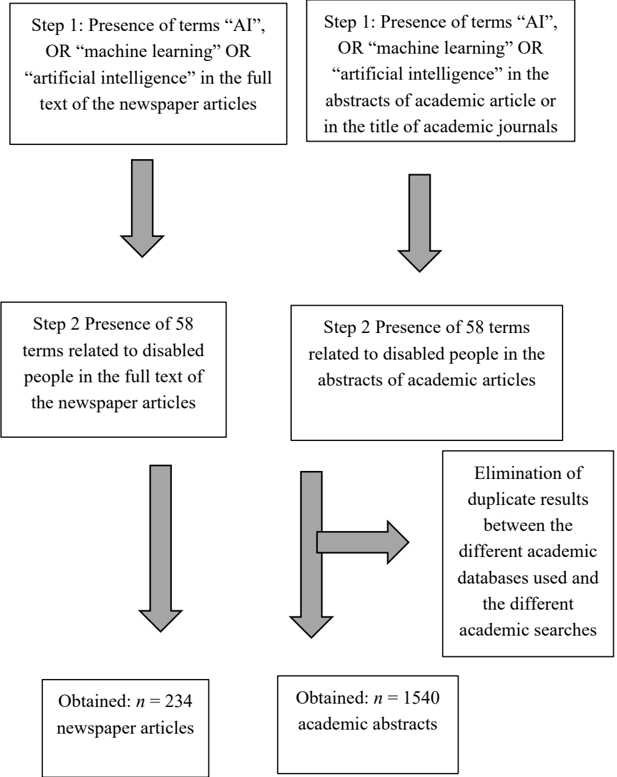
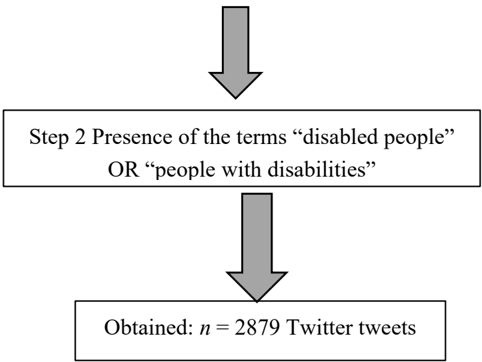
Artificial intelligence (AI) and machine learning (ML) advancements increasingly impact society and AI/ML ethics and governance discourses have emerged. Various countries have established AI/ML strategies. “AI for good” and “AI for social good” are just two discourses that focus on using AI/ML in a positive way. Disabled people are impacted by AI/ML in many ways such as potential therapeutic and non-therapeutic users of AI/ML advanced products and processes and by the changing societal parameters enabled by AI/ML advancements. They are impacted by AI/ML ethics and governance discussions and discussions around the use of AI/ML for good and social good. Using identity, role, and stakeholder theories as our lenses, the aim of our scoping review is to identify and analyze to what extent, and how, AI/ML focused academic literature, Canadian newspapers, and Twitter tweets engage with disabled people. Performing manifest coding of the presence of the terms “AI”, or “artificial intelligence” or “machine learning” in conjunction with the term “patient”, or “disabled people” or “people with disabilities” we found that the term “patient” was used 20 times more than the terms “disabled people” and “people with disabilities” together to identify disabled people within the AI/ML literature covered. As to the downloaded 1540 academic abstracts, 234 full-text Canadian English language newspaper articles and 2879 tweets containing at least one of 58 terms used to depict disabled people (excluding the term patient) and the three AI terms, we found that health was one major focus, that the social good/for good discourse was not mentioned in relation to disabled people, that the tone of AI/ML coverage was mostly techno-optimistic and that disabled people were mostly engaged with in their role of being therapeutic or non-therapeutic users of AI/ML influenced products. Problems with AI/ML were mentioned in relation to the user having a bodily problem, the usability of AI/ML influenced technologies, and problems disabled people face accessing such technologies. Problems caused for disabled people by AI/ML advancements, such as changing occupational landscapes, were not mentioned. Disabled people were not covered as knowledge producers or influencers of AI/ML discourses including AI/ML governance and ethics discourses. Our findings suggest that AI/ML coverage must change, if disabled people are to become meaningful contributors to, and beneficiaries of, discussions around AI/ML.
Overview
The claims and statistics of this paper haven’t been checked yet.
Free: it reads the open-access text and checks the first 5 claims that cite a source we can check. Create a free account to check every claim.
Integrity signals
Registry
Cites
Statistics
Figures
Verification
Claims the paper makes
The claims and statistics of this paper haven’t been checked yet.
Free: it reads the open-access text and checks the first 5 claims that cite a source we can check. Create a free account to check every claim.
Claims other papers make about this one
Each is checked against this paper’s own text: does it say what the citing paper says it does?
The source backs part of the claim, not all of it — or backs it for a different population, condition or comparison.
In the citing paper
“It also requires an in-depth understanding of workers and their context (Cowls, King, Taddeo, & Floridi, 2019), particularly those with disabilities and other special needs (Lillywhite & Wolbring, 2020).”
From Productive employment and decent work: The impact of AI adoption on psychological contracts, job engagement and employee trust (2021) · cites this paper as Lillywhite & Wolbring, 2020
Experimental — accuracy not yet measuredThe source backs part of the claim, not all of it — or backs it for a different population, condition or comparison.
In the citing paper
“AI has the potential to promote inclusion of workers in at risk groups, such as disabled workers (Lillywhite & Wolbring, 2020).”
From Productive employment and decent work: The impact of AI adoption on psychological contracts, job engagement and employee trust (2021) · cites this paper as Lillywhite & Wolbring, 2020
Experimental — accuracy not yet measuredThe cited source says what the claim attributes to it.
In the citing paper
“AI has the potential to improve society by addressing issues such as improving worker inclusion (Lillywhite & Wolbring, 2020), eliminating gender discrimination and sexual harassment at work (Cowls et al., 2019) and reducing cyberbullying (Kumari, Singh, Dwivedi, & Rana, 2019).”
From Productive employment and decent work: The impact of AI adoption on psychological contracts, job engagement and employee trust (2021) · cites this paper as Lillywhite & Wolbring, 2020
Self-check
Percentages, sums and reported differences re-computed from the paper’s own numbers.
The self-check needs the paper’s full text.
Citations
Cites
Lincoln, Y. S., Guba, E. G., & Pilotta, J. J. (1985) · International Journal of Intercultural Relations · doi:10.1016/0147-1767(85)90062-8 · Cited by 45,787
Three Approaches to Qualitative Content Analysis
Hsieh, H.-F., & Shannon, S. E. (2005) · Qualitative Health Research · doi:10.1177/1049732305276687 · Cited by 44,601 · cited 4×
“We then independently identified and clustered the themes based on meaning, repetition, and the research questions [117,121].”
BackgroundMethodInfluentialScoping studies: towards a methodological framework
Arksey, H., & O'Malley, L. (2005) · International Journal of Social Research Methodology · doi:10.1080/1364557032000119616 · Cited by 36,742 · cited 2×
“We chose a modified scoping review drawing from another study [105] as the most appropriate approach for the study given our research questions to identify the current understanding of a given topic [106]; in our case, how the AI/ML literature covered engages with disabled people.”
MethodStrategies for ensuring trustworthiness in qualitative research projects
Shenton, A. K. (2004) · Education for Information · doi:10.3233/efi-2004-22201 · Cited by 9,748
Qualitative Case Study Methodology: Study Design and Implementation for Novice Researchers
Baxter, P., & Jack, S. (2015) · The Qualitative Report · doi:10.46743/2160-3715/2008.1573 · Cited by 7,594
Mitchell, R. K., Agle, B. R., & Wood, D. J. (1997) · The Academy of Management Review · doi:10.2307/259247 · Cited by 5,039 · cited 5×
“Considering Mitchell’s three main factors identifying a stakeholder: “(1) the stakeholder’s power to influence the firm, (2) the legitimacy of the stakeholder’s relationship with the firm, and (3) the urgency of the stakeholder’s claim on the firm” [72] (p.”
BackgroundInfluentialFloridi, L., Cowls, J., Beltrametti, M., Chatila, R., Chazerand, P., Dignum, V., Luetge, C., Madelin, R., Pagallo, U., Rossi, F., et al. (2018) · Minds and Machines · doi:10.1007/s11023-018-9482-5 · Cited by 4,774
Content analysis: Method, applications, and issues
Downe‐Wamboldt, B. (1992) · Health Care for Women International · doi:10.1080/07399339209516006 · Cited by 2,682 · cited 3×
“We then independently identified and clustered the themes based on meaning, repetition, and the research questions [117,121].”
BackgroundMethodA Tale of Two Theories: A Critical Comparison of Identity Theory with Social Identity Theory
Hogg, M. A., Terry, D. J., & White, K. M. (1995) · Social Psychology Quarterly · doi:10.2307/2787127 · Cited by 2,443 · cited 3×
“According to identity theory, the perception of ‘self’ is influenced by the role one occupies in the social world [67].”
BackgroundNeuroscience-Inspired Artificial Intelligence
Hassabis, D., Kumaran, D., Summerfield, C., & Botvinick, M. (2017) · Neuron · doi:10.1016/j.neuron.2017.06.011 · Cited by 1,557
Research works printed but not linked: 17
- Deloria, 2019, How research literature and media cover the role and image of disabled people in relation to artificial intelligence and neuro-research, Eubios J. Asian Int. Bioeth., 29, 169
- 2007, Artificial Brains, Inf. Process. Med. Imaging, 8, 159
- Asilomar and AI Conference Participants (2020, January 26). Asilomar AI Principles Principles Developed in Conjunction with the 2017 Asilomar Conference. Available online: https://futureoflife.org/ai-principles/?cn-reloaded=1.
- (2020, January 26). The IEEE Global Initiative on Ethics of Autonomous and Intelligent Systems, T.I.G.I. Ethically Aligned Design: A Vision for Prioritizing Human Well-Being with Autonomous and Intelligent Systems (A/IS). Available online: http://standards.ieee.org/develop/indconn/ec/ead_v2.pdf.
- Smith, K.J. (2017, January 27–29). The AI community and the united nations: A missing global conversation and a closer look at social good. Proceedings of the AAAI Spring Symposium—Technical Report, Palo Alto, CA, USA.
- Hager, G.D., Drobnis, A., Fang, F., Ghani, R., Greenwald, A., Lyons, T., Parkes, D.C., Schultz, J., Saria, S., and Smith, S.F. (2020, January 26). Artificial Intelligence for Social Good. Available online: https://cra.org/ccc/wp-content/uploads/sites/2/2016/04/AI-for-Social-Good-Workshop-Report.pdf.
- McKelvey, F. (2020, January 26). Next Steps for Canadian AI Governance: Reflections on Student Symposium on AI and Human Rights. Available online: http://www.amo-oma.ca/en/2018/05/10/next-steps-for-canadian-ai-governance-reflections-on-student-symposium-on-ai-and-human-rights/.
- Diep, L. (2017). Anticipatory Governance, Anticipatory Advocacy, Knowledge Brokering, and the State of Disabled People’s Rights Advocacy in Canada: Perspectives of Two Canadian Cross-Disability Rights Organizations. [Master’s Thesis, University of Calgary].
- Fairclough, N. (2020, January 26). Available online: https://pdfs.semanticscholar.org/a3cd/84f4fd0d89eda5a15b9f9c7fa01394aca9d9.pdf.
- Clarkson, M. (1994). A risk based model of stakeholder theory. Proceedings of the second Toronto conference on stakeholder theory, University of Toronto.
- Wahid, 2017, Water as a business: Should water tariff remain? Descriptive analyses on Malaysian households’ socio-economic background, Int. J. Econ. Res., 14, 367
- Mintz, J., Gyori, M., and Aagaard, M. (2012). Touching the Future Technology for Autism?: Lessons from the HANDS Project, IOS Press.
- 2008, Design for All—From Idea to Practise, Comput. Vis., 5105, 106
- Radianti, 2018, Universal Design of ICT for Emergency Management, Lect. Notes Comput. Sci., 10907 LNCS, 63
- Dalmau, 2015, E-Learning and Serious Games, Form. Asp. Compon. Softw., 9192, 632
- Mulley, A., and Gelijns, A. (1992). The patient’s stake in the changing health care economy. Technology and Health Care in an Era of Limits, National Academy Press.
- Wolbring, 2018, The Utility of the “Community Scholar” Identity from the Perspective of Students from one Community Rehabilitation and Disability Studies Program, Interdiscip. Perspect. Equal. Divers., 4, 1
Cited by
Braganza, A., Chen, W., Canhoto, A., & Sap, S. (2021) · Journal of Business Research · doi:10.1016/j.jbusres.2020.08.018 · Cited by 431
Buyl, M., Cociancig, C., Frattone, C., & Roekens, N. (2022) · ACM Conference on Fairness, Accountability, and Transparency (FAccT) · doi:10.1145/3531146.3533169 · Cited by 117
“Even though technology can also assist and mitigate some disabilities, PWDs are affected negatively by AI in multiple areas and significantly more so than people without disabilities [61].”
BackgroundMethodInfluentialAI and disability: A systematic scoping review
Morr, C. E., Kundi, B., Mobeen, F., Taleghani, S., El‐Lahib, Y., & Gorman, R. D. S. (2024) · Health Informatics Journal · doi:10.1177/14604582241285743 · Cited by 86
Bai, S., Zhang, X., Yu, D., & Yao, J. (2024) · Frontiers in Public Health · doi:10.3389/fpubh.2024.1449561 · Cited by 57
“On the other hand, managers must adopt necessary measures to safeguard the well-being of employees, particularly vulnerable groups such as disabled workers and those with special needs (59, 103).”
BackgroundAuditing the ‘Social’ of Quantum Technologies: A Scoping Review
Wolbring, G. (2022) · Societies · doi:10.3390/soc12020041 · Cited by 50
“, workplace); (g) Quantum technologies increasing autonomy of AI/ML (AI/ML judging disabled people) (modified from [197].”
BackgroundInfluentialSelf-citation
Metadata
- Authors
- Lillywhite, A., & Wolbring, G.
- Affiliations
- University of Calgary (CA)
- Corresponding author
- Wolbring, Gregor
- Venue
- Societies
- Publisher
- MDPI AG
- Published
- 2020-02-27
- Volume
- 10
- Issue
- 1
- Pages
- 23
- ISSN
- 2075-4698 (ISSN-L)
- OpenAlex
- W3008584416
- Cited by
- 48
- References
- 133
- Citations by year
- 2026: 2 · 2025: 12 · 2024: 8 · 2023: 11 · 2022: 6 · 2021: 4 · 2020: 5
- FWCI
- 8.85
- Type
- journal article
- Language
- en
- Open access
- gold
- dx.doi.org
- Licence
- Locations
- Societies (publishedVersion, cc-by)
- RePEc: Research Papers in Economics (submittedVersion)
- DOAJ (DOAJ: Directory of Open Access Journals) (submittedVersion, cc-by-sa)
- Funders
- Government of Canada, Canadian Institutes of Health Research, Institute of Neurosciences, Mental Health and Addiction (ERN 155204 in cooperation with ERA-NET NEURON JTC 2017)
- Topics
- Physical Sciences › Computer Science › Artificial Intelligence › Ethics and Social Impacts of AI
- Social Sciences › Sociology and Political Science › Disability Rights and Representation
- Health Sciences › Medicine › Health Informatics › Artificial Intelligence in Healthcare and Education
- Keywords
- artificial intelligence, machine learning, disability, people with disabilities, media coverage of disability, AI ethics, AI governance, AI for social good, disability representation, Canadian newspapers, Twitter, academic literature, technological optimism
About these checks
Registry, retraction, Cites and statistics results are computed, not judged, with one exception: a printed reference that no index lists is read once by a model before it counts as a citation error. Claims are extracted by a model and kept only when their quote appears verbatim in the text; each cited source is then checked, with a model’s help, for whether it says what the claim relies on. Those verdicts can be wrong — read the claim’s quote and the cited source before relying on one.
Statistics and arithmetic are recomputed, not judged.
Confidence bands are shown only for fields calibrated on our annotated test set. None is calibrated yet, so no band is shown.
What counts as a claim ›How we measure confidence ›How we check this ›
Are you an author, or do you see a problem with this page? Request a review
How to cite
Cite CoChat for the checks on this page, and the paper for its own findings.
- This page
- CoChat. (2026). Citation check: Coverage of Artificial Intelligence and Machine Learning within Academic Literature, Canadian Newspapers, and Twitter Tweets: The Case of Disabled People. https://app.cochat.ai/papers/10.3390/soc10010023
- The paper
- Lillywhite, A., & Wolbring, G. (2020). Coverage of Artificial Intelligence and Machine Learning within Academic Literature, Canadian Newspapers, and Twitter Tweets: The Case of Disabled People. Societies. https://doi.org/10.3390/soc10010023
Data sources
Bibliographic data: Semantic Scholar, OpenAlex, Crossref.
Contains information from the Semantic Scholar Academic Graph Datasets, made available under the ODC Attribution License (ODC-BY 1.0).
Semantic Scholar’s data is described in: Kinney, R., et al. (2023). The Semantic Scholar Open Data Platform. arXiv:2301.10140.
