

Coverage of Artificial Intelligence and Machine Learning within Academic Literature, Canadian Newspapers, and Twitter Tweets: The Case of Disabled People
Open accessThe DOI matches its Crossref record; 130 of the 133 references it cites were found in a registry or an index, and 1 are not checked yet.
Abstract
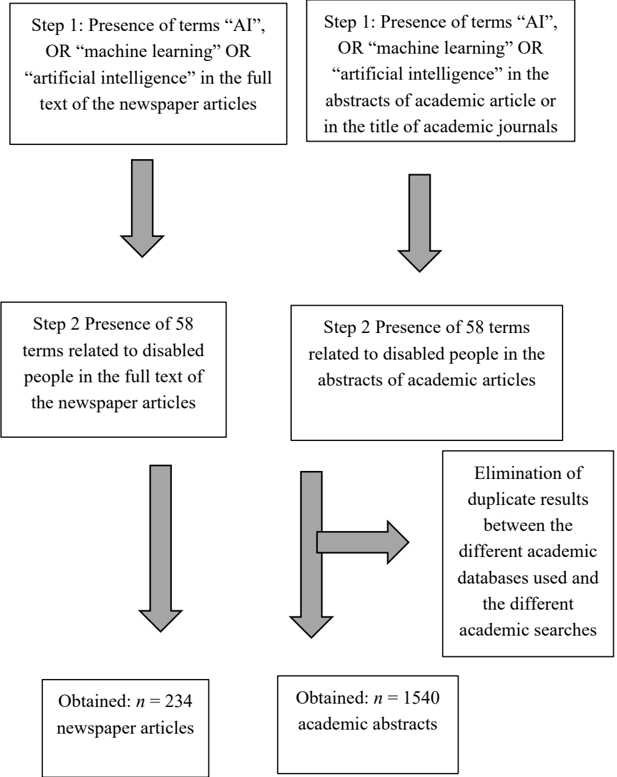
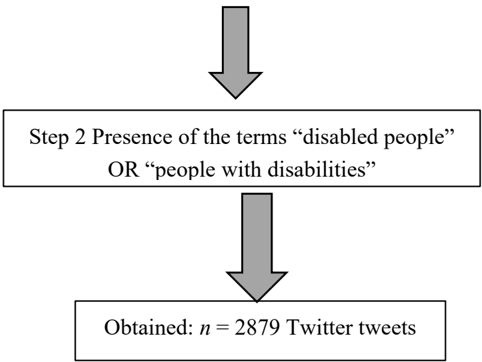
Artificial intelligence (AI) and machine learning (ML) advancements increasingly impact society and AI/ML ethics and governance discourses have emerged. Various countries have established AI/ML strategies. “AI for good” and “AI for social good” are just two discourses that focus on using AI/ML in a positive way. Disabled people are impacted by AI/ML in many ways such as potential therapeutic and non-therapeutic users of AI/ML advanced products and processes and by the changing societal parameters enabled by AI/ML advancements. They are impacted by AI/ML ethics and governance discussions and discussions around the use of AI/ML for good and social good. Using identity, role, and stakeholder theories as our lenses, the aim of our scoping review is to identify and analyze to what extent, and how, AI/ML focused academic literature, Canadian newspapers, and Twitter tweets engage with disabled people. Performing manifest coding of the presence of the terms “AI”, or “artificial intelligence” or “machine learning” in conjunction with the term “patient”, or “disabled people” or “people with disabilities” we found that the term “patient” was used 20 times more than the terms “disabled people” and “people with disabilities” together to identify disabled people within the AI/ML literature covered. As to the downloaded 1540 academic abstracts, 234 full-text Canadian English language newspaper articles and 2879 tweets containing at least one of 58 terms used to depict disabled people (excluding the term patient) and the three AI terms, we found that health was one major focus, that the social good/for good discourse was not mentioned in relation to disabled people, that the tone of AI/ML coverage was mostly techno-optimistic and that disabled people were mostly engaged with in their role of being therapeutic or non-therapeutic users of AI/ML influenced products. Problems with AI/ML were mentioned in relation to the user having a bodily problem, the usability of AI/ML influenced technologies, and problems disabled people face accessing such technologies. Problems caused for disabled people by AI/ML advancements, such as changing occupational landscapes, were not mentioned. Disabled people were not covered as knowledge producers or influencers of AI/ML discourses including AI/ML governance and ethics discourses. Our findings suggest that AI/ML coverage must change, if disabled people are to become meaningful contributors to, and beneficiaries of, discussions around AI/ML.
Overview
The claims and statistics of this paper haven’t been checked yet.
Free: it reads the open-access text and checks the first 5 claims that cite a source we can check. Create a free account to check every claim.
Integrity signals
Registry
Cites
Statistics
Figures
Verification
Claims the paper makes
The claims and statistics of this paper haven’t been checked yet.
Free: it reads the open-access text and checks the first 5 claims that cite a source we can check. Create a free account to check every claim.
Claims other papers make about this one
Each is checked against this paper’s own text: does it say what the citing paper says it does?
The source backs part of the claim, not all of it — or backs it for a different population, condition or comparison.
In the citing paper
“It also requires an in-depth understanding of workers and their context (Cowls, King, Taddeo, & Floridi, 2019), particularly those with disabilities and other special needs (Lillywhite & Wolbring, 2020).”
From Productive employment and decent work: The impact of AI adoption on psychological contracts, job engagement and employee trust (2021) · cites this paper as Lillywhite & Wolbring, 2020
Experimental — accuracy not yet measuredThe source backs part of the claim, not all of it — or backs it for a different population, condition or comparison.
In the citing paper
“AI has the potential to promote inclusion of workers in at risk groups, such as disabled workers (Lillywhite & Wolbring, 2020).”
From Productive employment and decent work: The impact of AI adoption on psychological contracts, job engagement and employee trust (2021) · cites this paper as Lillywhite & Wolbring, 2020
Experimental — accuracy not yet measuredThe cited source says what the claim attributes to it.
In the citing paper
“AI has the potential to improve society by addressing issues such as improving worker inclusion (Lillywhite & Wolbring, 2020), eliminating gender discrimination and sexual harassment at work (Cowls et al., 2019) and reducing cyberbullying (Kumari, Singh, Dwivedi, & Rana, 2019).”
From Productive employment and decent work: The impact of AI adoption on psychological contracts, job engagement and employee trust (2021) · cites this paper as Lillywhite & Wolbring, 2020
Self-check
Percentages, sums and reported differences re-computed from the paper’s own numbers.
The self-check needs the paper’s full text.
Citations
Cites
Lincoln, Y. S., Guba, E. G., & Pilotta, J. J. (1985) · International Journal of Intercultural Relations · doi:10.1016/0147-1767(85)90062-8 · Cited by 45,787
Three Approaches to Qualitative Content Analysis
Hsieh, H.-F., & Shannon, S. E. (2005) · Qualitative Health Research · doi:10.1177/1049732305276687 · Cited by 44,601 · cited 4×
“We then independently identified and clustered the themes based on meaning, repetition, and the research questions [117,121].”
BackgroundMethodInfluentialScoping studies: towards a methodological framework
Arksey, H., & O'Malley, L. (2005) · International Journal of Social Research Methodology · doi:10.1080/1364557032000119616 · Cited by 36,742 · cited 2×
“We chose a modified scoping review drawing from another study [105] as the most appropriate approach for the study given our research questions to identify the current understanding of a given topic [106]; in our case, how the AI/ML literature covered engages with disabled people.”
MethodStrategies for ensuring trustworthiness in qualitative research projects
Shenton, A. K. (2004) · Education for Information · doi:10.3233/efi-2004-22201 · Cited by 9,748
Qualitative Case Study Methodology: Study Design and Implementation for Novice Researchers
Baxter, P., & Jack, S. (2015) · The Qualitative Report · doi:10.46743/2160-3715/2008.1573 · Cited by 7,594
Mitchell, R. K., Agle, B. R., & Wood, D. J. (1997) · The Academy of Management Review · doi:10.2307/259247 · Cited by 5,039 · cited 5×
“Considering Mitchell’s three main factors identifying a stakeholder: “(1) the stakeholder’s power to influence the firm, (2) the legitimacy of the stakeholder’s relationship with the firm, and (3) the urgency of the stakeholder’s claim on the firm” [72] (p.”
BackgroundInfluentialFloridi, L., Cowls, J., Beltrametti, M., Chatila, R., Chazerand, P., Dignum, V., Luetge, C., Madelin, R., Pagallo, U., Rossi, F., et al. (2018) · Minds and Machines · doi:10.1007/s11023-018-9482-5 · Cited by 4,774
Content analysis: Method, applications, and issues
Downe‐Wamboldt, B. (1992) · Health Care for Women International · doi:10.1080/07399339209516006 · Cited by 2,682 · cited 3×
“We then independently identified and clustered the themes based on meaning, repetition, and the research questions [117,121].”
BackgroundMethodA Tale of Two Theories: A Critical Comparison of Identity Theory with Social Identity Theory
Hogg, M. A., Terry, D. J., & White, K. M. (1995) · Social Psychology Quarterly · doi:10.2307/2787127 · Cited by 2,443 · cited 3×
“According to identity theory, the perception of ‘self’ is influenced by the role one occupies in the social world [67].”
BackgroundNeuroscience-Inspired Artificial Intelligence
Hassabis, D., Kumaran, D., Summerfield, C., & Botvinick, M. (2017) · Neuron · doi:10.1016/j.neuron.2017.06.011 · Cited by 1,557
Qualitative Researching with Text, Image and Sound
Bauer, M., & Gaskell, G. (2000) · SAGE Publications Ltd eBooks · doi:10.4135/9781849209731 · Cited by 1,280
Amazon Scraps Secret AI Recruiting Tool that Showed Bias against Women *
Dastin, J. (2022) · Ethics of Data and Analytics · doi:10.1201/9781003278290-44 · Cited by 1,165
Clarke, V., & Braun, V. (2014) · Encyclopedia of Critical Psychology · doi:10.1007/978-1-4614-5583-7_311 · Cited by 885
What are scoping studies? A review of the nursing literature
Davis, K., Drey, N., & Gould, D. (2009) · International Journal of Nursing Studies · doi:10.1016/j.ijnurstu.2009.02.010 · Cited by 855 · cited 2×
“An explicit search strategy was employed to obtain the data [115].”
MethodThe Malicious Use of Artificial Intelligence: Forecasting, Prevention, and Mitigation
Brundage, M., Avin, S., Clark, J., Toner, H., Eckersley, P., Garfinkel, B., Dafoe, A., Scharre, P., Zeitzoff, T., Filar, B., et al. (2018) · Apollo - University of Cambridge Repository · doi:10.17863/cam.22520 · Cited by 849
The Malicious Use of Artificial Intelligence: Forecasting, Prevention, and Mitigation
Brundage, M., Avin, S., Clark, J., Toner, H., Eckersley, P., Garfinkel, B., Dafoe, A., Scharre, P., Zeitzoff, T., Filar, B., et al. (2018) · arXiv · doi:10.48550/arxiv.1802.07228 · Cited by 849
Development and Application of Artificial Neural Network
Wu, Y.-C., & Feng, J.-W. (2018) · Wireless Personal Communications · doi:10.1007/s11277-017-5224-x · Cited by 800
Convention on the Rights of Persons with Disabilities (CRPD)
Lord, J. E., & Stein, M. A. (2022) · Elgar Encyclopedia of Human Rights · doi:10.4337/9781789903621.convention.rights.persons.disabilities · Cited by 775
An Identity Theory Approach to Commitment
Burke, P. J., & Reitzes, D. C. (1991) · Social Psychology Quarterly · doi:10.2307/2786653 · Cited by 757 · cited 1×
“Indeed identities are seen to have five distinct features: identities are social products, selfmeaning, symbolic in a sense that one’s response is similar to the response of others, reflexive, and a “source of motivation for action particularly actions that result in the social confirmation of the identity” [70] (p.”
BackgroundThree Lenses of Evidence‐Based Policy
Head, B. W. (2008) · Australian Journal of Public Administration · doi:10.1111/j.1467-8500.2007.00564.x · Cited by 706
Four ethical priorities for neurotechnologies and AI
Yuste, R., Goering, S., Arcas, B. A. Y., Bi, G., Carmena, J. M., Carter, A., Fins, J. J., Friesen, P., Gallant, J., Huggins, J. E., et al. (2017) · Nature · doi:10.1038/551159a · Cited by 678 · cited 1×
“Justice is mentioned in many documents linked to AI governance [21–25] as is solidarity [23,25] and equity or equality [23,25,173] demanding a differentiated engagement with disabled people beyond the techno-optimistic tone we found in our study.”
BackgroundAnderson, S., Allen, P., Peckham, S., & Goodwin, N. (2008) · Health Research Policy and Systems · doi:10.1186/1478-4505-6-7 · Cited by 653
OECD Science, Technology and Industry Working Papers
(2010) · OECD science, technology and industry working papers · doi:10.1787/18151965 · Cited by 595
Society-in-the-loop: programming the algorithmic social contract
Rahwan, I. (2018) · Ethics and Information Technology · doi:10.1007/s10676-017-9430-8 · Cited by 553
Pathways to “Evidence-Informed” Policy and Practice: A Framework for Action
Bowen, S., & Zwi, A. B. (2005) · PLoS Medicine · doi:10.1371/journal.pmed.0020166 · Cited by 539
Stakeholders: Theory and Practice
Friedman, A. L., & Miles, S. (2006) · doi:10.1093/oso/9780199269860.001.0001 · Cited by 539
Artificial Intelligence as a Positive and Negative Factor in Global Risk
Yudkowsky, E. (2008) · Global Catastrophic Risks · doi:10.1093/oso/9780198570509.003.0021 · Cited by 431 · cited 1×
“Words such as risk, challenge, and problem can be used to shape any given topic [78], including what is seen at stake for disabled people and what AI/ML development is impacting disabled people.”
BackgroundA Layered Model for AI Governance
Gasser, U., & Almeida, V. A. F. (2017) · IEEE Internet Computing · doi:10.1109/mic.2017.4180835 · Cited by 431
How to Design AI for Social Good: Seven Essential Factors
Floridi, L., Cowls, J., King, T. C., & Taddeo, M. (2020) · Science and Engineering Ethics · doi:10.1007/s11948-020-00213-5 · Cited by 430
Ethics and Privacy in AI and Big Data: Implementing Responsible Research and Innovation
Stahl, B. C., & Wright, D. (2018) · IEEE Security & Privacy · doi:10.1109/msp.2018.2701164 · Cited by 374 · cited 1×
“Public engagement is seen as a necessary component for AI advancements [43,45,46] and AI governance.”
BackgroundConsumer Choice and Autonomy in the Age of Artificial Intelligence and Big Data
André, Q., Carmon, Z., Wertenbroch, K., Crum, A., Frank, D., Goldstein, W., Huber, J., van Boven, L., Weber, B., & Yang, H. (2018) · Customer Needs and Solutions · doi:10.1007/s40547-017-0085-8 · Cited by 332
Stakeholder Theory and Social Identity: Rethinking Stakeholder Identification
Crane, A., & Ruebottom, T. (2011) · Journal of Business Ethics · doi:10.1007/s10551-011-1191-4 · Cited by 308 · cited 1×
“According to the stakeholder theory, a stakeholder’s action expresses their identity [71].”
BackgroundAhuvia, A. (2001) · Social Indicators Research · doi:10.1023/a:1011087813505 · Cited by 304
Social Science and the Evidence-based Policy Movement
Young, K., Ashby, D., Boaz, A., & Grayson, L. (2002) · Social Policy and Society · doi:10.1017/s1474746402003068 · Cited by 301
Identifying influential attributes in freight route/mode choice decisions: a content analysis
Cullinane, K., & Toy, N. (2000) · Transportation Research Part E: Logistics and Transportation Review · doi:10.1016/s1366-5545(99)00016-2 · Cited by 300 · cited 1×
“the visible, surface, or obvious components of communication” [121], most specifically the frequency and location of a certain “recording unit” [120].”
BackgroundEthical aspects of brain computer interfaces: a scoping review
Burwell, S., Sample, M., & Racine, E. (2017) · BMC Medical Ethics · doi:10.1186/s12910-017-0220-y · Cited by 241 · cited 1×
“Not using full-text searches of academic literature as an exclusion criterium has been used in scoping reviews conducted by others [116] and was chosen to ensure that AI/ML and disabled people were the primary theme of the article found.”
MethodMeasuring Message Propagation and Social Influence on Twitter.com
Ye, S., & Wu, S. F. (2010) · Lecture Notes in Computer Science · doi:10.1007/978-3-642-16567-2_16 · Cited by 239
Shahriari, K., & Shahriari, M. (2017) · 2017 IEEE Canada International Humanitarian Technology Conference (IHTC) · doi:10.1109/ihtc.2017.8058187 · Cited by 206
Zannettou, S., Caulfield, T., De Cristofaro, E., Sirivianos, M., Stringhini, G., & Blackburn, J. (2019) · Companion Proceedings of The 2019 World Wide Web Conference · doi:10.1145/3308560.3316495 · Cited by 206
Wangmo, T., Lipps, M., Kressig, R. W., & Ienca, M. (2019) · BMC Medical Ethics · doi:10.1186/s12910-019-0437-z · Cited by 199
Hutcheon, E. J., & Wolbring, G. (2012) · Journal of Diversity in Higher Education · doi:10.1037/a0027002 · Cited by 169 · cited 2×
“Based on a study that investigated the experience of disabled postsecondary students in postsecondary education [189], we suggest that the experience reported (feeling medicalized, hesitant to self-advocate, to try to fit in with the norm) might hinder disabled students to be knowledge producers in relation to governa…”
BackgroundSelf-citationConsuming Image: How Mass Media Impact the Identity of People with Disabilities
Zhang, L., & Haller, B. (2013) · Communication Quarterly · doi:10.1080/01463373.2013.776988 · Cited by 152 · cited 1×
“How one defines disabled people [54–56] is one such factor that can influence how a problem is defined and what solution is sought in relation to disabled people [57,58] and how a disabled person is portrayed impacts discourses [59,60].”
BackgroundTalcott Parsons, the Sick Role and Chronic Illness
Varul, M. Z. (2010) · Body & Society · doi:10.1177/1357034x10364766 · Cited by 150
Woodrum, E. (1984) · Social Science Research · doi:10.1016/0049-089x(84)90001-2 · Cited by 148
The Fortress City: Privatized Spaces, Consumer Citizenship
Christopherson, S. (1994) · doi:10.1002/9780470712726.ch14 · Cited by 144 · cited 1×
“The consumer identity is engaged with outside [183] and in relation to disabled people [184].”
BackgroundEquity of Access to Health Care: Some Conceptual and Ethical Issues
Daniels, N. (1982) · The Milbank Memorial Fund Quarterly Health and Society · doi:10.2307/3349700 · Cited by 142 · cited 1×
“The concept of “social good” is applied to many areas such as education [84,85] (wherein, education is changing the meaning of “social good” [86]), water [87], health [88], food [89], meaningful work [90], healthcare [91], and sustainability [92].”
BackgroundDeep learning guided stroke management: a review of clinical applications
Feng, R., Badgeley, M., Mocco, J., & Oermann, E. K. (2018) · Journal of NeuroInterventional Surgery · doi:10.1136/neurintsurg-2017-013355 · Cited by 131 · cited 1×
“Artificial intelligence (AI) and machine learning (ML) are applied in many areas [1] such as medical technologies [2,3], big data [4], various neuro linked technologies [5–15], autonomous cars, drones, robotics, assistive technologies[16–18], gaming, urban design, various forms of surveillance, and the military.”
BackgroundMoves on the Street: Classifying Crime Hotspots Using Aggregated Anonymized Data on People Dynamics
Bogomolov, A., Lepri, B., Staiano, J., Letouzé, E., Oliver, N., Pianesi, F., & Pentland, A. (2015) · Big Data · doi:10.1089/big.2014.0054 · Cited by 127 · cited 1×
“There are subfields which include “data for social good” [94,95], “IT for social good” [96], and “computer for social good” [97–99].”
Schiller, C., Winters, M., Hanson, H. M., & Ashe, M. C. (2013) · BMC Public Health · doi:10.1186/1471-2458-13-428 · Cited by 124 · cited 2×
“Various articles outline ways to identify stakeholder groups [75].”
BackgroundFraming science and technology in the Canadian press
Einsiedel, E. F. (1992) · Public Understanding of Science · doi:10.1088/0963-6625/1/1/011 · Cited by 117 · cited 1×
“A techno-optimistic or techno-enthusiastic tone [76,77] could not lend itself to cover disabled people as being negatively impacted by AI/ML advancements (whereby a techno-skeptic or techno-pessimistic tone could), but rather, facilitates the coverage of disabled people as potential therapeutic or non-therapeutic user…”
BackgroundArtificial Intelligence for Social Good
Hager, G. D., Drobnis, A., Fang, F., Ghani, R., Greenwald, A., Lyons, T., Parkes, D. C., Schultz, J., Saria, S., Smith, S. F., et al. (2019) · arXiv · doi:10.48550/arxiv.1901.05406 · Cited by 108
Exploring Silence and Absence in Discourse
(2017) · Springer eBooks · doi:10.1007/978-3-319-64580-3 · Cited by 92
Artificial consciousness: Utopia or real possibility?
Buttazzo, G. (2001) · Computer · doi:10.1109/2.933500 · Cited by 90
Discourse, knowledge, power and politics
van Dijk, T. A. (2011) · Discourse approaches to politics, society and culture · doi:10.1075/dapsac.43.03van · Cited by 86
Designing AI for Social Good: Seven Essential Factors
Cowls, J., King, T., Taddeo, M., & Floridi, L. (2019) · SSRN Electronic Journal · doi:10.2139/ssrn.3388669 · Cited by 83 · cited 4×
“, under situational fairness concluded, “6) AI4SG designers should remove from relevant datasets variables and proxies that are irrelevant to an outcome, except when their inclusion supports inclusivity, safety, or other ethical imperatives” [31] (p.”
BackgroundInfluentialLevels and loops: the future of artificial intelligence and neuroscience
Bell, A. J. (1999) · Philosophical Transactions of the Royal Society B Biological Sciences · doi:10.1098/rstb.1999.0540 · Cited by 80
Rapid developments in Artificial Intelligence: how might the New Zealand government respond?
Boyd, M., & Wilson, N. (2017) · Policy Quarterly · doi:10.26686/pq.v13i4.4619 · Cited by 79 · cited 1×
“Public engagement is seen as a necessary component for AI advancements [43,45,46] and AI governance.”
BackgroundLessons Learned from Community Organizations: Inclusion of People with Disabilities and Others
Fujimoto, Y., Rentschler, R., Le, H., Edwards, D., & Härtel, C. E. J. (2014) · British Journal of Management · doi:10.1111/1467-8551.12034 · Cited by 75
Lehman-Wilzig, S. N. (1981) · Futures · doi:10.1016/0016-3287(81)90100-2 · Cited by 70
Disability Studies: New or not so new directions?
Barnes, C. (1999) · Disability & Society · doi:10.1080/09687599926136 · Cited by 69
A Note on Language and the Social Identity of Disabled People
Longmore, P. K. (1985) · American Behavioral Scientist · doi:10.1177/000276485028003009 · Cited by 67
Machine Learning and Cochlear Implantation—A Structured Review of Opportunities and Challenges
Crowson, M. G., Lin, V., Chen, J. M., & Chan, T. C. Y. (2019) · Otology & Neurotology · doi:10.1097/mao.0000000000002440 · Cited by 62
Artificial Intelligence and Community Well-being: A Proposal for an Emerging Area of Research
Musikanski, L., Rakova, B., Bradbury, J., Phillips, R., & Manson, M. (2020) · International Journal of Community Well-Being · doi:10.1007/s42413-019-00054-6 · Cited by 62 · cited 1×
“However, what exactly constitutes “AI for social good” [100,101] and what “makes AI socially good” [31] (p.”
BackgroundDirth, T. P., & Branscombe, N. R. (2019) · Journal of Social Issues · doi:10.1111/josi.12345 · Cited by 61 · cited 4×
“As such, AI/ML discourses that focus so exclusively on therapeutic and nontherapeutic consumer identities influence intergroup relationships [68,69] between disabled and nondisabled people within the AI/ML discourses and between disability groups and disabled people exhibiting different identities, roles, and stakes.”
BackgroundInfluentialLillywhite, A., & Wolbring, G. (2019) · Assistive Technology · doi:10.1080/10400435.2019.1593259 · Cited by 60 · cited 2×
“According to the second abstract of a paper that focused on the very issue of how ethics are covered in relation to disabled people and AI/ML, the conclusion was that very few articles exist [1].”
BackgroundSelf-citationSensor/Actuator Networks in Smart Homes for Supporting Elderly and Handicapped People
Dengler, S., Awad, A., & Dressler, F. (2007) · International Conference on Advanced Information Networking and Applications Workshops (WAINA) · doi:10.1109/ainaw.2007.325 · Cited by 58 · cited 1×
““Challenge” was linked to the use of products to compensate for a ‘bodily deficiency’ [128] but not to indicate societal changes enabled by AI products and processes that might pose challenges for disabled people.”
BackgroundExploring silence and absence in discourse: empirical approaches
Schröter, M., & Taylor, C. (2018) · Palgrave Macmillan eBooks · Cited by 54
Artificial Intelligence for Social Good: A Survey
Shi, Z. R., Wang, C., & Fang, F. (2020) · arXiv (Cornell University) · doi:10.48550/arxiv.2001.01818 · Cited by 53 · cited 1×
“However, what exactly constitutes “AI for social good” [100,101] and what “makes AI socially good” [31] (p.”
BackgroundMore Than Just a Game: Accessibility in Computer Games
Miesenberger, K., Ossmann, R., Archambault, D., Searle, G., & Holzinger, A. (2008) · Lecture notes in computer science · doi:10.1007/978-3-540-89350-9_18 · Cited by 52
Wilkinson, C., Bultitude, K., & Dawson, E. (2011) · Science Communication · doi:10.1177/1075547010389818 · Cited by 51 · cited 1×
“Public engagement is seen as a necessary component for AI advancements [43,45,46] and AI governance.”
BackgroundThe Discussions around Precision Genetic Engineering: Role of and Impact on Disabled People
Wolbring, G., & Diep, L. (2016) · Laws · doi:10.3390/laws5030037 · Cited by 50 · cited 3×
“How one defines disabled people [54–56] is one such factor that can influence how a problem is defined and what solution is sought in relation to disabled people [57,58] and how a disabled person is portrayed impacts discourses [59,60].”
BackgroundSelf-citationReference group influence in consumer role rehearsal narratives
Schulz, H. M. (2015) · Qualitative Market Research An International Journal · doi:10.1108/qmr-02-2012-0009 · Cited by 45 · cited 3×
“Given that the roles one expects of oneself are impacted by the role expectations others have of oneself [66] and given that the perception of ‘self’ is influenced by the role one occupies in the social world [67], the role narrative we found in our data is disempowering for disabled people.”
BackgroundImagery of Disabled People within Social Robotics Research
Yumakulov, S., Yergens, D., & Wolbring, G. (2012) · Lecture notes in computer science · doi:10.1007/978-3-642-34103-8_17 · Cited by 41 · cited 3×
“For many targets of AI/ML, such as assistive devices and technologies, it is known that disabled people already face many challenges such as costs, access, and design issues [79], the imagery of the disabled person [58,80], and the fear of being judged for using them [81,82] or not using them [79].”
BackgroundSelf-citationWolbring, G. (2016) · Societies · doi:10.3390/soc6020015 · Cited by 41 · cited 2×
“A recent study looking at the coverage of robotics in academic literature and newspapers made the point that many discussions exist surrounding the negative impact of robotics on the employment situation of non-disabled people, and the study also revealed that coverage of the impacts of robotics on the employment situ…”
BackgroundSelf-citationSaving Higher Education in the Age of Money
Singell, L. P., Engell, J., & Dangerfield, A. (2006) · Academe · doi:10.2307/40252900 · Cited by 40
Access to work or liberation from work? Disabled people, autonomy, and post-work politics
Graby, S. (2015) · Canadian Journal of Disability Studies · doi:10.15353/cjds.v4i2.212 · Cited by 39 · cited 1×
“Discourses around “social good” often lead to detrimental consequences for disabled people, such as eugenic practices done for the “social good” [103], how and what meanings of work are seen as a “social good”, and how this is operationalized [90,104] or how social justice as a public good is conceived [93].”
BackgroundHutchinson, K., Roberts, C., & Daly, M. G. (2017) · Disability & Society · doi:10.1080/09687599.2017.1392931 · Cited by 39
Disabled People and the Post-2015 Development Goal Agenda through a Disability Studies Lens
Wolbring, G., Mackay, R., Rybchinski, T., & Noga, J. (2013) · Sustainability · doi:10.3390/su5104152 · Cited by 37 · cited 5×
“In that consultation many demands were flagged in relation to academics [168].”
BackgroundInfluentialSelf-citationCastiglioni, C., Lozza, E., & Bonanomi, A. G. (2019) · Sustainability · doi:10.3390/su11020370 · Cited by 37 · cited 1×
“The concept of “social good” is applied to many areas such as education [84,85] (wherein, education is changing the meaning of “social good” [86]), water [87], health [88], food [89], meaningful work [90], healthcare [91], and sustainability [92].”
BackgroundCognitive/Neuroenhancement Through an Ability Studies Lens
Wolbring, G., & Diep, L. (2016) · Oxford University Press eBooks · doi:10.1093/acprof:oso/9780199396818.003.0005 · Cited by 36 · cited 2×
“For many targets of AI/ML, such as assistive devices and technologies, it is known that disabled people already face many challenges such as costs, access, and design issues [79], the imagery of the disabled person [58,80], and the fear of being judged for using them [81,82] or not using them [79].”
BackgroundSelf-citationArtificial Intelligence: A Study on Governance, Policies, and Regulations
Wang, W., & Siau, K. L. (2018) · Singapore Management University Institutional Knowledge (InK) (Singapore Management University) · Cited by 34
A Middle-School Camp Emphasizing Data Science and Computing for Social Good
Bryant, C., Chen, Y., Chen, Z., Gilmour, J., Gumidyala, S., Herce-Hagiwara, B., Koures, A., Lee, S., Msekela, J., Pham, A. T., et al. (2019) · ACM Technical Symposium on Computer Science Education (SIGCSE) · doi:10.1145/3287324.3287510 · Cited by 34 · cited 1×
“There are subfields which include “data for social good” [94,95], “IT for social good” [96], and “computer for social good” [97–99].”
European Group on Ethics in Science and New Technologies.
(1998) · Journal of Medical Ethics · doi:10.1136/jme.24.4.247 · Cited by 32
Meeuws, M., Pascoal, D., Bermejo, I., Artaso, M., Ceulaer, G. D., & Govaerts, P. (2017) · Cochlear Implants International · doi:10.1080/14670100.2017.1325093 · Cited by 31
Ableism and Disablism in the UK Environmental Movement
Salkeld, D. F. (2017) · Environmental Values · doi:10.3197/096327117x14976900137377 · Cited by 31 · cited 1×
“For example, there is increasing literature indicating that many disabled people feel left out, feel not being taken into account in climate change discussions, and although disabled people also care about the environment and climate change, the discourse often instrumentalizes disabled people (for example using a med…”
BackgroundKim, Y., & Chandler, J. D. (2018) · The Journal of Marketing Theory and Practice · doi:10.1080/10696679.2017.1389238 · Cited by 29
Viewpoint: A Critical View on Smart Cities and AI
Inclezan, D., & Prádanos, L. I. (2017) · Journal of Artificial Intelligence Research · doi:10.1613/jair.5660 · Cited by 27 · cited 1×
“A techno-optimistic or techno-enthusiastic tone [76,77] could not lend itself to cover disabled people as being negatively impacted by AI/ML advancements (whereby a techno-skeptic or techno-pessimistic tone could), but rather, facilitates the coverage of disabled people as potential therapeutic or non-therapeutic user…”
BackgroundParticular Use of BIG DATA in Medical Diagnostic Tasks
Ilyasova, N. Y., Kupriyanov, A. V., Александрович, П. Р., & Kirsh, D. V. (2018) · Pattern Recognition and Image Analysis · doi:10.1134/s1054661818010066 · Cited by 27 · cited 1×
“Artificial intelligence (AI) and machine learning (ML) are applied in many areas [1] such as medical technologies [2,3], big data [4], various neuro linked technologies [5–15], autonomous cars, drones, robotics, assistive technologies[16–18], gaming, urban design, various forms of surveillance, and the military.”
BackgroundBrain–computer interfaces and dualism: a problem of brain, mind, and body
Lee, J. (2014) · AI & Society · doi:10.1007/s00146-014-0545-8 · Cited by 26
Edling, S., & Simmie, G. M. (2017) · Citizenship Social and Economics Education · doi:10.1177/2047173417743760 · Cited by 26 · cited 1×
“To answer the research questions, we (both authors) employed a) a descriptive quantitative analysis approach and b) a thematic qualitative content approach [117,118] using a combination of both manifest and latent content coding methods [118–122].”
MethodDiep, L., & Wolbring, G. (2013) · Education Sciences · doi:10.3390/educsci3010030 · Cited by 24 · cited 1×
“For many targets of AI/ML, such as assistive devices and technologies, it is known that disabled people already face many challenges such as costs, access, and design issues [79], the imagery of the disabled person [58,80], and the fear of being judged for using them [81,82] or not using them [79].”
BackgroundSelf-citation(1997) · University of Toronto Press eBooks · doi:10.3138/9781442602595 · Cited by 24
Titsworth, B. S. (1999) · Argumentation and Advocacy · doi:10.1080/00028533.1999.11951630 · Cited by 23
Social disability and the public good
Rioux, M. H., & Zubrow, E. B. W. (2005) · Routledge eBooks · doi:10.4324/9780203996706-13 · Cited by 22
Wrestling with Group Identity: Disability Activism and Direct Funding
Kelly, C. (2010) · Disability Studies Quarterly · doi:10.18061/dsq.v30i3/4.1279 · Cited by 19 · cited 1×
“The consumer identity is engaged with outside [183] and in relation to disabled people [184].”
BackgroundStrategies for Adopting CSG-Ed In CS 1
Goldweber, M. (2018) · Research on Equity and Sustained Participation in Engineering, Computing, and Technology (RESPECT) · doi:10.1109/respect.2018.8491703 · Cited by 19
Solutions follow perceptions: NBIC and the concept of health, medicine, disability and disease.
Wolbring, G. (2004) · PubMed · Cited by 18
Self-citationEcohealth Through an Ability Studies and Disability Studies Lens
Wolbring, G. (2013) · Advances in medical sociology · doi:10.1108/s1057-6290(2013)0000015008 · Cited by 18
Self-citationContributive justice: social class and graduate employment in the UK
Morrison, A. (2019) · Journal of Education and Work · doi:10.1080/13639080.2019.1646414 · Cited by 18 · cited 2×
“The concept of “social good” is applied to many areas such as education [84,85] (wherein, education is changing the meaning of “social good” [86]), water [87], health [88], food [89], meaningful work [90], healthcare [91], and sustainability [92].”
BackgroundVarshney, K. R., & Mojsilović, A. (2019) · arXiv (Cornell University) · doi:10.48550/arxiv.1905.11519 · Cited by 17
AI-Based Evaluation of the SDGs: The Case of Crop Detection With Earth Observation DataPreprint
Efremova, N., West, D. R., & Zausaev, D. (2019) · SSRN Electronic Journal · doi:10.2139/ssrn.3411647 · Cited by 16
Research on Computer Science and Sign Language: Ethical Aspects
Braffort, A. (2002) · Lecture notes in computer science · doi:10.1007/3-540-47873-6_1 · Cited by 15 · cited 1×
“In the third abstract, the authors suggested that ethical problems appear when hearing computer scientists work on Sign Languages (SL) used by the deaf community [135].”
BackgroundUniversal Design of ICT for Emergency Management: A Systematic Literature Review and Research Agenda
Gjøsæter, T., Radianti, J., & Chen, W. (2018) · Lecture notes in computer science · doi:10.1007/978-3-319-92049-8_5 · Cited by 15 · cited 1×
“Of these eight, one gave a general overview of design for all and the convention on the rights of persons with disabilities [152]; one covered the advancement on “access for all” for a part of Germany [153]; one was a review of social computing (SC) for social inclusion [154]; one made the case of access issues with t…”
BackgroundWill artificial intelligence be a blessing or concern in assistive robots for play?
Adams, K. D., Encarnação, P. M. M., Rincon, A. M. R., & Cook, A. (2018) · Journal of Human Growth and Development · doi:10.7322/jhgd.147242 · Cited by 15 · cited 1×
“The fourth abstract, which focused on AI applied to robots for children with disabilities, acknowledged that there are ethical considerations around data needed by AI algorithms [136] without mentioning them.”
BackgroundA Middle-School Code Camp Emphasizing Digital Humanities
Chen, Y., Chen, Z., Gumidyala, S., Koures, A., Lee, S., Msekela, J., Remash, H., Schoenle, N., Albright, S. D., & Rebelsky, S. A. (2019) · ACM Technical Symposium on Computer Science Education (SIGCSE) · doi:10.1145/3287324.3287509 · Cited by 15
An Ethical Foundation for Social Good: Virtue Theory and Solidarity
Garlington, S. B., Collins, M. E., & Bossaller, M. R. D. (2019) · Research on Social Work Practice · doi:10.1177/1049731519863487 · Cited by 15 · cited 1×
“Social good is for example described as achieving “human well-being on a large scale” [83], although no one definition is accepted.”
BackgroundPerceptions of Brain-Machine Interface Technology among Mothers of Disabled Children
Diep, L., & Wolbring, G. (2015) · Disability Studies Quarterly · doi:10.18061/.v35i4.3856 · Cited by 14 · cited 1×
“For many targets of AI/ML, such as assistive devices and technologies, it is known that disabled people already face many challenges such as costs, access, and design issues [79], the imagery of the disabled person [58,80], and the fear of being judged for using them [81,82] or not using them [79].”
BackgroundSelf-citationAgangiba, M. A., Nketiah, E. B., & Agangiba, W. A. (2017) · Lecture notes in computer science · doi:10.1007/978-3-319-66733-1_16 · Cited by 14
The medicalization of education: ADHD, human enhancement and academic performance
Maturo, A. F. (2013) · Archivio istituzionale della ricerca (Alma Mater Studiorum Università di Bologna) · Cited by 13
Intelligent Subcutaneous Body Area Networks: Anticipating Implantable Devices
Catherwood, P. A., Finlay, D., & McLaughlin, J. A. (2016) · IEEE Technology and Society Magazine · doi:10.1109/mts.2016.2593219 · Cited by 13
BCI Control of Heuristic Search Algorithms
Cavazza, M., Aranyi, G., & Charles, F. (2017) · Frontiers in Neuroinformatics · doi:10.3389/fninf.2017.00006 · Cited by 13
An examination of ingroup preferences among people with multiple socially stigmatized identities
Jiang, C., Vitiello, C. A., Axt, J. R., Campbell, J. T., & Ratliff, K. A. (2019) · Self and Identity · doi:10.1080/15298868.2019.1657937 · Cited by 12 · cited 2×
“As such, AI/ML discourses that focus so exclusively on therapeutic and nontherapeutic consumer identities influence intergroup relationships [68,69] between disabled and nondisabled people within the AI/ML discourses and between disability groups and disabled people exhibiting different identities, roles, and stakes.”
BackgroundE-Learning and Serious Games: New Trends in Architectural and Urban Design Education
Dalmau, F. V., Domínguez, E. R., & Fonseca, D. (2015) · Lecture notes in computer science · doi:10.1007/978-3-319-20609-7_59 · Cited by 11
Integrating Social Good into CS Education
Fisher, D., Cameron, J., Clegg, T., & August, S. E. (2018) · ACM Technical Symposium on Computer Science Education (SIGCSE) · doi:10.1145/3159450.3159622 · Cited by 11
AI for the Common Good?! Pitfalls, challenges, and ethics pen-testing
Berendt, B. (2019) · Paladyn, Journal of Behavioral Robotics · doi:10.1515/pjbr-2019-0004 · Cited by 8 · cited 3×
“Discourses under the header AI for “social good” [21,29–36] and other words with similar connotation such as “common good” [37] and “for good” [38] explicitly look at how to make a positive contribution to society.”
BackgroundProsperity4All – Designing a Multi-Stakeholder Network for Economic Inclusion
Treviranus, J., Clark, C., Mitchell, J., & Vanderheiden, G. C. (2014) · Lecture notes in computer science · doi:10.1007/978-3-319-07509-9_43 · Cited by 6 · cited 1×
“Of these eight, one gave a general overview of design for all and the convention on the rights of persons with disabilities [152]; one covered the advancement on “access for all” for a part of Germany [153]; one was a review of social computing (SC) for social inclusion [154]; one made the case of access issues with t…”
BackgroundEschler, J., O’Leary, K., Kendall, L., Ralston, J. D., & Pratt, W. (2015) · Hawaii International Conference on System Sciences (HICSS) · doi:10.1109/hicss.2015.339 · Cited by 6 · cited 1×
“Objective information, good decision making, resource allocation, innovation, diffusion of new technologies [165], and functionality of the health care system [166] are some stakes identified for patients.”
BackgroundExploring Paths to a More Accessible Digital Future
Brewer, J. (2018) · International ACM SIGACCESS Conference on Computers and Accessibility (ASSETS) · doi:10.1145/3234695.3243502 · Cited by 6 · cited 1×
““Barrier” was used in the sense of not having access to the product [131] or that technology eliminates barriers [132], not that AI/ML generates societal or other negative barriers for disabled people.”
BackgroundSkills as Trope, Skills as Target: Universities and the Uncertain Future
Gerrard, H. (2017) · New Zealand Journal of Educational Studies · doi:10.1007/s40841-017-0084-1 · Cited by 5 · cited 1×
“The concept of “social good” is applied to many areas such as education [84,85] (wherein, education is changing the meaning of “social good” [86]), water [87], health [88], food [89], meaningful work [90], healthcare [91], and sustainability [92].”
BackgroundThompson, W. S. (1925) · Social Forces · doi:10.2307/3004978 · Cited by 4 · cited 1×
“Discourses around “social good” often lead to detrimental consequences for disabled people, such as eugenic practices done for the “social good” [103], how and what meanings of work are seen as a “social good”, and how this is operationalized [90,104] or how social justice as a public good is conceived [93].”
BackgroundTowards the Use of Social Computing for Social Inclusion: An Overview of the Literature
Constantinou, V., Kosmas, P., Parmaxi, A., Ioannou, A., Klironomos, I., Antona, M., Stephanidis, C., & Zaphiris, P. (2018) · Lecture notes in computer science · doi:10.1007/978-3-319-91743-6_28 · Cited by 4 · cited 1×
“Of these eight, one gave a general overview of design for all and the convention on the rights of persons with disabilities [152]; one covered the advancement on “access for all” for a part of Germany [153]; one was a review of social computing (SC) for social inclusion [154]; one made the case of access issues with t…”
BackgroundHealth as an Intermediate End and Primary Social Good
Walker, G. (2017) · Public Health Ethics · doi:10.1093/phe/phx009 · Cited by 4 · cited 1×
“The concept of “social good” is applied to many areas such as education [84,85] (wherein, education is changing the meaning of “social good” [86]), water [87], health [88], food [89], meaningful work [90], healthcare [91], and sustainability [92].”
BackgroundNeto, J. S. D. O., Silva, A. L. M., Nakano, F., Pérez-Alcázar, J. J., & Kofuji, S. T. (2018) · IGI Global eBooks · doi:10.4018/978-1-5225-7030-1.ch060 · Cited by 4
Participation in Development of Computers Helping People
Bruhn, L., Homann, J., & Renzelberg, G. (2006) · Lecture notes in computer science · doi:10.1007/11788713_79 · Cited by 3 · cited 1×
“In the first abstract, authors argued that ethical issues are often not covered if the focus is on the consumer angle [134].”
BackgroundHubert, M., Bühler, C., & Schmitz, W. (2016) · Lecture notes in computer science · doi:10.1007/978-3-319-41264-1_11 · Cited by 3 · cited 2×
“In Encyclopedia of Critical Psychology; Springer Science and Business Media LLC: Berlin, Germany, 2014; pp. 1947–1952.”
BackgroundWilson, R. (2019) · Örebro University Library (Örebro University) · Cited by 3
Which Technology Do We Want? Ethical Considerations about Technical Aids and Assisting Technology
Venter, A., Renzelberg, G., Homann, J., & Bruhn, L. (2008) · Lecture notes in computer science · doi:10.1007/978-3-540-70540-6_198 · Cited by 2 · cited 1×
““Barrier” was used in the sense of not having access to the product [131] or that technology eliminates barriers [132], not that AI/ML generates societal or other negative barriers for disabled people.”
BackgroundIyer, L., Dissanayake, I., & Bedeley, R. T. (2017) · ACM SIGCPR Conference on Computer Personnel Research (SIGCPR) · doi:10.1145/3084381.3084415 · Cited by 2
Volver a donde nunca se estuvo. Pacto social, felicidad pública y educación en Chile (c.1810-c.2010)
Toro-Blanco, P. (2017) · Araucaria · doi:10.12795/araucaria.2017.i38.14 · Cited by 2
Back to the Future: A Framework for Modelling Altruistic Intelligence Explosions.
Prasad, M. (2017) · National Conference on Artificial Intelligence · Cited by 2
Crowdsourcing for Deployable Intelligent Systems
Lasecki, W. S. (2013) · Proceedings of the AAAI Conference on Artificial Intelligence · doi:10.1609/aaai.v27i1.8507 · Cited by 1
Research works printed but not linked: 17
- Deloria, 2019, How research literature and media cover the role and image of disabled people in relation to artificial intelligence and neuro-research, Eubios J. Asian Int. Bioeth., 29, 169
- 2007, Artificial Brains, Inf. Process. Med. Imaging, 8, 159
- Asilomar and AI Conference Participants (2020, January 26). Asilomar AI Principles Principles Developed in Conjunction with the 2017 Asilomar Conference. Available online: https://futureoflife.org/ai-principles/?cn-reloaded=1.
- (2020, January 26). The IEEE Global Initiative on Ethics of Autonomous and Intelligent Systems, T.I.G.I. Ethically Aligned Design: A Vision for Prioritizing Human Well-Being with Autonomous and Intelligent Systems (A/IS). Available online: http://standards.ieee.org/develop/indconn/ec/ead_v2.pdf.
- Smith, K.J. (2017, January 27–29). The AI community and the united nations: A missing global conversation and a closer look at social good. Proceedings of the AAAI Spring Symposium—Technical Report, Palo Alto, CA, USA.
- Hager, G.D., Drobnis, A., Fang, F., Ghani, R., Greenwald, A., Lyons, T., Parkes, D.C., Schultz, J., Saria, S., and Smith, S.F. (2020, January 26). Artificial Intelligence for Social Good. Available online: https://cra.org/ccc/wp-content/uploads/sites/2/2016/04/AI-for-Social-Good-Workshop-Report.pdf.
- McKelvey, F. (2020, January 26). Next Steps for Canadian AI Governance: Reflections on Student Symposium on AI and Human Rights. Available online: http://www.amo-oma.ca/en/2018/05/10/next-steps-for-canadian-ai-governance-reflections-on-student-symposium-on-ai-and-human-rights/.
- Diep, L. (2017). Anticipatory Governance, Anticipatory Advocacy, Knowledge Brokering, and the State of Disabled People’s Rights Advocacy in Canada: Perspectives of Two Canadian Cross-Disability Rights Organizations. [Master’s Thesis, University of Calgary].
- Fairclough, N. (2020, January 26). Available online: https://pdfs.semanticscholar.org/a3cd/84f4fd0d89eda5a15b9f9c7fa01394aca9d9.pdf.
- Clarkson, M. (1994). A risk based model of stakeholder theory. Proceedings of the second Toronto conference on stakeholder theory, University of Toronto.
- Wahid, 2017, Water as a business: Should water tariff remain? Descriptive analyses on Malaysian households’ socio-economic background, Int. J. Econ. Res., 14, 367
- Mintz, J., Gyori, M., and Aagaard, M. (2012). Touching the Future Technology for Autism?: Lessons from the HANDS Project, IOS Press.
- 2008, Design for All—From Idea to Practise, Comput. Vis., 5105, 106
- Radianti, 2018, Universal Design of ICT for Emergency Management, Lect. Notes Comput. Sci., 10907 LNCS, 63
- Dalmau, 2015, E-Learning and Serious Games, Form. Asp. Compon. Softw., 9192, 632
- Mulley, A., and Gelijns, A. (1992). The patient’s stake in the changing health care economy. Technology and Health Care in an Era of Limits, National Academy Press.
- Wolbring, 2018, The Utility of the “Community Scholar” Identity from the Perspective of Students from one Community Rehabilitation and Disability Studies Program, Interdiscip. Perspect. Equal. Divers., 4, 1
Cited by
Braganza, A., Chen, W., Canhoto, A., & Sap, S. (2021) · Journal of Business Research · doi:10.1016/j.jbusres.2020.08.018 · Cited by 431
Buyl, M., Cociancig, C., Frattone, C., & Roekens, N. (2022) · ACM Conference on Fairness, Accountability, and Transparency (FAccT) · doi:10.1145/3531146.3533169 · Cited by 118
“Even though technology can also assist and mitigate some disabilities, PWDs are affected negatively by AI in multiple areas and significantly more so than people without disabilities [61].”
BackgroundMethodInfluentialAI and disability: A systematic scoping review
Morr, C. E., Kundi, B., Mobeen, F., Taleghani, S., El‐Lahib, Y., & Gorman, R. D. S. (2024) · Health Informatics Journal · doi:10.1177/14604582241285743 · Cited by 86
Bai, S., Zhang, X., Yu, D., & Yao, J. (2024) · Frontiers in Public Health · doi:10.3389/fpubh.2024.1449561 · Cited by 58
“On the other hand, managers must adopt necessary measures to safeguard the well-being of employees, particularly vulnerable groups such as disabled workers and those with special needs (59, 103).”
BackgroundAuditing the ‘Social’ of Quantum Technologies: A Scoping Review
Wolbring, G. (2022) · Societies · doi:10.3390/soc12020041 · Cited by 50
“, workplace); (g) Quantum technologies increasing autonomy of AI/ML (AI/ML judging disabled people) (modified from [197].”
BackgroundInfluentialSelf-citation
Metadata
- Authors
- Lillywhite, A., & Wolbring, G.
- Affiliations
- University of Calgary (CA)
- Corresponding author
- Wolbring, Gregor
- Venue
- Societies
- Publisher
- MDPI AG
- Published
- 2020-02-27
- Volume
- 10
- Issue
- 1
- Pages
- 23
- ISSN
- 2075-4698 (ISSN-L)
- OpenAlex
- W3008584416
- Cited by
- 48
- References
- 133
- Citations by year
- 2026: 2 · 2025: 12 · 2024: 8 · 2023: 11 · 2022: 6 · 2021: 4 · 2020: 5
- FWCI
- 8.85
- Type
- journal article
- Language
- en
- Open access
- gold
- dx.doi.org
- Licence
- Locations
- Societies (publishedVersion, cc-by)
- RePEc: Research Papers in Economics (submittedVersion)
- DOAJ (DOAJ: Directory of Open Access Journals) (submittedVersion, cc-by-sa)
- Funders
- Government of Canada, Canadian Institutes of Health Research, Institute of Neurosciences, Mental Health and Addiction (ERN 155204 in cooperation with ERA-NET NEURON JTC 2017)
- Topics
- Physical Sciences › Computer Science › Artificial Intelligence › Ethics and Social Impacts of AI
- Social Sciences › Sociology and Political Science › Disability Rights and Representation
- Health Sciences › Medicine › Health Informatics › Artificial Intelligence in Healthcare and Education
- Keywords
- artificial intelligence, machine learning, disability, people with disabilities, media coverage of disability, AI ethics, AI governance, AI for social good, disability representation, Canadian newspapers, Twitter, academic literature, technological optimism
About these checks
Registry, retraction, Cites and statistics results are computed, not judged, with one exception: a printed reference that no index lists is read once by a model before it counts as a citation error. Claims are extracted by a model and kept only when their quote appears verbatim in the text; each cited source is then checked, with a model’s help, for whether it says what the claim relies on. Those verdicts can be wrong — read the claim’s quote and the cited source before relying on one.
Statistics and arithmetic are recomputed, not judged.
Confidence bands are shown only for fields calibrated on our annotated test set. None is calibrated yet, so no band is shown.
What counts as a claim ›How we measure confidence ›How we check this ›
Are you an author, or do you see a problem with this page? Request a review
Data sources
Bibliographic data: Semantic Scholar, OpenAlex, Crossref.
Contains information from the Semantic Scholar Academic Graph Datasets, made available under the ODC Attribution License (ODC-BY 1.0).
Semantic Scholar’s data is described in: Kinney, R., et al. (2023). The Semantic Scholar Open Data Platform. arXiv:2301.10140.
