

Transferability of Exercise Intensity Based on Muscle Oxygenation from Normoxia to Hypoxia in Ski-Mountaineering Athletes—Exploratory Study
Open accessThe DOI matches its Crossref record; 49 of the 49 references it cites were found in a registry or an index; 19 of the 35 sources its claims cite were checked for support.
Abstract
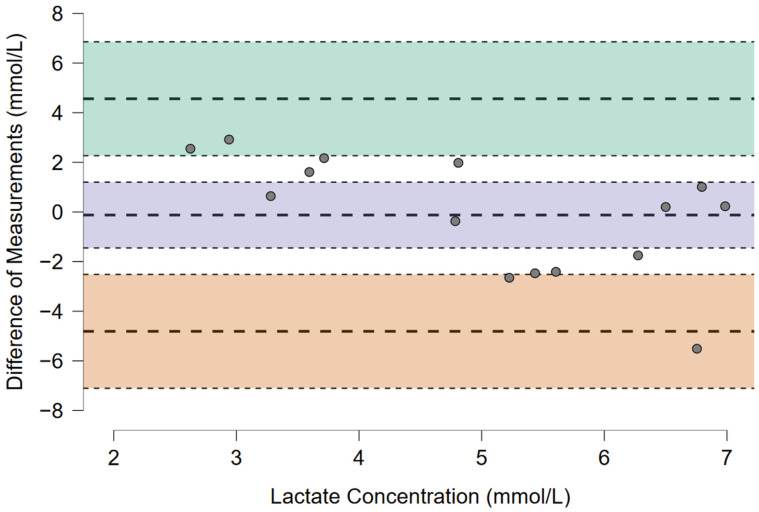
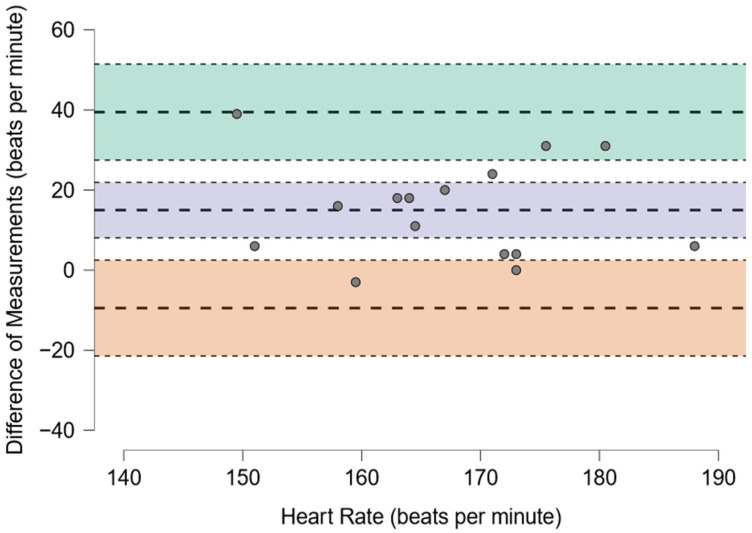
Frequent changes in altitude and oxygen levels limit the practical application of traditionally derived exercise thresholds or training zones based on heart rate (HR) or blood lactate concentration (bLa). We investigated the transferability of a muscle oxygenation (SmO2)-based intensity prescription between different hypoxic conditions to assess the suitability of real-time SmO2 measurements for ski-mountaineering (SKIMO) athletes during submaximal endurance exercise. A group of 15 well-trained male SKIMO athletes performed a graded-intensity run test in normoxia (87 m ASL, FiO2 = 20.8%) to determine the anaerobic threshold (AnT) with the mod-Dmax method, and maximal lactate steady state (MLSS) assessments in acute normobaric hypoxia (3000 m ASL, FiO2 = 14.4%) with the intensity aligned to 90–105% of SmO2 at the normoxia-determined AnT. SmO2, HR, and bLa were monitored during both tests. The number of MLSS assessments without a bLa increase over 1 mmol·L−1 was reported. Paired t-tests with Cohen’s d effect sizes and intraclass correlation coefficient (ICC) were computed to compare the bLa and HR at the AnT in normoxia and MLSS averages in hypoxia, as both corresponded to equivalent SmO2. Out of the 15 MLSS assessments, 11 (73.3%) were performed without a bLa increase over 1 mmol·L−1. Significant differences at equivalent SmO2 in normoxia and hypoxia were found for HR (175 ± 11.7 vs. 160 ± 14.2 bpm, p = 0.005, d = 1.02), but not for bLa (4.9 ± 1.2 vs. 5.1 ± 2.4 mmol·L−1, p = 0.845, d = −0.05). ICC(2,k) for HR and bLa were 0.56 (95% CI: −0.24, 0.85) and 0.40 (95% CI: −0.75, 0.80), respectively. The results indicate a fair transferability of a SmO2-based intensity prescription between different hypoxic conditions in well-trained SKIMO athletes during submaximal endurance exercise. The practical significance of the observations depends on the required accuracy of the exercise intensity determination.
Overview
CoChat Summary
TL;DR
In 15 well-trained male ski-mountaineering athletes, a muscle oxygenation (SmO2)-based intensity prescription showed fair transferability from normoxia to acute normobaric hypoxia during submaximal endurance exercise. At equivalent SmO2, blood lactate did not differ significantly between conditions, but heart rate was significantly lower in hypoxia.
Key findings
- Of 15 maximal lactate steady state (MLSS) assessments in hypoxia, 11 (73.3%) were performed without a blood lactate increase over 1 mmol·L−1.
- At equivalent SmO2, heart rate differed significantly between normoxia and hypoxia: 175 ± 11.7 vs. 160 ± 14.2 bpm (p = 0.005, d = 1.02).
- Blood lactate did not differ significantly at equivalent SmO2: 4.9 ± 1.2 vs. 5.1 ± 2.4 mmol·L−1 (p = 0.845, d = −0.05).
- ICC(2,k) was 0.56 (95% CI: −0.24, 0.85) for HR and 0.40 (95% CI: −0.75, 0.80) for blood lactate.
Methods
- Fifteen male SKIMO athletes (Tier 3 or Tier 4; at least 4 years competitive training) completed two testing procedures across 10 days.
- A graded-intensity treadmill run test in normoxia (87 m ASL, FiO2 = 20.8%) determined the anaerobic threshold (AnT) via the mod-Dmax method for HR, blood lactate, and SmO2; the following week, MLSS assessments were performed in acute normobaric hypoxia (3000 m ASL, FiO2 = 14.4%) with intensity aligned to 90–105% of SmO2 at the normoxia-determined AnT.
- SmO2, HR, and blood lactate were monitored; paired t-tests with Cohen’s d, ICC, and Bland–Altman plots compared blood lactate and HR at AnT in normoxia with MLSS averages in hypoxia at equivalent SmO2.
Limitations
- The paper states that the sample was relatively small and included only male ski-mountaineers; the compared variables were applied, and direct juxtaposition of the same protocols in normoxia and hypoxia was lacking.
- The paper states that findings come from a homogeneous group of well-trained endurance athletes who regularly train and compete in hypoxia, so they should not be extrapolated to different populations such as recreationally active tourists; future research should address different effort characteristics, genders, training statuses, work rates, and modalities.
- Evident from the text: the ICC 95% confidence intervals are wide and cross zero for both HR and blood lactate, indicating imprecise agreement despite the reported fair transferability.
Model-written summary. Check it against the paper before relying on it.
Integrity signals
Registry
Cites
Statistics
Figures
Verification
Claims the paper makes
17 Valid · 0 Not valid · 11 Not checked · 18 Own results and interpretations
Every source the paper cites for this claim was checked and supports it.
In the paper
“Furthermore, at a corresponding workload bLa may be higher in moderate hypoxia, reflecting an increased reliance on anaerobic glycolysis to meet energy demands in the face of limited oxygen availability during submaximal intensity.”
§ Transferability of Exercise Intensity Based on Muscle Oxygenation from Normoxia to Hypoxia in Ski-Mountaineering Athletes—Exploratory Study > 1. Introduction
What the sources say
- Supportedcites [13] Park H.-Y. Kim J.-W. Nam S.-S. Metabolic, Cardiac, and Hemorheological Responses to Submaximal Exercise under Light and Moderate Hypobaric Hypoxia in Healthy Men Biology 2022 11 144 10.3390/biology11010144 35053141 PMC8772706 source
The Discussion reports significantly higher blood lactate in moderate hypoxia than in light hypoxia or normoxia, with a similar mechanical load across conditions. It also links reduced oxygen availability to greater reliance on anaerobic glycolysis. Page numbers are not supplied in our copy. (LLM, conf=0.93)
hedgedstates a possible cause- Asserted: passes — The authors put it forward as true.
- Checkable: passes — It can be checked against evidence.
- Load-bearing: passes — The paper’s conclusions depend on it.
- Based: passes — The paper gives a reason why it holds.
- Supported
The cited sources support only part of this claim — read each source’s verdict below.
In the paper
“However, these indices may exhibit different values during exercise in hypoxia compared to at sea level [8,9,10].”
§ Transferability of Exercise Intensity Based on Muscle Oxygenation from Normoxia to Hypoxia in Ski-Mountaineering Athletes—Exploratory Study > 1. Introduction
What the sources say
- Not checked — no full text of the sourcecites [8] Koistinen P. Takala T. Martikkala V. Leppäluoto J. Aerobic Fitness Influences the Response of Maximal Oxygen Uptake and Lactate Threshold in Acute Hypobaric Hypoxia Int. J. Sports Med. 1995 16 78 81 10.1055/s-2007-972968 7751080 source
- Partly supportedcites [9] Engelen M. Porszasz J. Riley M. Wasserman K. Maehara K. Barstow T.J. Effects of Hypoxic Hypoxia on O2 Uptake and Heart Rate Kinetics during Heavy Exercise J. Appl. Physiol. 1996 81 2500 2508 10.1152/jappl.1996.81.6.2500 9018498 sourceExperimental — accuracy not yet measured
The Discussion reports elevated heart rate and lactate during heavy exercise in hypoxia, and the Incremental Exercise section reports a lower lactate threshold than in room air. The study used cycling and does not report pace values or directly evaluate pace-based training zones. (LLM, conf=0.85)
- Not checked — no full text of the sourcecites [10] Beever A.T. Zhuang A.Y. Murias J.M. Aboodarda S.J. MacInnis M.J. Effects of Acute Simulated Altitude on the Maximal Lactate Steady State in Humans Am. J. Physiol. Regul. Integr. Comp. Physiol. 2024 327 R195 R207 10.1152/ajpregu.00065.2024 38842515 source
hedgedstates a possible cause- Asserted: passes — The authors put it forward as true.
- Checkable: passes — It can be checked against evidence.
- Load-bearing: passes — The paper’s conclusions depend on it.
- Based: passes — The paper gives a reason why it holds.
The cited sources support only part of this claim — read each source’s verdict below.
In the paper
“The recorded values (5.3 ± 1.3 mm) ensured physiologically reliable SmO2 measurements [30].”
§ Transferability of Exercise Intensity Based on Muscle Oxygenation from Normoxia to Hypoxia in Ski-Mountaineering Athletes—Exploratory Study > 2. Materials and Methods > 2.2. Study Design
What the sources say
- Partly supportedcites [30] McManus C.J. Collison J. Cooper C.E. Performance Comparison of the MOXY and PortaMon near-Infrared Spectroscopy Muscle Oximeters at Rest and during Exercise J. Biomed. Opt. 2018 23 015007 10.1117/1.JBO.23.1.015007 29368457 sourceExperimental — accuracy not yet measured
The Results (section 3.2, p. 6) report similar resting TSI values from MOXY and PortaMon at adipose tissue thickness below 7 mm. The paper also describes measurements in male subjects with low adipose tissue thickness as physiologically credible (p. 2). It does not establish that a skinfold value of 5.3 ± 1.3 mm ensures reliable SmO2 measurements; its conclusion is limited to the devices and subject group studied. (LLM, conf=0.85)
plainstates a cause- Asserted: passes — The authors put it forward as true.
- Checkable: passes — It can be checked against evidence.
- Load-bearing: unclear — It is unclear whether the paper’s conclusions depend on it.
- Based: passes — The paper gives a reason why it holds.
- Partly supported
Every source the paper cites for this claim was checked and supports it.
In the paper
“However, the proposed approach should be applied with caution, as high individual variability concerning NIRS-obtained indices has been reported [45].”
§ Transferability of Exercise Intensity Based on Muscle Oxygenation from Normoxia to Hypoxia in Ski-Mountaineering Athletes—Exploratory Study > 4. Discussion > 4.1. Practical Implications for Endurance Exercise
What the sources say
- Supportedcites [45] Yogev A. Arnold J. Clarke D. Guenette J.A. Sporer B.C. Koehle M.S. Comparing the Respiratory Compensation Point with Muscle Oxygen Saturation in Locomotor and Non-Locomotor Muscles Using Wearable NIRS Spectroscopy during Whole-Body Exercise Front. Physiol. 2022 13 818733 10.3389/fphys.2022.818733 35431982 PMC9007235 source
The Discussion (page not provided) explicitly reports large individual variation in NIRS-derived breakpoints and cautions against using the indices interchangeably. It also concludes that wearable NIRS determination of metabolic breakpoints remains premature because of high individual variability. (LLM, conf=0.94)
plain- Asserted: passes — The authors put it forward as true.
- Checkable: passes — It can be checked against evidence.
- Load-bearing: passes — The paper’s conclusions depend on it.
- Based: passes — The paper gives a reason why it holds.
- Supported
A result the paper reports from its own data — it cites no other source for it, so there is none to check. The quote shows it is in the paper.
In the paper
“Statistically significant differences at equivalent SmO2 in normoxia and hypoxia were found for the HR (175 ± 11.7 vs. 160 ± 14.2 bpm, p = 0.005, d = 1.02), but not for the bLa (4.9 ± 1.2 vs. 5.1 ± 2.4 mmol·L−1, p = 0.845, d = −0.05).”
§ Transferability of Exercise Intensity Based on Muscle Oxygenation from Normoxia to Hypoxia in Ski-Mountaineering Athletes—Exploratory Study > 3. Results
plain- Asserted: passes — The authors put it forward as true.
- Checkable: passes — It can be checked against evidence.
- Load-bearing: passes — The paper’s conclusions depend on it.
- Based: passes — The paper gives a reason why it holds.
8 more claims
Create a free account to see all 46 claims and every source verdict.
- Probably not a substantial claim. 28
- It may state two separate claims as one. 18
Self-check
Percentages, sums and reported differences re-computed from the paper’s own numbers.
Each contradiction between two passages listed here was confirmed by an independent check.
Rated minor: it would not touch a result — a value no result rests on, a p-value that stays on the same side of the significance level, or a conflict that is clerical, resolved elsewhere in the paper, or outside its own findings.
In the paper
§ Transferability of Exercise Intensity Based on Muscle Oxygenation from Normoxia to Hypoxia in Ski-Mountaineering Athletes—Exploratory Study > 2. Materials and Methods > 2.1. Participants
“be classified in Tier 3 or Tier 4 as defined by McKay et al. (2002)”
§ Transferability of Exercise Intensity Based on Muscle Oxygenation from Normoxia to Hypoxia in Ski-Mountaineering Athletes—Exploratory Study > References
“26. McKay A.K.A. Stellingwerff T. Smith E.S. Martin D.T. Mujika I. Goosey-Tolfrey V.L. Sheppard J. Burke L.M. Defining Training and Performance Caliber: A Participant Classification Framework Int. J. Sports Physiol. Perform. 2022 17 317 331”
Citations
Cites
Defining Training and Performance Caliber: A Participant Classification Framework
McKay, A. K. A., Stellingwerff, T., Smith, E. S., Martin, D. T., Mujika, I., Goosey-Tolfrey, V. L., Sheppard, J., & Burke, L. M. (2022) · International Journal of Sports Physiology and Performance · doi:10.1123/ijspp.2021-0451 · Cited by 3,093
Justification of the 4-mmol/l lactate threshold
Heck, H., Mader, A., Hess, G., Mücke, S., Müller, R., & Hollmann, W. (1985) · International Journal of Sports Medicine · doi:10.1055/s-2008-1025824 · Cited by 888
Lactate Threshold Concepts: How Valid are They?
Faude, O., Kindermann, W., & Meyer, T. (2009) · Sports Medicine · doi:10.2165/00007256-200939060-00003 · Cited by 882
Measurement of the maximum oxygen uptake V̇ o 2max : V̇ o 2peak is no longer acceptable
Poole, D. C., & Jones, A. M. (2017) · Journal of Applied Physiology · doi:10.1152/japplphysiol.01063.2016 · Cited by 533
Scheeren, T. W. L., Schober, P., & Schwarte, L. A. (2012) · Journal of Clinical Monitoring and Computing · doi:10.1007/s10877-012-9348-y · Cited by 478
An Examination and Critique of Current Methods to Determine Exercise Intensity
Jamnick, N. A., Pettitt, R. W., Granata, C., Pyne, D. B., & Bishop, D. J. (2020) · Sports Medicine · doi:10.1007/s40279-020-01322-8 · Cited by 424
Wehrlin, J. P., & Hallén, J. (2006) · European Journal of Applied Physiology · doi:10.1007/s00421-005-0081-9 · Cited by 284
Oxygen Uptake Kinetics during Exercise
Xu, F., & Rhodes, E. C. (1999) · Sports Medicine · doi:10.2165/00007256-199927050-00003 · Cited by 258
Exercise Exacerbates Acute Mountain Sickness at Simulated High Altitude
Roach, R. C., Maes, D., Sandoval, D., Robergs, R. A., Icenogle, M., Hinghofer-Szalkay, H., Lium, D., & Loeppky, J. A. (2000) · Journal of Applied Physiology · doi:10.1152/jappl.2000.88.2.581 · Cited by 234
Effects of hypoxic hypoxia on O2uptake and heart rate kinetics during heavy exercise
Engelen, M., Porszasz, J., Riley, M., Wasserman, K., Maehara, K., & Barstow, T. J. (1996) · Journal of Applied Physiology · doi:10.1152/jappl.1996.81.6.2500 · Cited by 207
Cited by
Critical power and critical oxygenation: examining transferability between normoxia and hypoxia
Kowalski, T., Rębiś, K., Wilk, A., Szwed, P., Klusiewicz, A., Debevec, T., & Faiss, R. (2025) · European Journal of Applied Physiology · doi:10.1007/s00421-025-05825-y · Cited by 5
“Moreover, equivalent SmO 2 levels corresponded to the same blood lactate concentrations (Rębiś et al. 2024b).”
InfluentialSelf-citationKowalski, T., Rębiś, K., Wilk, A., Granda, D., Białecki, A., Debevec, T., & Faiss, R. (2025) · Experimental Physiology · doi:10.1113/ep092862 · Cited by 1
“Likewise, in our recent study addressing MLSS running efforts in trained ski-mountaineers, SmO 2 plateaus were observed at sea level and the simulated altitude of 3000 m a.s.l. (Rębiś et al., 2024).”
Self-citationMrakic‐Sposta, S., Ranuncoli, C., Verratti, V., Gussoni, M., Mrakic-Sposta, F., Nava, C. R., Marzola, M., Montorsi, M., Cavicchioli, A., & Vezzoli, A. (2026) · Sports · doi:10.3390/sports14090388
“Accordingly, ski mountaineering competitions represent a unique model in which exercise-and hypoxia-induced mechanisms coexist and may interact synergistically [17,18].”
Metadata
- Authors
- Rębiś, K., Kowalski, T., Michalik, K., & Klusiewicz, A.
- Affiliations
- Instytut Sportu (PL)
- Wroclaw University of Health and Sport Sciences (PL)
- Józef Piłsudski University of Physical Education in Warsaw (PL)
- Corresponding author
- Rębiś, Kinga
- Venue
- Sports
- Publisher
- MDPI AG
- Published
- 2024-12-18
- Volume
- 12
- Issue
- 12
- Pages
- 351
- ISSN
- 2075-4663 (ISSN-L)
- PMC
- PMC11678988
- OpenAlex
- W4405529069
- Semantic Scholar
- 3ff651e009607d0329bf4d58ff7b4f55efd55c5d
- Cited by
- 4
- References
- 46
- Citations by year
- 2026: 1 · 2025: 3
- FWCI
- 0.89
- Type
- journal article
- Language
- en
- Open access
- gold
- doi.org
- Licence
- Locations
- Sports (publishedVersion, cc-by)
- PubMed Central (publishedVersion, cc-by)
- PubMed (publishedVersion)
- DOAJ (DOAJ: Directory of Open Access Journals) (submittedVersion)
- Funders
- Ministry of Sport and Tourism, Poland (2023.0252/DSW)
- Topics
- Health Sciences › Medicine › Physiology (medical) › High Altitude and Hypoxia
- Health Sciences › Medicine › Physiology (medical) › Cardiovascular and exercise physiology
- Health Sciences › Medicine › Orthopedics and Sports Medicine › Sports Performance and Training
- Keywords
- muscle oxygenation, exercise intensity prescription, hypoxia, normobaric hypoxia, ski mountaineering, anaerobic threshold, maximal lactate steady state, training zones, heart rate, blood lactate, endurance exercise, altitude training, real-time monitoring
About these checks
Registry, retraction, Cites and statistics results are computed, not judged, with one exception: a printed reference that no index lists is read once by a model before it counts as a citation error. Claims are extracted by a model and kept only when their quote appears verbatim in the text; each cited source is then checked, with a model’s help, for whether it says what the claim relies on. Those verdicts can be wrong — read the claim’s quote and the cited source before relying on one.
The claim verdicts this report counts are experimental: their accuracy is not yet measured.
A language model drew the claims from the paper on 2026-10-13, under version 3 of the claim definition (model deepseek-v4.1-flash, prompt extract-v3).
A second model labelled each claim on 2026-10-13 (model jev-1.13-20260917, definition revision gold-guideline-v0.2).
Cited sources are checked with a language model’s help (gpt-6-sol).
Statistics and arithmetic are recomputed, not judged.
Confidence bands are shown only for fields calibrated on our annotated test set. None is calibrated yet, so no band is shown.
What counts as a claim ›How we measure confidence ›How we check this ›
Are you an author, or do you see a problem with this page? Request a review
Data sources
Bibliographic data: Semantic Scholar, OpenAlex, Crossref.
Contains information from the Semantic Scholar Academic Graph Datasets, made available under the ODC Attribution License (ODC-BY 1.0).
Semantic Scholar’s data is described in: Kinney, R., et al. (2023). The Semantic Scholar Open Data Platform. arXiv:2301.10140.
