

The DOI matches its Crossref record; 3 of the 3 references it cites were found in a registry or an index.
Interpreting Circularity. Circular City Representations Concealing Transition Drivers
Abstract
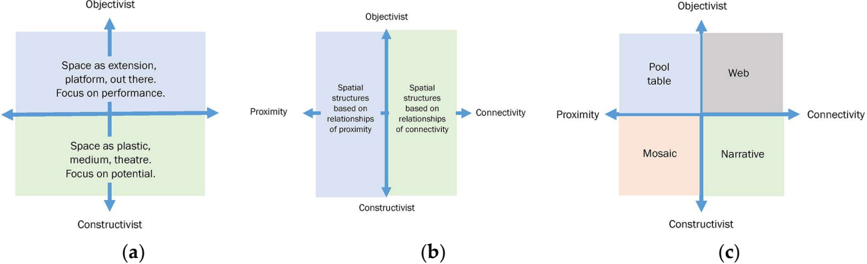
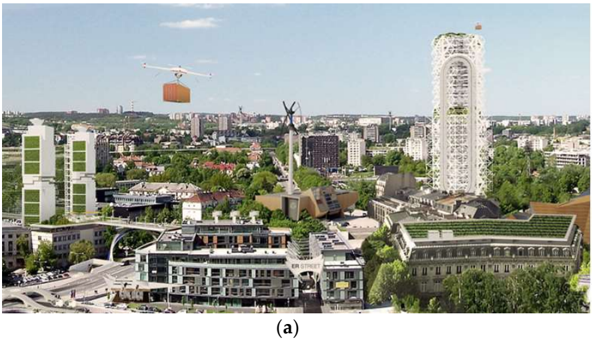
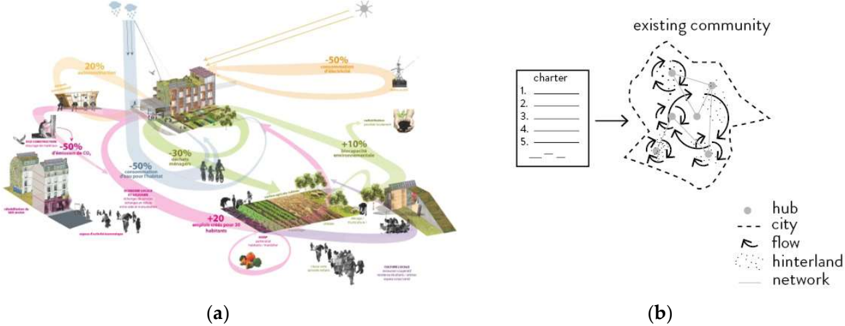
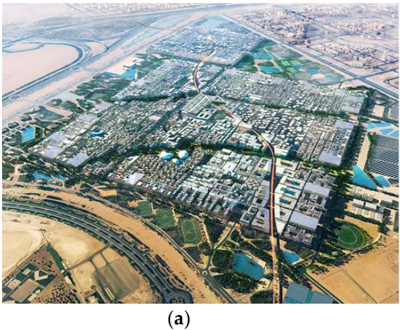
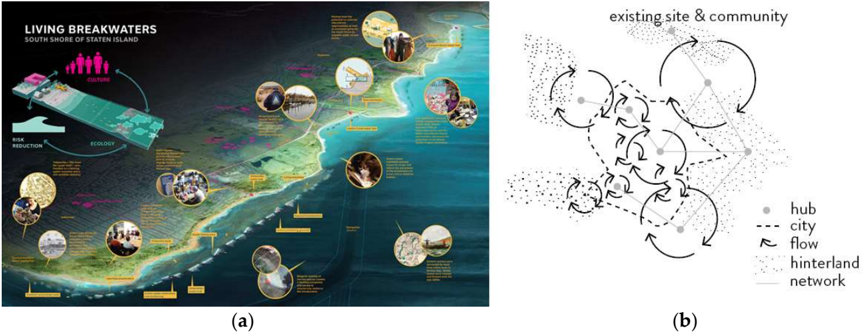
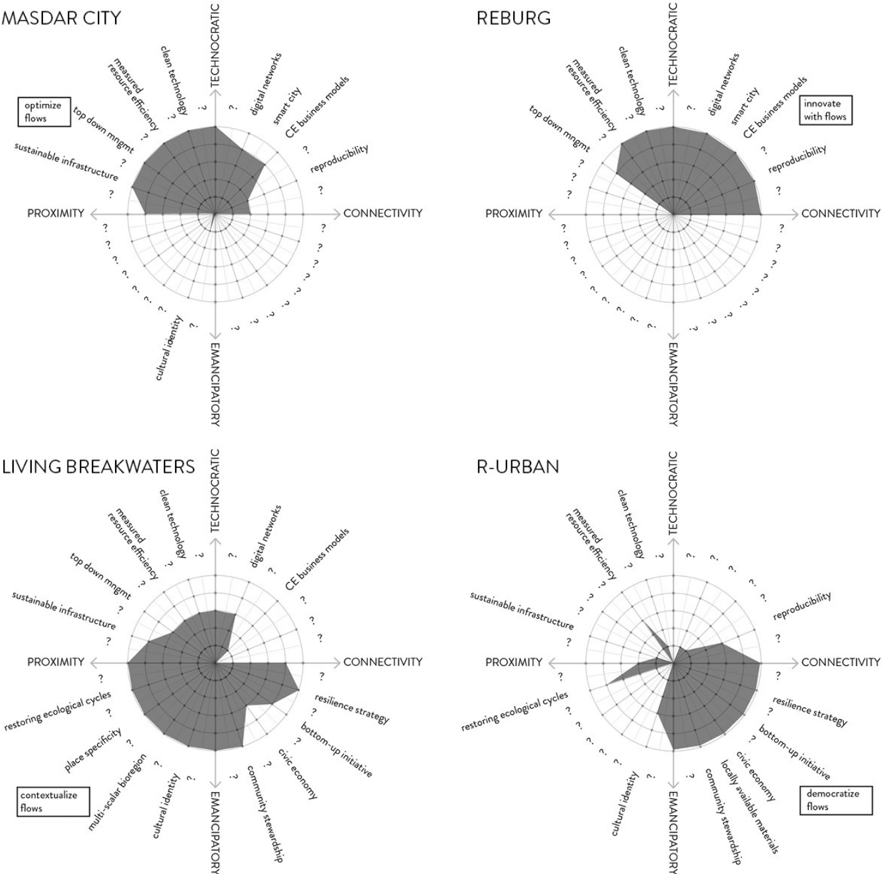
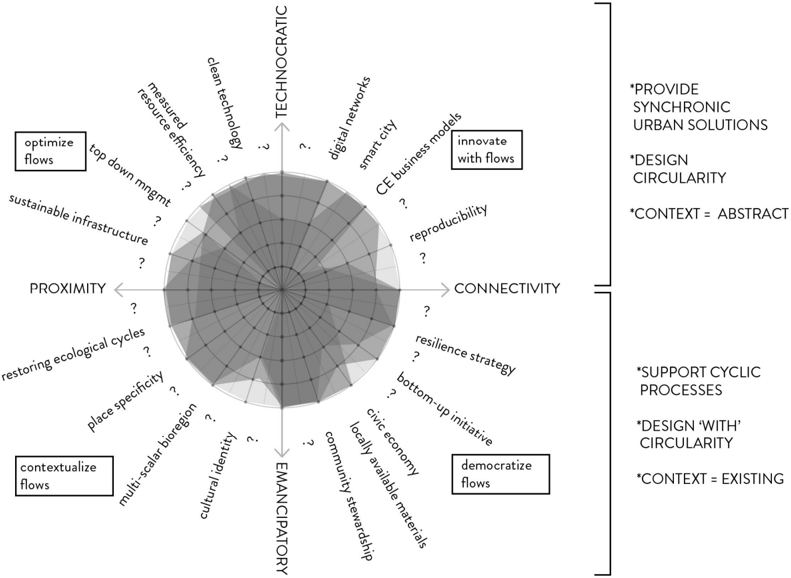
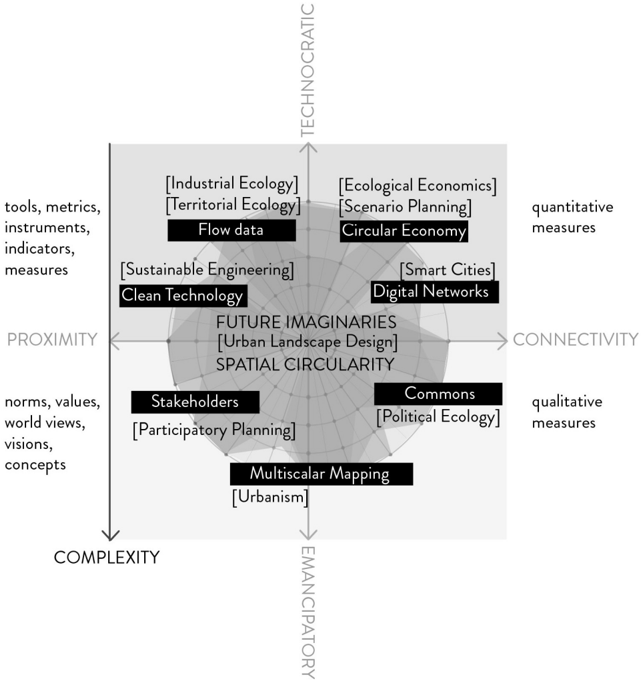
Embodying circular economy transition as a sustainable city concept, circularity in cities is increasingly the subject of policy innovations, urban strategies, and research & development agendas. It seems evident that a circular city should include more than the sum or multiplication of urban circular economies. Nevertheless, prevailing discourses remain till today business focused, and how circular economy creates economic, social, and environmental resilience in cities has yet to be explored. This paper conceptualizes the notion of urban circularity. It introduces an analytical framework sorting existing circularity concepts that are based on design and planning characteristics. Adopting comparative case study research on four contemporary forward-looking spatial representations of ‘circular’ places, this paper articulates their circularity interpretation. Demonstrating how diverging sustainability framings and political positions are embedded within the studied spatial representations, this paper aims to bring clarity in contemporary circular city approaches for policymakers as well as for spatial practitioners. The paper concludes with an agenda for multi-perspective and multi-dimensional circular city design, which is anchored in place specific and multi-scalar transition relations. It suggests urban landscape design as a disciplinary field to act as a pivot in transdisciplinary circularity design and research.
Overview
The claims and statistics of this paper haven’t been checked yet.
Run the check — free, no account needed. It reads the open-access text and checks the sources it cites.
Integrity signals
Registry
Cites
Statistics
Figures
Verification
Claims the paper makes
The claims and statistics of this paper haven’t been checked yet.
Run the check — free, no account needed. It reads the open-access text and checks the sources it cites.
Claims other papers make about this one
Each is checked against this paper’s own text: does it say what the citing paper says it does?
The source backs part of the claim, not all of it — or backs it for a different population, condition or comparison.
In the citing paper
“For these reasons, shifting the focus to urban and regional contexts characterised by structural shrinkage can open the door to alternative perspectives on the transition to CE, particularly those that diverge from the dominant ecomodernist and technocratic paradigms (Calisto Friant et al., 2023; Marin and De Meuler, 2018).”
From Mapping the emergence of the circular economy within the governance paths of shrinking cities and regions: a comparative study of Parkstad Limburg (NL) and Satakunta (FI) (2024) · cites this paper as Marin and De Meuler, 2018
Experimental — accuracy not yet measuredIn the citing paper
“However, this prevailing emphasis on context-specific considerations cannot be regarded as emblematic of a broader drive to contextualise the management of resource flows (Marin and De Meulder, 2018).”
From Mapping the emergence of the circular economy within the governance paths of shrinking cities and regions: a comparative study of Parkstad Limburg (NL) and Satakunta (FI) (2024) · cites this paper as Marin and De Meulder, 2018
Self-check
Percentages, sums and reported differences re-computed from the paper’s own numbers.
The self-check needs the paper’s full text.
Citations
Cites
Dilemmas in a general theory of planning
Rittel, H. W. J., & Webber, M. M. (1973) · Policy Sciences · doi:10.1007/bf01405730 · Cited by 16,338 · cited 1×
“Wicked problems [31] have no clear solutions or goals to reach up until the moment they are achieved.”
BackgroundConceptualizing the circular economy: An analysis of 114 definitions
Kirchherr, J., Reike, D., & Hekkert, M. (2017) · Resources, Conservation and Recycling · doi:10.1016/j.resconrec.2017.09.005 · Cited by 8,550
Ghisellini, P., Cialani, C., & Ulgiati, S. (2016) · Journal of Cleaner Production · doi:10.1016/j.jclepro.2015.09.007 · Cited by 6,536
Research works printed but not linked: 24
- Korhonen, 2018, Circular economy as an essentially contested concept, J. Clean. Prod., 175, 544, 10.1016/j.jclepro.2017.12.111 · DOI · Paper page
- Merli, 2018, How do scholars approach the circular economy? A systematic literature review, J. Clean. Prod., 178, 703, 10.1016/j.jclepro.2017.12.112 · DOI
- Bocken, 2017, Taking the Circularity to the Next Level: A Special Issue on the Circular Economy, J. Ind. Ecol., 21, 476, 10.1111/jiec.12606 · DOI
- Korhonen, 2018, Circular Economy: The Concept and its Limitations, Ecol. Econ., 143, 37, 10.1016/j.ecolecon.2017.06.041 · DOI · Paper page
- Jaca, 2018, Towards a consensus on the circular economy, J. Clean. Prod., 179, 605, 10.1016/j.jclepro.2017.12.224 · DOI
- Pomponi, 2017, Circular economy for the built environment: A research framework, J. Clean. Prod., 143, 710, 10.1016/j.jclepro.2016.12.055 · DOI
- Ellen MacArthur Foundation (2018, January 28). Towards the Circular Economy Vol. 1. Available online: https://www.ellenmacarthurfoundation.org/publications/towards-the-circular-economy-vol-1-an-economic-and-business-rationale-for-an-accelerated-transition.
- Ford, H. (1926). Learning from waste. Today and Tomorrow, Productivity Press.
- Prendeville, 2017, Circular Cities: Mapping Six Cities in Transition, Environ. Innov. Soc. Transit., 26, 171, 10.1016/j.eist.2017.03.002 · DOI · Paper page
- Arnsperger, 2016, Vers une économie authentiquement circulaire, Revue de l’OFCE, 145, 91
- McDowall, 2017, Circular Economy Policies in China and Europe, J. Ind. Ecol., 21, 651, 10.1111/jiec.12597 · DOI
- Bugge, M., Capasso, M., Finne, H., Hansen, T., Klitkou, A., Normann, H., and Steen, M. (February, January 31). Geography of Sustainability Transitions. Proceedings of the 4th Geography of Innovation Conference, Barcelona, Spain. Available online: http://geoinno2018.com/geography-of-sustainability-transitions/.
- Coenen, 2012, Toward a spatial perspective on sustainability transitions, Res. Policy, 41, 968, 10.1016/j.respol.2012.02.014 · DOI
- Yin, R.K. (1991). Case Study Research: Design and Methods, Sage Publications. [2nd ed.].
- Baccini, P., and Brunner, P. (2012). Metabolism of the Anthroposphere: Analysis, Evaluation, Design, The MIT Press. [2nd ed.]. · DOI
- Allen, 2012, Interdisciplinary Perspectives on Urban Metabolism, J. Ind. Ecol., 16, 851, 10.1111/j.1530-9290.2012.00556.x · DOI
- 2007, An Institutional Approach to Sustainability: Historical Interplay of Worldviews, Institutions and Technology, J. Econ. Issues, 41, 1109, 10.1080/00213624.2007.11507089 · DOI
- Barles, 2010, Society, energy and materials: The contribution of urban metabolism studies to sustainable urban development issues, J. Environ. Plan. Manag., 53, 439, 10.1080/09640561003703772 · DOI
- Orff, K. (2016). Toward an Urban Ecology, The Monacelli Press.
- Cugurullo, 2016, Urban eco-modernisation and the policy context of new eco-city projects: Where Masdar City fails and why, Urban Stud., 53, 2417, 10.1177/0042098015588727 · DOI
- Krieger, A., and Saunders, W. (2003). Where and How Does Urban Design Happen?. Urban Design, University of Minnesota Press.
- Urban Design (1956). Condensed Report of an Invitation Conference Sponsored by Faculty and Alumni Association of Graduate School of Design, Harvard University, April 9–10, 1956. Progress. Archit., 8, 97–112.
- McHarg, I. (1992). Design with Nature, xth ed., John Wiley & Sons, Inc.
- Waldheim, C. (2006). Terra fluxus. Landscape Urbanism Reader, Princeton Architectural Press.
Cited by
Sorted by citations
Marjanović, M., & Williams, J. (2024) · Cambridge Journal of Regions, Economy and Society · doi:10.1093/cjres/rsae019 · Cited by 18
Metadata
- Authors
- Marin, J., & De Meulder, B.
- Affiliations
- Department of Architecture, University of Leuven, 3000 Leuven, Belgium
- ORCID
- Marin, Julie
- Venue
- Sustainability
- Publisher
- MDPI AG
- Published
- 2018-04-24
- Volume
- 10
- Issue
- 5
- Pages
- 1310
- ISSN
- 2071-1050
- Cited by
- 120
- References
- 3
- Language
- en
- Funders
- Fonds Wetenschappelijk Onderzoek
About these checks
Registry, retraction, Cites and statistics results are computed, not judged, with one exception: a printed reference that no index lists is read once by a model before it counts as a citation error. Claims are extracted by a model and kept only when their quote appears verbatim in the text; each cited source is then checked, with a model’s help, for whether it says what the claim relies on. Those verdicts can be wrong — read the claim’s quote and the cited source before relying on one.
Statistics and arithmetic are recomputed, not judged.
Confidence bands are shown only for fields calibrated on our annotated test set. None is calibrated yet, so no band is shown.
What counts as a claim ›How we measure confidence ›How we check this ›
Are you an author, or do you see a problem with this page? Request a review
How to cite
Cite CoChat for the checks on this page, and the paper for its own findings.
- This page
- CoChat. (2026). Citation check: Interpreting Circularity. Circular City Representations Concealing Transition Drivers. https://app.cochat.ai/papers/10.3390/su10051310
- The paper
- Marin, J., & De Meulder, B. (2018). Interpreting Circularity. Circular City Representations Concealing Transition Drivers. Sustainability. https://doi.org/10.3390/su10051310
