

Eco-Anxiety and Environmental Education
Open accessThe DOI matches its Crossref record; 228 of the 228 references it cites were found in a registry or an index.
Abstract
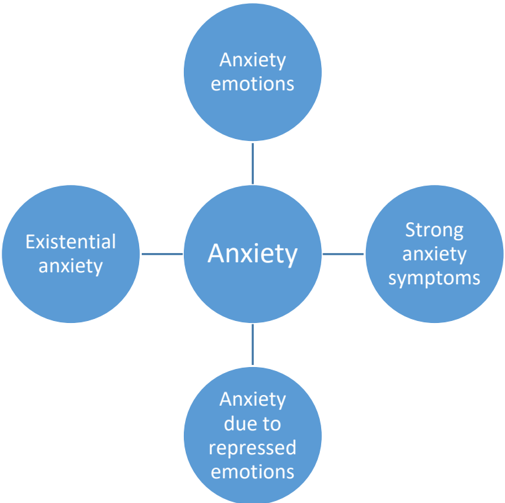
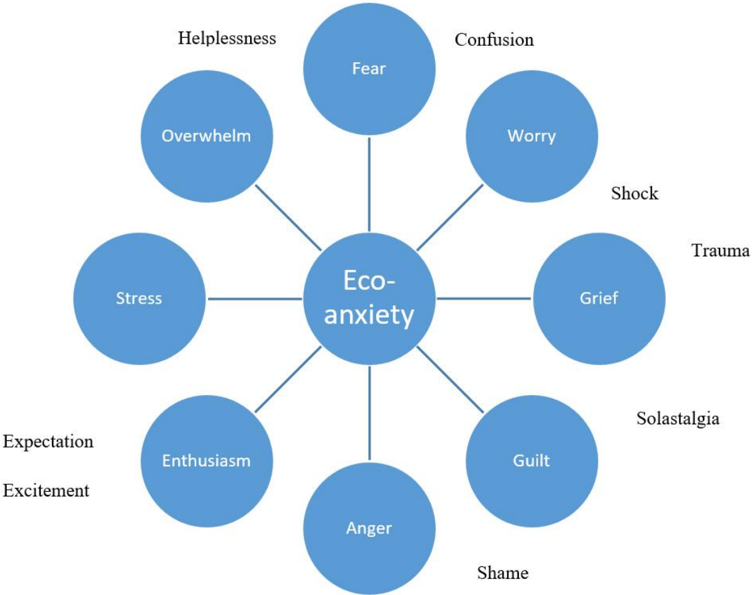
Anxiety and distress about the ecological crisis seems to be a rapidly growing phenomenon. This article analyzes the challenges and possibilities posed by such “eco-anxiety” for environmental education. Variations of eco-anxiety are analyzed, and it is argued that educators should be aware of the multiple forms that the phenomenon has. Eco-anxiety is found to be closely connected with many difficult emotions, such as grief, guilt, anger, and despair. However, anxiety also has an adaptive dimension, which can be called “practical anxiety”. Anxiety is connected with expectation, motivation, and hopes. Previous research about eco-anxiety and ecological emotions in various disciplines is discussed, and related studies from various fields of education are brought together. Based on this extensive literature review, theoretical analyses are made, using a philosophical method. It is argued that environmental educators need organizational and peer support both in relation to their own difficult emotions and in order to develop emotional skills in their work. Educators should first practice self-reflection about eco-anxiety, after which they have many possibilities to help their audiences to develop emotional resilience. Potential practical activities related to eco-anxiety are discussed, drawing from various fields of education. These include validation of eco-anxiety and ecological emotions, providing safe spaces to discuss them, and, if possible, providing embodied and creative activities to more fully deliberate on them.
Overview
The claims and statistics of this paper haven’t been checked yet.
Free: it reads the open-access text and checks the first 5 claims that cite a source we can check. Create a free account to check every claim.
Integrity signals
Registry
Cites
Statistics
Figures
Verification
Claims the paper makes
The claims and statistics of this paper haven’t been checked yet.
Free: it reads the open-access text and checks the first 5 claims that cite a source we can check. Create a free account to check every claim.
Claims other papers make about this one
Each is checked against this paper’s own text: does it say what the citing paper says it does?
The source backs part of the claim, not all of it — or backs it for a different population, condition or comparison.
In the citing paper
“The primary interventions cited in the literature included: (1) psychoanalysis and cognitive interventions; (2) fostering inner resilience; (3) taking action and engaging in community participation; and (4) engaging with the natural environment [6,20,[57][58][59][60].”
From Climate Distress: A Review of Current Psychological Research and Practice (2023) · cites this paper as [20]
Experimental — accuracy not yet measuredThe source backs part of the claim, not all of it — or backs it for a different population, condition or comparison.
In the citing paper
“Many researchers and clinicians highlight the importance of creating a safe space within therapy and validating the emotions of service users to allow a comfortability to engage in exploring climate change-related feelings [12,20,56].”
From Climate Distress: A Review of Current Psychological Research and Practice (2023) · cites this paper as [20]
Experimental — accuracy not yet measuredThe source backs part of the claim, not all of it — or backs it for a different population, condition or comparison.
In the citing paper
“Additionally, it has been found that increasing one's awareness of climate change and in their daily life can have counterproductive effects on wellbeing outcomes and may increase anxiety, concern or distress [20,59].”
From Climate Distress: A Review of Current Psychological Research and Practice (2023) · cites this paper as [20]
Experimental — accuracy not yet measuredThe source backs part of the claim, not all of it — or backs it for a different population, condition or comparison.
In the citing paper
“Competent therapists may help their clients develop their understanding of emotions and channel their emotional energy into functional and meaningful climaterelated action [20,56].”
From Climate Distress: A Review of Current Psychological Research and Practice (2023) · cites this paper as [20]
Experimental — accuracy not yet measuredThe source backs part of the claim, not all of it — or backs it for a different population, condition or comparison.
In the citing paper
“addressing ways the client can participate in meaningful eco-friendly action can mitigate hopelessness and anxiety [59,60], and enhance community participation, self-efficacy, and competence [6,20,57].”
From Climate Distress: A Review of Current Psychological Research and Practice (2023) · cites this paper as [20]
Experimental — accuracy not yet measured
3 more claims about this paper
Create a free account to see every claim other papers make about this one.
Self-check
Percentages, sums and reported differences re-computed from the paper’s own numbers.
The self-check needs the paper’s full text.
Citations
Cites
Kollmuss, A., & Agyeman, J. (2002) · Environmental Education Research · doi:10.1080/13504620220145401 · Cited by 8,866 · cited 1×
“It has been noted for a long time in EE theory that many kinds of emotional experiences may shape people’s environmental identity and their motivation about environmental behavior [191,205], but recently the role of grief, shock, anger, and anxiety has gathered more focused attention [206,207].”
BackgroundStaying with the Trouble: Making Kin in the Chthulucene
HARAWAY, D. J. (2016) · Duke University Press eBooks · doi:10.2307/j.ctv11cw25q · Cited by 2,811
Uncertainty and anticipation in anxiety: an integrated neurobiological and psychological perspective
Grupe, D. W., & Nitschke, J. B. (2013) · Nature Reviews Neuroscience · doi:10.1038/nrn3524 · Cited by 2,007 · cited 2×
“In addition, as anxiety scholars Grupe and Nitschke [48] point out, anxiety and depression may intertwine: “Mixed anxiety and depression is characterized by uncertainty about the occurrence of negative events and feelings of helplessness regarding control over those events” (p. 489).”
BackgroundClimate anxiety: Psychological responses to climate change
Clayton, S. (2020) · Journal of Anxiety Disorders · doi:10.1016/j.janxdis.2020.102263 · Cited by 1,409 · cited 3×
“Then again, the leading author of the aforementioned APA report, experienced climate psychologist Susan Clayton, also herself argues that climate anxiety should not be regarded fundamentally as a problem, but instead an important sign that the individual cares about the state of the planet [7,42].”
BackgroundEcological grief as a mental health response to climate change-related loss
Cunsolo, A., & Ellis, N. R. (2018) · Nature Climate Change · doi:10.1038/s41558-018-0092-2 · Cited by 1,408 · cited 2×
“One of the most important recent fields of research in relation to eco-anxiety has been the emerging interdisciplinary study of ecological grief and climate grief [8,113,114].”
BackgroundThe case for positive emotions in the stress process
Folkman, S. (2008) · Anxiety, Stress, & Coping · doi:10.1080/10615800701740457 · Cited by 1,204 · cited 2×
“Drawing from classic coping theorists Folkman and Lazarus [237,238], Ojala efforts to combine both problem-focused coping and emotion-focused coping into such coping, which emphasizes the need to maintain a sense of meaning in life.”
BackgroundDevelopment and validation of a measure of climate change anxiety
Clayton, S., & Karazsia, B. T. (2020) · Journal of Environmental Psychology · doi:10.1016/j.jenvp.2020.101434 · Cited by 1,196 · cited 3×
“Then again, the leading author of the aforementioned APA report, experienced climate psychologist Susan Clayton, also herself argues that climate anxiety should not be regarded fundamentally as a problem, but instead an important sign that the individual cares about the state of the planet [7,42].”
BackgroundLiving in Denial: Climate Change, Emotions, and Everyday Life
Norgaard, K. M. (2011) · doi:10.7551/mitpress/9780262015448.001.0001 · Cited by 1,131
Hope and climate change: the importance of hope for environmental engagement among young people
Ojala, M. (2012) · Environmental Education Research · doi:10.1080/13504622.2011.637157 · Cited by 988 · cited 14×
“Important pioneers in studying matters close to eco-anxiety in EE theory have been Maria Ojala, Elin Kelsey, John Hicks, and Paul Maiteny.”
BackgroundInfluentialAnxiety and the Ecological Crisis: An Analysis of Eco-Anxiety and Climate Anxiety
Pihkala, P. (2020) · Sustainability · doi:10.3390/su12197836 · Cited by 978 · cited 12×
“This “practical anxiety” [51] is regularly seen in the eco-anxiety experiences of people [3].”
BackgroundMethodInfluentialSelf-citation
Research works printed but not linked: 44
- 2. Taylor, M.; Murray, J. 'Overwhelming and terrifying': The rise of climate anxiety. Guardian 2020, 10, 2020.
- 28. Filho, W.L., Salomone, M., Eds.; Peter Lang: Frankfurt, Germany, 2006; pp. 193-202.
- 31. Boeckel, J.V. Arts-based environmental education and the ecological crisis: Between opening the senses and coping with psychic numbing. In Metamorphoses in Children's Literature and Culture; Drillsma-Milgrom, B., Kirstinä, L., Eds.; Enostone: Turku, Finland, 2009; pp. 145-164.
- 33. Ray, S.J. Coming of age at the end of the world: The affective arc of undergraduate environmental studies curricula. In Affective Ecocriticism: Emotion, Embodiment, Environment; · DOI
- 34. Bladow, K.A., Ladino, J., Eds.; UNP: Lincoln, NE, USA, 2018; pp. 299-319.
- 49. Barlow, D.H. Anxiety and Its Disorders: The Nature and Treatment of Anxiety and Panic, 2nd ed.; Guilford Press: New York, NY, USA, 2004.
- 53. Olatunji, B.O., Ed.; Cambridge University Press: Cambridge, UK, 2019; pp. 1-10.
- 62. Weintrobe, S. The difficult problem of anxiety in thinking about climate change. In Engaging with Climate Change: Psychoanalytic and Interdisciplinary Perspectives; Weintrobe, S., Ed.; Routledge: London, UK; New York, NY, USA, 2013; pp. 33-47. · DOI · Paper page
- 70. Clayton, S.D.; Manning, C. (Eds.) Psychology and Climate Change: Human Perceptions, Impacts, and Responses; Academic Press (Elsevier): London, UK, 2018.
- 75. Roszak, T.; Gomes, M.E.; Kanner, A.D. (Eds.) Ecopsychology: Restoring the Earth, Healing the Mind; Sierra Club: San Francisco, CA, USA, 1995.
- 99. Jamail, D. End of Ice: Bearing Witness and Finding Meaning in the Path of Climate Disruption; The New Press: New York, NY, USA, 2019.
- 103. Doherty, T.J.; Clayton, S. The psychological impacts of global climate change. Am. Psychol. 2011, 66, 265-276. [CrossRef] [PubMed] 112. Pihkala, P. Climate Anxiety: A Report; MIELI Mental Health Finland: Helsinki, Finland, 2019. Available online: https://mieli.fi/en/raportit/climate-anxiety (accessed on 30 November 2020). 113.
- Cunsolo Willox, A., and Landman, K. (2017). Solastalgia and the new mourning. Mourning Nature: Hope at the Heart of Ecological Loss and Grief, McGill-Queen’s University Press. · DOI
- 109. Reser, J.; Swim, J.K. Adapting to and coping with the threat and impacts of climate change. Am. Psychol. 2011, 66, 277-289. [CrossRef] [PubMed] 141. Anonymous. Psychology & Global Climate Change: Addressing a Multi-Faceted Phenomenon and Set of Challenges; Report of the American Psychological Association Task Force on the Interface between Psychology and Global Climate Change; American Psychological Association: Washington, DC, USA, 2009. 142.
- Ahmed, S. (2004). The Cultural Politics of Emotion, Edinburgh University Press.
- 111. Stoknes, P.E. What We Think about When We Try Not to Think about Global Warming: Toward a New Psychology of Climate Action; Chelsea Green Publishing: White River Junction, ON, Canada, 2015. 145. Ahmed, S. The Cultural Politics of Emotion; Edinburgh University Press: Edinburgh, UK, 2004. 146. Lockwood, A. The affective legacy of silent spring. Environ. Humanit. 2012, 1, 123-140. [CrossRef] 147. Jacquet, J. Is Shame Necessary? New Uses for an Old Tool; Pantheon Books: New York, NY, USA, 2015. 148. Orange, D. Climate Change, Psychoanalysis, and Radical Ethics; Routledge: New York, NY, USA, 2017. 149.
- Russell, 2016, Engaging the emotional dimensions of environmental education, Can. J. Environ. Educ., 21, 13
- Winograd, K. (2017). Preparing children for the emotional challenges of climate change: A review of the research. Education in Times of Environmental Crises: Teaching Children to Be Agents of Change, Routledge.
- 121. Kelsey, E.; Kim, S. A Last Goodbye; Owlkids Books: Toronto, ON, Canada, 2020. 187. Ocean Optimism. Available online: www.oceanoptimism.org (accessed on 26 October 2020). 188. Teaching for a Better World (the Home Page of David Hicks). Available online: www.teaching4abetterworld. co.uk (accessed on 26 October 2020). 189. Hicks, D. Educating for Hope in Troubled Times: Climate Change and the Transition to a Post-Carbon Future; Institute of Education Press: London, UK, 2014. 190.
- Hicks, D. (2014). Educating for Hope in Troubled Times: Climate Change and the Transition to a Post-Carbon Future, Institute of Education Press.
- Maiteny, 2005, Education for sustainability and development: Psychoemotional blocks and catalysts, Dev. Educ. J., 11, 1
- 124. DeMello, M. (Ed.) Mourning Animals: Rituals and Practices Surrounding Animal Death; Michigan State University Press: East Lansing, MI, USA, 2016. 205.
- Winograd, K. (2016). Education in Times of Environmental Crises: Teaching Children to Be Agents of Change, Routledge. · DOI
- 127. Shepardson, D.P., Roychoudhury, A., Hirsch, A.S., Eds.; Routledge: New York, NY, USA, 2017; pp. 43-55. 209. Siperstein, S.; Hall, S.; LeMenager, S. (Eds.) Teaching Climate Change in the Humanities; Routledge: London, UK; New York, NY, USA, 2017. 210. Winograd, K. (Ed.) Education in Times of Environmental Crises: Teaching Children to Be Agents of Change; Routledge: New York, NY, USA, 2016. 211. Wilson, R. Will the end of the world be on the final exam? Emotions, climate change, and teaching an introductory environmental studies course. In Teaching Climate Change in the Humanities; · DOI
- 128. Figueroa, R.M. Learning in the anthropocene: Environmental justice and climate pedagogy. In Teaching Climate Change in the Humanities; · DOI
- 129. Siperstein, S., Hall, S., LeMenager, S., Eds.; Routledge: London, UK; New York, NY, USA, 2017; pp. 110-117. 213. Szeman, I. Energy, climate and the classroom. In Teaching Climate Change in the Humanities; · DOI
- Siperstein, S., Hall, S., and LeMenager, S. (2017). Engaging the ’eaarth’: Teaching and making climate change cultures in an art and design context. Teaching Climate Change in the Humanities, Routledge. · DOI
- Nicholsen, S.W. (2002). The Love of Nature and the End of the World: The Unspoken Dimensions of Environmental Concern, MIT Press.
- 135. Nicholsen, S.W. The Love of Nature and the End of the World: The Unspoken Dimensions of Environmental Concern; MIT Press: Cambridge, UK, 2002. 233. Rust, M. Towards an Ecopsychotherapy; Confer Books: London, UK, 2020. 234. Glendinning, C. My Name Is Chellis and I'm in Recovery from Western Civilization; The Original Year of Publication Is 1994; New Catalyst Books: Gabriola Island, BC, Canada, 2007. 235. Randall, R. Six Short Videos on Coping with the Climate Crisis. 2020. Available online: https://rorandall.org/ 2020/08/13/six-short-videos-on-coping-with-the-climate-crisis/ (accessed on 30 November 2020). 236. Climate Change Psychology. Available online: https://www.psychology.org.au/for-the-public/Psychology- topics/Climate-change-psychology (accessed on 26 October 2020). 237. Lazarus, R.S.; Folkman, S. Stress, Appraisal, and Coping; Springer: New York, NY, USA, 1984. 238. Folkman, S. The case for positive emotions in the stress process. Anxiety Stress Coping 2007, 21, 3-14.
- Lazarus, R.S., and Folkman, S. (1984). Stress, Appraisal, and Coping, Springer.
- Frankl, V. (1959). Man’s Search for Meaning, Beacon Press.
- 136. CrossRef] 239. Ojala, M. How do children cope with global climate change? Coping strategies, engagement, and well-being. J. Environ. Psychol. 2012, 32, 225-233. [CrossRef] 240. Frankl, V. Man's Search for Meaning; Beacon Press: Boston, MA, USA, 1959. 241. Frankl, V. The Doctor and the Soul: From Psychotherapy to Logotherapy, 2nd ed.; Souvenir Press: London, UK, 2004. 242.
- Extinction Rebellion (2020). This Is Not a Drill: An Extinction Rebellion Handbook, Penguin Books.
- Bladow, K.A., and Ladino, J. (2018). Affective Ecocriticism: Emotion, Embodiment, Environment, University of Nebraska Press. · DOI
- 139. Bladow, K.A.; Ladino, J. (Eds.) Affective Ecocriticism: Emotion, Embodiment, Environment; University of Nebraska Press: Lincoln, MI, USA, 2018. 250. Emotional Resilience Toolkit for Climate Work, Climate Therapy Alliance, Pacific Northwest Chapter, 1.5th ed.; 2019. Available online: https://static1.squarespace.com/static/5c50ca089f87700f60a1b56d/t/ 5d96d9c4a6b84676db50ffc2/1570167236794/Emotional+Resilience+Toolkit+for+Climate+Work+%28v1.5% 29+04Oct19.pdf (accessed on 30 November 2020). 251. Bamberg, S.; Rees, J.; Schulte, M. Environmental protection through societal change: What psychology knows about collective climate action-And what it needs to find out. In Psychology and Climate Change: Human Perceptions, Impacts, and Responses;
- Clayton, S.D., and Manning, C.M. (2018). Environmental protection through societal change: What psychology knows about collective climate action—And what it needs to find out. Psychology and Climate Change: Human Perceptions, Impacts, and Responses, Academic Press.
- 140. Clayton, S.D., Manning, C.M., Eds.; Academic Press: Amsterdam, The Netherland, 2018. 252. Ruitenberg, C.W. The cruel optimism of transformative environmental education. J. Philos. Educ. 2020, 54, 832-837. [CrossRef] 253. Existential Toolkit for Climate Justice Education. Available online: https://www.existentialtoolkit.com/ (accessed on 28 October 2020). 254. Toivoa ja Toimintaa [Hope and Action]. Available online: www.toivoajatoimintaa.fi (accessed on 28 October 2020). 255.
- Chawla, 2020, Helping students cope with environmental change and take constructive civic action, Green Sch. Catal. Q., 7, 44
- Clayton, S., and Myers, G. (2015). Conservation Psychology Understanding and Promoting Human Care for Nature, John Wiley & Sons Ltd. [2nd ed.].
- 144. Clayton, S.; Myers, G. Conservation Psychology Understanding and Promoting Human Care for Nature, 2nd ed.; John Wiley & Sons Ltd: West Sussex, UK, 2015. 264. Eco-Anxious Stories. Available online: https://www.ecoanxious.ca/ (accessed on 28 October 2020). 265. The Climate Crisis and You: A New Poetry Challenge. Available online: https://ypn.poetrysociety.org.uk/ workshop/the-climate-crisis-and-you-a-new-poetry-challenge/ (accessed on 29 October 2020). 266.
- Lehtonen, 2015, Calls for creative collaboration: How can drama provide creative and collaborative learning methods for climate change education?, Nord. Dramapedagogisk Tidskr., 52, 34
- 151. Laine, A.; Elonheimo, M.; Kettunen, A. (Eds.) Leap into the Outdoor Classroom: Guide to Teaching Outdoors; SYKLI: Helsinki, Finland, 2018. Available online: https://ulkoluokka.fi/wp-content/uploads/2020/02/ulkoluokka- enkku-nettiin.pdf (accessed on 30 November 2020). 286.
- 153. Morgan, A.D. 'Salting': Preserving, seasoning, savouring, purifying and transforming through 'marine adventuring'. J. Adventure Educ. Outdoor Learn. 2019, 19, 140-158. [CrossRef] 288. Gunnlaugson, O.; Sarath, E.W.; Scott, C.; Bai, H. (Eds.) Contemplative Learning and Inquiry across Disciplines; State University of New York Press: Albany, NY, USA, 2014. 289. · DOI
- Willox, A.C., and Landman, K. (2017). Mourning ourselves and/as our relatives: Environment as kinship. Mourning Nature: Hope at the Heart of Ecological Loss & Grief, McGill-Queen’s University Press.
Cited by
Hickman, C., Marks, E., Pihkala, P., Clayton, S., Lewandowski, R. E., Mayall, E. E., Wray, B., Mellor, C., & van Susteren, L. (2021) · The Lancet Planetary Health · doi:10.1016/s2542-5196(21)00278-3 · Cited by 2,324
Self-citationLawrance, E. L., Thompson, R., Newberry Le Vay, J., Page, L., & Jennings, N. (2022) · International Review of Psychiatry · doi:10.1080/09540261.2022.2128725 · Cited by 500
Toward a taxonomy of climate emotions
Pihkala, P. (2022) · Frontiers in Climate · doi:10.3389/fclim.2021.738154 · Cited by 471
Self-citationClimate anxiety: What predicts it and how is it related to climate action?
Whitmarsh, L., Player, L., Jiongco, A., James, M., Williams, M., Marks, E., & Kennedy-Williams, P. (2022) · Journal of Environmental Psychology · doi:10.1016/j.jenvp.2022.101866 · Cited by 401
A social–ecological perspective on climate anxiety in children and adolescents
Crandon, T. J., Scott, J. G., Charlson, F. J., & Thomas, H. J. (2022) · Nature Climate Change · doi:10.1038/s41558-021-01251-y · Cited by 306
Metadata
- Authors
- Pihkala, P.
- Affiliations
- University of Helsinki (FI)
- Corresponding author
- Pihkala, Panu
- ORCID
- Pihkala, Panu
- Venue
- Sustainability
- Publisher
- MDPI AG
- Published
- 2020-12-04
- Volume
- 12
- Issue
- 23
- Pages
- 10149
- ISSN
- 2071-1050 (ISSN-L)
- OpenAlex
- W3108869421
- Cited by
- 475
- References
- 226
- Citations by year
- 2026: 107 · 2025: 112 · 2024: 102 · 2023: 81 · 2022: 50 · 2021: 23
- FWCI
- 45.48
- Type
- journal article
- Language
- en
- Open access
- gold
- doi.org
- Licence
- Locations
- Sustainability (publishedVersion, cc-by)
- Työväentutkimus Vuosikirja (submittedVersion, public-domain)
- RePEc: Research Papers in Economics (submittedVersion)
- DOAJ (DOAJ: Directory of Open Access Journals) (submittedVersion, cc-by-sa)
- Työväentutkimus Vuosikirja (submittedVersion)
- Funders
- Suomen Kulttuurirahasto (October 2018)
- Topics
- Social Sciences › Education › Environmental and sustainability education
- Social Sciences › Sociology and Political Science › Climate Change Communication and Perception
- Physical Sciences › Environmental Science › Nature and Landscape Conservation › Environmental Philosophy and Ethics
- Keywords
- climate anxiety, environmental education, grief, guilt, despair, psychological resilience, self-reflection, peer support, safe spaces, embodied learning, creative activity, environmental crisis
About these checks
Registry, retraction, Cites and statistics results are computed, not judged, with one exception: a printed reference that no index lists is read once by a model before it counts as a citation error. Claims are extracted by a model and kept only when their quote appears verbatim in the text; each cited source is then checked, with a model’s help, for whether it says what the claim relies on. Those verdicts can be wrong — read the claim’s quote and the cited source before relying on one.
Statistics and arithmetic are recomputed, not judged.
Confidence bands are shown only for fields calibrated on our annotated test set. None is calibrated yet, so no band is shown.
What counts as a claim ›How we measure confidence ›How we check this ›
Are you an author, or do you see a problem with this page? Request a review
Data sources
Bibliographic data: Semantic Scholar, OpenAlex, Crossref.
Contains information from the Semantic Scholar Academic Graph Datasets, made available under the ODC Attribution License (ODC-BY 1.0).
Semantic Scholar’s data is described in: Kinney, R., et al. (2023). The Semantic Scholar Open Data Platform. arXiv:2301.10140.
