

The DOI matches its Crossref record.
Bacillus subtilis Synthesized Iron Oxide Nanoparticles (Fe3O4 NPs) Induced Metabolic and Anti-Oxidative Response in Rice (Oryza sativa L.) under Arsenic Stress
Abstract
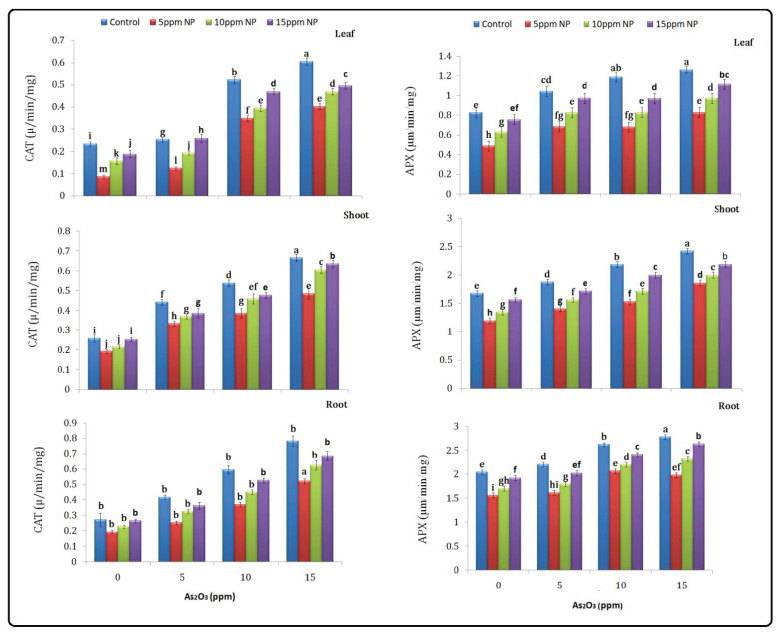
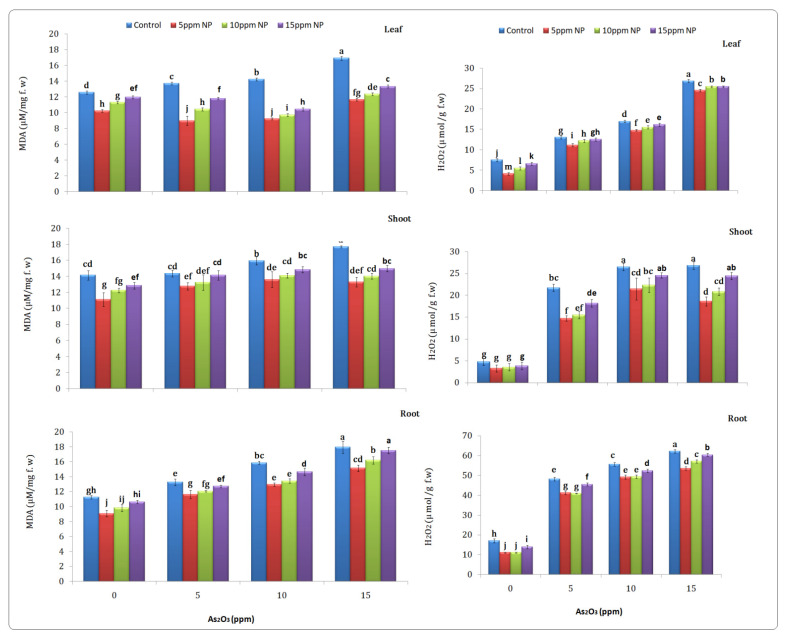
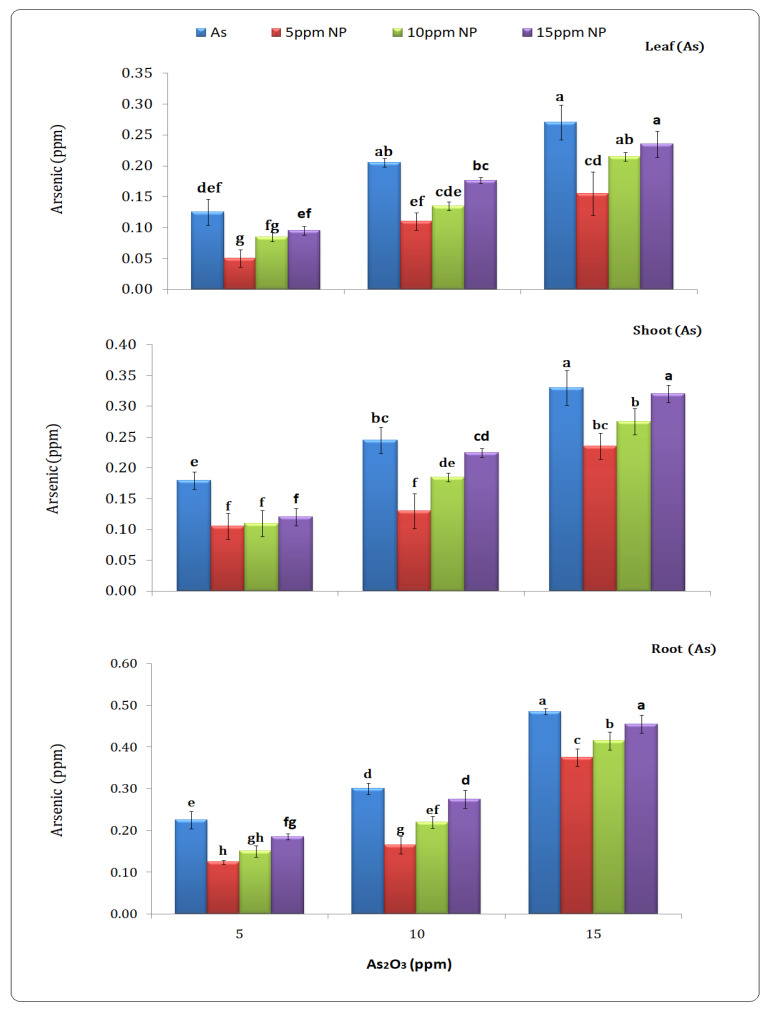
Nanoparticle (NP) application is most effective in decreasing metalloid toxicity. The current study aimed to evaluate the effect of Bacillus subtiles synthesized iron oxide nanoparticles (Fe3O4 NPs) against arsenic (As) stress on rice (Oryza sativa L.) seedlings. Different concentrations of As (5, 10 and 15 ppm) and Bacillus subtilis synthesized Fe3O4 NPs solution (5, 10 and 15 ppm) alone and in combination were applied to rice seedlings. The results showed that As at 15 ppm significantly decreased the growth of rice, which was increased by the low level of As. Results indicated that B. subtilis synthesized Fe3O4 NP-treated plants showed maximum chlorophyll land protein content as compared with arsenic treatment alone. The antioxidant enzymes such as SOD, POD, CAT, MDA and APX and stress modulators (Glycine betain and proline) also showed decreased content in plants as compared with As stress. Subsequently, Bacillus subtilis synthesized Fe3O4 NPs reduced the stress associated parameters due to limited passage of arsenic inside the plant. Furthermore, reduction in H2O2 and MDA content confirmed that the addition of Bacillus subtilis synthesized Fe3O4 NPs under As stress protected rice seedlings against arsenic toxicity, hence enhanced growth was notice and it had beneficial effects on the plant. Results highlighted that Fe3O4 NPs protect rice seedlings against arsenic stress by reducing As accumulation, act as a nano adsorbent and restricting arsenic uptake in rice plants. Hence, our study confirms the significance of Bacillus subtilis synthesized Fe3O4 NPs in alleviating As toxicity in rice plants.
Overview
The claims and statistics of this paper haven’t been checked yet.
Run the check — free, no account needed. It reads the open-access text and checks the sources it cites.
Integrity signals
Registry
Cites
Statistics
Figures
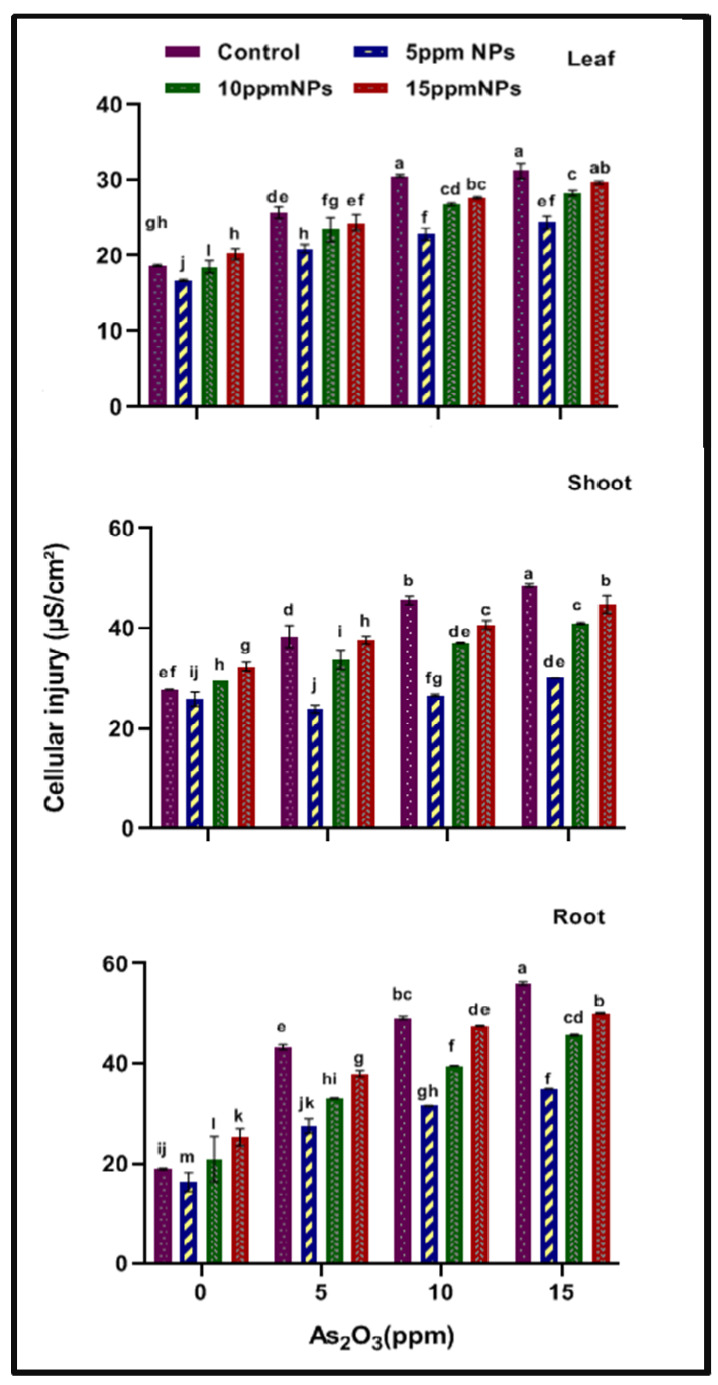
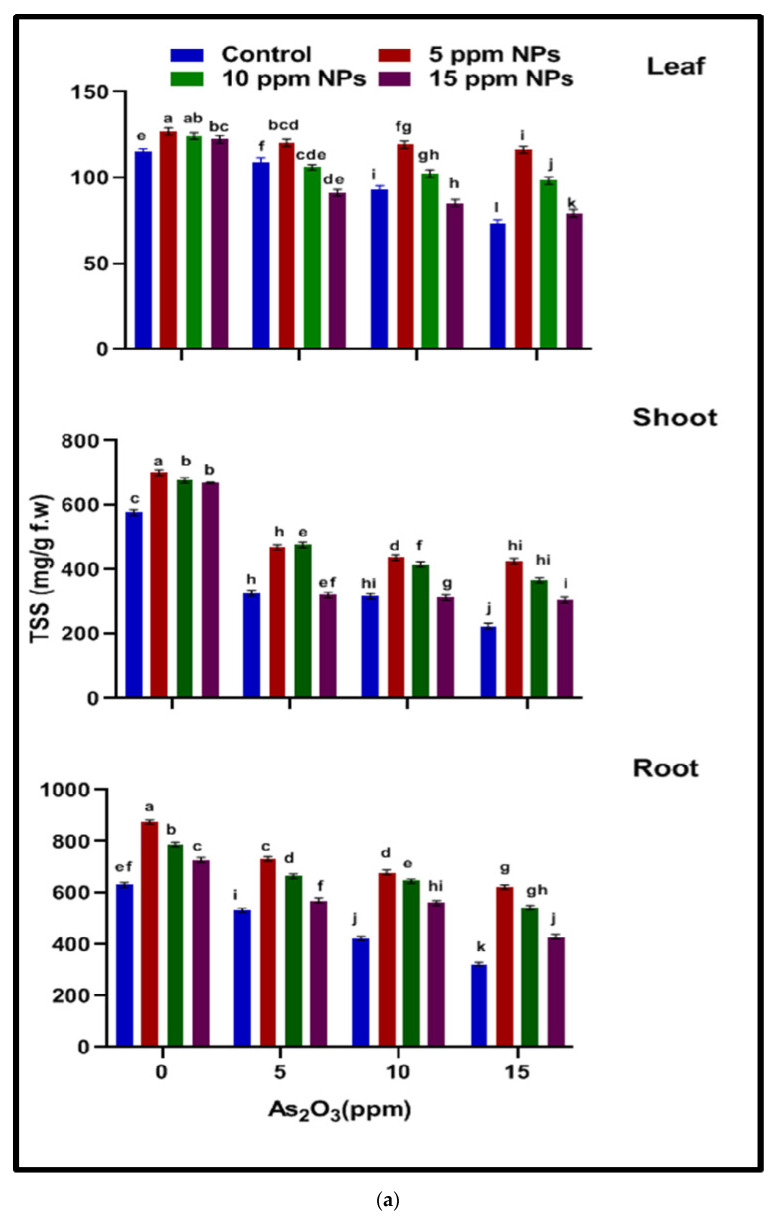
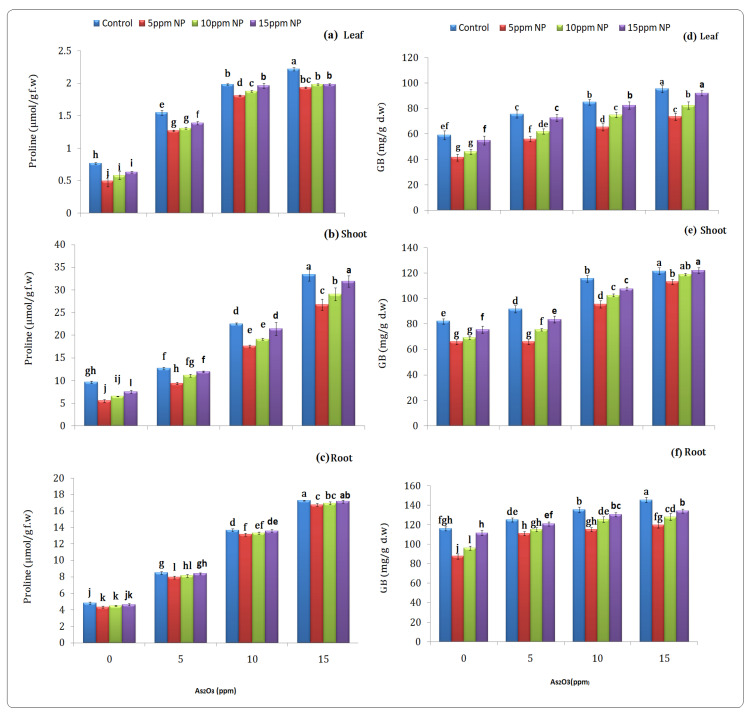
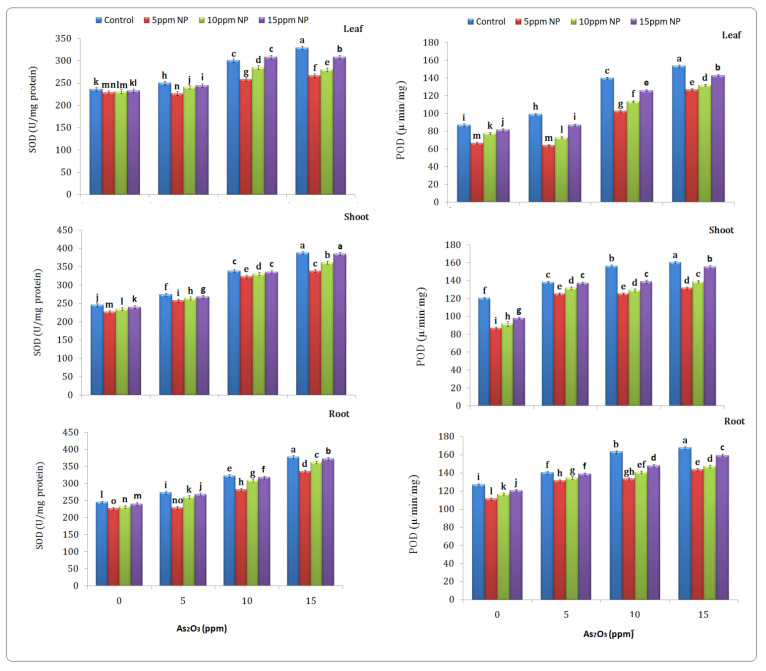
Verification
Claims the paper makes
The claims and statistics of this paper haven’t been checked yet.
Run the check — free, no account needed. It reads the open-access text and checks the sources it cites.
Claims other papers make about this one
Each is checked against this paper’s own text: does it say what the citing paper says it does?
In the citing paper
“For example, the Bacillus subtilis and Aspergillus niger have been used with success to biosynthesized iron-oxide NPs [48, 49].”
From Advances in green-synthesized magnetic nanoparticles for targeted cancer therapy: mechanisms, applications, and future perspectives (2026) · cites this paper as [48]
Self-check
Percentages, sums and reported differences re-computed from the paper’s own numbers.
The self-check needs the paper’s full text.
Citations
Cites
No references could be resolved yet.
Research works printed but not linked: 60
- Gupta, 2021, Arbuscular mycorrhiza improves photosynthesis and restores alteration in sugar metabolism in Triticum aestivum L. grown in arsenic contaminated soil, Front. Plant Sci., 12, 334, 10.3389/fpls.2021.640379 · DOI
- Khan, S., Akhtar, N., Rehman, S.U., Shujah, S., Rha, E.S., and Jamil, M. (2020). Biosynthesized iron oxide nanoparticles (Fe3O4 NPs) mitigate arsenic toxicity in rice seedlings. Toxics, 9. · DOI
- Akhtar, 2017, Pb-induced changes in roots of two cultivated rice cultivars grown in lead-contaminated soil mediated by smoke, Environ. Sci. Pollut. Res., 24, 21298, 10.1007/s11356-017-9777-8 · DOI
- He, 2021, Arsenic accumulation, speciation and bioavailability in rice cultivated in arsenic acid exposed soil, Plant. Soil Environ., 67, 307, 10.17221/10/2021-PSE · DOI
- Zhou, P., Adeel, M., Shakoor, N., Guo, M., Hao, Y., Azeem, I., and Rui, Y. (2021). Application of nanoparticles alleviates heavy metals stress and promotes plant growth: An overview. Nanomaterials, 11. · DOI
- Natasha, S.M., Imran, M., Khalid, S., Murtaza, B., Niazi, N.K., Zhang, Y., and Hussain, I. (2020). Arsenic Environmental Contamination Status in South Asia. Arsen. Drink. Water Food, 13–39. · DOI
- Asgher, 2021, Hydrogen peroxide modulates activity and expression of antioxidant enzymes and protects photosynthetic activity from arsenic damage in rice (Oryza sativa L.), J. Hazar. Mater., 401, 123, 10.1016/j.jhazmat.2020.123365 · DOI
- Moulick, 2021, Arsenic contamination, impact and mitigation strategies in rice agro-environment: An inclusive insight, Sci. Total Environ., 800, 149477, 10.1016/j.scitotenv.2021.149477 · DOI
- Di, 2021, Physiological responses and transcriptome analyses of upland rice following exposure to arsenite and arsenate, Environ. Exp. Bot., 183, 104, 10.1016/j.envexpbot.2020.104366 · DOI
- Dien, 2019, Proline and carbohydrate metabolism in rice varieties (Oryza sativa L.) under various drought and recovery conditions, Plant. Physiol. Rep., 14, 376, 10.1007/s40502-019-00462-y · DOI
- Majumder, 2019, Identification of arsenic-tolerant and arsenic-sensitive rice (Oryza sativa L.) cultivars on the basis of arsenic accumulation assisted stress perception, morpho-biochemical responses, and alteration in genomic template stability, Protoplasma, 256, 193, 10.1007/s00709-018-1290-5 · DOI
- Alkhatib, 2021, Effect of Fe3O4 nanoparticles on seed germination in tobacco, Environ. Sci. Pollut. Res., 2, 53568, 10.1007/s11356-021-14541-x · DOI
- Dawood, 2021, Positive and negative effects of nanoparticles on agricultural crops, Nanotechnol. Environ. Eng., 6, 21, 10.1007/s41204-021-00117-0 · DOI
- Brar, 2021, Impact of metal oxide nanoparticles on cotton (Gossypium hirsutum L.): A physiological perspective, J. Cotton Res., 4, 1
- Manzoor, 2021, Iron oxide nanoparticles ameliorated the cadmium and salinity stresses in wheat plants, facilitating photosynthetic pigments and restricting cadmium uptake, Sci. Total Environ., 769, 145, 10.1016/j.scitotenv.2021.145221 · DOI
- Arshad, 2021, Multi-element uptake and growth responses of Rice (Oryza sativa L.) to TiO2 nanoparticles applied in different textured soils, Ecotoxicol. Environ. Saf., 215, 112, 10.1016/j.ecoenv.2021.112149 · DOI
- Carrouel, F., Viennot, S., Ottolenghi, L., Gaillard, C., and Bourgeois, D. (2020). Nanoparticles as anti-microbial, anti-inflammatory, and remineralizing agents in oral care cosmetics: A review of the current situation. Nanomaterials, 10. · DOI
- Yang, 2020, Effects of iron oxide nanoparticles on the mineral composition and growth of soybean (Glycine max L.) plants, Acta Physiologiae Plantarum, 42, 1, 10.1007/s11738-020-03104-1 · DOI
- Akhtar, N., Khan, S., Rehman, S.U., Rehman, Z.U., Khatoon, A., Rha, E.S., and Jamil, M. (2021). Synergistic effects of zinc oxide nanoparticles and bacteria reduce heavy metals toxicity in rice (Oryza sativa L.) plant. Toxics, 9. · DOI
- Ansar, 2020, Eco friendly silver nanoparticles synthesis by Brassica oleracea and its antibacterial, anticancer and antioxidant properties, Sci. Rep., 10, 18564, 10.1038/s41598-020-74371-8 · DOI
- Tombuloglu, 2020, Uptake, translocation, and physiological effects of hematite (α-Fe2O3) nanoparticles in barley (Hordeum vulgare L.), Environ. Pollut., 266, 115, 10.1016/j.envpol.2020.115391 · DOI
- Singh, V.P., Singh, S., Tripathi, D.K., Prasad, S.M., and Chauhan, D.K. (2021). Nanoparticles and their impacts on seed germination. Plant Responses to Nanomaterials: Recent Interventions, and Physiological and Biochemical Responses, Springer. · DOI
- Dziwulska-Hunek, A., Kachel, M., Gagoś, M., and Szymanek, M. (2021). Influence of silver nanoparticles, laser light and electromagnetic stimulation of seeds on germination rate and photosynthetic parameters in pumpkin (Cucurbitapepo L.) Leaves. Appl. Sci., 11. · DOI
- Akhtar, 2018, Effect of wastewater on physiological and biochemical characteristics of rice (Oryza sativa L.), Interciencia J., 43, 102
- Kumar, M., Etesami, H., and Kumar, V. (2019). Effects of halophilic bacteria on biochemical characteristics of rice cultivars under salinity stress conditions. Saline Soil-Based Agriculture by Halo tolerant Microorganisms, Springer. · DOI
- Akhtar, 2022, Combined Effect of Zinc Oxide Nanoparticles and Bacteria on Osmolytes and Antioxidative Parameters of Rice (Oryza sativa L.) Plant Grown in Heavy Metal-Contaminated Water, Adsorpt. Sci. Technol., 2022, 4148765, 10.1155/2022/4148765 · DOI
- Pagano, 2016, Molecular response of crop plants to engineered nanomaterials, Environ. Sci. Technol., 50, 7198, 10.1021/acs.est.6b01816 · DOI
- Guerra, F.D., Attia, M.F., Whitehead, D.C., and Alexis, F. (2018). Nanotechnology for Environmental Remediation: Materials and Applications. Molecules, 23. · DOI
- Hammad, 2021, Large-scale synthesis of iron oxide/graphene hybrid materials as highly efficient photo-Fenton catalyst for water remediation, Environ. Technol. Innovat., 21, 101
- Ahmad, 2013, Exposure of Brassica juncea (L.) to arsenic species in hydroponic medium: A comparative analysis in accumulation and biochemical and transcriptional alterations, Environ. Sci. Pollut., 10, 8141, 10.1007/s11356-013-1632-y · DOI
- Li, 2021, Physiological impacts of zero valent iron, Fe3O4 and Fe2O3 nanoparticles in rice plants and their potential as Fe fertilizers, Environ. Pollut., 269, 116, 10.1016/j.envpol.2020.116134 · DOI
- Tortella, G., Rubilar, O., Fincheira, P., Pieretti, J.C., Duran, P., Lourenço, I.M., and Seabra, A.B. (2021). Bactericidal and Virucidal Activities of Biogenic Metal-Based Nanoparticles: Advances and Perspectives. Antibiotics, 10. · DOI
- Hamim, H., Miftahudin, M., and Setyaningsih, L. (2018). Cellular and Ultrastructure Alteration of Plant Roots in Response to MetalStress, Intech Open. · DOI
- Li, 2021, ZnO nanoparticle-based seed priming modulates early growth and enhances physio-biochemical and metabolic profiles of fragrant rice against cadmium toxicity, J. Nanobiotechnol., 19, 75, 10.1186/s12951-021-00820-9 · DOI
- Akhtar, 2020, Remediating Effect Of Smoke Solution On Shoot Of Two Rice (Oryza Sativa L.) Cultivars under Lead Contaminated Water, Fresenius Environ. Bull., 29, 10376
- Bradford, 1976, A rapid and sensitive method for the quantitation of microgram quantities of protein utilizing the principle of protein-dye binding, Anal. Biochem., 72, 248, 10.1016/0003-2697(76)90527-3 · DOI · Paper page
- Bates, 1973, Rapid determination of free proline for water-stress studies, Plant Soil, 39, 105, 10.1007/BF00018060 · DOI · Paper page
- Beauchamp, 1971, Superoxide dismutase: Improved assays and an assay applicable to acrylamide gels, Anal. Biochem., 44, 276, 10.1016/0003-2697(71)90370-8 · DOI · Paper page
- Velikova, 2000, Oxidative stress and some antioxidant systems in acid rain-treated bean plants: Protective role of exogenous polyamines, Plant Sci., 151, 59, 10.1016/S0168-9452(99)00197-1 · DOI · Paper page
- Zhao, 2009, Arsenic uptake and metabolism in plants, New Phytol., 181, 777, 10.1111/j.1469-8137.2008.02716.x · DOI · Paper page
- Fiol, 2021, Nanotechnology in plants: Recent advances and challenges, J. Chem. Technol. Biotechnol., 96, 2095, 10.1002/jctb.6741 · DOI
- Dey, 1990, Oligosaccharides, Methods in Plant Biochemistry, Volume 1, 189, 10.1016/B978-0-12-461012-5.50011-2 · DOI
- Hasanuzzaman, M., Bhuyan, M.H.M., Zulfiqar, F., Raza, A., Mohsin, S.M., Mahmud, J.A., and Fotopoulos, V. (2020). Reactive oxygen species and antioxidant defense in plants under abiotic stress: Revisiting the crucial role of a universal defense regulator. Antioxidants, 9. · DOI
- Packer, 1984, Chapter 13—Catalase in vitro, Methods in Enzymology, Volume 105, 121, 10.1016/S0076-6879(84)05016-3 · DOI · Paper page
- Sofo, 2015, Ascorbate peroxidase and catalase activities and their genetic regulation inplants subjected to drought and salinity stresses, Int. J. Mol. Sci., 16, 13561, 10.3390/ijms160613561 · DOI
- Ashraf, 2021, Heavy metals assessment in water, soil, vegetables and their associated health risks via consumption of vegetables, district Kasur, Pakistan, SN Appl. Sci., 3, 552, 10.1007/s42452-021-04547-y · DOI
- Janero, 1990, Malondialdehyde and thiobarbituric acid-reactivity as diagnostic indices of lipid peroxidation and peroxidative tissue injury, Free Radic. Biol. Med., 9, 515, 10.1016/0891-5849(90)90131-2 · DOI
- Nankano, 1980, Hydrogen-peroxide is scavenged by ascorbate-specific peroxidase in spinach chloroplasts, Plant Cell Physiol., 1, 867
- Praveen, 2018, Iron Oxide Nanoparticles as Nano-adsorbents: A Possible Way to Reduce Arsenic Phytotoxicity in Indian Mustard Plant (Brassica juncea L.), J. Plant Growth Regul., 37, 612, 10.1007/s00344-017-9760-0 · DOI
- Shabnam, 2019, Iron(III) oxide nanoparticles alleviate arsenic induceds tunting in Vigna radiata, Ecotoxicol. Environ. Saf., 183, 109496, 10.1016/j.ecoenv.2019.109496 · DOI
- Joardar, 2019, Arsenics tress on photosynthesis and growth in Ipomoeaaquatica, Plant. Sci. Today, 6, 420, 10.14719/pst.2019.6.4.589 · DOI
- Yuan, 2018, New insights in to the cellular responses to iron nanoparticles in Capsicum annuum, Sci. Rep., 8, 3228, 10.1038/s41598-017-18055-w · DOI
- Chowdhury, 2011, Arsenic removal from aqueous solutions by mixed magnetite-maghemite nanoparticles, Environ. Earth Sci., 64, 411, 10.1007/s12665-010-0865-z · DOI
- Mahakham, 2017, Nanopriming technology for enhancing germination and starch metabolism of aged rice seeds using phytosynthesized silver nanoparticles, Sci. Rep., 7, 8263, 10.1038/s41598-017-08669-5 · DOI
- 2021, Nanoparticles as Novel Elicitors to Improve Bioactive Compounds in Plants, Agriculture, 11, 134, 10.3390/agriculture11020134 · DOI
- Torasso, 2021, Enhanc in garsenic adsorption via excellent dispersion of iron oxide nanoparticles in side poly (vinyl alcohol) nanofibers, J. Environ. Chem. Eng., 9, 104, 10.1016/j.jece.2020.104664 · DOI
- Salem, 2021, Green synthesis of metallic nanoparticles and their prospective biotechnological applications: An overview, Biol. Trace Elem. Res., 199, 344, 10.1007/s12011-020-02138-3 · DOI
- Srivastava, 2021, Biological nano factories: Using living forms for metal nanoparticle synthesis, Mini Rev. Med. Chem., 21, 245, 10.2174/1389557520999201116163012 · DOI
- Shahid, 2021, Arsenic- induced oxidative stress in Brassica oleracea: Multi variate and literature data analyses of physiological parameters, applied levels and plant organ type, Environ. Geochem. Health, 44, 1827
- Samanta, 2021, Melatonin application differentially modulates the enzymes associated with antioxidative machinery and ascorbate-glutathione cycle during arsenate exposure in indica rice varieties, Plant Biol., 23, 193, 10.1111/plb.13181 · DOI
Cited by
Sorted by citations
El-khawaga, A. M., Youssef, O. I., El-dydamoni, O. A., Ragab, W. M., & Mohammed, R. A. E. (2026) · European Journal of Medical Research · doi:10.1186/s40001-025-03804-9 · Cited by 14
Metadata
- Authors
- Khan, S., Akhtar, N., Rehman, S. U., Shujah, S., Rha, E. S., & Jamil, M.
- Venue
- Toxics
- Publisher
- MDPI AG
- Published
- 2022-10-18
- Volume
- 10
- Issue
- 10
- Pages
- 618
- ISSN
- 2305-6304
- PMC
- PMC9606974
- Cited by
- 27
- References
- 0
- Language
- en
- Funders
- Higher Education Commission (HEC), Pakistan (4372)
About these checks
Registry, retraction, Cites and statistics results are computed, not judged, with one exception: a printed reference that no index lists is read once by a model before it counts as a citation error. Claims are extracted by a model and kept only when their quote appears verbatim in the text; each cited source is then checked, with a model’s help, for whether it says what the claim relies on. Those verdicts can be wrong — read the claim’s quote and the cited source before relying on one.
Statistics and arithmetic are recomputed, not judged.
Confidence bands are shown only for fields calibrated on our annotated test set. None is calibrated yet, so no band is shown.
What counts as a claim ›How we measure confidence ›How we check this ›
Are you an author, or do you see a problem with this page? Request a review
