

The Role of Snake Venom Proteins in Inducing Inflammation Post-Envenomation: An Overview on Mechanistic Insights and Treatment Strategies
Open accessThe DOI matches its Crossref record; 218 of the 218 references it cites were found in a registry or an index.
Abstract
The intricate combination of organic and inorganic compounds found in snake venom includes proteins, peptides, lipids, carbohydrates, nucleotides, and metal ions. These components work together to immobilise and consume prey through processes such as paralysis and hypotension. Proteins, both enzymatic and non-enzymatic, form the primary components of the venom. Based on the effects they produce, venom can be classified as neurotoxic, hemotoxic, and cytotoxic. Studies have shown that, after envenomation, proteins in snake venom also contribute significantly to the induction of inflammatory responses which can either have systemic or localized consequences. This review delves into the mechanisms by which snake venom proteins trigger inflammatory responses, focusing on key families such as phospholipase A2, metalloproteinases, serine proteases, C-type lectins, cysteine-rich secretory proteins, and L-amino acid oxidase. In addition, the role of venom proteins in activating various inflammatory pathways, including the complement system, inflammasomes, and sterile inflammation are also summarized. The available therapeutic options are examined, with a focus on antivenom therapy and its side effects. In general, this review offers a comprehensive understanding of the inflammatory mechanisms that are triggered by snake venom proteins and the side effects of antivenom treatment. All these emphasize the need for effective strategies to mitigate these detrimental effects.
Overview
The claims and statistics of this paper haven’t been checked yet.
Free: it reads the open-access text and checks the first 5 claims that cite a source we can check. Create a free account to check every claim.
Integrity signals
Registry
Cites
Statistics
Figures
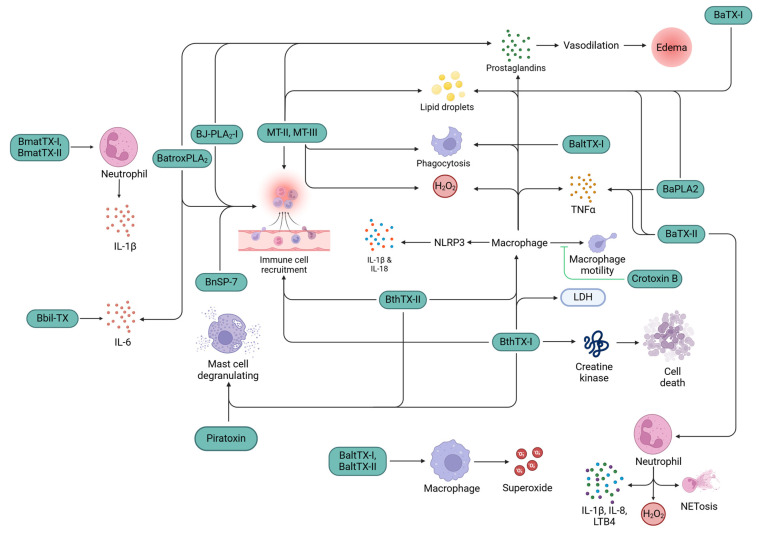
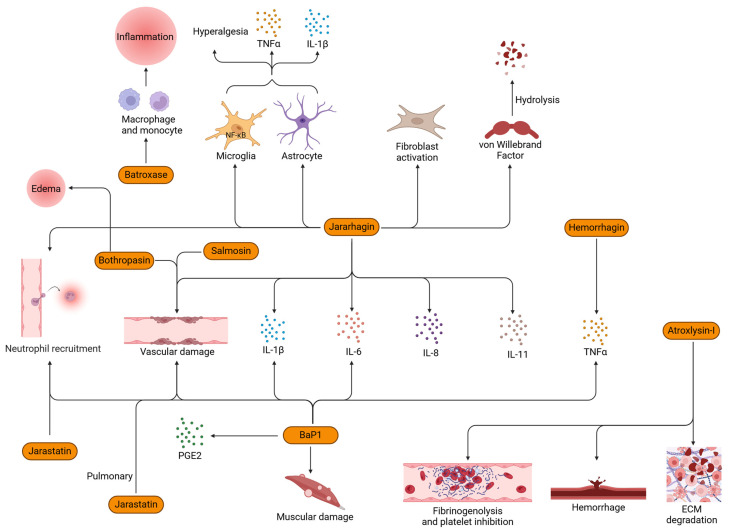
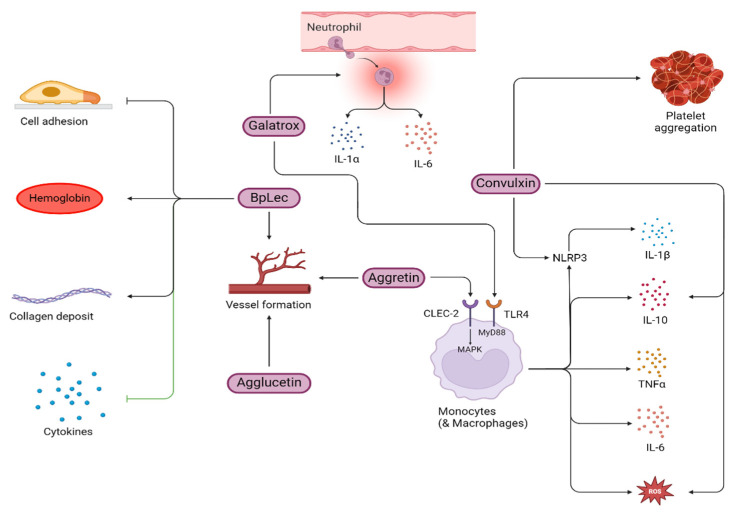
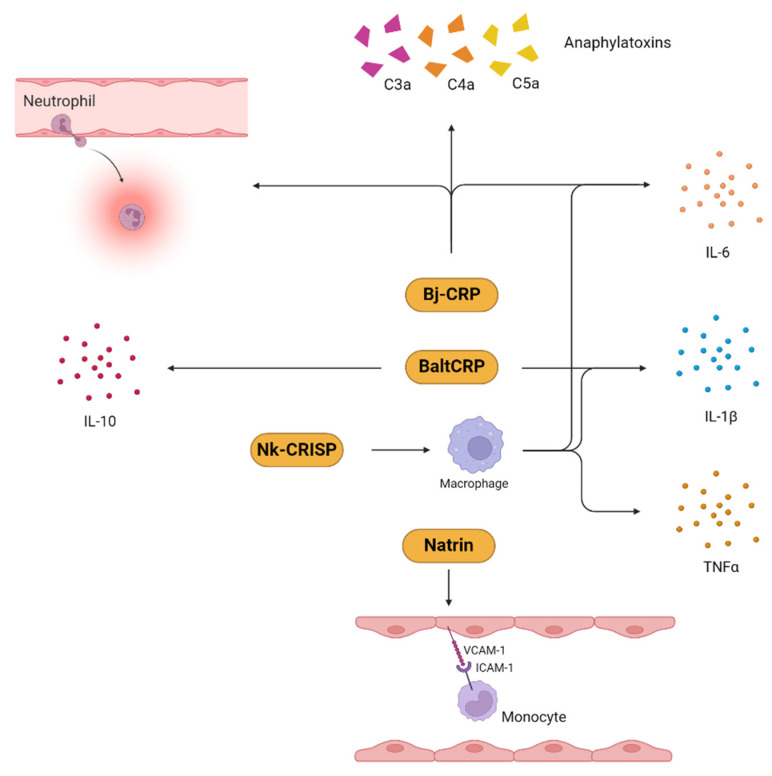
Verification
Claims the paper makes
The claims and statistics of this paper haven’t been checked yet.
Free: it reads the open-access text and checks the first 5 claims that cite a source we can check. Create a free account to check every claim.
Claims other papers make about this one
Each is checked against this paper’s own text: does it say what the citing paper says it does?
The source backs part of the claim, not all of it — or backs it for a different population, condition or comparison.
In the citing paper
“Local tissue damage due to envenomation can be caused by a secondary sterile inflammatory pathway [29] that leads to the breakdown of cellular components, triggering the release of DAMPs into the microenvironment [30].”
From Role of Regulated Cell Death Pathways in Snakebite Envenomation: Mechanisms, Crosstalk, and Therapeutic Opportunities (2026) · cites this paper as [29]
Experimental — accuracy not yet measured
Self-check
Percentages, sums and reported differences re-computed from the paper’s own numbers.
The self-check needs the paper’s full text.
Citations
Cites
Origin and physiological roles of inflammation
Medzhitov, R. (2008) · Nature · doi:10.1038/nature07201 · Cited by 6,618 · cited 1×
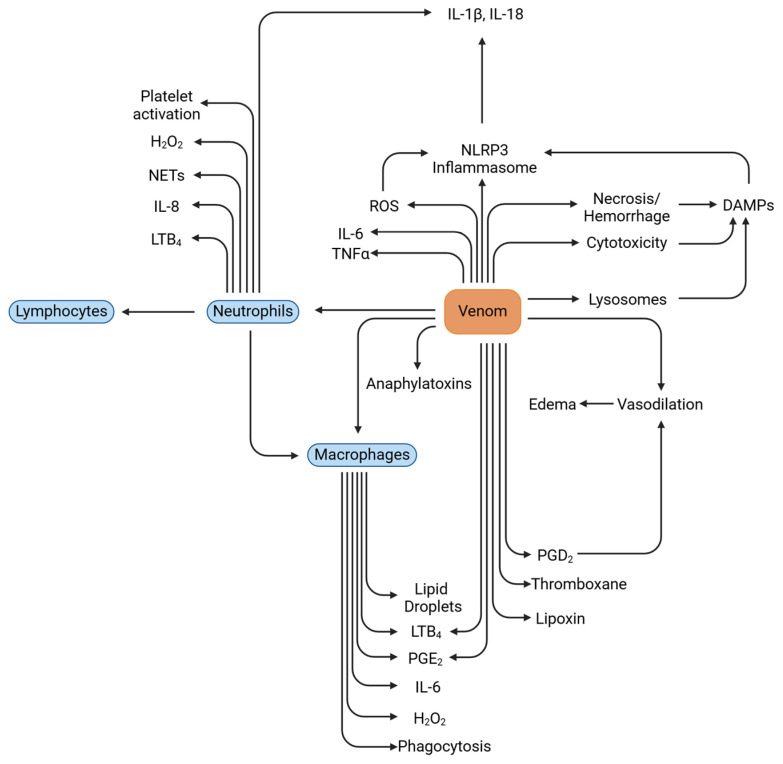
“Other mediators of inflammation are pro-and anti-inflammatory cytokines, chemokines, anaphylatoxins, vasoactive amines (histamines and serotonins), eicosanoids (leukotrienes, thromboxanes, prostaglandins), peptides such as bradykinin, and free radicals of oxygen and nitrogen, to name a few [8].”
Prostaglandins and Inflammation
Ricciotti, E., & FitzGerald, G. A. (2011) · Arteriosclerosis, Thrombosis, and Vascular Biology · doi:10.1161/atvbaha.110.207449 · Cited by 3,803 · cited 1×
“This release of chemicals like leukotrienes and prostaglandins causes vasodilation, increased permeability, muscle contractions, and increased gland function [199].”
Complement: a key system for immune surveillance and homeostasis
Ricklin, D., Hajishengallis, G., Yang, K., & Lambris, J. D. (2010) · Nature Immunology · doi:10.1038/ni.1923 · Cited by 3,654 · cited 1×
“Its initiation can occur via one of three major pathways— classical, alternative, and lectin pathways, that all converge at the formation of C3 conver-tase [154,155].”
Mechanisms and Functions of Inflammasomes
Lamkanfi, M., & Dixit, V. M. (2014) · Cell · doi:10.1016/j.cell.2014.04.007 · Cited by 2,503 · cited 1×
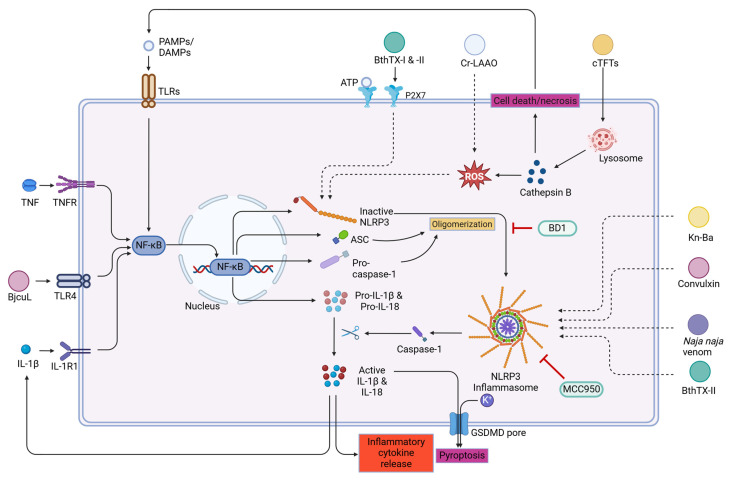
“Since ATP is a DAMP, the involvement of NLRP3 inflammasomes is highly likely, thus resulting in the surge of caspase-1, IL-1 β , and IL-18 levels [34,146,147].”
Marschallinger, J., Iram, T., Zardeneta, M., Lee, S. E., Lehallier, B., Haney, M. S., Pluvinage, J. V., Mathur, V., Hahn, O., Morgens, D. W., et al. (2020) · Nature Neuroscience · doi:10.1038/s41593-019-0566-1 · Cited by 1,586 · cited 1×
“In addition, LD formation is also associated with inflammation [55–57] and their accumulation in immunocompetent cells [58,59].”
MEROPS: the database of proteolytic enzymes, their substrates and inhibitors
Rawlings, N. D., Barrett, A. J., & Bateman, A. (2012) · Nucleic Acids Research · doi:10.1093/nar/gkr987 · Cited by 1,544 · cited 1×
“Most abundantly found in viperid venoms, SVSPs are monomeric glycoproteins weighing about 26–76 kDa and are categorized under the proteolytic class of enzymes [98].”
Cholesterol, inflammation and innate immunity.
Tall, A. R., & Yvan-Charvet, L. (2015) · Nature Reviews Immunology · doi:10.1038/nri3793 · Cited by 1,479 · cited 1×
“In addition, LD formation is also associated with inflammation [55–57] and their accumulation in immunocompetent cells [58,59].”
Marschallinger, J., Iram, T., Zardeneta, M., Lee, S. E., Lehallier, B., Haney, M. S., Pluvinage, J. V., Mathur, V., Hahn, O., Morgens, D. W., et al. (2019) · doi:10.1101/722827 · Cited by 1,414
Neutrophil migration in infection and wound repair: going forward in reverse
de Oliveira, S., Rosowski, E. E., & Huttenlocher, A. (2016) · Nature Reviews Immunology · doi:10.1038/nri.2016.49 · Cited by 1,058 · cited 2×
“Bbil-TX from Bothropsis bilineata stimulated the production of IL-6 in mice models [31], and BmatTX-I and BmatTX-II were shown to upregulate the secretion of IL-1 β in mice neutrophil cell cultures [32].”
Mass Spectrometry Imaging: A Review of Emerging Advancements and Future Insights
Buchberger, A. R., DeLaney, K., Johnson, J., & Li, L. (2018) · Analytical Chemistry · doi:10.1021/acs.analchem.7b04733 · Cited by 1,029 · cited 1×
“A highly promising tool, mass spectrometry imaging (MSI), aims to offer insights into the spatial expression of proteins by integrating protein data acquisition through mass spectrometry with visualization software [214].”
Cited by
Rapon, C., Florentin, J., Radouani, F., Jalta, P., Negrello, F., Guèye, P., Pierre-Louis, O., Nevière, R., & Résière, D. (2025) · Frontiers in Immunology · doi:10.3389/fimmu.2025.1625165 · Cited by 9
Belo, C. A. D., Hyslop, S., & Carlini, C. R. (2025) · Toxins · doi:10.3390/toxins17100497 · Cited by 9
Silva, M. D. S., da Silva, C. P., de Araujo, V. F., de Araujo, E. C. S., Brilhante, L. M. V., Santana, H. M., Cordeiro Eulálio, M. D. M., Soares, A. M., da Silva, J. S., Setúbal, S. D. S., et al. (2026) · Journal of Innate Immunity · doi:10.1159/000551301 · Cited by 3
“Growing evidence indicates that venom components can act as danger signals capable of triggering inflammasome activation, thereby exacerbating inflammatory damage in envenomed tissues [19–21].”
Reghu, N., Rao, S., Raveendran, D., Nair, B. G., & Vanuopadath, M. (2025) · International Journal of Molecular Sciences · doi:10.3390/ijms26199734 · Cited by 4
“These challenges often require the use of large antivenom doses, which increase the possibility of adverse reactions [54].”
Self-citationSnake venom-induced tissue damage as a paradigm of redox imbalance, ferroptosis, and inflammaging
Dahiya, R., Singh, A. P., & Rawat, A. (2026) · Toxicology Letters · doi:10.1016/j.toxlet.2026.111894 · Cited by 3
Chippaux, J., Amta, P., Madec, Y., Ntonè, R., Noël, G., Clauteaux, P., Boum, Y., Nkwescheu, A. S., & Taieb, F. (2025) · PLoS neglected tropical diseases · doi:10.1371/journal.pntd.0013195 · Cited by 4
Torres-Bonilla, K. A., Bayona-Serrano, J. D., Sáenz-Suarez, P. A., Muñoz-Gómez, L. M., Bernal, M. H., & Hyslop, S. (2025) · Toxicon · doi:10.1016/j.toxicon.2025.108407 · Cited by 2
Advances in coagulation peptides: Exploring diverse functions from hemostasis to disease treatment
Ma, W., Wang, Y., Liu, X., Li, W., Zhao, W., Di, J., Cong, H., & Yu, B. (2025) · Colloids and Surfaces B Biointerfaces · doi:10.1016/j.colsurfb.2025.115383 · Cited by 2
Snake Venom: Toxicology and Associated Countermeasures
Youngman, N. J. (2025) · Toxins · doi:10.3390/toxins17050237 · Cited by 2
Okumu, M. O., Nieczaj, A., Hassan, F., Ooko, S., Sande, E., Chinheya, R. M., Njikam, J. M., & Bocian, A. (2025) · Molecules · doi:10.3390/molecules30183827 · Cited by 1
“Snake venoms are made up of biologically active heterogenous proteins and peptides tailored for defence, prey subjugation, and digestion [1,2].”
Tong, D., Chen, L., & Xu, J. (2026) · Frontiers in Pharmacology · doi:10.3389/fphar.2026.1815953 · Cited by 3
“More importantly, in severe poisoning cases, the direct tissue necrosis, hemorrhage, or organ damage (such as acute kidney injury) caused by the venom can initiate chronic inflammation or fibrosis during the repair process, which may impair organ function in the long term (Rao et al., 2024).”
Inflammation induced by snake venoms optimizes envenomation
Helden, D. F. V., Spratt, N. J., Dosen, P. J., McFadden, S. A., Holdsworth, J., Beard, D. J., Coupland, K., Jobling, P., Hardy, T. A., & Laver, D. R. (2026) · The Journal of Physiology · doi:10.1113/jp290494 · Cited by 1
“…inflammation, with consequences such as increased vascular leakage of plasma, causing localized oedema and pain (Brain et al., 1977; Feldberg & Kellaway, 1938; Gutierrez et al., 1980; Landucci et al., 1998; Maia-Marques et al., 2021; Miller & Tu, 1989; Rao et al., 2024; Teixeira et al., 2003).”
Alangode, A., Rajasekhar, A., Sabu, J. J., Krishna, S., Anuja, D., Sreeja, A., Remesh, G., Kaladevi, A., & Nair, B. G. (2026) · International Journal of Molecular Sciences · doi:10.3390/ijms27156830
“Local tissue damage due to envenomation can be caused by a secondary sterile inflammatory pathway [29] that leads to the breakdown of cellular components, triggering the release of DAMPs into the microenvironment [30].”
Self-citationHussain, S. S., & J, D. (2025) · Annales de Toxicologie Analytique · doi:10.1016/j.toxac.2025.09.081 · Cited by 2
Animal toxins and NETosis: A new frontier in innate immune modulation
de Oliveira, I. S., Ferreira, I. G., Jacob, B. D. C. D. S., Ramos, E., Agati, L., Vieira, B., Melo-dos-Santos, G., Magalhães, A., & Pucca, M. B. (2025) · International Immunopharmacology · doi:10.1016/j.intimp.2025.115758 · Cited by 1
Envenimation ophidienne : le retour des antidotes ?
Chippaux, J. (2025) · Bulletin de l Académie Nationale de Médecine · doi:10.1016/j.banm.2025.09.007
Sogujko, Y., Kovalchuk, О., Maievskyi, O., Kostiuk, O., Synelnyk, T., Kryvko, Y., Halenova, T., Raksha, N., Savchuk, O., & Остапченко, Л. І. (2025) · Toxicology International · doi:10.18311/ti/2025/v32i4/48360
Balasubramanian, R., Kala, P. P., Gandhi, S., Sakthidhasan, P., & Raja, S., V (2026) · Pharmacological Research - Natural Products · doi:10.1016/j.prenap.2026.100597
Balchan, N. R., Oo, W. P., Wogan, G. O. U., Keyler, D. E., & Wüster, W. (2026) · PLoS neglected tropical diseases · doi:10.1371/journal.pntd.0014445
“Ideally, the appropriate antivenom used should contain antibodies directed against key toxins present in the venom of the responsible cobra species if the patient is to have a confirmed positive therapeutic response [67,77].”
Bungarus multicinctus venom induces pyroptosis via the NLRP3/Caspase-1/GSDMD pathway in BV2 cells
Luo, M., Wang, Z.-R., Tan, X.-L., Yang, X., & Ning, Z. (2026) · Cell Biology and Toxicology · doi:10.1007/s10565-026-10240-w
“Once liberated, these signaling molecules may gain entry into the bloodstream and subsequently convert a focal inflammatory challenge into a widespread systemic reaction (Rao et al. 2024).”
Torrejón, D., Regalado, A., Torres, A. D. P., Otárola, V., Lazo, F., Rodríguez, E., Colona-Vallejos, E. H., Alzamora‐Gonzales, L., Gutierrez, J. O. C., Zarria-Romero, J. Y., et al. (2026) · Toxins · doi:10.3390/toxins18080338
“This selective cytokine profile is consistent with inflammatory responses previously reported for Lys49-PLA 2 homologues and other snake venom toxins [32–34].”
Bordon, K. D. C. F., Zoccal, K. F., Otuka, S. N., Reis, M. B., de Lima, C. A., Cipriano, U. G., Bonato, V. L. D., & Arantes, E. C. (2026) · Frontiers in Pharmacology · doi:10.3389/fphar.2026.1869630
Hussain, S. S., & Kingsley, D. J. (2026) · Frontiers in Molecular Biosciences · doi:10.3389/fmolb.2026.1906533
“…Kini and Koh, 2016), (F2, F10) (Kini, 2005; Teixeira et al., 2019), (SERPINE1, PLAT) (Frabitore et al., 2022; Yamashita et al., 2014), (TNF, IL6) (Liu et al., 2026; Rao et al., 2024), (AKT1, MAPK1) (Bhattacharya et al., 2013; Bickler, 2020), and PTGS2 (Olivo et al., 2007; Teixeira et al., 2025).”
Kiruthika, S., Sanju, A. V., Hussain, S. B., Nair, B. G., & Vanuopadath, M. (2026) · Life · doi:10.3390/life16101615
“As a procoagulant drug, it is utilized in the treatment of stroke, pulmonary embolism, deep vein thrombosis, myocardial infarction, and perioperative bleeding [17], [95].”
Self-citationReghu, N., Nair, B. G., & Vanuopadath, M. (2026) · Life · doi:10.3390/life16101636
“However, individual toxin isoforms and less-abundant toxins may also have useful immunomodulatory effects [25].”
Self-citationSnake venoms and bioactive molecules: A natural arsenal for tomorrow's medicine
Chakir, S., Hammani, N., Ibenmoussa, S., Galan, J. A., Aassila, H., Stöcklin, R., & Oukkache, N. (2026) · Elsevier eBooks · doi:10.1016/b978-0-443-44394-7.00007-x
Neuroprotective peptides in snake venom: A ray of hope for neurodegenerative diseases
Khan, S. A., Tabassum, A., & Parvez, S. (2026) · Elsevier eBooks · doi:10.1016/b978-0-443-44394-7.00011-1
Venom biologics: Treating autoimmune and inflammatory disorders
Ibrahim, J., Panicker, L. K., Sudhakaran, P. R., Sugathan, S., Antony, H., & Oommen, O. V. (2026) · Elsevier eBooks · doi:10.1016/b978-0-443-44394-7.00002-0
Healing with venom: Dermatological applications of snake-derived molecules
Cordeiro, F. A., Ferreira, I. G., Zoccal, K. F., Bordon, K. D. C. F., & Arantes, E. C. (2026) · Elsevier eBooks · doi:10.1016/b978-0-443-44394-7.00001-9
Boeno, C. N., Paloschi, M. V., Silva, M. D. S., & Zuliani, J. P. (2026) · Pharmacological Reports · doi:10.1007/s43440-026-00913-y · Cited by 1
Metadata
- Authors
- Rao, S., Reghu, N., Nair, B. G., & Vanuopadath, M.
- Affiliations
- University College Dublin (IE)
- Amrita Vishwa Vidyapeetham (IN)
- Corresponding author
- Nair, Bipin Gopalakrishnan
- Vanuopadath, Muralidharan
- Venue
- Toxins
- Publisher
- MDPI AG
- Published
- 2024-12-02
- Volume
- 16
- Issue
- 12
- Pages
- 519
- ISSN
- 2072-6651 (ISSN-L)
- PMC
- PMC11728808
- OpenAlex
- W4404970607
- Cited by
- 30
- References
- 217
- Citations by year
- 2026: 18 · 2025: 12
- FWCI
- 2.06
- Type
- journal article
- Language
- en
- Open access
- gold
- doi.org
- Licence
- Locations
- Toxins (publishedVersion, cc-by)
- PubMed Central (publishedVersion, cc-by)
- PubMed (publishedVersion)
- DOAJ (DOAJ: Directory of Open Access Journals) (submittedVersion)
- Funders
- Young Scientist Fellowship program provided by the Department of Health Research (No.R.12014/31/2022-HR, ASG2022195)
- Ministry of Health and Family Welfare (MoFHW), Indian Council of Medical Research, Government of India (No.R.12014/31/2022-HR, ASG2022195)
- Amrita Vishwa Vidyapeetham (No.R.12014/31/2022-HR, ASG2022195)
- Topics
- Life Sciences › Pharmacology, Toxicology and Pharmaceutics › Toxicology › Venomous Animal Envenomation and Studies
- Health Sciences › Medicine › Pharmacology (medical) › Healthcare and Venom Research
- Life Sciences › Agricultural and Biological Sciences › Ecology, Evolution, Behavior and Systematics › Amphibian and Reptile Biology
- Keywords
- snake venom proteins, envenomation, inflammation, phospholipase A2, metalloproteinases, serine protease, C-type lectin, cysteine-rich secretory proteins, L-amino acid oxidase, complement system, inflammasome, sterile inflammation, antivenom therapy
- MeSH terms
- Animals, Antivenins, Humans, Inflammation, Snake Bites, Snake Venoms
About these checks
Registry, retraction, Cites and statistics results are computed, not judged, with one exception: a printed reference that no index lists is read once by a model before it counts as a citation error. Claims are extracted by a model and kept only when their quote appears verbatim in the text; each cited source is then checked, with a model’s help, for whether it says what the claim relies on. Those verdicts can be wrong — read the claim’s quote and the cited source before relying on one.
Statistics and arithmetic are recomputed, not judged.
Confidence bands are shown only for fields calibrated on our annotated test set. None is calibrated yet, so no band is shown.
What counts as a claim ›How we measure confidence ›How we check this ›
Are you an author, or do you see a problem with this page? Request a review
Data sources
Bibliographic data: Semantic Scholar, OpenAlex, Crossref.
Contains information from the Semantic Scholar Academic Graph Datasets, made available under the ODC Attribution License (ODC-BY 1.0).
Semantic Scholar’s data is described in: Kinney, R., et al. (2023). The Semantic Scholar Open Data Platform. arXiv:2301.10140.
