

The Role of Snake Venom Proteins in Inducing Inflammation Post-Envenomation: An Overview on Mechanistic Insights and Treatment Strategies
Open accessThe DOI matches its Crossref record; 218 of the 218 references it cites were found in a registry or an index.
Abstract
The intricate combination of organic and inorganic compounds found in snake venom includes proteins, peptides, lipids, carbohydrates, nucleotides, and metal ions. These components work together to immobilise and consume prey through processes such as paralysis and hypotension. Proteins, both enzymatic and non-enzymatic, form the primary components of the venom. Based on the effects they produce, venom can be classified as neurotoxic, hemotoxic, and cytotoxic. Studies have shown that, after envenomation, proteins in snake venom also contribute significantly to the induction of inflammatory responses which can either have systemic or localized consequences. This review delves into the mechanisms by which snake venom proteins trigger inflammatory responses, focusing on key families such as phospholipase A2, metalloproteinases, serine proteases, C-type lectins, cysteine-rich secretory proteins, and L-amino acid oxidase. In addition, the role of venom proteins in activating various inflammatory pathways, including the complement system, inflammasomes, and sterile inflammation are also summarized. The available therapeutic options are examined, with a focus on antivenom therapy and its side effects. In general, this review offers a comprehensive understanding of the inflammatory mechanisms that are triggered by snake venom proteins and the side effects of antivenom treatment. All these emphasize the need for effective strategies to mitigate these detrimental effects.
Overview
The claims and statistics of this paper haven’t been checked yet.
Free: it reads the open-access text and checks the first 5 claims that cite a source we can check. Create a free account to check every claim.
Integrity signals
Registry
Cites
Statistics
Figures
Verification
Claims the paper makes
The claims and statistics of this paper haven’t been checked yet.
Free: it reads the open-access text and checks the first 5 claims that cite a source we can check. Create a free account to check every claim.
Claims other papers make about this one
Each is checked against this paper’s own text: does it say what the citing paper says it does?
The source backs part of the claim, not all of it — or backs it for a different population, condition or comparison.
In the citing paper
“Local tissue damage due to envenomation can be caused by a secondary sterile inflammatory pathway [29] that leads to the breakdown of cellular components, triggering the release of DAMPs into the microenvironment [30].”
From Role of Regulated Cell Death Pathways in Snakebite Envenomation: Mechanisms, Crosstalk, and Therapeutic Opportunities (2026) · cites this paper as [29]
Experimental — accuracy not yet measured
Self-check
Percentages, sums and reported differences re-computed from the paper’s own numbers.
The self-check needs the paper’s full text.
Citations
Cites
Items 201–218 of 218
Wang, W. (2008) · Biochemical and Biophysical Research Communications · doi:10.1016/j.bbrc.2008.02.091 · Cited by 15 · cited 1×
“In addition to aggretin, agglucetin, isolated from Agkistrodon acutus , also possessed pro-angiogenic activities through the FAK, PI3K, and Akt pathways [108].”
Karabuva, S., Brizić, I., Latinović, Z., Leonardi, A., Križaj, I., & Lukšić, B. (2016) · Toxicon · doi:10.1016/j.toxicon.2016.09.001 · Cited by 15 · cited 1×
“Reports indicate that snake venom PLA 2 s (svPLA 2 ) induce several pharmacological effects such as hemorrhage, edema, myotoxicity, neurotoxicity, cardiotoxicity, and tissue damage [10–13].”
Theakston, R. D. G., & Smith, D. C. (1997) · BioDrugs · doi:10.2165/00063030-199707050-00004 · Cited by 13 · cited 2×
“Antivenoms made of Fab or F (ab”)2 with Fc fragments eliminated were created to lessen the adverse consequences [191].”
Salazar, E., Cirilo, A., Reyes, A., Barrientos, M., Galan, J. A., Sanchez, E. E., & Suntravat, M. (2023) · Toxicon X · doi:10.1016/j.toxcx.2023.100180 · Cited by 10 · cited 1×
“The ion channel blocking, myotoxic, and proinflammatory activities of snake venom CRISPs have been explored in detail by several groups [112,115–117].”
Ghezellou, P., Heiles, S., Kadesch, P., Ghassempour, A., & Spengler, B. (2021) · Journal of the American Society for Mass Spectrometry · doi:10.1021/jasms.1c00042 · Cited by 10 · cited 1×
“MSI has been previously employed to study the spatial differentiation of snake venom glands [215,216].”
Coppola, C. M., & Hogan, D. E. (1994) · Journal of Osteopathic Medicine · doi:10.7556/jaoa.1994.94.6.494 · Cited by 10
Lin, X., Qi, J.-Z., Chen, M., Qiu, B., Huang, Z., Qiu, P., Chen, J., & Guang-mei, Y. (2012) · Biochemical Pharmacology · doi:10.1016/j.bcp.2012.11.012 · Cited by 9 · cited 1×
“Similarly, rFII, a recombinant fibrinogenase enzyme, sourced from Agkistrodon acutus cleaved C5, C6, and C9 components [165,166].”
Papain hydrolysis of goat IgG immunoglobulins: A means of subclass characterization
Micusan, V. V., & Borduas, A. G. (1975) · Immunochemistry · doi:10.1016/0019-2791(75)90187-1 · Cited by 9
Kini, R. M., Zhang, C. Y., & Tan, B. K. H. (1997) · Toxicon · doi:10.1016/s0041-0101(96)00151-1 · Cited by 9 · cited 1×
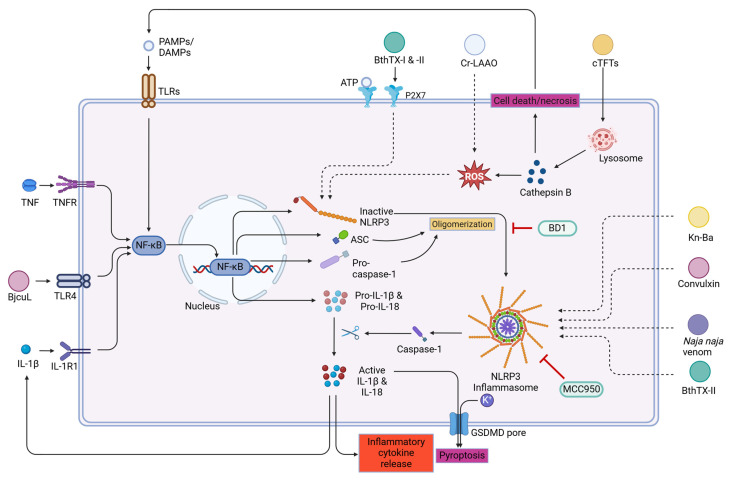
“…mechanisms resulting in the production of proinflammatory cytokines IL-1 β and IL-18 and inducing pyroptosis [141]. sPLA 2 s of Viperidae venoms share structural and functional similarities with secretory PLA 2 s and are one of the most potent activators of inflammasomes [142,143].”
Alomran, N., Blundell, P. A., Alsolaiss, J., Crittenden, E., Ainsworth, S., Dawson, C. A., Edge, R. J., Hall, S. R., Harrison, R. A., Wilkinson, M. C., et al. (2022) · bioRxiv (Cold Spring Harbor Laboratory) · doi:10.1101/2022.05.07.491032 · Cited by 8
Naja naja snake venom-induced local toxicities in mice is by inflammasome activation
Nandana, M. B., Bharatha, M., Vishwanath, B. S., & Rajaiah, R. (2024) · Toxicon · doi:10.1016/j.toxicon.2023.107590 · Cited by 7 · cited 1×
“The findings also demonstrated that treatment using MCC950, a selective NLRP3 inflammasome inhibitor, reduced the production of IL-1 β through the activation of caspase-1 pathways in mouse macrophages [151].”
Rajan, K., Alangode, A., Menon, J. C., Raveendran, D., Nair, S. S., Reick, M., Nair, B. G., Reick, M., & Vanuopadath, M. (2024) · Transactions of the Royal Society of Tropical Medicine and Hygiene · doi:10.1093/trstmh/trae038 · Cited by 7
Self-citationMenon, J. C., Nair, B. G., Pati, S., Pillay, V. V., Mahapatra, A., Sreekrishnan, T. P., Vanuopadath, M., John, D., Balachandran, S., Sahoo, P. K., et al. (2024) · PLoS neglected tropical diseases · doi:10.1371/journal.pntd.0012425 · Cited by 6 · cited 2×
“This poses a concern for healthcare systems in two ways: treatments for envenomation must be available at every healthcare facility and the effectiveness of the treatment option itself [171].”
Self-citationAlam, I., Quasimi, H., Kumar, A., Alam, A., Bhagat, S., Alam, M. S., Khan, G. A., Dhulap, A., & Ansari, M. A. (2022) · European Journal of Pharmacology · doi:10.1016/j.ejphar.2022.175095 · Cited by 4 · cited 1×
“The process termed sterile inflammation is mediated by several molecules including HMGB1, HSPs, S100B, S100A8, S100A9, MyD88 [62], and IL-6 [169,170].”
Nandana, M. B., Bharatha, M., Praveen, R., Nayaka, S., Vishwanath, B. S., & Rajaiah, R. (2024) · Toxicon · doi:10.1016/j.toxicon.2024.107757 · Cited by 4 · cited 1×
“In another study, the same group has shown that dimethyl ester of bilirubin (BD1) inhibited the activation of MAPKs and NLRP3 inflammasomes and reduced Naja naja venom-induced lung toxicity [152].”
Acute hypersensitivity reaction from administration of crotalidae immune F(ab’)2 antivenom
Ontiveros, S. T., Clark, R. F., & Minns, A. B. (2020) · Clinical Toxicology · doi:10.1080/15563650.2020.1837386 · Cited by 4 · cited 1×
“Adverse hypersensitivity reactions to snake antivenom may occur as both acute (anaphylactic and pyrogenic reactions) and delayed (serum sickness) [194].”
Occupational Exposure and Pulmonary Function in Health Care Workers in an Aerosol Pentamidine Clinic
McIvor, A., Lee-Pack, L. R., & Chan, C. K. (1994) · CHEST Journal · doi:10.1378/chest.106.3.980b · Cited by 2 · cited 1×
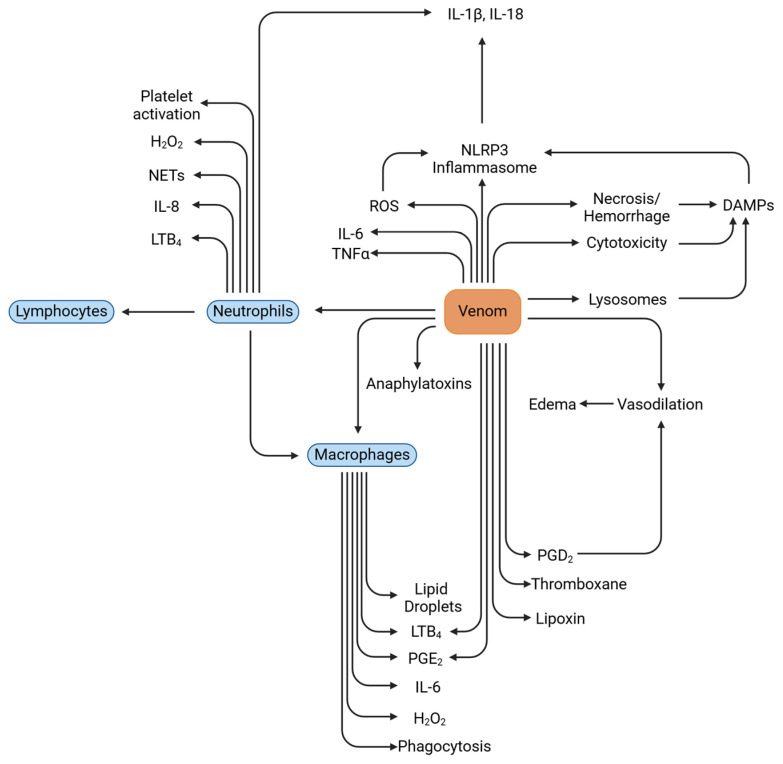
“Similarly, a study conducted on Naja annulifera demonstrated that the C5a-C5aR1 axis is elicited by SVMPs, that induce the expression of prostaglandins, leukotrienes, and thromboxanes [162], along with the increased expression of CXCL1.”
Granny sucks snakebite: A study of an envenomation
Hutchinson, K. A. (2003) · Australian Critical Care · doi:10.1016/s1036-7314(05)80038-4 · Cited by 1 · cited 1×
“Potential treatments for minimizing the occurrence and intensity of antivenom reactions include the administration of corticosteroids, adrenaline, and antihistamines [183,203].”
Cited by
Rapon, C., Florentin, J., Radouani, F., Jalta, P., Negrello, F., Guèye, P., Pierre-Louis, O., Nevière, R., & Résière, D. (2025) · Frontiers in Immunology · doi:10.3389/fimmu.2025.1625165 · Cited by 9
Belo, C. A. D., Hyslop, S., & Carlini, C. R. (2025) · Toxins · doi:10.3390/toxins17100497 · Cited by 9
Silva, M. D. S., da Silva, C. P., de Araujo, V. F., de Araujo, E. C. S., Brilhante, L. M. V., Santana, H. M., Cordeiro Eulálio, M. D. M., Soares, A. M., da Silva, J. S., Setúbal, S. D. S., et al. (2026) · Journal of Innate Immunity · doi:10.1159/000551301 · Cited by 3
“Growing evidence indicates that venom components can act as danger signals capable of triggering inflammasome activation, thereby exacerbating inflammatory damage in envenomed tissues [19–21].”
Reghu, N., Rao, S., Raveendran, D., Nair, B. G., & Vanuopadath, M. (2025) · International Journal of Molecular Sciences · doi:10.3390/ijms26199734 · Cited by 4
“These challenges often require the use of large antivenom doses, which increase the possibility of adverse reactions [54].”
Self-citationSnake venom-induced tissue damage as a paradigm of redox imbalance, ferroptosis, and inflammaging
Dahiya, R., Singh, A. P., & Rawat, A. (2026) · Toxicology Letters · doi:10.1016/j.toxlet.2026.111894 · Cited by 3
Metadata
- Authors
- Rao, S., Reghu, N., Nair, B. G., & Vanuopadath, M.
- Affiliations
- University College Dublin (IE)
- Amrita Vishwa Vidyapeetham (IN)
- Corresponding author
- Nair, Bipin Gopalakrishnan
- Vanuopadath, Muralidharan
- Venue
- Toxins
- Publisher
- MDPI AG
- Published
- 2024-12-02
- Volume
- 16
- Issue
- 12
- Pages
- 519
- ISSN
- 2072-6651 (ISSN-L)
- PMC
- PMC11728808
- OpenAlex
- W4404970607
- Cited by
- 30
- References
- 217
- Citations by year
- 2026: 18 · 2025: 12
- FWCI
- 2.06
- Type
- journal article
- Language
- en
- Open access
- gold
- doi.org
- Licence
- Locations
- Toxins (publishedVersion, cc-by)
- PubMed Central (publishedVersion, cc-by)
- PubMed (publishedVersion)
- DOAJ (DOAJ: Directory of Open Access Journals) (submittedVersion)
- Funders
- Young Scientist Fellowship program provided by the Department of Health Research (No.R.12014/31/2022-HR, ASG2022195)
- Ministry of Health and Family Welfare (MoFHW), Indian Council of Medical Research, Government of India (No.R.12014/31/2022-HR, ASG2022195)
- Amrita Vishwa Vidyapeetham (No.R.12014/31/2022-HR, ASG2022195)
- Topics
- Life Sciences › Pharmacology, Toxicology and Pharmaceutics › Toxicology › Venomous Animal Envenomation and Studies
- Health Sciences › Medicine › Pharmacology (medical) › Healthcare and Venom Research
- Life Sciences › Agricultural and Biological Sciences › Ecology, Evolution, Behavior and Systematics › Amphibian and Reptile Biology
- Keywords
- snake venom proteins, envenomation, inflammation, phospholipase A2, metalloproteinases, serine protease, C-type lectin, cysteine-rich secretory proteins, L-amino acid oxidase, complement system, inflammasome, sterile inflammation, antivenom therapy
- MeSH terms
- Animals, Antivenins, Humans, Inflammation, Snake Bites, Snake Venoms
About these checks
Registry, retraction, Cites and statistics results are computed, not judged, with one exception: a printed reference that no index lists is read once by a model before it counts as a citation error. Claims are extracted by a model and kept only when their quote appears verbatim in the text; each cited source is then checked, with a model’s help, for whether it says what the claim relies on. Those verdicts can be wrong — read the claim’s quote and the cited source before relying on one.
Statistics and arithmetic are recomputed, not judged.
Confidence bands are shown only for fields calibrated on our annotated test set. None is calibrated yet, so no band is shown.
What counts as a claim ›How we measure confidence ›How we check this ›
Are you an author, or do you see a problem with this page? Request a review
Data sources
Bibliographic data: Semantic Scholar, OpenAlex, Crossref.
Contains information from the Semantic Scholar Academic Graph Datasets, made available under the ODC Attribution License (ODC-BY 1.0).
Semantic Scholar’s data is described in: Kinney, R., et al. (2023). The Semantic Scholar Open Data Platform. arXiv:2301.10140.
