

A Teledermatology Pilot Programme for the Management of Skin Diseases in Primary Health Care Centres: Experiences from a Resource-Limited Country (Mali, West Africa)
Open accessThe DOI matches its Crossref record; 25 of the 25 references it cites were found in a registry or an index; 1 of the 24 sources its claims cite were checked for support.
Abstract
In sub-Saharan Africa, in particular in rural areas, patients have limited access to doctors with specialist skills in skin diseases. To address this issue, a teledermatology pilot programme focused on primary health centres was set up in Mali. This study was aimed at investigating the feasibility of this programme and its impact on the management of skin diseases. The programme was based on the store-and-forward model. Health care providers from 10 primary centres were trained to manage common skin diseases, to capture images of skin lesions, and to use an e-platform to post all cases beyond their expertise for dermatologists in order to obtain diagnosis and treatment recommendations. After training, the cases of 180 patients were posted by trained health workers on the platform. Ninety-six per cent of these patients were properly managed via the responses given by dermatologists. The mean time to receive the expert’s response was 32 h (range: 13 min to 20 days). Analysis of all diseases diagnosed via the platform revealed a wide range of skin disorders. Our initiative hugely improved the management of all skin diseases in the targeted health centres. In developing countries, Internet accessibility and connection quality represent the main challenges when conducting teledermatology programmes.
Overview
CoChat Summary
TL;DR
This pilot programme in Mali tested store-and-forward teledermatology at primary health care centres, training health workers to manage common skin diseases and e-refer cases beyond their expertise. It found the programme feasible and improved skin disease management, with 96% of 180 posted patients properly managed via dermatologist responses.
Key findings
- Of 180 patients posted on the platform, 96% were properly managed via dermatologist responses; mean expert response time was 32 h (range 13 min to 20 days), and images per patient ranged from 0 to 13 (average 3.6).
- After training, unclear diagnoses decreased from 53.7% (322/599) to 12.4% (84/679) (p < 10−6); the top post-programme diagnoses were pyoderma (28.4%), eczema (13.5%), dermatophytosis (6.9%), tinea capitis (5.3%), and prurigo (4.4%).
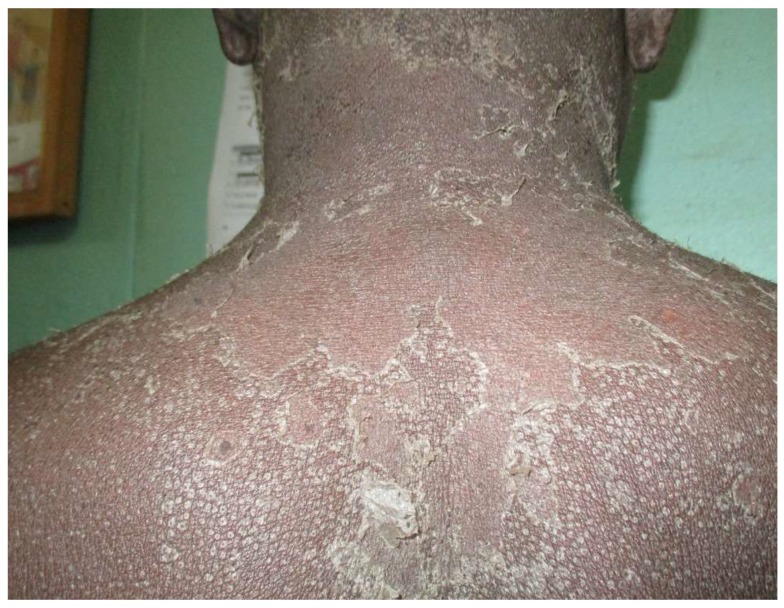
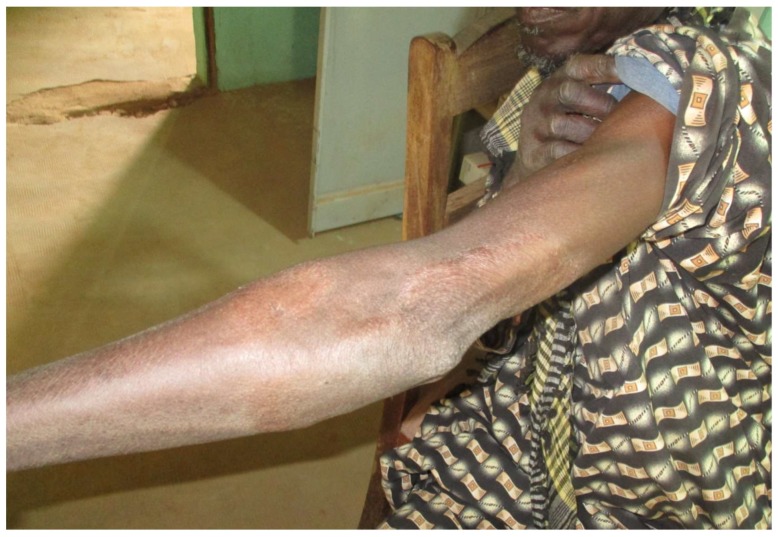
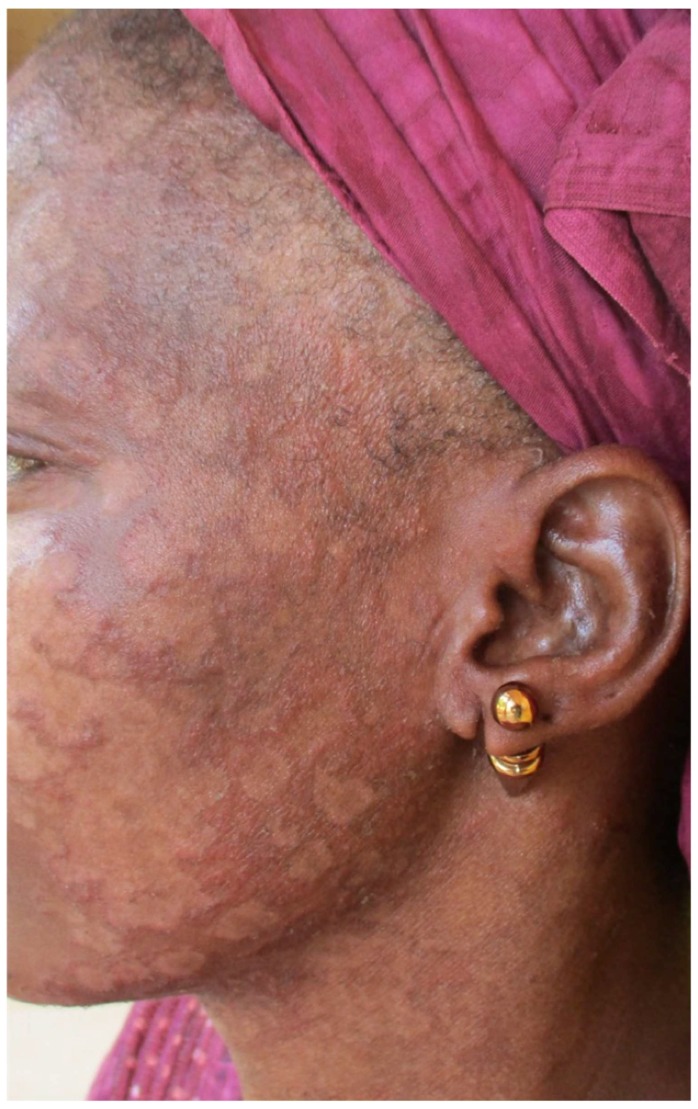
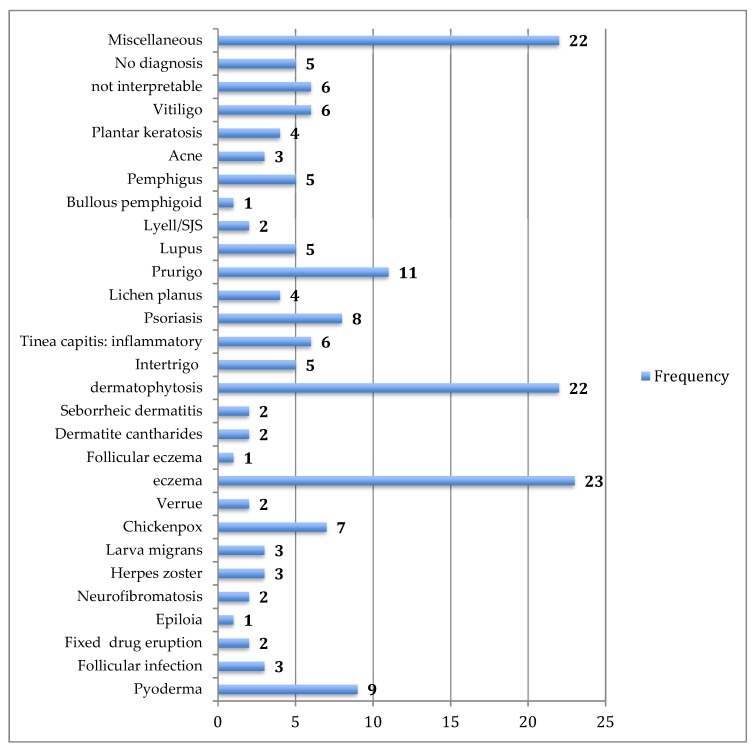
- Teledermatology diagnoses included eczema (25/180), dermatophytosis (22/180), pyoderma (10/180), prurigo (11/180), and psoriasis (7/180); diagnosis concordance between dermatologists was 95% among 40 randomly selected cases.
- Satisfaction interviews found 8/10 health care workers were satisfied (4 strongly satisfied), 7/10 considered response time reasonable, and all 37 interviewed patients were strongly satisfied and would recommend teledermatology.
Methods
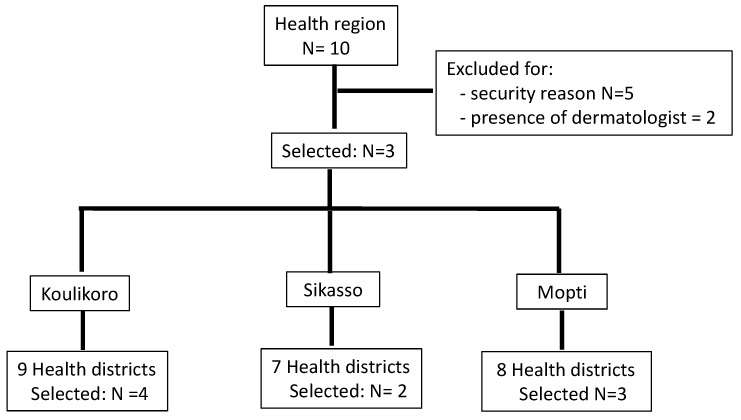
- A store-and-forward teledermatology pilot was conducted from July 2015 to February 2017 in three Malian regions (Koulikoro, Sikasso, Mopti), involving 9 health districts/centres and 20 health care workers (9 nurses, 11 general physicians) trained over three days at the Marchoux Institute.
- Health workers captured skin lesion images and posted cases with brief histories to the secure “Bogou” e-platform; dermatologists returned diagnoses and treatment recommendations, with validity checked by a second dermatologist and quarterly clinical supervision including skin biopsy for difficult diagnoses.
- Evaluation indicators included number of consults, clear diagnosis/treatment, turnaround time, disease patterns, diagnostic concordance, and pre/post proportions of skin diseases; data were collected via standardized questionnaire and analyzed with SPSS 16.0, using chi-squared tests to compare proportions.
Limitations
- The paper states limitations including selection of only three health regions, a small number of randomly selected health centres relative to Mali’s total, and few teledermatology requests from one centre (Banamba) due to Internet quality or lack of health worker commitment.
- The paper also states that privacy issues and ethical/medicolegal responsibility in cases of injury and unsolved cases were not addressed.
- Evident from the text: before the study, only 4 of 9 centres had an Internet connection, no centre had a digital camera, and 6 of 20 health workers had never touched a computer or had no email; image/information quality was judged insufficient for diagnosis in 6 patients (3%), and 11 patients had no diagnosis.
Model-written summary. Check it against the paper before relying on it.
Integrity signals
Registry
Cites
Statistics
Figures
Verification
Claims the paper makes
1 Valid · 0 Not valid · 10 Not checked · 54 Own results and interpretations
A result the paper reports from its own data — it cites no other source for it, so there is none to check. The quote shows it is in the paper.
In the paper
“Of the 9 health centres, only 4 had an Internet connection (Table 1).”
§ A Teledermatology Pilot Programme for the Management of Skin Diseases in Primary Health Care Centres: Experiences from a Resource-Limited Country (Mali, West Africa) > 3. Results > 3.1. Characteristics of the Study Sites and Trainees:
plain- Asserted: passes — The authors put it forward as true.
- Checkable: passes — It can be checked against evidence.
- Load-bearing: unclear — It is unclear whether the paper’s conclusions depend on it.
- Based: passes — The paper gives a reason why it holds.
A result the paper reports from its own data — it cites no other source for it, so there is none to check. The quote shows it is in the paper.
In the paper
“The five top diagnoses were: eczema (25/180), dermatophytosis (22/180), pyoderma (10/180), prurigo (11/180), and psoriasis (7/180).”
§ A Teledermatology Pilot Programme for the Management of Skin Diseases in Primary Health Care Centres: Experiences from a Resource-Limited Country (Mali, West Africa) > 3. Results > 3.3. Management of Skin Diseases via Teledermatology
plainn = 180- Asserted: passes — The authors put it forward as true.
- Checkable: passes — It can be checked against evidence.
- Load-bearing: unclear — It is unclear whether the paper’s conclusions depend on it.
- Based: passes — The paper gives a reason why it holds.
A result the paper reports from its own data — it cites no other source for it, so there is none to check. The quote shows it is in the paper.
In the paper
“Not a single centre had a digital camera.”
§ A Teledermatology Pilot Programme for the Management of Skin Diseases in Primary Health Care Centres: Experiences from a Resource-Limited Country (Mali, West Africa) > 3. Results > 3.1. Characteristics of the Study Sites and Trainees:
plain- Asserted: passes — The authors put it forward as true.
- Checkable: passes — It can be checked against evidence.
- Load-bearing: unclear — It is unclear whether the paper’s conclusions depend on it.
- Based: passes — The paper gives a reason why it holds.
A result the paper reports from its own data — it cites no other source for it, so there is none to check. The quote shows it is in the paper.
In the paper
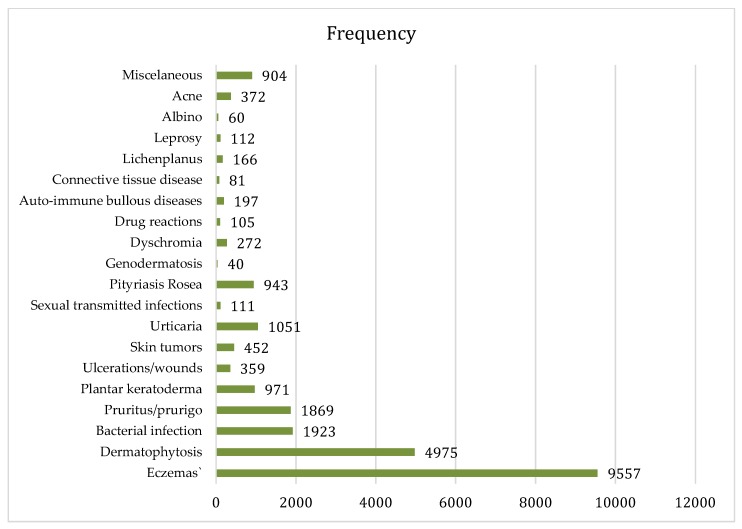
“The five top diagnoses observed in these patients were: eczema, dermatophytosis, bacterial infection and prurigo, or pruritus and plantar keratoderma.”
§ A Teledermatology Pilot Programme for the Management of Skin Diseases in Primary Health Care Centres: Experiences from a Resource-Limited Country (Mali, West Africa) > 3. Results > 3.3. Management of Skin Diseases via Teledermatology
plainn = 24,520- Asserted: passes — The authors put it forward as true.
- Checkable: passes — It can be checked against evidence.
- Load-bearing: unclear — It is unclear whether the paper’s conclusions depend on it.
- Based: passes — The paper gives a reason why it holds.
A result the paper reports from its own data — it cites no other source for it, so there is none to check. The quote shows it is in the paper.
In the paper
“This pattern was similar to that of cases managed via teledermatology during the same period (Figure 6 and Figure 7).”
§ A Teledermatology Pilot Programme for the Management of Skin Diseases in Primary Health Care Centres: Experiences from a Resource-Limited Country (Mali, West Africa) > 3. Results > 3.3. Management of Skin Diseases via Teledermatology
plainn = 24,520- Asserted: passes — The authors put it forward as true.
- Checkable: passes — It can be checked against evidence.
- Load-bearing: unclear — It is unclear whether the paper’s conclusions depend on it.
- Based: passes — The paper gives a reason why it holds.
24 more claims
Create a free account to see all 65 claims and to verify the 23 references still open.
- Probably not a substantial claim. 26
- It may state two separate claims as one. 17
Claims other papers make about this one
Each is checked against this paper’s own text: does it say what the citing paper says it does?
The source backs part of the claim, not all of it — or backs it for a different population, condition or comparison.
In the citing paper
“Improves upon the existing mHealth application which contains SMS based and telemedicine by employing human centered design approach such as anthropomorphism and affective design.”
From Current evidence on the use of mHealth approaches in Sub-Saharan Africa: A scoping review (2023) · cites this paper as [78]
Experimental — accuracy not yet measuredThe cited source says what the claim attributes to it.
In the citing paper
“A few attempts at teledermatology have been made in sub-Saharan African countries and have shown promising results [17-19].”
From An mHealth App (eSkinHealth) for detecting and managing skin diseases in resource-limited settings: mixed methods Pilot Study (2023) · cites this paper as [17]
Self-check
Percentages, sums and reported differences re-computed from the paper’s own numbers.
Each contradiction between two passages listed here was confirmed by an independent check.
Rated minor: it would not touch a result — a value no result rests on, a p-value that stays on the same side of the significance level, or a conflict that is clerical, resolved elsewhere in the paper, or outside its own findings.
In the paper
§ A Teledermatology Pilot Programme for the Management of Skin Diseases in Primary Health Care Centres: Experiences from a Resource-Limited Country (Mali, West Africa) > Abstract
“Health care providers from 10 primary centres were trained to manage common skin diseases”
§ A Teledermatology Pilot Programme for the Management of Skin Diseases in Primary Health Care Centres: Experiences from a Resource-Limited Country (Mali, West Africa) > 3. Results > 3.1. Characteristics of the Study Sites and Trainees:
“Overall, 20 HCW from 9 health centres were involved in the study: 9 nurses and 11 general physicians.”
Citations
Cites
Global Skin Disease Morbidity and Mortality: An Update From the Global Burden of Disease Study 2013
Karimkhani, C., Dellavalle, R. P., Coffeng, L. E., Flohr, C., Hay, R. J., Langan, S. M., Nsoesie, E. O., Ferrari, A. J., Erskine, H. E., Silverberg, J. I., et al. (2017) · JAMA Dermatology · doi:10.1001/jamadermatol.2016.5538 · Cited by 742
Teledermatology for diagnosis and management of skin conditions: A systematic review
Warshaw, E. M., Hillman, Y. J., Greer, N. L., Hagel, E. M., MacDonald, R., Rutks, I. R., & Wilt, T. J. (2011) · Journal of the American Academy of Dermatology · doi:10.1016/j.jaad.2010.08.026 · Cited by 310 · cited 2×
“Several papers have addressed the usefulness and effectiveness of teledermatology programmes [16,24].”
BackgroundSkin disease and socioeconomic conditions in rural Africa: Tanzania
GIBBS, S. (1996) · International Journal of Dermatology · doi:10.1111/j.1365-4362.1996.tb03687.x · Cited by 225
Telemedicine in dermatology: findings and experiences worldwide—a systematic literature review.
Trettel, A., Eissing, L., & Augustin, M. (2018) · Journal of the European Academy of Dermatology and Venereology · doi:10.1111/jdv.14341 · Cited by 206
Store-and-Forward Teledermatology in Skin Cancer Triage
Moreno-Ramirez, D., Ferrandiz, L., Nieto-Garcia, A., Carrasco, R., Moreno-Alvarez, P., Galdeano, R., Bidegain, E., Rios-Martin, J. J., & Camacho, F. M. (2007) · Archives of Dermatology · doi:10.1001/archderm.143.4.479 · Cited by 163
Epidemiology of skin diseases in school children: A study from northern India
Dogra, S., & Kumar, B. (2003) · Pediatric Dermatology · doi:10.1111/j.1525-1470.2003.20602.x · Cited by 140
Tran, K., Ayad, M., Weinberg, J., Cherng, A., Chowdhury, M., Monir, S., El Hariri, M., & Kovarik, C. (2011) · Journal of the American Academy of Dermatology · doi:10.1016/j.jaad.2010.01.010 · Cited by 111
Bechelli, L. M., Haddad, N., Pimenta, W. P., Pagnano, P. M. G., Melchior, Jr., Fregnan, R. C., Zanin, L. C., & Arenas, A. (2009) · Dermatologica · doi:10.1159/000250144 · Cited by 111
Prevalence of skin diseases in rural areas of Assiut Governorate, Upper Egypt
Abdel‐Hafez, K., Abdel‐Aty, M. A., & Hofny, E. R. M. (2003) · International Journal of Dermatology · doi:10.1046/j.1365-4362.2003.01936.x · Cited by 109
Skin disease is common in rural Nepal: results of a point prevalence study
Walker, S. L., Shah, M., Hubbard, V. G., Pradhan, H. M., & Ghimire, M. (2007) · British Journal of Dermatology · doi:10.1111/j.1365-2133.2007.08107.x · Cited by 100
Research works printed but not linked: 1
- Faye O. Keita S. N’diaye H. Konare H. Coulibaly I. Evaluation du niveau de connaissance des agents de santé sur le diagnostic de la lèpre à Bamako (MALI): Proposition pour l’avenir de la lutte anti-lépreuse Mali. Méd. 2003 18 32 34 (In French)
Cited by
Engelman, D., Yoshizumi, J., Hay, R. J., Osti, M., Micali, G., Norton, S., Walton, S., Boralevi, F., Bernigaud, C., Bowen, A. C., et al. (2020) · British Journal of Dermatology · doi:10.1111/bjd.18943 · Cited by 351
Self-citationMbunge, E., Batani, J., Gaobotse, G., & Muchemwa, B. (2022) · Global Health Journal · doi:10.1016/j.glohj.2022.03.001 · Cited by 205
“84 Because it is very visual, dermatology is very suited for modern telemedicine techniques.”
Control Strategies for Scabies
Engelman, D., & Steer, A. C. (2018) · Tropical Medicine and Infectious Disease · doi:10.3390/tropicalmed3030098 · Cited by 106
Atopic dermatitis: A global health perspective
Faye, O., Flohr, C., Kabashima, K., Ma, L., Paller, A. S., Rapelanoro, F. R., Steinhoff, M. S., Su, J. C., Takaoka, R., Wollenberg, A., et al. (2023) · Journal of the European Academy of Dermatology and Venereology · doi:10.1111/jdv.19723 · Cited by 100
Self-citationTeledermatology reduces dermatology referrals and improves access to specialists
Bianchi, M. G., Santos, A. P., & Cordioli, E. (2020) · EClinicalMedicine · doi:10.1016/j.eclinm.2020.100641 · Cited by 76
Integrated Management of Skin NTDs—Lessons Learned from Existing Practice and Field Research
Yotsu, R. R. (2018) · Tropical Medicine and Infectious Disease · doi:10.3390/tropicalmed3040120 · Cited by 65
“Two examples of such projects are described in this issue [95,96].”
BackgroundYotsu, R. R., Fuller, L. C., Murdoch, M. E., van Brakel, W. H., Revankar, C. R., Barogui, M. Y. T., Ruiz-Postigo, J. A., Dagne, D. A., Asiedu, K. B., & Hay, R. J. (2023) · PLoS neglected tropical diseases · doi:10.1371/journal.pntd.0011357 · Cited by 58
Current evidence on the use of mHealth approaches in Sub-Saharan Africa: A scoping review
Aboye, G. T., Vande Walle, M., Simegn, G. L., & Aerts, J.-M. (2023) · Health Policy and Technology · doi:10.1016/j.hlpt.2023.100806 · Cited by 55
Teledermatology in Rural, Underserved, and Isolated Environments: A Review
Ahuja, S., Briggs, S. M., & Collier, S. M. (2022) · Current Dermatology Reports · doi:10.1007/s13671-022-00377-2 · Cited by 52
Position Statement on Atopic Dermatitis in Sub‐Saharan Africa: current status and roadmap
Schmid‐Grendelmeier, P., Takaoka, R., Ahogo, K. C., Belachew, W. A., Brown, S., Correia, J. C., Correia, M. M., Dégboé, B., Dorizy-Vuong, V., Faye, O., et al. (2019) · Journal of the European Academy of Dermatology and Venereology · doi:10.1111/jdv.15972 · Cited by 51
Self-citationDermatology Training in Africa
Mosam, A., & Todd, G. (2021) · Dermatologic Clinics · doi:10.1016/j.det.2020.08.006 · Cited by 48
Schoenmakers, A., Hambridge, T., van Wijk, R., Kasang, C., Richardus, J. H., Bobosha, K., Mitano, F., Mshana, S. E., Mamo, E., Marega, A., et al. (2021) · BMJ Open · doi:10.1136/bmjopen-2020-046125 · Cited by 37
Epidemiology and management of asthma and atopic dermatitis in Sub-Saharan Africa
Skevaki, C. L., Ngocho, J. S., Amour, C., Schmid‐Grendelmeier, P., Mmbaga, B. T., & Renz, H. E. (2021) · Journal of Allergy and Clinical Immunology · doi:10.1016/j.jaci.2021.10.019 · Cited by 37
Aboye, G. T., Vande Walle, M., Simegn, G. L., & Aerts, J.-M. (2023) · Digital Health · doi:10.1177/20552076231180972 · Cited by 31
Implementation of Teledermatology: Theory and Practice
Peracca, S. B., Jackson, G. L., Weinstock, M. A., & Oh, D. H. (2019) · Current Dermatology Reports · doi:10.1007/s13671-019-0252-2 · Cited by 26
Yotsu, R. R., Fuller, L. C., Murdoch, M. E., Revankar, C., Barogui, Y. T., Pemmaraju, V. R. R., Ruiz-Postigo, J.-A., Dagne, D. A., Asiedu, K., & Hay, R. J. (2023) · British Journal of Dermatology · doi:10.1093/bjd/ljac031 · Cited by 23
Hay, R. J. (2020) · Acta Dermato Venereologica · doi:10.2340/00015555-3469 · Cited by 20
Teledermatology to Improve Access to and Quality of Skin Care in Eastern Indonesia
Adella, F. J., Ammah, H., Siregar, G. O., Harianja, M., Sundari, E. S., Sagara, R., Tarino, N., Hamers, R. L., Bøgh, C., Soebono, H., et al. (2024) · American Journal of Tropical Medicine and Hygiene · doi:10.4269/ajtmh.23-0218 · Cited by 20
Yotsu, R. R., Almamy, D., Vagamon, B., Ugai, K., Itoh, S., Koffi, Y. D., Kaloga, M., Dizoé, L. A. S., Kouadio, K., Aka, N., et al. (2023) · JMIR Dermatology · doi:10.2196/46295 · Cited by 18
“A few attempts at teledermatology have been made in sub-Saharan African countries and have shown promising results [17-19].”
BackgroundYotsu, R. R., Itoh, S., Yao, K. A., Kouadio, K., Ugai, K., Koffi, Y. D., Almamy, D., Vagamon, B., & Blanton, R. E. (2022) · JMIR Research Protocols · doi:10.2196/39867 · Cited by 18
Holmes, A., Chansky, P. B., & Simpson, C. L. (2020) · Telemedicine Journal and e-Health · doi:10.1089/tmj.2019.0217 · Cited by 18
Boateng, L. A., Adom, F., Angwaawie, P., Boateng, L. A., Danquah, E., Dotse, W.-G., Frimpong-Amenyo, R.-P., Head, M., Lamptey, R., Lartey, A., et al. (2020) · Transactions of the Royal Society of Tropical Medicine and Hygiene · doi:10.1093/trstmh/traa071 · Cited by 18
Okyere, D., Ocloo, E. K., Owusu, L., Amoako, Y. A., Tuwor, R. D., Koka, E., Novignon, J., Asante-Poku, A., Siam, I. M., Afreh, E. K., et al. (2024) · PLOS Global Public Health · doi:10.1371/journal.pgph.0002833 · Cited by 16
Teledermatology: Meeting the Need for Specialized Care in Rural Haiti
Cutler, L., Ross, K., Withers, M. H., Chiu, M. W., & Cutler, D. (2019) · Journal of Health Care for the Poor and Underserved · doi:10.1353/hpu.2019.0097 · Cited by 14
Alotaibi, H., Alruwaili, Z. M. N., Dilli, A., Altaleb, A. A., ASIRI, M. J., Alwadani, O., Alshaalan, Z. M., & Dar, U. F. (2023) · Healthcare · doi:10.3390/healthcare11121705 · Cited by 14
Strengthening eHealth Systems to Support Universal Health Coverage in sub-Saharan Africa
Ojo, A. I., Tolentino, H., & Yoon, S. S. (2021) · Online Journal of Public Health Informatics · doi:10.5210/ojphi.v13i3.11550 · Cited by 13
Teledermatology in the Control of Skin Neglected Tropical Diseases: A Systematic Review
Joshi, T. P., & Ren, V. Z. (2021) · Dermatology Practical & Conceptual · doi:10.5826/dpc.1104a130 · Cited by 13
Telemedicine and COVID-19: Experience of Medical Doctors in Cameroon
Armand, K., Ananfack, E. G., Marcien, N. N. F., Wilson, N. N. A., Reine, M. M. C., & Claude, N. N. E. (2021) · American Journal of Health Medicine and Nursing Practice · doi:10.47672/ajhmn.666 · Cited by 9
Schmid‐Grendelmeier, P., Rabenja, F. R., Beshah, A. M., Ball, M. D., Dlova, N. C., Faye, O., Flohr, C., Hsu, C. S., Mavura, D., Manuel, R. C. R., et al. (2023) · Journal of the European Academy of Dermatology and Venereology · doi:10.1111/jdv.19096 · Cited by 9
Self-citationDeveloping and evaluating a mobile-based teledermatology system for skin lesion diagnosis in Iran
Shajirat, Z., Parandeh, R., Pazyar, N., & Azizi, A. (2024) · Scientific Reports · doi:10.1038/s41598-024-71340-3 · Cited by 7
Shapiro, J. S., Lavi, I., Kun, D., Ingber, A., Freud, T., & Grunfeld, O. (2024) · Dermatology · doi:10.1159/000537823 · Cited by 5
Trends in Dermatology Consultations in the COVID-19 Era in Cameroon
Linwa, E. M. M., Sigha, O. B., Touka, A. J. D., Ekoube, C. E., Linwa, E. É. N., Budzi, M. N., Meh, M. G., Nzozone, H. F., Kouotou, E. A., & Bissek, A.-C. Z. K. (2022) · Skin Health and Disease · doi:10.1002/ski2.113 · Cited by 5
Fernandez, J. M., Kaderbhai, H., Adams, J. L., Adam, M. B., & Adam, R. D. (2025) · International Journal of Women’s Dermatology · doi:10.1097/jw9.0000000000000196 · Cited by 4
Deuxièmes assises de télédermatologie africaines — Lomé (Togo)
Saka, B., Lauressergues, E., Mahamadou, G., Matel, L., Abilogoun, C. A. E. O. S., Adegbidi, H., Ahogo, K. C., Akakpo, S., Akakpo, C., Akata, E., et al. (2020) · La Presse Médicale Formation · doi:10.1016/j.lpmfor.2020.04.009 · Cited by 4
Self-citationSkin-Related Neglected Tropical Diseases (Skin-NTDs)—A New Challenge
Hay, R. J., & Asiedu, K. B. (2019) · MDPI eBooks · doi:10.3390/books978-3-03921-254-5 · Cited by 3
The Role of Artificial Intelligence in Diagnosis and Management of Cutaneous Infections
Khan, B. I., Bhatt, S., Shishak, M., Madhumita, M., & Gupta, S. (2025) · Current Dermatology Reports · doi:10.1007/s13671-025-00468-w · Cited by 3
A dermatologia em Angola: evolução e desafios
de Almeida-Voumard, L. (2021) · Revista Medicina Cutánea Ibero-Latino-Americana · doi:10.24875/mcut.20000114 · Cited by 3
Teledermatology: Implementation
Castillo, F. T., Peracca, S. B., & Oh, D. H. (2023) · Updates in clinical dermatology · doi:10.1007/978-3-031-27276-9_7 · Cited by 2
Wlodek, C., Fuimaono, H. V., & Ekeroma, A. J. (2019) · Australasian Journal of Dermatology · doi:10.1111/ajd.13118 · Cited by 2
Prevalence of common skin diseases among outpatients clinic of Baghdad hospital
Al-Baker, S. M., Al-Gasha’a, F. A. S., & Al-Saadi, A. F. (2022) · AIP conference proceedings · doi:10.1063/5.0122006 · Cited by 2
La télémédecine en Afrique, retour d’expérience – gains et défis
Khaldouni, O., Falaki, A. E., Berrhoute, L., Zerrouk, L., Youlyouz‐Marfak, I., Mesradi, M. R., Ahmed, Y. A., Baydaoui, R. E., Marfak, A., & Saad, E. (2023) · IRBM News · doi:10.1016/j.irbmnw.2023.100487 · Cited by 2
Parandeh, R., Shajirat, Z., Pazyar, N., & Azizi, A. (2024) · Comprehensive Health and Biomedical Studies · doi:10.5812/chbs-149451 · Cited by 1
Teledermatology: Practice Models
Mehta, M. D., & Armstrong, A. W. (2023) · Updates in clinical dermatology · doi:10.1007/978-3-031-27276-9_2 · Cited by 1
Dermatological primary health care services for older adults in Thailand
Lekhavat, C., & Sriratanaban, J. (2025) · Journal of Health Research · doi:10.56808/2586-940x.1156 · Cited by 1
Bagayoko, C. O., Cissé, M., Aka, J., Dicko, A., Anne, A., Traoré, D., Cisse, L., Niang, M., Karabinta, Y., Gassama, M., et al. (2020) · Research Square · doi:10.21203/rs.3.rs-129110/v1 · Cited by 1
Self-citationYotsu, R. R. (2024) · Japanese journal of leprosy · doi:10.5025/hansen.92.79 · Cited by 1
Évaluation du projet de téléexpertise dans la prise en charge des dermatoses courantes au Togo
Saka, B., Mouhari-Touré, A., Akakpo, S., Teclessou, J. N., Lauressergues, E., Przybylski, C., Gnossikè, P., Kassang, P., Mahamadou, G., Matel, L., et al. (2023) · Santé Publique · doi:10.3917/spub.232.0211 · Cited by 1
Kemeness, C., Schandua, H., Spangenberg, A., Gupta, R., Muraguri, I., Cheruiyot, P., Biwott, P., Boit, R., Kranyak, A. C., Marquez-Grap, G., et al. (2026) · JAAD Case Reports · doi:10.1016/j.jdcr.2026.05.042 · Cited by 1
Teledermatology: Outcomes for Skin Lesions
Clarke, E., Mahama, A., Gracey, L. E., & Jambusaria‐Pahlajani, A. (2023) · Updates in clinical dermatology · doi:10.1007/978-3-031-27276-9_10
Quilter, E. E. V., Nyangacha, R. M., Kinyeru, E., Fuster‐Casanovas, A., Brigden, A., O’Hara, K., Atieno, D., Ruiz-Postigo, J. A., & Carrión, C. (2026) · JMIR mhealth and uhealth · doi:10.2196/81829
Global Teledermatology in Underdeveloped Countries
Hwang, J. C., Tung, J. K., & James, A. J. (2023) · Updates in clinical dermatology · doi:10.1007/978-3-031-27276-9_23
Assefa, G. T., Degu, S. A., & Koster, A. C. (2026) · doi:10.2196/preprints.100514
Abate, G. K. (2026) · Research Square · doi:10.21203/rs.3.rs-9007646/v1
Assefa, G. T., Ayele, S., Teklehaimanot, A., & Jikamo, B. (2026) · Pan African Medical Journal · doi:10.11604/pamj.2026.55.73.48922
Maladies de peau et dermatologie en Afrique subsaharienne
Faye, O., & Mahé, A. (2022) · Elsevier eBooks · doi:10.1016/b978-2-294-77570-3.00042-0
Self-citationCOVID-19 Outbreak Response in Dermatology
Garcia-Tan, N., & Tan, N. M. G. (2023) · Updates in clinical dermatology · doi:10.1007/978-3-031-45586-5_7
Moungui, H. C. (2026) · Tesis Doctorals en Xarxa (Consorci de Serveis Universitaris de Catalunya)
Premier cas de mpox dépisté au Mali dans une zone d’orpaillage en 2025 grâce à la télédermatologie
Traoré, D., Bekaye, T., ARAMA, A. E., Sougane, M., Cissé, M., TAPILY, H. S., TOURÉ, S., MOLBA, D., TRAORÉ, M. H., DIALLO, M. A., et al. (2026) · PubMed Central · doi:10.48327/mtsi.v6i3.2026.786
Self-citationImpact of COVID-19 on the use of tele-expertise services in Mali, from 2018 to 2022
TAPILY, H. S., Bérété, Z. C., Traoré, D., Cissé, M., & BAKAYOKO, C. O. (2025) · Revue Africaine des Sciences Sociales et de la Sante Publique · doi:10.4314/rasp.v7i2.22
Visage de la dermatologie pédiatrique dans la zone minière de Siguiri (Guinée)
Savané, M., Diané, B. F., Keita, F., Fofana, K., Kante, M., Touré, M., Diallo, F., Tounkara, T. M., Keita, M., Soumah, M., et al. (2025) · Revue de Dermatologie Tropicale · doi:10.66480/rdt.39
Metadata
- Authors
- Faye, O., Bagayoko, C., Dicko, A., Cissé, L., Berthé, S., Traoré, B., Fofana, Y., Niang, M., Traoré, S., Karabinta, Y., Gassama, M., Guindo, B., Keita, A., Tall, K., Keita, S., Geissbuhler, A., Mahé, A., & Teledermali Team
- Affiliations
- University of Bamako (ML)
- CERTES, Bamako, Mali
- Department of Dermatology, Faculty of Medicine and Odontostomatology, Bamako, Mali
- Département de Radiologie et Informatique médicale, Université de Genève, Genaven 1211, Switzerland
- Service de Dermatologie, Hôpital Pasteur, Colmar 68000, France
- Corresponding author
- Faye, Ousmane
- ORCID
- Venue
- Tropical Medicine and Infectious Disease
- Publisher
- MDPI AG
- Published
- 2018-08-17
- Volume
- 3
- Issue
- 3
- Pages
- 88
- ISSN
- 2414-6366 (ISSN-L)
- PMC
- PMC6161172
- OpenAlex
- W2885965376
- Cited by
- 54
- References
- 25
- Citations by year
- 2026: 3 · 2025: 4 · 2024: 6 · 2023: 14 · 2022: 7 · 2021: 6 · 2020: 7 · 2019: 5 · 2018: 2
- FWCI
- 4.77
- Type
- journal article
- Language
- en
- Open access
- gold
- dx.doi.org
- Licence
- Locations
- Tropical Medicine and Infectious Disease (publishedVersion, cc-by)
- Europe PMC (PubMed Central) (publishedVersion, other-oa)
- PubMed Central (publishedVersion, cc-by)
- PubMed (publishedVersion)
- DOAJ (DOAJ: Directory of Open Access Journals) (submittedVersion, cc-by-sa)
- Topics
- Health Sciences › Medicine › Public Health, Environmental and Occupational Health › Telemedicine and Telehealth Implementation
- Health Sciences › Medicine › Public Health, Environmental and Occupational Health › Healthcare Systems and Technology
- Health Sciences › Medicine › Radiology, Nuclear Medicine and Imaging › Digital Imaging in Medicine
- Keywords
- teledermatology, store-and-forward telemedicine, skin diseases, primary care, rural healthcare access, dermatology consultation, skin lesion imaging, health professions education, resource-limited settings, Mali, sub-Saharan Africa
About these checks
Registry, retraction, Cites and statistics results are computed, not judged, with one exception: a printed reference that no index lists is read once by a model before it counts as a citation error. Claims are extracted by a model and kept only when their quote appears verbatim in the text; each cited source is then checked, with a model’s help, for whether it says what the claim relies on. Those verdicts can be wrong — read the claim’s quote and the cited source before relying on one.
A language model drew the claims from the paper on 2026-10-05, under version 3 of the claim definition (model deepseek-v4.1-flash, prompt extract-v3).
A second model labelled each claim on 2026-10-05 (model jev-1.13-20260917, definition revision gold-guideline-v0.2).
Statistics and arithmetic are recomputed, not judged.
Confidence bands are shown only for fields calibrated on our annotated test set. None is calibrated yet, so no band is shown.
What counts as a claim ›How we measure confidence ›How we check this ›
Are you an author, or do you see a problem with this page? Request a review
Data sources
Bibliographic data: Semantic Scholar, OpenAlex, Crossref.
Contains information from the Semantic Scholar Academic Graph Datasets, made available under the ODC Attribution License (ODC-BY 1.0).
Semantic Scholar’s data is described in: Kinney, R., et al. (2023). The Semantic Scholar Open Data Platform. arXiv:2301.10140.
