

Integrated Management of Skin NTDs—Lessons Learned from Existing Practice and Field Research
Open accessThe DOI matches its Crossref record; 94 of the 94 references it cites were found in a registry or an index.
Abstract
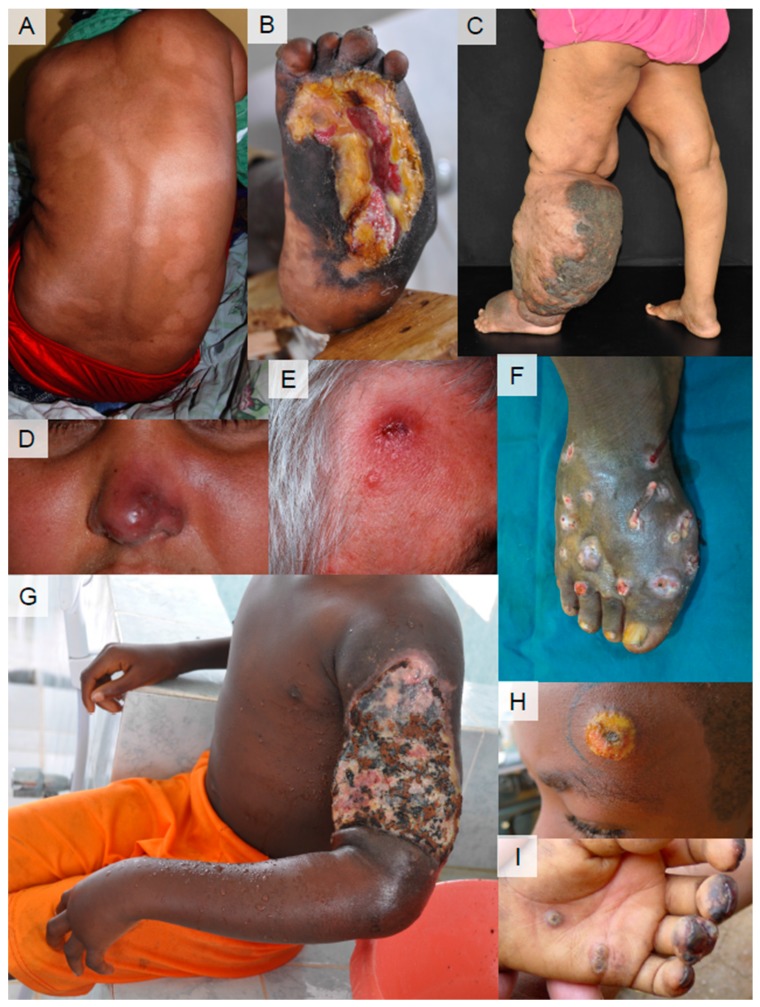
Integration of neglected tropical diseases (NTDs) into the public health agenda has been a priority in global health for the last decade. Because a number of these diseases share not only the geographical distribution, but also a common feature which is skin involvement, bringing together a sub-group of ‘skin NTDs’ is one way forward to promote further integration among NTDs. With these diseases, which include leprosy, Buruli ulcer, yaws, mycetoma, lymphatic filariasis, and leishmaniasis, patients may be left with life-long deformities and disabilities when diagnosis and treatment are delayed. Stigma is another serious consequence of skin NTDs as it places a large barrier on the economic activities and social life of a patient. As a result, this creates a vicious cycle and obstructs a key goal of society, the elimination of poverty. Enhancement in surveillance systems as well as the further development of diagnostic methods, improvement in treatment and management, and identification of preventative measures for skin NTDs are therefore urgently needed. This article summarizes the existing practices and field research on skin NTDs and identifies potential synergies that could be achieved by adopting this integrated approach.
Overview
The claims and statistics of this paper haven’t been checked yet.
Free: it reads the open-access text and checks the first 5 claims that cite a source we can check. Create a free account to check every claim.
Integrity signals
Registry
Cites
Statistics
Figures
Verification
Claims the paper makes
The claims and statistics of this paper haven’t been checked yet.
Free: it reads the open-access text and checks the first 5 claims that cite a source we can check. Create a free account to check every claim.
Claims other papers make about this one
Each is checked against this paper’s own text: does it say what the citing paper says it does?
The cited source says what the claim attributes to it.
In the citing paper
“Furthermore, some diseases, including leprosy, Buruli ulcer, lymphatic filariasis, and other skin infections, lead to lifelong disabilities and deformities if not diagnosed and treated early [10,12].”
From An mHealth App (eSkinHealth) for detecting and managing skin diseases in resource-limited settings: mixed methods Pilot Study (2023) · cites this paper as [12]
Self-check
Percentages, sums and reported differences re-computed from the paper’s own numbers.
The self-check needs the paper’s full text.
Citations
Cites
Honey as a topical treatment for wounds
Jull, A. B., Cullum, N., Dumville, J. C., Westby, M. J., Deshpande, S., & Walker, N. (2015) · Cochrane Database of Systematic Reviews · doi:10.1002/14651858.cd005083.pub4 · Cited by 653
Health economic burden that different wound types impose on the UK's National Health Service
Guest, J. F., Ayoub, N., McIlwraith, T., Uchegbu, I., Gerrish, A., Weidlich, D., Vowden, K., & Vowden, P. (2017) · International Wound Journal · doi:10.1111/iwj.12603 · Cited by 406 · cited 2×
“Furthermore, findings from some cost nalyses carried out in the l world show a strik ngly high cost burden [83,84], and this also needs to be assessed in r sourc -limited settings.”
BackgroundThe Global Programme to Eliminate Lymphatic Filariasis: Health Impact after 8 Years
Ottesen, E. A., Hooper, P. J., Bradley, M., & Biswas, G. (2008) · PLoS Neglected Tropical Diseases · doi:10.1371/journal.pntd.0000317 · Cited by 326 · cited 1×
“Similarly, the African Program for Onchocerciasis [39] and the Global Programme to Eliminate Lymphatic Filariasis [40] reported a coincident effect in reducing the number of cases of scabies, an off-target disease.”
BackgroundAttinger, C. E., Janis, J. E., Steinberg, J., Schwartz, J., Al-Attar, A., & Couch, K. (2006) · Plastic and Reconstructive Surgery · doi:10.1097/01.prs.0000225470.42514.8f · Cited by 295
Mass drug administration for scabies control in a population with endemic disease.
Romani, L., Whitfeld, M. J., Koroivueta, J., Kama, M., Wand, H., Tikoduadua, L., Tuicakau, M., Koroi, A., Andrews, R., Kaldor, J. M., et al. (2015) · New England Journal of Medicine · doi:10.1056/nejmoa1500987 · Cited by 268
Moet, F. J., Pahan, D., Oskam, L., & Richardus, J. H. (2008) · BMJ · doi:10.1136/bmj.39500.885752.be · Cited by 242 · cited 1×
“5% reduction in new cases in the intervention group [46].”
BackgroundFernandez, R., & Griffiths, R. (2012) · Cochrane Database of Systematic Reviews · doi:10.1002/14651858.cd003861.pub3 · Cited by 239
Engelman, D., Kiang, K., Chosidow, O., McCarthy, J., Fuller, C., Lammie, P., Hay, R., Steer, A., & on behalf of the members of the International Alliance for the Control of Scabies (IACS) (2013) · PLoS Neglected Tropical Diseases · doi:10.1371/journal.pntd.0002167 · Cited by 219
Lawrence, G., Leafasia, J. L., Sheridan, J., Hills, S. L., Wate, J., Wate, C., Montgomery, J. M., Pandeya, N., & Purdie, D. M. (2005) · Europe PMC (PubMed Central) · Cited by 212
Thomsen, E. K., Sanuku, N., Baea, M., Satofan, S., Maki, E., Lombore, B., Schmidt, M. S., Siba, P. M., Weil, G. J., Kazura, J. W., et al. (2016) · Clinical Infectious Diseases · doi:10.1093/cid/civ882 · Cited by 186
Research works printed but not linked: 1
- Saikawa K. Epidemiological implications of school survey in Okinawa (in Japanese) J. Health Welf. Stat. 1978 25 6 23
Cited by
Estimating the global burden of scabies: what else do we need?*
Cox, V. R. V., Fuller, L. C., Engelman, D., Steer, A. C., & Hay, R. J. (2020) · British Journal of Dermatology · doi:10.1111/bjd.19170 · Cited by 92
Prevalence, incidence, and reported global distribution of noma: a systematic literature review
Galli, A., Brugger, C., Fürst, T., Monnier, N., Winkler, M. S., & Steinmann, P. (2022) · The Lancet Infectious Diseases · doi:10.1016/s1473-3099(21)00698-8 · Cited by 48
Yotsu, R. R., Fuller, L. C., Murdoch, M. E., van Brakel, W. H., Revankar, C. R., Barogui, M. Y. T., Ruiz-Postigo, J. A., Dagne, D. A., Asiedu, K. B., & Hay, R. J. (2023) · PLoS neglected tropical diseases · doi:10.1371/journal.pntd.0011357 · Cited by 58
“—Sharing of tools As these diseases are neglected, so are developments in new diagnostic tools and point-of-care tests using modern molecular techniques or in the provision of and training in the use of simple laboratory methods (S1 Table) [22,23].”
BackgroundSelf-citationSchoenmakers, A., Hambridge, T., van Wijk, R., Kasang, C., Richardus, J. H., Bobosha, K., Mitano, F., Mshana, S. E., Mamo, E., Marega, A., et al. (2021) · BMJ Open · doi:10.1136/bmjopen-2020-046125 · Cited by 37
A comprehensive research agenda for zero leprosy
Steinmann, P., Dusenbury, C. M., Addiss, D. G., Mirza, F., & Smith, W. C. (2020) · Infectious Diseases of Poverty · doi:10.1186/s40249-020-00774-4 · Cited by 32
Yotsu, R. R., Comoé, C. C., Ainyakou, G. T., Konan, N., Akpa, A., Yao, A., Aké, J., Vagamon, B., Abbet Abbet, R., Bedimo, R., et al. (2020) · PLOS Neglected Tropical Diseases · doi:10.1371/journal.pntd.0008291 · Cited by 21
“Many countries in sub-Saharan Africa are co-endemic with different combinations of skin NTDs including leprosy, Buruli ulcer (BU), yaws, lymphatic filariasis, onchocerciasis, and mycetoma along with scabies which was recently added to the NTD group in 2017 [2].”
BackgroundSelf-citationProchazka, M., Timothy, J. W. S., Pullan, R. L., Kollie, K., Rogers, E., Wright, A., & Palmer, J. J. (2020) · PLoS neglected tropical diseases · doi:10.1371/journal.pntd.0008030 · Cited by 24
“While integrated approaches to the case management of skin NTDs have been implemented in co-endemic areas, few health systems have documented actual experiences of implementation[25].”
BackgroundYotsu, R. R., Almamy, D., Vagamon, B., Ugai, K., Itoh, S., Koffi, Y. D., Kaloga, M., Dizoé, L. A. S., Kouadio, K., Aka, N., et al. (2023) · JMIR Dermatology · doi:10.2196/46295 · Cited by 18
“Furthermore, some diseases, including leprosy, Buruli ulcer, lymphatic filariasis, and other skin infections, lead to lifelong disabilities and deformities if not diagnosed and treated early [10,12].”
BackgroundSelf-citationCano, M., Ruiz-Postigo, J. A., Macharia, P. M., Amoako, Y. A., Phillips, R. O., Kinyeru, E., & Carrión, C. (2024) · Journal of Medical Internet Research · doi:10.2196/51628 · Cited by 21
“Efforts to improve the diagnosis and management of skin NTDs are crucial, yet many existing strategies, despite showing effectiveness, are constrained by their face-to-face nature, focus on single conditions, and lack of sustainability and scalability [11,13-15].”
InfluentialDiagnosing skin neglected tropical diseases with the aid of digital health tools: A scoping review
Barnowska, E. J., Fastenau, A., Penna, S., Bonkass, A.-K., Stuetzle, S., & Janssen, R. (2024) · PLOS Digital Health · doi:10.1371/journal.pdig.0000629 · Cited by 20
Yotsu, R. R., Itoh, S., Yao, K. A., Kouadio, K., Ugai, K., Koffi, Y. D., Almamy, D., Vagamon, B., & Blanton, R. E. (2022) · JMIR Research Protocols · doi:10.2196/39867 · Cited by 18
“Furthermore, some diseases, including leprosy, Buruli ulcer, lymphatic filariasis, and other skin infections, lead to lifelong disabilities and deformities if not diagnosed and treated early [9,11].”
Self-citationHay, R. J. (2020) · Acta Dermato Venereologica · doi:10.2340/00015555-3469 · Cited by 20
“Attempts to use such approaches in the field as part of broader Skin NTD programmes, aimed at detecting a range of endemic NTDs, are now under way (17, 57).”
BackgroundMangeard-Lourme, J., de Arquer, G. R., Parasa, J., Singh, R. K., Satle, N., & Mamhidi, R. (2020) · Leprosy Review · doi:10.47276/lr.91.4.367 · Cited by 14
Epidemiologic and Genomic Reidentification of Yaws, Liberia
Timothy, J. W. S., Beale, M. A., Rogers, E., Zaizay, Z., Halliday, K. E., Mulbah, T., Giddings, R. K., Walker, S. L., Thomson, N. R., Kollie, K., et al. (2021) · Emerging infectious diseases · doi:10.3201/eid2704.204442 · Cited by 11
“Coupled with the genomic characterization of TPE, we provide key details of TPE diversity in this region, which expands and reinforces understanding of TPE spatiotemporal diversity in West Africa.”
BackgroundInfluentialFrej, A., Cano, M., Ruiz-Postigo, J. A., Macharia, P. M., Phillips, R. O., Amoako, Y. A., & Carrión, C. (2022) · JMIR Research Protocols · doi:10.2196/39393 · Cited by 13
“As most of these conditions do not benefit from large-scale preventive drug administration, they rely on early diagnosis and treatment, which, in turn, relies on considerable resources, including trained personnel and financial backing [4].”
BackgroundKaba, M., Hailemichael, Y., Alemu, A. Y., Cherkose, T., Kebebew, G., Kassa, F. A., Ayana, G. M., Nigusse, T., Engdawork, K., Begna, Z., et al. (2025) · BMJ Global Health · doi:10.1136/bmjgh-2024-016650 · Cited by 16
Community-based wound management in a rural setting of Côte d’Ivoire
Toppino, S., Koffi, Y. D., Koné, B. V., N’krumah, R. T. A. S., Coulibaly, I. D., Tobian, F., Pluschke, G., Stojković, M., Bonfoh, B., & Junghanss, T. (2022) · PLoS neglected tropical diseases · doi:10.1371/journal.pntd.0010730 · Cited by 20
Phillips, R. O., Owusu, L., Koka, E., Ocloo, E. K., Simpson, H., Agbanyo, A., Okyere, D., Tuwor, R. D., Fokuoh-Boadu, A., Akuffo, R. A., et al. (2024) · PLOS Global Public Health · doi:10.1371/journal.pgph.0002809 · Cited by 13
Community-based models for neglected tropical diseases affecting the skin: a scoping review
Hotopf, I., Chowdhury, S., Robert, G., Sellers, M. E., Phillip, M., Fastenau, A., Marais, M. D. M., Vettel, C., Rahman, M., Singh, R. K., et al. (2025) · Frontiers in Tropical Diseases · doi:10.3389/fitd.2025.1544842 · Cited by 9
Self-care treatment for lymphoedema of lymphatic filariasis using integrative medicine
Narahari, S. R. B., Aggithaya, M. G., Ryan, T. J., Muralidharan, K., Franks, P. J., Moffatt, C. J., & Mortimer, P. S. (2023) · British Journal of Dermatology · doi:10.1093/bjd/ljad310 · Cited by 9
Kollie, K., Theobald, S., Jones, L., Kpadeh, O., Nallo, G. E., Borbor, D., Taylor, M., Dean, L., Phillip, M., Godwin-Akpan, T. G., et al. (2024) · BMJ Global Health · doi:10.1136/bmjgh-2023-012599 · Cited by 11
“21 23 This points to the need for further investigation into the sustainability of the approach.”
BackgroundAsboeck, A., Kallon, L. H., Schlumberger, F., Willis, M. D., Fastenau, A., & Krumeich, A. J. S. M. (2025) · Tropical Medicine and Health · doi:10.1186/s41182-025-00772-y · Cited by 12
“Early diagnosis and swift treatment with multidrug therapy provided by the World Health Organization (WHO) are critical to preventing complications and halting further transmission (4, 6– 8).”
Evaluation of a facility-based inspection tool to assess lymphedema management services in Vietnam
Dũng, Đ. T., Binh, V. T. L., Worrell, C. M., Brady, M. A., Walsh, V., Yajima, A., Sifri, Z., & Fox, L. M. (2020) · PLoS neglected tropical diseases · doi:10.1371/journal.pntd.0008773 · Cited by 8
“As has been done with community case finding activities for skin diseases [16], integrating questions on similar themes of patient hygiene and follow-up into the direct inspection protocol for leprosy or diabetes programs could reduce some fragmentation of health facility data collection but still provide specific inf…”
BackgroundLar, L., Chowdhury, S., Umunnakwe, C. U., Yahemba, D., David, A., Omitola, O. O., Haruna, S., Lawal, S., Isiyaku, S., Shu'aibu, J., et al. (2023) · International Health · doi:10.1093/inthealth/ihac081 · Cited by 12
Roadmap towards zero leprosy, Pakistan
Fastenau, A., Ali, M., Salam, A., Iqbal, M., Gutierrez, N. O., Schlumberger, F., Unterkircher, S. C. W., Treml, E., Hambridge, T., Hasker, E. C., et al. (2025) · Bulletin of the World Health Organization · doi:10.2471/blt.24.292585 · Cited by 7
“22 Improving data management methods will strengthen monitoring, supervision and reporting processes, and mapping leprosy cases will help target activities to hotspot areas.”
Maritim, P., Chewe, M., Munakampe, M. N., Silumbwe, A., Sichone, G., & Zulu, J. M. (2023) · PLOS Global Public Health · doi:10.1371/journal.pgph.0002145 · Cited by 12
Gibson, L. M., Moffatt, C. J., Narahari, S. R. B., Kabiri, L., Ikhile, D., Nchafack, A., Dring, E., Nursing, D., Kousthubha, S. N., & Gorry, J. (2021) · Lymphatic Research and Biology · doi:10.1089/lrb.2021.0063 · Cited by 7
Mamo, E., Tsehay, D., Hassen, S., Getahun, S., Mengiste, A., Tadesse, B., Tadesse, T., Legesse, M., & Bobosha, K. (2024) · Tropical Medicine and Infectious Disease · doi:10.3390/tropicalmed9030051 · Cited by 15
Mwageni, N., van Wijk, R., Daba, F., Mamo, E., Debelo, K., Jansen, B., Schoenmakers, A., van Hees, C. L. M., Kasang, C., Mieras, L. F., et al. (2024) · Tropical Medicine and Infectious Disease · doi:10.3390/tropicalmed9010018 · Cited by 11
“Some NTDs are associated with skin conditions which can lead to disability —such as leprosy and lymphatic filariasis (LF)—, stigmatization, exclusion, and mental health problems [21].”
BackgroundDefining the noma research agenda
Galli, A., Comparet, M., Dagne, D. A., Baratti-Mayer, D., Cao, T. H., Guerin, P. J., Guevara, M. E. M., Hetzel, M. W., Jeantet, C., Mpinga, E. K., et al. (2025) · PLoS neglected tropical diseases · doi:10.1371/journal.pntd.0012940 · Cited by 6
“Noma research agenda for diagnosis, wound care, detection and preventive campaigns, support groups, and advocacy with people affected should be used [14].”
Piggott, M. L., Zaizay, Z., Dean, L., Zawolo, G., Parker, C., & McCollum, R. (2025) · Research Involvement and Engagement · doi:10.1186/s40900-025-00695-2 · Cited by 5
Godwin-Akpan, T. G., Chowdhury, S., Rogers, E. J., Kollie, K., Zaizay, F. Z., Wickenden, A., Zawolo, G., Parker, C. B. M. C., & Dean, L. (2023) · PLoS ONE · doi:10.1371/journal.pone.0283856 · Cited by 8
Wadagni, A. C., Yao, T. A. K., Diez, G., Balle, F. H., Koffi, A. P., Aoulou, P., Zahiri, M.-H., Djossou, P., Barogui, Y. T., Assé, H., et al. (2024) · PLOS Global Public Health · doi:10.1371/journal.pgph.0002889 · Cited by 7
Parasitic skin infections: neglected diseases or just challenging for diagnosis?
Gardini, G., Tomasoni, L. R., & Castelli, F. (2020) · Current Opinion in Infectious Diseases · doi:10.1097/qco.0000000000000634 · Cited by 4
Perceived water-related risk factors of Buruli ulcer in two villages of south-central Côte d’Ivoire
Leuenberger, A., Koné, B. V., N’krumah, R. T. A. S., Koffi, Y. D., Bonfoh, B., Utzinger, J., & Pluschke, G. (2022) · PLoS neglected tropical diseases · doi:10.1371/journal.pntd.0010927 · Cited by 4
“To reduce the burden of Buruli ulcer, integrated approaches for disease management have been suggested, emphasizing diagnosis and treatment of wounds early [7,8].”
BackgroundSingal, A., & Bisherwal, K. (2023) · British Journal of Dermatology · doi:10.1093/bjd/ljad374 · Cited by 4
Fastenau, A., Heesewijk, N. S. V., Willis, M. D., Saunderson, P. R., Schlumberger, F., Ali, M., Iqbal, M., Salam, A., Unterkircher, S. C. W., Treml, E., et al. (2025) · BMC Global and Public Health · doi:10.1186/s44263-025-00228-9 · Cited by 3
“These geographical disparities emphasize the need for targeted interventions that address the specific sociocultural and economic factors contributing to leprosy transmission in high-burden areas [25, 26].”
Juma, E. A., Achu, D., Barry, A., Beshah, A. M., Adjami, A. A. G., Kello, A. B., Ebeja, A. K., Jatta, B., Bakajika, D. K., Nduba, D. Y., et al. (2026) · BMC Proceedings · doi:10.1186/s12919-025-00357-x · Cited by 3
Ayele, B., Tadele, G., & Engdawork, K. (2025) · International Journal for Equity in Health · doi:10.1186/s12939-025-02639-4 · Cited by 5
“It predominantly affects rural populations with limited health resources and high levels of poverty [4].”
Mosi, L., Acharya, B., Asiedu, K. B., Bamisaiye, A., Benbow, M. E., de Souza, D., Elson, L. H., Fahal, A. H., Hay, R. J., Nyangacha, R. M., et al. (2026) · Nature Communications · doi:10.1038/s41467-026-69065-0 · Cited by 3
Community Rehabilitation in Leprosy
Agarwal, N., & Mishra, A. (2022) · Clinical Cases in Dermatology · doi:10.1007/978-3-031-08220-7_9 · Cited by 2
Integrated Management of Scabies and Other Parasitic Diseases
Chang, A. Y., & Heukelbach, J. (2023) · Springer eBooks · doi:10.1007/978-3-031-26070-4_31 · Cited by 2
Huang, X. X., Koné, B. V., Koffi, Y. D., Koffi, A. P., Camara, P. B. E., Dje, L., Kouma, B., Akpa, M. A. J. C., N'dri, N. R., Barogui, M. Y. T., et al. (2024) · International Journal of Infectious Diseases · doi:10.1016/j.ijid.2024.107177 · Cited by 3
Glennie, M., Dowden, M., Scolyer, M., O’Meara, I., Angeles, G., Woerle, H., Campbell, P. T., & Gardner, K. (2023) · Tropical Medicine and Infectious Disease · doi:10.3390/tropicalmed8040200 · Cited by 2
Nkwetta, D. L., Fuen, B. R., Yenban, N. F., Tchatat, N. M., Nchanji, G. T., Bonekeh, J., Ndzeshang, B. L., Gandjui, N. V. T., Fombad, F. F., Klarmann‐Schulz, U., et al. (2023) · BMC Microbiology · doi:10.1186/s12866-023-02923-9 · Cited by 2
Badiezadeh, P., Esmaeilifallah, M., Haddadniaa, M., & Abtahi, S. M. (2024) · International Journal of Environmental Health Research · doi:10.1080/09603123.2023.2300750 · Cited by 2
“Therefore, improving early diagnosis, timely treatment, morbidity management, and prevention of disability will be crucial (Yotsu 2018).”
Godwin-Akpan, T. G., Chowdhury, S., Rogers, E. J., Kollie, K., Zaizay, F. Z., Wickenden, A., Zawolo, G. V. K., Parker, C. B. M. C., & Dean, L. (2022) · medRxiv · doi:10.1101/2022.02.01.22269709 · Cited by 2
Hotopf, I., Chowdhury, S., Berrian, H., Seekey, W., Kollie, J., Parker, C., Zaizay, Z., Rogers, E., Zawolo, G., Smith, J. S., et al. (2026) · International Journal for Equity in Health · doi:10.1186/s12939-026-02865-4 · Cited by 2
“Although the prominent role of traditional medicine in treating skin NTDs in Africa been highlighted in the literature [34, 68–72], there is a lack of evidence around the role of TH/FHs in perpetuating these myths and misconceptions.”
Skin health takes the global stage: Dawn of a new era
Kant, L., & Singal, A. (2025) · Indian Journal of Dermatology Venereology and Leprology · doi:10.25259/ijdvl_1409_2025 · Cited by 1
Pradhan, S., Mishra, A., & Sahu, K. (2022) · Springer eBooks · doi:10.1007/978-981-16-6065-8_16 · Cited by 1
Bhat, R., & Nagabushan, S. (2025) · Clinical Dermatology Review · doi:10.4103/cdr.cdr_79_24 · Cited by 1
Hambridge, T., Blok, D. J., Mamo, E., Richardus, J. H., & de Vlas, S. J. (2025) · Journal of Epidemiology and Global Health · doi:10.1007/s44197-025-00370-5 · Cited by 1
“It is therefore also imperative to continue developing sustainable programmes in the community such as leprosy education and awareness campaigns, involvement of traditional healers, and enhanced training of healthcare workers for diagnosis of skin-NTDs [13, 45, 46].”
Mwageni, N., Schoenmakers, A., van Wijk, R., Kamara, D., Kisonga, R. M., Njako, B., Nyakato, P., Mieras, L. F., de Vlas, S. J., Richardus, J. H., et al. (2025) · medRxiv · doi:10.64898/2025.12.02.25341087 · Cited by 3
Hay, R. J. (2020) · Springer eBooks · doi:10.1007/978-3-030-37476-1_6
Current Infections, Local and Regional
(2021) · Australasian Journal of Dermatology · doi:10.1111/ajd.13278
Tchan, B. G. O., Kakou-Ngazoa, S. E., Dizoe, S., Hammoudi, N., Grine, G., Ruimy, R., & Drancourt, M. (2023) · PLoS neglected tropical diseases · doi:10.1371/journal.pntd.0011413
Yotsu, R. R. (2024) · Japanese journal of leprosy · doi:10.5025/hansen.92.79 · Cited by 1
Self-citationde Souza, D. K., Quaye, C., Kusi, K. A., Joseph, J., Agbemelo-Tsomafo, C., Ofori, M. F., & Yeboah‐Manu, D. (2024) · Ghana Medical Journal · doi:10.4314/gmj.v58i2s.6
Managing the unmanageable: The role of integrated-pathy in chronic disease
Pandey, D., Pandey, J., Upreti, J., & Narahari, S. R. B. (2025) · Elsevier eBooks · doi:10.1016/b978-0-443-29040-4.00012-8
Haddadniaa, M., Esmaeilifallah, M., Badiezadeh, P., & Abtahi, S. M. (2025) · International Journal of Environmental Health Research · doi:10.1080/09603123.2025.2496706
“Neglected skin tropical diseases (NTDs), such as CL, have similar manifestations of visible changes in the skin that make them challenging to diagnose accurately in non-endemic and even endemic areas where the disease is common (Yotsu 2018).”
Additional file of A comprehensive research agenda for zero leprosy
Steinmann, P., Dusenbury, C. M., Addiss, D., Mirza, F., & Smith, W. C. S. (2021) · Figshare · doi:10.6084/m9.figshare.14433260
Aborode, A. T., Otorkpa, O. J., Scott, G. Y., Adesola, R. O., Bhattacharjee, P., Elebesunu, E. E., Khan, M., Abdullahi, A. N., Olorukooba, A. A., Sybile, T. N. L., et al. (2026) · Tropical Diseases Travel Medicine and Vaccines · doi:10.1186/s40794-026-00288-1
“Skin symptoms are very noticeable which not only leads to stigmatization and exacerbate poverty, but also impacts mental health and can lead to suicidal thoughts, depression and anxiety [50].”
Putri, A. Z., Diptyanusa, A., Sidjabat, R. T., Yatinawati, Y., Intarti, Y., Kusuma, I. S., Ayun, K. Q., Yudopuspito, T., Simanullang, M. A., Martanti, D., et al. (2026) · Tropical Medicine and Infectious Disease · doi:10.3390/tropicalmed11050123
“Surveillance is central to interrupting the transmission of skin NTDs [9,10]; however, current systems in Indonesia face substantial operational constraints.”
Minyilu, Y., Yimer, M. A., & Meshesha, M. (2026) · Online Journal of Public Health Informatics · doi:10.2196/84966
“This triggers the need to investigate and implement NTD diagnostics based on effective point-of-care tools for skin NTD diagnosis [8,9,13].”
New and Emerging Infectious Diseases
ShamaeiZadeh, P., Khalfalla, T., Westby, S., & Freeman, E. E. (2026) · Dermatologic Clinics · doi:10.1016/j.det.2026.09.002
Metadata
- Authors
- Yotsu, R. R.
- Affiliations
- National Center for Global Health and Medicine (JP)
- Corresponding author
- Yotsu, Rie R.
- ORCID
- Yotsu, Rie R.
- Venue
- Tropical Medicine and Infectious Disease
- Publisher
- MDPI AG
- Published
- 2018-11-14
- Volume
- 3
- Issue
- 4
- Pages
- 120
- ISSN
- 2414-6366 (ISSN-L)
- PMC
- PMC6306929
- OpenAlex
- W2900600894
- Cited by
- 65
- References
- 94
- Citations by year
- 2026: 7 · 2025: 14 · 2024: 11 · 2023: 11 · 2022: 8 · 2021: 5 · 2020: 9
- FWCI
- 0.51
- Type
- journal article
- Language
- en
- Open access
- gold
- dx.doi.org
- Licence
- Locations
- Tropical Medicine and Infectious Disease (publishedVersion, cc-by)
- Europe PMC (PubMed Central) (publishedVersion, cc-by)
- PubMed Central (publishedVersion, cc-by)
- PubMed (publishedVersion)
- DOAJ (DOAJ: Directory of Open Access Journals) (submittedVersion, cc-by-sa)
- Funders
- Japan Agency for Medical Research and Development (18jm0510004h0001)
- University of the Ryukyus
- Japan Society for the Promotion of Science (16K21656)
- Topics
- Health Sciences › Medicine › Infectious Diseases › Leprosy Research and Treatment
- Health Sciences › Medicine › Infectious Diseases › Dermatological diseases and infestations
- Health Sciences › Medicine › Infectious Diseases › Parasitic Diseases Research and Treatment
- Keywords
- skin neglected tropical diseases, leprosy, Buruli ulcer, yaws, mycetoma, lymphatic filariasis, leishmaniasis, disease surveillance, diagnosis and treatment, poverty reduction
About these checks
Registry, retraction, Cites and statistics results are computed, not judged, with one exception: a printed reference that no index lists is read once by a model before it counts as a citation error. Claims are extracted by a model and kept only when their quote appears verbatim in the text; each cited source is then checked, with a model’s help, for whether it says what the claim relies on. Those verdicts can be wrong — read the claim’s quote and the cited source before relying on one.
Statistics and arithmetic are recomputed, not judged.
Confidence bands are shown only for fields calibrated on our annotated test set. None is calibrated yet, so no band is shown.
What counts as a claim ›How we measure confidence ›How we check this ›
Are you an author, or do you see a problem with this page? Request a review
Data sources
Bibliographic data: Semantic Scholar, OpenAlex, Crossref.
Contains information from the Semantic Scholar Academic Graph Datasets, made available under the ODC Attribution License (ODC-BY 1.0).
Semantic Scholar’s data is described in: Kinney, R., et al. (2023). The Semantic Scholar Open Data Platform. arXiv:2301.10140.
