

Curvature Invariants for the Alcubierre and Natário Warp Drives
Open accessThe DOI matches its Crossref record; 31 of the 31 references it cites were found in a registry or an index.
Abstract
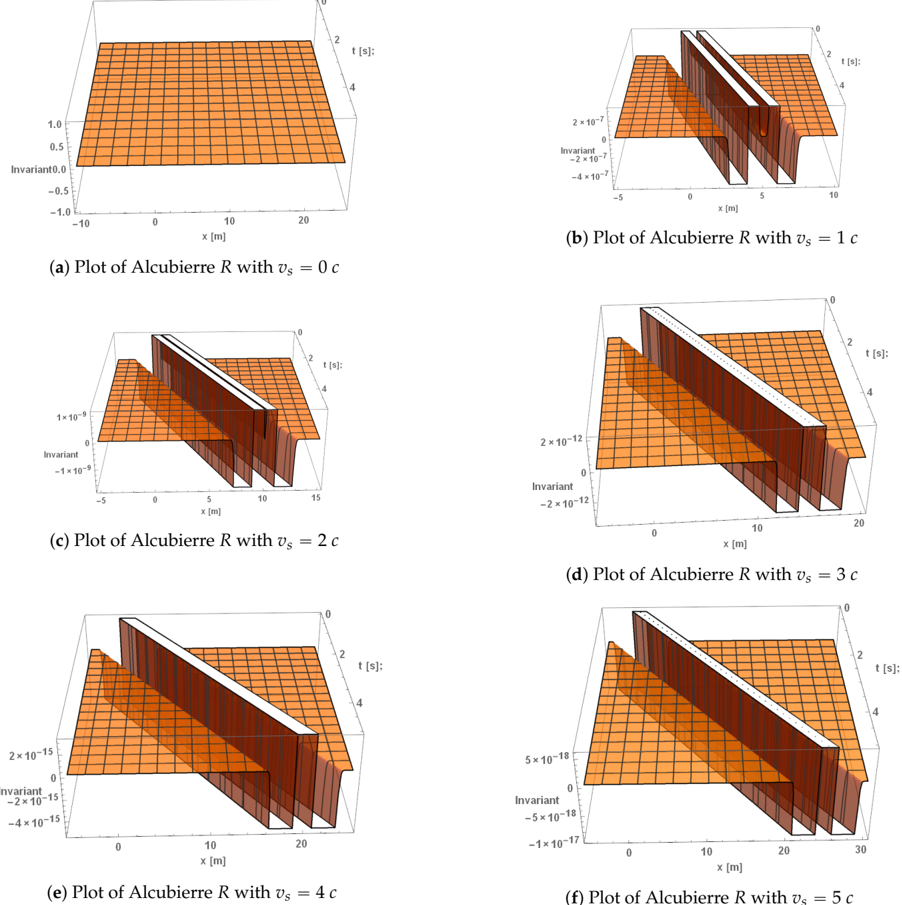
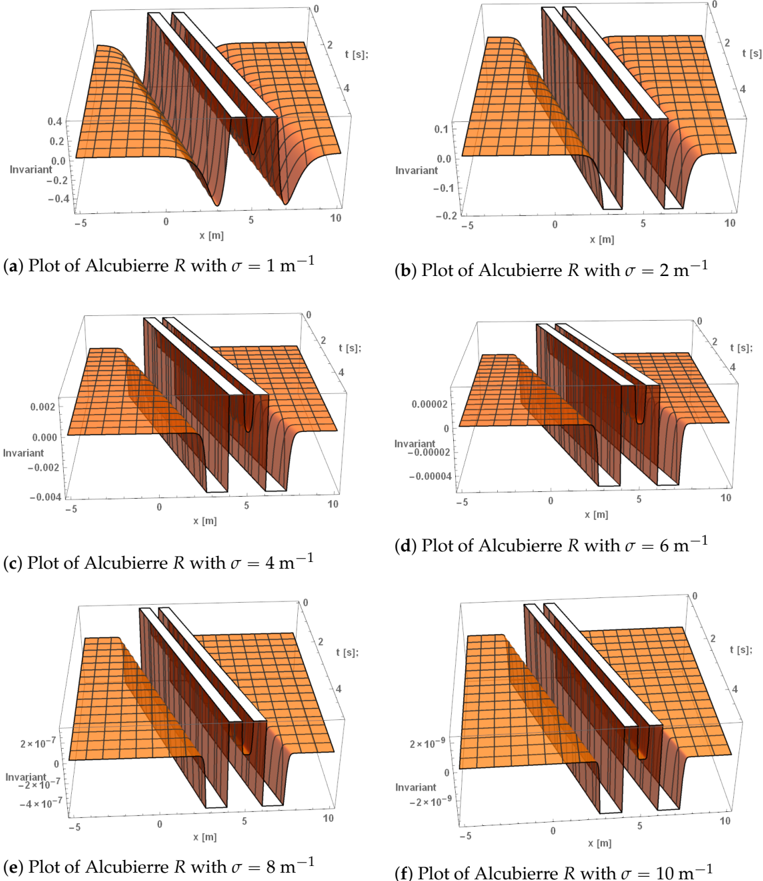
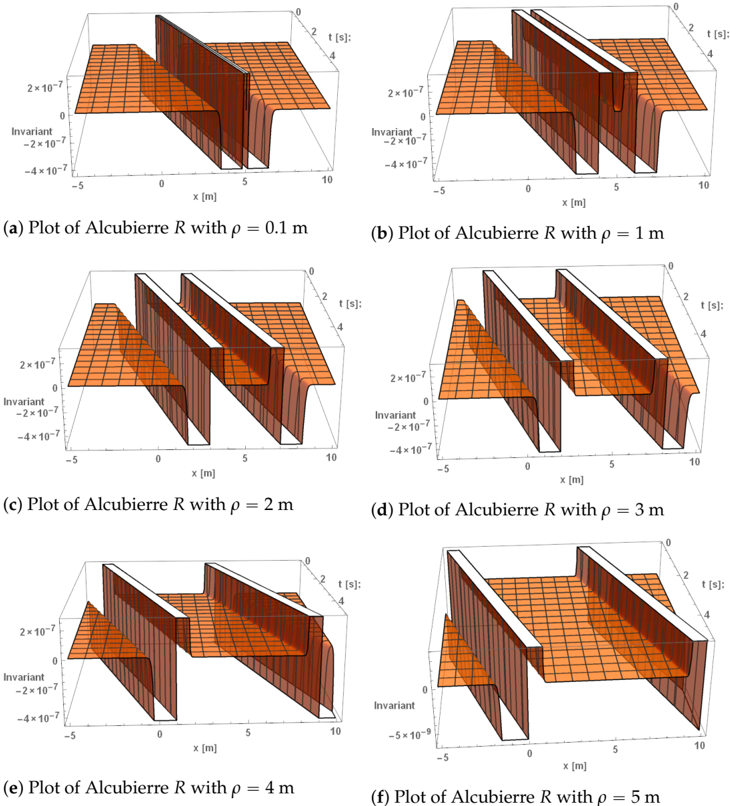
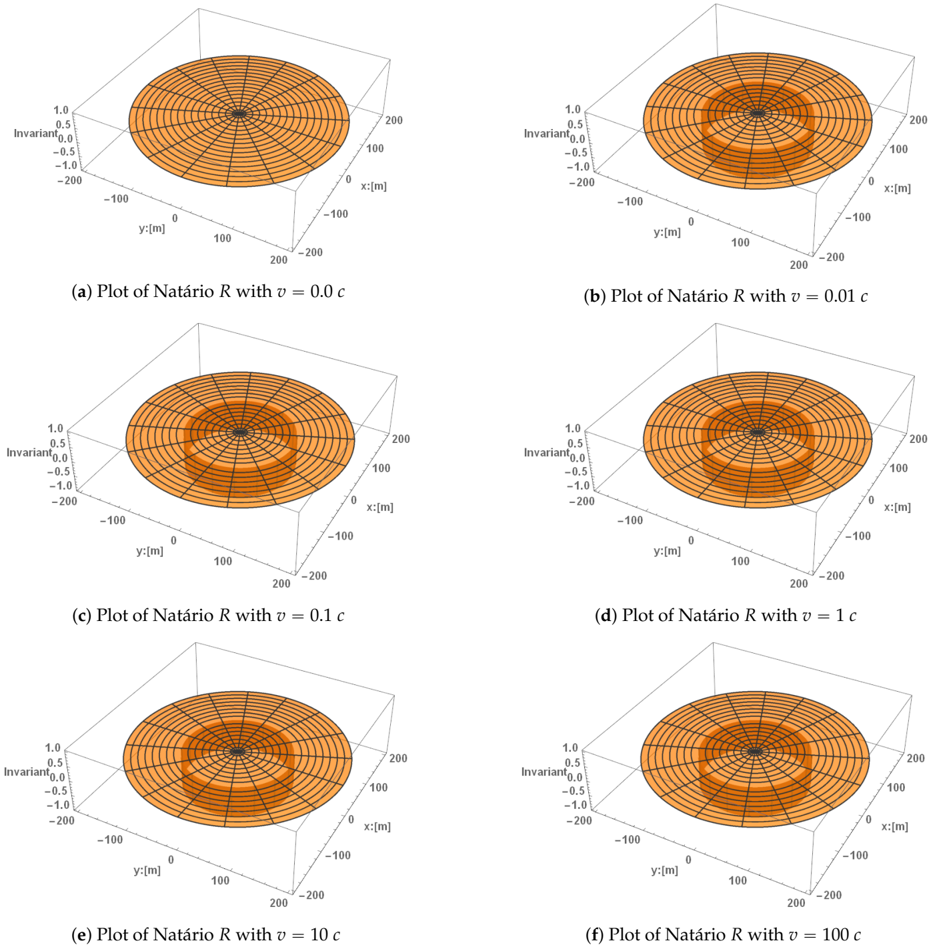
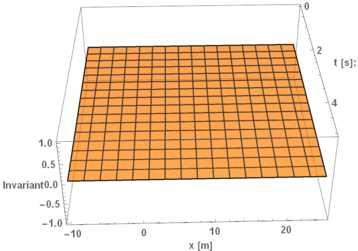
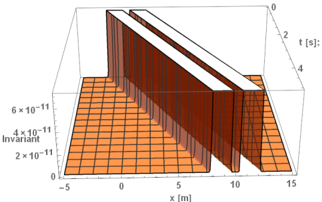
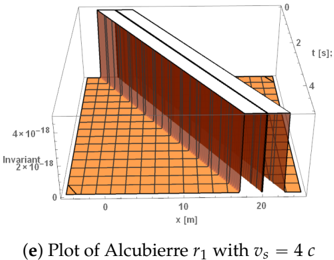
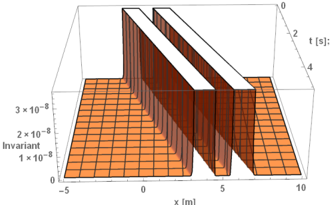
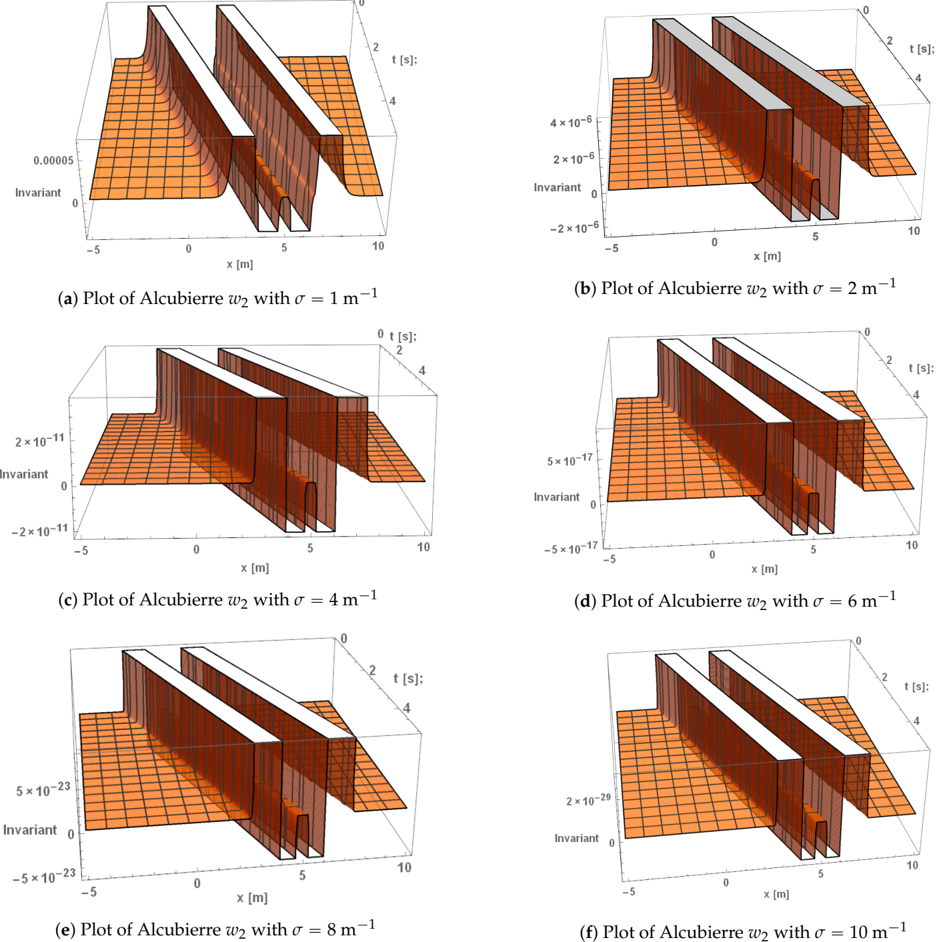
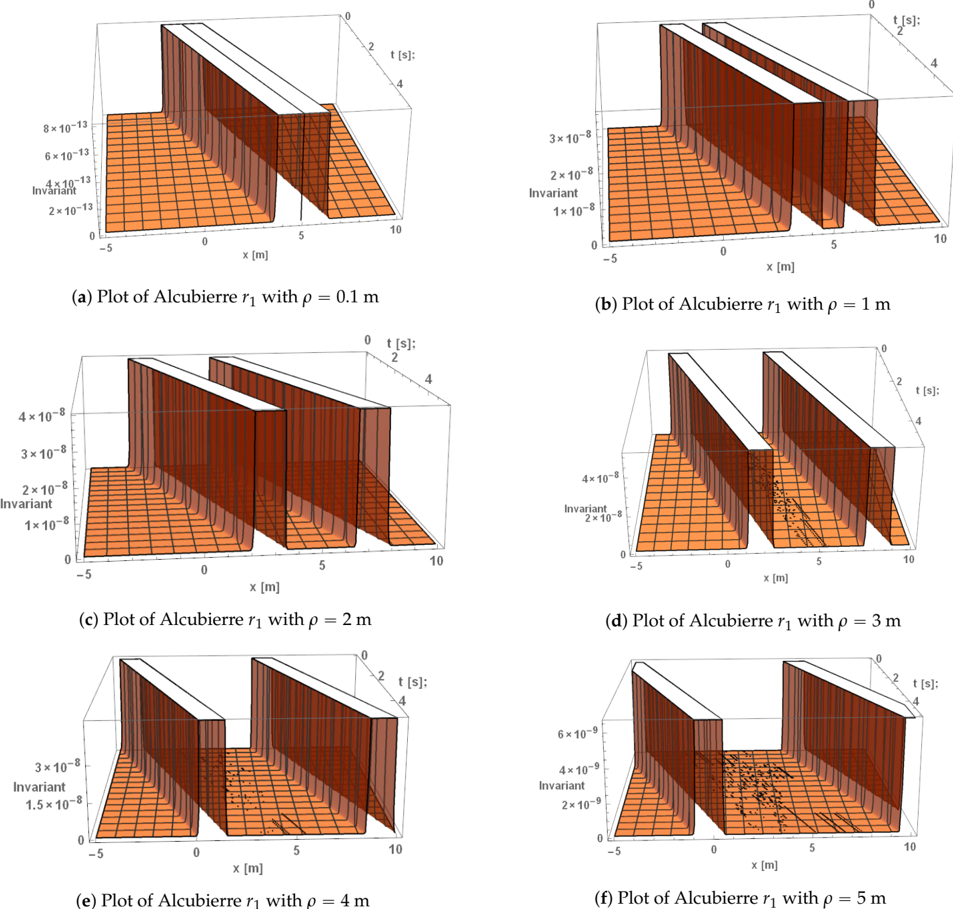
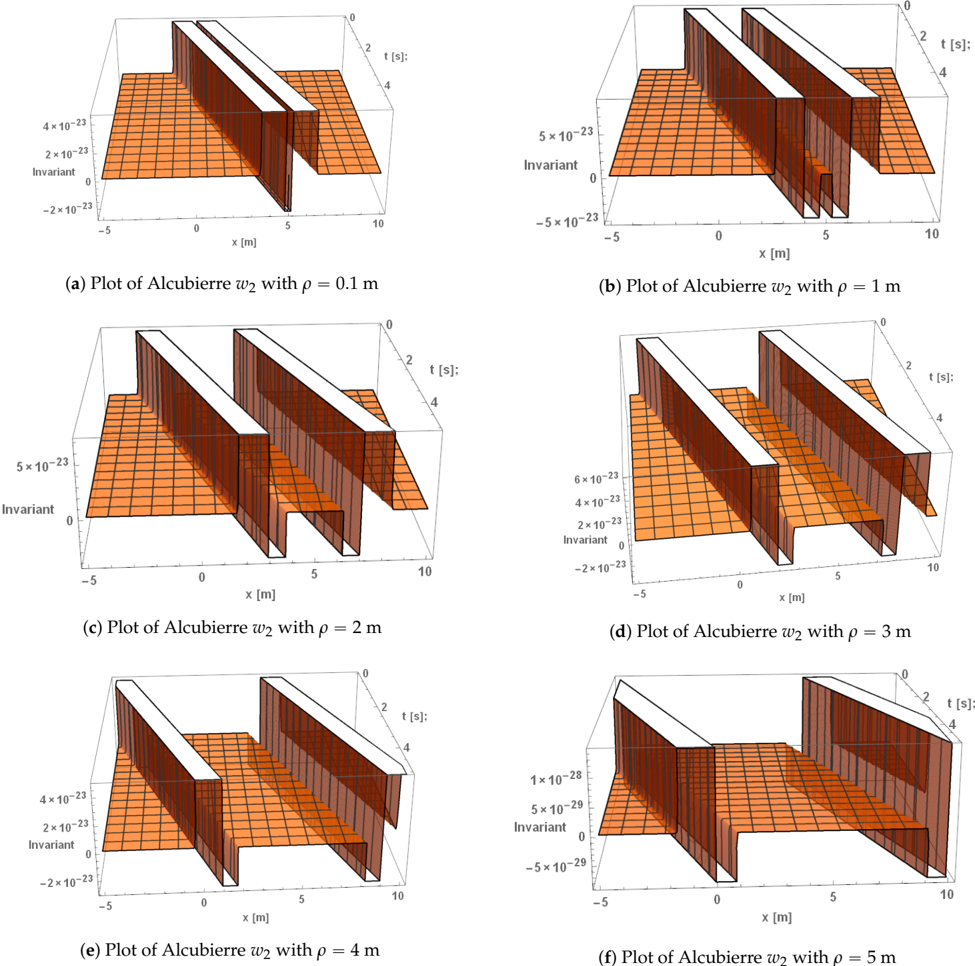
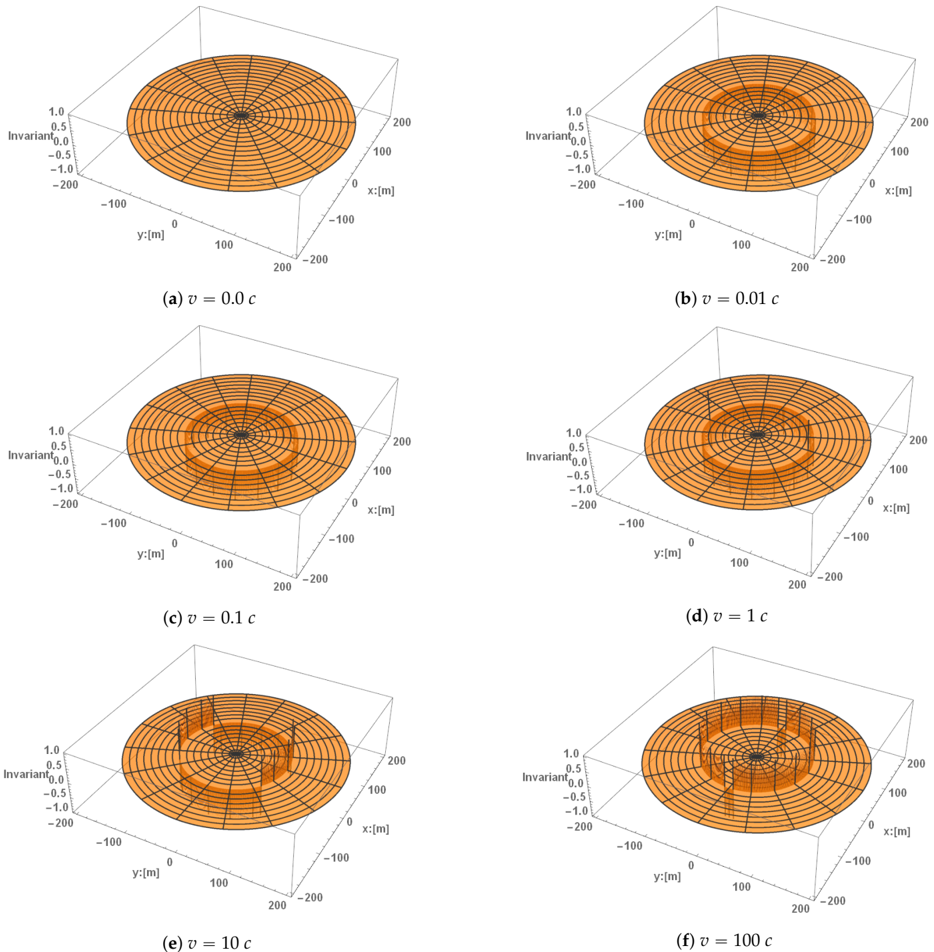
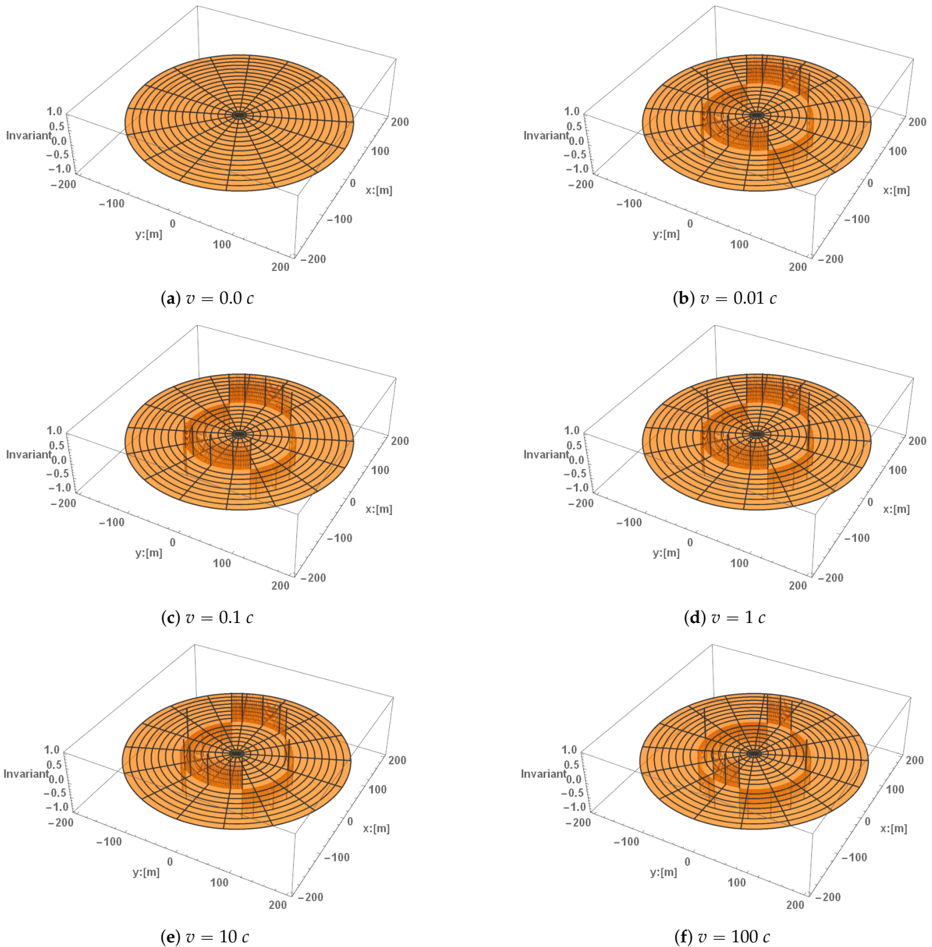
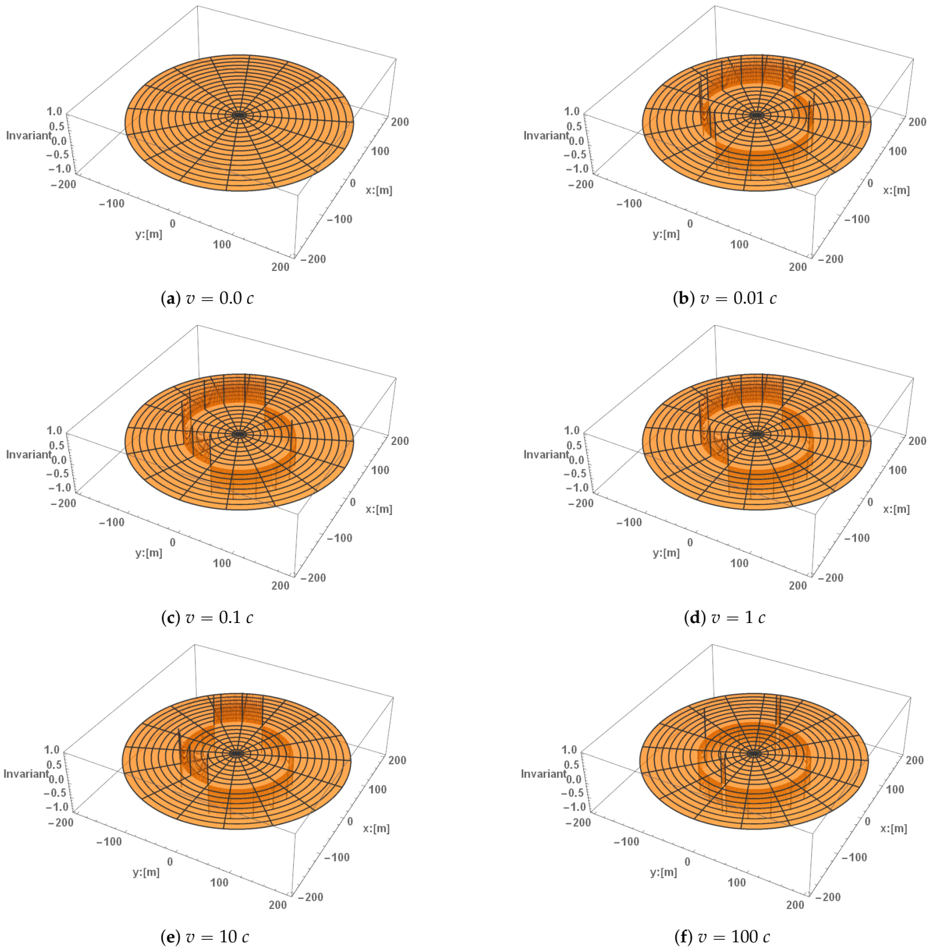
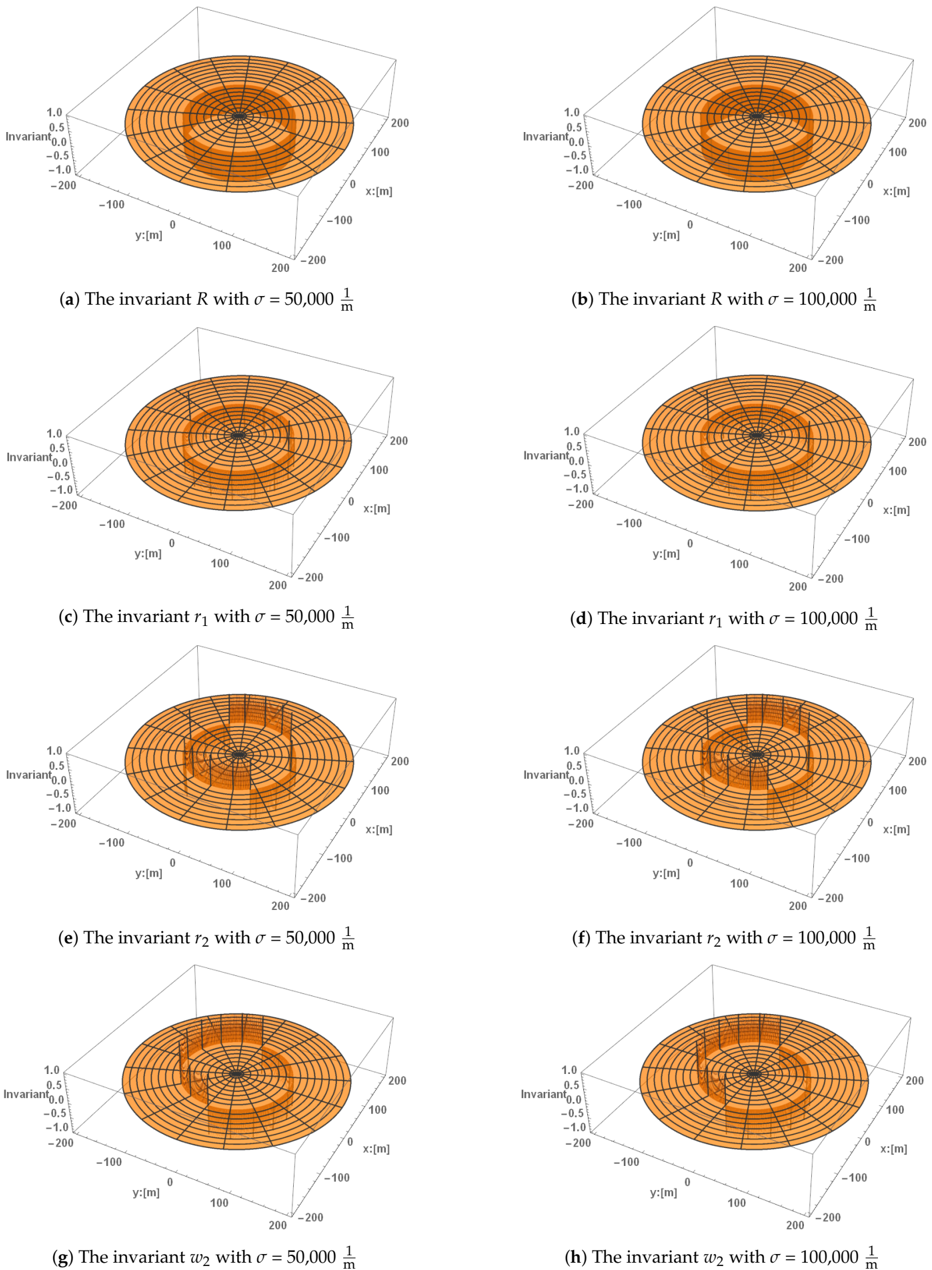
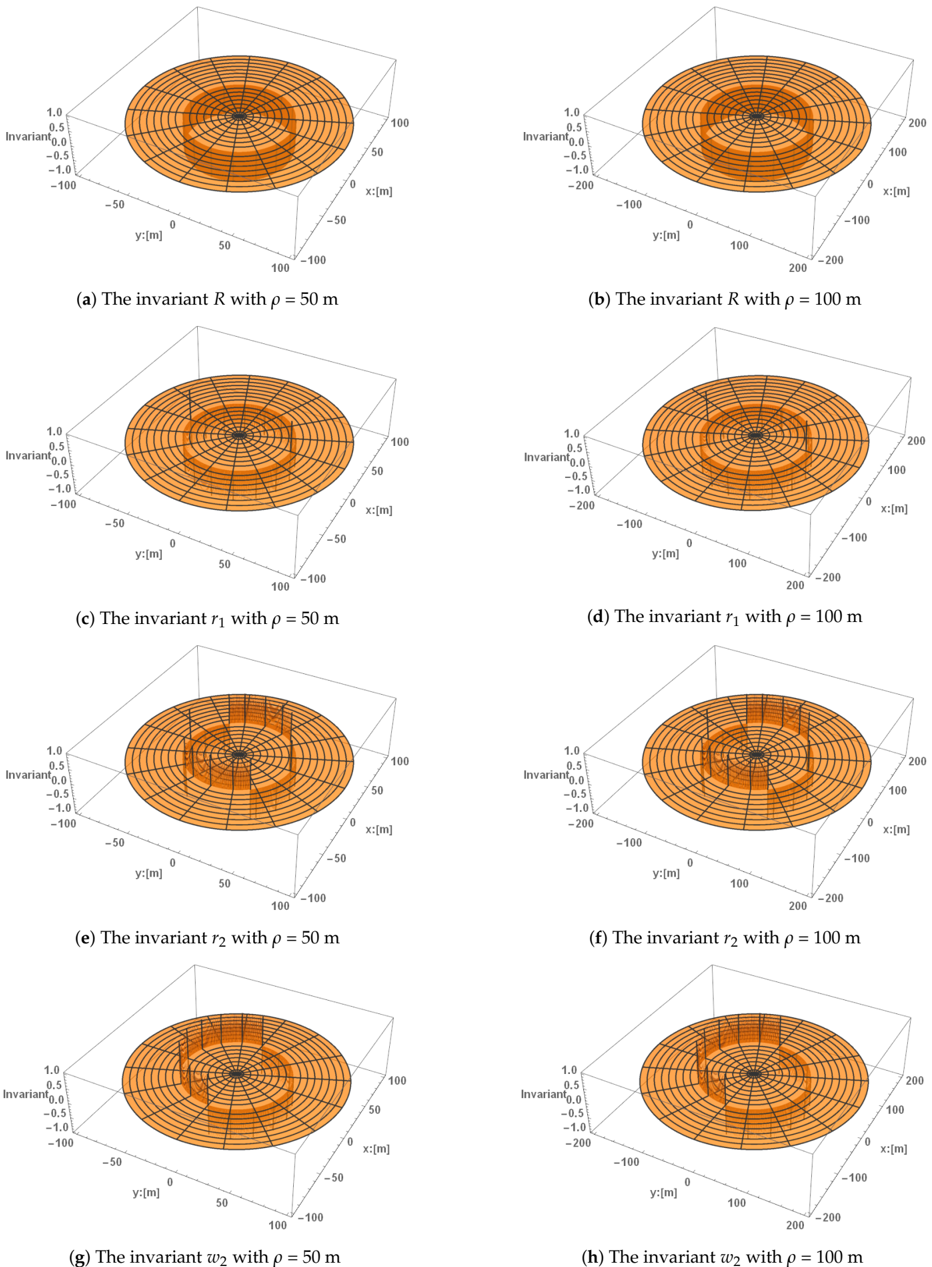
A process for using curvature invariants is applied to evaluate the metrics for the Alcubierre and the Natário warp drives at a constant velocity. Curvature invariants are independent of coordinate bases, so plotting these invariants will be free of coordinate mapping distortions. As a consequence, they provide a novel perspective into complex spacetimes, such as warp drives. Warp drives are the theoretical solutions to Einstein’s field equations that allow for the possibility for faster-than-light (FTL) travel. While their mathematics is well established, the visualisation of such spacetimes is unexplored. This paper uses the methods of computing and plotting the warp drive curvature invariants to reveal these spacetimes. The warp drive parameters of velocity, skin depth and radius are varied individually and then plotted to see each parameter’s unique effect on the surrounding curvature. For each warp drive, this research shows a safe harbor and how the shape function forms the warp bubble. The curvature plots for the constant velocity Natário warp drive do not contain a wake or a constant curvature, indicating that these are unique features of the accelerating Natário warp drive.
Overview
The claims and statistics of this paper haven’t been checked yet.
Free: it reads the open-access text and checks the first 5 claims that cite a source we can check. Create a free account to check every claim.
Integrity signals
Registry
Cites
Statistics
Figures
Verification
Claims the paper makes
The claims and statistics of this paper haven’t been checked yet.
Free: it reads the open-access text and checks the first 5 claims that cite a source we can check. Create a free account to check every claim.
Self-check
Percentages, sums and reported differences re-computed from the paper’s own numbers.
The self-check needs the paper’s full text.
Citations
Cites
Wormholes in spacetime and their use for interstellar travel: A tool for teaching general relativity
Morris, M. S., & Thorne, K. S. (1988) · American Journal of Physics · doi:10.1119/1.15620 · Cited by 2,939
Exact Solutions of Einstein's Field Equations
Stephani, H., Kramer, D., MacCallum, M., Hoenselaers, C., & Herlt, E. (2003) · doi:10.1017/cbo9780511535185 · Cited by 2,184
Wormholes, Time Machines, and the Weak Energy Condition
Morris, M. S., Thorne, K. S., & Yurtsever, U. (1988) · Physical Review Letters · doi:10.1103/physrevlett.61.1446 · Cited by 1,609
Lorentzian Wormholes: From Einstein to Hawking
(1996) · Choice Reviews Online · doi:10.5860/choice.33-5168 · Cited by 1,319
Dynamical Structure and Definition of Energy in General Relativity
Arnowitt, R., Deser, S., & Misner, C. W. (1959) · Physical Review · doi:10.1103/physrev.116.1322 · Cited by 894 · cited 1×
“It decomposes spacetime into space-like hyper-surfaces parametrized by the value of an arbitrary time coordinate dx [27, 28].”
BackgroundIntroducing Einstein’s Relativity
d’Invemo, R. (1992) · doi:10.1093/oso/9780198596530.001.0001 · Cited by 624
The warp drive: hyper-fast travel within general relativity
Alcubierre, M. (1994) · Classical and Quantum Gravity · doi:10.1088/0264-9381/11/5/001 · Cited by 569 · cited 5×
“FTL warp should not encounter a singularity inside or out of it. The two most well known solutions to Einstein’s equations that obey these eight requirements are traversable wormholes and warp drives [1,2,4,5,6,7,8,9,10,12]. While Einstein’s equations allow for their possibility, each solution remains at the theoretic…”
BackgroundMethodInfluentialIntroducing Einstein's Relativity: A Deeper Understanding
d'Inverno, R., & Vickers, J. (2022) · doi:10.1093/oso/9780198862024.001.0001 · Cited by 416
Scalar-tensor theory and scalar charge
Bronnikov, K. A. (1973) · Acta Physica Polonica B · Cited by 327
Ueber die Transformation der homogenen Differentialausdrücke zweiten Grades.
Christoffel, E. B. (1869) · Journal für die reine und angewandte Mathematik (Crelles Journal) · doi:10.1515/crll.1869.70.46 · Cited by 205
Wormholes, Warp Drives and Energy Conditions
(2017) · Fundamental Theories of Physics · doi:10.1007/978-3-319-55182-1 · Cited by 189
Exact solutions of Einstein's equations
MacCallum, M. (2013) · Scholarpedia · doi:10.4249/scholarpedia.8584 · Cited by 165
Algebraic invariants of the Riemann tensor in a four-dimensional Lorentzian space
Carminati, J., & McLenaghan, R. G. (1991) · Journal of Mathematical Physics · doi:10.1063/1.529470 · Cited by 149
Kretschmann Scalar for a Kerr‐Newman Black Hole
Henry, R. C. (2000) · The Astrophysical Journal · doi:10.1086/308819 · Cited by 139
Hyperfast travel in general relativity
Krasnikov, S. V. (1998) · Physical Review D · doi:10.1103/physrevd.57.4760 · Cited by 138
A `warp drive' with more reasonable total energy requirements
Broeck, C. V. D. (1999) · Classical and Quantum Gravity · doi:10.1088/0264-9381/16/12/314 · Cited by 99
A Complete Set of Riemann Invariants
Zakhary, E., & McIntosh, C. B. G. (1997) · General Relativity and Gravitation · doi:10.1023/a:1018851201784 · Cited by 98
Kretschmann Scalar for a Kerr-Newman Black Hole
Henry, R. C. (1999) · CERN Document Server (European Organization for Nuclear Research) · Cited by 73
Warp drive with zero expansion
Natário, J. (2002) · Classical and Quantum Gravity · doi:10.1088/0264-9381/19/6/308 · Cited by 70 · cited 1×
“iants for the Alcubierre warp drive. 3.2 Natario Warp Drive at a Constant Velocity Natario improved upon Alcubierre’s work by constructing a warp drive spacetime such that no net expansion occurred [2]. His warp drive spacetime chose a shift vector rotated around the x axis in spherical polar coordinates. As a consequ…”
BackgroundInfluentialWarp drive with zero expansionPreprint
Natário, J. (2001) · Cited by 46
Invariants of the Riemann tensor for class B warped product space-times
Santosuosso, K., Pollney, D., Pelavas, N., Musgrave, P., & Lake, K. (1998) · Computer Physics Communications · doi:10.1016/s0010-4655(98)00134-9 · Cited by 40
Cartan invariants and event horizon detection
Brooks, D., Chavy-Waddy, P. C., Coley, A. A., Forget, A., Gregoris, D., MacCallum, M. A. H., & McNutt, D. D. (2018) · General Relativity and Gravitation · doi:10.1007/s10714-018-2358-4 · Cited by 36
Cartan Invariants and Event Horizon Detection, Extended VersionPreprint
McNutt, D. D., MacCallum, M. A. H., Gregoris, D., Forget, A., Coley, A. A., Chavy-Waddy, P. C., & Brooks, D. (2017) · arXiv (Cornell University) · doi:10.48550/arxiv.1709.03362 · Cited by 34
Spacetime invariants and their usesPreprint
MacCallum, M. A. H. (2015) · arXiv (Cornell University) · doi:10.48550/arxiv.1504.06857 · Cited by 29
Dust content solutions for the Alcubierre warp drive spacetime
Santos-Pereira, O. L., Abreu, E. M. C., & Ribeiro, M. B. (2020) · The European Physical Journal C · doi:10.1140/epjc/s10052-020-8355-2 · Cited by 25
Curvature Invariants for Charged and Rotating Black Holes
OVERDUIN, J. M., Coplan, M., Wilcomb, K., & Henry, R. C. (2020) · Universe · doi:10.3390/universe6020022 · Cited by 22
Curvature Invariants for Lorentzian Traversable Wormholes
Mattingly, B., Kar, A., Julius, W., Gorban, M., Watson, C. K., Ali, M., Baas, A., Elmore, C., Shakerin, B., Davis, E. W., et al. (2020) · Universe · doi:10.3390/universe6010011 · Cited by 15
Self-citationAhmed, F. (2017) · Advances in High Energy Physics · doi:10.1155/2017/7943649 · Cited by 10
Curvature Invariants for the Accelerating Natário Warp Drive
Mattingly, B., Kar, A., Gorban, M., Julius, W., Watson, C. K., Ali, M. D., Baas, A., Elmore, C., Lee, J. S., Shakerin, B., et al. (2020) · Particles · doi:10.3390/particles3030042 · Cited by 9
Self-citationLoup, F. (2017) · HAL (Le Centre pour la Communication Scientifique Directe) · Cited by 5
Six different Natario warp drive spacetime metric equations
Loup, F. (2018) · HAL · Cited by 5
Research works printed but not linked: 4
- 2. Davis, E.W. Chapter 15: Faster-Than-Light Approaches in General Relativity. In Frontiers of Propulsion Science ; Progress in Astronautics & Aeronautics Series; American Inst. of Aeronautics & Astronautics Press: Reston, VA, USA, 2009; pp. 473-509.
- 12. Alcubierre, M.; Lobo, F.S.N. Warp Drive Basics, Wormholes, Warp Drives and Energy Conditions. Fund. Theor. Phys. 2017 , 189 , 257-279.
- 13. Barceló, C.; Liberati, S. Probing Faster than Light Travel and Chronology. Wormholes, Warp Drives and Energy Conditions. Fund. Theor. Phys. 2017 , 189 , 281-299.
- 29. Marquet, P. The Generalized Warp Drive Concept in the EGR Theory. Abraham Zelmanov J. 2009 , 2 , 261-187.
Cited by
Fluid dynamics in the warp drive spacetime geometry
Santos-Pereira, O. L., Abreu, E. M. C., & Ribeiro, M. B. (2021) · The European Physical Journal C · doi:10.1140/epjc/s10052-021-08921-3 · Cited by 29
Curvature invariants for accelerating Kerr–Newman black holes in (anti-)de Sitter spacetime
Kraniotis, G. V. (2022) · Classical and Quantum Gravity · doi:10.1088/1361-6382/ac750a · Cited by 18
Perfect fluid warp drive solutions with the cosmological constant
Santos-Pereira, O. L., Abreu, E. M. C., & Ribeiro, M. B. (2021) · The European Physical Journal Plus · doi:10.1140/epjp/s13360-021-01899-7 · Cited by 15
“[18, 19] studied the curvature invariants characteristic of Natario and Alcubierre warp drives, whereas Mattingly [20] discussed further curvature invariants for warped spacetimes.”
BackgroundCurrent Problems and Recent Advances in Wormhole Physics
Bronnikov, K. A., & Sushkov, S. V. (2023) · Universe · doi:10.3390/universe9020081 · Cited by 11
On the total energy conservation of the Alcubierre spacetime
Carneiro, F. L., Ulhoa, S. C., Maluf, J. W., & da Rocha-Neto, J. F. (2022) · Journal of Cosmology and Astroparticle Physics · doi:10.1088/1475-7516/2022/07/030 · Cited by 8
Metadata
- Authors
- Mattingly, B., Kar, A., Gorban, M., Julius, W., Watson, C. K., Ali, M., Baas, A., Elmore, C., Lee, J. S., Shakerin, B., Davis, E. W., & Cleaver, G. B.
- Affiliations
- Baylor University (US)
- Corresponding author
- Cleaver, Gerald B.
- ORCID
- Venue
- Universe
- Publisher
- MDPI AG
- Published
- 2021-01-20
- Volume
- 7
- Issue
- 2
- Pages
- 21
- ISSN
- 2218-1997 (ISSN-L)
- OpenAlex
- W3094103116
- Cited by
- 14
- References
- 31
- Citations by year
- 2026: 2 · 2024: 3 · 2023: 2 · 2022: 4 · 2021: 3
- FWCI
- 1.61
- Type
- journal article
- Language
- en
- Open access
- gold
- dx.doi.org
- Licence
- Locations
- Universe (publishedVersion, cc-by)
- arXiv (Cornell University) (submittedVersion)
- DOAJ (DOAJ: Directory of Open Access Journals) (submittedVersion, cc-by-sa)
- arXiv (Cornell University)
- Topics
- Physical Sciences › Physics and Astronomy › Astronomy and Astrophysics › Relativity and Gravitational Theory
- Physical Sciences › Physics and Astronomy › Astronomy and Astrophysics › Cosmology and Gravitation Theories
- Physical Sciences › Mathematics › Geometry and Topology › Advanced Differential Geometry Research
- Keywords
- warp drive, Alcubierre metric, curvature invariants, spacetime visualization, faster-than-light travel, shape functions, warp bubble, safe harbor, skin depth, constant velocity, spacetime curvature
About these checks
Registry, retraction, Cites and statistics results are computed, not judged, with one exception: a printed reference that no index lists is read once by a model before it counts as a citation error. Claims are extracted by a model and kept only when their quote appears verbatim in the text; each cited source is then checked, with a model’s help, for whether it says what the claim relies on. Those verdicts can be wrong — read the claim’s quote and the cited source before relying on one.
Statistics and arithmetic are recomputed, not judged.
Confidence bands are shown only for fields calibrated on our annotated test set. None is calibrated yet, so no band is shown.
What counts as a claim ›How we measure confidence ›How we check this ›
Are you an author, or do you see a problem with this page? Request a review
Data sources
Bibliographic data: Semantic Scholar, OpenAlex, Crossref.
Contains information from the Semantic Scholar Academic Graph Datasets, made available under the ODC Attribution License (ODC-BY 1.0).
Semantic Scholar’s data is described in: Kinney, R., et al. (2023). The Semantic Scholar Open Data Platform. arXiv:2301.10140.
