

Multiplex Detection of Aspergillus fumigatus Mycoviruses
Open accessThe DOI matches its Crossref record; 26 of the 26 references it cites were found in a registry or an index.
Abstract
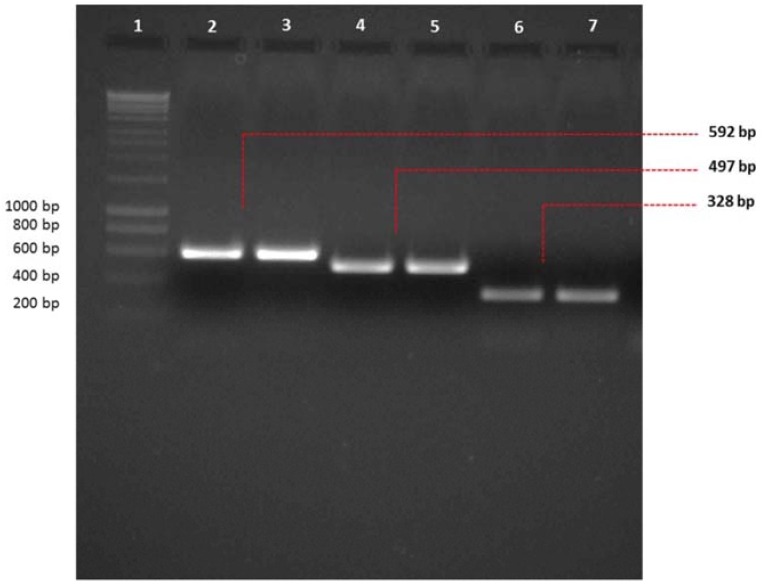
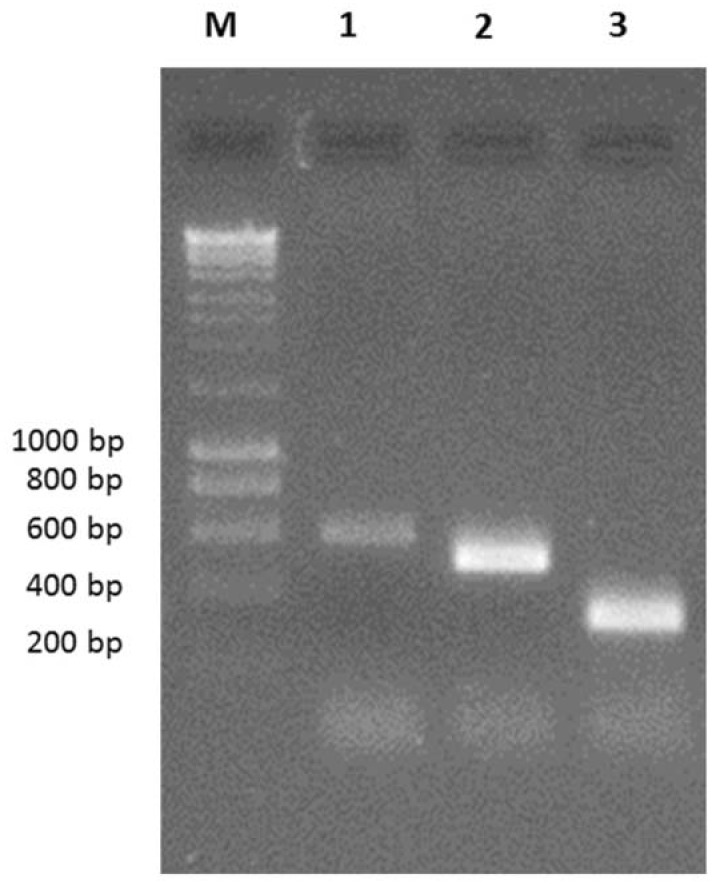
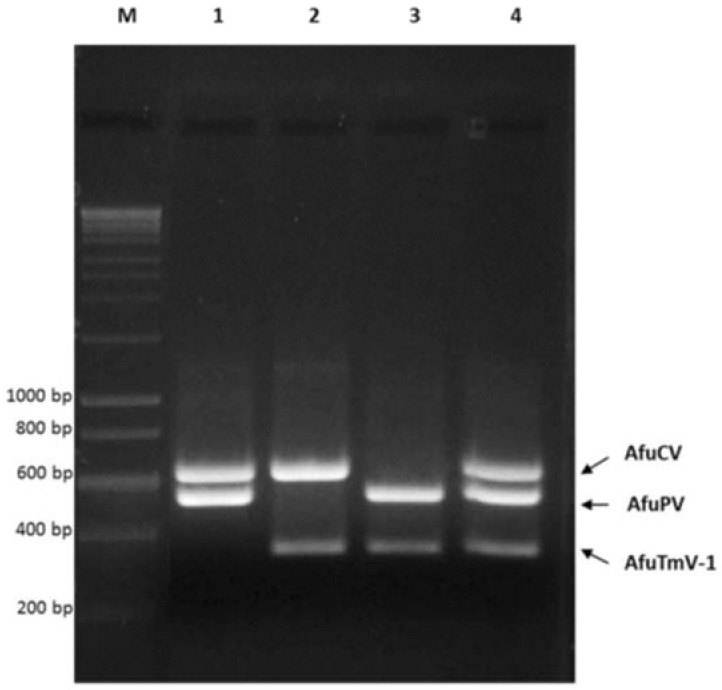
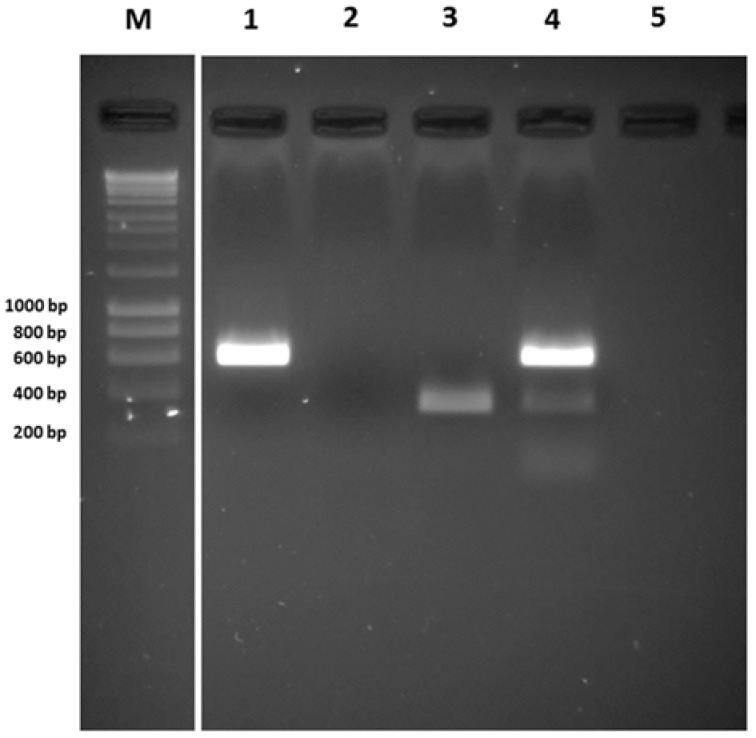
Mycoviruses are viruses that naturally infect and replicate in fungi. They are widespread in all major fungal groups including plant and animal pathogenic fungi. Several dsRNA mycoviruses have been reported in Aspergillus fumigatus. Multiplex polymerase chain reaction (PCR) amplification is a version of PCR that enables amplification of different targets simultaneously. This technique has been widely used for detection and differentiation of viruses especially plant viruses such as those which infect tobacco, potato and garlic. For rapid detection, multiplex RT-PCR was developed to screen new isolates for the presence of A. fumigatus mycoviruses. Aspergillus fumigatus chrysovirus (AfuCV), Aspergillus fumigatus partitivirus (AfuPV-1), and Aspergillus fumigatus tetramycovirus-1 (AfuTmV-1) dsRNAs were amplified in separate reactions using a mixture of multiplex primer pairs. It was demonstrated that in the presence of a single infection, primer pair mixtures only amplify the corresponding single virus infection. Mixed infections using dual or triple combinations of dsRNA viruses were also amplified simultaneously using multiplex RT-PCR. Up until now, methods for the rapid detection of Aspergillus mycoviruses have been restricted to small scale dsRNA extraction approaches which are laborious and for large numbers of samples not as sensitive as RT-PCR. The multiplex RT-PCR assay developed here will be useful for studies on determining the incidence of A. fumigatus mycoviruses. This is the first report on multiplex detection of A. fumigatus mycoviruses.
Overview
The claims and statistics of this paper haven’t been checked yet.
Free: it reads the open-access text and checks the first 5 claims that cite a source we can check. Create a free account to check every claim.
Integrity signals
Registry
Cites
Statistics
Figures
Verification
Claims the paper makes
The claims and statistics of this paper haven’t been checked yet.
Free: it reads the open-access text and checks the first 5 claims that cite a source we can check. Create a free account to check every claim.
Claims other papers make about this one
Each is checked against this paper’s own text: does it say what the citing paper says it does?
The cited source says what the claim attributes to it.
In the citing paper
“A. fumigatus is regularly reported to be infected by viruses (592, 593).”
From Aspergillus fumigatus and Aspergillosis in 2019 (2019) · cites this paper as [593]
Self-check
Percentages, sums and reported differences re-computed from the paper’s own numbers.
The self-check needs the paper’s full text.
Citations
Cites
Aspergillus fumigatus and Aspergillosis
Latgé, J.-P. (1999) · Clinical Microbiology Reviews · doi:10.1128/cmr.12.2.310 · Cited by 2,307 · cited 1×
“Aspergillus fumigatus is an important pathogen with the capability of infecting humans, invading lungs and leading to opportunistic infections in immunocompromised hosts along with the allergic reactions in healthy individuals [1,2].”
BackgroundMethods in virus diagnostics: From ELISA to next generation sequencing
Boonham, N., Kreuze, J., Winter, S., van der Vlugt, R., Bergervoet, J., Tomlinson, J., & Mumford, R. (2014) · Virus Research · doi:10.1016/j.virusres.2013.12.007 · Cited by 448 · cited 1×
“Multiplex detection technologies where simultaneous detection of multiple viruses in a single assay can be achieved, enables a reduction in cost, time and labor as compared to other detection methods [9].”
ResultMarzano, S.-Y. L., Nelson, B. D., Ajayi-Oyetunde, O., Bradley, C. A., Hughes, T. J., Hartman, G. L., Eastburn, D. M., & Domier, L. L. (2016) · Journal of Virology · doi:10.1128/jvi.00357-16 · Cited by 261 · cited 1×
“These include RT-LAMP [12] and next generation sequencing-mediated virus detection and characterization [24,25], and it is conceivable that such techniques could be combined with multiplex-PCR technology in virus detection and characterization in the future.”
MethodA Multiplex PCR Assay to Characterize Potato virus Y Isolates and Identify Strain Mixtures
Lorenzen, J. H., Piche, L. M., Gudmestad, N. C., Meacham, T., & Shiel, P. (2006) · Plant Disease · doi:10.1094/pd-90-0935 · Cited by 183
Wingfield, L. K., Kotta‐Loizou, I., Özkan-Kotiloğlu, S., Gunning, A. P., & Coutts, R. H. A. (2015) · Proceedings of the National Academy of Sciences · doi:10.1073/pnas.1419225112 · Cited by 175 · cited 1×
“fumigatus mycoviruses namely Aspergillus fumigatus chrysovirus (AfuCV) [17], Aspergillus fumigatus partitivirus (AfuPV-1) [18], and Aspergillus fumigatus tetramycovirus-1 (AfuTmV-1) [19], which have been reviewed recently by Kotta-Loizou and Coutts [20].”
BackgroundSelf-citationThe current role of Aspergillus and Penicillium in human and animal health
Pitt, J. I. (1994) · Medical Mycology · doi:10.1080/02681219480000701 · Cited by 175 · cited 2×
“) are universal and ubiquitous in nature, and are usually found as saprophytes in soil, decaying vegetation, seed and grains [1].”
BackgroundIsolation of Viral Double-Stranded RNAs Using a LiCl Fractionation Procedure
Diaz-ruiz, J. R., & Kaper, J. M. (1978) · Preparative Biochemistry · doi:10.1080/00327487808068215 · Cited by 162 · cited 1×
“Additionally, viral dsRNAs were extracted using LiCl extraction as described previously [21] and used as a positive control in order to check the efficiency of the kit at extracting viral dsRNAs.”
MethodNerva, L., Ciuffo, M., Vallino, M., Margaria, P., Varese, G. C., Gnavi, G., & Turina, M. (2015) · Virus Research · doi:10.1016/j.virusres.2015.10.028 · Cited by 149 · cited 2×
“These include RT-LAMP [12] and next generation sequencing-mediated virus detection and characterization [24,25], and it is conceivable that such techniques could be combined with multiplex-PCR technology in virus detection and characterization in the future.”
BackgroundMethodMycoviruses in Aspergilli: A Comprehensive Review
Kotta-Loizou, I., & Coutts, R. H. A. (2017) · Frontiers in Microbiology · doi:10.3389/fmicb.2017.01699 · Cited by 130 · cited 4×
“fumigatus mycoviruses namely Aspergillus fumigatus chrysovirus (AfuCV) [17], Aspergillus fumigatus partitivirus (AfuPV-1) [18], and Aspergillus fumigatus tetramycovirus-1 (AfuTmV-1) [19], which have been reviewed recently by Kotta-Loizou and Coutts [20].”
BackgroundMethodSelf-citationMultiple virus infection in a single strain of Fusarium poae shown by deep sequencing
Osaki, H., Sasaki, A., Nomiyama, K., & Tomioka, K. (2016) · Virus Genes · doi:10.1007/s11262-016-1379-x · Cited by 124
Cited by
Aspergillus fumigatus and Aspergillosis in 2019
Latgé, J.-P., & Chamilos, G. (2019) · Clinical Microbiology Reviews · doi:10.1128/cmr.00140-18 · Cited by 1,400
Briard, B., Mislin, G. L. A., Latgé, J.-P., & Beauvais, A. (2019) · Journal of Fungi · doi:10.3390/jof5020048 · Cited by 69
Multiplex Detection of Pleurotus ostreatus Mycoviruses
Zhang, X., Hu, H., Wang, Y., Yan, J., Liu, Y., Wang, J., & Cheng, X. (2022) · Current Issues in Molecular Biology · doi:10.3390/cimb44110392 · Cited by 9
Mycoviruses: Past, Present, and Future.
Matsubara, K., Watanabe, I., & Kiho, Y. (1961) · PubMed Central · doi:10.3390/v11040361 · Cited by 8
Identification and analysis of new mycoviruses from melon powdery mildew
Maimaiti, Y., Ding, L., Chai, M., Jing, X., Du, Y., Han, S., Sun, L., & Chen, W. (2020) · Journal of Plant Pathology · doi:10.1007/s42161-020-00607-1 · Cited by 3
Tsuchida, S., Yamashita, K., Murata, S., Miyabe, A., Satoh, M., Matsushita, K., Nakayama, T., Nomura, F., & Umemura, H. (2023) · Journal of Microbiological Methods · doi:10.1016/j.mimet.2023.106706 · Cited by 2
An Account on Mycoviruses and Their Applications
Khan, M. I. R. (2021) · Advances in environmental engineering and green technologies book series · doi:10.4018/978-1-7998-7062-3.ch013
Collier, L. (2019) · Research Explorer (The University of Manchester)
Bornman, S., Read, D., Wingfield, B. D., & Wilken, P. M. (2026) · Virology · doi:10.1016/j.virol.2026.111020
Metadata
- Authors
- Özkan-Kotiloğlu, S., & Coutts, R. H. A.
- Affiliations
- Ahi Evran University (TR)
- University of Hertfordshire (GB)
- Corresponding author
- Özkan-Kotiloğlu, Selin
- Venue
- Viruses
- Publisher
- MDPI AG
- Published
- 2018-05-08
- Volume
- 10
- Issue
- 5
- Pages
- 247
- ISSN
- 1999-4915 (ISSN-L)
- PMC
- PMC5977240
- OpenAlex
- W2799691981
- Cited by
- 10
- References
- 26
- Citations by year
- 2026: 1 · 2023: 1 · 2022: 1 · 2021: 1 · 2020: 1 · 2019: 3 · 2018: 1
- FWCI
- 1.06
- Type
- journal article
- Language
- en
- Open access
- gold
- doi.org
- Licence
- Locations
- Viruses (publishedVersion, cc-by)
- PubMed Central (publishedVersion, cc-by)
- PubMed (publishedVersion)
- University of Hertfordshire Research Archive (University of Hertfordshire) (acceptedVersion)
- University of Hertfordshire Research Archive (University of Hertfordshire) (submittedVersion, cc-by)
- DOAJ (DOAJ: Directory of Open Access Journals) (submittedVersion, cc-by-sa)
- Funders
- Leverhulme Trust
- Topics
- Life Sciences › Immunology and Microbiology › Virology › Plant and Fungal Interactions Research
- Life Sciences › Immunology and Microbiology › Virology › Bacteriophages and microbial interactions
- Life Sciences › Agricultural and Biological Sciences › Plant Science › Plant Pathogens and Fungal Diseases
- Keywords
- Aspergillus fumigatus, mycoviruses, multiplex RT-PCR, double-stranded RNA virus, viral coinfection, virus detection
- MeSH terms
- Fungal Viruses, Aspergillus fumigatus, RNA Viruses, RNA, Double-Stranded, Sensitivity and Specificity, DNA Primers, Multiplex Polymerase Chain Reaction
About these checks
Registry, retraction, Cites and statistics results are computed, not judged, with one exception: a printed reference that no index lists is read once by a model before it counts as a citation error. Claims are extracted by a model and kept only when their quote appears verbatim in the text; each cited source is then checked, with a model’s help, for whether it says what the claim relies on. Those verdicts can be wrong — read the claim’s quote and the cited source before relying on one.
Statistics and arithmetic are recomputed, not judged.
Confidence bands are shown only for fields calibrated on our annotated test set. None is calibrated yet, so no band is shown.
What counts as a claim ›How we measure confidence ›How we check this ›
Are you an author, or do you see a problem with this page? Request a review
Data sources
Bibliographic data: Semantic Scholar, OpenAlex, Crossref.
Contains information from the Semantic Scholar Academic Graph Datasets, made available under the ODC Attribution License (ODC-BY 1.0).
Semantic Scholar’s data is described in: Kinney, R., et al. (2023). The Semantic Scholar Open Data Platform. arXiv:2301.10140.
