

The DOI matches its Crossref record; 6 of the 6 references it cites were found in a registry or an index.
Biochemical and Functional Interactions of Human Papillomavirus Proteins with Polycomb Group Proteins
Abstract
The role of enzymes involved in polycomb repression of gene transcription has been studied extensively in human cancer. Polycomb repressive complexes mediate oncogene-induced senescence, a principal innate cell-intrinsic tumor suppressor pathway that thwarts expansion of cells that have suffered oncogenic hits. Infections with human cancer viruses including human papillomaviruses (HPVs) and Epstein-Barr virus can trigger oncogene-induced senescence, and the viruses have evolved strategies to abrogate this response in order to establish an infection and reprogram their host cells to establish a long-term persistent infection. As a consequence of inhibiting polycomb repression and evading oncogene induced-senescence, HPV infected cells have an altered epigenetic program as evidenced by aberrant homeobox gene expression. Similar alterations are frequently observed in non-virus associated human cancers and may be harnessed for diagnosis and therapy.
Overview
The claims and statistics of this paper haven’t been checked yet.
Run the check — free, no account needed. It reads the open-access text and checks the sources it cites.
Integrity signals
Registry
Cites
Statistics
Figures
Verification
Claims the paper makes
The claims and statistics of this paper haven’t been checked yet.
Run the check — free, no account needed. It reads the open-access text and checks the sources it cites.
Claims other papers make about this one
Each is checked against this paper’s own text: does it say what the citing paper says it does?
In the citing paper
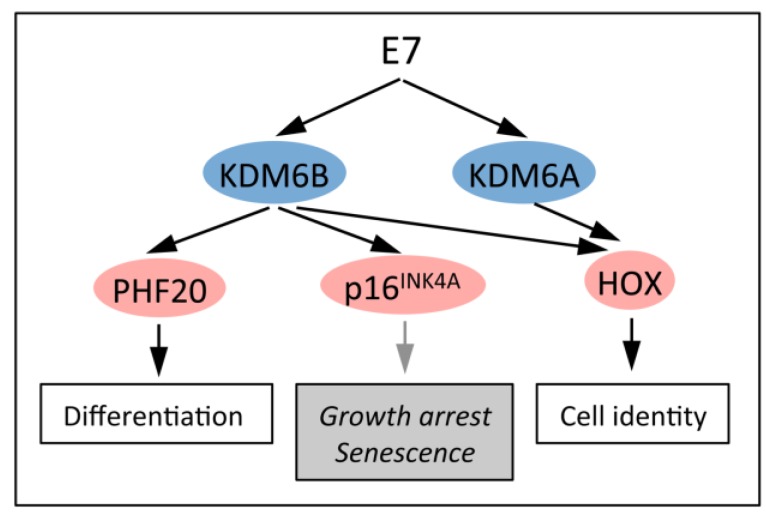
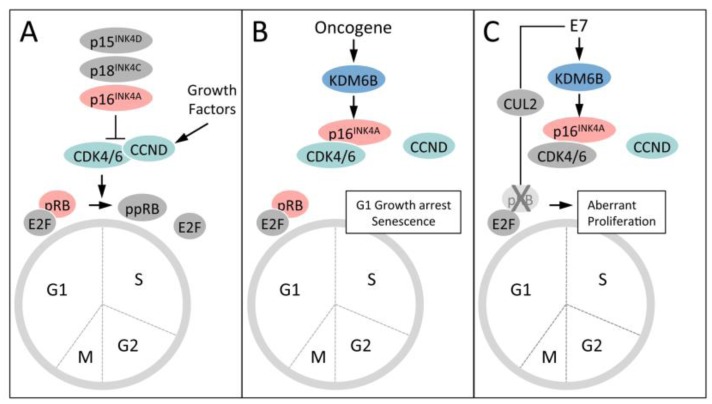
“KDM6B induction mediates increased expression of the cervical cancer biomarker p16INK4A. Higher expression of p16INK4A caused by HPV-16 E7 mediated KDM6D upregulation represents an E7-triggered oncogene-induced senescence (OIS) response.”
From The Not-So-Good, the Bad and the Ugly: HPV E5, E6 and E7 Oncoproteins in the Orchestration of Carcinogenesis (2021) · cites this paper as [334]
In the citing paper
“HPVs have evolved to target pRB for ubiquitin-dependent proteasomal degradation, which is why p16INK4A upregulation in HPV-positive cancer cells does not inhibit proliferation [332,333,334]”
From The Not-So-Good, the Bad and the Ugly: HPV E5, E6 and E7 Oncoproteins in the Orchestration of Carcinogenesis (2021) · cites this paper as [334]
Self-check
Percentages, sums and reported differences re-computed from the paper’s own numbers.
The self-check needs the paper’s full text.
Citations
Cites
Oncogenic ras provokes premature cell senescence associated with accumulation of p53 and p16INK4a
Serrano, M., Lin, A. W., McCurrach, M. E., Beach, D., & Lowe, S. W. (1997) · Cell · doi:10.1016/s0092-8674(00)81902-9 · Cited by 5,218 · cited 1×
“OIS was initially discovered with the RAS oncogene and is signaled through transcriptional upregulation of the p16 INK4A tumor suppressor [70] (Figure 5).”
BackgroundEZH2 is downstream of the pRB-E2F pathway, essential for proliferation and amplified in cancer.
Bracken, A. P., Pasini, D., Capra, M., Prosperini, E., Colli, E., & Helin, K. (2003) · The EMBO Journal · doi:10.1093/emboj/cdg542 · Cited by 1,196
De Santa, F., Totaro, M. G., Prosperini, E., Notarbartolo, S., Testa, G., & Natoli, G. (2007) · Cell · doi:10.1016/j.cell.2007.08.019 · Cited by 965
A selective jumonji H3K27 demethylase inhibitor modulates the proinflammatory macrophage response
Kruidenier, L., Chung, C.-W., Cheng, Z., Liddle, J., Che, K., Joberty, G., Bantscheff, M., Bountra, C., Bridges, A., Diallo, H., et al. (2012) · Nature · doi:10.1038/nature11262 · Cited by 950
Histone demethylase JMJD3 contributes to epigenetic control of INK4a/ARF by oncogenic RAS
Barradas, M., Anderton, E., Acosta, J. C., Li, S., Banito, A., Rodriguez-Niedenführ, M., Maertens, G., Banck, M., Zhou, M.-M., Walsh, M. J., et al. (2009) · Genes & Development · doi:10.1101/gad.511109 · Cited by 352
X-linked H3K27me3 demethylase Utx is required for embryonic development in a sex-specific manner
Welstead, G. G., Creyghton, M. P., Bilodeau, S., Cheng, A. W., Markoulaki, S., Young, R. A., & Jaenisch, R. (2012) · Proceedings of the National Academy of Sciences · doi:10.1073/pnas.1210787109 · Cited by 194
Research works printed but not linked: 87
- Bernard, 2010, Classification of papillomaviruses (PVs) based on 189 PV types and proposal of taxonomic amendments, Virology, 401, 70, 10.1016/j.virol.2010.02.002 · DOI
- Moody, 2010, Human papillomavirus oncoproteins: Pathways to transformation, Nat. Rev. Cancer, 10, 550, 10.1038/nrc2886 · DOI
- Munoz, 2003, Epidemiologic classification of human papillomavirus types associated with cervical cancer, N. Engl. J. Med., 348, 518, 10.1056/NEJMoa021641 · DOI · Paper page
- Jemal, 2013, Annual report to the nation on the status of cancer, 1975–2009, Featuring the burden and trends in human papillomavirus(HPV)-associated cancers and HPV vaccination coverage levels, J. Nat. Cancer Inst., 105, 175, 10.1093/jnci/djs491 · DOI
- Kane, 2012, Implementation of human papillomavirus immunization in the developing world, Vaccine, 30, F192, 10.1016/j.vaccine.2012.06.075 · DOI
- Frazer, 2004, Prevention of cervical cancer through papillomavirus vaccination, Nat. Rev. Immunol., 4, 46, 10.1038/nri1260 · DOI
- Hebner, 2006, Human papillomaviruses: Basic mechanisms of pathogenesis and oncogenicity, Rev. Med. Virol., 16, 83, 10.1002/rmv.488 · DOI
- Bodily, 2011, Persistence of human papillomavirus infection: Keys to malignant progression, Trends Microbiol., 19, 33, 10.1016/j.tim.2010.10.002 · DOI
- Baker, 1987, Structural and translational analysis of human papillomavirus type 16 sequences in cervical carcinoma cell lines, J. Virol., 61, 962, 10.1128/jvi.61.4.962-971.1987 · DOI
- Schwarz, 1985, Structure and transcription of human papillomavirus sequences in cervical carcinoma cells, Nature, 314, 111, 10.1038/314111a0 · DOI
- Munger, 2009, Oncogenic activities of human papillomaviruses, Virus Res., 143, 195, 10.1016/j.virusres.2009.06.008 · DOI
- Riley, 2003, Dissection of human papillomavirus E6 and E7 function in transgenic mouse models of cervical carcinogenesis, Cancer Res., 63, 4862
- Francis, 2000, Repression of the integrated papillomavirus E6/E7 promoter is required for growth suppression of cervical cancer cells, J. Virol., 74, 2679, 10.1128/JVI.74.6.2679-2686.2000 · DOI
- Goodwin, 2000, Repression of human papillomavirus oncogenes in HeLa cervical carcinoma cells causes the orderly reactivation of dormant tumor suppressor pathways, Proc. Natl. Acad. Sci. USA, 97, 12513, 10.1073/pnas.97.23.12513 · DOI · Paper page
- Thierry, 1987, The BPV-1 E2 trans-acting protein can be either an activator or repressor of the HPV-18 regulatory region, EMBO, 6, 3391, 10.1002/j.1460-2075.1987.tb02662.x · DOI
- Bracken, 2009, Polycomb group proteins: Navigators of lineage pathways led astray in cancer, Nat. Rev. Cancer, 9, 773, 10.1038/nrc2736 · DOI · Paper page
- Trojer, 2011, L3MBTL2 protein acts in concert with PcG protein-mediated monoubiquitination of H2A to establish a repressive chromatin structure, Mol. Cell, 42, 438, 10.1016/j.molcel.2011.04.004 · DOI
- Qin, 2012, The polycomb group protein L3mbtl2 assembles an atypical PRC1-family complex that is essential in pluripotent stem cells and early development, Cell Stem Cell, 11, 319, 10.1016/j.stem.2012.06.002 · DOI
- Zhang, 2012, Epigenetic regulation of skin: Focus on the Polycomb complex, Cell Mol. Life Sci., 69, 2161, 10.1007/s00018-012-0920-x · DOI
- Eckert, 2011, Polycomb group proteins are key regulators of keratinocyte function, J. Invest. Dermatol., 131, 295, 10.1038/jid.2010.318 · DOI
- Shaw, 2009, Epigenetic reprogramming during wound healing: Loss of polycomb-mediated silencing may enable upregulation of repair genes, EMBO Rep., 10, 881, 10.1038/embor.2009.102 · DOI · Paper page
- Eklund, 2011, The role of Hox proteins in leukemogenesis: Insights into key regulatory events in hematopoiesis, Crit. Rev. Oncog., 16, 65, 10.1615/CritRevOncog.v16.i1-2.70 · DOI
- Kelly, 2011, HOX genes in ovarian cancer, J. Ovarian. Res., 4, e16, 10.1186/1757-2215-4-16 · DOI
- Ewing, 2012, Germline mutations in HOXB13 and prostate-cancer risk, N. Engl. J. Med., 366, 141, 10.1056/NEJMoa1110000 · DOI
- Martin, 2013, Interplay between homeobox proteins and polycomb repressive complexes in p16 regulation, EMBO, 32, 982, 10.1038/emboj.2013.37 · DOI
- Hung, 2003, Homeobox gene expression and mutation in cervical carcinoma cells, Cancer Sci., 94, 437, 10.1111/j.1349-7006.2003.tb01461.x · DOI
- Alami, 1999, HOXC5 and HOXC8 expression are selectively turned on in human cervical cancer cells compared to normal keratinocytes, Biochem. Biophys. Res. Commun., 257, 738, 10.1006/bbrc.1999.0516 · DOI
- Santos, 2012, Hox B4 as potential marker of non-differentiated cells in human cervical cancer cells, J. Cancer Res. Clin. Oncol., 138, 293, 10.1007/s00432-011-1081-2 · DOI
- Zhai, 2007, Gene expression analysis of preinvasive and invasive cervical squamous cell carcinomas identifies HOXC10 as a key mediator of invasion, Cancer Res., 67, 10163, 10.1158/0008-5472.CAN-07-2056 · DOI
- White, 2013, Proteomic approaches to the study of papillomavirus-host interactions, Virology, 435, 57, 10.1016/j.virol.2012.09.046 · DOI · Paper page
- Huh, 2005, Association of the human papillomavirus type 16 E7 oncoprotein with the 600-kDa retinoblastoma protein-associated factor, p600, Proc. Natl. Acad. Sci. USA, 102, 11492, 10.1073/pnas.0505337102 · DOI · Paper page
- Huh, 2008, Human papillomavirus type 16 E7 oncoprotein associates with E2F6, J. Virol., 82, 8695, 10.1128/JVI.00579-08 · DOI · Paper page
- Cartwright, 1998, E2F-6: A novel member of the E2F family is an inhibitor of E2F-dependent transcription, Oncogene, 17, 611, 10.1038/sj.onc.1201975 · DOI
- Gaubatz, 1998, Unusual proliferation arrest and transcriptional control properties of a newly discovered E2F family member, E2F-6, Proc. Natl. Acad. Sci. USA, 95, 9190, 10.1073/pnas.95.16.9190 · DOI
- Trimarchi, 2001, The E2F6 transcription factor is a component of the mammalian Bmi1-containing polycomb complex, Proc. Natl. Acad. Sci. USA, 98, 1519, 10.1073/pnas.98.4.1519 · DOI
- Ogawa, 2002, A complex with chromatin modifiers that occupies E2F- and Myc-responsive genes in G0 cells, Science, 296, 1132, 10.1126/science.1069861 · DOI
- Attwooll, 2005, A novel repressive E2F6 complex containing the polycomb group protein, EPC1, that interacts with EZH2 in a proliferation-specific manner, J. Biol. Chem., 280, 1199, 10.1074/jbc.M412509200 · DOI
- Deshpande, 2007, PHC3, a component of the hPRC-H complex, associates with E2F6 during G0 and is lost in osteosarcoma tumors, Oncogene, 26, 1714, 10.1038/sj.onc.1209988 · DOI
- Crum, 2011, Human papillomavirus E7 oncoprotein induces KDM6A and KDM6B histone demethylase expression and causes epigenetic reprogramming, Proc. Natl. Acad. Sci. USA, 108, 2130, 10.1073/pnas.1009933108 · DOI · Paper page
- Hyland, 2011, Evidence for alteration of EZH2, BMI1, and KDM6A and epigenetic reprogramming in human papillomavirus type 16 E6/E7-expressing keratinocytes, J. Virol., 85, 10999, 10.1128/JVI.00160-11 · DOI
- Morin, 2010, Somatic mutations altering EZH2 (Tyr641) in follicular and diffuse large B-cell lymphomas of germinal-center origin, Nat. Genet., 42, 181, 10.1038/ng.518 · DOI · Paper page
- Chase, 2011, Aberrations of EZH2 in cancer, Clin. Cancer Res., 17, 2613, 10.1158/1078-0432.CCR-10-2156 · DOI
- Holland, 2008, Activation of the enhancer of zeste homologue 2 gene by the human papillomavirus E7 oncoprotein, Cancer Res., 68, 9964, 10.1158/0008-5472.CAN-08-1134 · DOI · Paper page
- Cha, 2005, Akt-mediated phosphorylation of EZH2 suppresses methylation of lysine 27 in histone H3, Science, 310, 306, 10.1126/science.1118947 · DOI
- Menges, 2006, Human papillomavirus type 16 E7 up-regulates AKT activity through the retinoblastoma protein, Cancer Res., 66, 5555, 10.1158/0008-5472.CAN-06-0499 · DOI · Paper page
- Spangle, 2010, The human papillomavirus type 16 E6 oncoprotein activates mTORC1 signaling and increases protein synthesis, J. Virol., 84, 9398, 10.1128/JVI.00974-10 · DOI · Paper page
- Xu, 2012, EZH2 oncogenic activity in castration-resistant prostate cancer cells is Polycomb-independent, Science, 338, 1465, 10.1126/science.1227604 · DOI
- Kuzmichev, 2005, Composition and histone substrates of polycomb repressive group complexes change during cellular differentiation, Proc. Natl. Acad. Sci. USA, 102, 1859, 10.1073/pnas.0409875102 · DOI · Paper page
- Honig, 2010, Overexpression of polycomb protein BMI-1 in human specimens of breast, Ovarian, endometrial and cervical cancer, Anticancer Res., 30, 1559
- Min, 2011, Clinicopathological and prognostic significance of Bmi-1 expression in human cervical cancer, Acta Obstet. Gynecol. Scand., 90, 737, 10.1111/j.1600-0412.2011.01102.x · DOI
- Zhang, 2010, Overexpression of Bmi-1 in uterine cervical cancer: Correlation with clinicopathology and prognosis, Int. J. Gynecol. Cancer, 20, 1597
- Zhang, 2012, Detection of circulating Bmi-1 mRNA in plasma and its potential diagnostic and prognostic value for uterine cervical cancer, Int. J. Cancer, 131, 165, 10.1002/ijc.26360 · DOI
- Tong, 2011, BMI-1 autoantibody as a new potential biomarker for cervical carcinoma, PLoS One, 6, e27804, 10.1371/journal.pone.0027804 · DOI
- Miller, 2013, HPV16 E7 Protein and hTERT proteins defective for telomere maintenance cooperate to immortalize human keratinocytes, PLoS Pathog., 9, e1003284, 10.1371/journal.ppat.1003284 · DOI
- Chen, 2011, Knockdown of BMI-1 causes cell-cycle arrest and derepresses p16INK4a, HOXA9 and HOXC13 mRNA expression in HeLa cells, Med. Oncol., 28, 1201, 10.1007/s12032-010-9634-9 · DOI
- Greenfield, 1998, The UTX gene escapes X inactivation in mice and humans, Hum. Mol. Genet., 7, 737, 10.1093/hmg/7.4.737 · DOI
- Shpargel, 2012, UTX and UTY demonstrate histone demethylase-independent function in mouse embryonic development, PLoS Genet., 8, e1002964, 10.1371/journal.pgen.1002964 · DOI
- Lee, 2012, UTX, a histone H3-lysine 27 demethylase, acts as a critical switch to activate the cardiac developmental program, Dev. Cell, 22, 25, 10.1016/j.devcel.2011.11.009 · DOI
- Wang, 2012, UTX regulates mesoderm differentiation of embryonic stem cells independent of H3K27 demethylase activity, Proc. Natl. Acad. Sci. USA, 109, 15324, 10.1073/pnas.1204166109 · DOI
- Burgold, 2012, The H3K27 demethylase JMJD3 is required for maintenance of the embryonic respiratory neuronal network, Neonatal breathing, and survival, Cell Rep., 2, 1244, 10.1016/j.celrep.2012.09.013 · DOI
- Narang, 2009, Jmjd3 contributes to the control of gene expression in LPS-activated macrophages, EMBO, 28, 3341, 10.1038/emboj.2009.271 · DOI
- Lee, 2007, Demethylation of H3K27 regulates polycomb recruitment and H2A ubiquitination, Science, 318, 447, 10.1126/science.1149042 · DOI
- Issaeva, 2007, Knockdown of ALR (MLL2) reveals ALR target genes and leads to alterations in cell adhesion and growth, Mol. Cell Biol., 27, 1889, 10.1128/MCB.01506-06 · DOI
- Dalgliesh, 2009, Somatic mutations of the histone H3K27 demethylase gene UTX in human cancer, Nat. Genet., 41, 521, 10.1038/ng.349 · DOI · Paper page
- Xiang, 2007, JMJD3 is a histone H3K27 demethylase, Cell Res., 17, 850, 10.1038/cr.2007.83 · DOI
- Sen, 2008, Control of differentiation in a self-renewing mammalian tissue by the histone demethylase JMJD3, Gene. Develop., 22, 1865, 10.1101/gad.1673508 · DOI
- Agger, 2009, The H3K27me3 demethylase JMJD3 contributes to the activation of the INK4A-ARF locus in response to oncogene- and stress-induced senescence, Gene. Develop., 23, 1171, 10.1101/gad.510809 · DOI · Paper page
- Sano, 1998, Expression status of p16 protein is associated with human papillomavirus oncogenic potential in cervical and genital lesions, Amer. J. Pathol., 153, 1741, 10.1016/S0002-9440(10)65689-1 · DOI
- Klaes, 2001, Overexpression of p16(INK4A) as a specific marker for dysplastic and neoplastic epithelial cells of the cervix uteri, Int. J. Cancer, 92, 276, 10.1002/ijc.1174 · DOI
- Khleif, 1996, Inhibition of cyclin D-CDK4/CDK6 activity is associated with an E2F-mediated induction of cyclin kinase inhibitor activity, Proc. Natl. Acad. Sci. USA, 93, 4350, 10.1073/pnas.93.9.4350 · DOI
- Gonzalez, 2001, Degradation of the retinoblastoma tumor suppressor by the human papillomavirus type 16 E7 oncoprotein is important for functional inactivation and is separable from proteasomal degradation of E7, J. Virol., 75, 7583, 10.1128/JVI.75.16.7583-7591.2001 · DOI · Paper page
- Skalska, 2013, Induction of p16(INK4a) is the major barrier to proliferation when Epstein-Barr Virus (EBV) transforms primary B cells into lymphoblastoid cell lines, PLoS Pathog., 9, e1003187, 10.1371/journal.ppat.1003187 · DOI
- Skalska, 2010, Epigenetic repression of p16(INK4A) by latent Epstein-Barr virus requires the interaction of EBNA3A and EBNA3C with CtBP, PLoS Pathog., 6, e1000951, 10.1371/journal.ppat.1000951 · DOI
- White, 2010, Extensive co-operation between the Epstein-Barr virus EBNA3 proteins in the manipulation of host gene expression and epigenetic chromatin modification, PLoS One, 5, e13979, 10.1371/journal.pone.0013979 · DOI
- Paschos, 2012, BIM promoter directly targeted by EBNA3C in polycomb-mediated repression by EBV, Nucleic Acids Res., 40, 7233, 10.1093/nar/gks391 · DOI
- Andrisani, 2013, Deregulation of epigenetic mechanisms by the hepatitis B virus x protein in hepatocarcinogenesis, Viruses, 5, 858, 10.3390/v5030858 · DOI
- Herschkowitz, 2008, The functional loss of the retinoblastoma tumour suppressor is a common event in basal-like and luminal B breast carcinomas, Breast Cancer Res., 10, R75, 10.1186/bcr2142 · DOI
- Jarrard, 2002, Alterations in the p16/pRb cell cycle checkpoint occur commonly in primary and metastatic human prostate cancer, Cancer Lett., 185, 191, 10.1016/S0304-3835(02)00282-3 · DOI
- Kommoss, 2007, Independent prognostic significance of cell cycle regulator proteins p16(INK4a) and pRb in advanced-stage ovarian carcinoma including optimally debulked patients: a translational research subprotocol of a randomised study of the Arbeitsgemeinschaft Gynaekologische Onkologie Ovarian Cancer Study Group, Br. J. Cancer, 96, 306, 10.1038/sj.bjc.6603531 · DOI
- Andujar, 2010, p16INK4A inactivation mechanisms in non-small-cell lung cancer patients occupationally exposed to asbestos, Lung Cancer, 67, 23, 10.1016/j.lungcan.2009.03.018 · DOI
- Malumbres, 2001, To cycle or not to cycle: a critical decision in cancer, Nat. Rev. Cancer, 1, 222, 10.1038/35106065 · DOI
- Horner, 2004, Repression of the human papillomavirus E6 gene initiates p53-dependent, Telomerase-independent senescence and apoptosis in HeLa cervical carcinoma cells, J. Virol., 78, 4063, 10.1128/JVI.78.8.4063-4073.2004 · DOI
- Psyrri, 2004, Role of the retinoblastoma pathway in senescence triggered by repression of the human papillomavirus E7 protein in cervical carcinoma cells, Cancer Res., 64, 3079, 10.1158/0008-5472.CAN-03-3739 · DOI
- DeFilippis, 2003, Endogenous human papillomavirus E6 and E7 proteins differentially regulate proliferation, senescence, and apoptosis in HeLa cervical carcinoma cells, J. Virol., 77, 1551, 10.1128/JVI.77.2.1551-1563.2003 · DOI
- Westbrook, 2005, A genetic screen for candidate tumor suppressors identifies REST, Cell, 121, 837, 10.1016/j.cell.2005.03.033 · DOI
- Coulson, 2000, A splice variant of the neuron-restrictive silencer factor repressor is expressed in small cell lung cancer: A potential role in derepression of neuroendocrine genes and a useful clinical marker, Cancer Res., 60, 1840
- Westbrook, 2008, SCFbeta-TRCP controls oncogenic transformation and neural differentiation through REST degradation, Nature, 452, 370, 10.1038/nature06780 · DOI · Paper page
Cited by
Basukala, O., & Banks, L. (2021) · Viruses · doi:10.3390/v13101892 · Cited by 137
Metadata
- Authors
- McLaughlin-Drubin, M., & Munger, K.
- Affiliations
- Division of Infectious Diseases, Brigham and Women's Hospital and Department of Medicine, Harvard Medical School, 181 Longwood Avenue, MCP 861, Boston, MA 02115, USA
- Venue
- Viruses
- Publisher
- MDPI AG
- Published
- 2013-05-14
- Volume
- 5
- Issue
- 5
- Pages
- 1231-1249
- ISSN
- 1999-4915
- PMC
- PMC3712305
- Cited by
- 28
- References
- 6
- Language
- en
About these checks
Registry, retraction, Cites and statistics results are computed, not judged, with one exception: a printed reference that no index lists is read once by a model before it counts as a citation error. Claims are extracted by a model and kept only when their quote appears verbatim in the text; each cited source is then checked, with a model’s help, for whether it says what the claim relies on. Those verdicts can be wrong — read the claim’s quote and the cited source before relying on one.
Statistics and arithmetic are recomputed, not judged.
Confidence bands are shown only for fields calibrated on our annotated test set. None is calibrated yet, so no band is shown.
What counts as a claim ›How we measure confidence ›How we check this ›
Are you an author, or do you see a problem with this page? Request a review
