

Worldwide Child Routine Vaccination Hesitancy Rate among Parents of Children Aged 0–6 Years: A Systematic Review and Meta-Analysis of Cross-Sectional Studies
Open accessThe DOI matches its Crossref record; 50 of the 51 references it cites were found in a registry or an index, and 1 are not checked yet.
Abstract
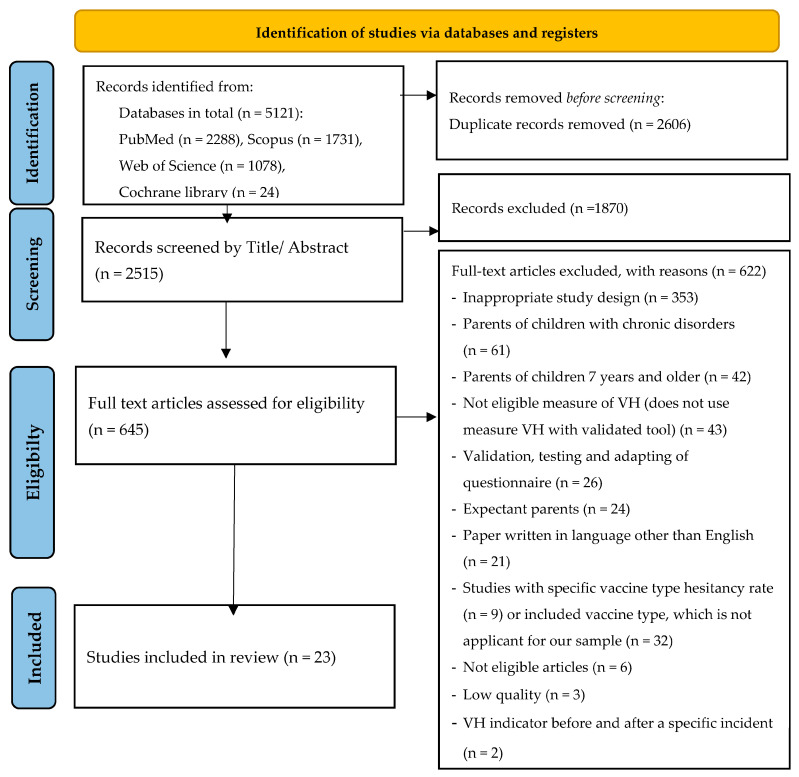
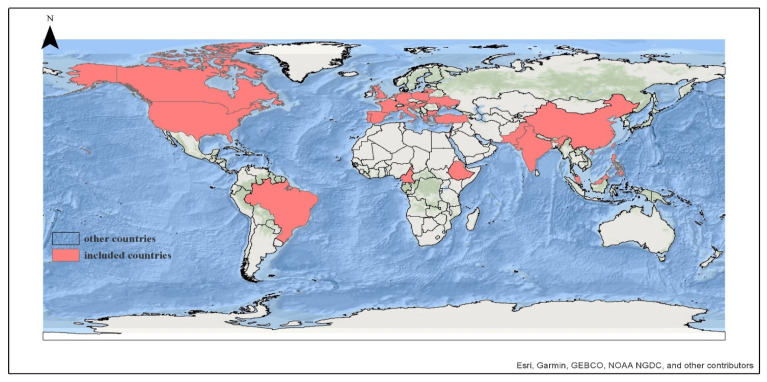
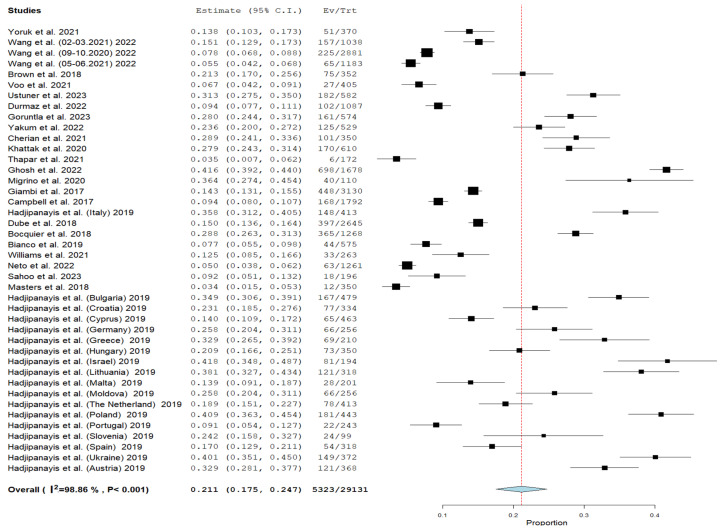
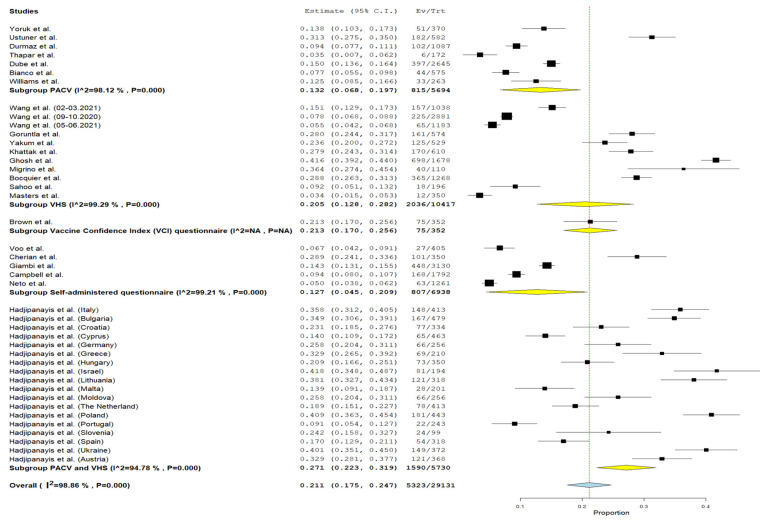
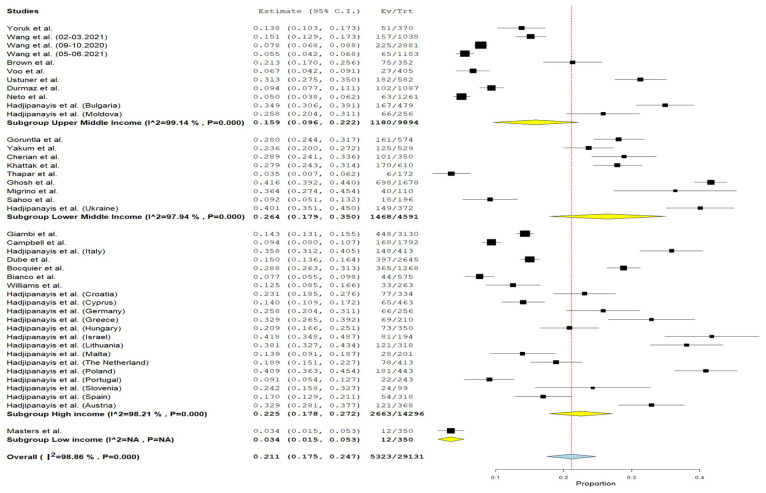
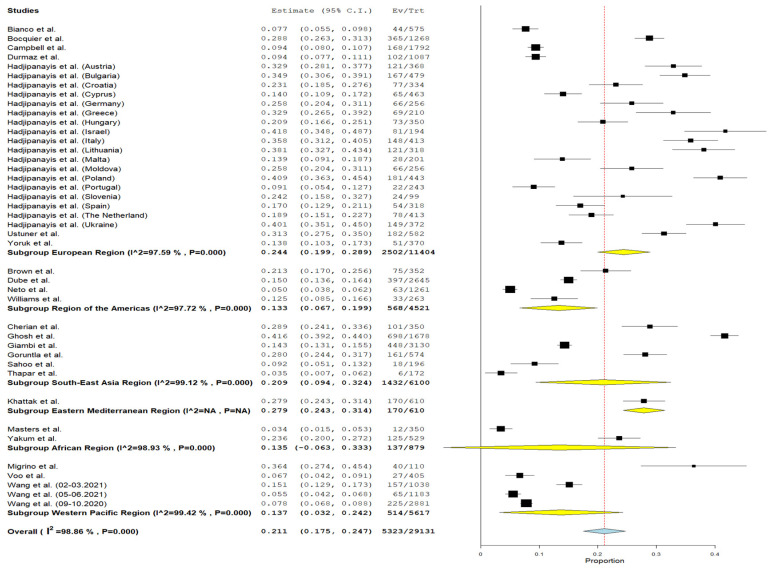
Routine vaccine hesitancy is a major global health challenge observed in over 190 countries worldwide. This meta-analysis aims to determine the worldwide prevalence of routine vaccination hesitancy among parents of children aged 0–6. An extensive search was conducted in four scientific databases: PubMed, Scopus, Web of Science, and the Cochrane Library. Studies were included if they reported hesitancy related to WHO-recommended routine immunizations for children under 7 years of age. A single-arm meta-analysis was performed using the OpenMeta[Analyst] software. An initial search retrieved 5121 articles, of which only 23 publications, involving 29,131 parents, guardians, and caregivers from over 30 countries met the inclusion criteria and quality assessment. The cumulative prevalence of parental vaccine hesitancy was found to be 21.1% (95% CI = 17.5–24.7%, I2 = 98.86%, p < 0.001). When stratifying the prevalence of vaccine hesitancy per WHO region, significant variations were observed, ranging from 13.3% (95% CI = 6.7–19.9%, I2 = 97.72%, p < 0.001) in the Region of the Americas to 27.9% (95% CI = 24.3–31.4%) in the Eastern Mediterranean region. The study findings highlight the need for healthcare providers and governments to develop and improve comprehensive programs with communication strategies to reduce parental vaccine hesitancy.
Overview
The claims and statistics of this paper haven’t been checked yet.
Free: it reads the open-access text and checks the first 5 claims that cite a source we can check. Create a free account to check every claim.
Integrity signals
Registry
Cites
Statistics
Figures
Verification
Claims the paper makes
The claims and statistics of this paper haven’t been checked yet.
Free: it reads the open-access text and checks the first 5 claims that cite a source we can check. Create a free account to check every claim.
Self-check
Percentages, sums and reported differences re-computed from the paper’s own numbers.
The self-check needs the paper’s full text.
Citations
Cites
Vaccine hesitancy: Definition, scope and determinants
MacDonald, N. E. (2015) · Vaccine · doi:10.1016/j.vaccine.2015.04.036 · Cited by 5,573 · cited 1×
“This phenomenon, defined as the reluctance to promptly accept or refuse vaccination despite the widespread availability of vaccination services, poses a threat to global public health [6].”
Backgroundde Figueiredo, A., Simas, C., Karafillakis, E., Paterson, P., & Larson, H. J. (2020) · The Lancet · doi:10.1016/s0140-6736(20)31558-0 · Cited by 1,143 · cited 1×
“In a comprehensive retrospective study of 149 countries that analyzed global trends in vaccine confidence and included data from 284,381 individuals, it was found that confidence in the importance of vaccines exhibited the strongest univariate association with vaccination coverage [13].”
BackgroundCOVID-19 vaccine acceptance and hesitancy in low- and middle-income countries
(2021) · doi:10.1038/s41591-021-01454-y · Cited by 1,105 · cited 1×
“However, the presence of these factors, in varying proportions, may be individual for each country or society [53,54].”
BackgroundStrategies for addressing vaccine hesitancy–A systematic review
Jarrett, C., Wilson, R., O’Leary, M., Eckersberger, E., & Larson, H. J. (2015) · Vaccine · doi:10.1016/j.vaccine.2015.04.040 · Cited by 1,066 · cited 1×
“Interventions based on vaccination reminders are also employed to combat vaccine hesitancy [58,59].”
BackgroundVaccine hesitancy, vaccine refusal and the anti-vaccine movement: influence, impact and implications
Dubé, E., Vivion, M., & MacDonald, N. E. (2015) · Expert Review of Vaccines · doi:10.1586/14760584.2015.964212 · Cited by 986 · cited 1×
“This highlights the importance of analyzing and monitoring the level of indecisiveness among parents, especially among parents of preschool-aged children [20,21].”
BackgroundPhadke, V. K., Bednarczyk, R. A., Salmon, D. A., & Omer, S. B. (2016) · JAMA · doi:10.1001/jama.2016.1353 · Cited by 674
Mapping vaccine hesitancy-country-specific characteristics of a global phenomenon
Dubé, E., Gagnon, D., Nickels, E., Jeram, S., & Schuster, M. (2014) · Vaccine · doi:10.1016/j.vaccine.2014.09.039 · Cited by 544
Lane, S., MacDonald, N. E., Marti, M., & Dumolard, L. (2018) · Vaccine · doi:10.1016/j.vaccine.2018.03.063 · Cited by 530
Opel, D. J., Mangione-Smith, R., Taylor, J. A., Korfiatis, C., Wiese, C., Catz, S., & Martin, D. P. (2011) · Human Vaccines · doi:10.4161/hv.7.4.14120 · Cited by 432 · cited 1×
“Numerous research studies have aimed to identify parental hesitancy toward childhood vaccination [14–19].”
A systematic review of interventions for reducing parental vaccine refusal and vaccine hesitancy
Sadaf, A., Richards, J. L., Glanz, J., Salmon, D. A., & Omer, S. B. (2013) · Vaccine · doi:10.1016/j.vaccine.2013.07.013 · Cited by 392
Cited by
Haeuser, E., Byrne, S., Nguyen, J., Raggi, C., McLaughlin, S. A., Bisignano, C., Harris, A. A., Smith, A. E., Lindstedt, P. A., Smith, G., et al. (2025) · The Lancet · doi:10.1016/s0140-6736(25)01037-2 · Cited by 143
Cagnotta, C., Lettera, N., Cardillo, M., Pirozzi, D., Catalán-Matamoros, D., Capuano, A., & Scavone, C. (2025) · Journal of Infection and Public Health · doi:10.1016/j.jiph.2024.102648 · Cited by 51
A World without Measles and Rubella: Addressing the Challenge of Vaccine Hesitancy
Higgins, D. M., & O’Leary, S. T. (2024) · Vaccines · doi:10.3390/vaccines12060694 · Cited by 21
“Based on a recent meta-analysis with studies from over 30 different countries, the worldwide cumulative prevalence of vaccine hesitancy among parents of children aged 0–6 years old has been estimated to be ~20% [43].”
BackgroundProgress with the Second Dose Measles Vaccine Introduction and Coverage in the WHO African Region
Masresha, B., Shibeshi, M. E., Grant, G. B., Hatcher, C., & Wiysonge, C. S. (2024) · Vaccines · doi:10.3390/vaccines12091069 · Cited by 21
Szalast, K., Nowicki, G., Pietrzak, M., Mastalerz–Migas, A., Biesiada, A. M., Grochans, E., & Ślusarska, B. J. (2025) · Vaccines · doi:10.3390/vaccines13010041 · Cited by 14
Vaccine pharmacovigilance in South Africa: successes and limitations of current approaches
Peter, J., Takalani, A., Meyer, J. C., Semete‐Makokotlela, B., Collie, S., Seocharan, I., Goga, A. E., Garrett, N., Bekker, L., & Gray, G. (2024) · Expert Opinion on Drug Safety · doi:10.1080/14740338.2024.2387322 · Cited by 8
Maugeri, A., Barchitta, M., Cappuccio, G., Favara, G., Lio, R. M. S., & Agodi, A. (2024) · Vaccines · doi:10.3390/vaccines12101145 · Cited by 8
“These hesitancy trends caused dips in vaccination rates as parents delayed or refused routine childhood vaccinations [17,18], contributing to several of the observed joinpoints in coverage data.”
BackgroundO’Leary, S. T., & Danchin, M. H. (2026) · New England Journal of Medicine · doi:10.1056/nejmcp2516616 · Cited by 8
Abenova, M., Shaltynov, A., Jamedinova, U., Ospanov, E., & Semenova, Y. M. (2024) · Vaccines · doi:10.3390/vaccines12040429 · Cited by 8
“Contributing to this decline are increasing misinformation and hesitancy about vaccines, which have emerged as major barriers to childhood immunization and are recognized as one of the top 10 global public health threats [9,10].”
BackgroundSelf-citationJaniak, S., Piszczek, E., Buczkowska, A., & Buczkowski, K. (2025) · Vaccines · doi:10.3390/vaccines13111127 · Cited by 8
Hakim, M., Ali, F., Zala, Z., Pervaiz, A., Afaq, S., & Haq, Z. U. (2025) · BMC Public Health · doi:10.1186/s12889-025-21388-1 · Cited by 5
“These findings are in line with a global review estimating the cumulative prevalence of parental vaccine hesitancy for children aged 0–6 years at 21.1% [26].”
InfluentialKigongo, E., Opollo, M. S., Nalwoga, V., Musinguzi, M., Kwizera, G., & Kabunga, A. (2024) · Global Pediatric Health · doi:10.1177/2333794x241298834 · Cited by 5
Addressing Vaccine Hesitancy: Validating the PACV Survey for Croatian Parents
Stipčić, A., & Matana, A. (2025) · Infectious Disease Reports · doi:10.3390/idr17010003 · Cited by 6
Tippins, A., Acevedo, J. C., Palomeque, F. S., Coy, K. C., Chadd, P., Stowell, D. F., Ademokun, O., Apaisam, C., Basilius, M., Brostrom, R. J., et al. (2024) · Vaccine · doi:10.1016/j.vaccine.2024.05.005 · Cited by 4
“Recent studies since the pandemic have also indicated vaccine hesitancy in the Pacific region and the Americas are similar, and among the lowest globally [15].”
The shadow of reactogenicity: Parental hesitancy due to prior vaccine experiences
Gschwend, M. H., Faust, E. A., Rousculp, M. D., & Toback, S. L. (2025) · Vaccine · doi:10.1016/j.vaccine.2025.128120 · Cited by 4
Keskin, S., & Temizer, M. (2026) · The Turkish Journal of Pediatrics · doi:10.24953/turkjpediatr.2026.6792 · Cited by 4
Social determinants of vaccine hesitancy among the Lebanese parents: A cross-sectional Study
Awad, R., Rahal, M. K., Henieneh, A.-M., Salameh, P., Farah, R., Cherfane, M., Kotb, R. E., Nakhoul, D., Khaddaj, R., Habib, N., et al. (2026) · PLoS ONE · doi:10.1371/journal.pone.0345153 · Cited by 3
“A global meta-analysis found parental vaccine hesitancy prevalence of 21.1% across over 30 countries, with lower-middle-income countries exhibiting rates ranging from 3.4% to 41.6%, reflecting substantial variability across geographic and socioeconomic contexts [42,44].”
InfluentialSystemic antiviral consumption in Kazakhstan
Semenova, Y. M., Kussainova, A. A., Talgatkyzy, K. L., Aimurziyeva, A., Semenov, D., Makalkina, L., Алдиярова, Н. Т., Avdeyev, A., & Lim, L. (2025) · Scientific Reports · doi:10.1038/s41598-025-05161-3 · Cited by 3
Self-citationBazar, M., Baliga, K., Nayak, A. P., & Ravikiran, S. R. (2025) · BMC Research Notes · doi:10.1186/s13104-025-07291-3 · Cited by 3
“(Update on Immunization of Children, Ministry of Health and Family Welfare, Government of India) [7].”
Predictors of vaccine hesitancy among medical students at the University of Belgrade
Nikolić, A., Grujičić, S. Š., Tanula, A. M., Vujcic, I. S., Marušić, V., & Majcan, M. (2025) · BMC Medical Education · doi:10.1186/s12909-025-08028-3 · Cited by 2
“While most studies on vaccine hesitancy focus on the general population [5–7], growing evidence suggests that it also affects healthcare professionals [8–10] and future healthcare providers - medical students [11–13].”
Baiocchi, C., & Bhardwaj, M. (2025) · BMC Public Health · doi:10.1186/s12889-025-23865-z · Cited by 4
“The growing problem of vaccination-hesitant parents is exerting a profound impact on the well-being of both children and the wider population, emerging as a top priority for governments and global organisations alike [1].”
Barbieri, M. A., Cicala, G., Molonia, A., Alibrandi, A., Pallio, G., Fauci, E. L., Ingrassia, M., Irrera, N., & Benedetto, L. (2026) · Pharmaceutical Research · doi:10.1007/s11095-026-04072-w · Cited by 3
Farhat, N., Safadi, D. E., Massoud, J., & Khalife, S. (2025) · Vaccines · doi:10.3390/vaccines13111166 · Cited by 1
“Vaccine hesitancy was notably driven by preference for natural immunity, cost concerns, and perceived vaccine necessity—barriers well documented in global and regional contexts [29].”
InfluentialJanssen, T., Degraeve, J., Coster, I. D., Decuyper, I. I., Brusselen, D. V., & Verhulst, S. (2026) · Human Vaccines & Immunotherapeutics · doi:10.1080/21645515.2026.2677834 · Cited by 4
Knowledge as a predictor of parental vaccine hesitancy during children's first year of life
Almeida, M. G., de Oliveira, B. F. A., Júnior, E. B. D. M., Rodrigues, A. R. D. A., Lugo, N. F., Borges, P. D. T. M., Neto, A. R. D. S., & de Araújo, T. M. E. (2026) · Vaccine · doi:10.1016/j.vaccine.2026.129127 · Cited by 1
Ethical and Legal Debates on Vaccine Infodemics
Youssef, A., & Ulloa, L. (2024) · Cureus · doi:10.7759/cureus.52566 · Cited by 3
“It has been reported that countries such as China, Italy, the United Kingdom, the US, Canada, and Israel have a high rate of parental hesitation in vaccinating their children [29].”
BackgroundPapelian, S. (2025) · Research Square · doi:10.21203/rs.3.rs-7340665/v1 · Cited by 2
Addressing Vaccine Hesitancy in Vulnerable Populations
Chenette, S. (2025) · doi:10.46409/sr./jdsr6846
Weeks, R., Dhaliwal, B. K., Huber, J., Nabia, S., Al-Shaikh, A. F., Chokephaibulkit, K., Fernando, L., Baghagho, E., & Shet, A. (2025) · PLOS Global Public Health · doi:10.1371/journal.pgph.0004473
“Meanwhile, other MICs ineligible for traditional Gavi support, like Brazil and the Philippines, have registered higher rates of vaccine hesitancy, with confidence in routine childhood vaccination dropping across over a dozen MICs during the COVID-19 pandemic [32,33].”
Principais Causas de Hesitação Vacinal Em Pais: Revisão Integrativa
Prado, A. S., Vilela, G. L. B., Vilela, H. O., Araújo, E. H., dos Santos, R. C., & Maciel, É. A. F. (2025) · Saúde Coletiva (Barueri) · doi:10.36489/saudecoletiva.2025v15i95p15662-15677
Annelerin Çocukluk Dönemi Aşılarına İlişkin Metafor Algılarının Değerlendirilmesi
Doğan, P., Karakul, A., & Düzkaya, D. S. (2025) · İzmir Katip Çelebi Üniversitesi Sağlık Bilimleri Fakültesi Dergisi · doi:10.61399/ikcusbfd.1611093
Cavalcanti, M. S., Lima, I. C. A., Santos, M. P., Soares, J. R. D., Rodrigues, C. A. Q., Maia, L. C., Costa, S. D. M., & Dias, O. V. (2025) · Aracê. · doi:10.56238/arev7n10-159
坂本, 史. (2025) · Igaku Toshokan · doi:10.7142/igakutoshokan.72.3_154
Lael–Monfared, E., Sabouri, S., Rahmani, N., & Peyman, N. (2025) · BMC Public Health · doi:10.1186/s12889-025-25905-0
“A systematic review indicated that vaccination adherence is more strongly influenced by a set of interrelated fac-tors—such as trust in the health system, social norms, and perceptions of risk—rather than by single variables like birth order or source of information [51].”
GÜZEL, S., BAYSAL, H. Y., Türkoğlu, N., Polat, H., Arslan, M. A., & Kurşun, E. (2026) · BMC Public Health · doi:10.1186/s12889-026-26365-w
“Distrust of vaccines has been identified as one of the main factors negatively influencing childhood vaccine refusal [9, 27, 29, 40].”
InfluentialDirie, A. M., Ahmed, N. R., Dirie, S. A., Shil, H. A., Jaylani, F. M., Omar, F. M., Abdirahman, I. A., Abdiqaadir, I. M., & Abdullahi, A. A. (2026) · Sage Open Pediatrics · doi:10.1177/30502225251411128 · Cited by 2
Sever, S. Ö., Aksu, S. B., & Öztürk, G. Z. (2026) · The Italian Journal of Pediatrics/Italian journal of pediatrics · doi:10.1186/s13052-026-02226-5
“The frequency of vaccine refusal varies between countries [6].”
InfluentialKraft, H., Dammann, M.-T., Hanke, K., Zemlin, M., Wenglein, J. S., Rohde, J., Lasserre, D., Humberg, A., Roll, C., Härtel, C., et al. (2026) · Molecular and Cellular Pediatrics · doi:10.1186/s40348-026-00228-1
Vaccine hesitancy in paediatric public health: A comprehensive narrative review
Gebrehiwot, Z. (2026) · Karnataka Pediatric Journal · doi:10.25259/kpj_6_2026 · Cited by 1
PALA, S. Ç., & Yanık, E. E. Ö. (2026) · Research Square · doi:10.21203/rs.3.rs-9060861/v1
Palombo, C. N. T., Souza, E. A., Garcia, É. M., Araújo, R. P. D. S., Santos, L. R. D. O., Leal, M. L., de Oliveira, A. A. C., Sato, A. P. S., & de Oliveira, C. V. R. (2026) · PLoS ONE · doi:10.1371/journal.pone.0344742 · Cited by 1
Medeleanu, M., Gill, E. E., Winsor, G. L., Azeez, R., Lotoski, L. C., Goguen, S., Humble, R. M., McNeil, D. A., Patrick, D. M., Bolotin, S., et al. (2026) · BMC Public Health · doi:10.1186/s12889-026-27115-8
“Between 1980 and 2019, global coverage for the original Expanded Program on Immunization nearly doubled, for example, Diphtheria-Tetanus-Pertussis (DTP3) coverage rose from 39.6% to 80.9% [1, 17].”
InfluentialEliaçık, O. E., Çöme, O., & Günvar, T. (2026) · BMC Family Practice · doi:10.1186/s12875-026-03418-y · Cited by 1
“These rates are consistent with national and international findings showing increased parental uncertainty following the COVID-19 vaccination campaign [19, 33].”
Ike, T. J., Jidong, D. E., Obi, C. K., Ntaji, M. I., Tamire, M., Habtamu, M., Ike, M. L., Ayobi, E. E., Ike, P. R., Doghor, R. F., et al. (2026) · Frontiers in Public Health · doi:10.3389/fpubh.2026.1854581 · Cited by 1
Knowledge, Attitudes, and Practices Regarding Typhoid Conjugate Vaccine: A Cross-Sectional Study
Khan, M. D. (2026) · Open Access Public Health and Health Administration Review · doi:10.59644/oaphhar.5(1).289
Reasons for Childhood Vaccine Refusal: A Cross-Sectional Study in South-Eastern Türkiye
Solmaz, M., Ertek, S. Y., Güzelbağ, A. N., & Orhan, Ö. (2026) · Children · doi:10.3390/children13091247
“At the level of individual decision-making, the systematic review and meta-analysis of Abenova et al. [10] https://doi.org/10.3390/children13091247 estimated that approximately one in five parents of children aged 0–6 years exhibits some degree of hesitancy towards routine childhood vaccination.”
InfluentialMarco, J. J. G., & Pasquín, M. J. Á. (2026) · FMC - Formación Médica Continuada en Atención Primaria · doi:10.1016/j.fmc.2026.04.005
Malomo, M., Kurosawa, N., Maeda, A., Yoshida, S., & Kitano, T. (2026) · Vaccine X · doi:10.1016/j.jvacx.2026.100914
Konieczny, M., Gąska, I., Kaczmar, E., Bądziul, D., Fal, A., Kiedik, D., & Rypicz, Ł. (2026) · Vaccines · doi:10.3390/vaccines14100906
“A meta-analysis estimated substantial parental hesitancy toward routine childhood vaccination worldwide [5], while European research demonstrated marked between-country differences in vaccine confidence, with Poland identified as a country with a relatively lower level of confidence [6].”
Metadata
- Authors
- Abenova, M., Shaltynov, A., Jamedinova, U., & Semenova, Y.
- Affiliations
- Semey Medical University (KZ)
- Nazarbayev University (KZ)
- Corresponding author
- Semenova, Yuliya
- Venue
- Vaccines
- Publisher
- MDPI AG
- Published
- 2023-12-27
- Volume
- 12
- Issue
- 1
- Pages
- 31
- ISSN
- 2076-393X (ISSN-L)
- PMC
- PMC10819761
- OpenAlex
- W4390273032
- Cited by
- 49
- References
- 50
- Citations by year
- 2026: 21 · 2025: 20 · 2024: 8
- FWCI
- 2.45
- Type
- journal article
- Language
- en
- Open access
- gold
- doi.org
- Licence
- Locations
- Vaccines (publishedVersion, cc-by)
- PubMed Central (publishedVersion, cc-by)
- PubMed (publishedVersion)
- DOAJ (DOAJ: Directory of Open Access Journals) (submittedVersion, cc-by-sa)
- Funders
- Science Committee of the Ministry of Education and Science of the Republic of Kazakhstan (AP15473448)
- Topics
- Social Sciences › Health › Vaccine Coverage and Hesitancy
- Health Sciences › Medicine › Epidemiology › Cervical Cancer and HPV Research
- Health Sciences › Medicine › Emergency Medicine › Intramuscular injections and effects
- Keywords
- vaccine hesitancy, routine childhood immunization, parental vaccine hesitancy, WHO regions, children aged 0-6, vaccine communication strategies, global health
About these checks
Registry, retraction, Cites and statistics results are computed, not judged, with one exception: a printed reference that no index lists is read once by a model before it counts as a citation error. Claims are extracted by a model and kept only when their quote appears verbatim in the text; each cited source is then checked, with a model’s help, for whether it says what the claim relies on. Those verdicts can be wrong — read the claim’s quote and the cited source before relying on one.
Statistics and arithmetic are recomputed, not judged.
Confidence bands are shown only for fields calibrated on our annotated test set. None is calibrated yet, so no band is shown.
What counts as a claim ›How we measure confidence ›How we check this ›
Are you an author, or do you see a problem with this page? Request a review
Data sources
Bibliographic data: Semantic Scholar, OpenAlex, Crossref.
Contains information from the Semantic Scholar Academic Graph Datasets, made available under the ODC Attribution License (ODC-BY 1.0).
Semantic Scholar’s data is described in: Kinney, R., et al. (2023). The Semantic Scholar Open Data Platform. arXiv:2301.10140.
