

The DOI matches its Crossref record; 158 of the 165 references it cites were found in a registry or an index.
The Role of Indoleamine 2, 3-Dioxygenase in Immune Suppression and Autoimmunity
Open accessAbstract
Indoleamine 2, 3-dioxygenase (IDO) is the first and rate limiting catabolic enzyme in the degradation pathway of the essential amino acid tryptophan. By cleaving the aromatic indole ring of tryptophan, IDO initiates the production of a variety of tryptophan degradation products called “kynurenines” that are known to exert important immuno-regulatory functions. Because tryptophan must be supplied in the diet, regulation of tryptophan catabolism may exert profound effects by activating or inhibiting metabolism and immune responses. Important for survival, the regulation of IDO biosynthesis and its activity in cells of the immune system can critically alter their responses to immunological insults, such as infection, autoimmunity and cancer. In this review, we assess how IDO-mediated catabolism of tryptophan can modulate the immune system to arrest inflammation, suppress immunity to cancer and inhibit allergy, autoimmunity and the rejection of transplanted tissues. Finally, we examine how vaccines may enhance immune suppression of autoimmunity through the upregulation of IDO biosynthesis in human dendritic cells.
Overview
The claims and statistics of this paper haven’t been checked yet.
Run the check — free, no account needed. It reads the open-access text and checks the sources it cites.
Integrity signals
Registry
Cites
Statistics
Figures
Verification
Claims the paper makes
The claims and statistics of this paper haven’t been checked yet.
Run the check — free, no account needed. It reads the open-access text and checks the sources it cites.
Claims other papers make about this one
Each is checked against this paper’s own text: does it say what the citing paper says it does?
The cited source says what the claim attributes to it.
In the citing paper
“Increased IDO expression is responsible for the catabolism of TRP in the KYN degradation pathway [36] and is canonically upregulated by inflammatory mechanisms [37,38].”
Self-check
Percentages, sums and reported differences re-computed from the paper’s own numbers.
The self-check needs the paper’s full text.
Citations
Cites
Multilineage potential of adult human mesenchymal stem cells
Pittenger, M. F., Mackay, A. M., Beck, S. C., Jaiswal, R. K., Douglas, R., Mosca, J. D., Moorman, M. A., Simonetti, D. W., Craig, S., & Marshak, D. R. (1999) · Science · doi:10.1126/science.284.5411.143 · Cited by 21,052 · cited 1×
“Mesenchymal stem cells provide a basis for improved tissue regeneration and gene therapy [17,18].”
BackgroundMechanisms of TGF-β Signaling from Cell Membrane to the Nucleus
Shi, Y., & Massagué, J. (2003) · Cell · doi:10.1016/s0092-8674(03)00432-x · Cited by 5,860 · cited 3×
“Several molecular stimuli and signaling pathways were shown to induce the transcription and translation of metabolically-active IDO1 enzyme [35,40,50].”
BackgroundMechanisms of Diabetic Complications
Forbes, J. M., & Cooper, M. E. (2013) · Physiological Reviews · doi:10.1152/physrev.00045.2011 · Cited by 2,890 · cited 2×
“About 80% of patients are women with a 2–5-times greater risk of autoimmune disease onset among African, Hispanic and Native American women than those of European descent [119,137,143–145].”
BackgroundPrevention of Allogeneic Fetal Rejection by Tryptophan Catabolism
Munn, D. H., Zhou, M., Attwood, J. T., Bondarev, I. E., Conway, S. J., Marshall, B., Brown, C. C., & Mellor, A. L. (1998) · Science · doi:10.1126/science.281.5380.1191 · Cited by 2,589 · cited 1×
“confirming that placental cells synthesizing IDO1 can protect the mammalian fetus from maternal T-cell attack [15,16].”
BackgroundUyttenhove, C., Pilotte, L., Théate, I., Stroobant, V., Colau, D., Parmentier, N., Boon, T., & Van den Eynde, B. J. (2003) · Nature Medicine · doi:10.1038/nm934 · Cited by 2,305 · cited 1×
“A connection between elevated urinary tryptophan catabolites and bladder cancer was first reported in the 1950s [105].”
BackgroundBone Marrow Stromal Stem Cells: Nature, Biology, and Potential Applications
Bianco, P., Riminucci, M., Gronthos, S., & Robey, P. G. (2001) · Stem Cells · doi:10.1634/stemcells.19-3-180 · Cited by 1,944 · cited 1×
“Mesenchymal stem cells provide a basis for improved tissue regeneration and gene therapy [17,18].”
BackgroundAn endogenous tumour-promoting ligand of the human aryl hydrocarbon receptor
Opitz, C. A., Litzenburger, U. M., Sahm, F., Ott, M., Tritschler, I., Trump, S., Schumacher, T., Jestaedt, L., Schrenk, D., Weller, M., et al. (2011) · Nature · doi:10.1038/nature10491 · Cited by 1,898 · cited 1×
“The aryl hydrocarbon receptor (AhR) was shown to cause immune suppression after binding dioxin [70].”
BackgroundAn Interaction between Kynurenine and the Aryl Hydrocarbon Receptor Can Generate Regulatory T Cells
Mezrich, J. D., Fechner, J. H., Zhang, X., Johnson, B. P., Burlingham, W. J., & Bradfield, C. A. (2010) · The Journal of Immunology · doi:10.4049/jimmunol.0903670 · Cited by 1,674 · cited 2×
“Interestingly, kynurenines produced from IDO’s enzymatic activity can also bind and activate as an endogenous ligand, AhR [53,54].”
BackgroundEpidemiology and estimated population burden of selected autoimmune diseases in the United States
Jacobson, D. L., Gange, S. J., Rose, N. R., & Graham, N. M. H. (1997) · Clinical Immunology and Immunopathology · doi:10.1006/clin.1997.4412 · Cited by 1,667 · cited 2×
“self-antigens were shown to prevent uveitis, multiple sclerosis and type 1 diabetes in animal models of autoimmunity [124,131,132,142,153].”
BackgroundEisenbarth (1986) · doi:10.1056/nejm198605223142106 · Cited by 1,659 · cited 1×
“Type 1 diabetes (T1D) is a well-studied prototypic tissue-specific autoimmune disease resulting from auto-reactive lymphocyte destruction of the pancreatic islet insulin-producing -cells [34,134–137].”
BackgroundMeisel, R., Zibert, A., Laryea, M. D., Göbel, U., Däubener, W., & Dilloo, D. (2004) · Blood · doi:10.1182/blood-2003-11-3909 · Cited by 1,638
Mesenchymal Stromal Cells: Sensors and Switchers of Inflammation
Bernardo, M. E., & Fibbe, W. E. (2013) · Cell stem cell · doi:10.1016/j.stem.2013.09.006 · Cited by 1,423 · cited 1×
“This immunological tolerization response supports data suggesting that MSCs function as sensors of inflammation by adopting a pro-inflammatory or anti-inflammatory phenotype that modulates innate and adaptive immune responses in vitro and in vivo [23].”
BackgroundDong, Y., & Benveniste, E. N. (2001) · Glia · doi:10.1002/glia.1107 · Cited by 1,325 · cited 1×
“Together with microglia, astrocytes play a role as important modulators of CNS immune and inflammatory reactions [24].”
BackgroundMunn, D. H., Sharma, M. D., Baban, B., Harding, H. P., Zhang, Y., Ron, D., & Mellor, A. L. (2005) · Immunity · doi:10.1016/j.immuni.2005.03.013 · Cited by 1,309 · cited 3×
“Conversely, IDO is important, but not essential for the maintenance of immune tolerance, as IDO mice do not die from autoimmunity [14].”
BackgroundInsulin-Dependent Diabetes Mellitus
Tisch, R., & McDevitt, H. O. (1996) · Cell · doi:10.1016/s0092-8674(00)81106-x · Cited by 1,146
Frumento, G., Rotondo, R., Tonetti, M., Damonte, G., Benatti, U., & Ferrara, G. B. (2002) · The Journal of Experimental Medicine · doi:10.1084/jem.20020121 · Cited by 1,133 · cited 1×
“NK-cell proliferation potentiated by tryptophan depletion [15,64].”
Fallarino, F., Grohmann, U., You, S., McGrath, B. C., Cavener, D. R., Vacca, C., Orabona, C., Bianchi, R., Belladonna, M. L., Volpi, C., et al. (2006) · The Journal of Immunology · doi:10.4049/jimmunol.176.11.6752 · Cited by 1,078 · cited 3×
“Tryptophan depletion was shown to induce the GCN2 pathway, to downregulate the CD3 -chain in CD8+ T-cells and to inhibit Th17 cell differentiation [14,55].”
BackgroundMuller, A. J., DuHadaway, J. B., Donover, P. S., Sutanto-Ward, E., & Prendergast, G. C. (2005) · Nature Medicine · doi:10.1038/nm1196 · Cited by 1,064 · cited 1×
“For some time, the significance of IDO promotion of cancer survival was questioned by its observed function in the prevention of allogenic rejection and by the evidence that IDO is overexpressed in most tumors and tumor draining lymph nodes [106,107].”
BackgroundT cell apoptosis by tryptophan catabolism
Fallarino, F., Grohmann, U., Vacca, C., Bianchi, R., Orabona, C., Spreca, A., Fioretti, M. C., & Puccetti, P. (2002) · Cell Death & Differentiation · doi:10.1038/sj.cdd.4401073 · Cited by 1,022 · cited 2×
“Further, these studies also demonstrated IDO-dependent apoptosis of thymocytes and terminally-differentiated antigen-specific CD4+ T-cells [15,62].”
BackgroundTerness, P., Bauer, T. M., Röse, L., Dufter, C., Watzlik, A., Simon, H., & Opelz, G. (2002) · The Journal of Experimental Medicine · doi:10.1084/jem.20020052 · Cited by 965 · cited 2×
“to T-cells, B-cells and natural killer (NK) cells were also killed while DCs remained unaffected [63].”
BackgroundThe epidemiology of autoimmune diseases
Cooper, G. S., & Stroehla, B. C. (2003) · Autoimmunity Reviews · doi:10.1016/s1568-9972(03)00006-5 · Cited by 882 · cited 2×
“Initial oral immunization experiments showed that feeding small amounts (2–20 μg) of CTB-INS could effectively suppress -cell destruction and clinical diabetes in pre-diabetic NOD mice [123,124,141].”
BackgroundTolerance, DCs and tryptophan: much ado about IDO
Grohmann, U. (2003) · Trends in Immunology · doi:10.1016/s1471-4906(03)00072-3 · Cited by 779
Indoleamine 2,3-dioxygenase is a signaling protein in long-term tolerance by dendritic cells
Pallotta, M. T., Orabona, C., Volpi, C., Vacca, C., Belladonna, M. L., Bianchi, R., Servillo, G., Brunacci, C., Calvitti, M., Bicciato, S., et al. (2011) · Nature Immunology · doi:10.1038/ni.2077 · Cited by 737 · cited 8×
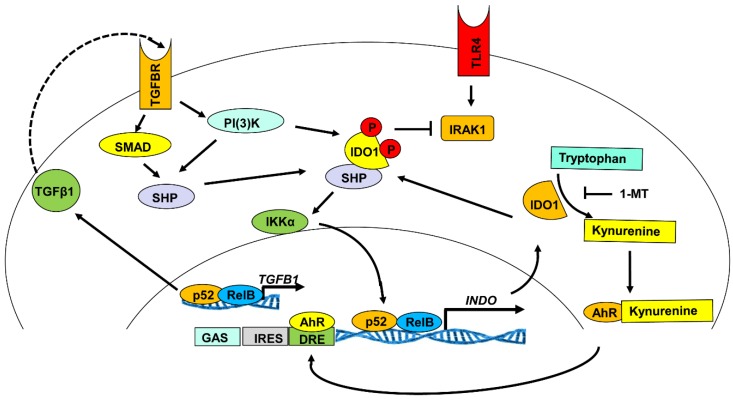
“The TGF- -IDO-SHP axis activates the non-canonical NF- B pathway [49].”
BackgroundInfluentialTryptophan Catabolism in Cancer: Beyond IDO and Tryptophan Depletion
Platten, M., Wick, W., & den Eynde, B. J. V. (2012) · Cancer Research · doi:10.1158/0008-5472.can-12-0569 · Cited by 725 · cited 3×
“Since then, elevated levels of IDO-generated catabolites have been found to be associated with a number of malignancies [94].”
BackgroundItano, A. A., McSorley, S. J., Reinhardt, R. L., Ehst, B. D., Ingulli, E. G., Rudensky, A. Y., & Jenkins, M. K. (2003) · Immunity · doi:10.1016/s1074-7613(03)00175-4 · Cited by 719 · cited 1×
“Dendritic cells (DCs) recognize and process self-antigens and are the first immune cells to surround pancreatic islets, indicating a prominent role in type 1 diabetes development [15,58,59,146–148].”
BackgroundNguyen, N. T., Kimura, A., Nakahama, T., Chinen, I., Masuda, K., Nohara, K., Fujii‐Kuriyama, Y., & Kishimoto, T. (2010) · Proceedings of the National Academy of Sciences · doi:10.1073/pnas.1014465107 · Cited by 705 · cited 1×
“produce IDO following LPS or CpG treatment [51].”
BackgroundHow mesenchymal stem cells interact with tissue immune responses
Shi, Y., Su, J., Roberts, A. I., Shou, P., Rabson, A. B., & Ren, G. (2012) · Trends in Immunology · doi:10.1016/j.it.2011.11.004 · Cited by 637 · cited 1×
“Mouse MSCs were shown to utilize nitric oxide (NO) as their immunosuppressive molecules, whereas human and monkey MSCs used IDO1 [20,21].”
BackgroundEmerging Concepts in the Immunopathogenesis of AIDS
Douek, D. C., Roederer, M., & Koup, R. A. (2008) · Annual Review of Medicine · doi:10.1146/annurev.med.60.041807.123549 · Cited by 633 · cited 1×
“Specifically, human immune deficiency virus (HIV) and Epstein-Barr virus are two well-known virus examples that increase cellular levels of IDO during infection [81–83].”
BackgroundSpecies Variation in the Mechanisms of Mesenchymal Stem Cell-Mediated Immunosuppression
Ren, G., Su, J., Zhang, L., Zhao, X., Ling, W., L'huillie, A., Zhang, J., Lu, Y., Roberts, A. I., Ji, W., et al. (2009) · Stem Cells · doi:10.1002/stem.118 · Cited by 597 · cited 1×
“inflammatory response, leading to immunological homeostasis [22].”
Vollmer, J., Weeratna, R. D., Payette, P., Jurk, M., Schetter, C., Laucht, M., Wader, T., Tluk, S., Liu, M., Davis, H. L., et al. (2003) · European Journal of Immunology · doi:10.1002/eji.200324032 · Cited by 592 · cited 1×
“Additionally, CpG oligodeoxynucleotides (CpG-ODNs) known to stimulate innate and adaptive immunity by binding to TLR9 molecules [67], induced selective IDO1 expression by a minor population of splenic CD19+ dendritic cells (DCs) that did not express the plasmacytoid DC marker 120G8.”
BackgroundThe role of dendritic cells in autoimmunity
Ganguly, D., Haak, S., Sisirak, V., & Reizis, B. (2013) · Nature reviews. Immunology · doi:10.1038/nri3477 · Cited by 518 · cited 1×
“About 80% of patients are women with a 2–5-times greater risk of autoimmune disease onset among African, Hispanic and Native American women than those of European descent [119,137,143–145].”
BackgroundImmunopathogenic Mechanisms of HIV Infection
Fauci, A. S., Pantaleo, G., Stanley, S., & Weissman, D. (1996) · Annals of Internal Medicine · doi:10.7326/0003-4819-124-7-199604010-00006 · Cited by 512 · cited 1×
“HIV is a lentivirus (retrovirus subgroup) that infects CD4+ T-cells, macrophages and dendritic cells [84,85].”
BackgroundWainwright, D. A., Balyasnikova, I. V., Chang, A. L., Ahmed, A. U., Moon, K., Auffinger, B., Tobias, A. L., Han, Y., & Lesniak, M. S. (2012) · Clinical Cancer Research · doi:10.1158/1078-0432.ccr-12-2130 · Cited by 484 · cited 1×
“In a similar study, high IDO expression levels in tumor cells were positively correlated with myometrial invasion, nodal metastasis and lymph-vascular space involvement [99].”
BackgroundMetz, R. A., DuHadaway, J. B., Kamasani, U. R., Laury‐Kleintop, L. D., Muller, A. J., & Prendergast, G. C. (2007) · Cancer Research · doi:10.1158/0008-5472.can-07-1872 · Cited by 482 · cited 4×
“Interestingly, two non-synonymous single-nucleotide polymorphisms lie in the coding region of the IDO2 gene, both of which result in a loss of enzymatic activity [7].”
BackgroundInfluentialIDO and regulatory T cells: a role for reverse signalling and non-canonical NF-κB activation
Puccetti, P., & Grohmann, U. (2007) · Nature reviews. Immunology · doi:10.1038/nri2163 · Cited by 469 · cited 3×
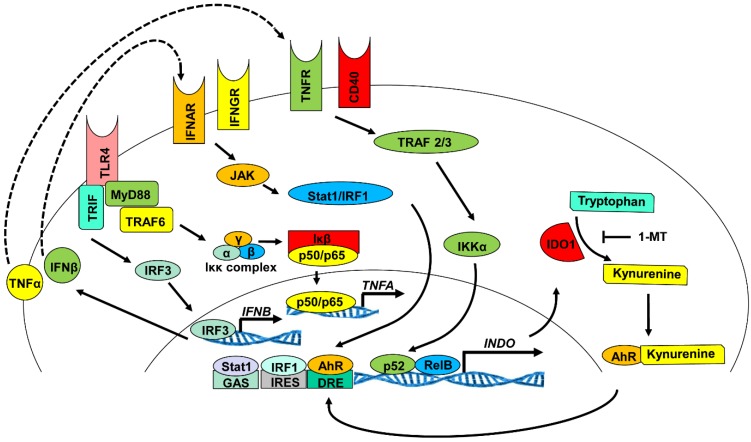
“Stimulation of TLR3 and TLR4 was shown to induce IDO1 production in dendritic cells, while TLR7/8 was shown to upregulate IDO1 in monocytes [42,43].”
BackgroundInfluentialSugimoto, H., Oda, S.-I., Otsuki, T., Hino, T., Yoshida, T., & Shiro, Y. (2006) · Proceedings of the National Academy of Sciences · doi:10.1073/pnas.0508996103 · Cited by 454 · cited 1×
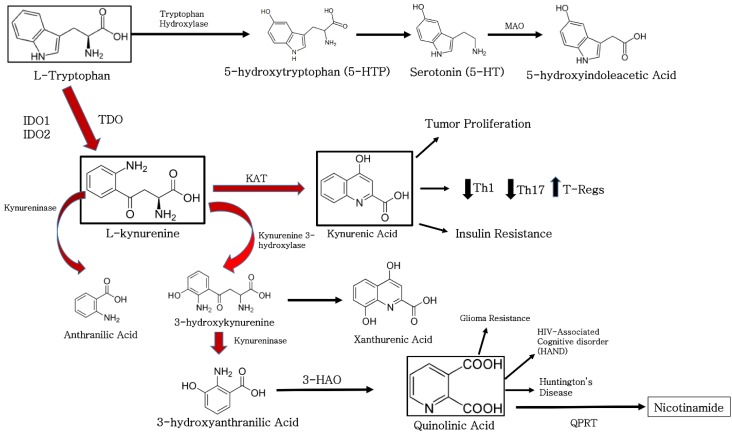
“Indoleamine 2, 3-dioxygenase (IDO) is a mammalian cytosolic enzyme composed of two alpha-helical domains with a heme group located between them responsible for catalyzing the initial step in tryptophan catabolism via the kynurenine degradation pathway [1] (Figure 1).”
BackgroundCharacterization of an indoleamine 2,3-dioxygenase-like protein found in humans and mice
Ball, H. J., Sánchez-Pérez, Á., Weiser, S., Austin, C., Astelbauer, F., Miu, J., McQuillan, J. A., Stocker, R., Jermiin, L. S., & Hunt, N. H. (2007) · Gene · doi:10.1016/j.gene.2007.04.010 · Cited by 445 · cited 2×
“remains unclear, and unlike IDO1, its expression is not induced by virus infection or the presence of IFN [4].”
BackgroundIndoleamine 2,3‐dioxygenase contributes to tumor cell evasion of T cell‐mediated rejection
Friberg, M., Jennings, R., Alsarraj, M., Dessureault, S., Cantor, A. B., Extermann, M., Mellor, A. L., Munn, D. H., & Antonia, S. J. (2002) · International Journal of Cancer · doi:10.1002/ijc.10645 · Cited by 374 · cited 1×
“Chen and colleagues have reported the expression of IDO1, estrogen receptor (ER), progesterone receptor (PR), human epithelial receptor 2, cytokeratin 5/6, epithelial growth factor receptor, phosphorylated AKT, neoangiogenesis, nitrogen oxide synthetase 2 (NOS2), cyclooxygenase 2 (COX2), FoxP3, CD8+ and CD11b molecule…”
BackgroundYan, Y., Zhang, G., Gran, B., Fallarino, F., Yu, S., Li, H., Cullimore, M. L., Rostami, A. M., & Xu, H. (2010) · The Journal of Immunology · doi:10.4049/jimmunol.1001628 · Cited by 369 · cited 1×
“Disease onset begins when insulin-presenting DCs bind T-cell receptors of cognate naive T helper cells and guide their differentiation into pro-inflammatory T helper and cytotoxic T-cells that attack the insulin producing islet -cells [13,149–152].”
BackgroundDifferential activation of astrocytes by innate and adaptive immune stimuli
Carpentier, P. A., Begolka, W. S., Olson, J. K., Elhofy, A., Karpus, W. J., & Miller, S. D. (2004) · Glia · doi:10.1002/glia.20117 · Cited by 368 · cited 1×
“While IFN- signaling is needed to induce IDO in astrocytes, it was established recently that astrocytes express certain members of the toll-like receptor (TLR) family, in particular TLR3, the receptor for double-stranded RNA (dsRNA) [27–29].”
BackgroundEfficacy of a food plant-based oral cholera toxin B subunit vaccine
Arakawa, T., Chong, D. K. X., & Langridge, W. H. R. (1998) · Nature Biotechnology · doi:10.1038/nbt0398-292 · Cited by 350 · cited 4×
“self-antigens were shown to prevent uveitis, multiple sclerosis and type 1 diabetes in animal models of autoimmunity [124,131,132,142,153].”
BackgroundInfluentialSelf-citationCancer Immunotherapy by Targeting IDO1/TDO and Their Downstream Effectors
Platten, M., Doeberitz, N. V. K., Oezen, I., Wick, W., & Ochs, K. (2015) · Frontiers in Immunology · doi:10.3389/fimmu.2014.00673 · Cited by 348 · cited 1×
“of monocytes with EBV was shown to suppress their phagocytic and antiviral activity [92,93].”
BackgroundDesigning Vaccines Based on Biology of Human Dendritic Cell Subsets
Palucka, K., Banchereau, J., & Mellman, I. (2010) · Immunity · doi:10.1016/j.immuni.2010.10.007 · Cited by 341 · cited 2×
“Studies aimed at understanding how Bin1 restricts tumor outgrowth identified the establishment of immune tolerance through deregulation of IDO1 as a likely explanation [108].”
BackgroundBonizzi, G., Bébien, M., Otero, D. C., Johnson-Vroom, K. E., Cao, Y., Vu, D., Jegga, A. G., Aronow, B. J., Ghosh, G., Rickert, R. C., et al. (2004) · The EMBO Journal · doi:10.1038/sj.emboj.7600391 · Cited by 338 · cited 2×
“The consensus sequence PuGGAGAPyTTPu is required for non-canonical binding of NF- B [41].”
BackgroundLöb, S., Königsrainer, A., Zieker, D., Brücher, B. L. D. M., Rammensee, H., Opelz, G., & Terness, P. (2008) · Cancer Immunology Immunotherapy · doi:10.1007/s00262-008-0513-6 · Cited by 305
Boasso, A., Herbeuval, J., Hardy, A. W., Anderson, S. A., Dolan, M. J., Fuchs, D., & Shearer, G. M. (2006) · Blood · doi:10.1182/blood-2006-07-034785 · Cited by 303
Okuda, S., Nishiyama, N., Saitō, H., & Katsuki, H. (1996) · Proceedings of the National Academy of Sciences · doi:10.1073/pnas.93.22.12553 · Cited by 302 · cited 1×
“Upon spontaneous auto-oxidation, 3-HAA produces reactive radical species, which, in turn, induce oxidative stress and apoptosis in neurons [31].”
BackgroundMellor, A. L., Baban, B., Chandler, P., Manlapat, A., Kahler, D. J., & Munn, D. H. (2005) · The Journal of Immunology · doi:10.4049/jimmunol.175.9.5601 · Cited by 288 · cited 1×
“Signaling through IFN type I receptors was essential for IDO upregulation, and CpG-ODNs induced selective activation of STAT-1 in CD19 DCs [68].”
BackgroundA defect in central tolerance in NOD mice
Kishimoto, H., & Sprent, J. (2001) · Nature Immunology · doi:10.1038/ni726 · Cited by 268 · cited 1×
“loaded with tumor antigens were shown to improve the immune response to the cancer [109,110].”
BackgroundPreferential expression and function of Toll-like receptor 3 in human astrocytes
Farina, C., Krumbholz, M., Giese, T., Hartmann, G., Aloisi, F., & Meinl, E. (2004) · Journal of Neuroimmunology · doi:10.1016/j.jneuroim.2004.09.009 · Cited by 256
An, H., Hou, J., Zhou, J., Zhao, W., Xu, H., Zheng, Y., Yu, Y., Liu, S., & Cao, X. (2008) · Nature Immunology · doi:10.1038/ni.1604 · Cited by 250
Ino, K., Yamamoto, E., Shibata, K., Kajiyama, H., Yoshida, N., Terauchi, M., Nawa, A., Nagasaka, T., Takikawa, O., & Kikkawa, F. (2008) · Clinical Cancer Research · doi:10.1158/1078-0432.ccr-07-4144 · Cited by 246 · cited 1×
“Based on the enzyme’s immunosuppressive functions, IDO1 is becoming established as a target for drug discovery in cancer immunotherapy [95,97].”
BackgroundAutoimmune diseases: a leading cause of death among young and middle-aged women in the United States
Walsh, S. J., & Rau, L. (2000) · American Journal of Public Health · doi:10.2105/ajph.90.9.1463 · Cited by 239 · cited 2×
“are responsible for the death of more than 700 million people worldwide annually, generating a public health crisis comparable to heart disease and cancer [59,143].”
BackgroundSu, J., Chen, X., Huang, Y., Li, W., Li, J., Cao, K., Cao, G., Zhang, L., Li, F., Roberts, A. I., et al. (2013) · Cell Death and Differentiation · doi:10.1038/cdd.2013.149 · Cited by 238 · cited 2×
“In his studies, the author suggests MSCs do not have the innate ability to express IDO1, but gain this ability following stimulation by the pro-inflammatory cytokines interferon- (IFN ) and tumor necrosis factor- (TNF ) in combination with IL-1 [19].”
BackgroundA cholera toxoid-insulin conjugate as an oral vaccine against spontaneous autoimmune diabetes
Bergerot, I., Ploix, C. C., Petersen, J. S., Moulin, V., Rask, C., Fabien, N., Lindblad, M., Mayer, A., Czerkinsky, C. C., Holmgren, J. R., et al. (1997) · Proceedings of the National Academy of Sciences · doi:10.1073/pnas.94.9.4610 · Cited by 231 · cited 2×
“Demonstrating the adjuvant capability of the cholera toxin B subunit, the linkage of CTB to an autoantigen (ovalbumin) was shown to provide up to a 10,000-fold reduction in the amount of autoantigen required for generating immune tolerance [59,122,125,126].”
BackgroundEffect of indoleamine 2,3-dioxygenase on induction of experimental autoimmune encephalomyelitis
Sakurai, K., Zou, J.-P., Tschetter, J. R., Ward, J. M., & Shearer, G. M. (2002) · Journal of Neuroimmunology · doi:10.1016/s0165-5728(02)00176-5 · Cited by 229 · cited 1×
“In contrast, multiple sclerosis (MS) is a chronic inflammatory disease of the central nervous system (CNS) associated with an immune reaction against components of the myelin sheath, predominantly myelin basic protein [114].”
BackgroundPrognostic significance and mechanism of Treg infiltration in human brain tumors
Jacobs, J. F. M., Idema, A. J. S., Bol, K. F., Grotenhuis, J. A., de Vries, I. J. M., Wesseling, P., & Adema, G. J. (2010) · Journal of Neuroimmunology · doi:10.1016/j.jneuroim.2010.05.020 · Cited by 222 · cited 1×
“Exogenous administration of the IDO1 pathway catabolites kynurenine and quinolinic acid led to activation of -catenin and proliferation of human colon cancer cells, resulting in increased tumor growth in mice [98].”
BackgroundComplications of Type 1 Diabetes
Melendez-Ramirez, L. Y., Richards, R. J., & Cefalu, W. T. (2010) · Endocrinology and Metabolism Clinics of North America · doi:10.1016/j.ecl.2010.05.009 · Cited by 213 · cited 1×
“Type 1 diabetes (T1D) is a well-studied prototypic tissue-specific autoimmune disease resulting from auto-reactive lymphocyte destruction of the pancreatic islet insulin-producing -cells [34,134–137].”
BackgroundRobinson, C. M., Hale, P. T., & Carlin, J. M. (2005) · Journal of Interferon & Cytokine Research · doi:10.1089/jir.2005.25.20 · Cited by 208 · cited 2×
“deletion of portions of two ISRE cis-acting (ISRE1 and ISRE2) response elements resulted in decreased IDO1 expression levels [39].”
BackgroundThaker, A. I., Rao, M. S., Bishnupuri, K. S., Kerr, T. A., Foster, L. R., Marinshaw, J. M., Newberry, R. D., Stenson, W. F., & Ciorba, M. A. (2013) · Gastroenterology · doi:10.1053/j.gastro.2013.05.002 · Cited by 197
Recent Developments in Cancer Vaccines
Palucka, K., Ueno, H., & Banchereau, J. (2011) · The Journal of Immunology · doi:10.4049/jimmunol.0902539 · Cited by 193 · cited 1×
“loaded with tumor antigens were shown to improve the immune response to the cancer [109,110].”
BackgroundBoyland, E. J., & Williams, D. C. (1956) · Biochemical Journal · doi:10.1042/bj0640578 · Cited by 180
Manipulation of dendritic cell function by viruses
Cunningham, A. L., Donaghy, H., Harman, A. N., Kim, M., & Turville, S. G. (2010) · Current Opinion in Microbiology · doi:10.1016/j.mib.2010.06.002 · Cited by 179 · cited 2×
“A recent report showed that IDO1 was overexpressed in lymphoid tissues during HIV infection [83].”
BackgroundIndoleamine 2,3-Dioxygenase and Dendritic Cell Tolerogenicity
Harden, J. L., & Egilmez, N. K. (2012) · Immunological Investigations · doi:10.3109/08820139.2012.676122 · Cited by 177 · cited 1×
“Tryptophan depletion is sensed in eukaryotic cells through activation of the general control non-repressed 2 (GCN2) kinase, which directly binds uncharged tRNAs [14,58,59].”
BackgroundJürgens, B., Hainz, U., Fuchs, D., Felzmann, T., & Heitger, A. (2009) · Blood · doi:10.1182/blood-2008-12-195073 · Cited by 176
Cutting Edge: Autocrine TGF-β Sustains Default Tolerogenesis by IDO-Competent Dendritic Cells
Belladonna, M. L., Volpi, C., Bianchi, R., Vacca, C., Orabona, C., Pallotta, M. T., Boon, L., Gizzi, S., Fioretti, M. C., Grohmann, U., et al. (2008) · The Journal of Immunology · doi:10.4049/jimmunol.181.8.5194 · Cited by 169 · cited 1×
“Treatment of mouse plasmacytoid DCs with transforming growth factor- (TGF- ) conferred regulatory effects on IDO1 that were shown to be mechanistically separable from its enzymatic activity [11,49,66].”
BackgroundGeorge‐Chandy, A., Eriksson, K., Lebens, M., Nordström, I., Schön, E., & Holmgren, J. R. (2001) · Infection and Immunity · doi:10.1128/iai.69.9.5716-5725.2001 · Cited by 168 · cited 5×
“Initial oral immunization experiments showed that feeding small amounts (2–20 μg) of CTB-INS could effectively suppress -cell destruction and clinical diabetes in pre-diabetic NOD mice [123,124,141].”
BackgroundInfluentialSpectrum of Epstein-Barr virus-related diseases: a pictorial review
Maeda, E., Akahane, M., Kiryu, S., Kato, N., Yoshikawa, T., Hayashi, N., Aoki, S., Minami, M., Uozaki, H., Fukayama, M., et al. (2009) · Japanese Journal of Radiology · doi:10.1007/s11604-008-0291-2 · Cited by 168 · cited 1×
“shown to occur in HIV-infected patients [87].”
Levo- but not dextro-1-methyl tryptophan abrogates the IDO activity of human dendritic cells
Löb, S., Königsrainer, A., Schäfer, R., Rammensee, H., Opelz, G., & Terness, P. (2007) · Blood · doi:10.1182/blood-2007-10-116111 · Cited by 167 · cited 2×
“Based on the enzyme’s immunosuppressive functions, IDO1 is becoming established as a target for drug discovery in cancer immunotherapy [95,97].”
BackgroundTas, S. W., Vervoordeldonk, M. J., Hajji, N., Schuitemaker, J. H. N., van der Sluijs, K., May, M. J., Ghosh, S., Kapsenberg, M. L., Tak, P. P., & de Jong, E. C. (2007) · Blood · doi:10.1182/blood-2006-11-056010 · Cited by 167 · cited 3×
“Based on the observation that CD40 ligand (CD40L) induces IDO1 biosynthesis through non-canonical NF- B signaling in human DCs [35], NF- B signaling pathway involvement in cholera toxin B subunit-”
BackgroundAerobic and anaerobic NAD+ metabolism in Saccharomyces cerevisiae
Panozzo, C., Nawara, M., Suski, C., Kucharczyk, R., Skoneczny, M., Bécam, A. ‐., Rytka, J., & Herbert, C. J. (2002) · FEBS Letters · doi:10.1016/s0014-5793(02)02585-1 · Cited by 156 · cited 1×
“While TDO is widely distributed in both eukaryotes and bacteria [5], IDO1 is restricted to mammals and yeast [6].”
BackgroundIDO expression in the brain: a double-edged sword
Kwidzinski, E., & Bechmann, I. (2007) · Journal of Molecular Medicine · doi:10.1007/s00109-007-0229-7 · Cited by 154 · cited 3×
“Two tryptophan degradation products, quinolinic acid (QUIN) and 3-hydroxyanthranilic acid (3-HAA), exhibit neurotoxic properties [26].”
BackgroundInfluentialImmunopathogenesis of multiple sclerosis: the role of T cells
Martino, G., & Hartung, H.-P. (1999) · Current Opinion in Neurology · doi:10.1097/00019052-199906000-00010 · Cited by 151 · cited 1×
“The predisposition of NOD mouse development of autoimmunity may involve defects in the mechanisms of both peripheral and central tolerance [65,112].”
BackgroundIndoleamine 2,3 dioxygenase and regulation of T cell immunity
Mellor, A. L. (2005) · Biochemical and Biophysical Research Communications · doi:10.1016/j.bbrc.2005.08.232 · Cited by 149 · cited 2×
“work by Munn, Mellor and their colleagues demonstrated that cells of the placenta express IDO1, which prevented maternal T-cell destruction of the fetus during pregnancy [12–14].”
BackgroundClements, C. S., Reid, H. H., Beddoe, T., Tynan, F. E., Perugini, M. A., Johns, T. G., Bernard, C. C. A., & Rossjohn, J. (2003) · Proceedings of the National Academy of Sciences · doi:10.1073/pnas.1833158100 · Cited by 148 · cited 2×
“self-antigens were shown to prevent uveitis, multiple sclerosis and type 1 diabetes in animal models of autoimmunity [124,131,132,142,153].”
BackgroundChen, J.-Y., Li, C., Kuo, C.-C., Tsai, K. K., Hou, M., & Hung, W.-C. (2014) · Breast Cancer Research · doi:10.1186/s13058-014-0410-1 · Cited by 145 · cited 2×
“One hallmark of GBM is the gradual accumulation of immunosuppressive and tumor-promoting CD4+ FoxP3+ regulatory T-cells (Tregs) [100,101].”
BackgroundLi, M., Bolduc, A. R., Hoda, M. N., Gamble, D. N., Dolisca, S.-B., Bolduc, A., Hoang, K., Ashley, C., McCall, D. C., Rojiani, A. M., et al. (2014) · Journal for ImmunoTherapy of Cancer · doi:10.1186/2051-1426-2-21 · Cited by 144 · cited 1×
“One hallmark of GBM is the gradual accumulation of immunosuppressive and tumor-promoting CD4 FoxP3+ regulatory T-cells (Tregs) [100,101].”
BackgroundIDO2 in Immunomodulation and Autoimmune Disease
Prendergast, G. C., Metz, R. A., Muller, A. J., Merlo, L. M. F., & Mandik‐Nayak, L. (2014) · Frontiers in Immunology · doi:10.3389/fimmu.2014.00585 · Cited by 140 · cited 1×
“Both IDO1 and IDO2 genes are conserved in mammals and are present in tandem on chromosome 8 [8,9].”
BackgroundInfection of Primary Human Monocytes by Epstein-Barr Virus
Savard, M., Bélanger, C., Tardif, M. R., Gourde, P., Flamand, L., & Gosselin, J. (2000) · Journal of Virology · doi:10.1128/jvi.74.6.2612-2619.2000 · Cited by 135 · cited 1×
“The EB virus is known to infect monocytes/macrophages, intraepithelial macrophages and Langerhans dendritic cells [90,91].”
BackgroundTGF-β and kynurenines as the key to infectious tolerance
Belladonna, M. L., Orabona, C., Grohmann, U., & Puccetti, P. (2009) · Trends in Molecular Medicine · doi:10.1016/j.molmed.2008.11.006 · Cited by 134 · cited 3×
“Vaccine-induced IDO1 biosynthesis and enzyme activity in human DCs suggest that kynurenines may be important for vaccine suppression of type 1 diabetes autoimmunity [11,34,56,61,65].”
BackgroundDendritic Cells: Arbiters of Immunity and Immunological TolerancePreprint
Lewis, K. L., & Reizis, B. (2012) · Cold Spring Harbor Perspectives in Biology · doi:10.1101/cshperspect.a007401 · Cited by 129 · cited 1×
“degradation of tryptophan accompanied DC suppression of arthritis, asthma, hemolytic anemia, multiple sclerosis, systemic lupus erythematosus and type 1 diabetes [116,117,146,154].”
BackgroundZhang, Y., Kang, S. A., Mukherjee, T., Bale, S., Crane, B. R., Begley, T. P., & Ealick, S. E. (2006) · Biochemistry · doi:10.1021/bi0620095 · Cited by 124 · cited 1×
“While TDO is widely distributed in both eukaryotes and bacteria [5], IDO1 is restricted to mammals and yeast [6].”
BackgroundStanford, M. R., Whittall, T., Bergmeier, L. A., Lindblad, M., LUNDIN, S., Shinnick, T. M., Mizushima, Y., Holmgren, J. R., & Lehner, T. (2004) · Clinical & Experimental Immunology · doi:10.1111/j.1365-2249.2004.02520.x · Cited by 121 · cited 1×
“Fusion of an uveitogenic HSP60-derived peptide (aa 336–351) with CTB resulted in significant protection against mucosally-induced uveitis and other Behcet’s disease symptoms [130].”
BackgroundKaneko, S., Suzuki, N., Yamashita, N., Nagafuchi, H., Nakajima, T., Wakisaka, S., Yamamoto, S., & Sakane, T. (1997) · Clinical & Experimental Immunology · doi:10.1046/j.1365-2249.1997.3611265.x · Cited by 121
Konan, K. V., & Taylor, M. W. (1996) · Journal of Biological Chemistry · doi:10.1074/jbc.271.32.19140 · Cited by 121 · cited 2×
“expression, as the deletion of 748 bps between the elements had no effect on IDO1 synthesis [40].”
BackgroundFallarino, F., Bianchi, R., Orabona, C., Vacca, C., Belladonna, M. L., Fioretti, M. C., SERREZE, D. V., Grohmann, U., & Puccetti, P. (2004) · The Journal of Experimental Medicine · doi:10.1084/jem.20040942 · Cited by 120
Marrying Immunotherapy with Chemotherapy: Why Say IDO?
Muller, A. J., & Prendergast, G. C. (2005) · Cancer Research · doi:10.1158/0008-5472.can-05-2213 · Cited by 115
Immunosuppression Via Tryptophan Catabolism: The Role of Kynurenine Pathway Enzymes
Belladonna, M. L., Puccetti, P., Orabona, C., Fallarino, F., Vacca, C., Volpi, C., Gizzi, S., Pallotta, M. T., Fioretti, M. C., & Grohmann, U. (2007) · Transplantation · doi:10.1097/01.tp.0000269199.16209.22 · Cited by 114 · cited 4×
“Through its expression in dendritic cells, monocytes and macrophages, IDO modulates T-cell behavior through catabolism of the essential amino acid tryptophan, which is obtained through the diet [11].”
BackgroundInfluentialNon-invasive monitoring of kidney allograft rejection through IDO metabolism evaluation
Brandacher, G., Cakar, F., Winkler, C., Schneeberger, S., Obrist, P., Bösmüller, C., Werner‐Felmayer, G., Werner, E. R., Bonatti, H., Margreiter, R., et al. (2006) · Kidney International · doi:10.1038/sj.ki.5002023 · Cited by 112
Vogel, C. F. A., Wu, D., Goth, S. R., Baek, J., Lollies, A., Domhardt, R., Grindel, A., & Pessah, I. N. (2013) · Immunology and Cell Biology · doi:10.1038/icb.2013.43 · Cited by 111
AB Toxins: A Paradigm Switch from Deadly to Desirable
Odumosu, O., Nicholas, D., Yano, H., & Langridge, W. H. R. (2010) · Toxins · doi:10.3390/toxins2071612 · Cited by 109
Self-citationSoliman, H. H., Rawal, B., Fulp, J., Lee, J., Lopez, A. S., Bui, M. M., Khalil, F. K., Antonia, S. J., Yfantis, H. G., Lee, D. H., et al. (2013) · Cancer Immunology Immunotherapy · doi:10.1007/s00262-013-1393-y · Cited by 109 · cited 1×
“[102] uncovering a link between IDO and the complement, pharmacologic”
BackgroundIDO Mediates TLR9-Driven Protection from Experimental Autoimmune Diabetes
Fallarino, F., Volpi, C., Zelante, T., Vacca, C., Calvitti, M., Fioretti, M. C., Puccetti, P., Romani, L. R., & Grohmann, U. (2009) · The Journal of Immunology · doi:10.4049/jimmunol.0901577 · Cited by 108
Chiarugi, A., Meli, E., & Moroni, F. (2001) · Journal of Neurochemistry · doi:10.1046/j.1471-4159.2001.00335.x · Cited by 107 · cited 1×
“At micromolar concentrations, the cytotoxic effect of QUIN can be mimicked in primary cortical neuronal cell cultures [30].”
BackgroundImmune Activation and Decreased Tryptophan in Patients with HIV-1 Infection
Fuchs, D., FORSMAN, A., Hagberg, L., LARSSON, M., Norkrans, G., Reibnegger, G. J., Werner, E. R., & WACHTER, H. (1990) · Journal of Interferon Research · doi:10.1089/jir.1990.10.599 · Cited by 102 · cited 1×
“HIV is a lentivirus (retrovirus subgroup) that infects CD4+ T-cells, macrophages and dendritic cells [84,85].”
BackgroundIndoleamine 2,3-dioxygenase, immunosuppression and pregnancy
Mellor, A. L., Chandler, P., Lee, G. K., Johnson, T. S., Keskin, D. B., Lee, J. R., & Munn, D. H. (2002) · Journal of Reproductive Immunology · doi:10.1016/s0165-0378(02)00040-2 · Cited by 101 · cited 1×
“The discovery of IDO function first occurred in mammals, which owe their continued existence to IDO-mediated immunosuppressive processes that prevent fetal rejection in utero [12].”
BackgroundNewell, B., Dilly, S., Finlayson, C., Gandhi, M., & Lakhani, S. (2009) · CRC Press eBooks · doi:10.1201/b13541-43 · Cited by 100
Suh, H.-S., Zhao, M., Rivieccio, M. A., Choi, S., Connolly, E. C., Zhao, Y., Takikawa, O., Brosnan, C. F., & Lee, S. C. (2007) · Journal of Virology · doi:10.1128/jvi.00792-07 · Cited by 99 · cited 3×
“and suppression of the antiviral T-cell response in HIV-generated encephalitis (HIVE) [27].”
BackgroundThe Role of Dendritic Cells in Tissue-Specific Autoimmunity
Mbongue, J. C., Nicholas, D., Firek, A. F., & Langridge, W. H. R. (2014) · Journal of Immunology Research · doi:10.1155/2014/857143 · Cited by 96 · cited 6×
“Demonstrating the adjuvant capability of the cholera toxin B subunit, the linkage of CTB to an autoantigen (ovalbumin) was shown to provide up to a 10,000-fold reduction in the amount of autoantigen required for generating immune tolerance [59,122,125,126].”
BackgroundInfluentialSelf-citationActivation of the STING Adaptor Attenuates Experimental Autoimmune Encephalitis
Lemos, H. D. P., Huang, L., Chandler, P., Mohamed, E. T., de Souza, G. R., Li, L., Pacholczyk, G. A., Barber, G. N., Hayakawa, Y., Munn, D. H., et al. (2014) · The Journal of Immunology · doi:10.4049/jimmunol.1303258 · Cited by 96 · cited 11×
“Based on their immunosuppressive properties, human mesenchymal stem cells (hMSC) provide a promising tool for cell-based therapies of autoimmune diseases, including MS. Murine MSCs (mMSC) were used to characterize and optimize the route of administration, motility, cellular targets and immunosuppressive mechanisms in…”
BackgroundInfluentialThe Jak-STAT Pathway Stimulated by Interferon γ
Horvath, C. M. (2004) · Science s STKE · doi:10.1126/stke.2602004tr8 · Cited by 96
Liu, H., Liu, L., Liu, K., Bizargity, P., Hancock, W. W., & Visner, G. A. (2009) · The Journal of Immunology · doi:10.4049/jimmunol.0900408 · Cited by 94 · cited 1×
“resulting in the induction of a long-lasting allograft tolerance in combination with a locally-restricted immunosuppressive environment [78].”
BackgroundTugizov, S. M., Herrera, R., Veluppillai, P., Greenspan, J. S., Greenspan, D., & Palefsky, J. M. (2007) · Journal of Virology · doi:10.1128/jvi.00171-07 · Cited by 92 · cited 2×
“The herpesvirus 4 strain is best known as the cause of infectious mononucleosis (glandular fever) [88].”
BackgroundZaher, S. S., Germain, C., Fu, H., Larkin, F., & George, A. J. T. (2011) · Investigative Ophthalmology & Visual Science · doi:10.1167/iovs.10-5793 · Cited by 89 · cited 2×
“biosynthesis and enzyme activity in human DCs suggest that kynurenines may be important for vaccine suppression of type 1 diabetes autoimmunity [11,34,56,61,65].”
BackgroundPloix, C. C., Bergerot, I., Durand, A., Czerkinsky, C. C., Holmgren, J. R., & Thivolet, C. H. (1999) · Diabetes · doi:10.2337/diabetes.48.11.2150 · Cited by 88 · cited 1×
“hyperglycemia can result in neural and circulatory complications that lead to amputation, loss of kidney function, blindness, heart attack and stroke, resulting in early mortality [34,138,139].”
BackgroundPhipps, P. A., Stanford, M. R., Sun, J., Xiao, B., Holmgren, J. R., Shinnick, T. M., Hasan, A., Mizushima, Y., & Lehner, T. (2003) · European Journal of Immunology · doi:10.1002/immu.200390025 · Cited by 84 · cited 1×
“Behcet’s disease (BD) is an inflammatory tissue-specific autoimmune disorder characterized by uveitis, oral and genital ulcers, as well as cutaneous, vascular, joint and neurological inflammation [128,129].”
BackgroundSucher, R., Fischler, K., Oberhuber, R., Kronberger, I. E., Margreiter, C., Öllinger, R., Schneeberger, S., Fuchs, D., Werner, E. R., Watschinger, K., et al. (2011) · The Journal of Immunology · doi:10.4049/jimmunol.1002777 · Cited by 83 · cited 1×
“Current treatments employ a general immunosuppressive regimen, which leaves the patient vulnerable to common pathogens, and immuno-suppressive therapy usually must be administered lifelong with potentially severe side effects [75,76].”
BackgroundLiu, W., Lin, Y., Han, X., Xing, S., Chen, H., Chi, P., & Zhang, G. (2014) · Journal of Virology · doi:10.1128/jvi.03678-13 · Cited by 81
Dendritic Cells: A Critical Player in Cancer Therapy?
Palucka, A. K., Ueno, H., Fay, J. W., & Banchereau, J. (2008) · Journal of Immunotherapy · doi:10.1097/cji.0b013e31818403bc · Cited by 80 · cited 1×
“For some time, the significance of IDO promotion of cancer survival was questioned by its observed function in the prevention of allogenic rejection and by the evidence that IDO is overexpressed in most tumors and tumor draining lymph nodes [106,107].”
BackgroundChon, S. Y., Hassanain, H. H., Pine, R. I., & Gupta, S. L. (1995) · Journal of Interferon & Cytokine Research · doi:10.1089/jir.1995.15.517 · Cited by 79 · cited 1×
“promoter contains nucleotide sequences that allow regulation through interferon sequence response-like elements (ISRE), GAS (palindromic gamma-activated sequences) and non-canonical NF- B (nuclear factor kappa-light-chain-enhancer of activated B-cells) consensus sequences [36–38].”
BackgroundNon-invasive monitoring of kidney allograft rejection through IDO metabolism evaluation.
Brandacher, G., Cakar, F., Winkler, C., Schneeberger, S., Obrist, P., Bösmüller, C., Werner-Felmayer, G., Werner, E. R., Bonatti, H., Margreiter, R., et al. (2007) · Kidney International · doi:10.1016/s0090-3671(08)79105-5 · Cited by 74 · cited 1×
“In vivo experiments have shown that IDO1 gene knockout mice experience acute rejection of transplanted MHC mismatched grafts, while wild-type mice with high tryptophan catabolism experienced long-term graft survival [77].”
BackgroundRobinson, C. M., Hale, P. T., & Carlin, J. M. (2006) · Cytokine · doi:10.1016/j.cyto.2006.07.007 · Cited by 73
Characterization and evolution of vertebrate indoleamine 2, 3-dioxygenases
Yuasa, H. J., Ball, H. J., Ho, Y. F., Austin, C., Whittington, C. M., Belov, K., Maghzal, G. J., Jermiin, L. S., & Hunt, N. H. (2009) · Comparative Biochemistry and Physiology Part B Biochemistry and Molecular Biology · doi:10.1016/j.cbpb.2009.02.002 · Cited by 72 · cited 1×
“The first and rate-limiting step in this pathway is the conversion of tryptophan to N-formyl kynurenine, and until recently, this reaction was thought to be performed by either tryptophan 2, 3-dioxygenase (TDO) or indoleamine 2, 3-dioxygenase (IDO1) [2–4].”
BackgroundManches, O., Fernandez, M. V., Plumas, J., Chaperot, L., & Bhardwaj, N. (2012) · Proceedings of the National Academy of Sciences · doi:10.1073/pnas.1204032109 · Cited by 70
Grant, R., Naif, H. M., Thuruthyil, S. J., Nasr, N., Littlejohn, T. K., Takikawa, O., & Kapoor, V. (2000) · Journal of Virology · doi:10.1128/jvi.74.9.4110-4115.2000 · Cited by 69 · cited 1×
“The impaired cytotoxic function seen in the IDO-treated CD8+ T-cells was accompanied by defects in the production of granule cytotoxic proteins, including perforin and granzyme A and B [79,80].”
BackgroundAnalysis of Transcription Factors Regulating Induction of Indoleamine 2,3-Dioxygenase by IFN- gamma
Du, M. X., Sotero-Esteva, W. D., & Taylor, M. W. (2000) · Journal of Interferon & Cytokine Research · doi:10.1089/107999000312531 · Cited by 67 · cited 1×
“In murine 3B6A cells, a cell line with a defect in IDO1 activity, Stat 1 was shown to bind to GAS and to restore IDO1 induction [36].”
BackgroundBock, F., Rößner, S., Onderka, J., Lechmann, M., Pallotta, M. T., Fallarino, F., Boon, L., Nicolette, C. A., Debenedette, M. A., Tcherepanova, I. Y., et al. (2013) · The Journal of Immunology · doi:10.4049/jimmunol.1201531 · Cited by 66 · cited 1×
“Current treatments employ a general immunosuppressive regimen, which leaves the patient vulnerable to common pathogens, and immuno-suppressive therapy usually must be administered lifelong with potentially severe side effects [75,76].”
BackgroundAspord, C., & Thivolet, C. H. (2002) · Clinical & Experimental Immunology · doi:10.1046/j.1365-2249.2002.01988.x · Cited by 64 · cited 1×
“Disease onset begins when insulin-presenting DCs bind T-cell receptors of cognate naive T helper cells and guide their differentiation into pro-inflammatory T helper and cytotoxic T-cells that attack the insulin producing islet -cells [13,149–152].”
BackgroundThe significance of tryptophan in human nutrition
Heine, W. E., Radke, M. H., & Wutzke, K. D. (1995) · Amino Acids · doi:10.1007/bf00805951 · Cited by 64 · cited 2×
“amino acids in protein metabolism, tryptophan (TRP) serves as a precursor for the synthesis of the neurotransmitters serotonin and tryptamine, as well as for the synthesis of the anti-pellagra vitamin nicotinic acid and the hormone melatonin [32].”
BackgroundPallotta, M. T., Orabona, C., Bianchi, R., Vacca, C., Fallarino, F., Belladonna, M. L., Volpi, C., Mondanelli, G., Gargaro, M., Allegrucci, M., et al. (2014) · Journal of Cellular and Molecular Medicine · doi:10.1111/jcmm.12360 · Cited by 63 · cited 4×
“cytokine IFN , one of the most potent inducers of IDO expression and catalytic function [65,113].”
BackgroundInfluentialFukui, T., Tabata, M., Taguri, M., Manabe, S., Morita, S., & Takanashi, S. (2011) · The Annals of Thoracic Surgery · doi:10.1016/j.athoracsur.2010.10.002 · Cited by 62 · cited 1×
“Tregs, as well as highlighting the central importance of IDO’s signaling capabilities [72–74].”
BackgroundMultiple sclerosis, seizures, and antiepileptics: role of IL-18, IDO, and melatonin
Anderson, G., & Rodriguez, M. (2010) · European Journal of Neurology · doi:10.1111/j.1468-1331.2010.03257.x · Cited by 62 · cited 2×
“self-antigens were shown to prevent uveitis, multiple sclerosis and type 1 diabetes in animal models of autoimmunity [124,131,132,142,153].”
BackgroundDendritic Cells Require the NF-κB2 Pathway for Cross-Presentation of Soluble Antigens
Lind, E. F., Ahonen, C. L., Wasiuk, A., Kosaka, Y., Becher, B., Bennett, K. A., & Noelle, R. J. (2008) · The Journal of Immunology · doi:10.4049/jimmunol.181.1.354 · Cited by 60 · cited 1×
“Tregs, as well as highlighting the central importance of IDO’s signaling capabilities [72–74].”
BackgroundRegulation of Expression and Function of IDO in Human Dendritic Cells
Heitger, A. (2011) · Current Medicinal Chemistry · doi:10.2174/092986711795656018 · Cited by 58 · cited 1×
“basis for reducing the effect of IDO2 in cancer progression [2].”
BackgroundWalling, D. M., Ray, A. J., Nichols, J. E., Flaitz, C. M., & Nichols, C. M. (2007) · Journal of Virology · doi:10.1128/jvi.02754-06 · Cited by 52 · cited 1×
“lymphoma, Burkitt’s lymphoma, nasopharyngeal carcinoma and HIV-associated conditions, including hairy leukoplakia and central nervous system lymphomas [88,89].”
BackgroundLanz, T. V., Opitz, C. A., Ho, P. P.-K., Agrawal, A., Lutz, C., Weller, M., Mellor, A. L., Steinman, L., Wick, W., & Platten, M. (2009) · Stem Cells and Development · doi:10.1089/scd.2009.0385 · Cited by 52 · cited 1×
“cytokine IFN , one of the most potent inducers of IDO expression and catalytic function [65,113].”
BackgroundEBV Suppresses Prostaglandin E2 Biosynthesis in Human Monocytes
Savard, M., Bélanger, C., Tremblay, M. J., Dumais, N., Flamand, L., Borgeat, P., & Gosselin, J. (2000) · The Journal of Immunology · doi:10.4049/jimmunol.164.12.6467 · Cited by 51 · cited 1×
“The EB virus is known to infect monocytes/macrophages, intraepithelial macrophages and Langerhans dendritic cells [90,91].”
BackgroundB-lymphoid cells with attributes of dendritic cells regulate T cells via indoleamine 2,3-dioxygenase
Johnson, B. A., Kahler, D. J., Baban, B., Chandler, P., Kang, B., Shimoda, M., Koni, P. A., Pihkala, J. P. S., Vilagos, B., Busslinger, M., et al. (2010) · Proceedings of the National Academy of Sciences · doi:10.1073/pnas.0914347107 · Cited by 51 · cited 2×
“In the same line, a discrete population of splenocytes with attributes of dendritic cells (DCs) and co-expressing the B-cell marker CD19 is uniquely competent to express the T-cell regulatory enzyme indoleamine 2, 3-dioxygenase (IDO) in mice treated with TLR9 ligands (CpGs) [69].”
BackgroundIdo (indolamine 2,3-dioxygenase) Expression and Function in the CNS
Kwidzinski, E., Bunse, J., Kovac, A. D., Ullrich, O., Zipp, F., Nitsch, R., & Bechmann, I. (2003) · Advances in experimental medicine and biology · doi:10.1007/978-1-4615-0135-0_13 · Cited by 50
Amino Acid Metabolism Inhibits Antibody-Driven Kidney Injury by Inducing Autophagy
Chaudhary, K., Shinde, R. S., Liu, H., Gnana‐Prakasam, J. P., Veeranan‐Karmegam, R., Huang, L., Ravishankar, B., Bradley, J., Kvirkvelia, N., McMenamin, M., et al. (2015) · The Journal of Immunology · doi:10.4049/jimmunol.1500277 · Cited by 49 · cited 1×
“critical negative feedback mechanism that limits inflammatory renal pathologic changes by inducing autophagy [60].”
BackgroundRole of human brain microvascular endothelial cells during central nervous system infection
Adam, R., Rüßing, D., Adams, O., Ailyati, A., Kim, K. S., Schroten, H., & Däubener, W. (2005) · Thrombosis and Haemostasis · doi:10.1160/th05-01-0053 · Cited by 42 · cited 1×
“Endothelial cells that make up the blood brain barrier catabolize L-tryptophan due to IDO1 stimulation of the kynurenine pathway [25].”
BackgroundDiagnosis of Epstein-Barr virus-related diseases.
Linde, A. (1996) · PubMed · Cited by 42
Sun, J., Czerkinsky, C. C., & Holmgren, J. R. (2012) · The Journal of Immunology · doi:10.4049/jimmunol.1101771 · Cited by 39
MerTK regulates thymic selection of autoreactive T cells
Wallet, M. A., Flores, R. R., Wang, Y., Yi, Z., Kroger, C. J., Mathews, C. E., Earp, H. S., Matsushima, G. K., Wang, B., & Tisch, R. (2009) · Proceedings of the National Academy of Sciences · doi:10.1073/pnas.0900683106 · Cited by 39 · cited 1×
“Disease onset begins when insulin-presenting DCs bind T-cell receptors of cognate naive T helper cells and guide their differentiation into pro-inflammatory T helper and cytotoxic T-cells that attack the insulin producing islet -cells [13,149–152].”
BackgroundPop, S. M., Wong, C. P., He, Q., Wang, Y., Wallet, M. A., Goudy, K., & Tisch, R. (2007) · Diabetes · doi:10.2337/db06-0543 · Cited by 36
Kuroki, K., Hirose, K., Okabe, Y., Fukunaga, Y., Takahashi, A., Shiroishi, M., Kajikawa, M., Tabata, S., Nakamura, S., Takai, T., et al. (2012) · Human Immunology · doi:10.1016/j.humimm.2012.11.060 · Cited by 36 · cited 2×
“degradation of tryptophan accompanied DC suppression of arthritis, asthma, hemolytic anemia, multiple sclerosis, systemic lupus erythematosus and type 1 diabetes [116,117,146,154].”
BackgroundMbongue, J. C., Nicholas, D., Zhang, K., Kim, N.-S., Hamilton, B. N., Larios, M., Zhang, G., Umezawa, K., Firek, A. F., & Langridge, W. H. R. (2015) · PLoS ONE · doi:10.1371/journal.pone.0118562 · Cited by 32 · cited 7×
“Vaccine-induced IDO1 biosynthesis and enzyme activity in human DCs suggest that kynurenines may be important for vaccine suppression of type 1 diabetes autoimmunity [11,34,56,61,65].”
BackgroundInfluentialSelf-citationD’Ambrosio, A., Colucci, M., Pugliese, O., Quintieri, F., & Boirivant, M. (2008) · Journal of Leukocyte Biology · doi:10.1189/jlb.1207850 · Cited by 30 · cited 2×
“Demonstrating the adjuvant capability of the cholera toxin B subunit, the linkage of CTB to an autoantigen (ovalbumin) was shown to provide up to a 10,000-fold reduction in the amount of autoantigen required for generating immune tolerance [59,122,125,126].”
BackgroundNajfeld, V., Menninger, J. C., Muhleman, D. R., Comings, D. E., & Gupta, S. (2008) · Cytogenetics and Cell Genetics · doi:10.1159/000133584 · Cited by 30
Odumosu, O., Nicholas, D., Payne, K. J., & Langridge, W. H. R. (2011) · Vaccine · doi:10.1016/j.vaccine.2011.07.077 · Cited by 28 · cited 2×
“Oral administration of the CTB subunit coupled with insulin or the GAD35 autoantigen was shown to induce immunological tolerance and suppression of type 1 diabetes in NOD mice [125,127].”
BackgroundSelf-citationLi, W., Katz, B. P., & Spinola, S. M. (2011) · Infection and Immunity · doi:10.1128/iai.05021-11 · Cited by 27 · cited 15×
“Deletion of the Bin1 gene from mammalian cells resulted in an increased IDO1 gene expression stimulated by IFN- .”
BackgroundInfluentialOdumosu, O., Payne, K. J., Báez, I., Jutzy, J. M. S., Wall, N. R., & Langridge, W. H. R. (2010) · Immunobiology · doi:10.1016/j.imbio.2010.09.008 · Cited by 27 · cited 3×
“self-antigens were shown to prevent uveitis, multiple sclerosis and type 1 diabetes in animal models of autoimmunity [124,131,132,142,153].”
BackgroundSelf-citationVaccine Therapies for the Prevention of Type 1 Diabetes Mellitus
Petrovsky, N., Silva, D. A. S., & Schatz, D. (2003) · Pediatric Drugs · doi:10.2165/00148581-200305090-00001 · Cited by 27 · cited 1×
“Disease onset begins when insulin-presenting DCs bind T-cell receptors of cognate naive T helper cells and guide their differentiation into pro-inflammatory T helper and cytotoxic T-cells that attack the insulin producing islet -cells [13,149–152].”
BackgroundSuppression of hyperglycemia in NOD mice after inoculation with recombinant vaccinia viruses
Denes, B. S., Yu, J., Fodor, N., Takátsy, Z., Fodor, I., & Langridge, W. H. R. (2006) · Molecular Biotechnology · doi:10.1385/mb:34:3:317 · Cited by 23 · cited 1×
“Increased cellular oxidative stress and chronic inflammation generated by hyperglycemia can result in neural and circulatory complications that lead to amputation, loss of kidney function, blindness, heart attack and stroke, resulting in early mortality [34,138,139].”
BackgroundSelf-citationDendritic cells enhance the antigen sensitivity of T cells
Garbi, N., & Kreutzberg, T. (2012) · Frontiers in Immunology · doi:10.3389/fimmu.2012.00389 · Cited by 23 · cited 1×
“Dendritic cells (DCs) recognize and process self-antigens and are the first immune cells to surround pancreatic islets, indicating a prominent role in type 1 diabetes development [15,58,59,146–148].”
BackgroundPrevention of type 1 diabetes: today and tomorrow
Cernea, S., Dobreanu, M., & Raz, I. (2010) · Diabetes/Metabolism Research and Reviews · doi:10.1002/dmrr.1138 · Cited by 22 · cited 1×
“degradation of tryptophan accompanied DC suppression of arthritis, asthma, hemolytic anemia, multiple sclerosis, systemic lupus erythematosus and type 1 diabetes [116,117,146,154].”
BackgroundCorrection: IDO Mediates Tlr9-Driven Protection From Experimental Autoimmune Diabetes
Fallarino, F., Volpi, C., Zelante, T., Vacca, C., Calvitti, M., Fioretti, M., Puccetti, P., Romani, L., & Grohmann, U. (2010) · Journal of Immunology · doi:10.4049/jimmunol.1090041 · Cited by 21 · cited 1×
“The aryl hydrocarbon receptor may be central to naive T-cell differentiation into Foxp3+ regulatory T-cells (Tregs) rather than pro-inflammatory Th17 lymphocytes [71].”
BackgroundThe Prospect of Vaccination to Prevent Type 1 Diabetes
Harrison, L. C. (2005) · Human Vaccines · doi:10.4161/hv.1.4.1923 · Cited by 21 · cited 1×
“Approximately 20% (one in five) Americans suffer from terminal autoimmunity because no cure is available [119,143].”
BackgroundDenes, B. S., Krausova, V. I., Fodor, N., Timiryasova, T. M., Henderson, D., Hough, J., Yu, J., Fodor, I., & Langridge, W. H. R. (2005) · Journal of Immunotherapy · doi:10.1097/01.cji.0000171315.82997.9a · Cited by 19 · cited 1×
“Prevention is, however, more applicable to early preclinical disease than to recent onset clinical disease, in which pancreatic islet beta cell destruction is more advanced [34,121].”
BackgroundSelf-citationProtection against Autoimmune Diabetes by Silkworm-Produced GFP-Tagged CTB-Insulin Fusion Protein
Meng, Q., Wang, W., Shi, X., Jin, Y., & Zhang, Y. (2011) · Clinical and Developmental Immunology · doi:10.1155/2011/831704 · Cited by 16 · cited 1×
“Linkage of CTB to insulin (CTB-INS) provided a protective effect against the onset of type 1 diabetes in NOD mice [123,126,140].”
BackgroundIwata, H., Mizuno, S., Ishikawa, E., Tanemura, A., Murata, Y., Kuriyama, N., Azumi, Y., Kishiwada, M., Usui, M., Sakurai, H., et al. (2014) · Transplantation Proceedings · doi:10.1016/j.transproceed.2013.11.113 · Cited by 14
Pickering, M. C., & Haskard, D. O. (2000) · Journal of the Royal College of Physicians of London · doi:10.1016/s0035-8819(25)01566-1 · Cited by 14
The Potential Role of Dendritic Cells in the Therapy of Type 1 Diabetes
Lee, C., Lew, A. M., & Wu, L. (2013) · Immunotherapy · doi:10.2217/imt.13.48 · Cited by 10
Sasaki, E., Ohta, Y., Shinohara, R., & Ishiguro, I. (1999) · Amino Acids · doi:10.1007/bf01318883 · Cited by 5 · cited 1×
“TRP is the only amino acid that binds high levels of serum albumin [32,33].”
BackgroundSHAW, A. R., & Feinberg, M. B. (2008) · Elsevier eBooks · doi:10.1016/b978-0-323-04404-2.10092-2 · Cited by 4
Vaccines for type 1 diabetes in the late stage of clinical development
Gupta, S. K. (2011) · Indian Journal of Pharmacology · doi:10.4103/0253-7613.83130 · Cited by 2 · cited 1×
“1980s, prevention, following disease initiation, has been the focus of attention with many candidate therapeutic agents, mainly immunosuppressive drugs [117–120].”
BackgroundAdsorption technologies and blood purification procedures: honoring Horst Klinkmann
Courtney, J., Falkenhagen, D., Ivanovich, P., & Schuett, W. (2002) · doi:10.1046/j.1525-1594.2002.00901.x · Cited by 1
Cited by
Sorted by citations
Targeting macrophages: therapeutic approaches in cancer
Cassetta, L., & Pollard, J. W. (2018) · Nature Reviews Drug Discovery · doi:10.1038/nrd.2018.169 · Cited by 2,101
Navigating metabolic pathways to enhance antitumour immunity and immunotherapy
Li, X., Wenes, M., Romero, P. J., Huang, S. C., Fendt, S., & Ho, P. (2019) · Nature Reviews Clinical Oncology · doi:10.1038/s41571-019-0203-7 · Cited by 750
Stem Cell-Derived Exosomes as Nanotherapeutics for Autoimmune and Neurodegenerative Disorders
Riazifar, M., Mohammadi, M. R., Pone, E. J., Yeri, A., Lässer, C., Segaliny, A. I., McIntyre, L. L., Shelke, G. V., Hutchins, E., Hamamoto, A., et al. (2019) · ACS Nano · doi:10.1021/acsnano.9b01004 · Cited by 551
Aspects of the Tumor Microenvironment Involved in Immune Resistance and Drug Resistance
Khalaf, K., Hana, D., Chou, J. T.-T., Singh, C., Mackiewicz, A. A., & Kaczmarek, M. (2021) · Frontiers in Immunology · doi:10.3389/fimmu.2021.656364 · Cited by 551
Mesenchymal stromal cell therapies: immunomodulatory properties and clinical progress
Wu, X., Jiang, J., Gu, Z., Zhang, J., Chen, Y., & Liu, X. (2020) · Stem Cell Research & Therapy · doi:10.1186/s13287-020-01855-9 · Cited by 343
“Particularly, soluble mediator IDO promotes the degradation of tryptophan to generate kynurenine and numerous other catabolites, which have been shown to contribute greatly to suppressing T cell proliferation and inducing Treg cells [117, 118].”
Background
Metadata
- Authors
- Mbongue, J., Nicholas, D., Torrez, T., Kim, N.-S., Firek, A., & Langridge, W.
- Affiliations
- Loma Linda University (US)
- California Baptist University (US)
- Jerry L. Pettis Memorial VA Medical Center (US)
- Corresponding author
- Langridge, William
- Venue
- Vaccines
- Publisher
- MDPI AG
- Published
- 2015-09-10
- Volume
- 3
- Issue
- 3
- Pages
- 703-729
- ISSN
- 2076-393X (ISSN-L)
- PMC
- PMC4586474
- OpenAlex
- W2101376945
- Cited by
- 351
- References
- 165
- Citations by year
- 2026: 18 · 2025: 32 · 2024: 32 · 2023: 39 · 2022: 43 · 2021: 39 · 2020: 47 · 2019: 34 · 2018: 39 · 2017: 16 · 2016: 11 · 2015: 1
- FWCI
- 1.26
- Type
- journal article
- Language
- en
- Open access
- gold
- dx.doi.org
- Licence
- Locations
- Vaccines (publishedVersion, cc-by)
- Europe PMC (PubMed Central) (publishedVersion, cc-by)
- PubMed Central (publishedVersion, cc-by)
- PubMed (publishedVersion)
- DOAJ (DOAJ: Directory of Open Access Journals) (submittedVersion, cc-by-sa)
- Funders
- Loma Linda University
- National Institutes of Health (DK-99-013)
- National Institute of General Medical Sciences (R25GM060507)
- National Institute on Minority Health and Health Disparities (P20MD006988)
- Topics
- Life Sciences › Neuroscience › Biological Psychiatry › Tryptophan and brain disorders
- Life Sciences › Immunology and Microbiology › Immunology › Immunotherapy and Immune Responses
- Life Sciences › Immunology and Microbiology › Immunology › T-cell and B-cell Immunology
- Keywords
- indoleamine 2,3-dioxygenase, tryptophan catabolism, kynurenine, immunosuppression, autoimmunity, dendritic cells, tumor immunosuppression, allergy, graft rejection, inflammation, vaccine adjuvants, tryptophan metabolism
About these checks
Registry, retraction, Cites and statistics results are computed, not judged, with one exception: a printed reference that no index lists is read once by a model before it counts as a citation error. Claims are extracted by a model and kept only when their quote appears verbatim in the text; each cited source is then checked, with a model’s help, for whether it says what the claim relies on. Those verdicts can be wrong — read the claim’s quote and the cited source before relying on one.
Statistics and arithmetic are recomputed, not judged.
Confidence bands are shown only for fields calibrated on our annotated test set. None is calibrated yet, so no band is shown.
What counts as a claim ›How we measure confidence ›How we check this ›
Are you an author, or do you see a problem with this page? Request a review
