

The DOI matches its Crossref record; 158 of the 165 references it cites were found in a registry or an index.
The Role of Indoleamine 2, 3-Dioxygenase in Immune Suppression and Autoimmunity
Open accessAbstract
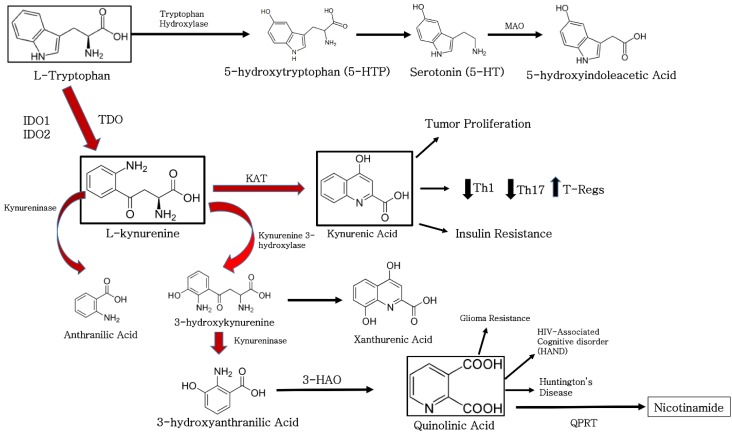
Indoleamine 2, 3-dioxygenase (IDO) is the first and rate limiting catabolic enzyme in the degradation pathway of the essential amino acid tryptophan. By cleaving the aromatic indole ring of tryptophan, IDO initiates the production of a variety of tryptophan degradation products called “kynurenines” that are known to exert important immuno-regulatory functions. Because tryptophan must be supplied in the diet, regulation of tryptophan catabolism may exert profound effects by activating or inhibiting metabolism and immune responses. Important for survival, the regulation of IDO biosynthesis and its activity in cells of the immune system can critically alter their responses to immunological insults, such as infection, autoimmunity and cancer. In this review, we assess how IDO-mediated catabolism of tryptophan can modulate the immune system to arrest inflammation, suppress immunity to cancer and inhibit allergy, autoimmunity and the rejection of transplanted tissues. Finally, we examine how vaccines may enhance immune suppression of autoimmunity through the upregulation of IDO biosynthesis in human dendritic cells.
Overview
The claims and statistics of this paper haven’t been checked yet.
Run the check — free, no account needed. It reads the open-access text and checks the sources it cites.
Integrity signals
Registry
Cites
Statistics
Figures
Verification
Claims the paper makes
The claims and statistics of this paper haven’t been checked yet.
Run the check — free, no account needed. It reads the open-access text and checks the sources it cites.
Claims other papers make about this one
Each is checked against this paper’s own text: does it say what the citing paper says it does?
The cited source says what the claim attributes to it.
In the citing paper
“Increased IDO expression is responsible for the catabolism of TRP in the KYN degradation pathway [36] and is canonically upregulated by inflammatory mechanisms [37,38].”
Self-check
Percentages, sums and reported differences re-computed from the paper’s own numbers.
The self-check needs the paper’s full text.
Citations
Cites
Multilineage potential of adult human mesenchymal stem cells
Pittenger, M. F., Mackay, A. M., Beck, S. C., Jaiswal, R. K., Douglas, R., Mosca, J. D., Moorman, M. A., Simonetti, D. W., Craig, S., & Marshak, D. R. (1999) · Science · doi:10.1126/science.284.5411.143 · Cited by 21,052 · cited 1×
“Mesenchymal stem cells provide a basis for improved tissue regeneration and gene therapy [17,18].”
BackgroundMechanisms of TGF-β Signaling from Cell Membrane to the Nucleus
Shi, Y., & Massagué, J. (2003) · Cell · doi:10.1016/s0092-8674(03)00432-x · Cited by 5,860 · cited 3×
“Several molecular stimuli and signaling pathways were shown to induce the transcription and translation of metabolically-active IDO1 enzyme [35,40,50].”
BackgroundMechanisms of Diabetic Complications
Forbes, J. M., & Cooper, M. E. (2013) · Physiological Reviews · doi:10.1152/physrev.00045.2011 · Cited by 2,890 · cited 2×
“About 80% of patients are women with a 2–5-times greater risk of autoimmune disease onset among African, Hispanic and Native American women than those of European descent [119,137,143–145].”
BackgroundPrevention of Allogeneic Fetal Rejection by Tryptophan Catabolism
Munn, D. H., Zhou, M., Attwood, J. T., Bondarev, I. E., Conway, S. J., Marshall, B., Brown, C. C., & Mellor, A. L. (1998) · Science · doi:10.1126/science.281.5380.1191 · Cited by 2,589 · cited 1×
“confirming that placental cells synthesizing IDO1 can protect the mammalian fetus from maternal T-cell attack [15,16].”
BackgroundUyttenhove, C., Pilotte, L., Théate, I., Stroobant, V., Colau, D., Parmentier, N., Boon, T., & Van den Eynde, B. J. (2003) · Nature Medicine · doi:10.1038/nm934 · Cited by 2,305 · cited 1×
“A connection between elevated urinary tryptophan catabolites and bladder cancer was first reported in the 1950s [105].”
BackgroundBone Marrow Stromal Stem Cells: Nature, Biology, and Potential Applications
Bianco, P., Riminucci, M., Gronthos, S., & Robey, P. G. (2001) · Stem Cells · doi:10.1634/stemcells.19-3-180 · Cited by 1,944 · cited 1×
“Mesenchymal stem cells provide a basis for improved tissue regeneration and gene therapy [17,18].”
BackgroundAn endogenous tumour-promoting ligand of the human aryl hydrocarbon receptor
Opitz, C. A., Litzenburger, U. M., Sahm, F., Ott, M., Tritschler, I., Trump, S., Schumacher, T., Jestaedt, L., Schrenk, D., Weller, M., et al. (2011) · Nature · doi:10.1038/nature10491 · Cited by 1,898 · cited 1×
“The aryl hydrocarbon receptor (AhR) was shown to cause immune suppression after binding dioxin [70].”
BackgroundAn Interaction between Kynurenine and the Aryl Hydrocarbon Receptor Can Generate Regulatory T Cells
Mezrich, J. D., Fechner, J. H., Zhang, X., Johnson, B. P., Burlingham, W. J., & Bradfield, C. A. (2010) · The Journal of Immunology · doi:10.4049/jimmunol.0903670 · Cited by 1,674 · cited 2×
“Interestingly, kynurenines produced from IDO’s enzymatic activity can also bind and activate as an endogenous ligand, AhR [53,54].”
BackgroundEpidemiology and estimated population burden of selected autoimmune diseases in the United States
Jacobson, D. L., Gange, S. J., Rose, N. R., & Graham, N. M. H. (1997) · Clinical Immunology and Immunopathology · doi:10.1006/clin.1997.4412 · Cited by 1,667 · cited 2×
“self-antigens were shown to prevent uveitis, multiple sclerosis and type 1 diabetes in animal models of autoimmunity [124,131,132,142,153].”
BackgroundEisenbarth (1986) · doi:10.1056/nejm198605223142106 · Cited by 1,659 · cited 1×
“Type 1 diabetes (T1D) is a well-studied prototypic tissue-specific autoimmune disease resulting from auto-reactive lymphocyte destruction of the pancreatic islet insulin-producing -cells [34,134–137].”
Background
Cited by
Sorted by citations
Targeting macrophages: therapeutic approaches in cancer
Cassetta, L., & Pollard, J. W. (2018) · Nature Reviews Drug Discovery · doi:10.1038/nrd.2018.169 · Cited by 2,101
Navigating metabolic pathways to enhance antitumour immunity and immunotherapy
Li, X., Wenes, M., Romero, P. J., Huang, S. C., Fendt, S., & Ho, P. (2019) · Nature Reviews Clinical Oncology · doi:10.1038/s41571-019-0203-7 · Cited by 750
Stem Cell-Derived Exosomes as Nanotherapeutics for Autoimmune and Neurodegenerative Disorders
Riazifar, M., Mohammadi, M. R., Pone, E. J., Yeri, A., Lässer, C., Segaliny, A. I., McIntyre, L. L., Shelke, G. V., Hutchins, E., Hamamoto, A., et al. (2019) · ACS Nano · doi:10.1021/acsnano.9b01004 · Cited by 551
Aspects of the Tumor Microenvironment Involved in Immune Resistance and Drug Resistance
Khalaf, K., Hana, D., Chou, J. T.-T., Singh, C., Mackiewicz, A. A., & Kaczmarek, M. (2021) · Frontiers in Immunology · doi:10.3389/fimmu.2021.656364 · Cited by 551
Mesenchymal stromal cell therapies: immunomodulatory properties and clinical progress
Wu, X., Jiang, J., Gu, Z., Zhang, J., Chen, Y., & Liu, X. (2020) · Stem Cell Research & Therapy · doi:10.1186/s13287-020-01855-9 · Cited by 343
“Particularly, soluble mediator IDO promotes the degradation of tryptophan to generate kynurenine and numerous other catabolites, which have been shown to contribute greatly to suppressing T cell proliferation and inducing Treg cells [117, 118].”
BackgroundCancer immunotherapy: a brief review of the history, possibilities, and challenges ahead
Oiseth, S. J., & Aziz, M. S. (2017) · Journal of Cancer Metastasis and Treatment · doi:10.20517/2394-4722.2017.41 · Cited by 386
“Some may be expressed by the cell in a free soluble form, such as indoleamine 2,3-dioxygenase (IDO1), an enzyme produced by some activated macrophages and also overexpressed by many tumors[94].”
BackgroundCicco, P. D., Ercolano, G., & Ianaro, A. (2020) · Frontiers in Immunology · doi:10.3389/fimmu.2020.01680 · Cited by 341
Castro-Portuguez, R., & Sutphin, G. L. (2020) · Experimental Gerontology · doi:10.1016/j.exger.2020.110841 · Cited by 296
Immune and Inflammatory Cells in Thyroid Cancer Microenvironment
Ferrari, S. M., Fallahi, P., Galdiero, M. R., Ruffilli, I., Elia, G., Ragusa, F., Paparo, S. R., Patrizio, A., Mazzi, V., Varricchi, G., et al. (2019) · International Journal of Molecular Sciences · doi:10.3390/ijms20184413 · Cited by 262
Gautam, U. S., Foreman, T. W., Bucşan, A. N., Veatch, A. V., Alvarez, X. A., Adékambi, T., Golden, N., Gentry, K. M., Doyle‐Meyers, L. A., Russell‐Lodrigue, K., et al. (2017) · Proceedings of the National Academy of Sciences · doi:10.1073/pnas.1711373114 · Cited by 197
“IDO catabolizes Tryptophan (Trp) to kynurenine (Kyn) and other metabolites, and acts to suppress the immune response, particularly the CD4 T cell production of IFN-γ (6).”
BackgroundInfluentialSalminen, A. (2022) · Ageing Research Reviews · doi:10.1016/j.arr.2022.101573 · Cited by 207
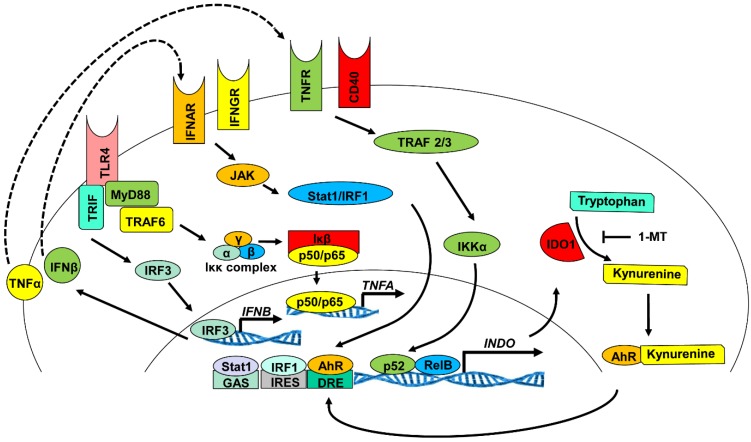
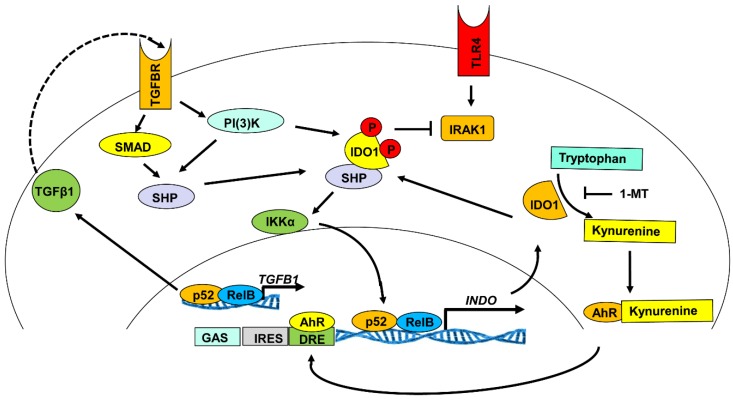
“There are observations indicating that the activation of SHP-1 stimulated IKKα which induced the non-canonical NF-κB signaling through the p52/RelB pathway (Pallotta et al., 2011; Mbongue et al., 2015) (Fig.”
BackgroundBiomarkers for Immune Checkpoint Inhibitor-Mediated Tumor Response and Adverse Events
Nakamura, Y. (2019) · Frontiers in Medicine · doi:10.3389/fmed.2019.00119 · Cited by 185
“Enzymes Related to Immune Response Indoleamine 2,3-dioxygenase (IDO) IDO is an enzyme that converts the essential amino acid ltryptophan into kynurenine and carries an immunosuppressive effect through multiple mechanisms (80).”
BackgroundBiomarkers associated with checkpoint inhibitors
Manson, G., Norwood, J., Marabelle, A., Kohrt, H. E. K., & Houot, R. (2016) · Annals of Oncology · doi:10.1093/annonc/mdw181 · Cited by 166
Turn Back the TIMe: Targeting Tumor Infiltrating Myeloid Cells to Revert Cancer Progression
Awad, R. M., Vlaeminck, Y. D., Maebe, J., Goyvaerts, C., & Breckpot, K. (2018) · Frontiers in Immunology · doi:10.3389/fimmu.2018.01977 · Cited by 154
IDO1: An important immunotherapy target in cancer treatment
Li, F., Zhang, R., Li, S., & Liu, J. (2017) · International Immunopharmacology · doi:10.1016/j.intimp.2017.03.024 · Cited by 162
Mei, K., Liao, Y., Jiang, J., Chiang, M., Khazaieli, M., Liu, X., Wang, X., Liu, Q., Chang, C. H., Zhang, X., et al. (2020) · ACS Nano · doi:10.1021/acsnano.0c05194 · Cited by 162
Török, N., Tanaka, M., & Vécsei, L. (2020) · International Journal of Molecular Sciences · doi:10.3390/ijms21249338 · Cited by 154
Gendelman, H. E., Zhang, Y., Santamaria, P. M., Olson, K. E., Schutt, C. R., Bhatti, D., Shetty, B. L. D., Lu, Y., Estes, K. A., Standaert, D. G., et al. (2017) · npj Parkinson s Disease · doi:10.1038/s41531-017-0013-5 · Cited by 147
Metabolic modulation of immune checkpoints and novel therapeutic strategies in cancer
Wang, Y., Wang, Y., Ren, Y., Zhang, Q., Yi, P., & Cheng, C. (2022) · Seminars in Cancer Biology · doi:10.1016/j.semcancer.2022.02.010 · Cited by 148
Intestinal epithelial cell metabolism at the interface of microbial dysbiosis and tissue injury
Rath, E., & Haller, D. (2022) · Mucosal Immunology · doi:10.1038/s41385-022-00514-x · Cited by 159
Regulatory T cells in the tumour microenvironment
Imianowski, C. J., Chen, Q., Workman, C. J., & Vignali, D. A. A. (2025) · Nature reviews. Cancer · doi:10.1038/s41568-025-00832-9 · Cited by 144
“IDO is the rate-limiting catabolic enzyme in the degradation pathway of tryptophan, an essential amino acid with degradation products that exert multiple important immunoregulatory functions including limiting T cell proliferation by kynurenine 146,147 .”
Indoleamine 2, 3-dioxygenase regulation of immune response (Review)
Wu, H., Gong, J., & Liu, Y. (2018) · Molecular Medicine Reports · doi:10.3892/mmr.2018.8537 · Cited by 126
“The B7 receptors on DCs expressing IDO bind to cytotoxic T-lymphocyte antigen 4 (CTLA4) on Tregs, resulting in their proliferation and antigen‑specific anergy (5,11).”
BackgroundInfluentialDarragh, L. B., Oweida, A., & Karam, S. D. (2019) · Frontiers in Immunology · doi:10.3389/fimmu.2018.03154 · Cited by 133
Immune Landscape of Breast Cancers
Nagarajan, D., & McArdle, S. (2018) · Biomedicines · doi:10.3390/biomedicines6010020 · Cited by 137
“In addition to PD1 and PD-L1, Indoleamine 2,3-dioxygenase-1 and -2 (IDO1,2) an intracellular enzyme overexpressed by many cancers, have also been shown to be involved in immune suppression via the depletion of tryptophan from the microenvironment and the production of metabolites, such as kynurenines [42].”
BackgroundImmune Escape in Glioblastoma Multiforme and the Adaptation of Immunotherapies for Treatment
Pearson, J. R. D., Cuzzubbo, S., McArthur, S., Durrant, L. G., Adhikaree, J., Tinsley, C. J., Pockley, A. G., & McArdle, S. (2020) · Frontiers in Immunology · doi:10.3389/fimmu.2020.582106 · Cited by 118
Wei, F., Wang, D., Wei, J., Tang, N., Tang, L. M., Xiong, F., Guo, C. J., Zhou, M., Li, X., Li, G., et al. (2020) · Cellular and Molecular Life Sciences · doi:10.1007/s00018-020-03581-0 · Cited by 128
Examining Chronic Inflammation, Immune Metabolism, and T Cell Dysfunction in HIV Infection
Mu, W., Patankar, V., Kitchen, S. G., & Zhen, A. (2024) · Viruses · doi:10.3390/v16020219 · Cited by 116
“For example, Indoleamine 2,3-dioxygenase (IDO) is an enzyme that is upregulated during inflammation and degrades tryptophan [147].”
BackgroundMasenga, S. K., Mweene, B. C., Luwaya, E. L., Muchaili, L., Chona, M., & Kirabo, A. (2023) · Cells · doi:10.3390/cells12101351 · Cited by 114
Immune Checkpoint Targeted Therapy in Glioma: Status and Hopes
Qi, Y., Liu, B., Sun, Q., Xiong, X., & Chen, Q. (2020) · Frontiers in Immunology · doi:10.3389/fimmu.2020.578877 · Cited by 132
Immunometabolism of Phagocytes During Mycobacterium tuberculosis Infection
Kumar, R., Singh, P., Kolloli, A., Shi, L., Bushkin, Y., Tyagi, S., & Subbian, S. (2019) · Frontiers in Molecular Biosciences · doi:10.3389/fmolb.2019.00105 · Cited by 103
“It also suppresses the host immune response, particularly IFNγ production by CD4+ T cells (Mbongue et al., 2015).”
BackgroundTargeting indoleamine-2,3-dioxygenase in cancer: Scientific rationale and clinical evidence
Ricciuti, B., Leonardi, G. C., Puccetti, P., Fallarino, F., Bianconi, V., Sahebkar, A., Baglivo, S., Chiari, R., & Pirro, M. (2018) · Pharmacology & Therapeutics · doi:10.1016/j.pharmthera.2018.12.004 · Cited by 97
“, pathogens, cytokines and lipopolysaccharides) (Mbongue et al., 2015).”
BackgroundInfluentialLipid-based nanosystems: the next generation of cancer immune therapy
Cheng, Z., Fobian, S., Gurrieri, E., Amin, M., D’Agostino, V., Falahati, M., Zalba, S., Debets, R., Garrido, M. J., Saeed, M., et al. (2024) · Journal of Hematology & Oncology · doi:10.1186/s13045-024-01574-1 · Cited by 95
“It is often overexpressed in tumors, degrading tryptophan to kynurenines, which increase immune regulatory and evasion functions, and promote metastasis [237, 238].”
BackgroundThe evolving landscape of ‘next-generation’ immune checkpoint inhibitors: A review
Mazzarella, L., Duso, B. A., Trapani, D., Belli, C., D’Amico, P., Ferraro, E., Viale, G., & Curigliano, G. (2019) · European Journal of Cancer · doi:10.1016/j.ejca.2019.04.035 · Cited by 100
Singh, A. K., Praharaj, M., Lombardo, K. A., Yoshida, T., Matoso, A., Baras, A. S., Zhao, L., Srikrishna, G., Huang, J., Prasad, P., et al. (2022) · Nature Communications · doi:10.1038/s41467-022-28509-z · Cited by 106
RetractedCommitment to Aerobic Glycolysis Sustains Immunosuppression of Human Mesenchymal Stem Cells
Liu, Y., Yuan, X., Munoz, N. M., Logan, T. M., & Ma, T. (2018) · Stem Cells Translational Medicine · doi:10.1002/sctm.18-0070 · Cited by 101
Mycobacterium tuberculosis : Pathogenesis and therapeutic targets
Yang, J., Zhang, L., Qiao, W., & Luo, Y. (2023) · MedComm · doi:10.1002/mco2.353 · Cited by 91
Immune checkpoint molecules. Possible future therapeutic implications in autoimmune diseases
Huang, C., Zhu, H., Yao, Y., Bian, Z.-H., Zheng, Y.-J., Li, L., Moutsopoulos, H. Μ., Gershwin, M. E., & Lian, Z. (2019) · Journal of Autoimmunity · doi:10.1016/j.jaut.2019.102333 · Cited by 94
The Kynurenine Pathway: A Primary Resistance Mechanism in Patients with Glioblastoma
Sordillo, P. P., Sordillo, L. A., & Helson, L. (2017) · Anticancer Research · doi:10.21873/anticanres.11551 · Cited by 73
Polyphenols as Immunomodulatory Compounds in the Tumor Microenvironment: Friends or Foes?
Focaccetti, C., Izzi, V., Benvenuto, M., Fazi, S., Ciuffa, S., Giganti, M. G., Potenza, V., Manzari, V., Modesti, A., & Bei, R. (2019) · International Journal of Molecular Sciences · doi:10.3390/ijms20071714 · Cited by 86
Photobiomodulation of the microbiome: implications for metabolic and inflammatory diseases
Bicknell, B. T., Liebert, A. D., Johnstone, D. M., & Kiat, H. (2018) · Lasers in Medical Science · doi:10.1007/s10103-018-2594-6 · Cited by 88
Adoptive Immunotherapy Using PRAME-Specific T Cells in Medulloblastoma
Orlando, D., Miele, E., Angelis, B. D., Guercio, M., Boffa, I., Sinibaldi, M., Pò, A., Caruana, I., Abballe, L., Carai, A., et al. (2018) · Cancer Research · doi:10.1158/0008-5472.can-17-3140 · Cited by 79
“(66,67) Tumors that utilize IDO deplete tryptophan from T cells forming kynurenines, which predispose an exhausted and regulatory T cell phenotype.(66,67) IDO blockers have been developed and are currently evaluated in children in early phase studies (phase I, clinical trials.”
BackgroundMetabolism in cancer metastasis: bioenergetics, biosynthesis, and beyond
Teoh, S. T., & Lunt, S. Y. (2017) · WIREs Systems Biology and Medicine · doi:10.1002/wsbm.1406 · Cited by 77
“The expression of indoleamine 2,3dioxygenase (IDO), which catalyzes the rate-limiting first step of tryptophan degradation via the kynurenine pathway, is frequently elevated in tumor cells.(252) IDO overexpression has a dual effect on T cells: IDO overexpression: (1) depletes tryptophan from the microenvironment to ha…”
BackgroundTryptophan metabolism as a target in gut microbiota, ageing and kidney disease
Miao, H., Zhang, S.-J., Wu, X., Li, P., & Zhao, Y.-L. (2025) · International Journal on Biological Sciences · doi:10.7150/ijbs.115359 · Cited by 71
“The two enzymes are not constitutively expressed in most cells but can be induced by different inflammatory stimuli such as lipopolysaccharides, cytokines and pathogens [21].”
Interferons: Reprogramming the Metabolic Network against Viral Infection
Raniga, K., & Liang, C. (2018) · Viruses · doi:10.3390/v10010036 · Cited by 74
“While exerting antiviral effects against numerous viruses, long-term consequences of induction could contribute to disease progression, as seen with the promotion of an immunosuppressive environment during chronic viral infections [106].”
BackgroundEsmaeili, S., Mahmoudi, M., Rezaieyazdi, Z., Sahebari, M., Tabasi, N. S., Sahebkar, A., & Rastin, M. (2018) · Journal of Cellular Biochemistry · doi:10.1002/jcb.27203 · Cited by 71
“Our observation of higher expression of IDO and IL‐10 in c‐MDC‐DEL, c‐MDC‐RAM, and c‐MDC‐ MIX could signify the capability of these DCs to show modulatory responses and shift to tolerogenic manner.(26) MDC‐DEL, MDC‐RAM, and MDC‐MIX in SLE donors, following treatment with probiotics, showed lower expression of HLA‐DR,…”
ResultTargeting tumor-associated macrophages for successful immunotherapy of ovarian carcinoma
Truxová, I., Cibula, D., Špíšek, R., & Fucikova, J. P. (2023) · Journal for ImmunoTherapy of Cancer · doi:10.1136/jitc-2022-005968 · Cited by 80
Parra, E. R., Villalobos, P. A., Zhang, J., Behrens, C., Mino, B., Swisher, S. G., Sepesi, B., Weissferdt, A., Kalhor, N., Heymach, J. V., et al. (2018) · Journal of Thoracic Oncology · doi:10.1016/j.jtho.2018.03.002 · Cited by 74
Granhøj, J. S., Jensen, A. W. P., Presti, M., Met, Ö., Svane, I. M., & Donia, M. (2022) · Expert Opinion on Biological Therapy · doi:10.1080/14712598.2022.2064711 · Cited by 76
Tumor-Mediated Neutrophil Polarization and Therapeutic Implications
Raftopoulou, S., Valadez-Cosmes, P., Mihalič, Z. N., Schicho, R., & Kargl, J. (2022) · International Journal of Molecular Sciences · doi:10.3390/ijms23063218 · Cited by 70
The Black Hole: CAR T Cell Therapy in AML
Atilla, E., & Benabdellah, K. (2023) · Cancers · doi:10.3390/cancers15102713 · Cited by 68
“The high expression of Indoleamine 2,3-dioxygenase (IDO) has been reported to promote Treg conversion and enhance the immunosuppressive ability [50].”
BackgroundGonzalez‐Pujana, A., Vining, K. H., Zhang, D. K. Y., Santos‐Vizcaíno, E., Igartúa, M., Hernández, R. M., & Mooney, D. J. (2020) · Biomaterials · doi:10.1016/j.biomaterials.2020.120266 · Cited by 69
Audrito, V., Managò, A., Gaudino, F., Sorci, L., Messana, V. G., Raffaelli, N., & Deaglio, S. (2019) · Frontiers in Immunology · doi:10.3389/fimmu.2019.01720 · Cited by 67
The Role of Tryptophan Metabolism in Alzheimer’s Disease
Savonije, K., & Weaver, D. F. (2023) · Brain Sciences · doi:10.3390/brainsci13020292 · Cited by 68
“IDO1 is produced in many different tissues as an anti-inflammatory immune-downregulating signal pathway; IDO-2 is less common [36].”
BackgroundMyeloid-Derived Suppressor Cells in Prostate Cancer: Present Knowledge and Future Perspectives
Koinis, F., Xagara, A., Chantzara, E., Leontopoulou, V., Aidarinis, C., & Kotsakis, A. P. (2021) · Cells · doi:10.3390/cells11010020 · Cited by 62
“IDO catalyzes the degradation of tryptophan, leading to accumulation of metabolites such as kynurenine [48,49], that suppress T cells via inhibition of their expansion and recruitment of T regs [50,51].”
BackgroundImmunomodulatory Effects of Genetic Alterations Affecting the Kynurenine Pathway
Boros, F. A., & Vécsei, L. (2019) · Frontiers in Immunology · doi:10.3389/fimmu.2019.02570 · Cited by 58
Rojewska, E., Ciapała, K., Piotrowska, A., Makuch, W., & Mika, J. (2018) · Frontiers in Pharmacology · doi:10.3389/fphar.2018.00724 · Cited by 56
“Therefore, we chose an inhibitor of IDO2: 1-D-MT for further research (Novak et al., 1995; Metz et al., 2007).”
MethodIDO Immune Status after Chemoradiation May Predict Survival in Lung Cancer Patients
Wang, W., Huang, L., Jin, J., Jolly, S., Zang, Y., Wu, H., Yan, L., Pi, W., Li, L., Mellor, A. L., et al. (2017) · Cancer Research · doi:10.1158/0008-5472.can-17-2995 · Cited by 63
“Patients in Group 1 achieved extremely long-term OS (the median OS has not been reached after up to 57 months of median follow-up), but a relatively low PFS of 14 (10-17) months.”
BackgroundKuppa, S. S., Kim, H. K., Kang, J. Y., Lee, S. C., & Seon, J. K. (2022) · International Journal of Molecular Sciences · doi:10.3390/ijms232113016 · Cited by 64
“IDO degrades tryptophan and creates tryptophan-degrading kynurenines, which have an immuno-regulatory impact [100].”
BackgroundGuenin‐Macé, L., Morel, J., Doisne, J., Schiavo, A., Boulet, L., Mayau, V., Gonçalves, P., Duchatelet, S., Hovnanian, A., Bondet, V., et al. (2020) · JCI Insight · doi:10.1172/jci.insight.140598 · Cited by 62
Metabolic Reprogramming in Cancer is Induced to Increase Proton Production.
Sun, H., Zhou, Y., Skaro, M., Wu, Y.-R., Qu, Z.-X., Mao, F., Zhao, S.-W., & Xu, Y. (2020) · Cancer Research · doi:10.1158/0008-5472.can-19-3392 · Cited by 54
Gasotransmitters and the immune system: Mode of action and novel therapeutic targets
Fagone, P., Mazzon, E., Bramanti, P., Bendtzen, K., & Nicoletti, F. (2018) · European Journal of Pharmacology · doi:10.1016/j.ejphar.2018.07.026 · Cited by 62
Immunosuppressive Amino-Acid Catabolizing Enzymes in Multiple Sclerosis
Correale, J. D. (2021) · Frontiers in Immunology · doi:10.3389/fimmu.2020.600428 · Cited by 54
“IDO1-dependent suppression of T cell responses has been proposed as an immunoregulatory pathway implicated in maternal tolerance of allogeneic fetuses during mammalian gestation, as well as in tumor tolerance, and protective regulation in autoimmune disease (9, 15, 18).”
BackgroundCancer Vaccine Immunotherapy with RNA-Loaded Liposomes
Sayour, E. J., Méndez‐Gómez, H. R., & Mitchell, D. A. (2018) · International Journal of Molecular Sciences · doi:10.3390/ijms19102890 · Cited by 67
Protracted immune disorders at one year after ICU discharge in patients with septic shock
Riché, F. C., Chousterman, B. G., Valleur, P. D., Mebazaa, A., Launay, J., & Gayat, É. (2018) · Critical Care · doi:10.1186/s13054-017-1934-4 · Cited by 60
“IDO is stimulated by lipopolysaccharide (LPS), TNFα, IFN-γ, transforming growth factor (TGF)ß and activation of toll-like receptor (TLR)3, TLR4, TLR7, and TLR8 [30].”
BackgroundIlić, N., Gruden‐Movsesijan, A., Cvetković, J., Tomić, S., Vučević, D., Aranzamendi, C., Čolić, M. J., Pinelli, E., & Sofronić‐Milosavljević, L. (2018) · Frontiers in Immunology · doi:10.3389/fimmu.2018.00011 · Cited by 57
The prognostic value of IDO expression in solid tumors: a systematic review and meta-analysis
Wang, S., Wu, J., Shen, H., & Wang, J. (2020) · BMC Cancer · doi:10.1186/s12885-020-06956-5 · Cited by 54
“Page 3/31 regulate the differentiation direction of Th17/Treg cells, thereby promoting the balanced differentiation of Th17/Treg to Treg cells [3-5].”
BackgroundKolijn, K., Verhoef, E. I., Smid, M., Böttcher, R., Jenster, G. W., Debets, R., & van Leenders, G. J. L. H. (2018) · Cancer Research · doi:10.1158/0008-5472.can-17-3752 · Cited by 58
Certo, M., Elkafrawy, H., Pucino, V., Cucchi, D., Cheung, K. C.-P., & Mauro, C. (2020) · British Journal of Pharmacology · doi:10.1111/bph.15002 · Cited by 54
“T cells can modulate the activity of endothelial cells through the release of specific cytokines such as theTh1 cytokines IFN-γ and TNF-α, theTh2 cytokines IL-4 and IL-13, and theTreg cytokines IL-10 and TGF-β.”
BackgroundInfluentialTargeting the Kynurenine Pathway for the Treatment of Cisplatin-Resistant Lung Cancer
Nguyen, D. J. M., Theodoropoulos, G., Li, Y.-Y., Wu, C., Sha, W., Feun, L. G., Lampidis, T. J., Savaraj, N., & Wangpaichitr, M. (2019) · Molecular Cancer Research · doi:10.1158/1541-7786.mcr-19-0239 · Cited by 60
Targeting Molecular Inflammatory Pathways in Granuloma as Host-Directed Therapies for Tuberculosis
Guler, R., Ozturk, M., Sabeel, S., Motaung, B., Parihar, S. P., Thienemann, F., & Brombacher, F. (2021) · Frontiers in Immunology · doi:10.3389/fimmu.2021.733853 · Cited by 46
Kwon, M., Ko, S.-K., Jang, M., Kim, G.-H., Ryoo, I., Son, S., Ryu, H., Oh, S.-R., Lee, W.-K., Kim, B. Y., et al. (2019) · Journal of Enzyme Inhibition and Medicinal Chemistry · doi:10.1080/14756366.2019.1640218 · Cited by 45
Amino Acid Catabolism in Multiple Sclerosis Affects Immune Homeostasis
Negrotto, L., & Correale, J. D. (2017) · The Journal of Immunology · doi:10.4049/jimmunol.1601139 · Cited by 50
“defense against infectious agents, in maternal–fetal tolerance, in oncologic processes as well as in autoimmune diseases (7).”
BackgroundHazrati, A., Malekpour, K., Khorramdelazad, H., Rajaei, S., & Hashemi, S. M. (2024) · Biomarker Research · doi:10.1186/s40364-024-00580-2 · Cited by 46
Li, S., Zhang, C., Pang, G., & Wang, P. (2020) · Frontiers in Immunology · doi:10.3389/fimmu.2020.603157 · Cited by 43
“Moreover, it promotes cancer cell survival through enhanced suppression of immunity (99).”
BackgroundTargeting immune checkpoints in malignant glioma
Zhang, X., Zhu, S., Li, T., Liu, Y., Chen, W., & Chen, J. (2016) · Oncotarget · doi:10.18632/oncotarget.12702 · Cited by 52
“In return, when CTLA-4 is induced in Tregs, CTLA-4 mediates the down-regulating of co-stimulatory molecules, CD80 and CD86 on DCs, and thus reduces the potency of APCs to activate other T cells, critically controlling the immunosuppressive activity of Tregs (Figure 2B) [76].”
BackgroundInfluentialÖzçam, M., Tocmo, R., Oh, J., Afrazi, A., Mezrich, J. D., Roos, S., Claesen, J., & van Pijkeren, J. (2018) · Applied and Environmental Microbiology · doi:10.1128/aem.01661-18 · Cited by 52
“tryptophan is taken up by the host (18), thereby limiting tryptophan availability to the”
BackgroundIntegration of multiple networks and pathways identifies cancer driver genes in pan-cancer analysis
Cava, C., Bertoli, G. R., Colaprico, A., Olsen, C., Bontempi, G., & Castiglioni, I. (2018) · BMC Genomics · doi:10.1186/s12864-017-4423-x · Cited by 43
Herrera-Rios, D., Mughal, S. S., Teuber‐Hanselmann, S., Pierscianek, D., Sucker, A., Jansen, P., Schimming, T. T., Klode, J., REIFENBERGER, J., Felsberg, J., et al. (2020) · Frontiers in Immunology · doi:10.3389/fimmu.2020.00120 · Cited by 36
Switch of NAD Salvage to de novo Biosynthesis Sustains SIRT1-RelB-Dependent Inflammatory Tolerance
Zhang, J., Tao, J., Ling, Y., Li, F., Zhu, X., Xu, L., Wang, M., Zhang, S., McCall, C. E., & Liu, T. F. (2019) · Frontiers in Immunology · doi:10.3389/fimmu.2019.02358 · Cited by 48
“Interestingly, although IDO1-NAD pathway plays an important role in sustaining tolerance, it is not required for tolerance induction (26, 31).”
BackgroundKlein, D. (2016) · Stem Cells International · doi:10.1155/2016/1905846 · Cited by 43
“MSCs exert an immunosuppressive function in the human body and the molecular mechanisms underlying the MSC-mediated immunosuppression were shown to be species dependent [81–84].”
Therapeutic Liposomal Vaccines for Dendritic Cell Activation or Tolerance
Nagy, N. A., de Haas, A. M., Geijtenbeek, T. B. H., van Ree, R., Tas, S. W., van Kooyk, Y., & de Jong, E. C. (2021) · Frontiers in Immunology · doi:10.3389/fimmu.2021.674048 · Cited by 49
Cheng, L.-C., Yu, J., Hao, T., Wang, W., Wei, M., & Li, G. (2023) · Pharmaceutics · doi:10.3390/pharmaceutics15112622 · Cited by 43
“This depletion has been demonstrated to trigger anergy and apoptosis in effector T cells [104].”
BackgroundJohnson, R. L., Cummings, M., Thangavelu, A., Theophilou, G., Jong, D. D., & Orsi, N. M. (2021) · Cancers · doi:10.3390/cancers13246231 · Cited by 39
Truong, N. T., Gargett, T., Brown, M. P., & Ebert, L. M. (2021) · Cancers · doi:10.3390/cancers13092225 · Cited by 47
Adoptive T cell therapy: Boosting the immune system to fight cancer
León, E. C., Ranganathan, R., & Savoldo, B. (2020) · Seminars in Immunology · doi:10.1016/j.smim.2020.101437 · Cited by 48
Qi, F., Wang, M., Li, B., Lu, Z., Nie, G., & Li, S. (2020) · Acta Pharmacologica Sinica · doi:10.1038/s41401-020-0423-5 · Cited by 45
Extracellular vesicles from IFN-γ-primed mesenchymal stem cells repress atopic dermatitis in mice
Kim, J., Lee, S. K., Jung, M., Jeong, S., You, H., Won, J., Han, S.-D., Cho, H. J., Park, S., Park, J., et al. (2022) · Journal of Nanobiotechnology · doi:10.1186/s12951-022-01728-8 · Cited by 38
“This IFN-γ-IDO1 axis is responsible for the immunomodulatory function of MSCs [73].”
BackgroundXiao, W., Li, J., Gao, X., Yang, H., Su, J., Weng, R., Gao, Y., Ni, W., & Gu, Y. (2022) · Experimental Neurology · doi:10.1016/j.expneurol.2022.114225 · Cited by 41
Immunotherapy for Pediatric Brain Tumors
Sayour, E. J., & Mitchell, D. A. (2017) · Brain Sciences · doi:10.3390/brainsci7100137 · Cited by 38
“Tumors that utilize IDO deplete tryptophan from T cells forming kynurenines, which predispose an exhausted and regulatory T cell phenotype [70,71].”
BackgroundInfluentialAldajani, W. A., Salazar, F., Sewell, H. F., Knox, A. J., & Ghaemmaghami, A. M. (2016) · Oncotarget · doi:10.18632/oncotarget.11586 · Cited by 34
Unraveling the role of M2 TAMs in ovarian cancer dynamics: a systematic review
Wang, Y.-P., Ma, C., Li, X., Yang, F., Wang, N., Ji, G., Liu, Q., Zhu, H., Xu, S., & Li, H. (2025) · Journal of Translational Medicine · doi:10.1186/s12967-025-06643-8 · Cited by 33
“…TAMS mediated immunosuppression is to directly inhibit its tumor-promoting function, including inhibiting the production of IDO and thereby inhibiting CTL proliferation [186, 187], and has been associated with peritoneal dissemination and poor survival outcomes in patients with ovarian cancer.”
Lan, H., We, Z., Jin, K., Liu, Y., & Wang, Z. (2020) · Drug Delivery · doi:10.1080/10717544.2020.1809559 · Cited by 35
“Engineered NPs allowed immune suppression to be reversed by blocking the IDO pathways (Mbongue et al., 2015).”
BackgroundZuo, B., Li, T., Liu, X., Wang, S.-L., Cheng, J., Liu, X.-Q., Cui, W.-J., Shi, H.-L., & Ling, C. (2023) · Clinical and Translational Oncology · doi:10.1007/s12094-023-03187-5 · Cited by 31
Stem Cells Therapy as a Possible Therapeutic Option in Treating COVID-19 Patients
Esquivel, D., Mishra, R., Soni, P., Seetharaman, R., Mahmood, A., & Srivastava, A. (2020) · Stem Cell Reviews and Reports · doi:10.1007/s12015-020-10017-6 · Cited by 34
Functional and metabolic targeting of natural killer cells to solid tumors
Wang, J., & Matosevic, S. (2020) · Cellular Oncology · doi:10.1007/s13402-020-00523-7 · Cited by 35
“TGF-β can further suppress NK cell activity by recruiting or activating a variety of cancer-promoting immune cells, including Tregs [134], MDSCs [135, 136], CD11bLy6G neutrophils [137], and indoleamine 2,3dioxygenase 1 (IDO1)-expressing dendritic cells (DCs) [138].”
Zahm, C. D., Johnson, L. E., & McNeel, D. G. (2019) · Cancer Immunology Immunotherapy · doi:10.1007/s00262-019-02394-w · Cited by 35
Ganesan, S., & Roy, C. R. (2019) · PLoS Pathogens · doi:10.1371/journal.ppat.1007955 · Cited by 33
Rusty Microglia: Trainers of Innate Immunity in Alzheimer's Disease
Sfera, A., Gradini, R., Cummings, M., Diaz, E. L., Price, A. I., & Osorio, C. P. (2018) · Frontiers in Neurology · doi:10.3389/fneur.2018.01062 · Cited by 32
Navarro‐Barriuso, J., Mansilla, M. J., & Martínez-Cáceres, E. M. (2018) · Frontiers in Immunology · doi:10.3389/fimmu.2018.02062 · Cited by 42
Takamori, S., Ishikawa, S., Suzuki, J., Oizumi, H., Uchida, T., Ueda, S., Edamatsu, K., Iino, M., & Sugimoto, M. (2021) · Thoracic Cancer · doi:10.1111/1759-7714.14282 · Cited by 30
“Trp, a precursor of kynurenine, is metabolized to kynurenine by the action of indoleamine 2,3-dioxygenase (IDO).(22,23) Under normal physiological conditions, IDO expression is modulated; however, it is often upregulated in several cancer types.”
Background
Metadata
- Authors
- Mbongue, J., Nicholas, D., Torrez, T., Kim, N.-S., Firek, A., & Langridge, W.
- Affiliations
- Loma Linda University (US)
- California Baptist University (US)
- Jerry L. Pettis Memorial VA Medical Center (US)
- Corresponding author
- Langridge, William
- Venue
- Vaccines
- Publisher
- MDPI AG
- Published
- 2015-09-10
- Volume
- 3
- Issue
- 3
- Pages
- 703-729
- ISSN
- 2076-393X (ISSN-L)
- PMC
- PMC4586474
- OpenAlex
- W2101376945
- Cited by
- 351
- References
- 165
- Citations by year
- 2026: 18 · 2025: 32 · 2024: 32 · 2023: 39 · 2022: 43 · 2021: 39 · 2020: 47 · 2019: 34 · 2018: 39 · 2017: 16 · 2016: 11 · 2015: 1
- FWCI
- 1.26
- Type
- journal article
- Language
- en
- Open access
- gold
- dx.doi.org
- Licence
- Locations
- Vaccines (publishedVersion, cc-by)
- Europe PMC (PubMed Central) (publishedVersion, cc-by)
- PubMed Central (publishedVersion, cc-by)
- PubMed (publishedVersion)
- DOAJ (DOAJ: Directory of Open Access Journals) (submittedVersion, cc-by-sa)
- Funders
- Loma Linda University
- National Institutes of Health (DK-99-013)
- National Institute of General Medical Sciences (R25GM060507)
- National Institute on Minority Health and Health Disparities (P20MD006988)
- Topics
- Life Sciences › Neuroscience › Biological Psychiatry › Tryptophan and brain disorders
- Life Sciences › Immunology and Microbiology › Immunology › Immunotherapy and Immune Responses
- Life Sciences › Immunology and Microbiology › Immunology › T-cell and B-cell Immunology
- Keywords
- indoleamine 2,3-dioxygenase, tryptophan catabolism, kynurenine, immunosuppression, autoimmunity, dendritic cells, tumor immunosuppression, allergy, graft rejection, inflammation, vaccine adjuvants, tryptophan metabolism
About these checks
Registry, retraction, Cites and statistics results are computed, not judged, with one exception: a printed reference that no index lists is read once by a model before it counts as a citation error. Claims are extracted by a model and kept only when their quote appears verbatim in the text; each cited source is then checked, with a model’s help, for whether it says what the claim relies on. Those verdicts can be wrong — read the claim’s quote and the cited source before relying on one.
Statistics and arithmetic are recomputed, not judged.
Confidence bands are shown only for fields calibrated on our annotated test set. None is calibrated yet, so no band is shown.
What counts as a claim ›How we measure confidence ›How we check this ›
Are you an author, or do you see a problem with this page? Request a review
