

The DOI matches its Crossref record; 107 of the 107 references it cites were found in a registry or an index; none of the 18 sources its claims cite is checked for support yet.
COVID-19 Vaccine Hesitancy Worldwide: A Concise Systematic Review of Vaccine Acceptance Rates
Open accessPublished version of a preprint
Abstract
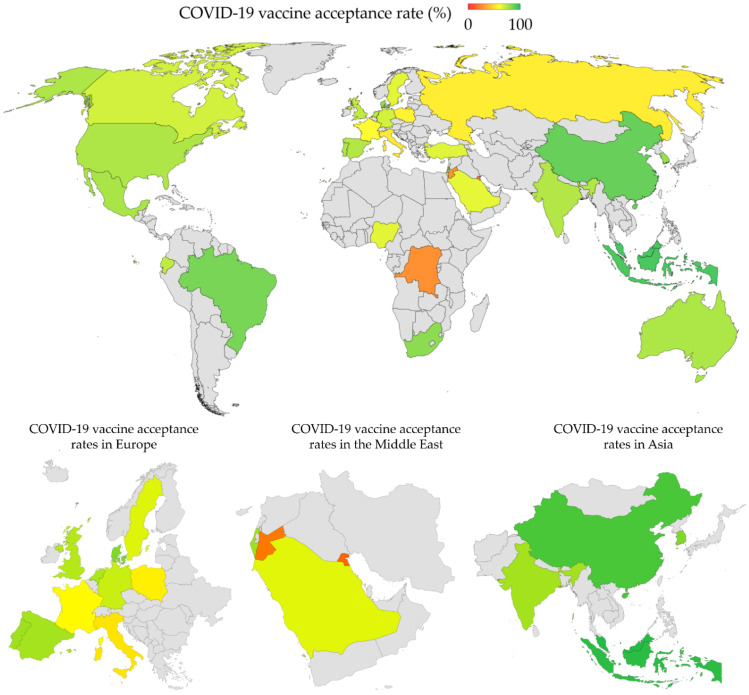
Utility of vaccine campaigns to control coronavirus 2019 disease (COVID-19) is not merely dependent on vaccine efficacy and safety. Vaccine acceptance among the general public and healthcare workers appears to have a decisive role in the successful control of the pandemic. The aim of this review was to provide an up-to-date assessment of COVID-19 vaccination acceptance rates worldwide. A systematic search of the peer-reviewed English survey literature indexed in PubMed was done on 25 December 2020. Results from 31 peer-reviewed published studies met the inclusion criteria and formed the basis for the final COVID-19 vaccine acceptance estimates. Survey studies on COVID-19 vaccine acceptance rates were found from 33 different countries. Among adults representing the general public, the highest COVID-19 vaccine acceptance rates were found in Ecuador (97.0%), Malaysia (94.3%), Indonesia (93.3%) and China (91.3%). However, the lowest COVID-19 vaccine acceptance rates were found in Kuwait (23.6%), Jordan (28.4%), Italy (53.7), Russia (54.9%), Poland (56.3%), US (56.9%), and France (58.9%). Only eight surveys among healthcare workers (doctors and nurses) were found, with vaccine acceptance rates ranging from 27.7% in the Democratic Republic of the Congo to 78.1% in Israel. In the majority of survey studies among the general public stratified per country (29/47, 62%), the acceptance of COVID-19 vaccination showed a level of ≥70%. Low rates of COVID-19 vaccine acceptance were reported in the Middle East, Russia, Africa and several European countries. This could represent a major problem in the global efforts to control the current COVID-19 pandemic. More studies are recommended to address the scope of COVID-19 vaccine hesitancy. Such studies are particularly needed in the Middle East and North Africa, Sub-Saharan Africa, Eastern Europe, Central Asia, Middle and South America. Addressing the scope of COVID-19 vaccine hesitancy in various countries is recommended as an initial step for building trust in COVID-19 vaccination efforts.
Overview
AI snapshot
Written from the paper’s full text.
TL;DR
This systematic review of 31 peer-reviewed survey studies from 33 countries found wide global variation in COVID-19 vaccine acceptance, with high rates in Ecuador, Malaysia, Indonesia, and China and low rates in Kuwait, Jordan, and several European countries. It concludes that vaccine hesitancy could be a major hindrance to pandemic control and recommends more studies in under-covered regions.
Key findings
- Among the general public, the highest COVID-19 vaccine acceptance rates were in Ecuador (97.0%), Malaysia (94.3%), Indonesia (93.3%), and China (91.3%); the lowest were in Kuwait (23.6%), Jordan (28.4%), Italy (53.7%), Russia (54.9%), Poland (56.3%), the US (56.9%), and France (58.9%).
- Among eight healthcare-worker surveys, acceptance ranged from 27.7% in the Democratic Republic of the Congo to 78.1% in Israel; three surveys reported rates below 60%.
- Stratified per country, 29/47 (62%) general-public surveys reported acceptance ≥70%; the review analyzed 60 surveys total: 47 among the general public, 8 among healthcare workers, 3 among parents/guardians, and 2 among university students.
- Male sex was associated with significantly higher COVID-19 vaccine acceptance in 15 countries/studies, while age was a significant factor in 11 studies/countries.
Methods
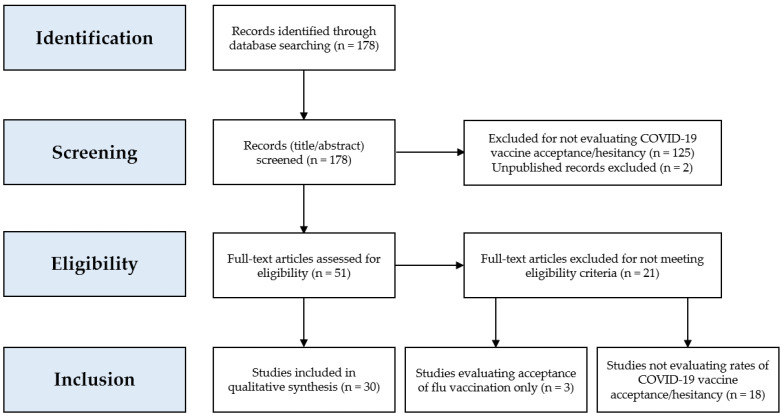
- PRISMA-guided systematic search of PubMed/Medline as of 25 December 2020 for English peer-reviewed survey studies evaluating COVID-19 vaccine acceptance/hesitancy; 178 records were identified, 30 articles were included, and one additional Jordan/Kuwait article was added, yielding 31 studies from 33 countries.
- Data extracted included survey date, country/countries, target population, total respondents, and COVID-19 vaccine acceptance rate, defined as respondents answering agree/somewhat/completely agree/leaning towards yes/definitely yes.
- Findings were synthesized descriptively, with acceptance rates stratified by country and target population.
Limitations
- The paper states that reliance on PubMed alone may have missed relevant studies, citing the example of Head et al.; included studies were cross-sectional with different sampling strategies, so results are snapshots and cannot predict future changes in acceptance.
- The paper states that studies used different approaches to express willingness to accept COVID-19 vaccines (e.g., binary yes/no vs. Likert-type scales), which should be considered when comparing acceptance rates.
- Evident from the text: the review added one recently published Jordan/Kuwait article outside the systematic search, and it reports a descriptive synthesis rather than a formal meta-analysis or quality appraisal.
Model-written summary. Check it against the paper before relying on it.
Integrity signals
Registry
Cites
Statistics
Figures
Verification
Claims the paper makes
12 Not checked yet · 10 Own result · 6 No basis given · 4 Own method · 4 Own interpretation
A result the paper reports from its own data — it cites no other source for it, so there is none to check. The quote shows it is in the paper.
In the paper
“In the majority of survey studies among the general public stratified per country (29/47, 62%), the acceptance of COVID-19 vaccination showed a level of ≥70%.”
§ COVID-19 Vaccine Hesitancy Worldwide: A Concise Systematic Review of Vaccine Acceptance Rates > Abstract
plain- Asserted: passes — The authors put it forward as true.
- Checkable: passes — It can be checked against evidence.
- Load-bearing: passes — The paper’s conclusions depend on it.
- Based: passes — The paper gives a reason why it holds.
A result the paper reports from its own data — it cites no other source for it, so there is none to check. The quote shows it is in the paper.
In the paper
“Survey studies on COVID-19 vaccine acceptance rates were found from 33 different countries.”
- Also stated in: § 3.1. Characteristics of the Papers Included in This Review · plain
“These studies comprised surveys on COVID-19 vaccine acceptance from a total of 33 different countries.”
§ COVID-19 Vaccine Hesitancy Worldwide: A Concise Systematic Review of Vaccine Acceptance Rates > Abstract
plain- Asserted: passes — The authors put it forward as true.
- Checkable: passes — It can be checked against evidence.
- Load-bearing: unclear — It is unclear whether the paper’s conclusions depend on it.
- Based: passes — The paper gives a reason why it holds.
- Also stated in: § 3.1. Characteristics of the Papers Included in This Review · plain
A result the paper reports from its own data — it cites no other source for it, so there is none to check. The quote shows it is in the paper.
In the paper
“Low rates of COVID-19 vaccine acceptance were reported in the Middle East, Russia, Africa and several European countries.”
- Also stated in: § 5. Conclusions · plain
“Low COVID-19 vaccine acceptance rates were more pronounced in the Middle East, Eastern Europe and Russia.”
§ COVID-19 Vaccine Hesitancy Worldwide: A Concise Systematic Review of Vaccine Acceptance Rates > Abstract
plain- Asserted: passes — The authors put it forward as true.
- Checkable: passes — It can be checked against evidence.
- Load-bearing: passes — The paper’s conclusions depend on it.
- Based: passes — The paper gives a reason why it holds.
- Also stated in: § 5. Conclusions · plain
In the paper
“Results from 31 peer-reviewed published studies met the inclusion criteria and formed the basis for the final COVID-19 vaccine acceptance estimates.”
- Also stated in: § 3.1. Characteristics of the Papers Included in This Review · plain
“A total of 30 published papers were analysed in this review, with an additional recently published article that focused on COVID-19 vaccine acceptance in Jordan and Kuwait to yield a total of 31 studies.”
§ COVID-19 Vaccine Hesitancy Worldwide: A Concise Systematic Review of Vaccine Acceptance Rates > Abstract
What the sources say
- Not checked yetcites [45] Sallam, M., Dababseh, D., Eid, H., Al-Mahzoum, K., Al-Haidar, A., Taim, D., Yaseen, A., Ababneh, N.A., Bakri, F.G., and Mahafzah, A. (2021). High rates of COVID-19 vaccine hesitancy and its association with conspiracy beliefs: A study in Jordan and Kuwait among other Arab countries. Vaccines, 9. source
plain- Asserted: passes — The authors put it forward as true.
- Checkable: passes — It can be checked against evidence.
- Load-bearing: passes — The paper’s conclusions depend on it.
- Based: passes — The paper gives a reason why it holds.
- Also stated in: § 3.1. Characteristics of the Papers Included in This Review · plain
A result the paper reports from its own data — it cites no other source for it, so there is none to check. The quote shows it is in the paper.
In the paper
“Among adults representing the general public, the highest COVID-19 vaccine acceptance rates were found in Ecuador (97.0%), Malaysia (94.3%), Indonesia (93.3%) and China (91.3%).”
- Also stated in: § 3.2. Rates of COVID-19 Vaccine Acceptance · plain
“Classified per study, the highest vaccine acceptance rates (>90%) among the general public were found in four studies from Ecuador (97.0%), Malaysia (94.3%), Indonesia (93.3%) and China (91.3%).”
§ COVID-19 Vaccine Hesitancy Worldwide: A Concise Systematic Review of Vaccine Acceptance Rates > Abstract
plain- Asserted: passes — The authors put it forward as true.
- Checkable: passes — It can be checked against evidence.
- Load-bearing: passes — The paper’s conclusions depend on it.
- Based: passes — The paper gives a reason why it holds.
- Also stated in: § 3.2. Rates of COVID-19 Vaccine Acceptance · plain
In the paper
“Only two surveys among the general public in African countries reported an acceptance rate of 81.6% in South Africa and 65.2% in Nigeria [46].”
§ COVID-19 Vaccine Hesitancy Worldwide: A Concise Systematic Review of Vaccine Acceptance Rates > 4. Discussion
What the sources say
- Not checked yetcites [46] Lazarus, J.V., Ratzan, S.C., Palayew, A., Gostin, L.O., Larson, H.J., Rabin, K., Kimball, S., and El-Mohandes, A. (2020). A global survey of potential acceptance of a COVID-19 vaccine. Nat. Med. source
plain- Asserted: passes — The authors put it forward as true.
- Checkable: passes — It can be checked against evidence.
- Load-bearing: passes — The paper’s conclusions depend on it.
- Based: passes — The paper gives a reason why it holds.
A result the paper reports from its own data — it cites no other source for it, so there is none to check. The quote shows it is in the paper.
In the paper
“Male sex was associated with significantly higher rates of COVID-19 vaccine in 15 countries/studies, while the age was a significant factor in 11 studies/countries.”
§ COVID-19 Vaccine Hesitancy Worldwide: A Concise Systematic Review of Vaccine Acceptance Rates > 3. Results > 3.2. Rates of COVID-19 Vaccine Acceptance
plaincorrelational- Asserted: passes — The authors put it forward as true.
- Checkable: passes — It can be checked against evidence.
- Load-bearing: unclear — It is unclear whether the paper’s conclusions depend on it.
- Based: passes — The paper gives a reason why it holds.
A result the paper reports from its own data — it cites no other source for it, so there is none to check. The quote shows it is in the paper.
In the paper
“In this review, a large variability in COVID-19 vaccine acceptance rates was found.”
- Also stated in: § 5. Conclusions · plain
“Large variability in COVID-19 vaccine acceptance rates was reported in different countries and regions of the world.”
§ COVID-19 Vaccine Hesitancy Worldwide: A Concise Systematic Review of Vaccine Acceptance Rates > 4. Discussion
plain- Asserted: passes — The authors put it forward as true.
- Checkable: passes — It can be checked against evidence.
- Load-bearing: passes — The paper’s conclusions depend on it.
- Based: passes — The paper gives a reason why it holds.
- Also stated in: § 5. Conclusions · plain
In the paper
“Early knowledge, attitudes and practices survey study towards COVID-19, from North-Central Nigeria, reported an acceptance rate of barely 29.0%, which highlights the need for more studies for an accurate depiction of COVID-19 vaccine hesitancy in Africa due to possible large regional and sub-regional variations [102].”
§ COVID-19 Vaccine Hesitancy Worldwide: A Concise Systematic Review of Vaccine Acceptance Rates > 4. Discussion
What the sources say
- Not checked yetcites [102] Reuben, R.C., Danladi, M.M.A., Saleh, D.A., and Ejembi, P.E. (2020). Knowledge, Attitudes and Practices Towards COVID-19: An Epidemiological Survey in North-Central Nigeria. J. Community Health. source
plain- Asserted: passes — The authors put it forward as true.
- Checkable: passes — It can be checked against evidence.
- Load-bearing: passes — The paper’s conclusions depend on it.
- Based: passes — The paper gives a reason why it holds.
A result the paper reports from its own data — it cites no other source for it, so there is none to check. The quote shows it is in the paper.
In the paper
“Male sex was associated with significantly higher rates of COVID-19 vaccine in 15 countries/studies, while the age was a significant factor in 11 studies/countries.”
§ COVID-19 Vaccine Hesitancy Worldwide: A Concise Systematic Review of Vaccine Acceptance Rates > 3. Results > 3.2. Rates of COVID-19 Vaccine Acceptance
plaincorrelational- Asserted: passes — The authors put it forward as true.
- Checkable: passes — It can be checked against evidence.
- Load-bearing: unclear — It is unclear whether the paper’s conclusions depend on it.
- Based: passes — The paper gives a reason why it holds.
- It may state two separate claims as one. 11
- Probably not a substantial claim. 4
A result the paper reports from its own data — it cites no other source for it, so there is none to check. The quote shows it is in the paper.
In the paper
“Only eight surveys among healthcare workers (doctors and nurses) were found, with vaccine acceptance rates ranging from 27.7% in the Democratic Republic of the Congo to 78.1% in Israel.”
- Also stated in: § 3.2. Rates of COVID-19 Vaccine Acceptance · plain
“For the eight studies conducted on healthcare workers, three surveys reported vaccine acceptance rates below 60%, with the highest rate being among doctors in Israel (78.1%) and the lowest vaccine acceptance rate (27.7%) reported among healthcare workers in the Democratic Republic of the Congo (DRC).”
§ COVID-19 Vaccine Hesitancy Worldwide: A Concise Systematic Review of Vaccine Acceptance Rates > Abstract
plain- Asserted: passes — The authors put it forward as true.
- Checkable: passes — It can be checked against evidence.
- Load-bearing: unclear — It is unclear whether the paper’s conclusions depend on it.
- Based: passes — The paper gives a reason why it holds.
It may state two separate claims as one.
- Also stated in: § 3.2. Rates of COVID-19 Vaccine Acceptance · plain
A result the paper reports from its own data — it cites no other source for it, so there is none to check. The quote shows it is in the paper.
In the paper
“However, the lowest COVID-19 vaccine acceptance rates were found in Kuwait (23.6%), Jordan (28.4%), Italy (53.7), Russia (54.9%), Poland (56.3%), US (56.9%), and France (58.9%).”
- Also stated in: § 3.2. Rates of COVID-19 Vaccine Acceptance · plain
“On the contrary, the lowest vaccine acceptance rates (<60%) among the general public were found in seven studies to be from Kuwait (23.6%), Jordan (28.4%), Italy (53.7), Russia (54.9%), Poland (56.3%), US (56.9%), and France (58.9%).”
§ COVID-19 Vaccine Hesitancy Worldwide: A Concise Systematic Review of Vaccine Acceptance Rates > Abstract
plain- Asserted: passes — The authors put it forward as true.
- Checkable: passes — It can be checked against evidence.
- Load-bearing: passes — The paper’s conclusions depend on it.
- Based: passes — The paper gives a reason why it holds.
It may state two separate claims as one.
- Also stated in: § 3.2. Rates of COVID-19 Vaccine Acceptance · plain
In the paper
“However, the highest vaccine acceptance rate was reported in Israel (75.0%); however, this rate was much lower among nurses surveyed in the same study (61.1%) [53].”
§ COVID-19 Vaccine Hesitancy Worldwide: A Concise Systematic Review of Vaccine Acceptance Rates > 4. Discussion
What the sources say
- Not checked yetcites [53] Dror, 2020, Vaccine hesitancy: The next challenge in the fight against COVID-19, Eur. J. Epidemiol. source
plain- Asserted: passes — The authors put it forward as true.
- Checkable: passes — It can be checked against evidence.
- Load-bearing: unclear — It is unclear whether the paper’s conclusions depend on it.
- Based: passes — The paper gives a reason why it holds.
It may state two separate claims as one.
The paper states this without a source or data behind it here, so there is nothing to check it against. The quote shows it is in the paper.
In the paper
“In France, the vaccine acceptance rate ranged from 62.0% to 77.1% in March/April and was 58.9% in June.”
§ COVID-19 Vaccine Hesitancy Worldwide: A Concise Systematic Review of Vaccine Acceptance Rates > 3. Results > 3.3. Changes in COVID-19 Vaccine Acceptance over Time in Countries with Multiple Survey Studies
plain- Asserted: passes — The authors put it forward as true.
- Checkable: passes — It can be checked against evidence.
- Load-bearing: unclear — It is unclear whether the paper’s conclusions depend on it.
- Based: passes — The paper gives a reason why it holds.
It may state two separate claims as one.
The paper states this without a source or data behind it here, so there is nothing to check it against. The quote shows it is in the paper.
In the paper
“In the UK, the vaccine acceptance rate was 79.0% in April, 83.0% in May, 71.5% in June, 64.0% in July and 71.7% in September/October.”
§ COVID-19 Vaccine Hesitancy Worldwide: A Concise Systematic Review of Vaccine Acceptance Rates > 3. Results > 3.3. Changes in COVID-19 Vaccine Acceptance over Time in Countries with Multiple Survey Studies
plain- Asserted: passes — The authors put it forward as true.
- Checkable: passes — It can be checked against evidence.
- Load-bearing: unclear — It is unclear whether the paper’s conclusions depend on it.
- Based: passes — The paper gives a reason why it holds.
It may state two separate claims as one.
None of the sources cited for this claim have been checked yet.
In the paper
“The acceptance rate was the lowest in Kuwait (23.6%), followed by Jordan (28.4%), Saudi Arabia (64.7%) and Turkey (66.0%) [45,62,75].”
§ COVID-19 Vaccine Hesitancy Worldwide: A Concise Systematic Review of Vaccine Acceptance Rates > 4. Discussion
What the sources say
- Not checked yetcites [45] Sallam, M., Dababseh, D., Eid, H., Al-Mahzoum, K., Al-Haidar, A., Taim, D., Yaseen, A., Ababneh, N.A., Bakri, F.G., and Mahafzah, A. (2021). High rates of COVID-19 vaccine hesitancy and its association with conspiracy beliefs: A study in Jordan and Kuwait among other Arab countries. Vaccines, 9. source
- Not checked yetcites [62] Salali, G.D., and Uysal, M.S. (2020). COVID-19 vaccine hesitancy is associated with beliefs on the origin of the novel coronavirus in the UK and Turkey. Psychol. Med., 1–3. source
- Not checked yetcites [75] Padhi, 2020, Determinants of COVID-19 Vaccine Acceptance in Saudi Arabia: A Web-Based National Survey, J. Multidiscip. Healthc. source
plain- Asserted: passes — The authors put it forward as true.
- Checkable: passes — It can be checked against evidence.
- Load-bearing: passes — The paper’s conclusions depend on it.
- Based: passes — The paper gives a reason why it holds.
It may state two separate claims as one.
The paper states this without a source or data behind it here, so there is nothing to check it against. The quote shows it is in the paper.
In the paper
“For the vaccine acceptance rates in the US, it was 56.9% in April, and ranged from 67.0% to 75.0% in May, and reached 75.4% in June.”
§ COVID-19 Vaccine Hesitancy Worldwide: A Concise Systematic Review of Vaccine Acceptance Rates > 3. Results > 3.3. Changes in COVID-19 Vaccine Acceptance over Time in Countries with Multiple Survey Studies
plain- Asserted: passes — The authors put it forward as true.
- Checkable: passes — It can be checked against evidence.
- Load-bearing: unclear — It is unclear whether the paper’s conclusions depend on it.
- Based: passes — The paper gives a reason why it holds.
It may state two separate claims as one.
The paper states this without a source or data behind it here, so there is nothing to check it against. The quote shows it is in the paper.
In the paper
“In Italy, the vaccine acceptance rate was 77.3% in April, 70.8% in June and it reached 53.7% in September.”
§ COVID-19 Vaccine Hesitancy Worldwide: A Concise Systematic Review of Vaccine Acceptance Rates > 3. Results > 3.3. Changes in COVID-19 Vaccine Acceptance over Time in Countries with Multiple Survey Studies
plain- Asserted: passes — The authors put it forward as true.
- Checkable: passes — It can be checked against evidence.
- Load-bearing: unclear — It is unclear whether the paper’s conclusions depend on it.
- Based: passes — The paper gives a reason why it holds.
It may state two separate claims as one.
In the paper
“This review was conducted following the PRISMA guidelines [44].”
§ COVID-19 Vaccine Hesitancy Worldwide: A Concise Systematic Review of Vaccine Acceptance Rates > 2. Materials and Methods
What the sources say
- Not checked yetcites [44] Moher, D., Liberati, A., Tetzlaff, J., Altman, D.G., and Group, P. (2009). Preferred reporting items for systematic reviews and meta-analyses: The PRISMA statement. PLoS Med., 6. source
plain- Asserted: passes — The authors put it forward as true.
- Checkable: passes — It can be checked against evidence.
- Load-bearing: fails — The paper’s conclusions may not depend on it.
- Based: passes — The paper gives a reason why it holds.
Probably not a substantial claim. The paper’s conclusions may not depend on it.
What the paper did — it cites no source for this, so there is none to check. The quote shows it is in the paper.
In the paper
“The inclusion criteria were: (1) peer-reviewed published articles indexed in PubMed; (2) survey studies among the general population, health-care workers, students, or parents/guardians); (3) the major aim of the study was to evaluate COVID-19 vaccine acceptance/hesitancy; and (4) publication language was English.”
§ COVID-19 Vaccine Hesitancy Worldwide: A Concise Systematic Review of Vaccine Acceptance Rates > 2. Materials and Methods
plain- Asserted: passes — The authors put it forward as true.
- Checkable: passes — It can be checked against evidence.
- Load-bearing: passes — The paper’s conclusions depend on it.
- Based: passes — The paper gives a reason why it holds.
Probably not a substantial claim. It may state two separate claims as one.
A conclusion the paper draws from its own results — it cites no other source for it, so there is none to check. The quote shows it is in the paper.
In the paper
“High acceptance rates in East and South East Asia would help to achieve proper control of the pandemic.”
§ COVID-19 Vaccine Hesitancy Worldwide: A Concise Systematic Review of Vaccine Acceptance Rates > 5. Conclusions
hedgedconditional- Asserted: passes — The authors put it forward as true.
- Checkable: passes — It can be checked against evidence.
- Load-bearing: passes — The paper’s conclusions depend on it.
- Based: passes — The paper gives a reason why it holds.
Probably not a substantial claim.
A conclusion the paper draws from its own results — it cites no other source for it, so there is none to check. The quote shows it is in the paper.
In the paper
“A sizable number of studies reported COVID-19 acceptance rates below 60%, which would pose a serious problem for efforts to control the current COVID-19 pandemic.”
§ COVID-19 Vaccine Hesitancy Worldwide: A Concise Systematic Review of Vaccine Acceptance Rates > 5. Conclusions
hedgeddirect- Asserted: passes — The authors put it forward as true.
- Checkable: passes — It can be checked against evidence.
- Load-bearing: passes — The paper’s conclusions depend on it.
- Based: passes — The paper gives a reason why it holds.
It may state two separate claims as one.
What the paper did — it cites no source for this, so there is none to check. The quote shows it is in the paper.
In the paper
“In addition, the research studies included in this review represented cross-sectional studies, which can be seen as snapshots of vaccine hesitancy status in each country/region, with different sampling strategies, which may partly explain the differences in vaccine acceptance rates reported in various studies from a single country.”
§ COVID-19 Vaccine Hesitancy Worldwide: A Concise Systematic Review of Vaccine Acceptance Rates > 4. Discussion
hedgedconditional- Asserted: passes — The authors put it forward as true.
- Checkable: passes — It can be checked against evidence.
- Load-bearing: passes — The paper’s conclusions depend on it.
- Based: passes — The paper gives a reason why it holds.
It may state two separate claims as one.
In the paper
“The relatively high rates of COVID-19 vaccine acceptance might be related to stronger confidence in vaccine safety and effectiveness, as reported previously in Asia [27].”
§ COVID-19 Vaccine Hesitancy Worldwide: A Concise Systematic Review of Vaccine Acceptance Rates > 4. Discussion
What the sources say
- Not checked yetcites [27] Larson, 2016, The State of Vaccine Confidence 2016: Global Insights Through a 67-Country Survey, EBioMedicine source
hedgedconditional- Asserted: passes — The authors put it forward as true.
- Checkable: passes — It can be checked against evidence.
- Load-bearing: fails — The paper’s conclusions may not depend on it.
- Based: passes — The paper gives a reason why it holds.
Probably not a substantial claim. The paper’s conclusions may not depend on it.
Claims other papers make about this one
Each is checked against this paper’s own text: does it say what the citing paper says it does?
The cited source says what the claim attributes to it.
In the citing paper
“current acceptance rates of 56–75%245 may be insufficient to reach at least 80–90% coverage246, the threshold thought to be necessary for herd immunity against SARS-CoV-2.”
From mRNA vaccines for infectious diseases: principles, delivery and clinical translation (2021) · cites this paper as [245]
Self-check
Percentages, sums and reported differences re-computed from the paper’s own numbers.
Each contradiction between two passages listed here was confirmed by an independent check.
Rated major: it would touch a result — a value a result rests on, reported and recomputed p-values on opposite sides of the significance level, two passages that conflict with no sign which is right, or a cited work retracted before this paper was published.
In the paper
§ COVID-19 Vaccine Hesitancy Worldwide: A Concise Systematic Review of Vaccine Acceptance Rates > 3. Results > 3.2. Rates of COVID-19 Vaccine Acceptance
“For the two studies among University students, the vaccine acceptance rate was 57.3% in Malta (excluding university staff), and 86.1% in Italy.”
§ COVID-19 Vaccine Hesitancy Worldwide: A Concise Systematic Review of Vaccine Acceptance Rates > 4. Discussion
“In addition, low rates of COVID-19 vaccine acceptance were reported among students and healthcare workers in Malta—44.2% and 52.0%, respectively [73,74].”
Citations
Cites
3 retracted
Grech, V., Gauci, C., & Agius, S. (2020) · Early Human Development · doi:10.1016/j.earlhumdev.2020.105213 · Cited by 117
RetractedGrech, V., & Gauci, C. (2020) · Early Human Development · doi:10.1016/j.earlhumdev.2020.105258 · Cited by 49
RetractedGrech, V., Bonnici, J. J., & Zammit, D. (2020) · Early Human Development · doi:10.1016/j.earlhumdev.2020.105259 · Cited by 32
RetractedPreferred Reporting Items for Systematic Reviews and Meta-Analyses: the PRISMA statement
Moher, D., Liberati, A., Tetzlaff, J., Altman, D. G., & for the PRISMA Group (2009) · BMJ · doi:10.1136/bmj.b2535 · Cited by 83,823
Preferred Reporting Items for Systematic Reviews and Meta-Analyses: The PRISMA Statement
Moher, D., Liberati, A., Tetzlaff, J., Altman, D. G., & The PRISMA Group (2009) · PLoS Medicine · doi:10.1371/journal.pmed.1000097 · Cited by 64,042
Wang, G., Ma, R., Qiao, G., Wada, K., Aizawa, Y., & Satoh, T. (2015) · Integrative Medicine International · doi:10.1159/000368408 · Cited by 18,762
The socio-economic implications of the coronavirus pandemic (COVID-19): a review
Nicola, M., Alsafi, Z., Sohrabi, C., Kerwan, A., Al-Jabir, A., Iosifidis, C., Agha, M., & Agha, R. (2020) · International Journal of Surgery · doi:10.1016/j.ijsu.2020.04.018 · Cited by 6,351
Vaccine hesitancy: Definition, scope and determinants
MacDonald, N. E. (2015) · Vaccine · doi:10.1016/j.vaccine.2015.04.036 · Cited by 5,573
Korber, B., Fischer, W. M., Gnanakaran, S., Yoon, H., Theiler, J., Abfalterer, W., Hengartner, N., Giorgi, E. E., Bhattacharya, T., Foley, B., et al. (2020) · Cell · doi:10.1016/j.cell.2020.06.043 · Cited by 4,281
A global survey of potential acceptance of a COVID-19 vaccine
Lazarus, J. V., Ratzan, S. C., Palayew, A., Gostin, L. O., Larson, H. J., Rabin, K., Kimball, S., & El-Mohandes, A. (2021) · Nature Medicine · doi:10.1038/s41591-020-1124-9 · Cited by 2,904
Cited by
Sorted by citations
Items 801–900 of 999
A Needs-Based Analysis of Teaching on Vaccinations and COVID-19 in German Medical Schools
Baessler, F., Zafar, A., Mengler, K., Natus, R. N., Dutt, A. J., Kuhlmann, M., Çinkaya, E., & Hennes, S. (2022) · Vaccines · doi:10.3390/vaccines10060975 · Cited by 11
Waszkiewicz, P., Lewulis, P., Górski, M., Czarnecki, A., & Feleszko, W. (2022) · Vaccines · doi:10.3390/vaccines10071081 · Cited by 9
Rayamajhi, S., Rafi, M. A., Tripathi, N., Dongol, A. S., Pandey, M., Rayamajhi, S., Bhandari, S., Shrestha, P., Hasan, M. T., & Hossain, M. G. (2022) · PLoS ONE · doi:10.1371/journal.pone.0272729 · Cited by 10
Prerequisite for COVID-19 Prediction: A Review on Factors Affecting the Infection Rate
Tang, S. G. H., Hadi, M. H. H., Arsad, S. R., Ker, P. J., Ramanathan, S., Afandi, N. A. M., Afzal, M. M., Yaw, M. W., Krishnan, P. S., Chen, C. P., et al. (2022) · International Journal of Environmental Research and Public Health · doi:10.3390/ijerph192012997 · Cited by 10
Zhao, J., Zhu, J., Huang, C., Zhu, X., Zhu, Z., Wu, Q., & Yuan, R. (2022) · Frontiers in Immunology · doi:10.3389/fimmu.2022.1035151 · Cited by 9
González-Block, M. Á., Gutiérrez-Calderón, E., & Sarti, E. (2022) · Vaccines · doi:10.3390/vaccines10111944 · Cited by 9
AL-Ahdal, T. M. A., Coker, D. C., Awad, H., Reda, A., Żuratyński, P., & Khailaie, S. (2022) · Vaccines · doi:10.3390/vaccines10121985 · Cited by 10
COVID-19 vaccine acceptance and its determinants in the Bono Region of Ghana
Forkuo, B. T., Osarfo, J., & Ampofo, G. D. (2022) · Ghana Medical Journal · doi:10.4314/gmj.v56i4.2 · Cited by 9
Wu, S., Zhu, S., Yan, X., Xu, Y., Xu, H., Yang, F., Han, Z., Gu, Y., Zhou, Y., Yang, Z., et al. (2023) · BMC Public Health · doi:10.1186/s12889-022-14961-5 · Cited by 9
Reagu, S. M., Jones, R. M., & Alabdulla, M. (2023) · Vaccines · doi:10.3390/vaccines11010189 · Cited by 9
Effect of psychological factors on COVID-19 vaccine hesitancy
Kim, H. J., Kim, E., & Han, D. H. (2023) · Journal of Public Health · doi:10.1093/pubmed/fdad050 · Cited by 9
Acceptability of COVID-19 vaccination among healthcare workers in Sudan
Khairy, A., Mahgoub, E. A. A., Nimir, M., Ahmed, M., Jubara, M., Jubara, M., Altayab, D., & Ahmed, A. (2023) · Eastern Mediterranean Health Journal · doi:10.26719/emhj.23.061 · Cited by 13
Community efforts to promote vaccine uptake in a rural setting: a qualitative interview study
Nanyonjo, A., Nelson, D., Sayers, E., Lall, P., Vernon-Wilson, E. F., Tetui, M., Grindrod, K., Kane, R., Gussy, M. G., & Siriwardena, A. N. (2023) · Health Promotion International · doi:10.1093/heapro/daad088 · Cited by 9
Rapid evolution of the COVID-19 pandemic calls for a unified public health response
He, N. (2021) · BioScience Trends · doi:10.5582/bst.2021.01261 · Cited by 9
Velardo, F., Watson, V., Arwidson, P., Alla, F., Luchini, S., Schwarzinger, M., & CoVaMax Study Group (2021) · Vaccines · doi:10.3390/vaccines9111364 · Cited by 8
Communicating public health during COVID-19, implications for vaccine rollout
Bloomfield, P. S., Magnusson, J., Walsh, M. L., & Naylor, A. (2021) · Big Data & Society · doi:10.1177/20539517211023534 · Cited by 10
Elnaem, M. H., Taufek, N. H. M., Rahman, N. S. A., Nazar, N. I. M., Zin, C. S., Nuffer, W. A., & Turner, C. J. (2021) · Research Square · doi:10.21203/rs.3.rs-923374/v1 · Cited by 9
Sastry, S., Siegenthaler, B., Mukherjee, P., Raheem, S. A., & Basu, A. (2023) · Human Communication Research · doi:10.1093/hcr/hqad018 · Cited by 8
COVID-19: vaccination, therapeutics and a review of the science and public health
Shah, S. K., Bhandari, K., Shah, A., & Chaurasiya, G. (2024) · Annals of Medicine and Surgery · doi:10.1097/ms9.0000000000002374 · Cited by 11
Zoch, G., & Wamsler, S. (2024) · Political Research Exchange · doi:10.1080/2474736x.2024.2403438 · Cited by 11
Ideological diversity of media consumption predicts COVID-19 vaccination
Grant, M. D., Markowitz, D. M., Sherman, D. K., Flores, A., Dickert, S., Eom, K., Jiga‐Boy, G. M., Kogut, T., Mayorga, M. W., Oonk, D. J., et al. (2024) · Scientific Reports · doi:10.1038/s41598-024-77408-4 · Cited by 8
A systematic review on the psychological factors behind vaccine hesitancy in the COVID-19 era
Panico, F., Biase, R. D., Catalano, L. M., Zappullo, I., D’Olimpio, F., Trojano, L., & Sagliano, L. (2025) · Frontiers in Public Health · doi:10.3389/fpubh.2025.1711428 · Cited by 8
Sophian, A., Normasari, Harumanto, A., & Abinawanto, A. (2026) · Reviews in Medical Virology · doi:10.1002/rmv.70149 · Cited by 8
Lounis, M., Abdelhadi, S., Rais, M. A., Bencherit, D., & Sallam, M. (2022) · Vacunas · doi:10.1016/j.vacun.2022.04.003 · Cited by 8
Self-citationCartanyà‐Hueso, À., Martínez-Sánchez, J. M., Martín‐Sánchez, J. C., Lidón‐Moyano, C., Pérez-Martín, H., & González‐Marrón, A. (2022) · Vaccine · doi:10.1016/j.vaccine.2022.06.049 · Cited by 8
Awuni, J. A., Ayamga, M., & Dagunga, G. (2022) · PLoS ONE · doi:10.1371/journal.pone.0270742 · Cited by 8
Graziani, A. R., Botindari, L., Menegatti, M., & Moscatelli, S. (2022) · International Journal of Environmental Research and Public Health · doi:10.3390/ijerph191811231 · Cited by 10
Abou-Arraj, N. E., Maddah, D., Buhamdan, V., Abbas, R., Jawad, N. K., Karaki, F. M., Alami, N. H., & Geldsetzer, P. (2022) · JMIR Formative Research · doi:10.2196/36827 · Cited by 8
Ojewale, L. Y., Afolabi, R. F., & Ogunniyi, A. O. (2022) · International Journal of Public Health · doi:10.3389/ijph.2022.1604811 · Cited by 8
Yanto, T. A., Lugito, N. P. H., Hwei, L. R. Y., Virliani, C., & Octavius, G. S. (2022) · Tropical Medicine and Infectious Disease · doi:10.3390/tropicalmed7110361 · Cited by 8
Fake news mediate the relationship between sociopolitical factors and vaccination intent in Brazil
de Medeiros, P. M., & de Medeiros, P. M. (2022) · Health Promotion International · doi:10.1093/heapro/daac110 · Cited by 8
Walking Together Indicator (WTI): Understanding and Measuring World Inequality
Pileggi, S. F. (2023) · Sustainability · doi:10.3390/su15065392 · Cited by 7
Wu, X., Li, Z., Lin, X., Li, P., Liu, M., & Huang, C. (2023) · Journal of Medical Internet Research · doi:10.2196/45051 · Cited by 8
Ciski, M., & Rząsa, K. (2023) · International Journal of Environmental Research and Public Health · doi:10.3390/ijerph20105875 · Cited by 10
Alcarria, F. J., & Navarro, J. T. (2023) · Communication & Society · doi:10.15581/003.36.3.153-174 · Cited by 8
How does nudging the COVID-19 vaccine play out in people who are in doubt about vaccination?
de Ridder, D. T. D., Adriaanse, M. A., van Gestel, L. C., & Wachner, J. (2023) · Health Policy · doi:10.1016/j.healthpol.2023.104858 · Cited by 8
Volatility of the COVID-19 vaccine hesitancy: sentiment analysis conducted in Brazil
Machado, C., Mantovani, D. M. N., de Sandes-Guimarães, L. V., Romeiro, M. D. C., Furlaneto, C. J., & Bazanini, R. (2023) · Frontiers in Public Health · doi:10.3389/fpubh.2023.1192155 · Cited by 8
COVID-19 Vaccine Strategy Left Small Primary Care Practices On The Sidelines
Hao, S., Rehkopf, D. H., Velásquez, E. E. M., Vala, A., Bazemore, A., & Phillips, R. L. (2023) · Health Affairs · doi:10.1377/hlthaff.2023.00114 · Cited by 8
Naranjo, D. E., Kimball, E. R., Nelson, J., Samore, M. H., Alder, S. C., Stroupe, K. T., Evans, C. T., Weaver, F. M., Ray, C. E., Kale, I. O., et al. (2023) · PLoS ONE · doi:10.1371/journal.pone.0290540 · Cited by 8
Costantino, A., Michelon, M., Noviello, D., Macaluso, F. S., Aloi, M., Armuzzi, A., Bossa, F., Ficari, F., Leone, S., Manguso, F., et al. (2023) · Vaccines · doi:10.3390/vaccines11101591 · Cited by 8
Ranjbaran, S., Chollou, K. M., Pourrazavi, S., & Babazadeh, T. (2023) · Frontiers in Public Health · doi:10.3389/fpubh.2023.1238738 · Cited by 8
Santos, A. J., Kislaya, I., Dias, C. M., & Machado, A. (2024) · Frontiers in Public Health · doi:10.3389/fpubh.2023.1331136 · Cited by 8
Orangzeb, S., Desalegn, A. A., Trinh, N. T., Zhao, J., Nordeng, H., & Lupattelli, A. (2024) · Vaccine · doi:10.1016/j.vaccine.2024.04.039 · Cited by 8
Brera, A. S., Arrigoni, C., Belloni, S., Conte, G., Magon, A., Arcidiacono, M. A., Pasek, M., Shabat, G., Bonavina, L., & Caruso, R. (2024) · Vaccines · doi:10.3390/vaccines12091054 · Cited by 8
Validation of the Arabic translation of the vaccination attitudes examination (VAX) scale
Alansari, K. D. H., Buhl, C., Thabit, A. K., Badr, A. F., Jad, L., & Jacobsen, R. (2024) · Vaccine · doi:10.1016/j.vaccine.2024.126411 · Cited by 8
Abel, Z. D. V., Roope, L. S. J., Duch, R. M., Cole, S., & Clarke, P. (2025) · Health Policy · doi:10.1016/j.healthpol.2025.105251 · Cited by 8
Kejriwal, S., Sheth, S., Silpa, P. S., Sarkar, S., & Guha, A. (2021) · Chaos Solitons & Fractals · doi:10.1016/j.chaos.2021.111710 · Cited by 8
Knowledge, Perceptions and Behaviors Related to COVID-19 in a University Setting in Malaysia
Lee, K. W., Yap, S. F., Ong, H. T., Leong, P. P., Hatta, N. M., & Lye, M. S. (2022) · Frontiers in Public Health · doi:10.3389/fpubh.2022.873022 · Cited by 12
Bayou, F. D., & Nigussie, S. (2022) · Patient Preference and Adherence · doi:10.2147/ppa.s360174 · Cited by 8
Yang, J., Yu, M., Fu, G., Lan, G., Li, L., Qiao, Y., Zhao, J., Qian, H., Zhang, X., Liu, X., et al. (2022) · Frontiers in Medicine · doi:10.3389/fmed.2022.822680 · Cited by 8
COVID-19 Vaccine Hesitancy in Israel Immediately Before the Vaccine Operation.
Regev, S. T., & Hon-Snir, S. (2022) · PubMed Central · Cited by 8
Moro, G. L., Scaioli, G., Bert, F., Zacchero, A. L., Minutiello, E., & Siliquini, R. (2022) · International Journal of Environmental Research and Public Health · doi:10.3390/ijerph19159350 · Cited by 8
Giannakou, K., Fakonti, G., & Kyprianidou, M. (2022) · Journal of Evaluation in Clinical Practice · doi:10.1111/jep.13764 · Cited by 7
Arshad, M. S., Masood, I., Imran, I., Saeed, H., Ahmad, I., Ishaq, I., Yaseen, H., Akbar, M., Chaudhry, M. O., & Rasool, M. F. (2022) · Vaccines · doi:10.3390/vaccines10101736 · Cited by 8
Marziali, E., Lontano, A., Regazzi, L., Paladini, A., Villani, L., Calabrò, G. E., Damiani, G., Laurenti, P., Ricciardi, W., & Cadeddu, C. (2022) · Vaccines · doi:10.3390/vaccines10111793 · Cited by 8
Hijazi, R., Gesser‐Edelsburg, A., Feder‐Bubis, P., & Mesch, G. S. (2022) · Frontiers in Public Health · doi:10.3389/fpubh.2022.1012822 · Cited by 8
Perception of COVID-19 and Vaccine Acceptance among Healthcare Workers
Nemr, N. A., Kishk, R. M., Soliman, N. H., Farghaly, R. M., Kishk, S. M., & Louis, N. (2022) · International Journal of Microbiology · doi:10.1155/2022/1607441 · Cited by 8
Willingness to Pay (WTP) for COVID-19 Vaccine Booster Dose and Its Determinants in Indonesia
Harapan, H., Sallam, M., Fathima, R., Kusuma, H. I., Anwar, S., Nalapraya, W. Y., Wibowo, A., Wati, K. D. K., Medina, A., Defrita, A. H., et al. (2022) · Infectious Disease Reports · doi:10.3390/idr14060101 · Cited by 10
Self-citationCOVID-19 vaccination hesitancy for children: A pilot assessment of parents in the United States
Batra, K., Sharma, M., Dai, C., Batra, R., & Khubchandani, J. (2022) · Health Promotion Perspectives · doi:10.34172/hpp.2022.51 · Cited by 8
Vaccine hesitancy and post-vaccination adherence to safety measures: A mixed-method study
Inam, A., Mushtaq, A., Zaman, S., Wasif, S., Noor, M., & Khan, H. A. (2023) · Frontiers in Public Health · doi:10.3389/fpubh.2023.1072740 · Cited by 8
Al-Momani, H., Aolymat, I., Almasri, M., Mahmoud, S. A., & Mashal, S. (2023) · Future Science OA · doi:10.2144/fsoa-2023-0040 · Cited by 8
Acting on sex and gender in medical innovation is good for business
Vijayasingham, L., Bischof, E. Y., Ateghang-Awankem, B., Rumaney, M. B., del Barrio, M. O., Cheah, P. Y., Meulen, A. S.-T., Tannenbaum, C., Morgan, R., & Wolfe, J. (2023) · BMJ · doi:10.1136/bmj-2022-072242 · Cited by 7
Shabir, A., Alkubaisi, N. A. O., Shafiq, A., Salman, M., Baraka, M. A., Mustafa, Z. U., Khan, Y. H., Mallhi, T. H., Meyer, J. C., & Godman, B. (2023) · Vaccines · doi:10.3390/vaccines11061081 · Cited by 8
Caycho‐Rodríguez, T., Tomás, J. M., Yupanqui-Lorenzo, D. E., Valencia, P. D., Carbajal‐León, C., Vilca, L. W., Ventura‐León, J., Paredes-Ángeles, R., Gallegos, W. L. A., Reyes-Bossio, M. A., et al. (2023) · Evaluation & the Health Professions · doi:10.1177/01632787231186621 · Cited by 8
Attitudes towards COVID Vaccine and Vaccine Hesitancy in Dermatology: A Narrative Review
Tay, W. C., Bewley, A., Maul, J., & Oon, H. H. B. (2023) · Vaccines · doi:10.3390/vaccines11081365 · Cited by 8
Anino, C. O., Wandera, I., Masimba, Z. O., Kipkosgei, K. C., Makero, C. S., Omari, P. K., & Sanga, P. K. (2023) · PLOS Global Public Health · doi:10.1371/journal.pgph.0001562 · Cited by 8
Eberwein, J. D., Edochie, I. N., Newhouse, D., Cojocaru, A., Deudibe, G., Kakietek, J. J., Kim, Y. S., & Montes, J. (2023) · BMJ Open · doi:10.1136/bmjopen-2022-069152 · Cited by 8
COVID‐19 Vaccine Acceptance and Uptake among Healthcare Workers in Trinidad and Tobago
Gopaul, C. D., Ventour, D., & Thomas, D. (2022) · Journal of Environmental and Public Health · doi:10.1155/2022/5031202 · Cited by 8
The population aspects of the COVID-19 pandemic in 20 papers: an introduction
Giulio, P. D., Goujon, A., & Marois, G. (2022) · Vienna Yearbook of Population Research · doi:10.1553/populationyearbook2022.int01 · Cited by 8
Acceptability of COVID-19 Vaccination among Healthcare Workers in Sudan: A Cross Sectional SurveyPreprint
Khairy, A., Mahgoob, E., Nimir, M., Ahmed, M., Jubara, M., Eltayeb, D., & Ahmed, A. (2021) · Research Square · doi:10.21203/rs.3.rs-745232/v1 · Cited by 8
Garbern, S. C., Perera, S. M., Mbong, E. N., Kulkarni, S., Fleming, M. K., Ombeni, A. B., Muhayangabo, R. F., Tchoualeu, D. D., Kallay, R., Song, E., et al. (2023) · Vaccines · doi:10.3390/vaccines11050973 · Cited by 8
Yeskendir, A., Gusmanov, A., & Zhussupov, B. (2023) · Vaccine · doi:10.1016/j.vaccine.2023.08.063 · Cited by 7
Zhou, A., Huang, H., Gupta, S., Feehan, J., & Hodge, A. (2024) · Journal of Gastrointestinal and Liver Diseases · doi:10.15403/jgld-5141 · Cited by 7
Slavec, A., Iwanowska, M., Bałandynowicz-Panfil, K., Olah, Ș., Zvonar, M. Š., Štebe, J., & Łosiewicz, M. (2024) · Archives of Public Health · doi:10.1186/s13690-024-01261-0 · Cited by 7
Muis, K. R., Kendeou, P., Kohatsu, M., & Wang, S. A. (2024) · Frontiers in Public Health · doi:10.3389/fpubh.2024.1377973 · Cited by 6
Factors influencing COVID-19 vaccine uptake among Latinos: A cross-sectional study
Smith, D. G., Smith, C. D., DeLeon, J., Sandoz, J. L., Ochoa, C. O., Pearson, M. P., & Macena, R. H. M. (2024) · PLoS ONE · doi:10.1371/journal.pone.0302332 · Cited by 6
A comparative review on the epidemiology of influenza, COVID-19 and respiratory syncytial viruses
Shuaib, B. I., Momodu, A., Muhibi, M. A., Dutsinma, U. A., & Yelwa, I. S. (2025) · Discover Medicine · doi:10.1007/s44337-025-00518-z · Cited by 8
Rice, D. R., Balamo, A., Thierry, A.-R., Gueral, A., Fidele, D., Mateen, F. J., & Sakadi, F. (2022) · PLOS Global Public Health · doi:10.1371/journal.pgph.0000608 · Cited by 7
COVID-19 Vaccine Acceptance in Pregnancy
Odedokun, T., Marquez, R., Thakkar, M., Dinglas, C., & Kady, D. E. (2022) · American Journal of Perinatology · doi:10.1055/s-0042-1757275 · Cited by 7
Barnawi, N. A., Alraqei, B., Hilwan, A., Al-Otibi, M. M., Alsubaie, R., Altowymy, S., & Abolfotouh, M. A. (2023) · Vaccines · doi:10.3390/vaccines11040727 · Cited by 7
Salman, M., Mallhi, T. H., Khan, Y. H., Mustafa, Z. U., Khan, M. T., Khan, F. U., Butt, M. H., Shehzadi, N., Farrukh, M. J., Waheed, M., et al. (2023) · Human Vaccines & Immunotherapeutics · doi:10.1080/21645515.2023.2225990 · Cited by 7
How Scientists View Vaccine Hesitancy
Welch, E. W., Johnson, T. P., Chen, T., Ma, J., Islam, S., Michalegko, L., Caldarulo, M., & Frandell, A. (2023) · Vaccines · doi:10.3390/vaccines11071208 · Cited by 7
Nasiratu, I., Pencille, L. B., Khuzwayo, N., Aboagye, R. G., & Tarkang, E. E. (2023) · PLoS ONE · doi:10.1371/journal.pone.0293350 · Cited by 7
Akilimali, P. Z., Egbende, L., Kayembe, D. M., Kabasubabo, F. K., Kazenza, B. M., Botomba, S., Tran, N. T., & Mashinda, D. K. (2024) · Vaccines · doi:10.3390/vaccines12020188 · Cited by 7
Sanae, A., Aicha, S. S., Adiba, E. B. E. I., & Noredine, E. K. (2024) · International Journal of Production Research · doi:10.1080/00207543.2024.2329317 · Cited by 7
Jäckle, S., & Timmis, J. K. (2024) · npj Vaccines · doi:10.1038/s41541-024-00928-7 · Cited by 7
Comparison of physiological and clinical reactions to COVID-19 and influenza vaccination
Yechezkel, M., Qian, G. L., Levi, Y., Davidovitch, N., Shmueli, E., Yamin, D., & Brandeau, M. L. (2024) · Communications Medicine · doi:10.1038/s43856-024-00588-7 · Cited by 8
Burhamah, W., Alkhayyat, A., Oroszlányová, M., AlKenane, A., Jafar, H., Behbehani, M., & Almansouri, A. (2021) · Cureus · doi:10.7759/cureus.16261 · Cited by 7
Factors Associated with COVID-19 Vaccine Hesitancy in Korea
Kweon, S., Yun, I., Choi, C. K., Ryu, S. Y., Cho, J. H., & Shin, M.-H. (2022) · Chonnam Medical Journal · doi:10.4068/cmj.2022.58.1.43 · Cited by 7
Who is hesitant about Covid-19 vaccines? The profiling of participants in a French online cohort
Montagni, I., Touhami, K. O., Pouymayou, A., Pereira, E., Texier, N., Schück, S., & Tzourio, C. (2022) · Revue d Épidémiologie et de Santé Publique · doi:10.1016/j.respe.2022.02.004 · Cited by 7
Conlin, J., Baker, M. K., Zhang, B., Shoenberger, H., & Shen, F. (2022) · Health Communication · doi:10.1080/10410236.2022.2065747 · Cited by 7
COVID-19 vaccine acceptance and hesitancy among ethnic minorities in Hong Kong
Chua, G. T., Yan, C. L., Wong, W. H. S., Sridhar, S., To, K. K., Lau, J. T. F., Gurung, S., Mahtani, S., Ho, R., Li, W. S., et al. (2022) · Human Vaccines & Immunotherapeutics · doi:10.1080/21645515.2022.2054261 · Cited by 7
Cogan, N. A., Gallant, A. J., Brown, L. A., Rasmussen, S. A., Young, D., & Williams, L. (2022) · Journal of Health Psychology · doi:10.1177/13591053221089104 · Cited by 7
Do disease prevalence and severity drive COVID-19 vaccine demand?
Sarkar, J. (2022) · Economic Analysis and Policy · doi:10.1016/j.eap.2022.05.014 · Cited by 7
Meltzer, G., Harris, J., Hefner, M. B., Lanternier, P., Gershon, R., Vlahov, D., & Merdjanoff, A. A. (2022) · The International Journal of Aging and Human Development · doi:10.1177/00914150221106709 · Cited by 7
Design Principles for an Educational Intervention Into Online Vaccine Misinformation
Veletsianos, G., Houlden, S., Reid, D., Hodson, J., & Thompson, C. P. (2022) · TechTrends · doi:10.1007/s11528-022-00755-4 · Cited by 7
Williams, A. H., & Zhan, C. (2022) · The Journal of Physical Chemistry B · doi:10.1021/acs.jpcb.2c02123 · Cited by 7
Mori, K., Mori, T., Nagata, T., Ando, H., Hino, A., Tateishi, S., Tsuji, M., Muramatsu, K., Fujino, Y., & the CORoNa Work Project (2022) · Environmental Health and Preventive Medicine · doi:10.1265/ehpm.22-00091 · Cited by 7
Sagoe, D., Ogunbode, C. A., Antwi, P., Knizek, B. L., Awaleh, Z., & Dadzie, O. E. (2022) · Frontiers in Psychology · doi:10.3389/fpsyg.2022.908917 · Cited by 7
Stoeklé, H., Sekkate, S., Angellier, É., Kennel, T., Benmaziane, A., Mabro, M., Geay, J., Beuzeboc, P., & Hervé, C. (2022) · BMC Medical Ethics · doi:10.1186/s12910-022-00827-3 · Cited by 7
Metadata
- Authors
- Sallam, M.
- Affiliations
- University of Jordan (JO)
- Corresponding author
- Sallam, Malik
- ORCID
- Sallam, Malik
- Venue
- Vaccines
- Publisher
- MDPI AG
- Published
- 2021-02-16
- Volume
- 9
- Issue
- 2
- Pages
- 160
- ISSN
- 2076-393X (ISSN-L)
- PMC
- PMC7920465
- OpenAlex
- W3132264034
- Semantic Scholar
- 5fdd594a2c5c5e845a8a3dfaca7f554d2d4ec788
- Cited by
- 2,128
- References
- 101
- Citations by year
- 2026: 82 · 2025: 146 · 2024: 270 · 2023: 505 · 2022: 710 · 2021: 410
- FWCI
- 51.35
- Type
- journal article
- Language
- en
- Open access
- gold
- doi.org
- Licence
- Locations
- Vaccines (publishedVersion, cc-by)
- medRxiv (acceptedVersion, cc-by-nc-nd)
- Preprints.org (acceptedVersion, cc-by)
- PubMed Central (publishedVersion, cc-by)
- PubMed (publishedVersion)
- DOAJ (DOAJ: Directory of Open Access Journals) (submittedVersion, cc-by-sa)
- SUNScholar (Stellenbosch University) (submittedVersion)
- Topics
- Social Sciences › Health › Vaccine Coverage and Hesitancy
- Health Sciences › Medicine › Infectious Diseases › SARS-CoV-2 and COVID-19 Research
- Social Sciences › Psychology › Clinical Psychology › COVID-19 and Mental Health
- Keywords
- COVID-19 vaccine hesitancy, COVID-19 vaccination, healthcare workers, public trust in vaccination, cross-national comparison
About these checks
Registry, retraction, Cites and statistics results are computed, not judged, with one exception: a printed reference that no index lists is read once by a model before it counts as a citation error. Claims are extracted by a model and kept only when their quote appears verbatim in the text; each cited source is then checked, with a model’s help, for whether it says what the claim relies on. Those verdicts can be wrong — read the claim’s quote and the cited source before relying on one.
A language model drew the claims from the paper on 2026-10-10, under version 3 of the claim definition (model deepseek-v4.1-flash, prompt extract-v3).
A second model labelled each claim on 2026-10-10 (model jev-1.13-20260917, definition revision gold-guideline-v0.2).
Statistics and arithmetic are recomputed, not judged.
Confidence bands are shown only for fields calibrated on our annotated test set. None is calibrated yet, so no band is shown.
What counts as a claim ›How we measure confidence ›How we check this ›
Are you an author, or do you see a problem with this page? Request a review
