

The role of the opioid system in decision making and cognitive control: A review
Open accessPublished version of a preprint
The DOI matches its Crossref record; 249 of the 249 references it cites were found in a registry or an index.
Abstract
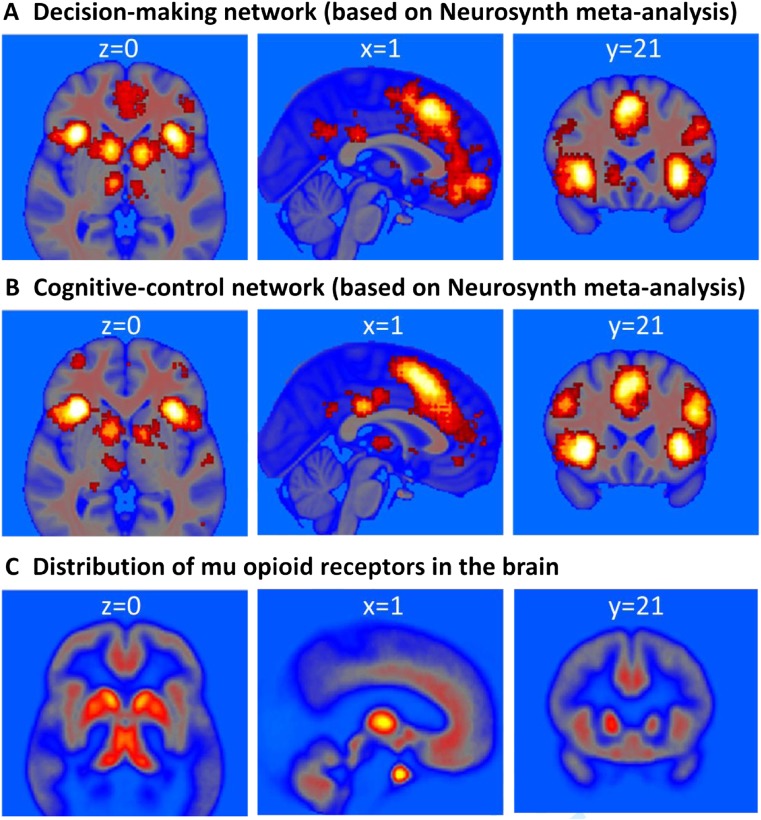
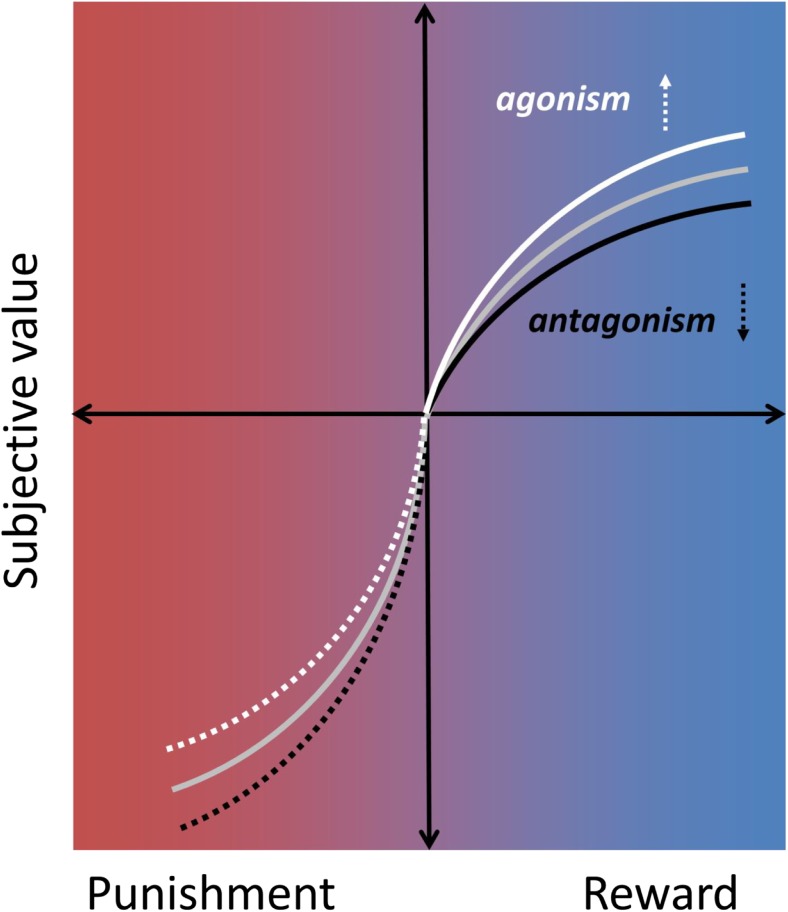
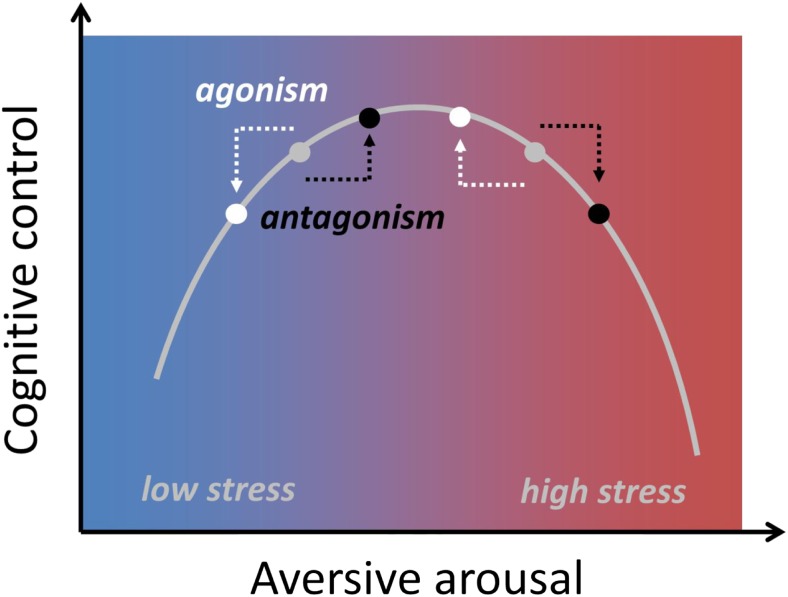
The opioid system regulates affective processing, including pain, pleasure, and reward. Restricting the role of this system to hedonic modulation may be an underestimation, however. Opioid receptors are distributed widely in the human brain, including the more "cognitive" regions in the frontal and parietal lobes. Nonhuman animal research points to opioid modulation of cognitive and decision-making processes. We review emerging evidence on whether acute opioid drug modulation in healthy humans can influence cognitive function, such as how we choose between actions of different values and how we control our behavior in the face of distracting information. Specifically, we review studies employing opioid agonists or antagonists together with experimental paradigms of reward-based decision making, impulsivity, executive functioning, attention, inhibition, and effort. Although this field is still in its infancy, the emerging picture suggests that the mu-opioid system can influence higher-level cognitive function via modulation of valuation, motivation, and control circuits dense in mu-opioid receptors, including orbitofrontal cortex, basal ganglia, amygdalae, anterior cingulate cortex, and prefrontal cortex. The framework that we put forward proposes that opioids influence decision making and cognitive control by increasing the subjective value of reward and reducing aversive arousal. We highlight potential mechanisms that might underlie the effects of mu-opioid signaling on decision making and cognitive control and provide directions for future research.
Overview
The claims and statistics of this paper haven’t been checked yet.
Free: it reads the open-access text and checks the first 5 claims that cite a source we can check. Create a free account to check every claim.
Integrity signals
Registry
Cites
Statistics
Figures
Verification
Claims the paper makes
The claims and statistics of this paper haven’t been checked yet.
Free: it reads the open-access text and checks the first 5 claims that cite a source we can check. Create a free account to check every claim.
Claims other papers make about this one
Each is checked against this paper’s own text: does it say what the citing paper says it does?
The source backs part of the claim, not all of it — or backs it for a different population, condition or comparison.
In the citing paper
“Supporting Hume, latter-day empirical studies indicate that reasoning is an inherently emotional process [see van Steenbergen et al. (2019)].”
From Can Damasio's Somatic Marker Hypothesis Explain More Than Its Originator Will Admit? (2021) · cites this paper as van Steenbergen et al. (2019)
Experimental — accuracy not yet measured
Self-check
Percentages, sums and reported differences re-computed from the paper’s own numbers.
The self-check needs the paper’s full text.
Citations
Cites
Items 201–249 of 249
Lahti, T. A., Halme, J. T., Pankakoski, M., Sinclair, D., & Alho, H. (2025) · Psychopharmacology Bulletin · doi:10.64719/pb.4296 · Cited by 39
Nestor, L. J., Murphy, A., McGonigle, J., Orbán, C., Reed, L. J., Taylor, E., Flechais, R., Paterson, L. M., Smith, D. G., Bullmore, E. T., et al. (2016) · Addiction Biology · doi:10.1111/adb.12444 · Cited by 39
Use of Buprenorphine in treatment of refractory depression—A review of current literature
Stanciu, C. N., Glass, O., & Penders, T. M. (2017) · Asian Journal of Psychiatry · doi:10.1016/j.ajp.2017.01.015 · Cited by 39
(2015) · Dentistry in Rabbits and Rodents · doi:10.1002/9781118802557.ch7 · Cited by 38
The Effect of Opioid Receptor Blockade on the Neural Processing of Thermal Stimuli
Schoell, E. D., Bingel, U., Eippert, F., Yacubian, J., Christiansen, K., Andresen, H., May, A., & Buechel, C. (2010) · PLoS ONE · doi:10.1371/journal.pone.0012344 · Cited by 37
Mixed agonist‐antagonist opiates and physical dependence.
Jacob, J., Michaud, G., & Tremblay, E. C. (1979) · British Journal of Clinical Pharmacology · doi:10.1111/j.1365-2125.1979.tb04703.x · Cited by 37
Naloxone increases electrophysiological measures of selective information processing in humans
Arnsten, A. F. T., Hj, N., Hillyard, S., Janowsky, D. S., & Segal, D. (1984) · Journal of Neuroscience · doi:10.1523/jneurosci.04-12-02912.1984 · Cited by 36
Quednow, B. B., Csomor, P., Chmiel, J., Beck, T., & Vollenweider, F. X. (2008) · The International Journal of Neuropsychopharmacology · doi:10.1017/s1461145707008322 · Cited by 36
Oliveto, A. H., Bickel, W. K., Kamien, J. B., Hughes, J. R., & Higgins, S. T. (1994) · Psychopharmacology · doi:10.1007/bf02249331 · Cited by 34
Roche, D. J. O., Worley, M. J., Courtney, K. E., Bujarski, S., London, E. D., SHOPTAW, S. J., & Ray, L. A. (2017) · Psychopharmacology · doi:10.1007/s00213-017-4607-8 · Cited by 34
Pleasure-Related Analgesia Activates Opioid-Insensitive Circuits
Kut, E., Candia, V., von Overbeck, J., Pok, J., Fink, D., & Folkers, G. (2011) · Journal of Neuroscience · doi:10.1523/jneurosci.3736-10.2011 · Cited by 34
Zacny, J. P., & Gutiérrez, S. (2007) · Pain Medicine · doi:10.1111/j.1526-4637.2007.00359.x · Cited by 34
Effects of Centrally Acting Drugs on Two Tests of Brain Damage
Primac, D. W., MIRSKY, A. F., & ROSVOLD, H. E. (1957) · Archives of Neurology And Psychiatry · doi:10.1001/archneurpsyc.1957.02330330114018 · Cited by 34
Porchet, R. I., Boekhoudt, L., Studer, B., Gandamaneni, P. K., Rani, N., Binnamangala, S., Müller, U., & Clark, L. (2013) · Frontiers in Behavioral Neuroscience · doi:10.3389/fnbeh.2013.00138 · Cited by 33 · cited 5×
“Using opioid blockade (50 mg of naltrexone, n = 21) and placebo (n = 20) before a slotmachine task and roulette task, Porchet et al. (2013) found that naltrexone moderately attenuated the motivational ratings after near-misses compared with placebo.”
BackgroundMethodInfluentialZacny, J. P. (2003) · Psychopharmacology · doi:10.1007/s00213-002-1245-5 · Cited by 32
Arnsten, A. F. T., Segal, D. L., Loughlin, S. E., & Roberts, D. C. S. (1981) · Brain Research · doi:10.1016/0006-8993(81)91038-6 · Cited by 32
Naloxone changes self-ratings but not performance in normal subjects
File, S. E., & Silverstone, T. (1981) · Psychopharmacology · doi:10.1007/bf00432746 · Cited by 32
Heart work after errors: Behavioral adjustment following error commission involves cardiac effort
Spruit, I. M., Wilderjans, T. F., & van Steenbergen, H. (2018) · Cognitive Affective & Behavioral Neuroscience · doi:10.3758/s13415-018-0576-6 · Cited by 32
Some effects of morphine and amphetamine on intellectual functions and mood
Evans, W. Ο., & Smith, R. P. (1964) · Psychopharmacology · doi:10.1007/bf00710914 · Cited by 31
Hiura, M., Sakata, M., Ishii, K., Toyohara, J., Oda, K., Nariai, T., & Ishiwata, K. (2017) · International Journal of Sports Medicine · doi:10.1055/s-0042-114779 · Cited by 31
Impaired Memory and Behavioral Performance with Fentanyl at Low Plasma Concentrations
Veselis, R. A., Reinsel, R. A., Feshchenko, V. A., Wroński, M., Dnistrian, A. M., Dutcher, S., & Wilson, R. S. (1994) · Anesthesia & Analgesia · doi:10.1213/00000539-199411000-00023 · Cited by 30
The interaction of high altitude and psychotropic drug action
Evans, W. Ο., & Witt, N. F. (1966) · Psychopharmacology · doi:10.1007/bf00455979 · Cited by 30 · cited 2×
“This was for example observed for logical reasoning and DSST performance in early studies by Evans and colleagues (Evans & Smith, 1964; Evans & Witt, 1966) as well as in more recent work on intradimensional set shifting and attention (Quednow et al., 2008).”
BackgroundResultZacny, J. P., Lichtor, J. L., Thapar, P., Coalson, D. W., Flemming, D. C., & Thompson, W. K. (1994) · Journal of Pharmacology and Experimental Therapeutics · doi:10.1016/s0022-3565(25)22416-8 · Cited by 29
Morphine, experimental pain, and psychological reactions
Jarvik, L. F., Simpson, J. H., Guthrie, D., & Liston, E. H. (1981) · Psychopharmacology · doi:10.1007/bf00432173 · Cited by 27
Opioid modulation of cognitive impairment in depression
Jacobson, M. L., Wulf, H. A., Browne, C. A., & Lucki, I. (2018) · Progress in brain research · doi:10.1016/bs.pbr.2018.07.007 · Cited by 27 · cited 2×
“However, as reviewed elsewhere (Jacobson et al., 2018), effects of opioid drugs on prepulse inhibition in rodents are mixed, showing that additional systematic research is needed.”
BackgroundBradley, C. M., & Nicholson, A. N. (1987) · European Journal of Clinical Pharmacology · doi:10.1007/bf00542185 · Cited by 26
Naloxone fails to affect short-term memory in man
Volavka, J., Dornbush, R. L., MALLYA, A. R., & Cho, D. (1979) · Psychiatry Research · doi:10.1016/0165-1781(79)90032-5 · Cited by 26
Redpath, J., & Pleuvry, B. J. (1982) · British Journal of Clinical Pharmacology · doi:10.1111/j.1365-2125.1982.tb02028.x · Cited by 25
Abnormal error processing in depressive states: a translational examination in humans and rats
Beard, C., Donahue, R. J., Dillon, D. G., Veer, A. V., Webber, C. J., Lee, J., Barrick, E. M., Hsu, K. J., Foti, D., Carroll, F. I., et al. (2015) · Translational Psychiatry · doi:10.1038/tp.2015.54 · Cited by 24
Subjective, behavioral and physiological responses to intravenous meperidine in healthy volunteers
Zacny, J. P., Lichtor, J. L., Binstock, W. B., Coalson, D. W., Cutter, T. W., Flemming, D. C., & Glosten, B. (1993) · Psychopharmacology · doi:10.1007/bf02244946 · Cited by 24
Light, S. N., Bieliauskas, L. A., & Zubieta, J. (2017) · Journal of Neuropsychiatry · doi:10.1176/appi.neuropsych.16090171 · Cited by 24
Johnson, B. A. (2006) · Expert Opinion on Pharmacotherapy · doi:10.1517/14656566.7.8.1065 · Cited by 22 · cited 4×
“Interestingly, in addition to reducing craving and relapse in addiction, opioid blockade may reduce impulsive behaviors in kleptomania, pathological gambling, and Bsex addiction^ (Bostwick & Bucci, 2008; Grant, Kim, & Odlaug, 2009; Johnson, 2006; Lahti, Halme, Pankakoski, Sinclair, & Alho, 2010; Minozzi et al., 2011;…”
BackgroundInfluentialMore pain, more gain: Blocking the opioid system boosts adaptive cognitive control
van Steenbergen, H., Weissman, D. H., Stein, D. J., Malcolm‐Smith, S., & van Honk, J. (2017) · Psychoneuroendocrinology · doi:10.1016/j.psyneuen.2017.03.002 · Cited by 22
Cutler, A. J., Tran-Johnson, T. K., Kalali, A. H., Åström, M., Brecher, M., & Meulien, D. (2025) · Psychopharmacology Bulletin · doi:10.64719/pb.4302 · Cited by 21
Vigour and Fatigue: How Variation in Affect Underlies Effective Self-Control
Saunders, B., & Inzlicht, M. (2016) · Cited by 21
Effects of naloxene on the subjective and psychomotor effects of nitrous oxide in humans
Zacny, J. P., Coalson, D. W., Lichtor, J. L., Yajnik, S. V., & Thapar, P. (1994) · Pharmacology Biochemistry and Behavior · doi:10.1016/0091-3057(94)90071-x · Cited by 20
Saarialho‐Kere, U. (1988) · British Journal of Clinical Pharmacology · doi:10.1111/j.1365-2125.1988.tb03367.x · Cited by 20 · cited 1×
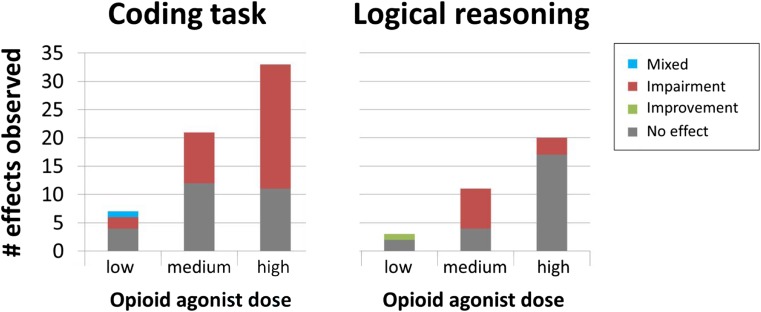
“Other studies using high doses of opioid agonists did not observe clear impairments in divided attention task performance (Saarialho-Kere, 1988; Saarialho-Kere, Mattila, & Seppälä, 1989; for procedural details of these studies see Table 1).”
BackgroundJayaram‐Lindström, N., Guterstam, J., Häggkvist, J., Ericson, M., Malmlöf, T., Schilström, B., Halldin, C., Červenka, S., Saijo, T., Nordström, A., et al. (2017) · Translational Psychiatry · doi:10.1038/tp.2017.79 · Cited by 19 · cited 2×
“even combining an agonist for one system with an antagonist for the other (Jayaram-Lindström et al., 2017; JayaramLindström, Wennberg, Hurd, & Franck, 2004; Roche et al., 2017).”
BackgroundPentazocine and codeine: effects on human performance and mood and interactions with diazepam.
Saarialho‐Kere, U., Mj, M., & Seppälä, T. T. (1986) · PubMed · Cited by 18
Morphine reduced perceived anger from neutral and implicit emotional expressions
Løseth, G. E., Eikemo, M., Isager, P. M., Holmgren, J., Laeng, B., Vindenes, V., Hjørnevik, T., & Leknes, S. (2018) · Psychoneuroendocrinology · doi:10.1016/j.psyneuen.2018.02.035 · Cited by 18 · cited 3×
“…frustration at missed opportunity to view these (Buchel, Miedl, & Sprenger, 2018), visual exploration of faces (Chelnokova et al., 2016), and perception of faces with emotional expressions (Bershad, Seiden, & de Wit, 2016; Loseth et al., 2018; Syal et al., 2015; Wardle, Bershad, & de Wit, 2016).”
BackgroundInfluentialSelf-citationZacny, J. P., & Goldman, R. E. (2003) · Drug and Alcohol Dependence · doi:10.1016/j.drugalcdep.2003.09.007 · Cited by 17
Saarialho‐Kere, U., Mattila, M. J., & Sepp�l�, T. (1988) · European Journal of Clinical Pharmacology · doi:10.1007/bf00558242 · Cited by 16 · cited 1×
“Other studies using high doses of opioid agonists did not observe clear impairments in divided attention task performance (Saarialho-Kere, 1988; Saarialho-Kere, Mattila, & Seppälä, 1989; for procedural details of these studies see Table 1).”
BackgroundEffects of fasting on responses to intravenous fentanyl in healthy volunteers
Zacny, J. P., Lichtor, J. L., Zaragoza, J. G., & de Wit, H. (1992) · Journal of Substance Abuse · doi:10.1016/0899-3289(92)90019-t · Cited by 16
Opioid-receptor antagonism increases pain and decreases pleasure in obese and non-obese individuals
Price, R. C., Christou, N. V., Backman, S. B., Stone, L. S., & Schweinhardt, P. (2016) · Psychopharmacology · doi:10.1007/s00213-016-4417-4 · Cited by 16
The Effects of Transnasal Butorphanol on Mood and Psychomotor Functioning in Healthy Volunteers
Zacny, J. P., Lichtor, J. L., Klafta, J. M., Alessi, R., & Apfelbaum, J. L. (1996) · Anesthesia & Analgesia · doi:10.1097/00000539-199605000-00007 · Cited by 14
The Neural Inhibition of Learning Increases Asset Market Bubbles: Experimental Evidence
Efremidze, L., Sarraf, G., Miotto, K. A., & Zak, P. J. (2017) · Journal of Behavioral Finance · doi:10.1080/15427560.2016.1238372 · Cited by 12
Strand, M. C., Arnestad, M., Fjeld, B., & Mørland, J. G. (2017) · Traffic Injury Prevention · doi:10.1080/15389588.2017.1326595 · Cited by 10
Effects of D-Met2, Pro5-enkephalinamide on pain tolerance and some cognitive functions in man
Székely, J. I., Török, K., Karczag, I., Tolna, J., & Till, M. L. (1986) · Psychopharmacology · doi:10.1007/bf02412112 · Cited by 8
Drugs and Behavior: An Introduction
Streufert, S., & Gengo, F. M. (2015) · Progress in basic and clinical pharmacology · doi:10.1159/000421893 · Cited by 3
Research works printed but not linked: 6
- Allen ME Coen D Naloxone blooking of running-induced mood changes Annals of Sports Medicine 1987 3 190 195
- De Quincey, T. (2000). Confessions of an English Opium-eater. The Works of Thomas De Quincey, Vol. 2: Confessions of an English Opium-Eater, 1821–1856 (Vol. 89). Oxford University Press.
- Gendolla GHE Wright RA Richter M Ryan R Effort intensity: Studies of cardiovascular response The Oxford handbook on motivation 2011 New York Oxford University Press
- Mayberg, H. S., & Frost, J. J. (1990). Opiate receptors. In Quantitative imaging: neuroreceptors, neurotransmitters, and enzymes (pp. 81–95). New York: Raven Press.
- Thayer RE The biopsychology of mood and activation 1989 New York Oxford University Press
- Yeomans MR Opioids and human food choice Appetite 1995 24 302
Cited by
Opioid Receptor-Mediated Regulation of Neurotransmission in the Brain
Reeves, K. C., Shah, N., Muñoz, B., & Atwood, B. K. (2022) · Frontiers in Molecular Neuroscience · doi:10.3389/fnmol.2022.919773 · Cited by 156
“…such as respiration and gastrointestinal tract motility (Shippenberg et al., 1998; Drews and Zimmer, 2010; Van’t Veer and Carlezon, 2013; Leroy et al., 2017; Eisenstein, 2019; Patel et al., 2019; Toubia and Khalife, 2019; van Steenbergen et al., 2019; Robble et al., 2020; Galaj and Xi, 2021).”
BackgroundHow positive affect buffers stress responses
van Steenbergen, H., de Bruijn, E. R. A., van Duijvenvoorde, A. C. K., & van Harmelen, A. (2021) · Current Opinion in Behavioral Sciences · doi:10.1016/j.cobeha.2021.03.014 · Cited by 102
Lowered endogenous mu-opioid receptor availability in subclinical depression and anxiety
Nummenmaa, L., Karjalainen, T., Isojärvi, J., Kantonen, T., Tuisku, J., Kaasinen, V., Joutsa, J., Nuutila, P., Kalliokoski, K. K., Hirvonen, J., et al. (2020) · Neuropsychopharmacology · doi:10.1038/s41386-020-0725-9 · Cited by 95
Emotions as ComputationsPreprint
Emanuel, A., & Eldar, E. (2022) · PsyArXiv (OSF Preprints) · doi:10.1016/j.neubiorev.2022.104977 · Cited by 97
Unlocking opioid neuropeptide dynamics with genetically encoded biosensors
Dong, C., Gowrishankar, R., Jin, Y., He, X. J., Gupta, A., Wang, H., Sayar, N., Flores, R. J., Mahe, K., Tjahjono, N., et al. (2024) · Nature Neuroscience · doi:10.1038/s41593-024-01697-1 · Cited by 67
Metadata
- Authors
- van Steenbergen, H., Eikemo, M., & Leknes, S.
- Affiliations
- Oslo University Hospital (NO)
- University of Oslo (NO)
- Venue
- Cognitive, Affective, & Behavioral Neuroscience
- Published
- 2019-04-08
- Volume
- 19
- Issue
- 3
- Pages
- 435-458
- ISSN
- 1530-7026 (ISSN-L)
- 1531-135X
- PMC
- PMC6599188
- OpenAlex
- W2937558409
- Cited by
- 118
- References
- 248
- Citations by year
- 2026: 9 · 2025: 14 · 2024: 28 · 2023: 12 · 2022: 18 · 2021: 14 · 2020: 17 · 2019: 5
- FWCI
- 1.80
- Type
- journal article
- Language
- en
- Open access
- hybrid
- doi.org
- Licence
- cc-by
- creativecommons.org/licenses/by/4.0 (tdm)
- Locations
- Cognitive Affective & Behavioral Neuroscience (publishedVersion, cc-by)
- Europe PMC (PubMed Central) (publishedVersion, cc-by)
- PubMed Central (publishedVersion, cc-by)
- PubMed (publishedVersion)
- Leiden Repository (Leiden University) (submittedVersion, cc-by)
- Leiden Repository (Leiden University) (submittedVersion)
- OSF Preprints (OSF Preprints) (submittedVersion)
- NORA - Norwegian Open Research Archives (submittedVersion, cc-by)
- Data Archiving and Networked Services (DANS) (submittedVersion, cc-by)
- Funders
- Leiden University
- Topics
- Life Sciences › Neuroscience › Cellular and Molecular Neuroscience › Neurotransmitter Receptor Influence on Behavior
- Life Sciences › Neuroscience › Cognitive Neuroscience › Neural and Behavioral Psychology Studies
- Life Sciences › Neuroscience › Cellular and Molecular Neuroscience › Neuropeptides and Animal Physiology
- Keywords
- opioid system, mu-opioid receptor, decision-making, cognitive control, reward valuation, impulsivity, executive function, attention, inhibition, effort, motivation, orbitofrontal cortex, basal ganglia, amygdala, anterior cingulate cortex, prefrontal cortex, opioid agonists, opioid antagonists
- MeSH terms
- Animals, Brain, Decision Making, Humans, Narcotic Antagonists, Narcotics, Reward, Signal Transduction, Executive Function
About these checks
Registry, retraction, Cites and statistics results are computed, not judged, with one exception: a printed reference that no index lists is read once by a model before it counts as a citation error. Claims are extracted by a model and kept only when their quote appears verbatim in the text; each cited source is then checked, with a model’s help, for whether it says what the claim relies on. Those verdicts can be wrong — read the claim’s quote and the cited source before relying on one.
Statistics and arithmetic are recomputed, not judged.
Confidence bands are shown only for fields calibrated on our annotated test set. None is calibrated yet, so no band is shown.
What counts as a claim ›How we measure confidence ›How we check this ›
Are you an author, or do you see a problem with this page? Request a review
Data sources
Bibliographic data: Semantic Scholar, OpenAlex, Crossref.
Contains information from the Semantic Scholar Academic Graph Datasets, made available under the ODC Attribution License (ODC-BY 1.0).
Semantic Scholar’s data is described in: Kinney, R., et al. (2023). The Semantic Scholar Open Data Platform. arXiv:2301.10140.
